-
-
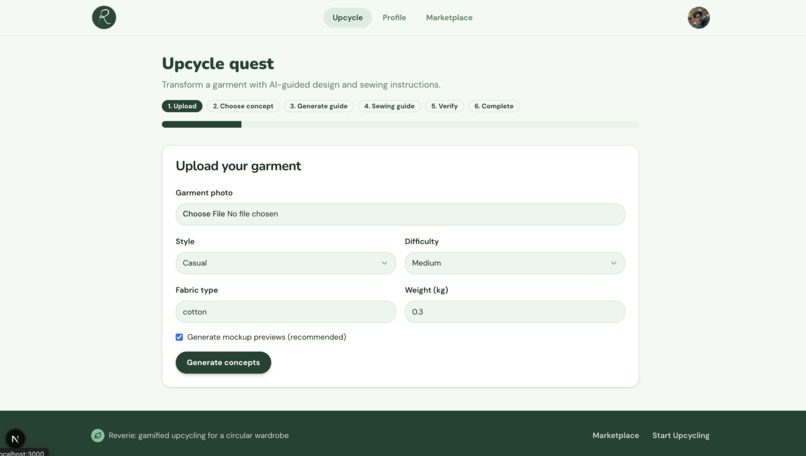
ai upscaler
-
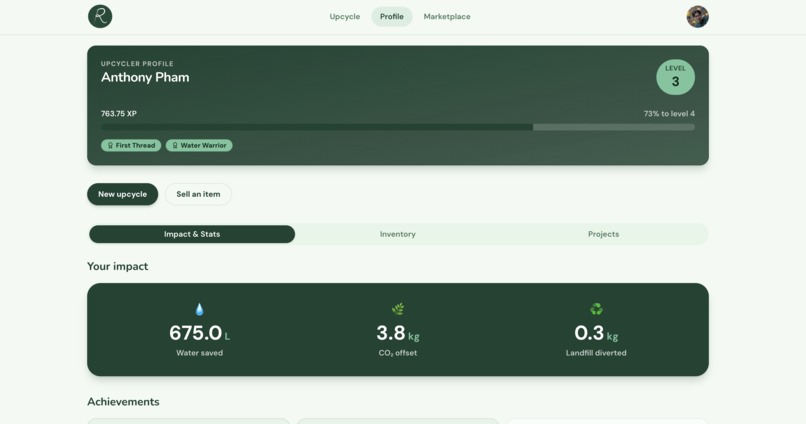
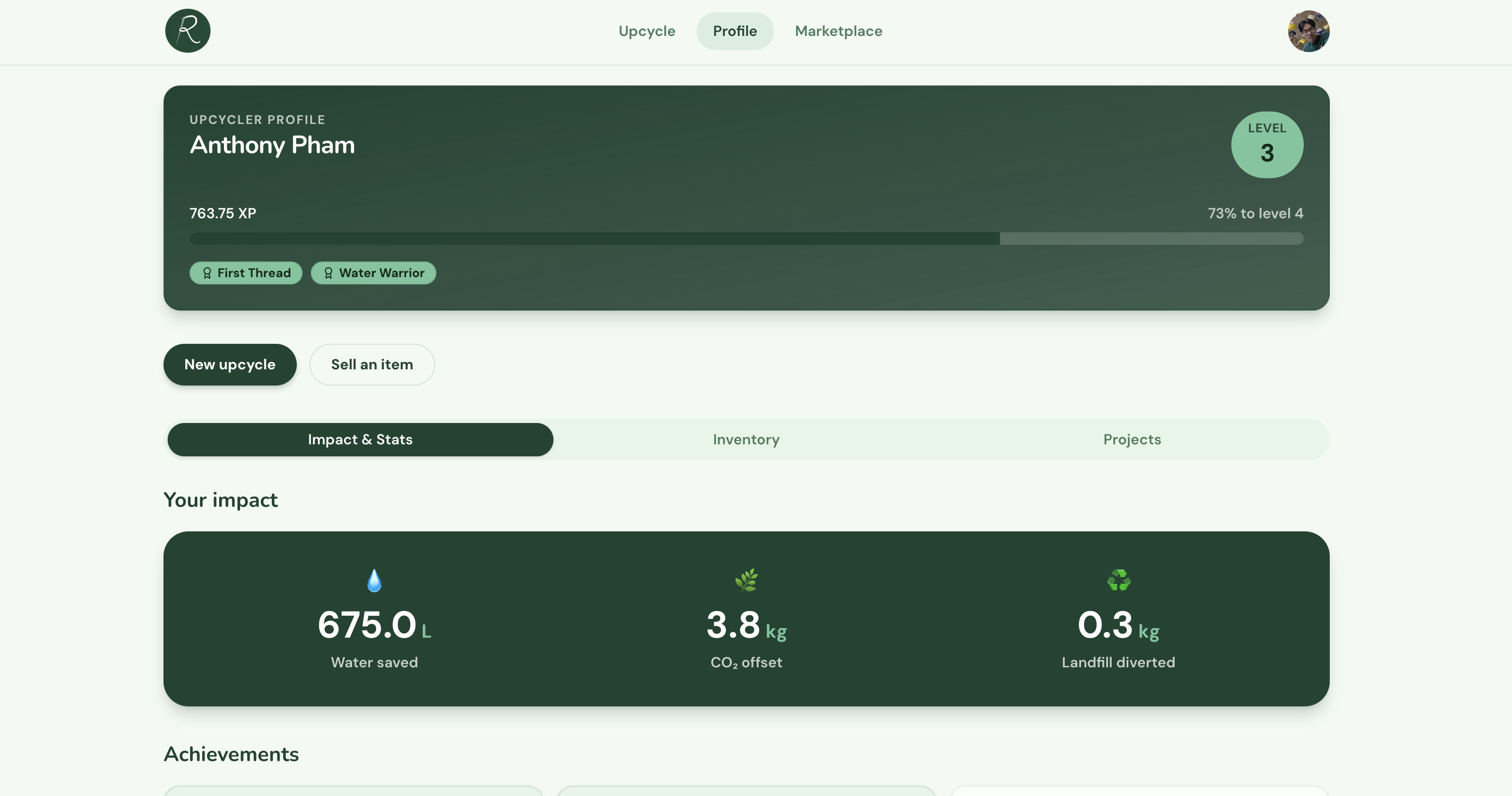
profile dashboard
-
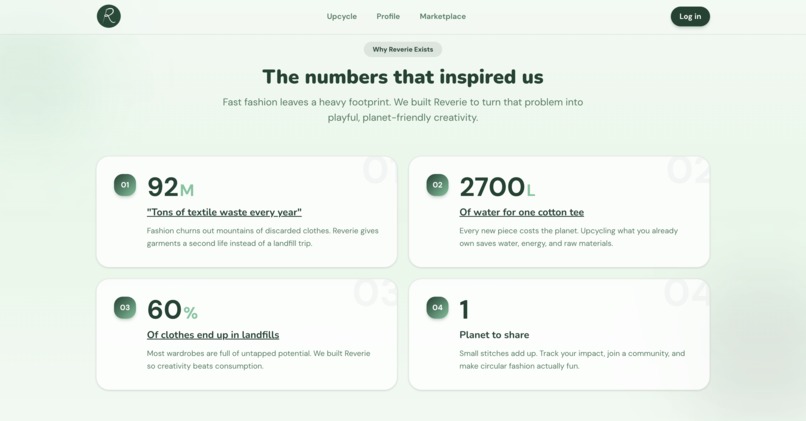
info
-
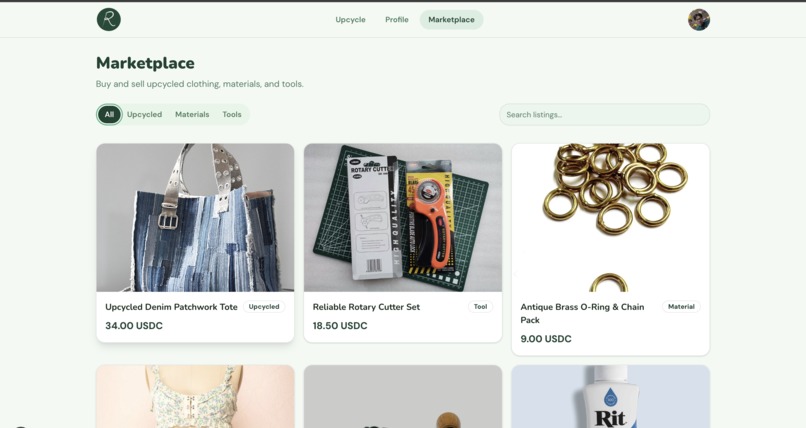
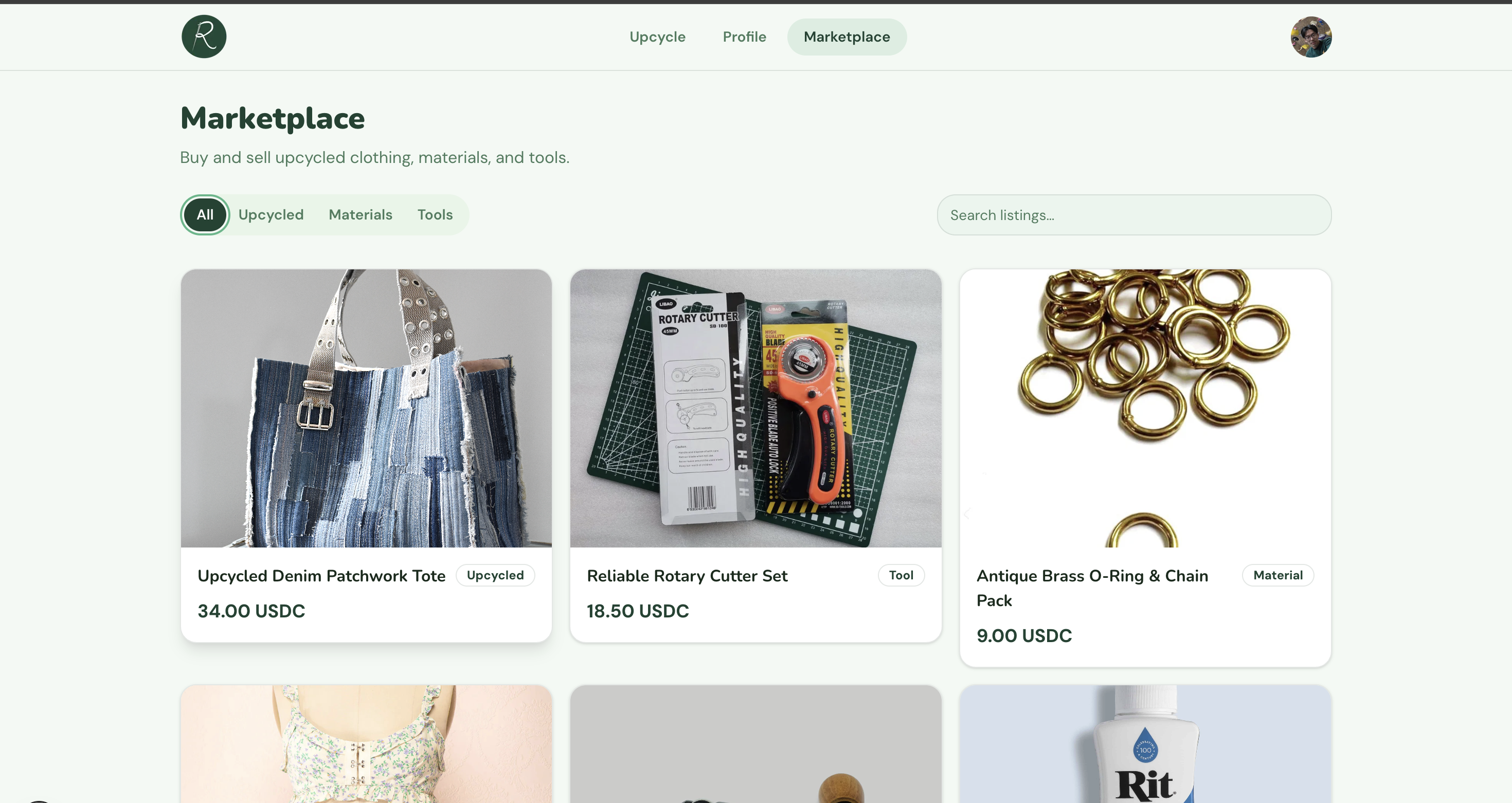
marketplace
-
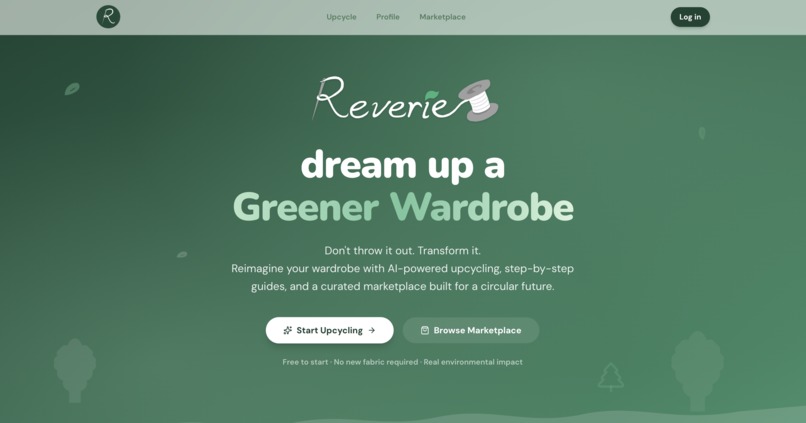
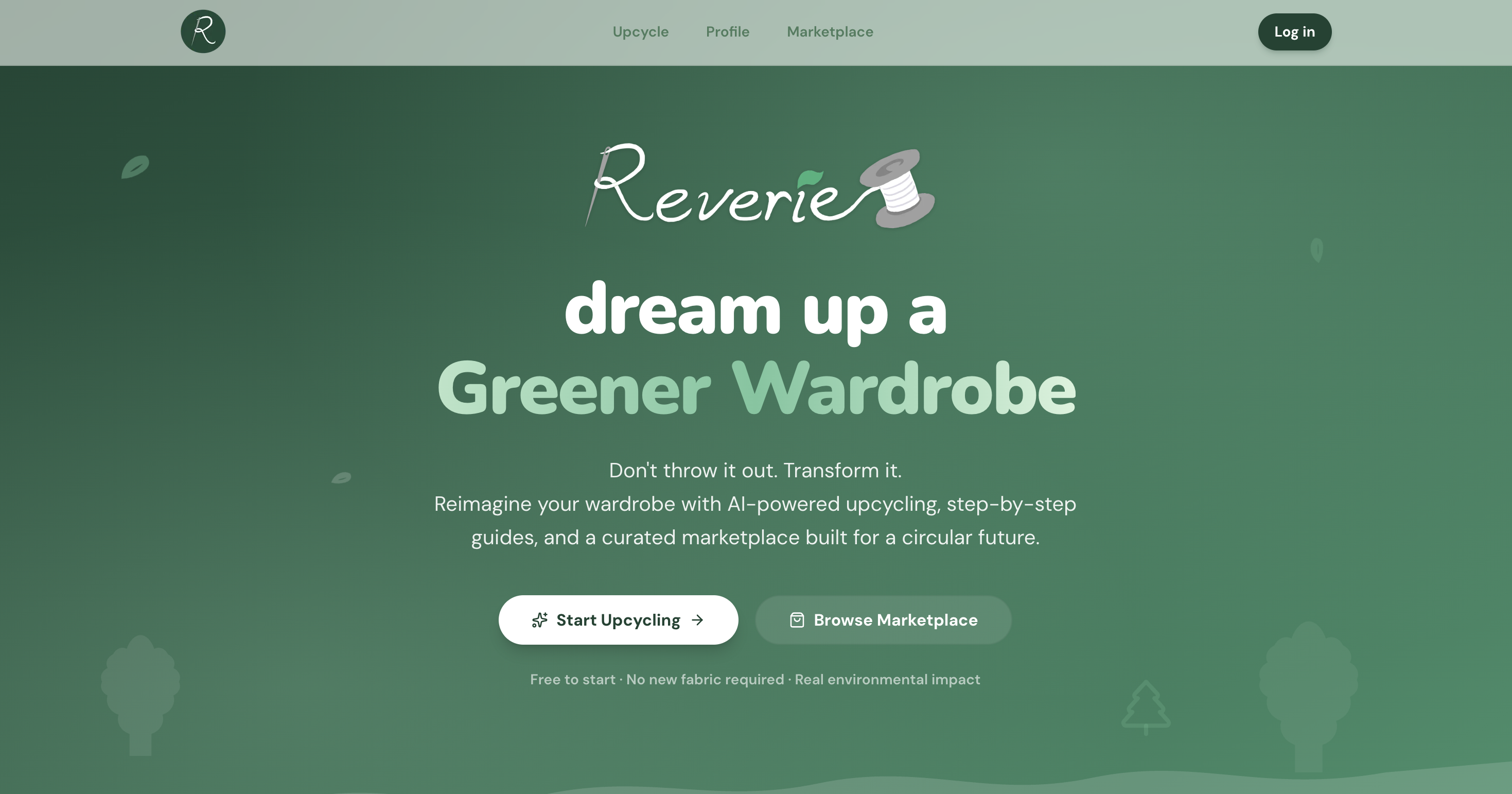
landing
Reverie
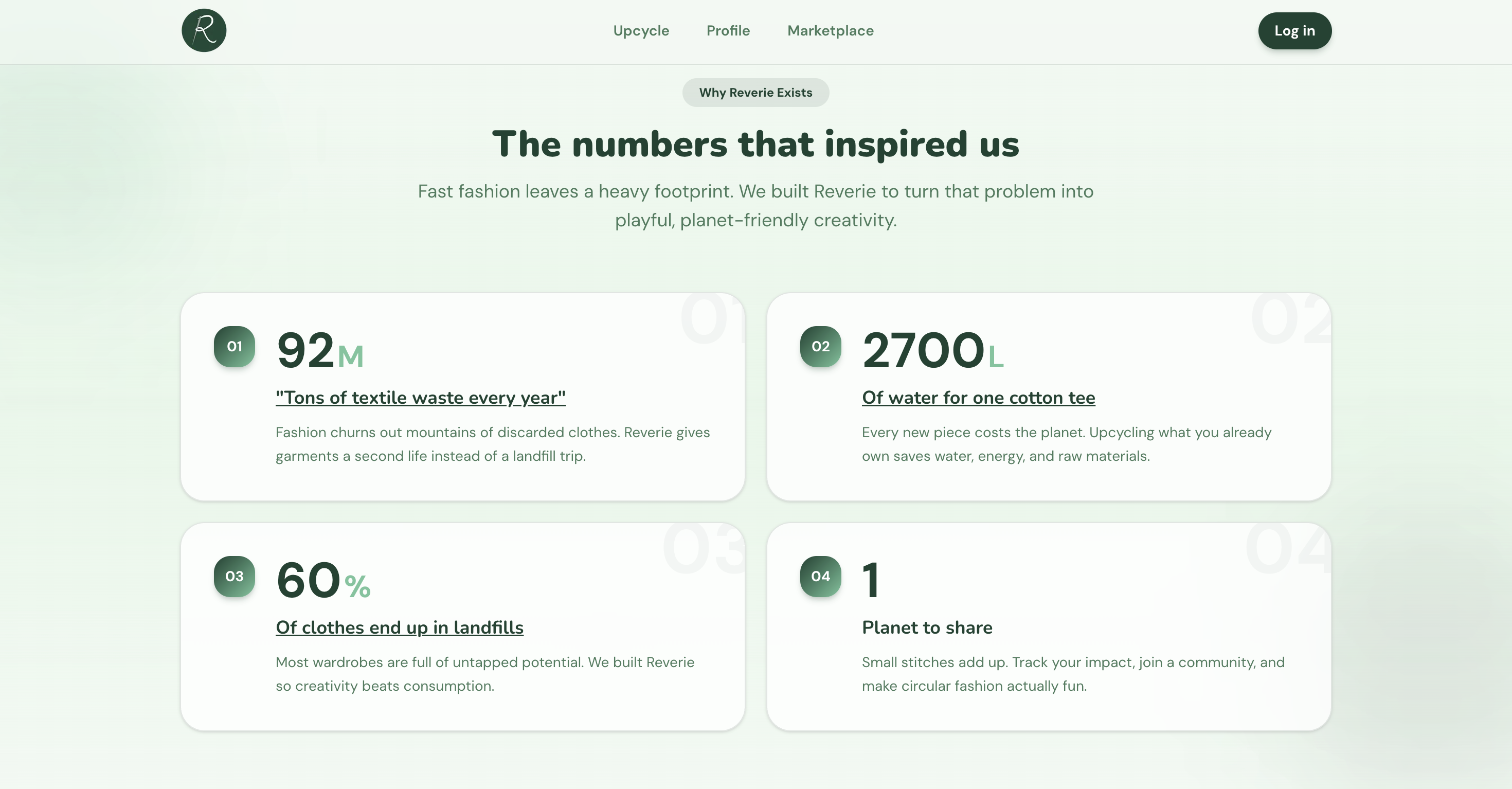
Every year, millions of tonnes of clothing are thrown away, not because they have reached the end of their life, but because people don’t have the tools, confidence, or inspiration to give them a second chance. Reverie uses AI to transform forgotten garments into personalized fashion creations, guiding users from their old clothes to new designs through creative suggestions, step-by-step tutorials, and an engaging sustainable fashion experience, teaching not only the importance of your fashion footprint and environmental sustainability, but also the skills you’ll keep for a lifetime.
Overview
Reverie is built as a backend-first application with a focus on sustainable fashion, upcycling, and ethical marketplace experiences. The API supports authenticated user workflows, AI-driven upcycle creation, inventory management, environmental analytics, and a marketplace for upcycled garments, materials, and tools.
Project Structure
The backend is organized into a clear separation of concerns:
backend/main.py: FastAPI application instance and router inclusion.backend/core/auth.py: Auth0 JWT verification dependency with JWKS validation.backend/core/config.py: Environment variables and configuration.backend/controllers/: Thin route handlers for each subsystem.backend/services/: Core business logic and service orchestration.backend/models/: SQLAlchemy models for items, projects, stats, and listings.backend/repositories/: Database repositories for inventory, upcycle, and marketplace operations.
Authentication
User-facing endpoints are protected with Auth0 JWT validation. The backend extracts the Auth0 user ID from the JWT sub claim, so clients no longer provide user_id in request bodies. When TESTING=True, the JWKS validation is bypassed and a mock subject ID is used for local or CI testing.
API Subsystems
Analytics
- Endpoint:
GET /api/stats/global - Publicly available.
- Aggregates total platform impact metrics such as water saved, CO2 offset, and landfill diverting totals.
Inventory & Profile
- Base route:
/api/inventory - Requires JWT authentication.
GET /api/inventory/me/stats: Fetches environmental impact stats for the authenticated user.GET /api/inventory/me: Lists physical wardrobe items belonging to the user.GET /api/inventory/{item_id}: Retrieves a specific item only if it belongs to the user.
Agentic AI Pipeline
- Base route:
/api/upcycle - Requires JWT authentication.
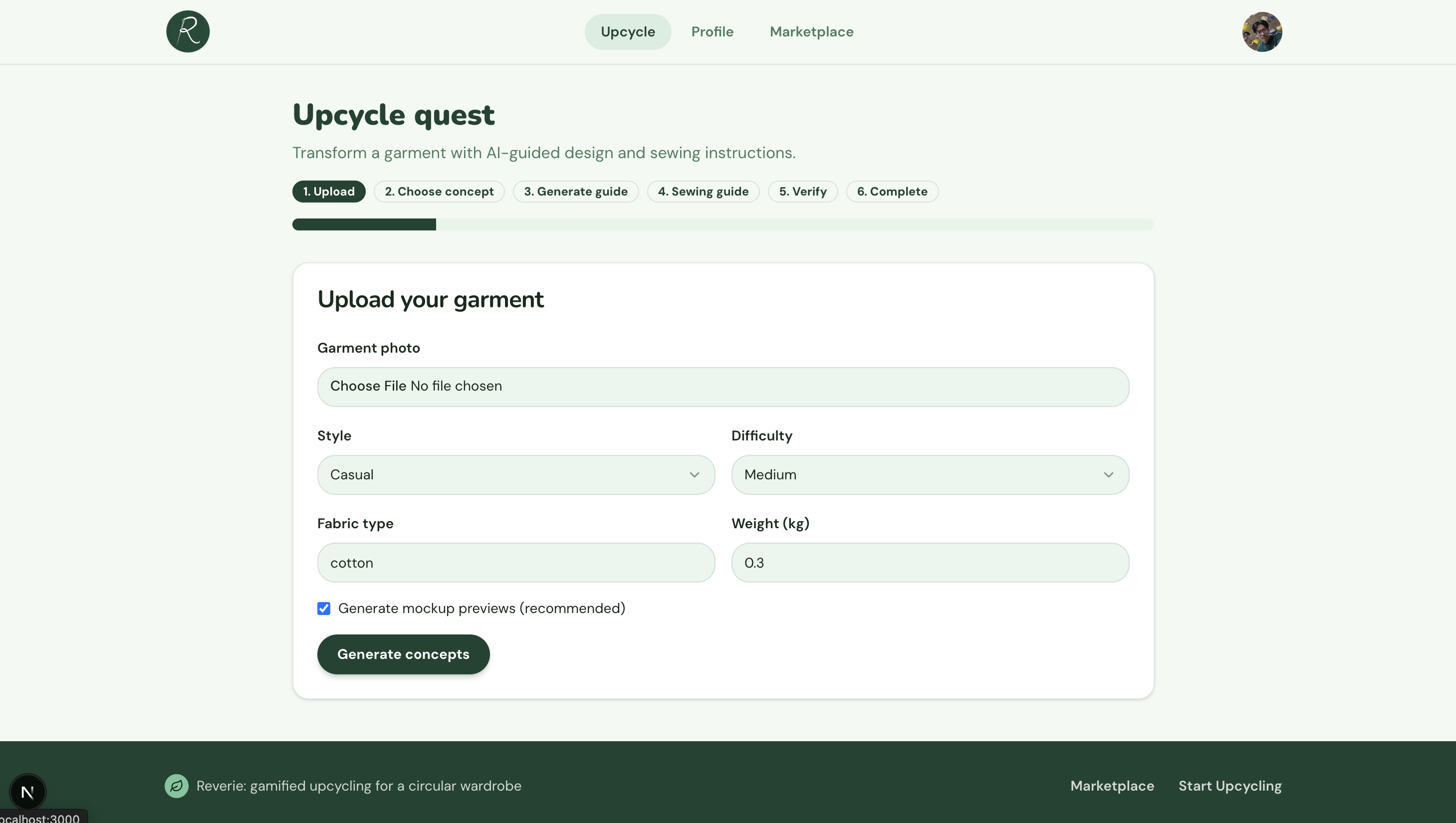
POST /api/upcycle/ideate: Uploads an image, runs AI upcycling concept generation, optionally renders mockups, and creates an item.POST /api/upcycle/execute: Executes the selected upcycling concept, generates sewing guidance, computes environmental impact metrics, and creates a project.POST /api/upcycle/{item_id}/verify: Validates a completed garment against the mockup and returns a verification score and feedback.
Marketplace
- Base route:
/api/marketplace - Supports active listing browsing, creation, checkout, and settlement.
POST /api/marketplace/list: Creates marketplace listings for upcycled clothing, materials, or tools.PATCH /api/marketplace/{listing_id}: Allows sellers to update listing details and cancel listings.GET /api/marketplace: Fetches active listings with category filtering and keyword search.GET /api/marketplace/{listing_id}: Retrieves listing details publicly.POST /api/marketplace/checkout/{listing_id}: Initiates checkout, creates a Unifold session, and places the listing into pending payment.POST /api/marketplace/settle/{listing_id}: Finalizes the sale after buyer confirmation and triggers payout.
Webhooks
- Base route:
/api/webhooks - No Auth0 token required, but uses HMAC-SHA256 signature verification.
POST /api/webhooks/unifold: Handles Unifold deposit and payout events, updates listing escrow status, and records payout transactions.
AI & Storage Behavior
- The AI pipeline can run on Vertex AI or Gemini AI Studio.
- Local offline mode stores uploaded images in
static/inventorywhen Supabase is unconfigured. - Generated content includes upcycling concepts, mockups, sewing guides, verification feedback, and environmental impact narratives.
Goals
Reverie aims to make sustainable fashion approachable by connecting wardrobe management, creative upcycling workflows, environmental impact tracking, and a responsible e-commerce experience in a single system.
Built With
- auth0
- fastapi
- google-adk
- google-gemini
- next.js
- postgresql
- python
- react
- sqlalchemy
- typescript


Log in or sign up for Devpost to join the conversation.