-
-
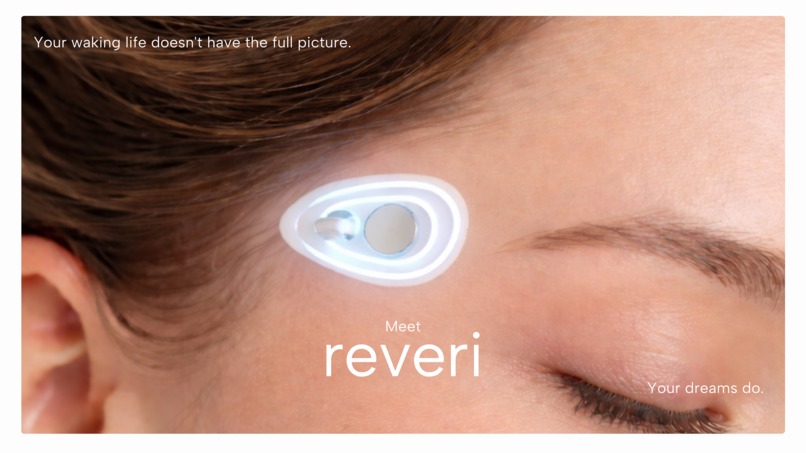
Reveri product
-
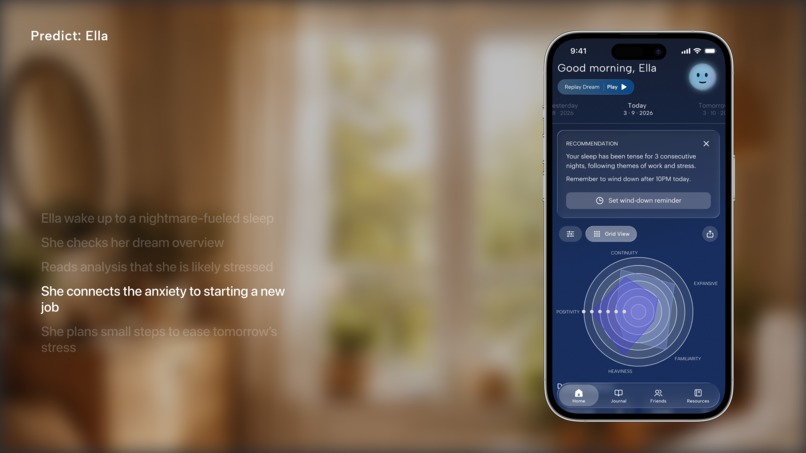
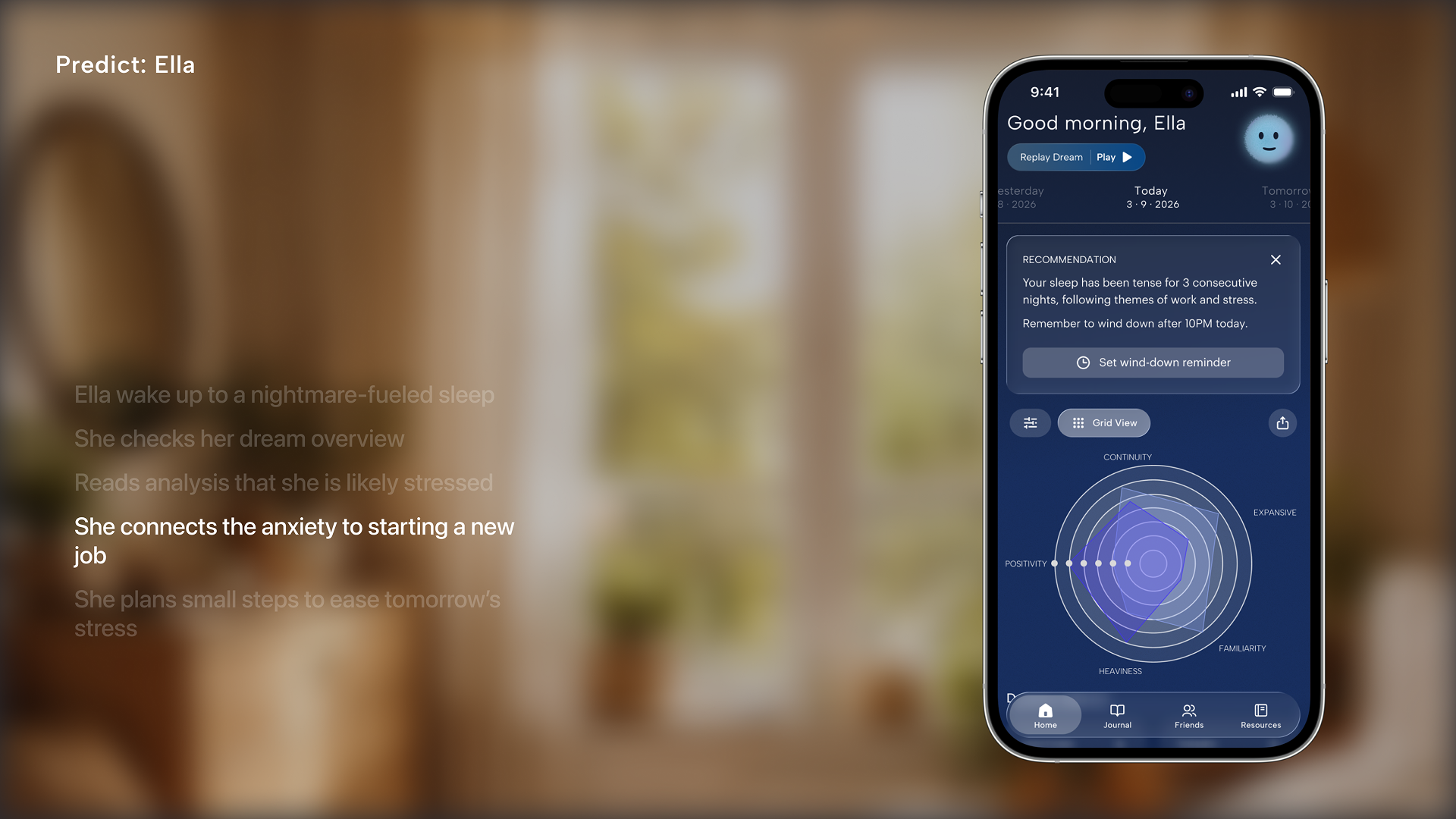
Reveri data screen
-
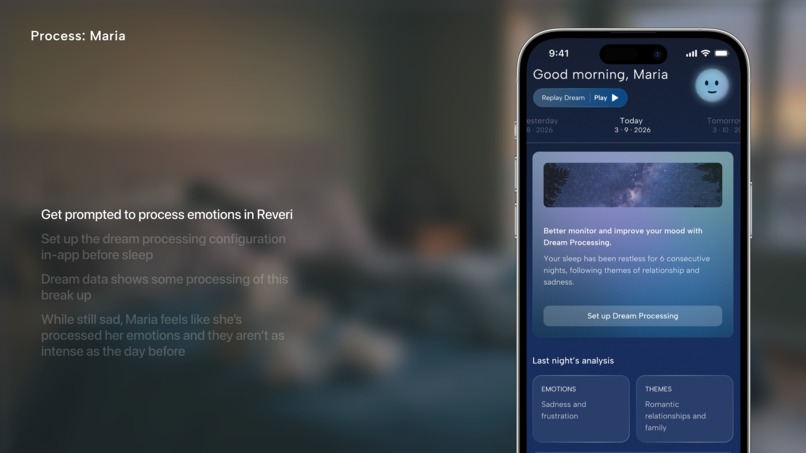
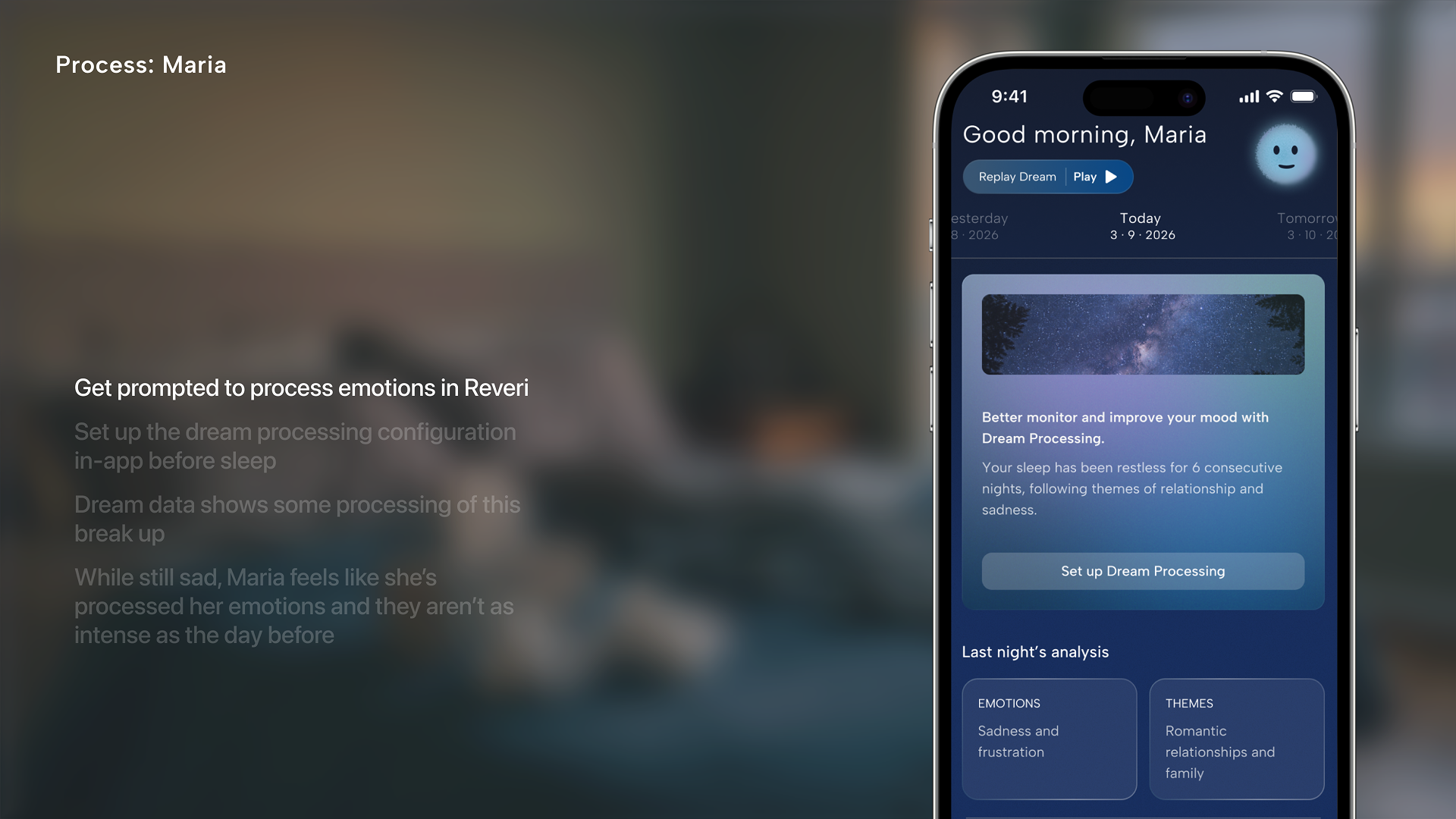
Reveri dream processing screen
Inspiration
Humans spend roughly one-third of their lives asleep, yet one of the most emotionally rich parts of that time—our dreams—remains largely invisible. Dreams help us process memories, emotions, and experiences, but they disappear within minutes of waking, leaving us with only fragments.
The quantified-self movement has allowed us to track nearly every aspect of our physical wellbeing—from steps to heart rate to sleep cycles. However, the subconscious emotional processing that occurs during dreaming is still inaccessible.
We were inspired to explore what might happen if people could sense, capture, and reflect on their dreams in the same way they track other aspects of their health. Reveri imagines a future where dream experiences become a meaningful tool for emotional insight and self-understanding.Dreams do not have clear structure, so we had to think carefully about how to visualize dream experiences in a way that felt meaningful rather than overwhelming.
What it does
Reveri is a speculative dream sensing system that captures and analyzes dream activity to help users better understand their subconscious emotional state.
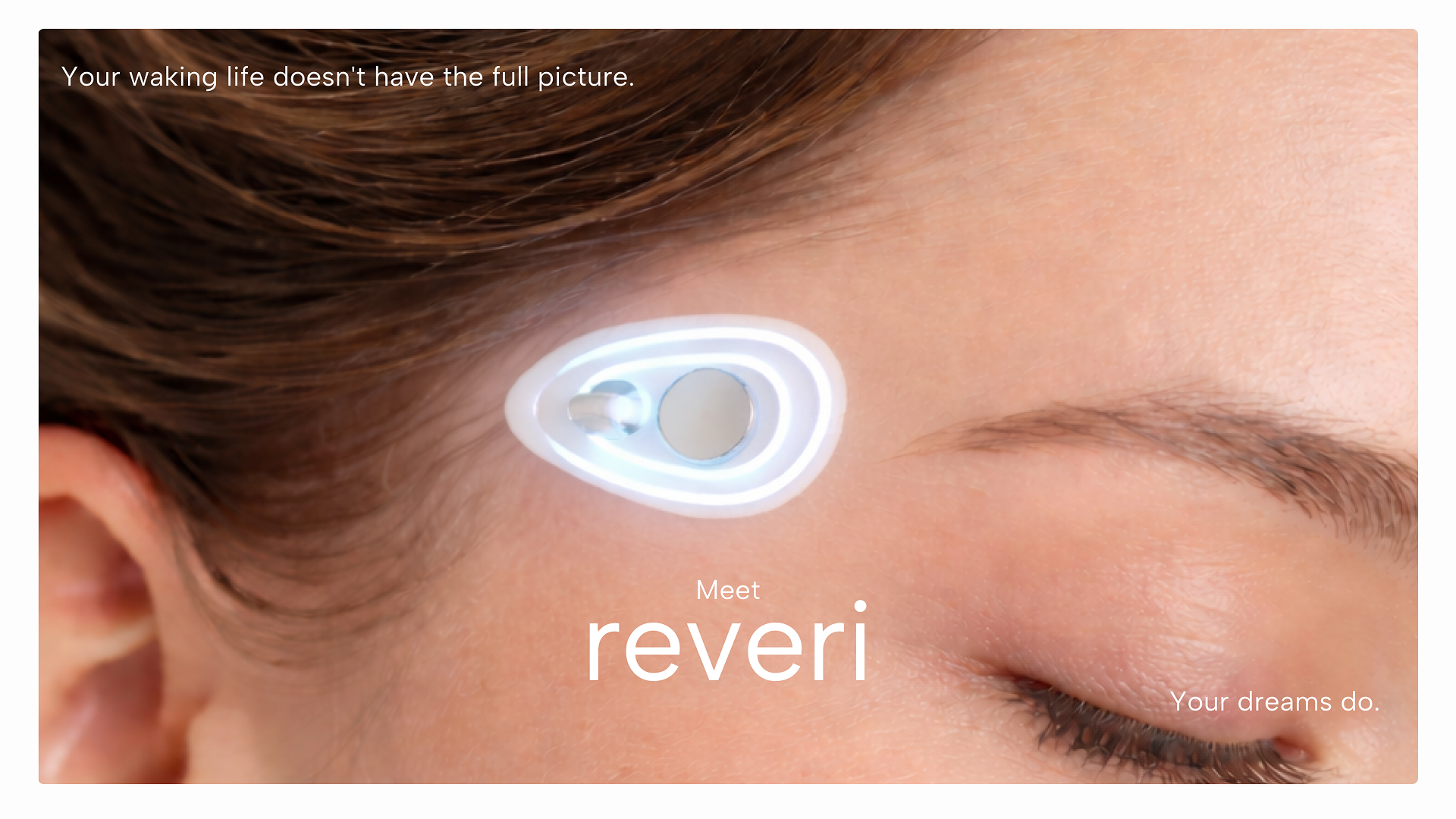
Using small neural sleep patches placed on the temples, Reveri detects signals during REM sleep and translates them into structured dream insights. Each morning, users receive a dream report that summarizes their dreams, visualizes emotional qualities, and reveals patterns in their subconscious processing.
Dreams are mapped across experiential scales such as: • light ↔ heavy • foreign ↔ familiar • expansive ↔ cozy • segmented ↔ continuous • negative ↔ positive
Users can also log their mood before sleep, track trends across nights, and share dream reports with therapists or trusted people to support reflection and conversation.
How we built it
We approached this project as a speculative design challenge focused on human sensory experience and emotional wellbeing.
Our process included:
Problem framing We explored the idea that dreams represent a form of subconscious emotional sensing that is currently inaccessible.
Concept development We designed a future system combining neural sleep patches with an interpretive dream analysis platform.
Experience design We mapped the user journey from pre-sleep reflection to morning dream reports and long-term insight tracking.
Interface prototyping Using Figma, we created prototype interfaces that demonstrate how dream data might be visualized and interpreted.
Scenario storytelling We developed real-life use cases to illustrate how Reveri could support emotional reflection, therapy, and personal wellbeing.
Challenges we ran into
One of the biggest challenges was designing an experience around something that is inherently abstract and subjective.
Dreams do not have clear structure, so we had to think carefully about how to visualize dream experiences in a way that felt meaningful rather than overwhelming.
Another challenge was balancing speculation with believability. Since the technology to fully capture dreams does not yet exist, we had to imagine future sensing capabilities while still designing an interface that felt grounded and intuitive.
Finally, we considered how to responsibly present emotional insights without implying that the system could diagnose mental health conditions.
Accomplishments that we're proud of
We are proud of designing a system that makes an invisible and deeply personal experience—dreaming—feel tangible and understandable. All within only two days!
Our team successfully: • conceptualized a new form of sensory self-tracking • designed a clear and intuitive dream visualization system • created meaningful use cases connecting dreams to emotional wellbeing • developed a cohesive speculative product experience
Most importantly, we designed a concept that encourages people to reflect on their inner lives and emotional signals in a new way.
What we learned
This project taught us how powerful speculative design can be for exploring future relationships between technology and human experience.
We learned that designing for something intangible—like dreams—requires focusing on interpretation and meaning, not just data.
We also gained insight into how people might interact with deeply personal information, and the importance of designing systems that prioritize emotional safety, privacy, and reflection.
Finally, we saw how storytelling and use cases can help communicate future technologies in a way that feels relatable and human-centered.
What's next for Reveri
In the future, Reveri could expand beyond individual dream reports to provide deeper long-term insights into emotional well-being and cognitive health.
Possible future directions include: • detecting early signs of stress, burnout, or emotional distress • integrating with therapy platforms to support guided reflection • developing richer visualizations of dream environments and narratives
Ultimately, Reveri imagines a future where understanding our dreams becomes an important part of understanding ourselves and our inner truths that are hidden beneath.
Built With
- chatgpt
- claude
- figma
- figmamake
- gemini


Log in or sign up for Devpost to join the conversation.