Inspiration
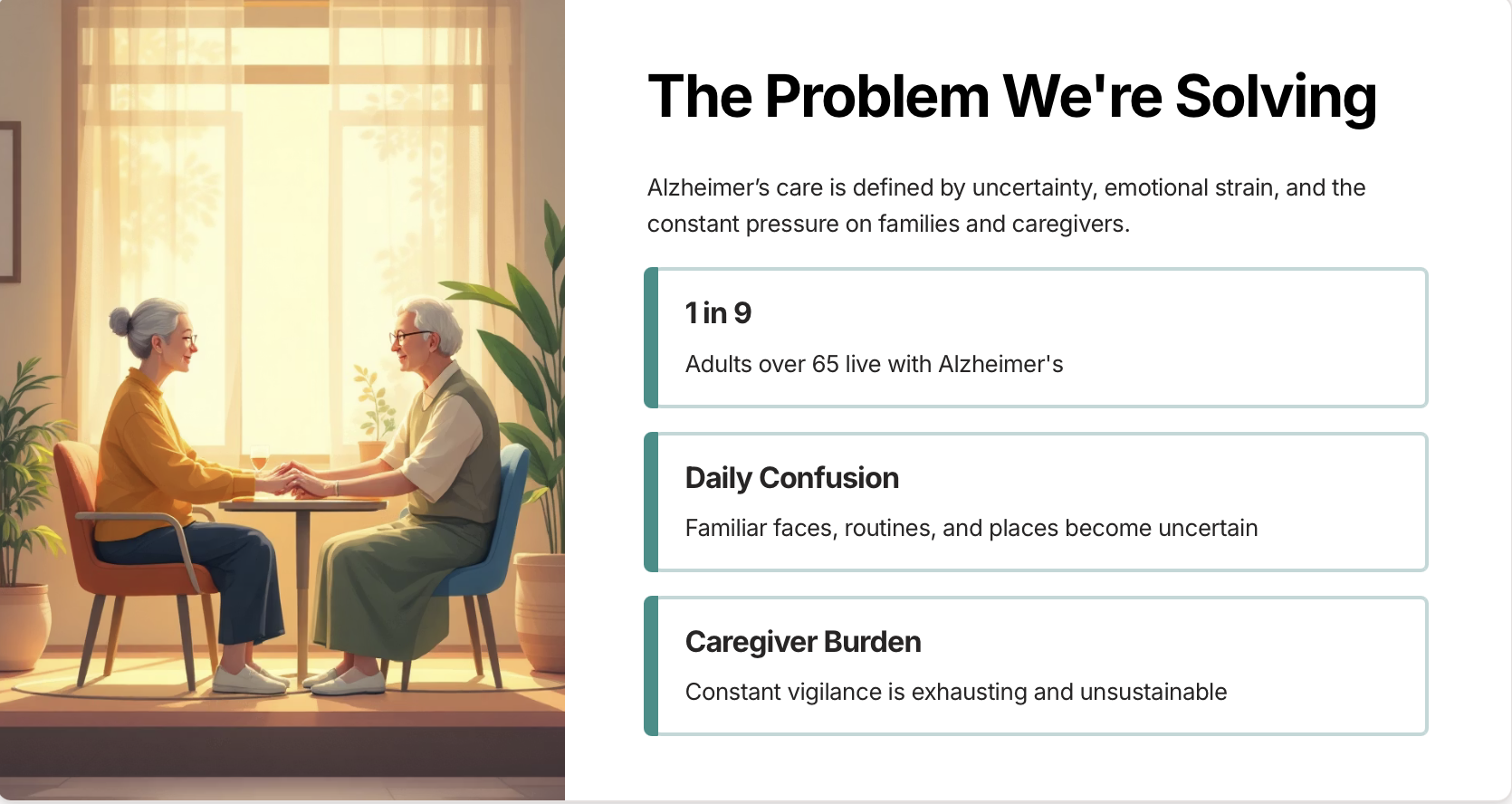
Alzheimer’s disease often affects a person’s ability to recognize familiar individuals and retain important day-to-day information, creating stress for both patients and caregivers. We were inspired to build Revere as a practical assistive system that uses AI to support memory, reduce confusion, and improve quality of life.
What it does
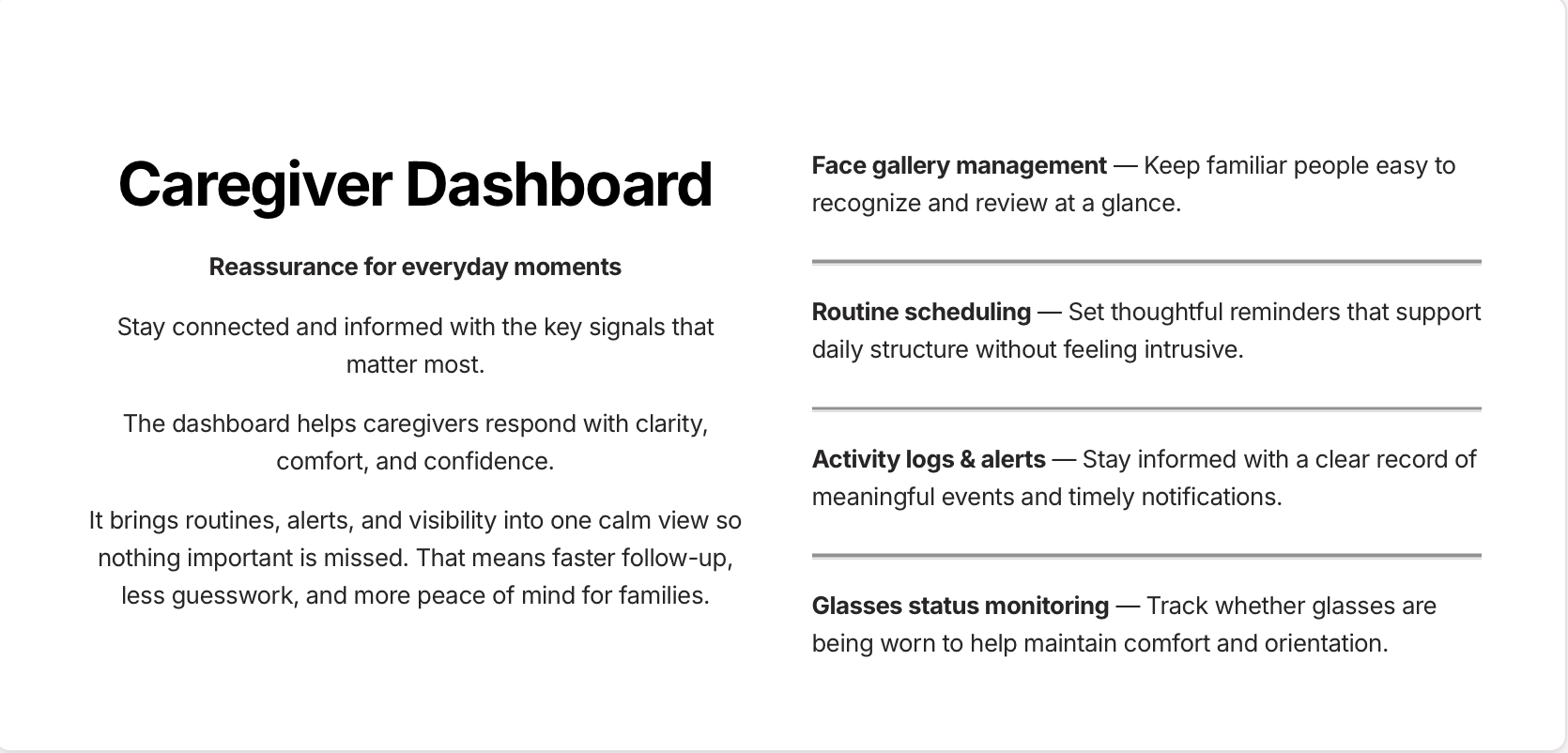
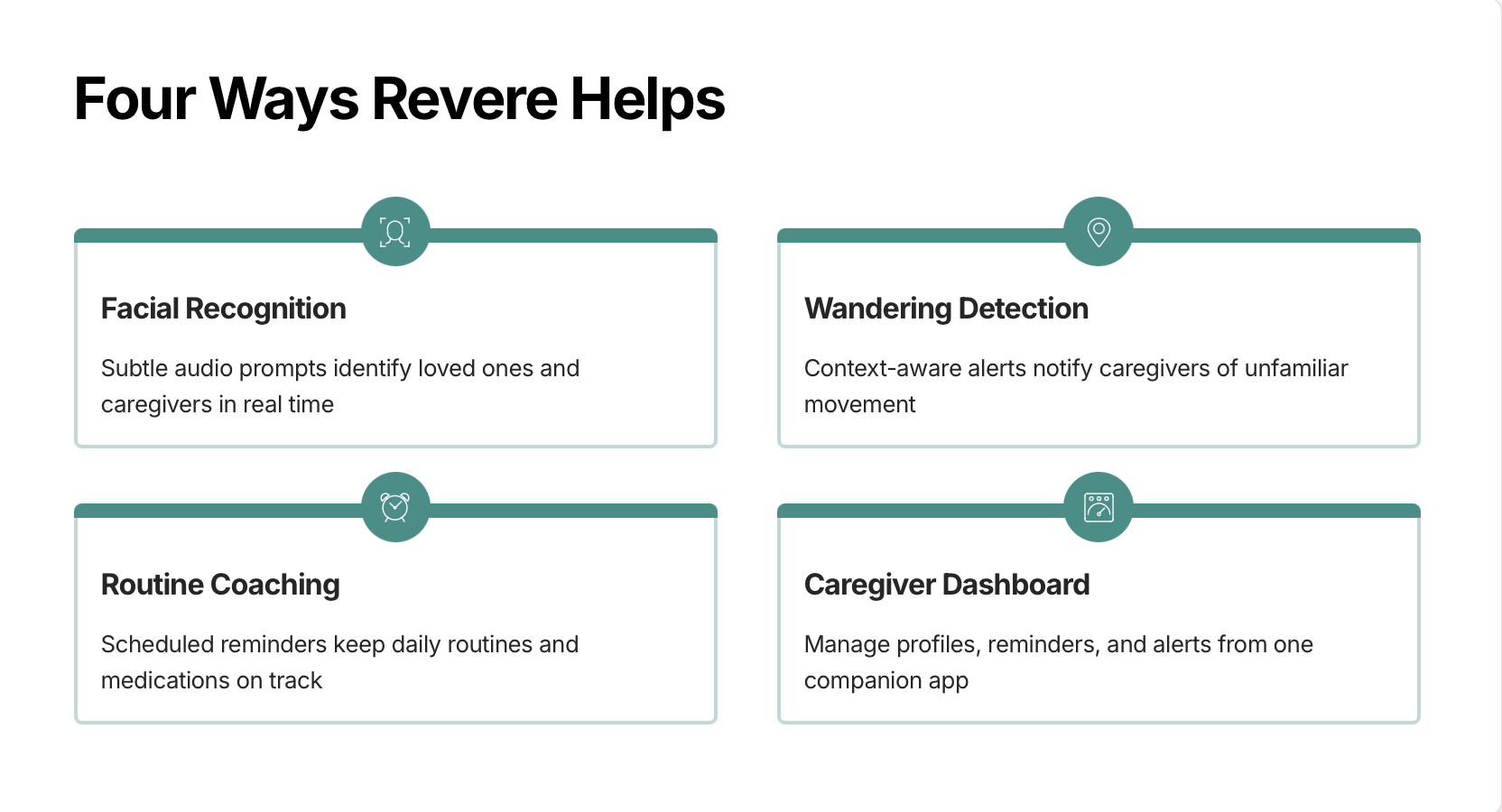
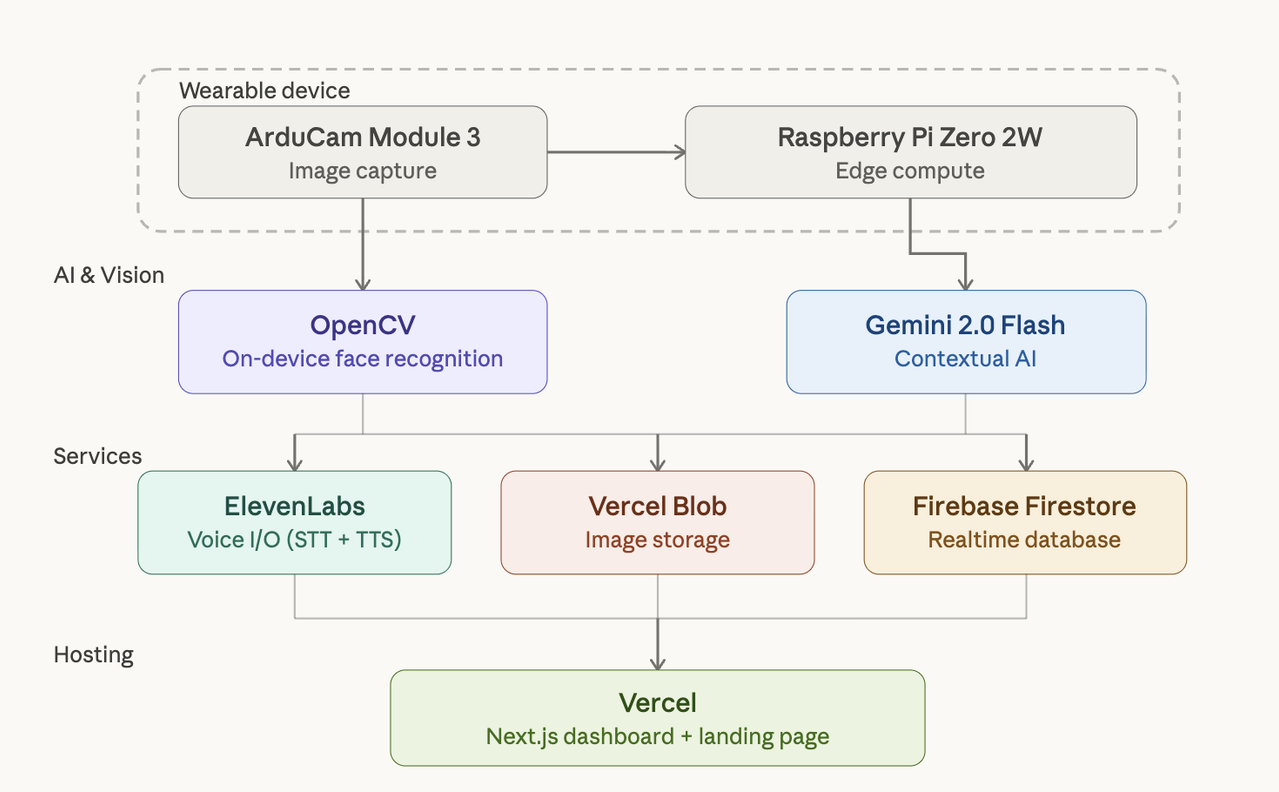
Revere is an AI-powered wearable and caregiver platform designed to support individuals with Alzheimer’s in real time. The system recognizes familiar people, delivers contextual audio cues, and provides caregivers with a centralized dashboard to manage reminders, monitor interactions, and retrieve system information through a voice-enabled assistant.
| Feature | Implementation | Impact |
|---|---|---|
| Face Recognition | Computer vision on Raspberry Pi wearable | Helps users identify familiar people |
| Audio Cues | Real-time spoken prompts based on recognition | Reduces confusion and supports memory |
| Caregiver Dashboard | Next.js dashboard with Firebase backend | Centralized caregiver controls and monitoring |
| Voice Assistant | ElevenLabs STT + TTS integration | Accessible hands-free caregiver interaction |
| Cloud Sync | Firebase + Vercel Blob for storage and sync | Reliable data access across the system |
How we built it
We developed Revere as a full-stack solution that combines a Raspberry Pi-based wearable device with a web-based caregiver dashboard. The wearable uses computer vision for face recognition, while the dashboard is built with Next.js and connected to Firebase for primary data storage and management and Vercel blob for image storage. We also integrated ElevenLabs speech-to-text and text-to-speech APIs to create an accessible voice interface for caregivers.
Challenges we ran into
API/ Database costs: We tried using a pro version of gemini for better spatial detection but incurring token charges surmounted, so we had to stay within free limit and use Gemini Flash 2.0.
Real-time sync - Buffering between 2s frontend polls and faster backend processing, polling api calls from raspberry pi zero 2w
GSAP-WebGL scroll scrubbing - Making 3d model animations snappy and lag-free was a tiring goal we are proud of successfully achieving
Accomplishments We're Proud Of
We successfully synchronized hardware, computer vision, and cloud infrastructure into a single cohesive ecosystem. Instead of separate "duct-taped" demos, we built:
Wearable Input: Real-time face recognition.
Live Feedback: Data feeding into a caregiver dashboard.
Accessibility: A voice-enabled layer for the system.
We built a front-end that balances tech with human empathy:
Visuals & Motion: Made using Higgsfield and Gemini Veo 2.0.
Assets: 3D elements via Meshy.AI and Canva identity.
What We Learned
Bridging the Gap: Integrating hardware with web stacks.
Human-Centric Design: Tech must be dependable and sensitive.
AI Orchestration: Using AI for efficiency and aesthetics.
What's Next for Revere
Performance: Porting to a high-performance CPU.
Intelligence: Expanding contextual AI reminders.
Hardware: Refining the wearable form factor.
Interaction: Enhancing the voice assistant dialogue.
Built With
- c
- firebase
- geminiapi
- next.js
- python
- raspberry-pi
- typescript


Log in or sign up for Devpost to join the conversation.