-
-
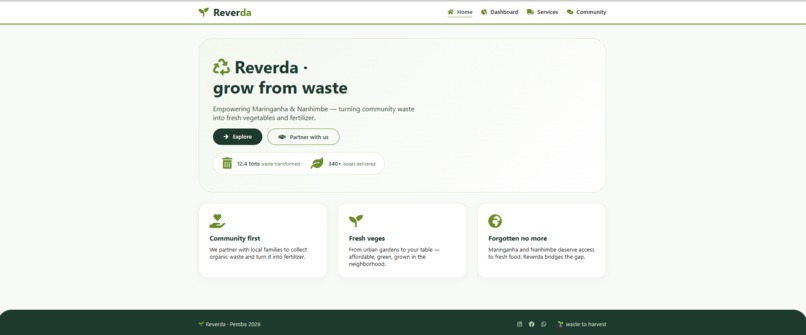
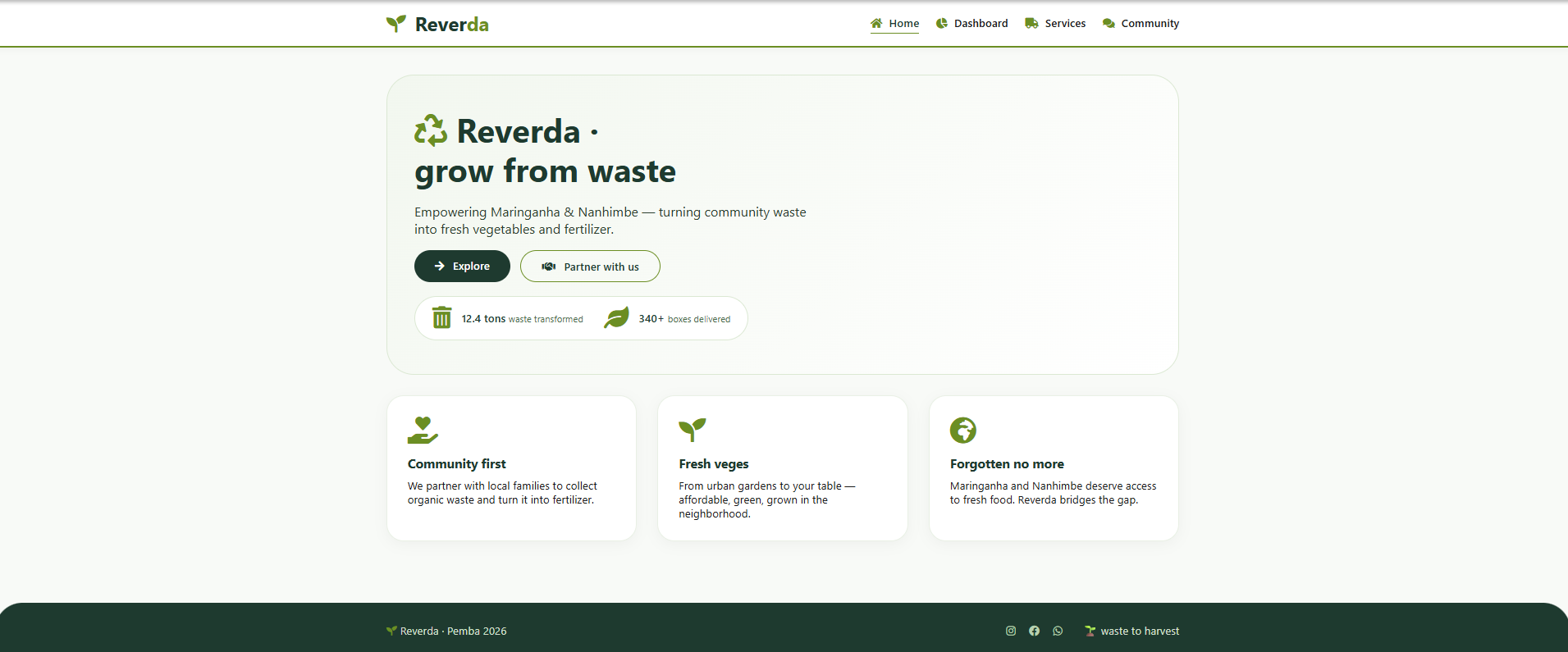
Home pagehttps://youtu.be/TDlBS_edZNE
-
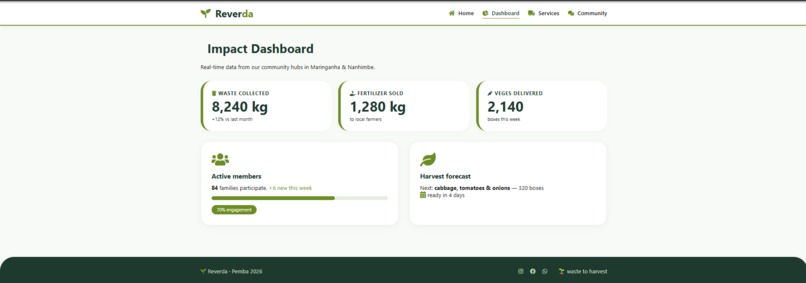
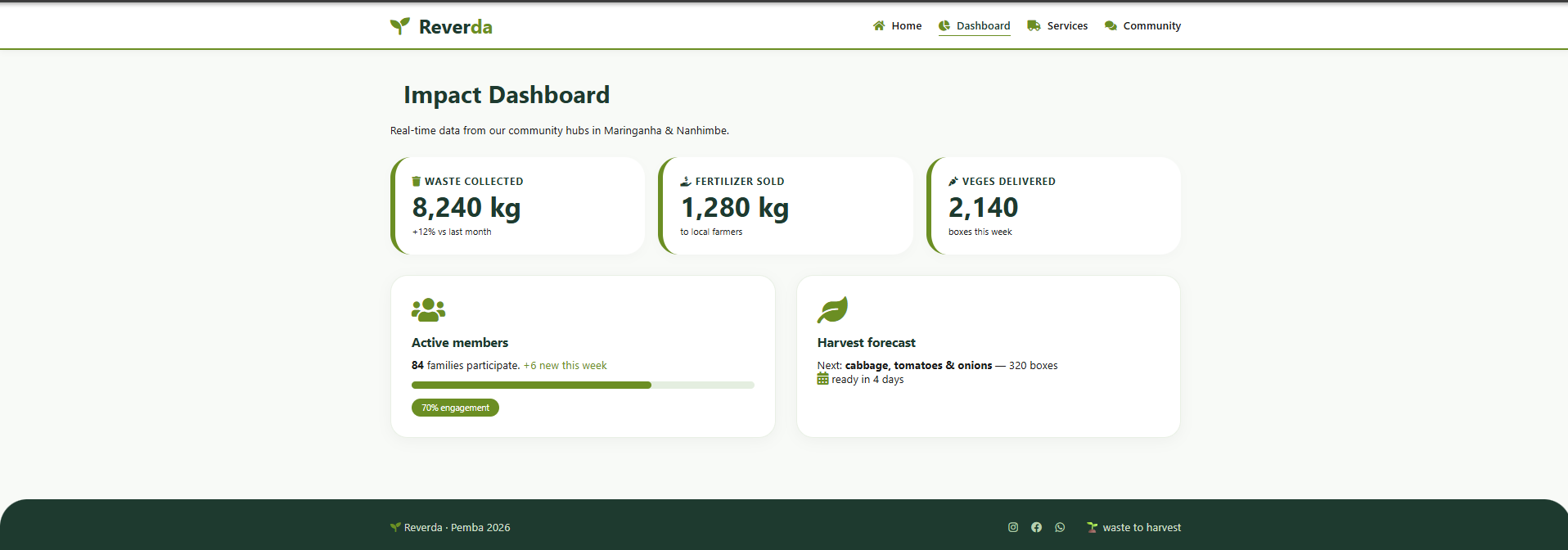
Dashboard page
-
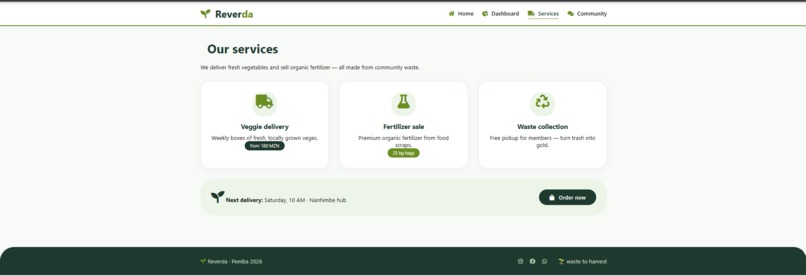
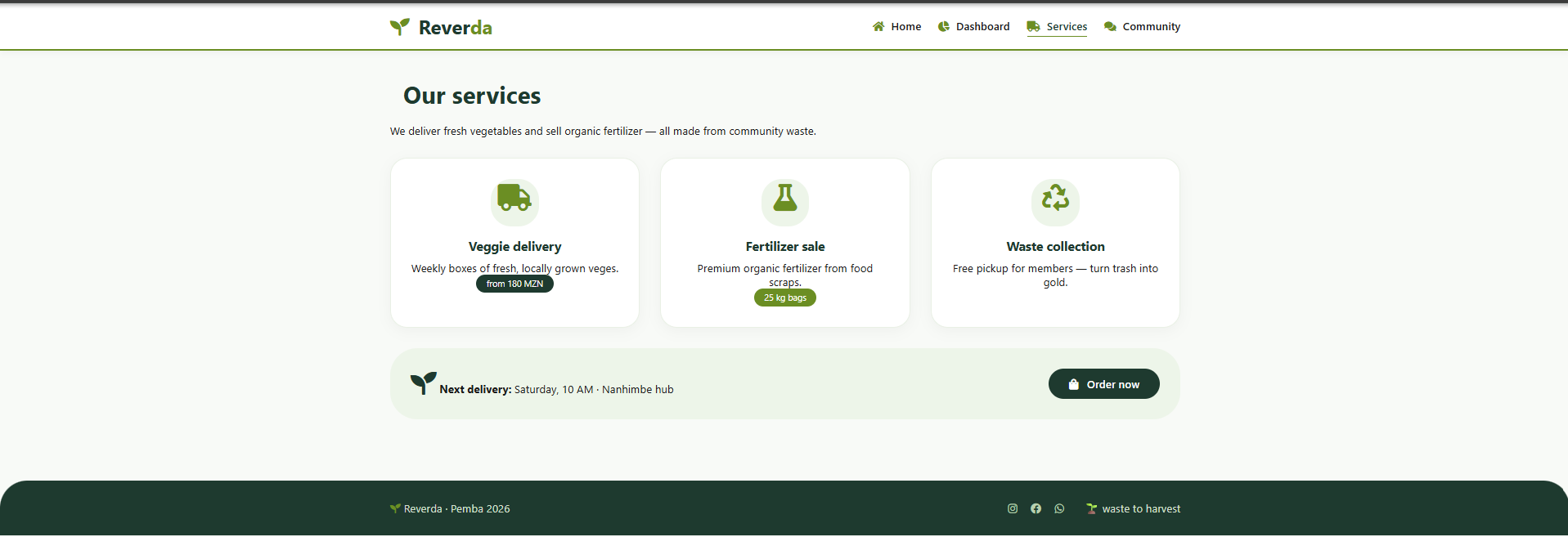
Services page
-
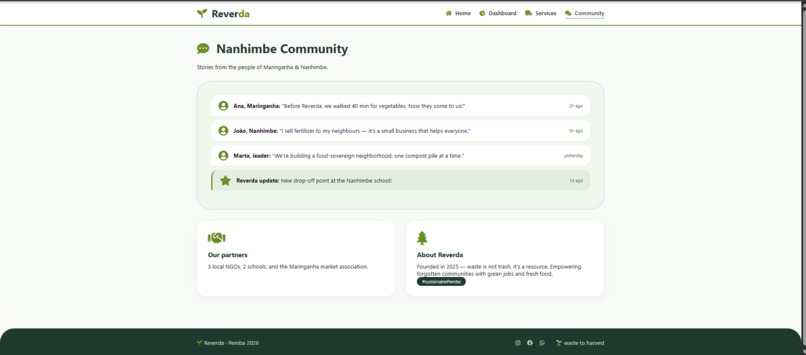
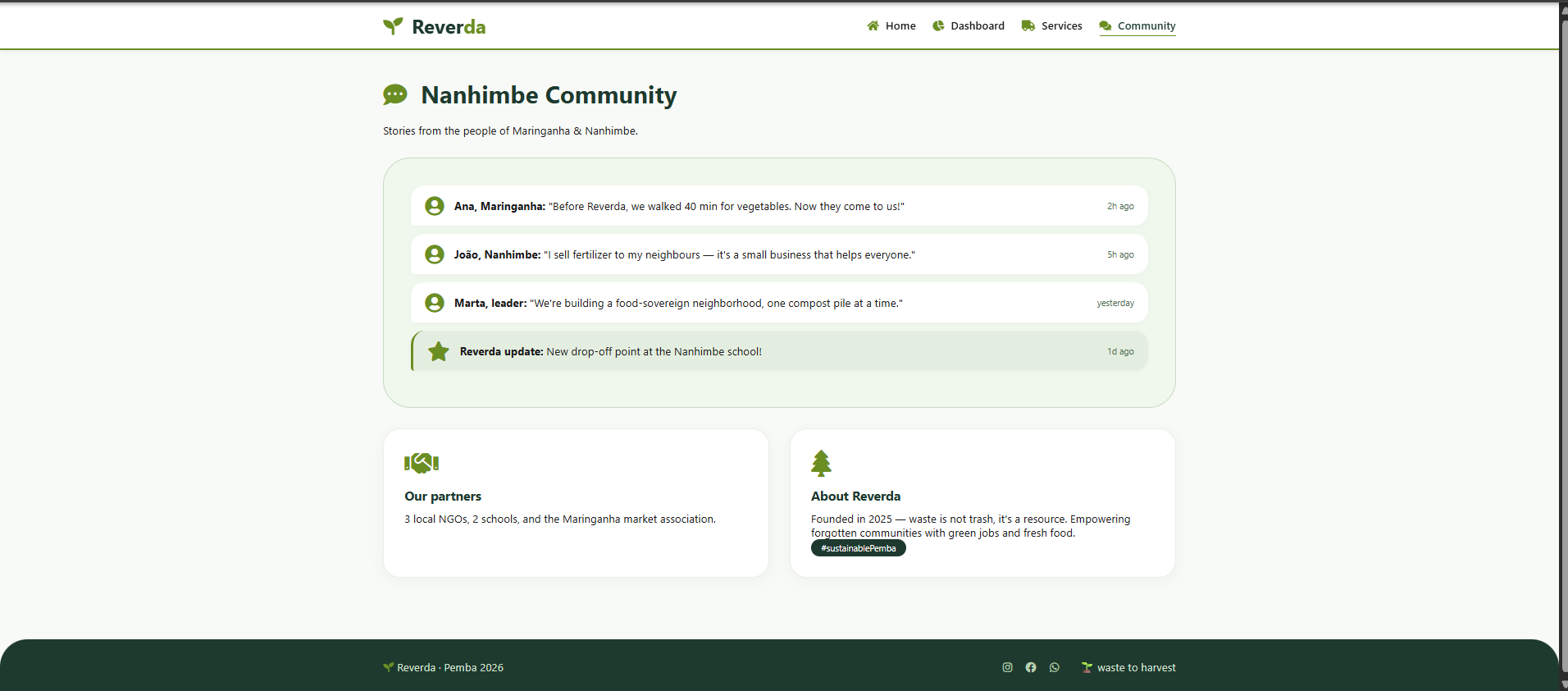
Community page
Reverda - Turning Waste into Food
Inspiration
Maringanha and Nanhimbe are vibrant communities in Pemba, Mozambique, but they face a paradox: while the area is filled with NGOs and tourists, the local residents struggle with high prices and limited access to fresh vegetables. The few existing markets rarely have greens, and the community feels "forgotten" by the systems that surround them.
I asked myself: "What if we could solve this from within?"
The idea was born from a simple observation:
- Waste is everywhere in the community due to the restaurants around
- Vegetables are expensive and hard to find there fore the locals have to move to the city center to be able to do their shoppings causing them to waste alot of money because sadly transportation has recently increased in the country therefore the taxi and even collective public buses´s price doubled so, i thought about giving Reverda it a chance
What it does
Reverda is meant to be a web platform that illustrates a complete sustainable ecosystem for Maringanha and Nanhimbe:
The Ecosystem:
- Waste Collection → Community members bring organic waste to collection points
- Fertilizer Production → Waste is transformed into high-quality organic fertilizer
- Vegetable Growing → Fertilizer is used to grow fresh vegetables in urban gardens
- Delivery → Vegetables are delivered back to the community at affordable prices
The Website Features:
- Home Page: Project introduction, impact statistics, and call to action
- Dashboard: Real-time data showing waste collected, fertilizer sold, and vegetables delivered
- Services: Clear explanation of veggie delivery, fertilizer sale, and waste collection
- Community: Testimonials and updates from the people of Maringanha and Nanhimbe
The Impact (Optimistic Expectations):
- 12.4 tons of waste transformed
- 340+ vegetable boxes delivered
- 84 families actively participating
- 70% community engagement rate
How I built it
Technical Approach:
I built Reverda as a single-page application using:
- HTML: For structure and content
- CSS: For custom styling with a sustainable color palette
- JavaScript: For interactivity (navigation, buttons, dynamic content)
Design Choices:
Color Palette:
- White (#FFFFFF) - Clean and modern
- Olive Green (#6B8E23) - Sustainability and growth
- Dark Green (#1E3A2F) - Depth and stability
- Black (#1A1A1A) - Contrast and readability
Mobile-First: The website is fully responsive and works on all devices
Single File: Everything is in one HTML file for easy deployment
Intuitive Navigation: Clear menu with icons for each page
Development Process:
- Research: Studied the community context in Pemba
- Planning: Sketched 4 pages and defined content
- Prototyping: Trough AI tools the code was generated by the descrition of the idea that i envision
- Styling: Applied the color palette and responsive design
- Interactivity: Added JavaScript for navigation and buttons
- Testing: Ensured everything works on desktop and mobile
Tools Used:
- VS Code (code editor)
- Font Awesome (icons)
Challenges I ran into
1. Conceptual Challenge
How to represent a community-based physical project through a website?
Solution: I focused on storytelling and data visualization to bring the impact to life
2. Time Constraint
Building a full website with 4 pages in limited time — working alone, even with ai i faced some struggles
Solution: I used a single HTML file with CSS and JavaScript embedded, making it fast and deployable
3. Color Palette Balance
Finding the right shades of green to represent sustainability while keeping it professional
Solution: Tested multiple combinations and settled on #6B8E23 (olive green) for highlights and #1E3A2F (dark green) for depth
4. Community Representation
How to show the human side of the project?
Solution: I added a "Community Chat" section with real-sounding testimonials to make it feel authentic
5. Working Solo
No team to brainstorm or divide tasks
Solution: I focused on MVP (Minimum Viable Product) — clean design, clear message, functional prototype
Accomplishments that I'm proud of
Creating a Cohesive Brand Identity
The color palette, typography, and visual style all work together to communicate sustainability, trust, and community.
Humanizing the Project
The Community page with testimonials makes the project feel real and connected to actual people.
What I learned
1. Sustainability is Social
The best solutions come from listening to communities, not imposing outside ideas. Reverda might work because it starts with people.
2. Waste is a Resource
Organic waste isn't trash — it's raw material for fertilizer, which grows food. This circular economy model is powerful and replicable.
3. Simplicity Scales
You don't need complex technology to make a difference. A simple, well-designed website can communicate a powerful idea effectively.
4. Focus is Everything
As a solo developer, I learned to prioritize what matters most: clear messaging, functional features, and user-friendly design.
5. Community Trust is Key
People participate when they see real benefits. The Dashboard helps build trust by showing transparent impact data.
What's next for Reverda
Phase 1: Community Pilot (3-6 months)
- Partner with 3 local NGOs and 2 schools in Maringanha and Nanhimbe
- Set up 2 waste collection points
- Train 10 community members on composting techniques
- Start small-scale vegetable production
Phase 2: Expansion (6-12 months)
- Grow from 84 to 200+ participating families
- Expand vegetable varieties (cabbage, tomatoes, onions, greens)
- Launch a mobile app for easier ordering and tracking
- Partner with local markets for larger distribution
Phase 3: Replication (12-24 months)
- Document the model as a playbook
- Identify 3 other "forgotten" communities in Mozambique
- Train local leaders to implement Reverda independently
- Build a network of community-driven food systems
Phase 4: Digital Growth
- Add real-time tracking with IoT sensors
- Create a community forum for sharing tips and stories
- Implement a rewards system for active participants
- Build a mobile-first PWA (Progressive Web App)
Links
Note: Temporary link (expires in 3 days). The HTML file is attached for permanent access.
- Live Demo: https://ruby-orchid-37yy.pagedrop.io
- GitHub Repository: [link-do-seu-repo]
- Contact: [email protected]
"From waste to harvest — growing a greener future for Pemba."
Built with ❤️ for the people of Maringanha and Nanhimbe

