-
-
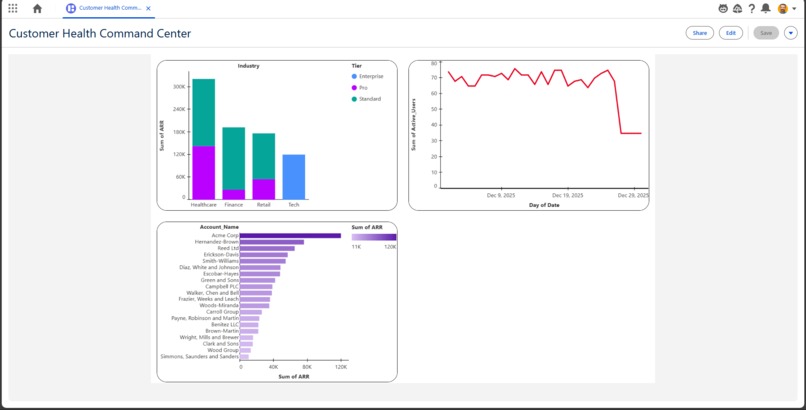
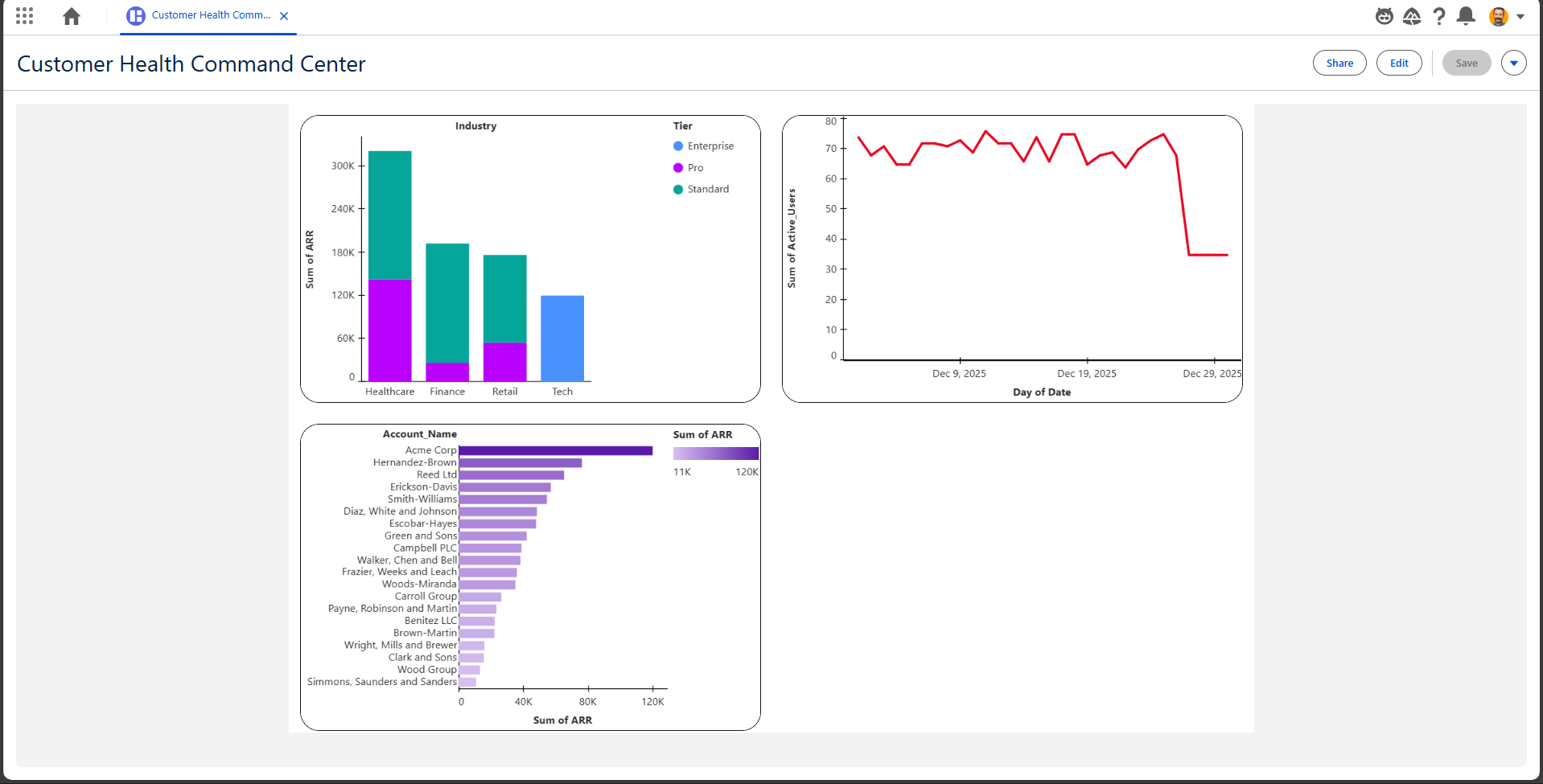
The Dashboard
-
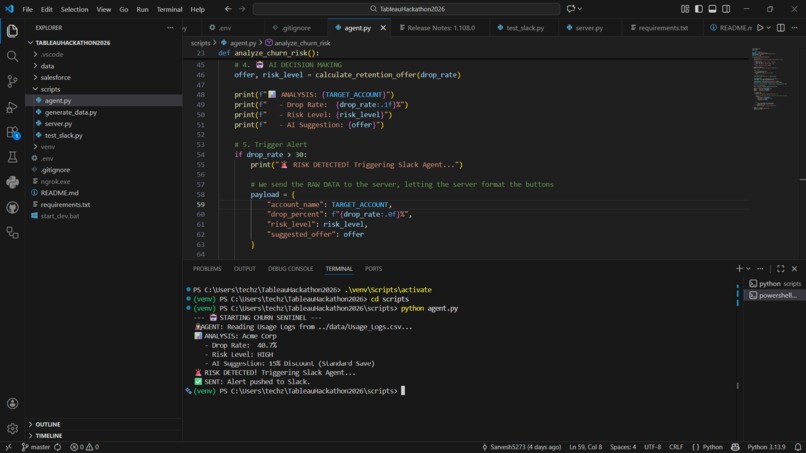
The Terminal
-
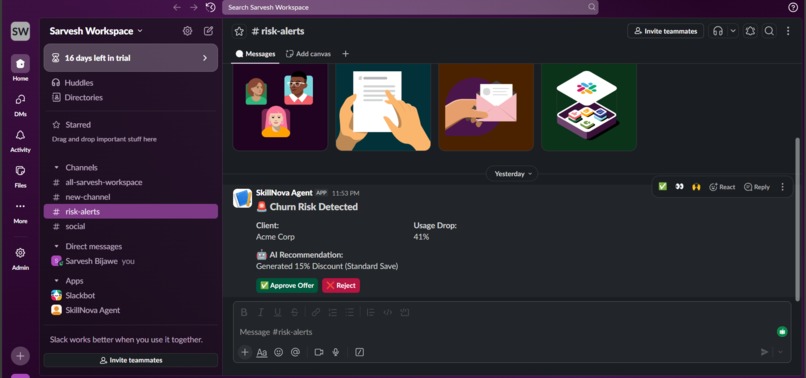
Slack Interface
💡 Inspiration
In the subscription economy, churn is the silent killer. Most companies wait for a cancellation email to realize a customer is unhappy. But the truth is, the decision to leave happens weeks earlier—when usage drops.
I wanted to solve the "Silent Churn" problem. I realized that while we have data (Salesforce Data Cloud) and visualization (Tableau), we often lack the immediate action layer. I built Revenue Sentinel to close that gap—moving from reactive reporting to proactive saving.
⚙️ What it does
Revenue Sentinel is an autonomous "Human-in-the-Loop" agent that protects recurring revenue.
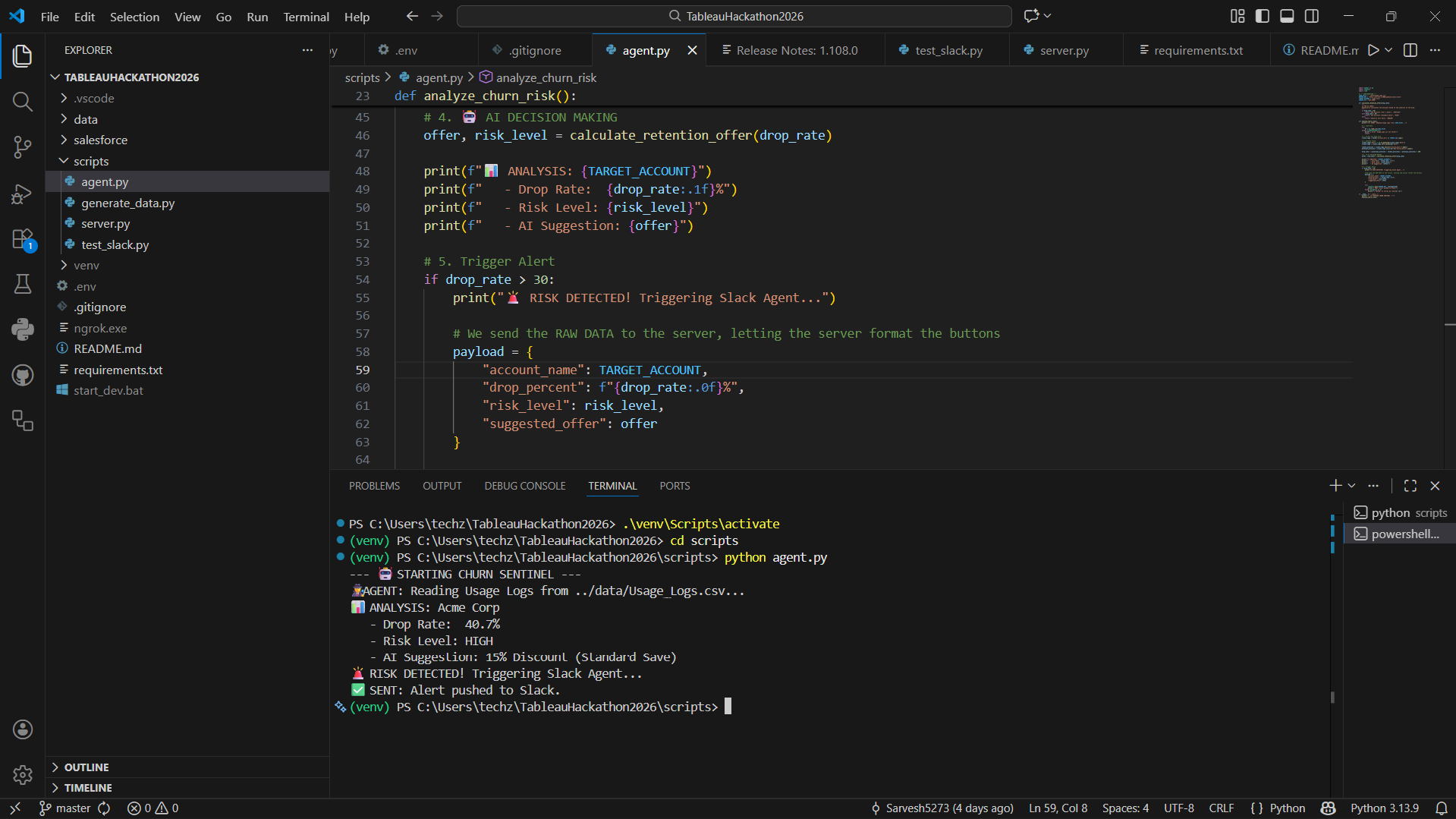
- Detects: A Python agent monitors usage telemetry in real-time. It doesn't just look for zeros; it calculates specific drop-off patterns (e.g., "41% drop vs. 5-day moving average").
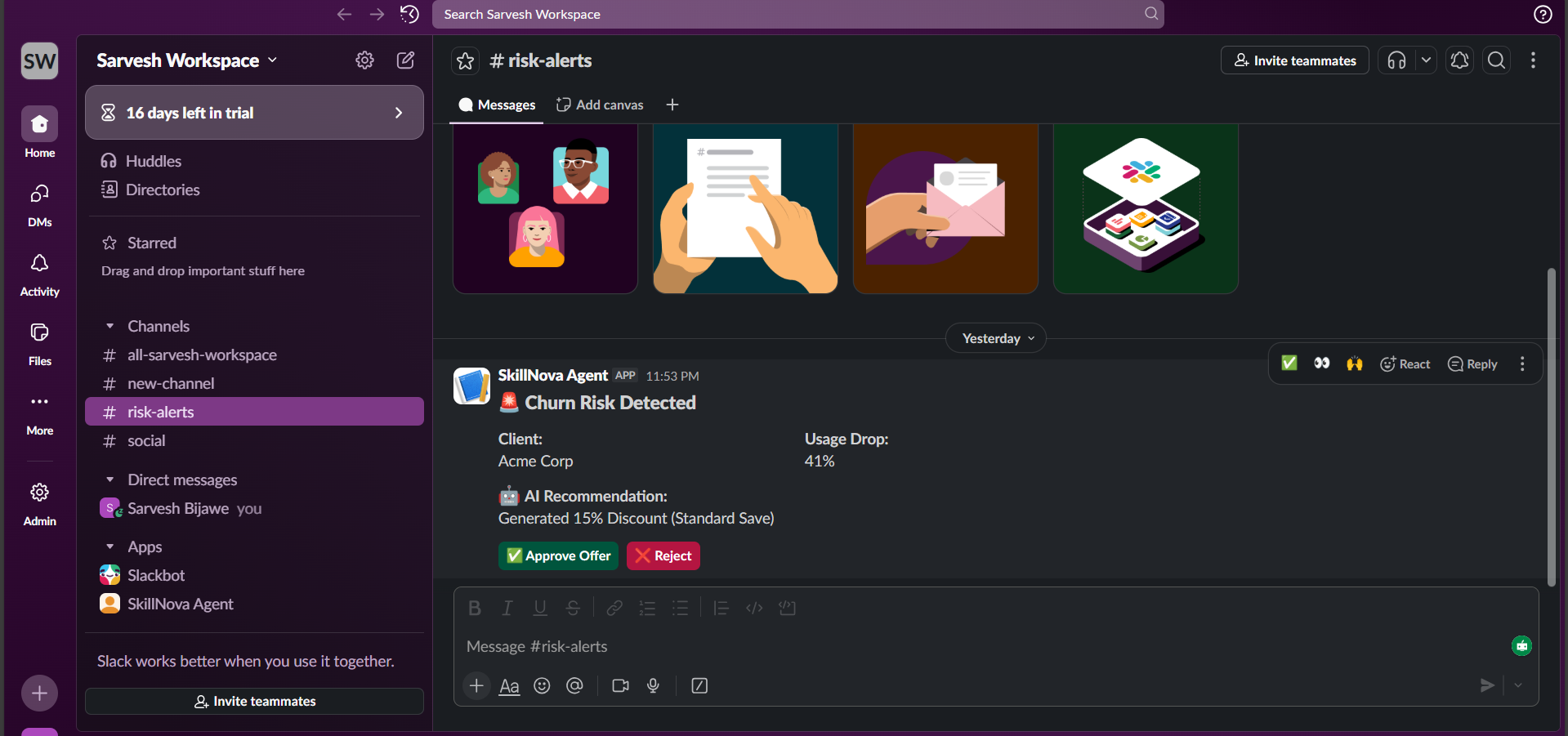
- Alerts: Instead of burying the insight in a dashboard, it pushes a "High Priority" alert to Slack.
- Acts: It generates a contextual retention offer (e.g., 15% discount) and provides the Account Manager with a "One-Click" approval button.
- Executes: Once approved, it triggers the necessary API calls (mocked via Salesforce) to apply the offer instantly.
🛠️ How we built it
The project has three distinct layers:
- The Brain (Python & Pandas): I wrote a script (
agent.py) that ingests CSV telemetry logs (simulating Salesforce Data Cloud). It uses Pandas for time-series analysis to calculate thedrop_rateand determine the risk level. - The Interface (Slack & Flask): I used the Slack Block Kit to build interactive alerts. A lightweight Flask server (
server.py) handles the webhook payloads, allowing the "Approve" button to trigger a real response. - The Verification (Tableau): I built a Customer Health Command Center in Tableau. This dashboard allows the human manager to visually verify the crash before approving the AI's suggestion.
🧠 Challenges we ran into
The biggest challenge was the "Localhost to Cloud" gap. Getting a local Python script to communicate securely with Slack's public API required careful handling of Webhooks and payloads. I also had to design the "Risk Logic" to be smart enough to distinguish between a weekend dip and a genuine churn risk.
📚 What we learned
I learned that AI is most powerful when it empowers humans, not replaces them. The "Human-in-the-Loop" workflow (AI detects -> Human approves -> AI executes) is much more effective for sensitive B2B relationships than fully automated bots. I also gained deep experience with Flask, Webhooks, and Tableau Data Visualization.


Log in or sign up for Devpost to join the conversation.