-
-
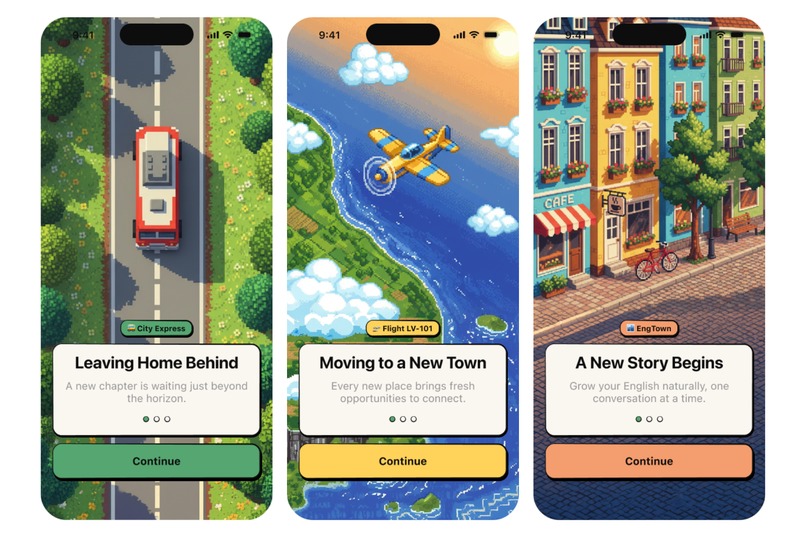
Onboarding
-
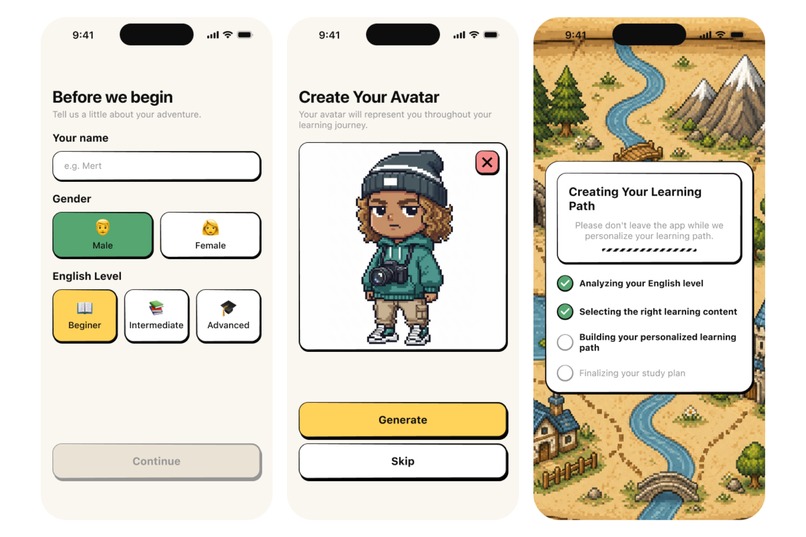
Setting information
-
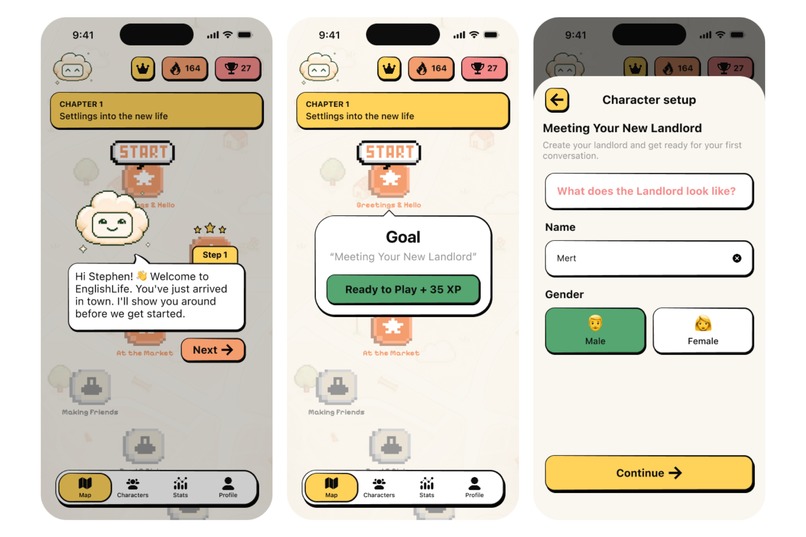
Study map, setup new conversation
-
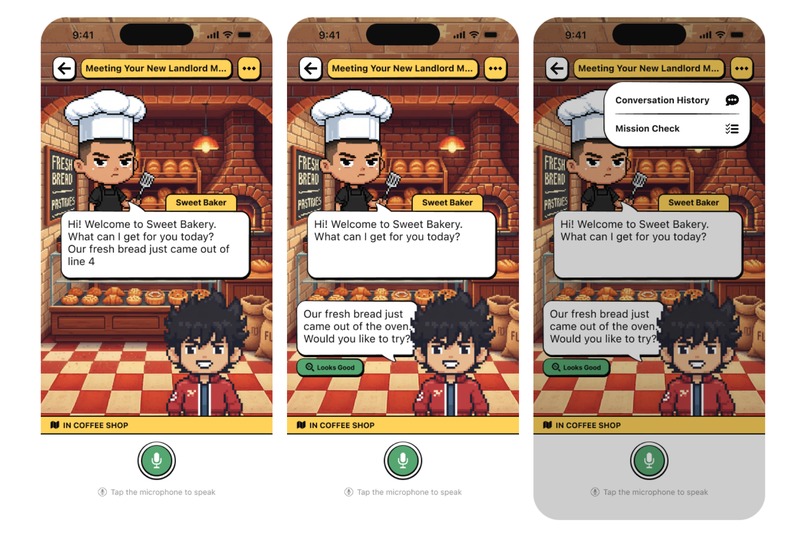
Practice detail
-
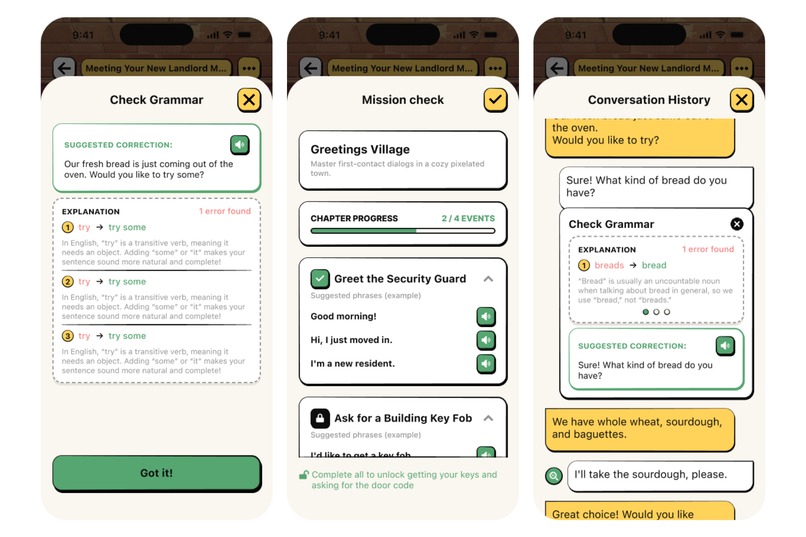
Mission check, Check grammar, History conversation
-
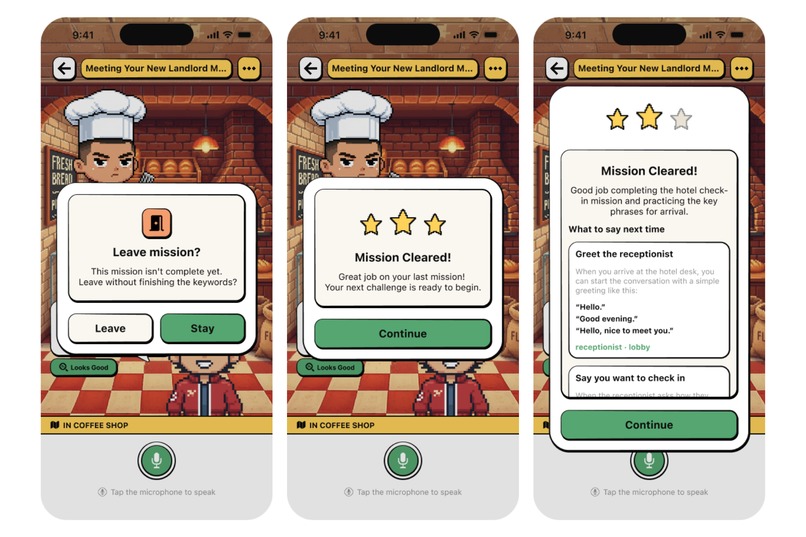
Rating and review
-
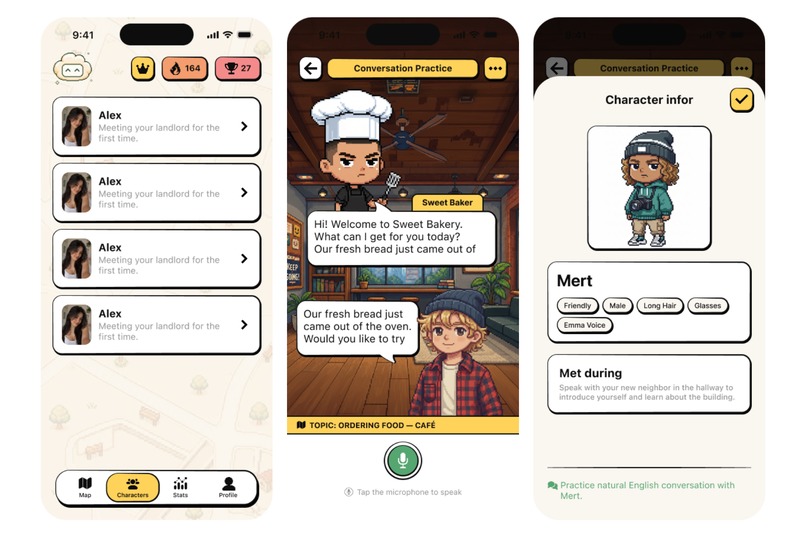
Manage character, speaking pratice
-
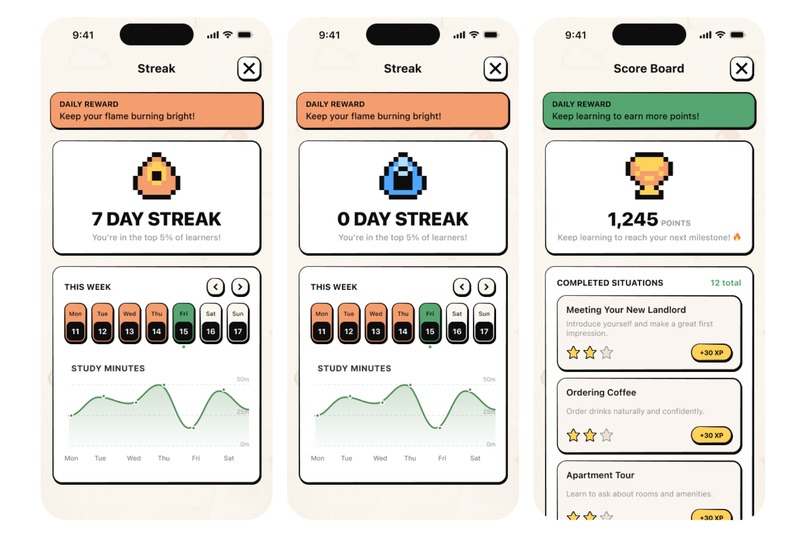
Streak and point
-
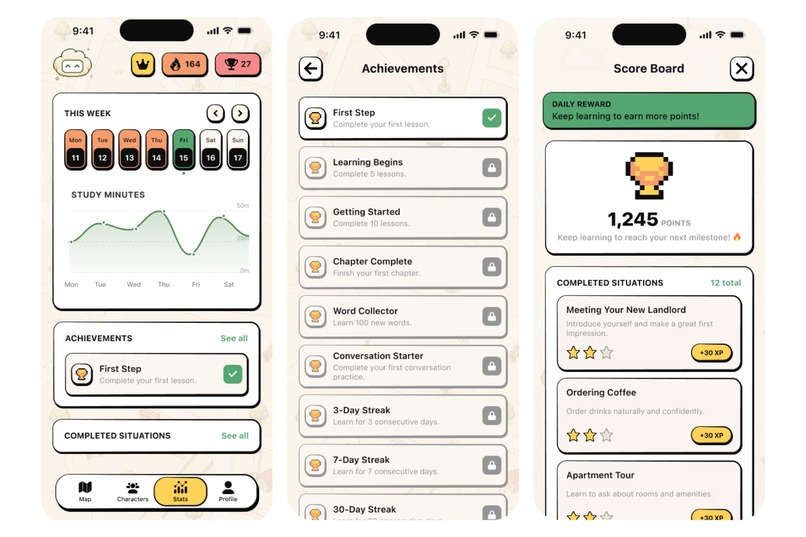
Dashboard, medal
-
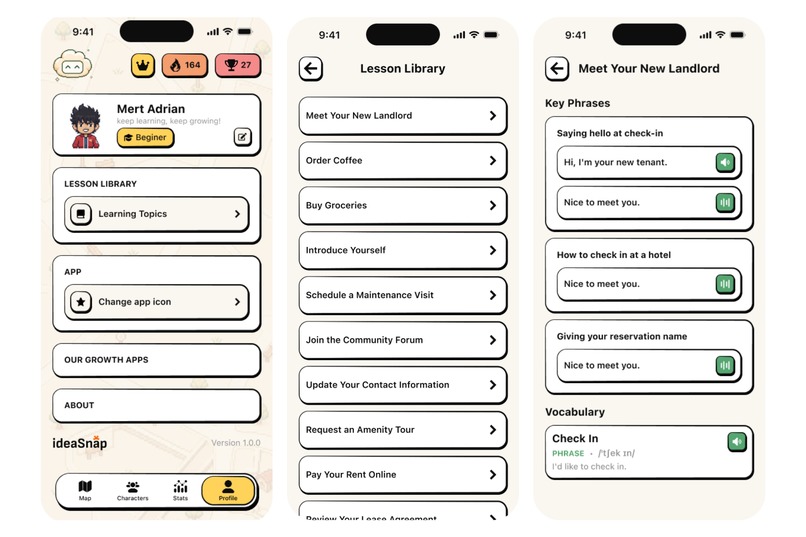
Setting and practice
Inspiration
Most of us learned English the same way: vocabulary lists, grammar drills, and a textbook dialogue about ordering coffee that nobody ever actually has. We could pass the test, but the moment a real person spoke to us, we froze.
Then we noticed something. The people who got good at English fastest weren't the ones who studied hardest. They were the ones who moved. They moved to a new city, had to find an apartment, open a bank account, make friends at work, and argue politely with a landlord. They had no choice but to speak, and that pressure, plus a bit of curiosity about the people around them, did what years of classes couldn't.
We can't send everyone abroad. But we wondered if we could give them the next best thing: a small town that exists just for them, full of people who are waiting to talk.
What it does
EngLife is an English speaking game where you don't study a language. You start a new life in it.
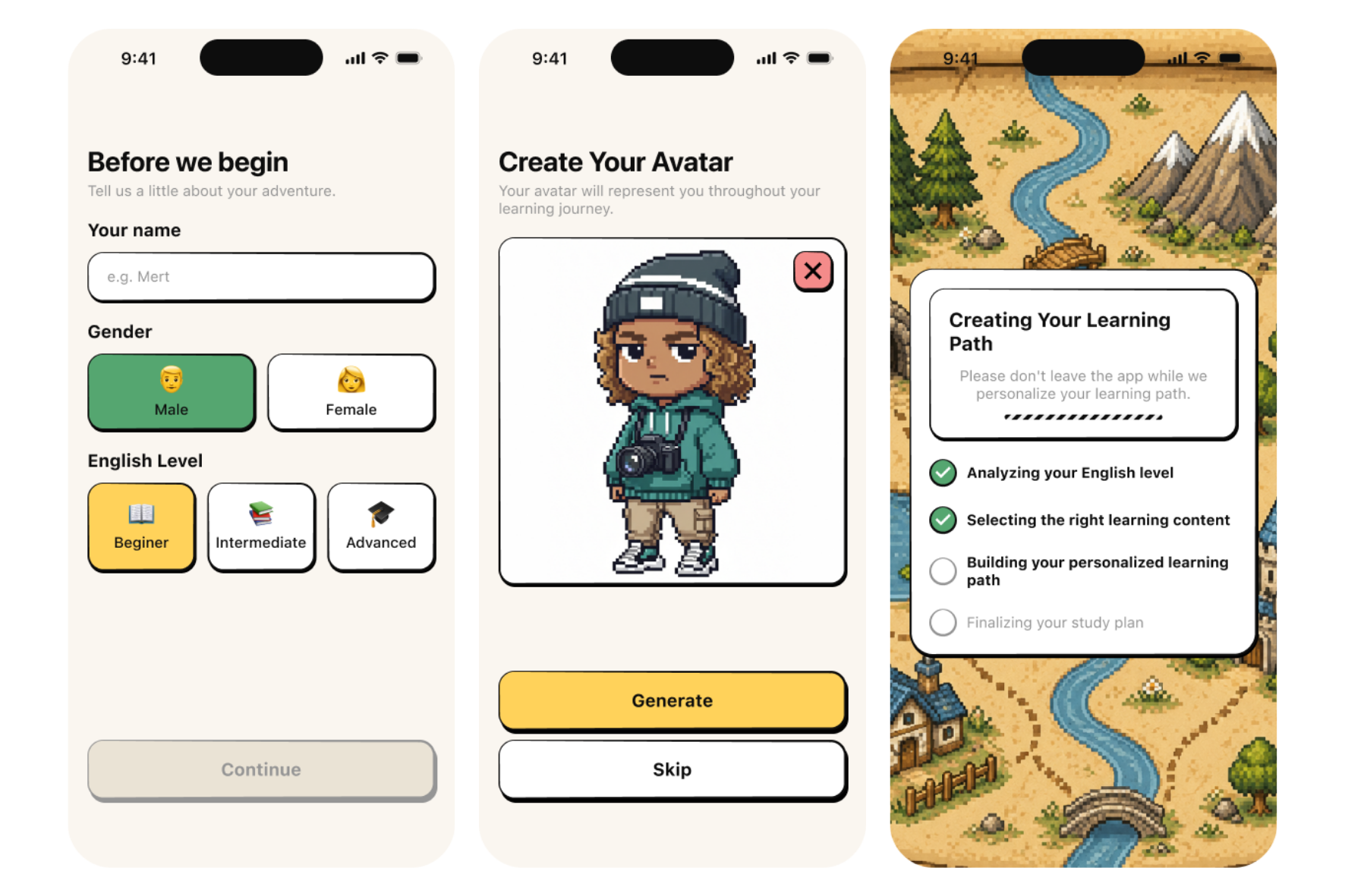
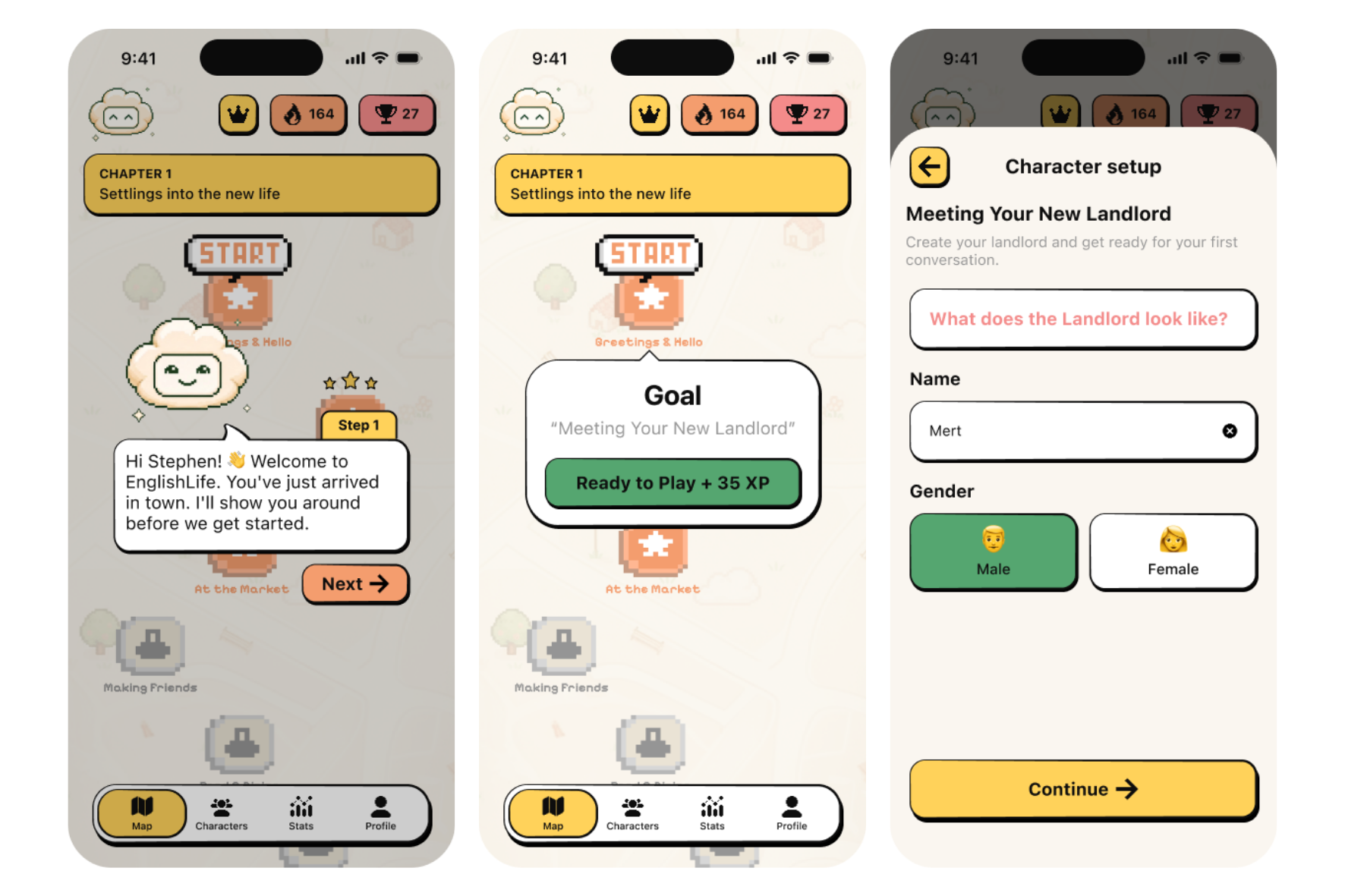
- You become the main character. You pick a name, and you can snap a selfie to become a 16-bit pixel-art version of yourself. From then on, that little avatar is you.
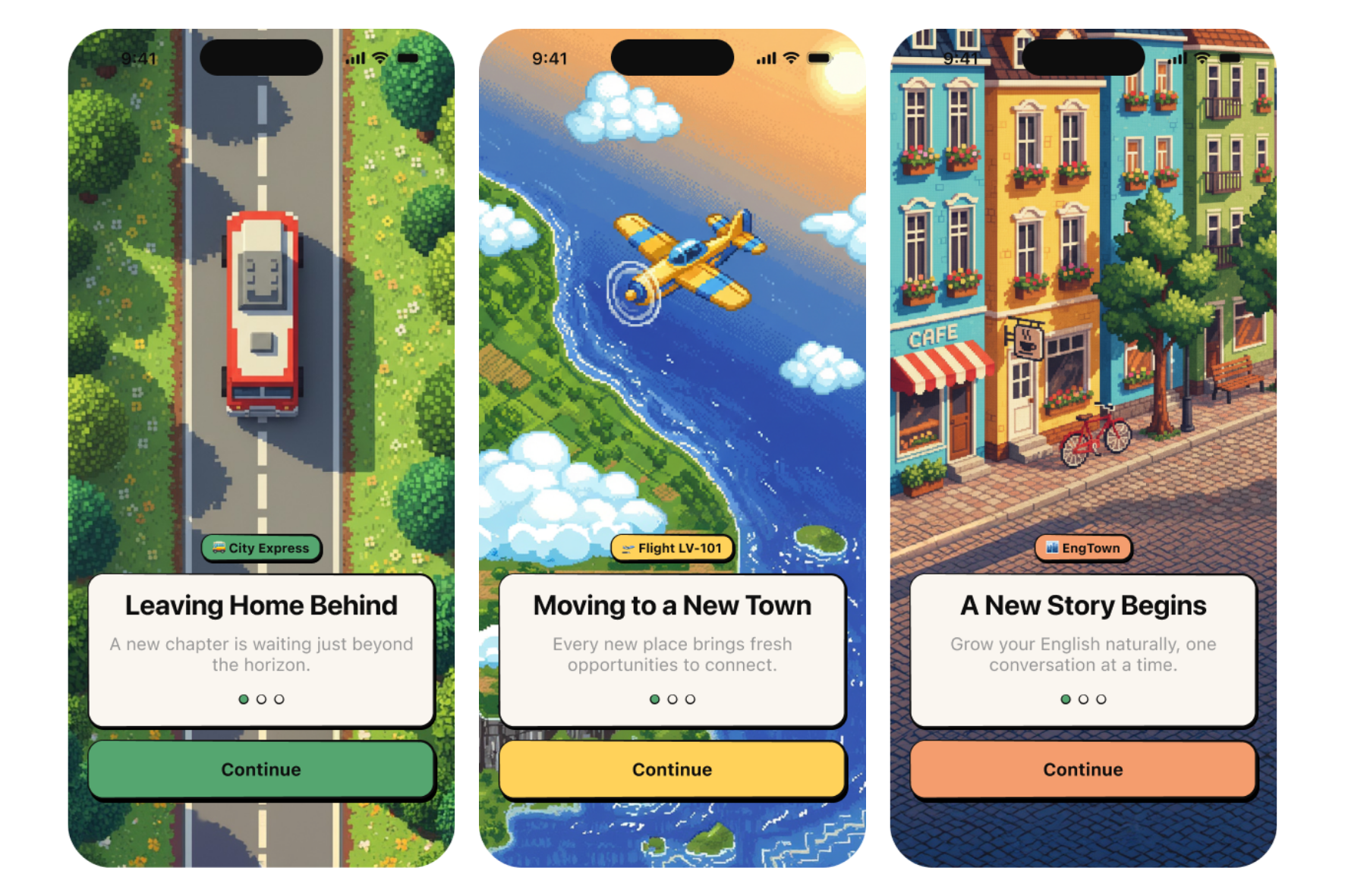
- You leave home behind. The story opens with you boarding a bus, then a flight (LV-101), and finally arriving in EngTown, a place where you don't know anyone yet.
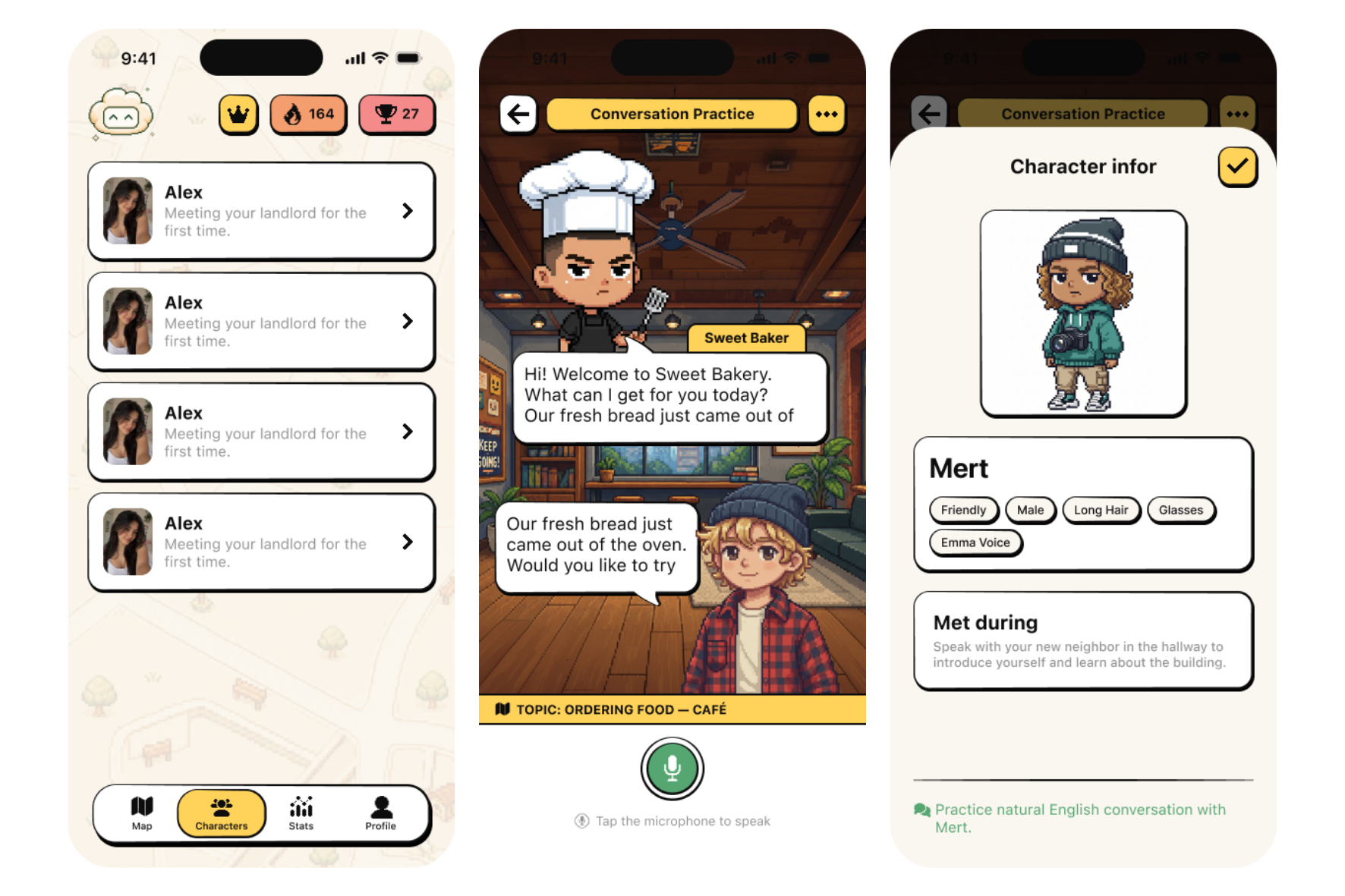
- Your journey is personal. Tell us your level and what you want to get out of it, and EngLife builds a study path shaped like a map. Each chapter is a new part of life in town, and each stop on the map is a real situation: checking into your apartment, ordering at the corner café, asking your neighbor for help, surviving your first day at work.
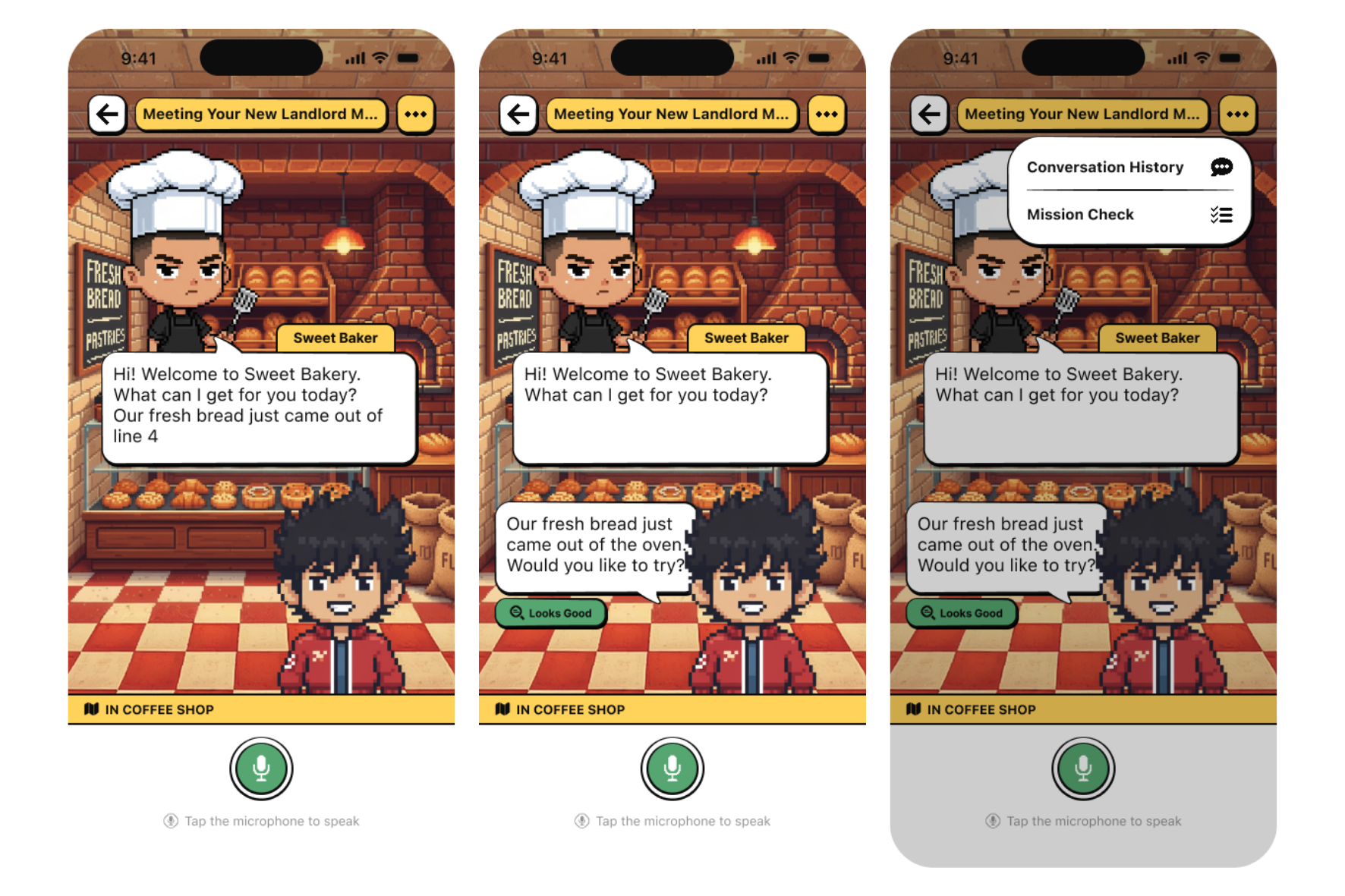
- You meet people, not flashcards. Every situation puts you face to face with a character: a grumpy landlord, a chatty barista, a new coworker who talks way too fast. You speak to them out loud, they answer in their own voice, and the conversation goes wherever you take it.
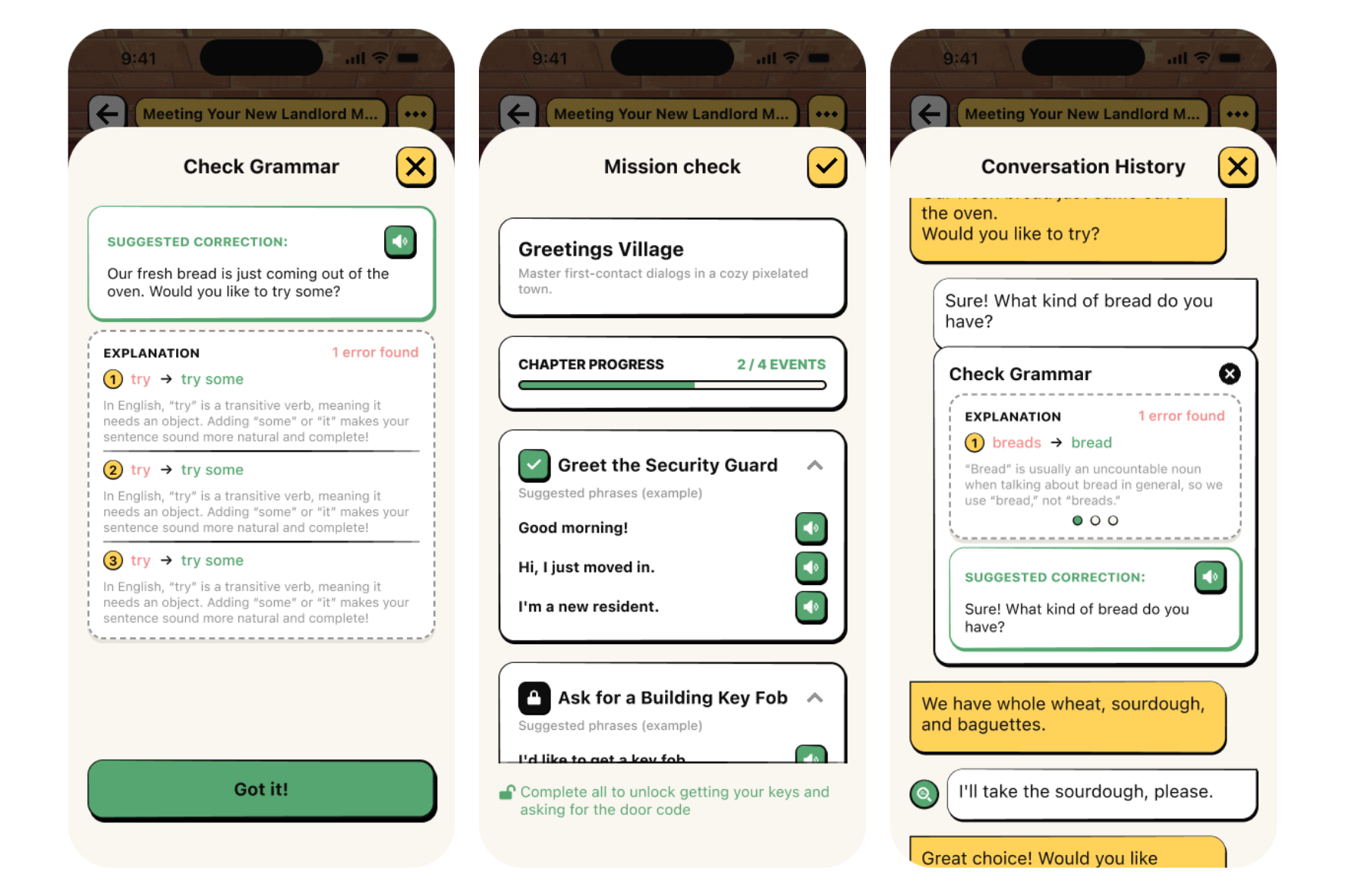
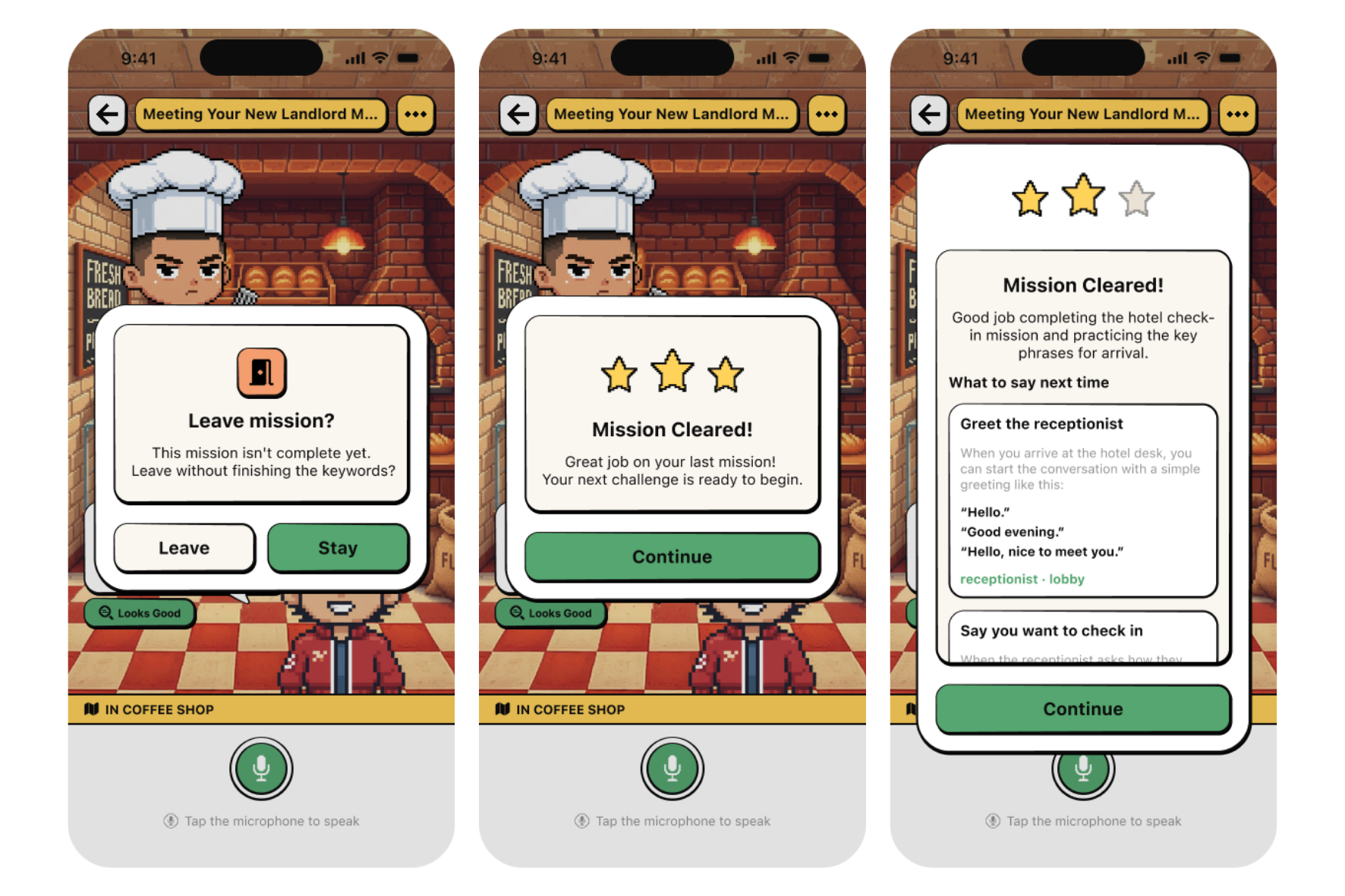
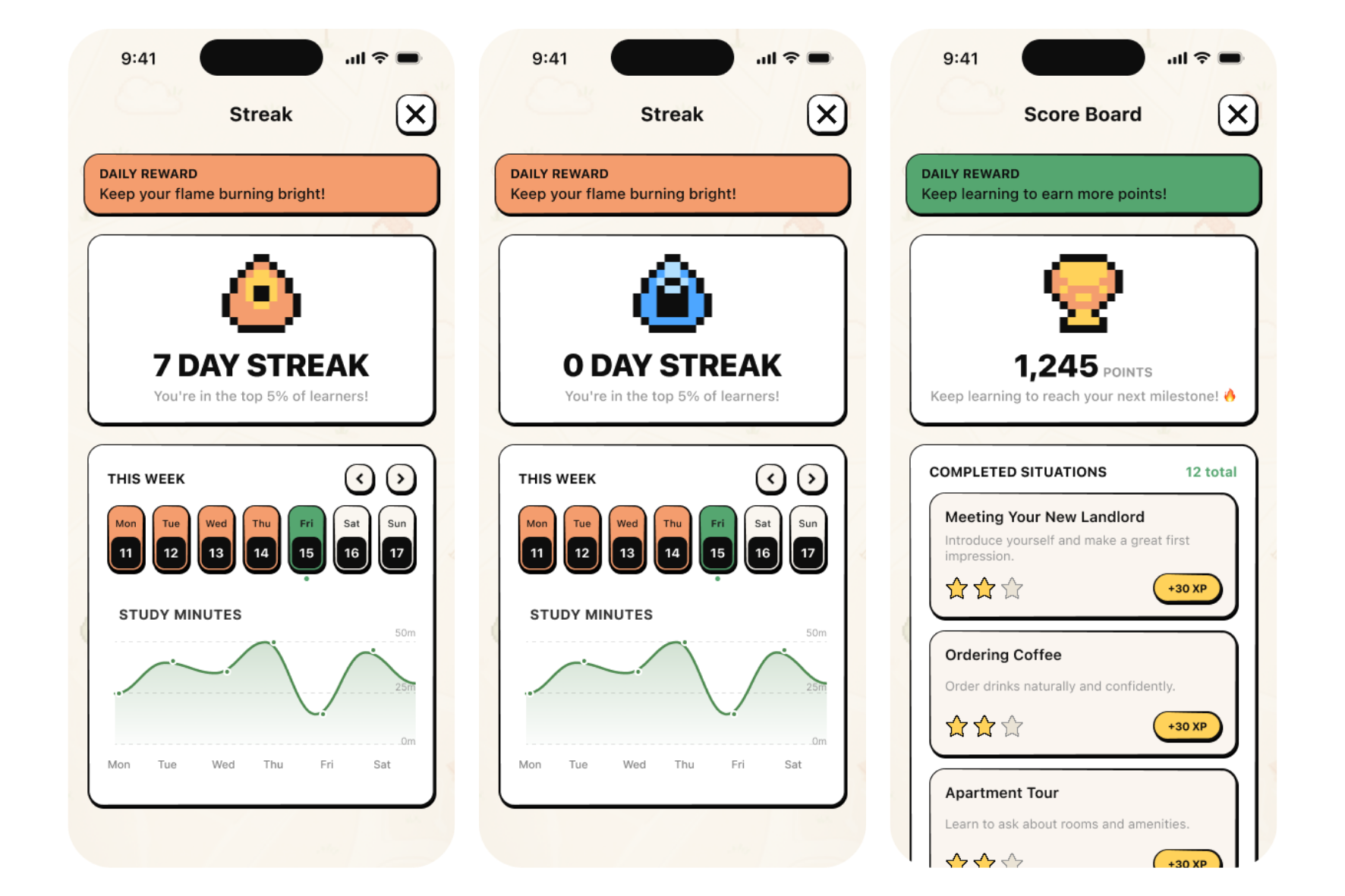
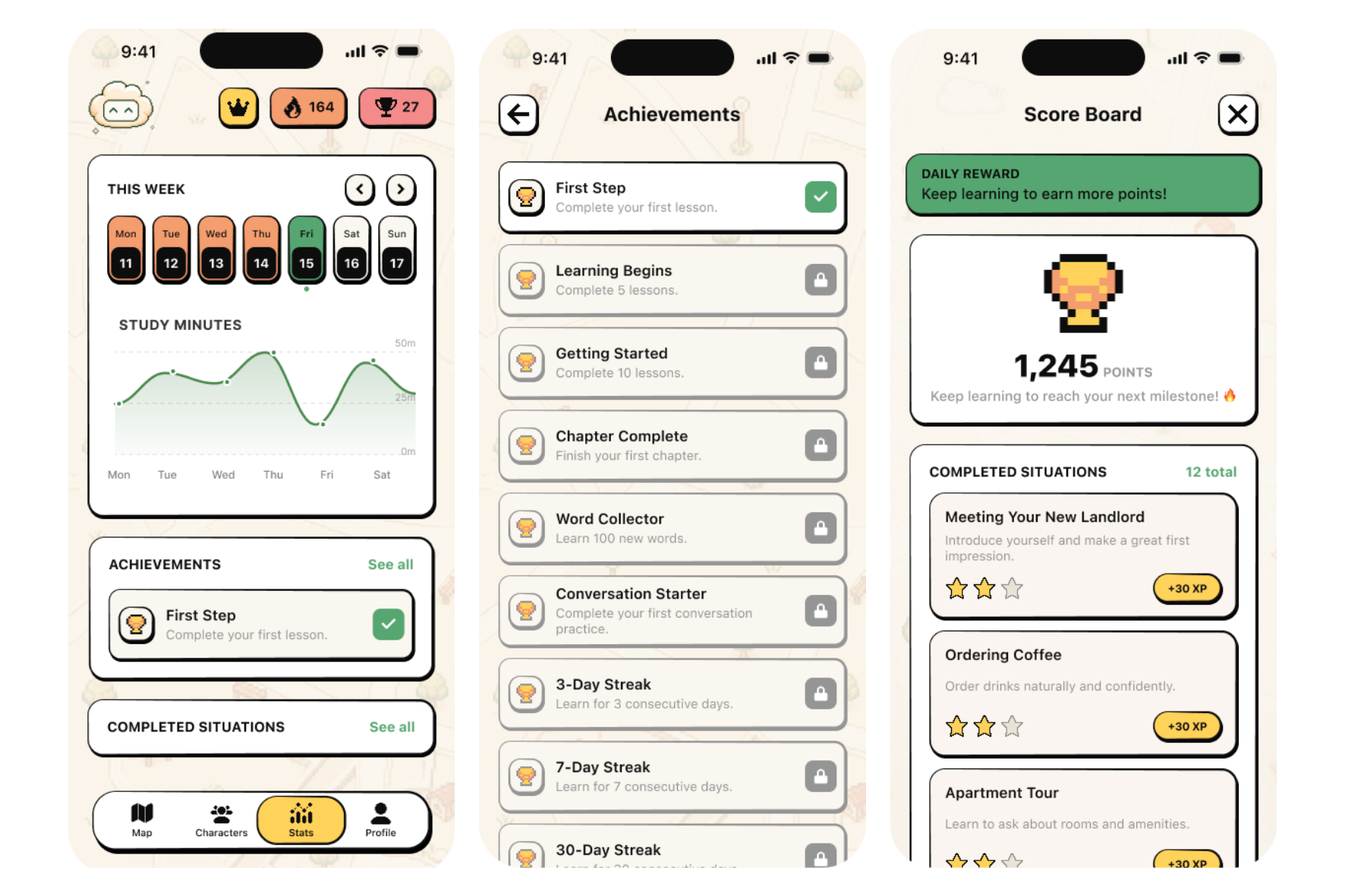
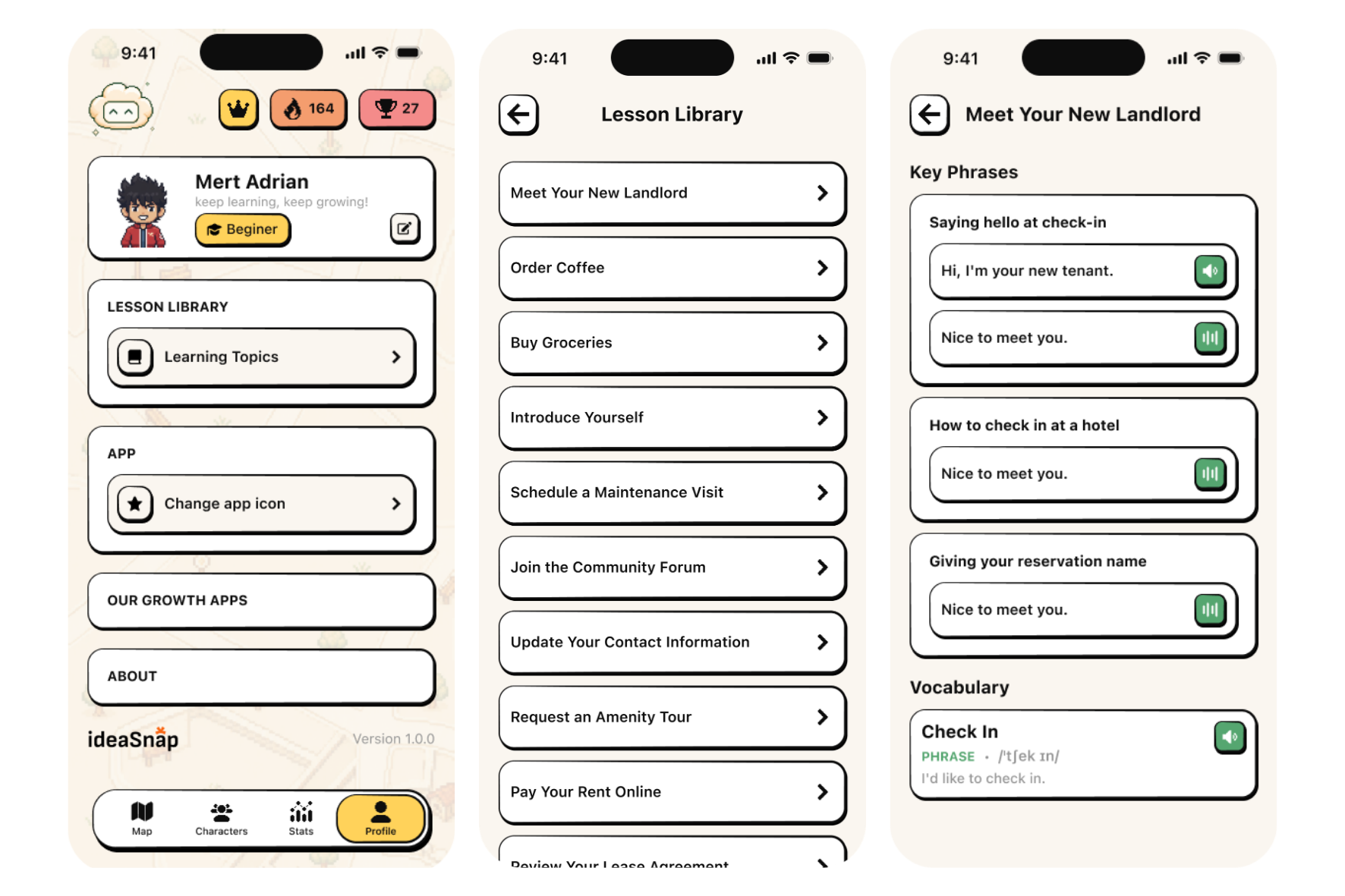
- You get better without feeling judged. After each conversation, EngLife gently points out grammar slips, suggests more natural ways to say things, and saves useful phrases into your personal vocabulary. XP and a scoreboard make progress something you can see.
The goal is simple: by the time you finish a chapter, you haven't just memorized phrases about renting an apartment. You've actually done it, in English, with someone who talked back.
How we built it
- iOS app in SwiftUI, with a warm, hand-crafted pixel-art look inspired by 16-bit SNES games. We wanted it to feel like a cozy RPG, not a classroom.
- Firebase for authentication, data, and Cloud Functions, which act as a secure bridge to our AI services so no API keys ever live in the app.
- OpenAI models power the characters' dialogue, study-path generation, grammar feedback, speech transcription, and the pixel-art avatars and town locations.
- Photo-to-avatar: we use image editing (not plain generation) so your pixel self still looks like you: same face shape, hairstyle, and vibe.
- Text-to-speech gives every character a voice, so listening practice happens naturally inside the story.
- Firebase Remote Config holds our prompts and model settings, so we can tune how characters behave, how the art looks, and which models we use without shipping a new build.
- RevenueCat handles subscriptions for premium chapters.
Challenges we ran into
- Making characters feel like people. Early versions of our NPCs were polite, helpful, and incredibly boring. It took a lot of prompt iteration to give each one a personality, a goal in the scene, and just enough friction to make you work for the conversation, without making beginners feel lost.
- Keeping "you" recognizable in pixel art. Turning a selfie into a 16-bit character while keeping the person's identity (not just "a person with brown hair") was much harder than we expected. We rebuilt that pipeline several times.
- One consistent art style. Avatars, characters, and backgrounds are all generated, and getting them to look like they belong to the same game meant a lot of careful style direction.
- Voice latency. Speaking is only fun if the other person answers quickly. We spent real time trimming the round trip from your voice to transcription, to reply, to speech.
- Every screen, every device. Our iPhone app also runs on iPads, and small layout details like a button sitting slightly too low taught us more about safe areas than we ever wanted to know.
Accomplishments that we're proud of
- The first time a tester laughed at something a character said, then answered back without thinking about grammar. That was the moment it felt real.
- Seeing someone generate their own pixel avatar and say "wait, that's actually me."
- A study path that feels like a story you're living, not a syllabus you're getting through.
- A playful, game-like experience that still quietly gives solid feedback on grammar and vocabulary.
What we learned
- People don't practice speaking because they're afraid of sounding wrong in front of someone. A character in a game is a much safer first audience.
- Context beats repetition. A phrase you needed to get your apartment keys sticks far better than one you drilled ten times.
- Personality is a feature. The more human our characters felt, the longer people kept talking.
- Building with AI is mostly about constraints: telling the model what not to do matters as much as what to do.
What's next for EngLife: English Speaking Game
- More towns, more lives. New chapters and destinations: university life, a first job abroad, travelling, falling in love (in English, of course).
- Characters who remember you. Your neighbors will recall what you talked about last week, so relationships grow over time.
- Pronunciation coaching that listens closely and helps with specific sounds, not just words.
- Social play. Visit a friend's town, compare progress, or team up on shared scenes.
- More support languages, so learners anywhere can start their new life in English.
EngLife started with one question: what if learning English felt like moving somewhere new, minus the scary part? We think we're onto something, and we're just getting off the plane.

Log in or sign up for Devpost to join the conversation.