-
-
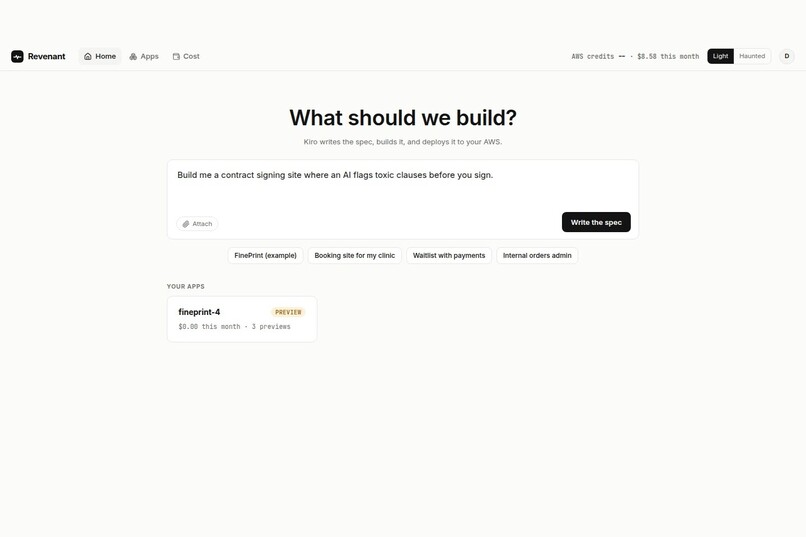
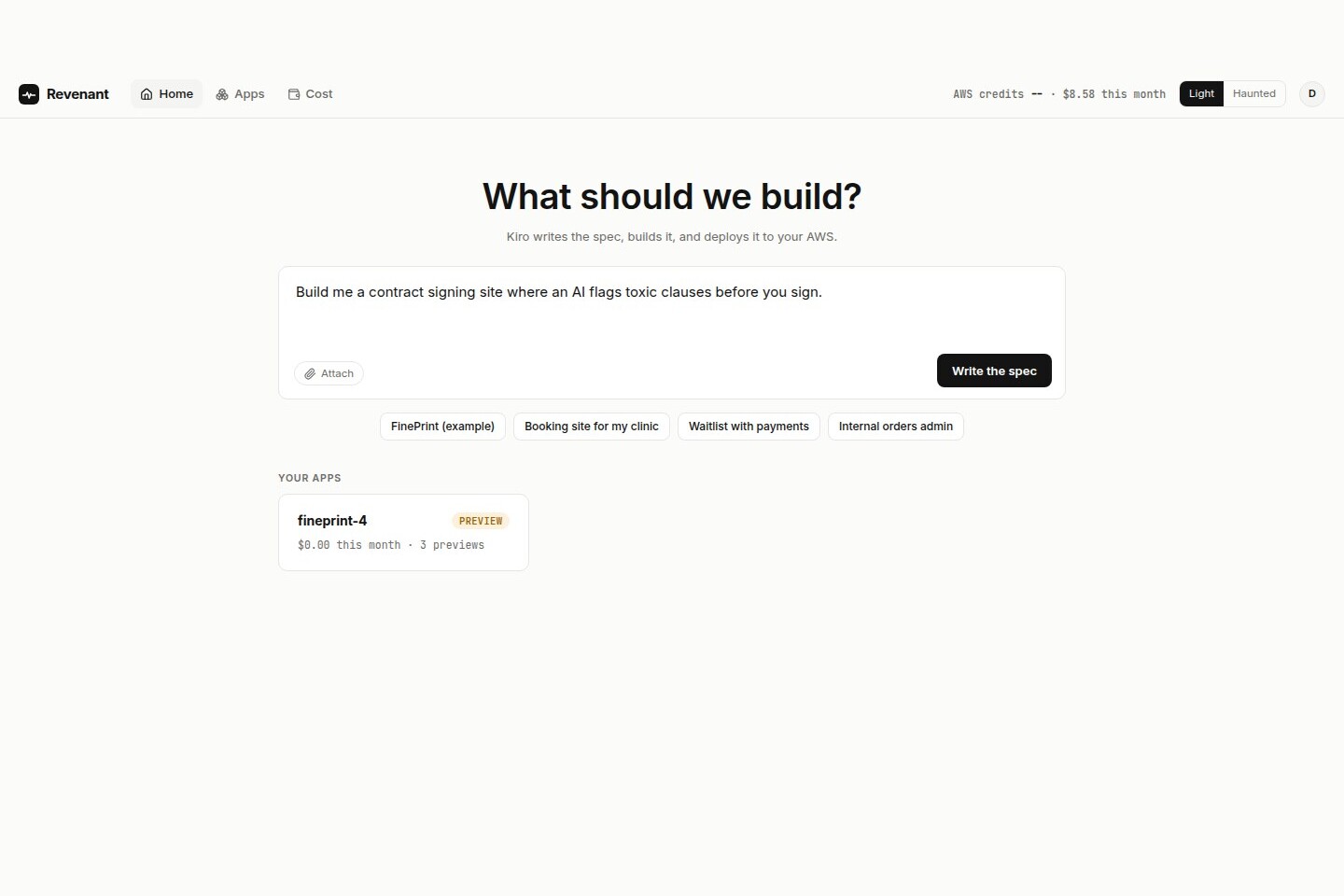
Ask for an app in plain words. Revenant runs in your own AWS account.
-
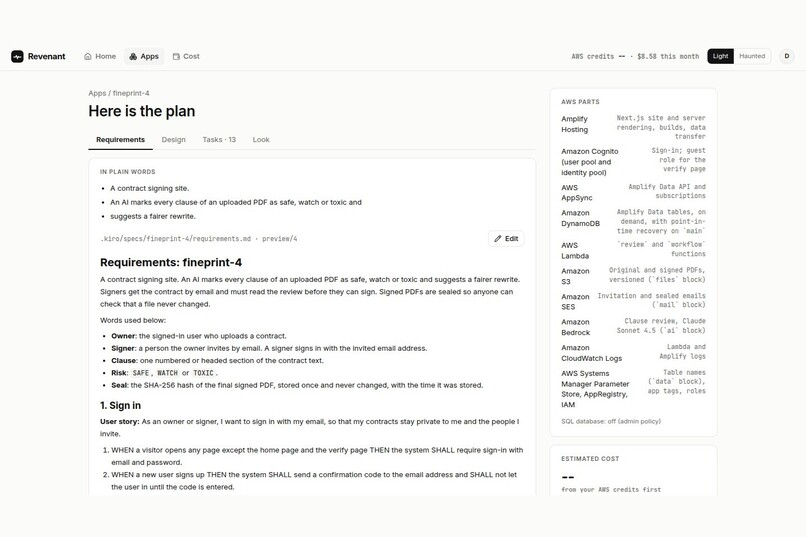
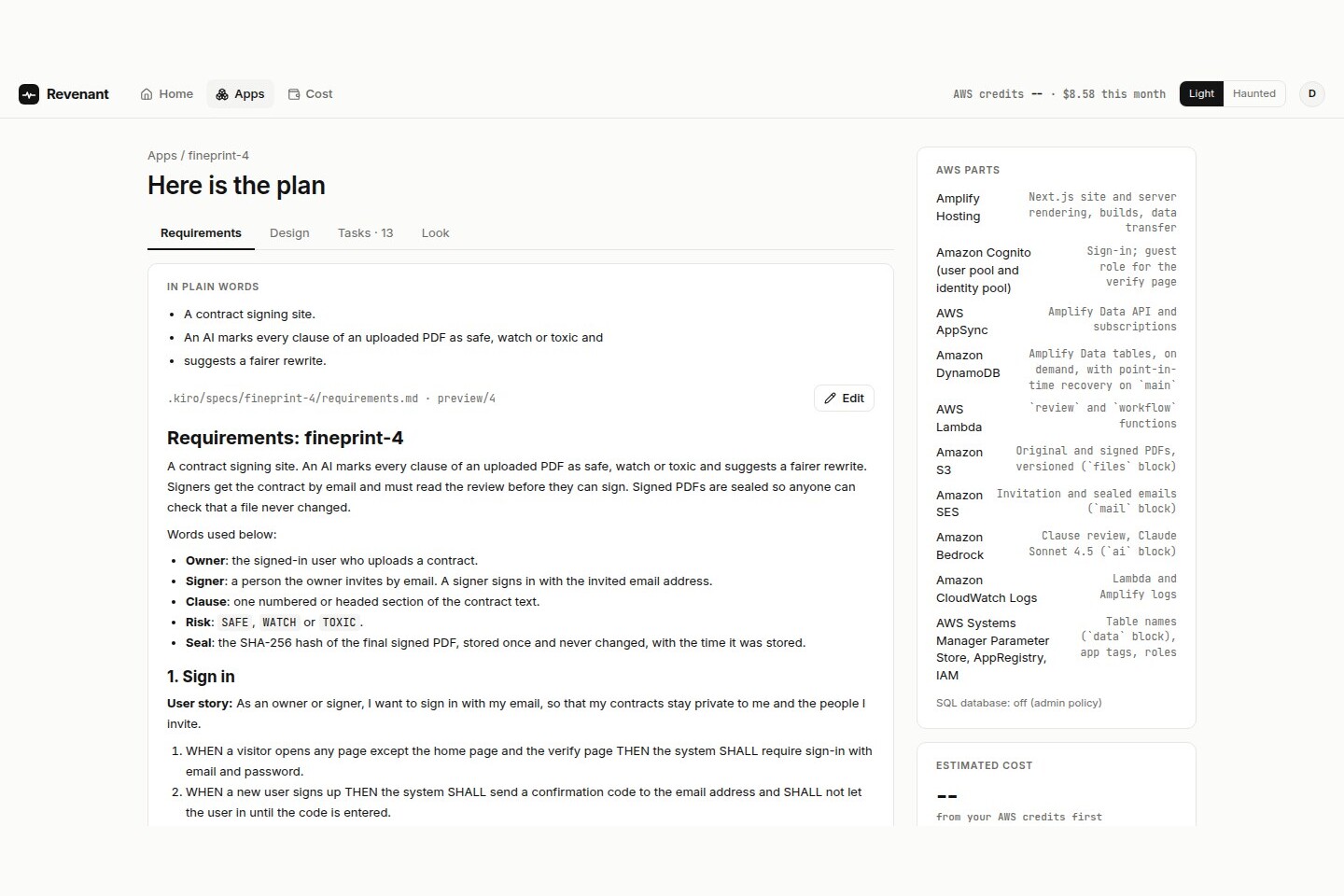
Kiro writes the spec first: requirements, design, tasks, AWS parts and the monthly cost.
-
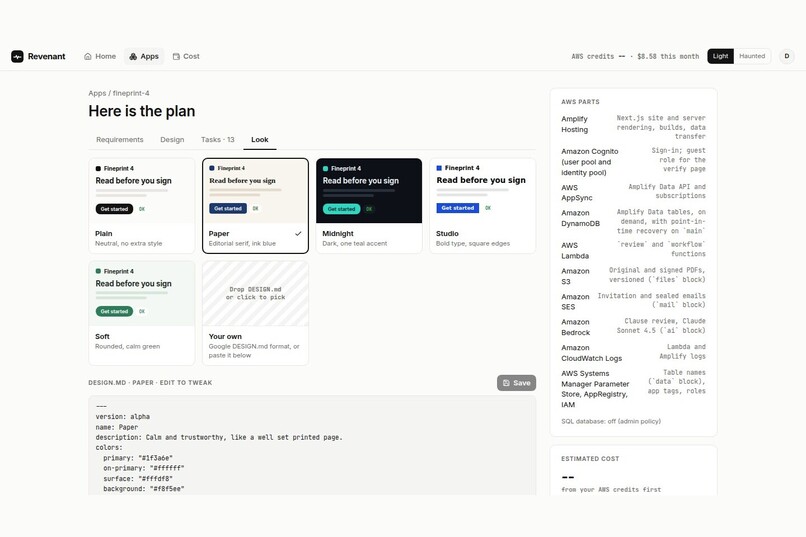
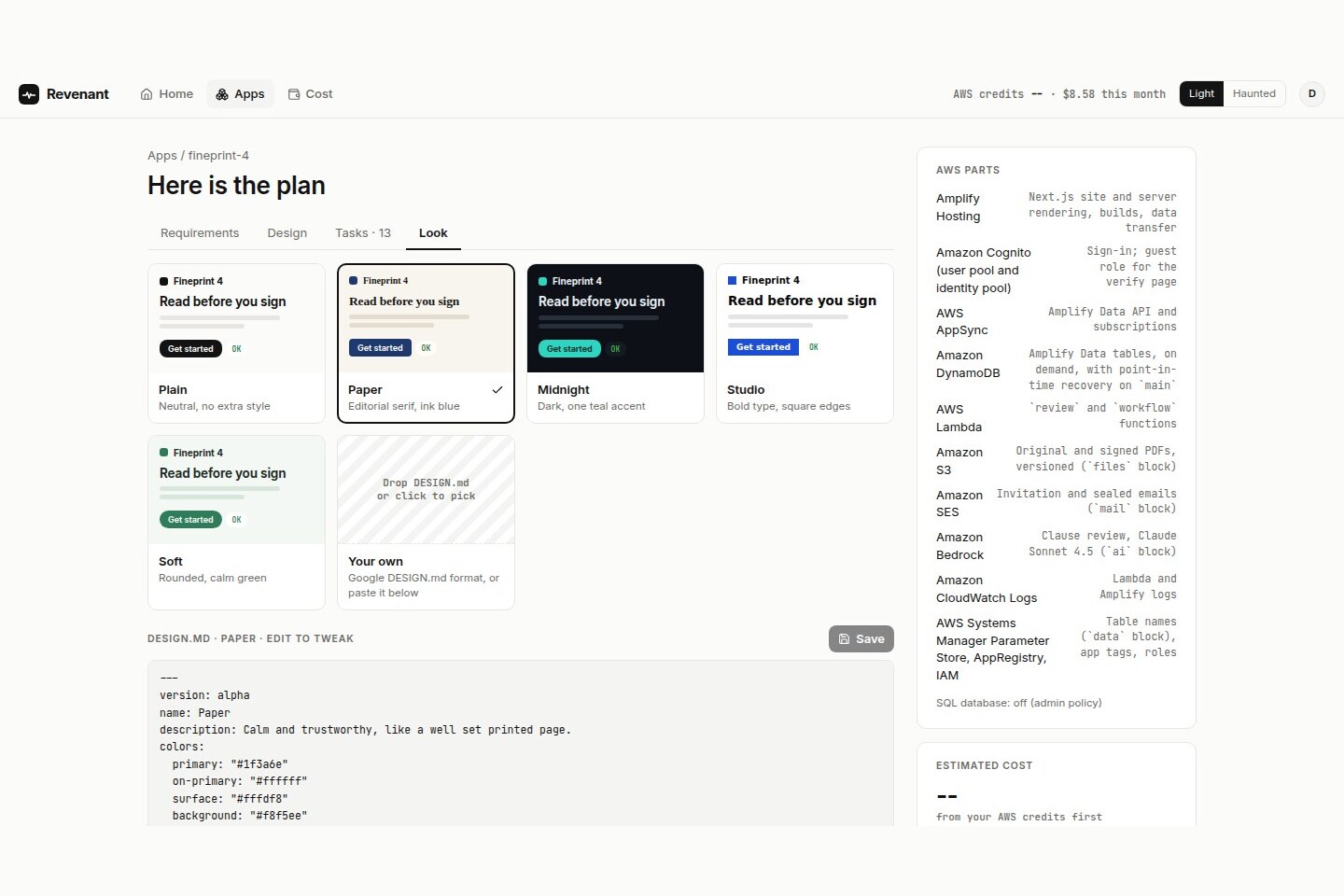
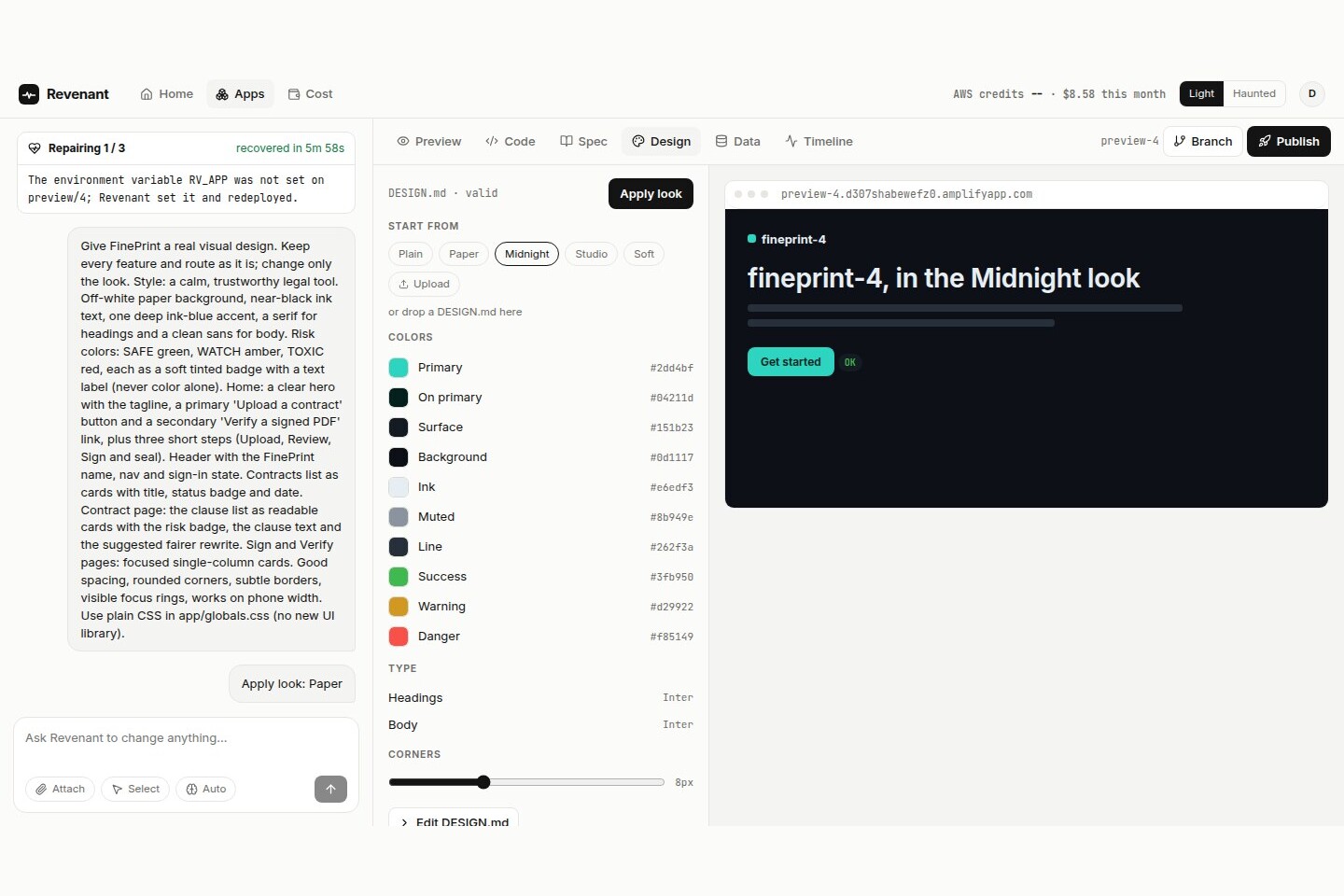
Pick a look before the build: a DESIGN.md that Kiro follows on every screen.
-
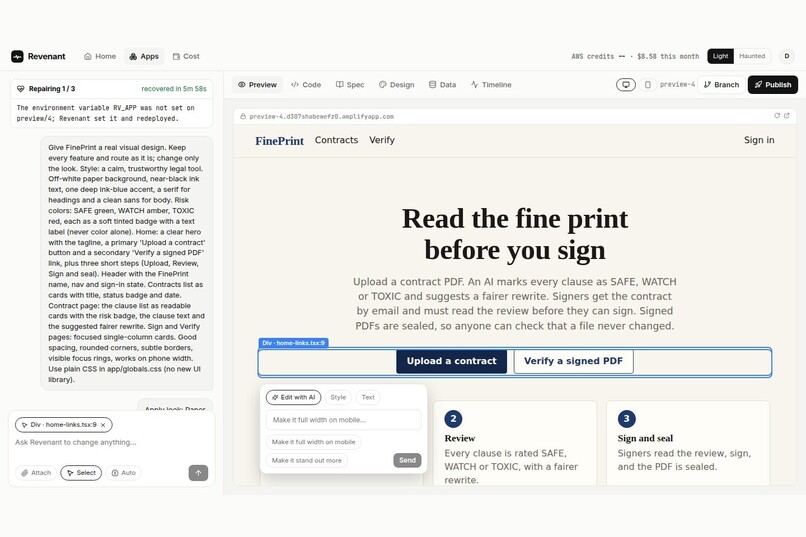
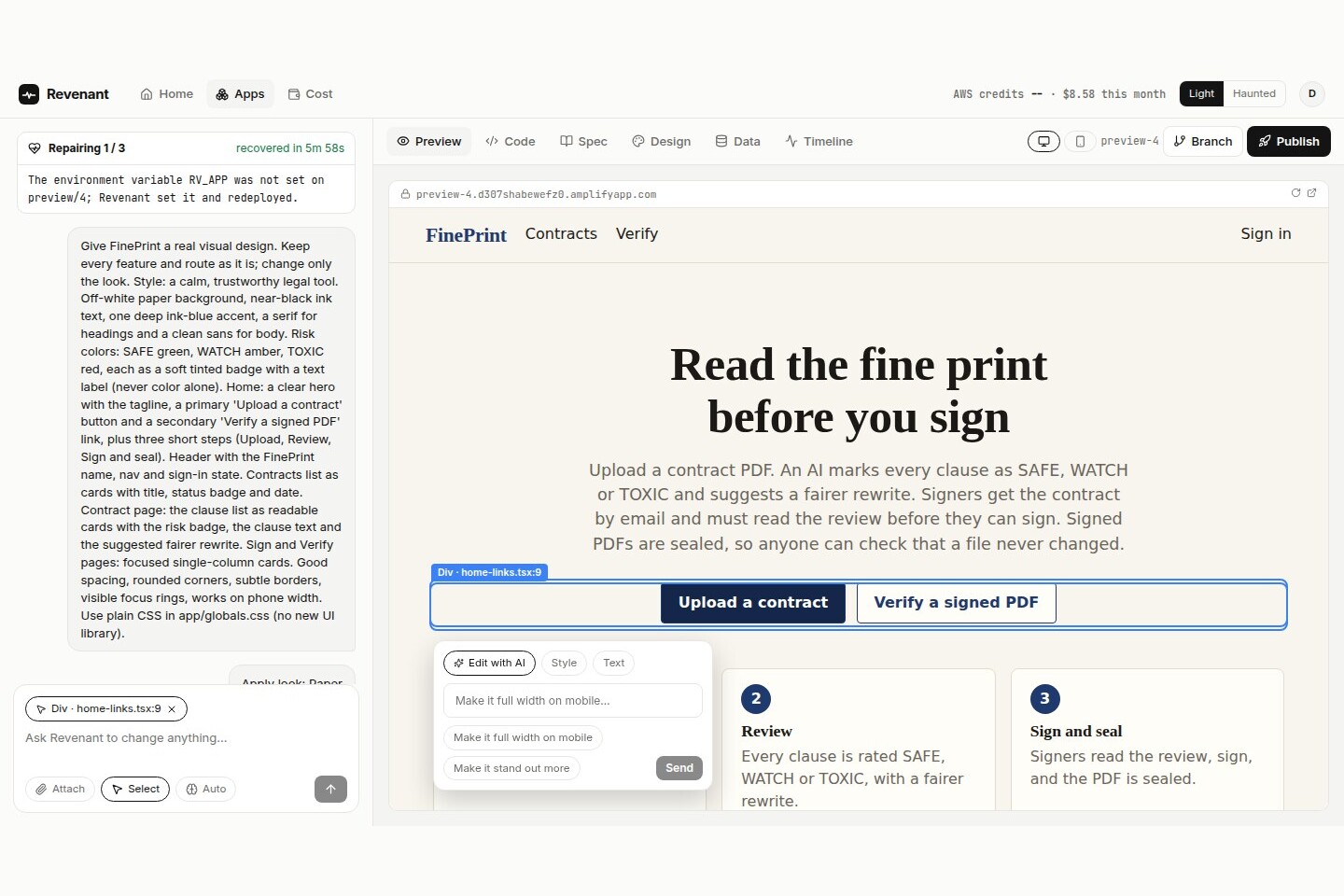
Studio: turn on Select, click anything in the preview, and see its file and line.
-
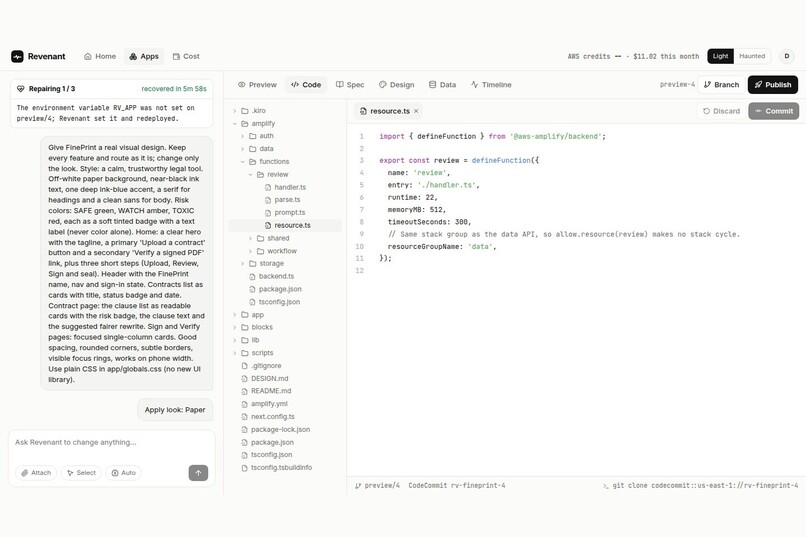
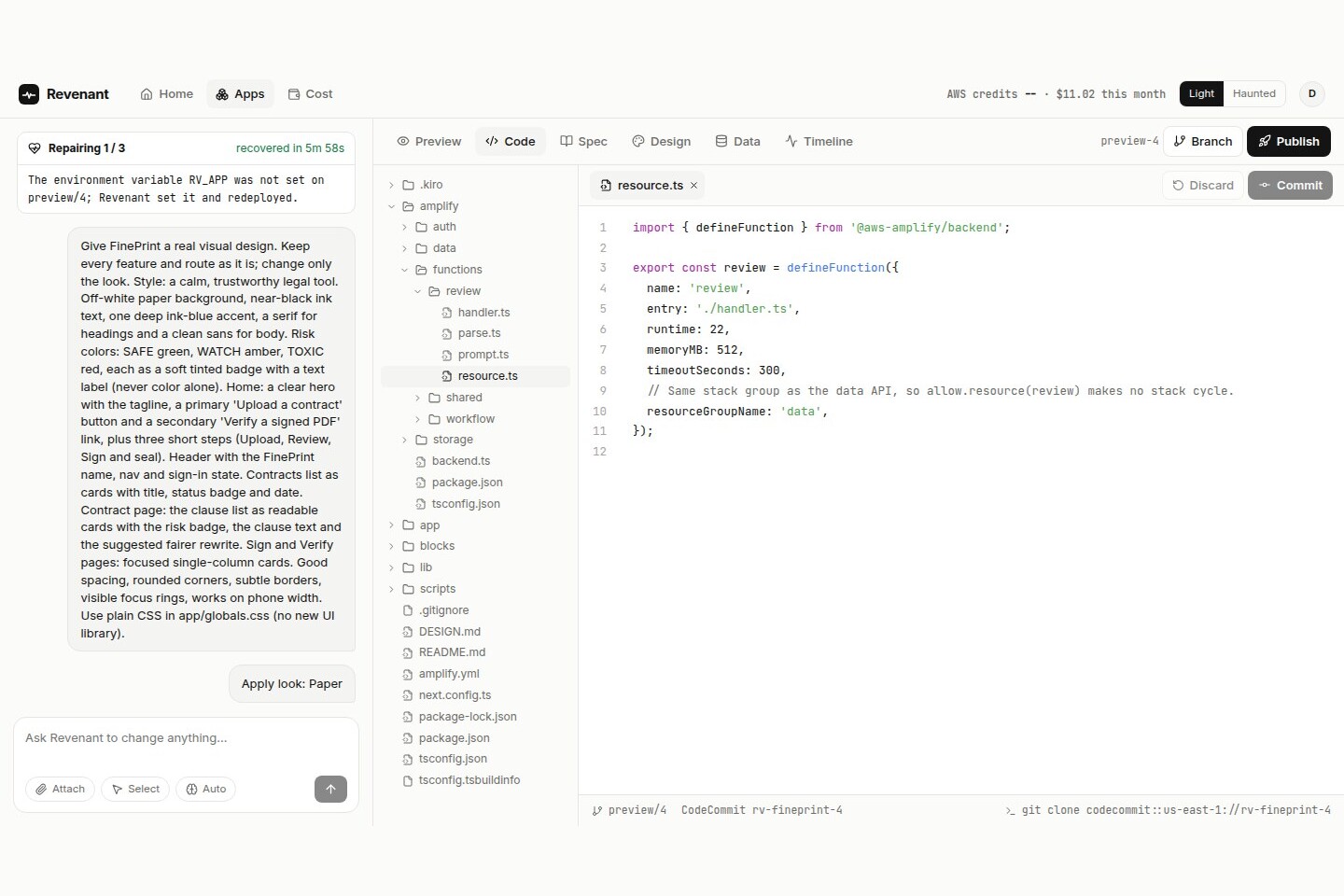
Edit the code yourself and commit. The next Kiro run starts from your commit.
-
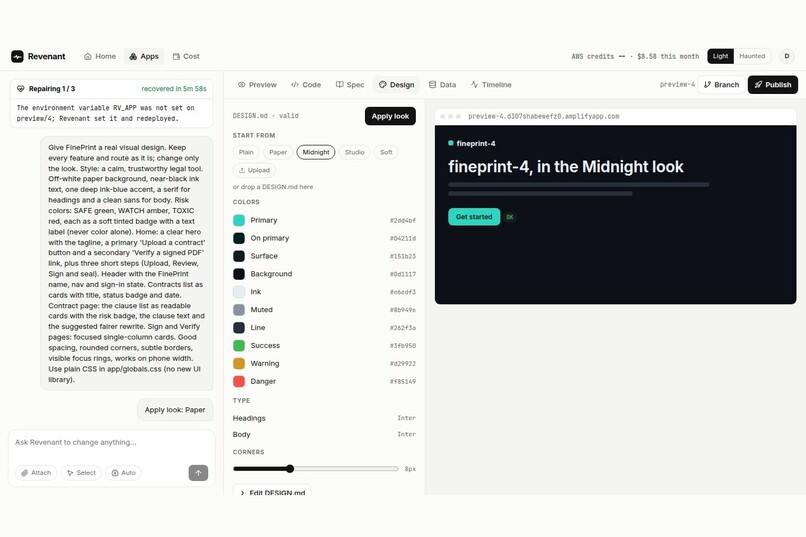
Edit the code yourself and commit. The next Kiro run starts from your commit.
-
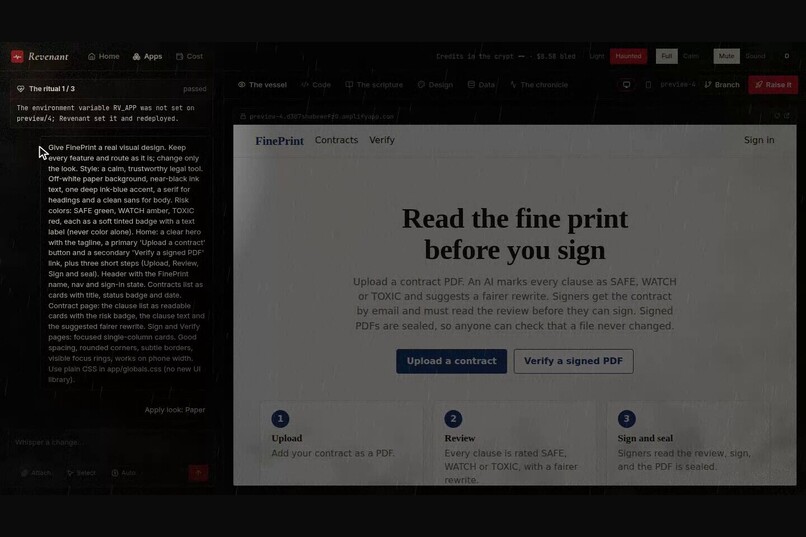
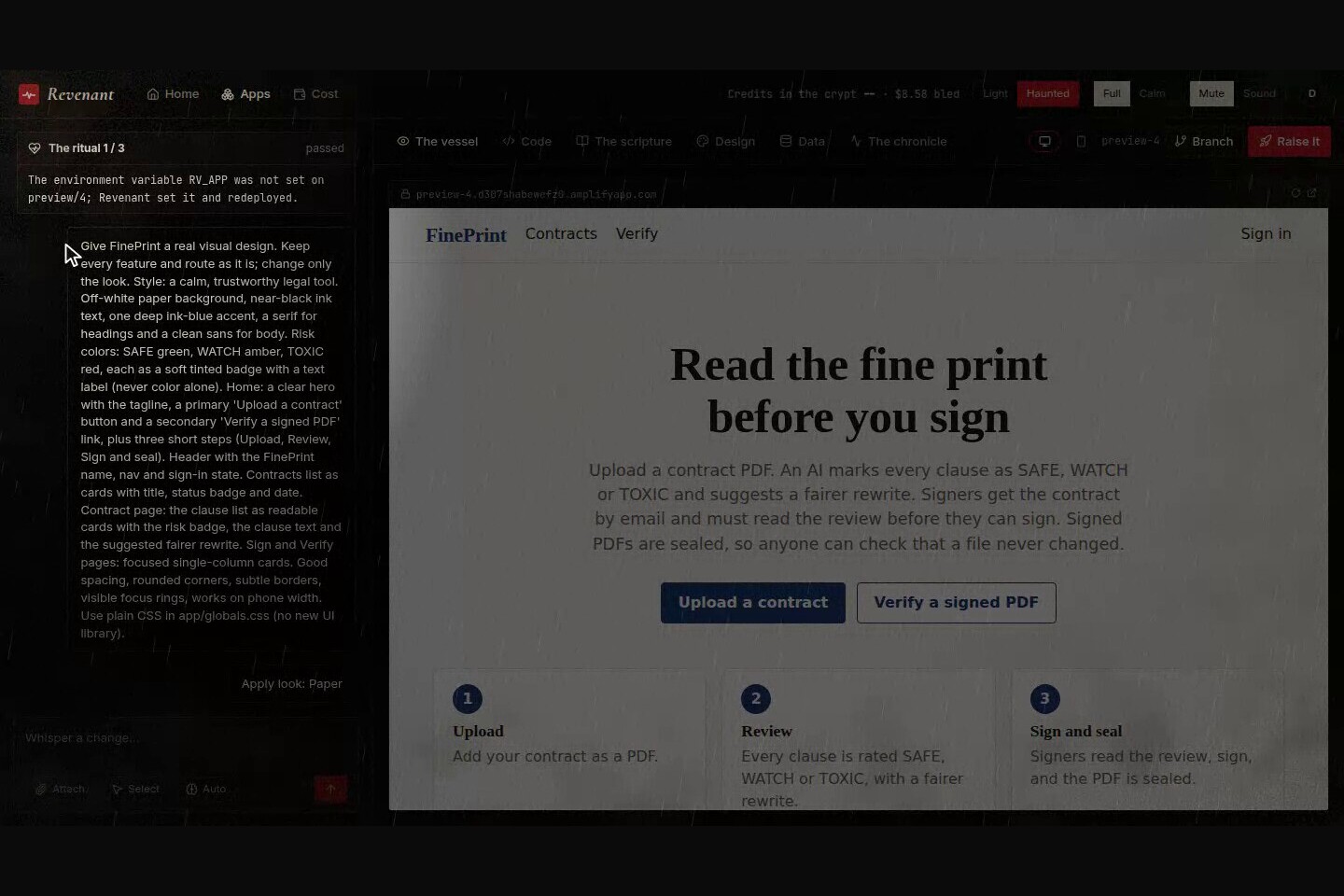
Haunted mode: the deploy died, and a tombstone covers the preview while Revenant repairs it.
-
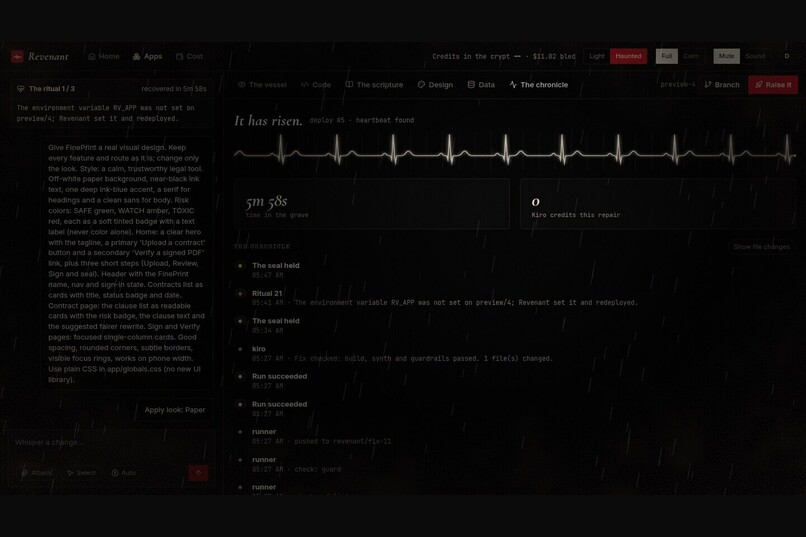
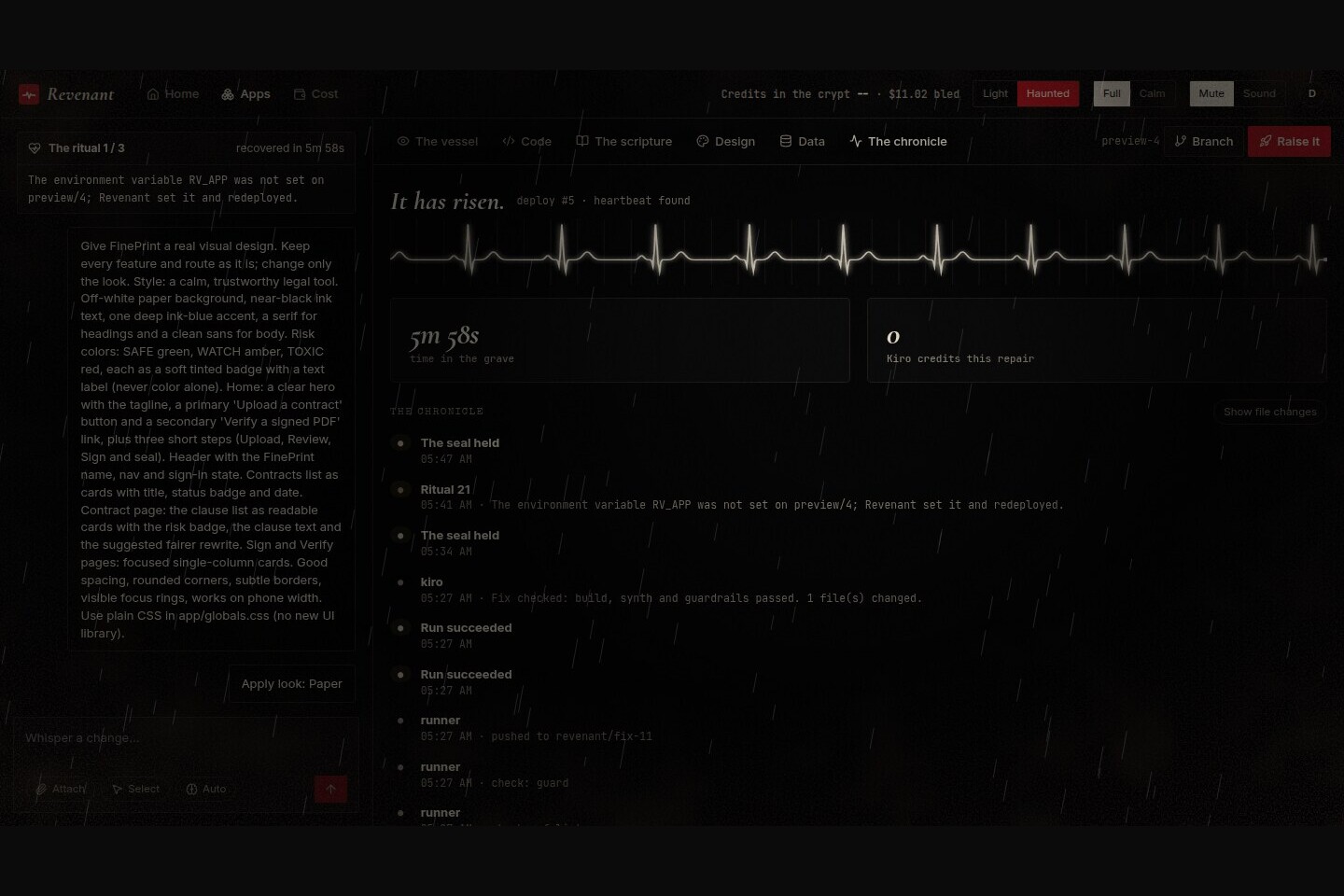
It has risen: 6m 9s to recover, 0 Kiro credits, nobody touched it.
-
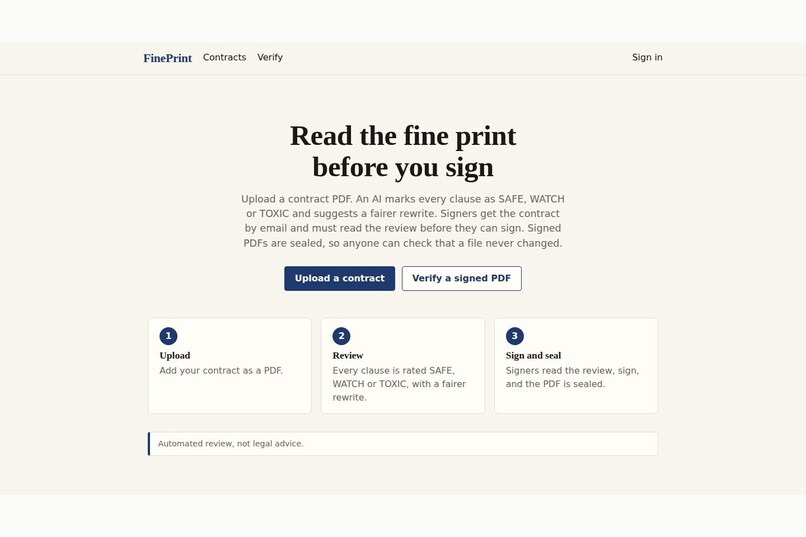
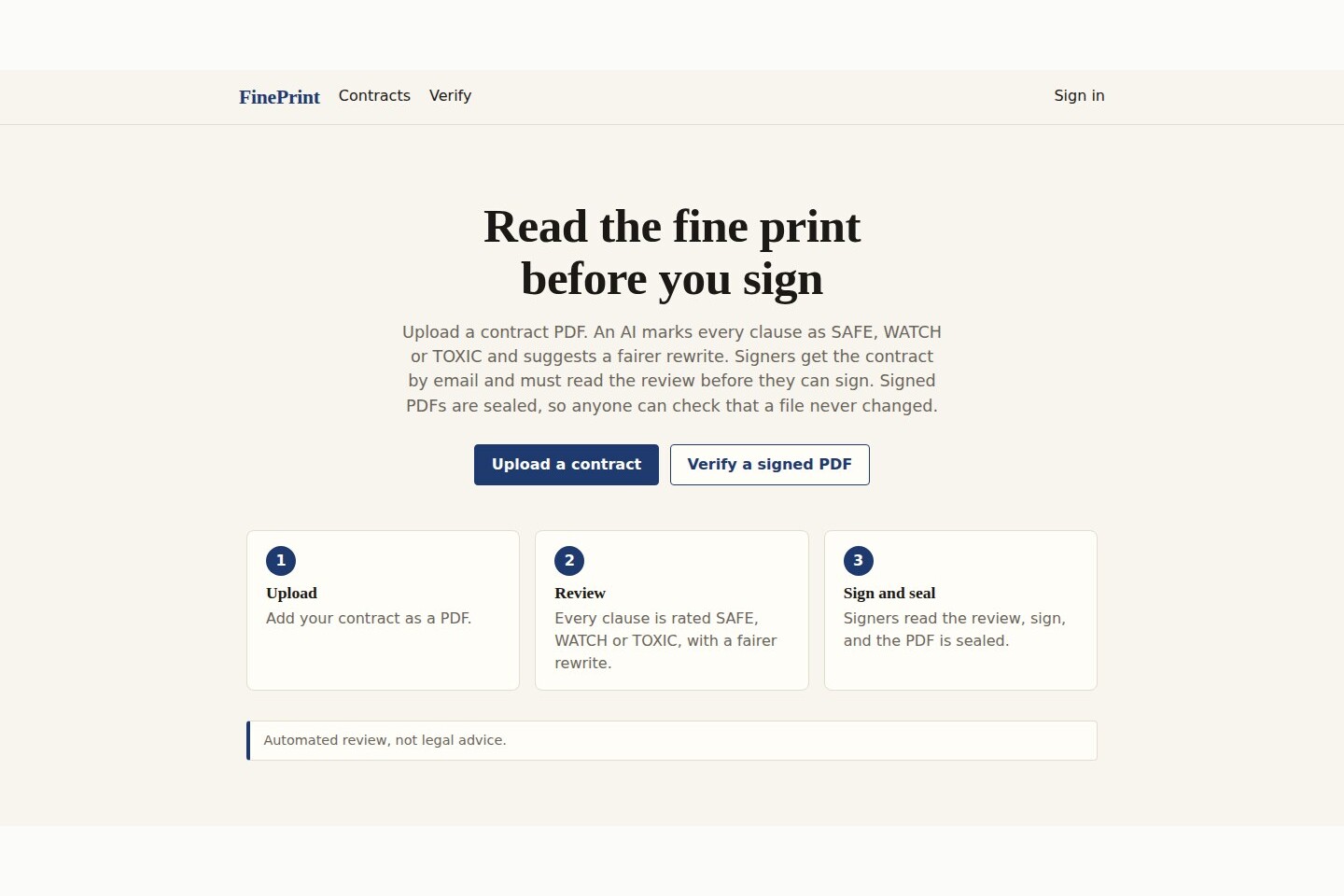
FinePrint, an app Revenant built: an AI flags toxic contract clauses before you sign.
-
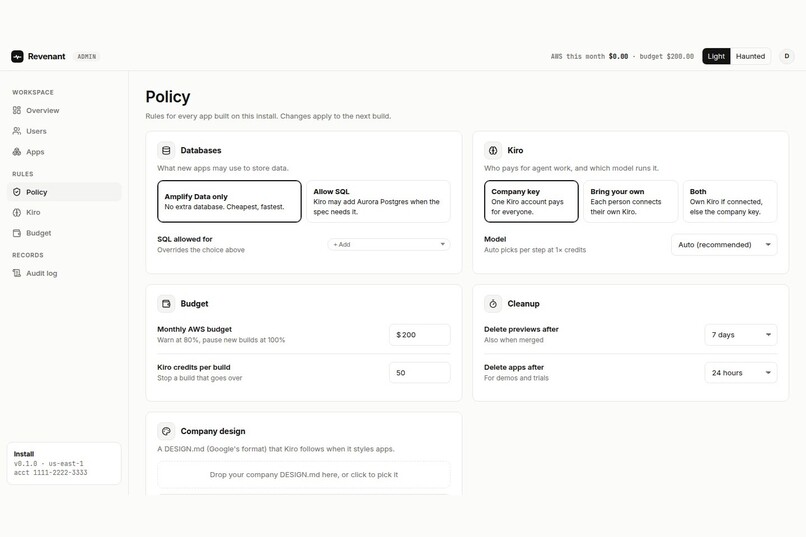
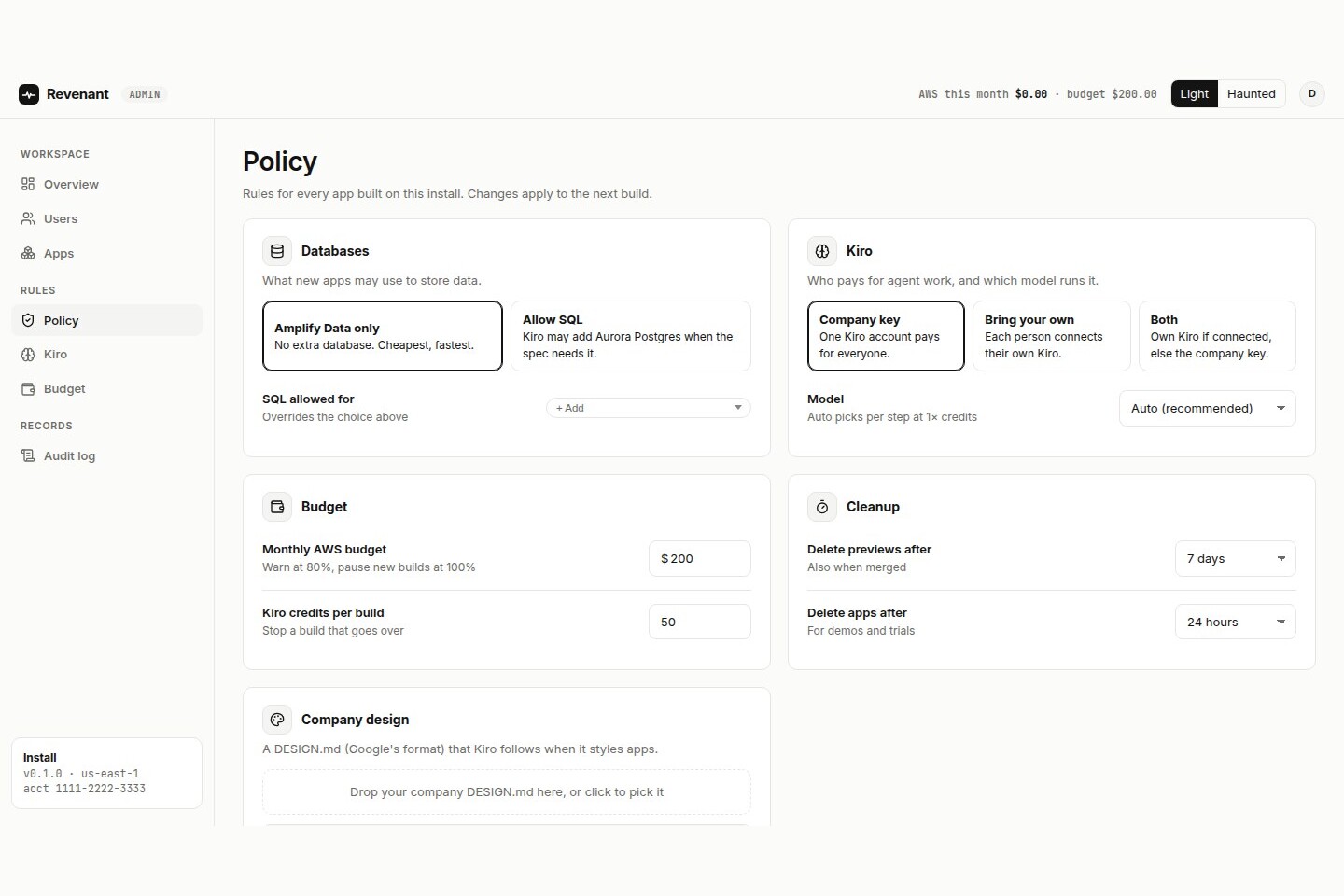
One admin policy for everyone: SQL, Kiro model, who pays for Kiro, budget, company design.
Inspiration
Companies that run everything on AWS still pay per seat for hosted app builders, and hand those vendors their code, data and infrastructure. That means a security review, a second cloud to audit, and lock-in. We wanted the "say what you want, get a live app" experience inside the company's own AWS account, on its own bill and its own AWS credits.
What it does
Revenant is a self-hosted, open-source app builder that installs into your AWS account with one CloudFormation stack (a Kiro API key, an admin email, a monthly budget).
- Ask in plain words. Revenant creates a CodeCommit repo for the project.
- Spec first. Kiro writes requirements, design and tasks, with the AWS parts and the estimated monthly cost. Nothing is built until you press "Build it".
- Build. Kiro CLI runs headless in CodeBuild, one commit per task. Every change gets an Amplify Gen 2 preview with its own URL and its own data.
- Edit with prompts or by hand: chat, Select any element in the preview to see its file and line, or edit and commit in the Code tab.
- Looks. Pick a look before the build or restyle later: each look is a
DESIGN.mdin Google's format, checked by its linter, and every app gets Anthropic's frontend-design skill. Admins can set a company design as the default or make it required. - Publish to production; a replace or delete waits for approval.
- Fix itself. When a run, build, deploy or health check fails, a repair run reads the logs, states the cause, fixes it on a branch, checks it and redeploys, up to 3 tries.
- Admin policy: SQL on or off, Kiro model (Auto by default), who pays for Kiro (company key, bring your own Kiro, or both), budget, auto-delete, all audited.
- Light or Haunted. Haunted is a horror-film theme: a flashlight, browser-made rain and thunder, a heartbeat that flatlines when a deploy dies and a tombstone over the preview until it rises. Calm turns the effects off. The theme never changes behaviour.
Every generated app is a plain Amplify Gen 2 app; uninstalling Revenant leaves it running. Revenant also ships as a Kiro Crew app: "build me X" in Kiro Crew chat creates a project, and a monitor reports when a build, deploy or repair finishes.
How we built it
One person and Kiro, in 31 hours from first commit to the demo video (178 commits, 2,737 Kiro credits, logged per message in docs/credits.md).
Spec first. .kiro/specs/revenant/ (17 requirement sections in EARS style, a design and a
task list) came first, and every big change (two renames, a move to all-AWS, a new default
database) was a spec edit before any code. Four steering files kept every agent on the same rules.
Kiro Crew as the control plane. Kiro Crew runs on a build server and reaches my other machines over Tailscale, so the whole loop ran from one chat:
- Parallel lanes. Each lane was a subagent in its own git worktree and branch, owning its own
folders, merged into
developonly after the parent read its pushed branch. - Deploys and AWS. Kiro Crew ran the CloudFormation install, the Amplify and CodeBuild deploys, quota requests, Cognito judge accounts and database checks in the AWS account.
- Testing. Unit and property tests (fast-check) on every change, then the browser tool clicked through the live install, and planted breaks were run for real and timed.
- Demo. Kiro Crew recorded the video with Playwright, voiced it with Amazon Polly, cut it with ffmpeg, and checked the upload from my MacBook over Tailscale.
- Bookkeeping. A Kiro Crew cron kept the Kiro credit log current.
Kiro CLI as the engine. Inside Revenant, kiro-cli chat --no-interactive runs in CodeBuild
with four modes (spec, build, change, repair), and Revenant's own steering and the
frontend-design skill are copied into every app. Full write-up:
docs/kiro-usage.md.
Challenges we ran into
- Stitching parts that were never meant to meet: a builder UI, a headless agent in CodeBuild, a CloudFormation installer and EventBridge-driven repairs. One log-line format, shared through lib/contracts.ts, ties the runner to the timeline.
- Making a self-healing agent safe in a customer's account: guardrails reject
"Action": "*", data without retain or snapshot, and secrets in plain environment variables before deploy; destructive changes wait for a human. - Keeping Kiro credit use low: checks run as scripts, common failures are fixed by rules before any agent runs, and limit hits never trigger a repair.
Accomplishments that we're proud of
- A one-step install into a fresh AWS account, with no GitHub token and no mail domain.
- A repair loop with the cause, the fix and the time to recover on record.
Time to recover on the planted breaks (FinePrint preview, 2026-11-11, measured from the
failed deploy or check to the live redeploy):
- Required env var
RV_APPremoved from the Amplify app: fixed by a rule (no agent), 342 s, 0 Kiro credits. - Lambda pinned to Node 16, a runtime AWS retired: fixed by a Kiro repair run, 478 s, 0.9 Kiro credits.
- Code tab commit adds a required field to an existing model with no backfill: the guard stopped it before deploy and a Kiro repair run made it optional, 579 s, 0.6 Kiro credits.
- Required env var
The first FinePrint deploy also failed on its own (the seed step had no table access); repair found and fixed that unprompted in 847 s. In the demo video the env var break is run again on camera: back in 6 min 9 s with 0 Kiro credits.
- A Haunted theme built from horror-film grammar instead of Halloween clip art.
What we learned
Specs and steering scale better than prompts. With the rules in steering and the plan in
tasks.md, parallel agents produced one consistent codebase, and checking each lane's
pushed branch, not its report, caught the joins that did not fit.
What's next for Revenant
- Generated-app hooks that run the guardrail check on save.
- More rule-based repairs, so fewer failures need an agent run.
- Hosting for outside customers (docs/platforms.md).
Built With
- amazon-aurora
- amazon-cognito
- amazon-eventbridge
- amazon-polly
- amazon-web-services
- amplify-gen-2
- aws-amplify
- aws-cdk
- aws-cloudformation
- aws-codebuild
- aws-codecommit
- aws-lambda
- aws-secrets-manager
- drizzle
- fast-check
- kiro
- kiro-cli
- kiro-crew
- mcp
- next.js
- playwright
- react
- tailscale
- typescript
- zod
