
Qhacks Devpost
REVAISE
Inspiration
One of the biggest struggles for students in university and high school is gaining the confidence that their assignments and essays are up to standard. The self-doubt, sleepless nights, and endless second-guessing are all too familiar. We created Revaise to give students peace of mind. Revaise emulates a marking scheme, providing constructive feedback on assignments and offering an estimate of their quality—all while maintaining academic integrity. Our goal is simple: help students improve and learn without resorting to shortcuts.
What It Does
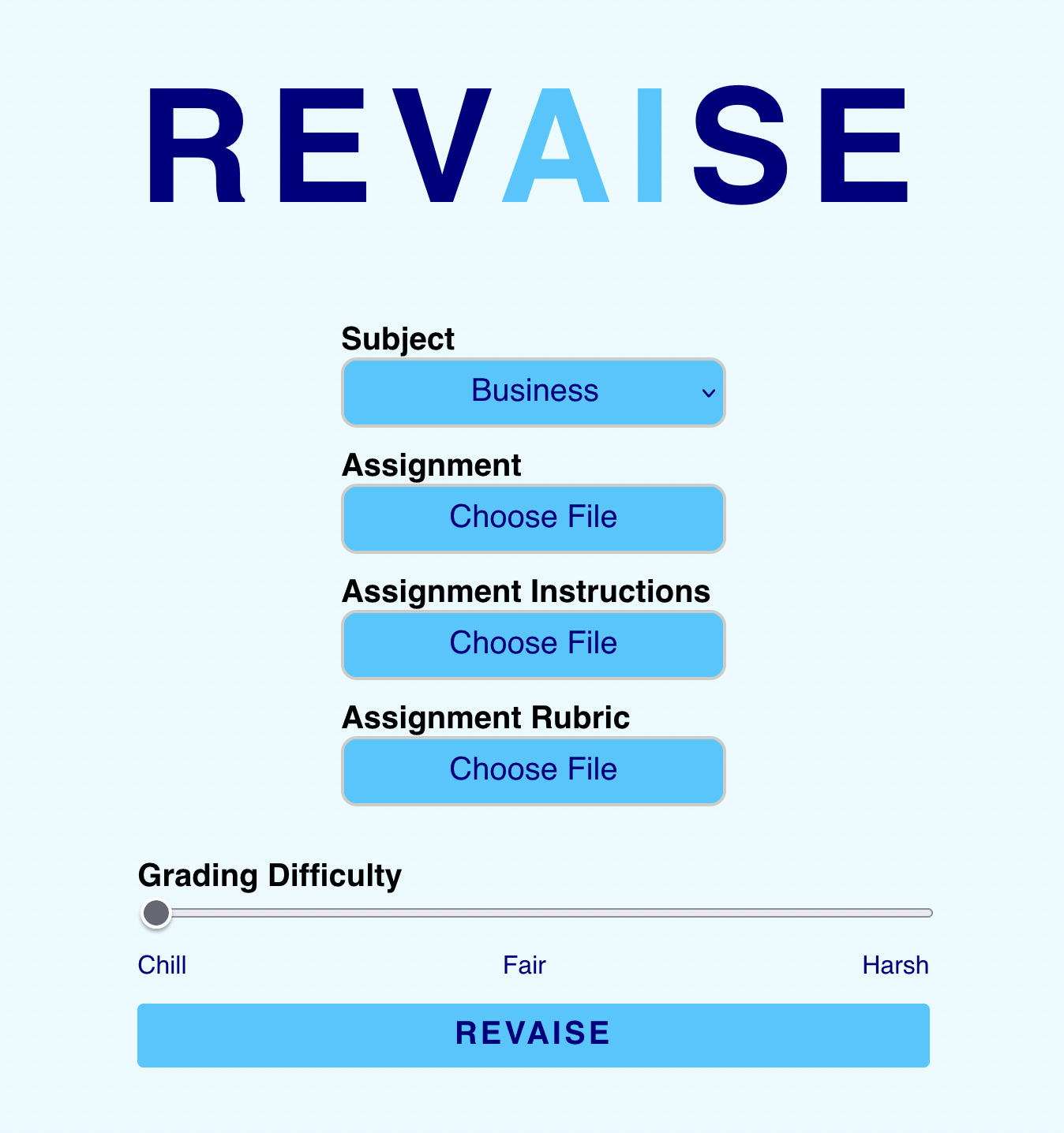
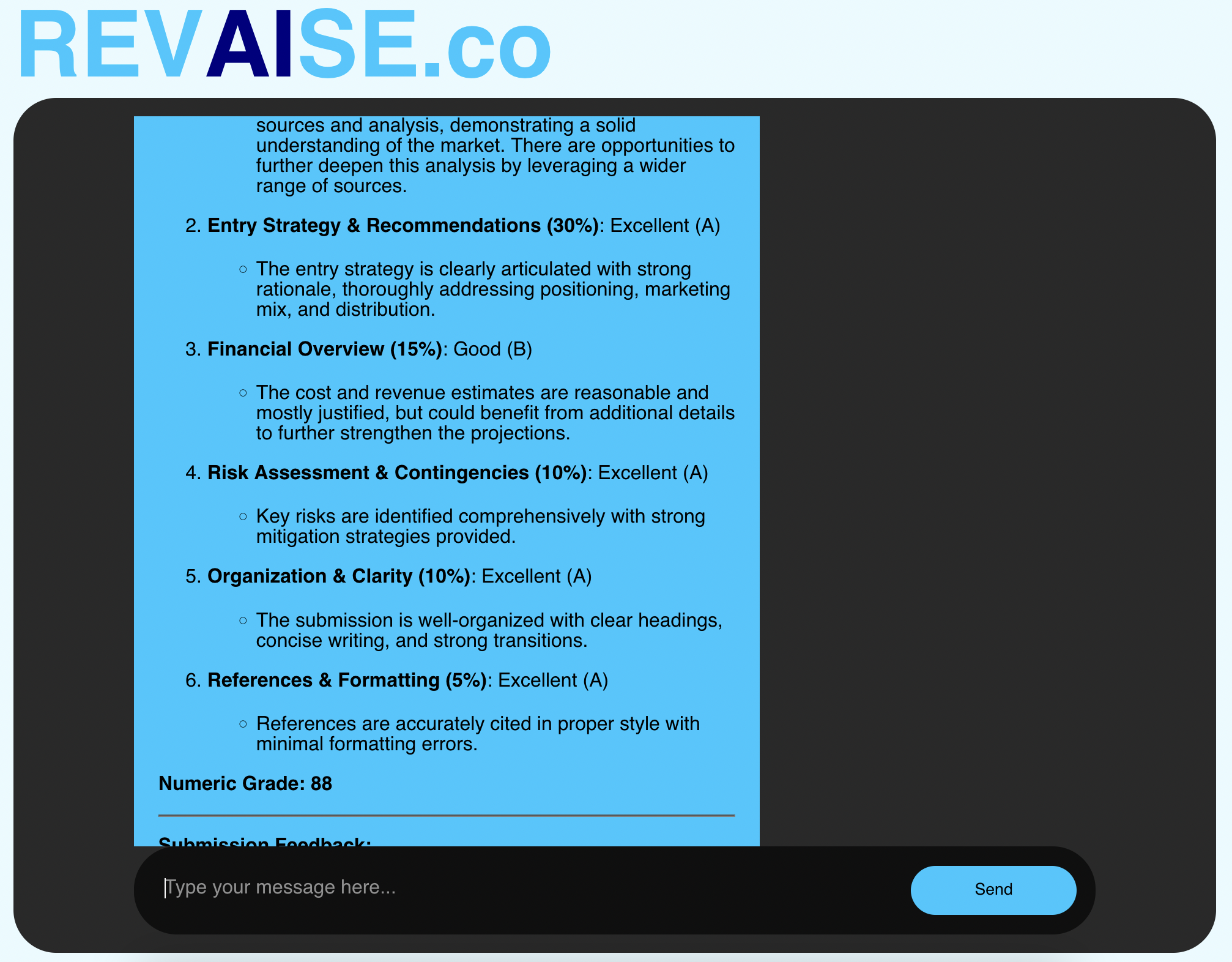
With Revaise, students can upload their rubric, assignment info, and written work. Revaise analyzes the submission and summarizes how well the assignment aligns with each section of the rubric, highlighting areas for improvement. Beyond this initial feedback, students can ask Revaise to expand on specific points, gaining deeper insights without receiving explicit answers (preserving academic integrity). This tool serves as a peer review tool, helping students decide whether more effort is needed or if their work is ready to submit.
How We Built It
Our frontend was built with React, JavaScript, and HTML/CSS, while the backend leverages Node.js. The heart of Revaise lies in OpenAI’s ChatGPT API, which powers the AI feedback. From the start, we prioritized creating a tool that helps students learn rather than providing shortcuts or compromising integrity.
We faced challenges transferring files (like PDFs) between the frontend and backend, ultimately deciding to convert PDFs into plain text in the frontend and send them as raw strings to the backend. This method improved efficiency and simplified integration.
Challenges We Ran Into
Integrating the backend and frontend was more complex than anticipated, especially when handling file uploads. We initially tried transferring PDFs directly, but after encountering issues, we shifted to a text-based approach. Another challenge was our workflow—building the frontend and backend in isolation meant more scrambling to connect them later. This taught us the value of focusing on integration earlier in the development process.
Accomplishments That We’re Proud Of
Successfully integrating a conversational AI with a specific use case is a significant achievement. We’re proud of building a tool that balances functionality with integrity, offering students valuable insights without undermining their learning experience.
What We Learned
- Prioritize integrations early: Building one component first (e.g., backend or frontend), connecting them, and then expanding functionality would have saved time.
- Flexibility is key: Our team didn’t stick rigidly to "frontend" or "backend" roles. As needs arose, we swapped tasks and maintained clear communication to ensure progress.
What’s Next
We aim to expand Revaise to support different courses and assignment types. For example, tackling mathematical proof problems presents unique challenges due to limitations in current AIs like GPT-4. Creating reliable tools for such use cases would likely require fine-tuning or leveraging future models like GPT-5. We also want to refine feedback for essay-adjacent courses and improve the robustness of our rubric-based assessments. With AI advancing rapidly, these improvements are within reach.
Built With
- JavaScript
- React
- CSS
- OpenAI
- Hosted on a Ubuntu server
- Domain registration through GoDaddy
- Cloudflare for DNS


Log in or sign up for Devpost to join the conversation.