-
-
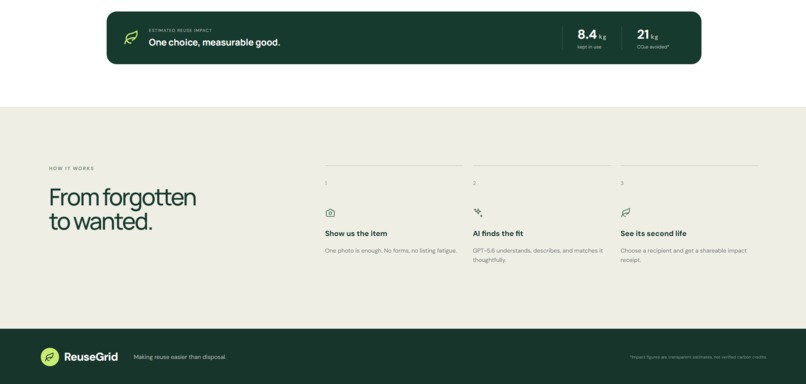
Banner
-
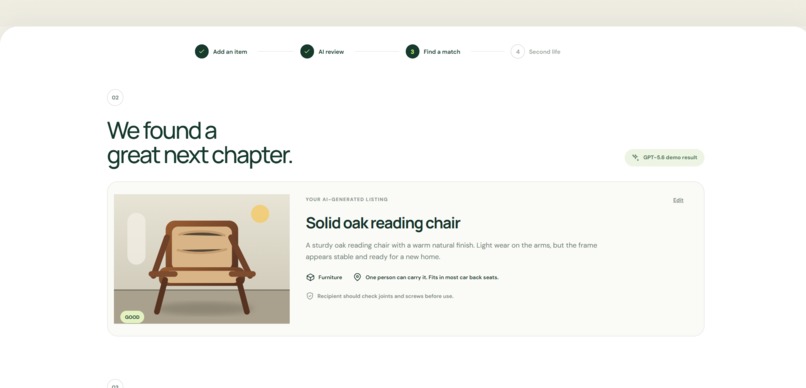
Condition of product determined
-
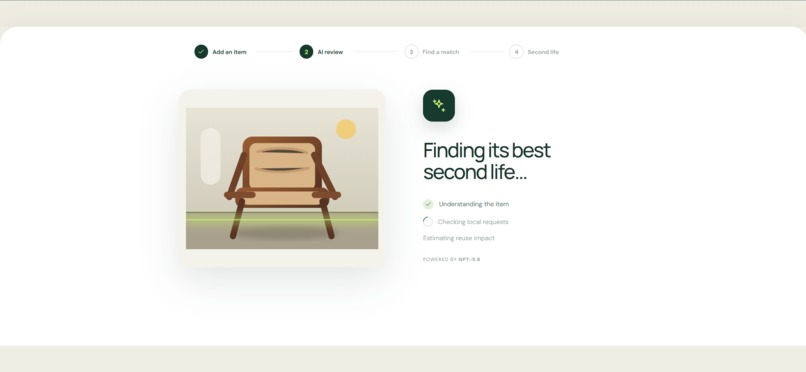
Verifying condition of Item
-
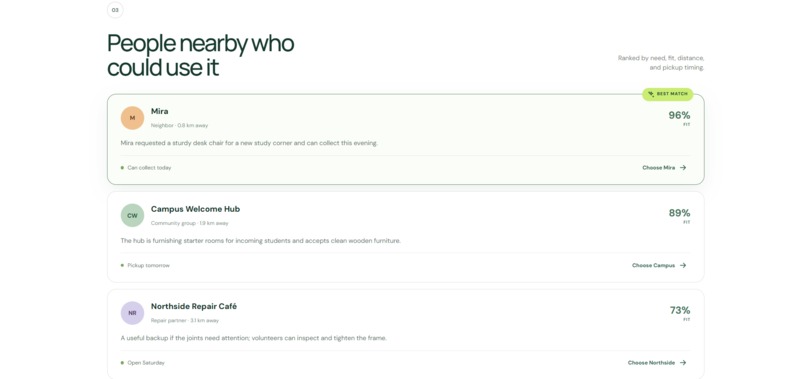
Listed Recipient by GPT 5.6
-
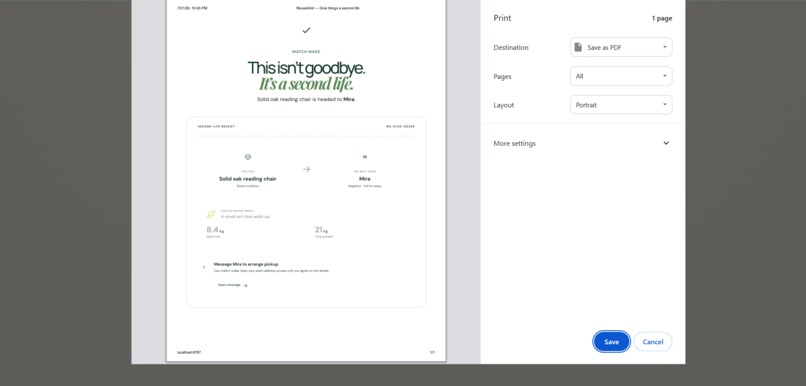
Saving a shareable receipt
-
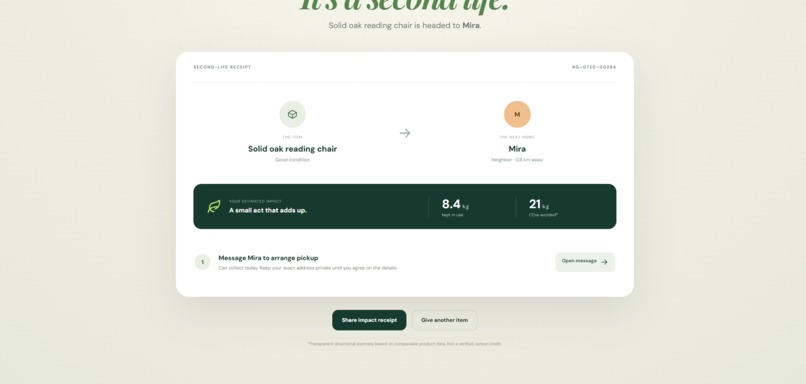
Matched Recipient _ Climate Impact
-
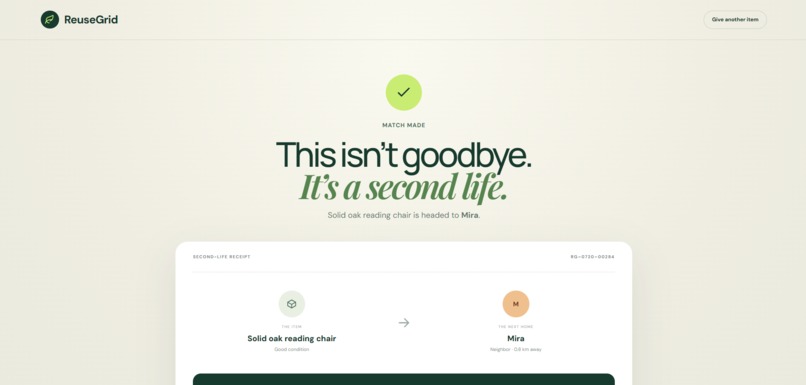
Matched Recipient
-
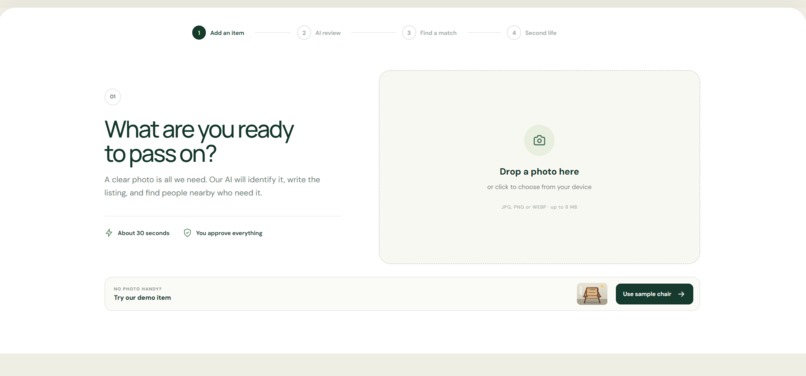
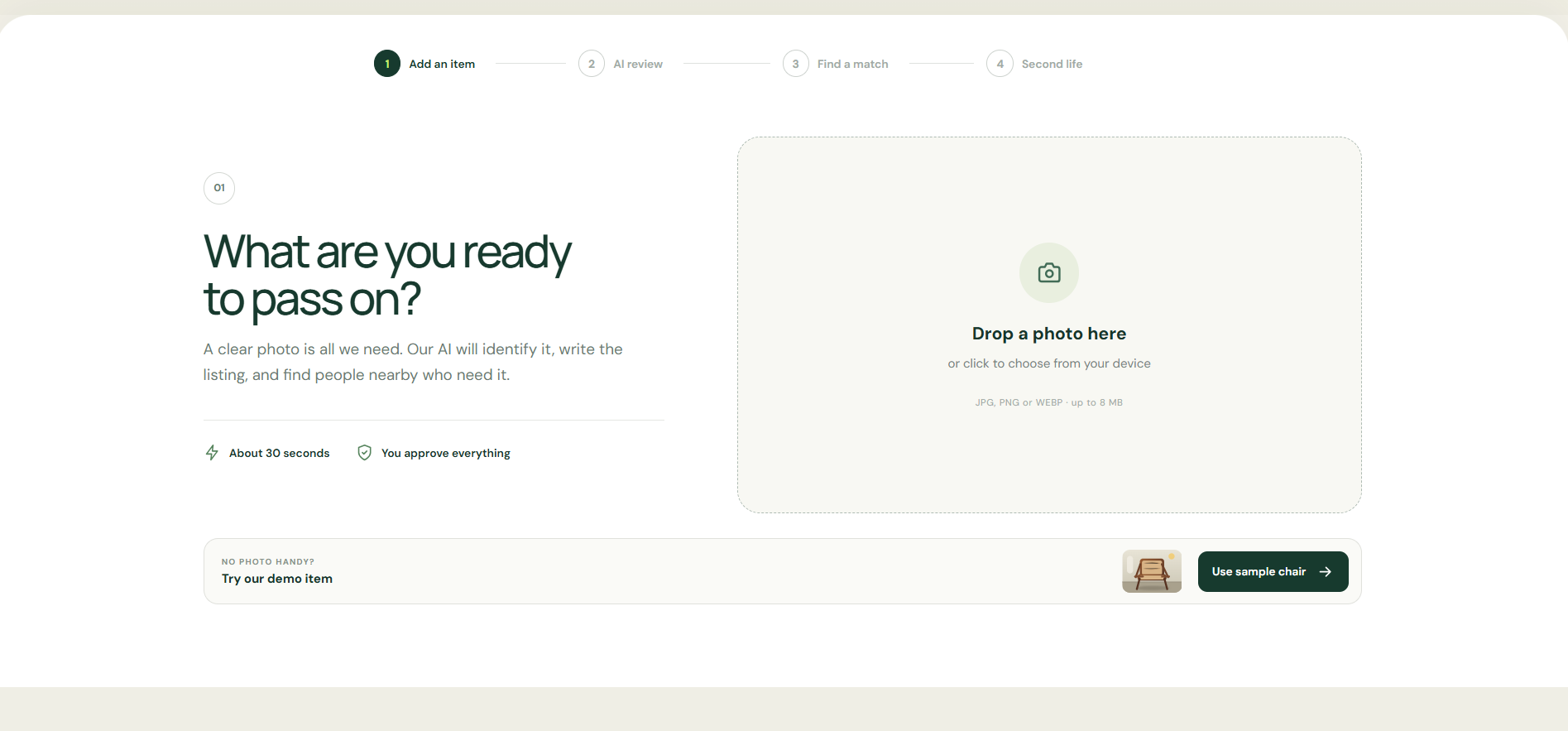
Upload Picture/Sample Chair Data
-
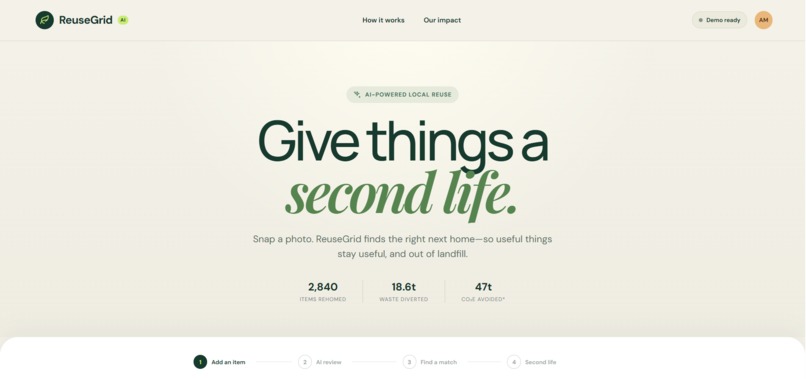
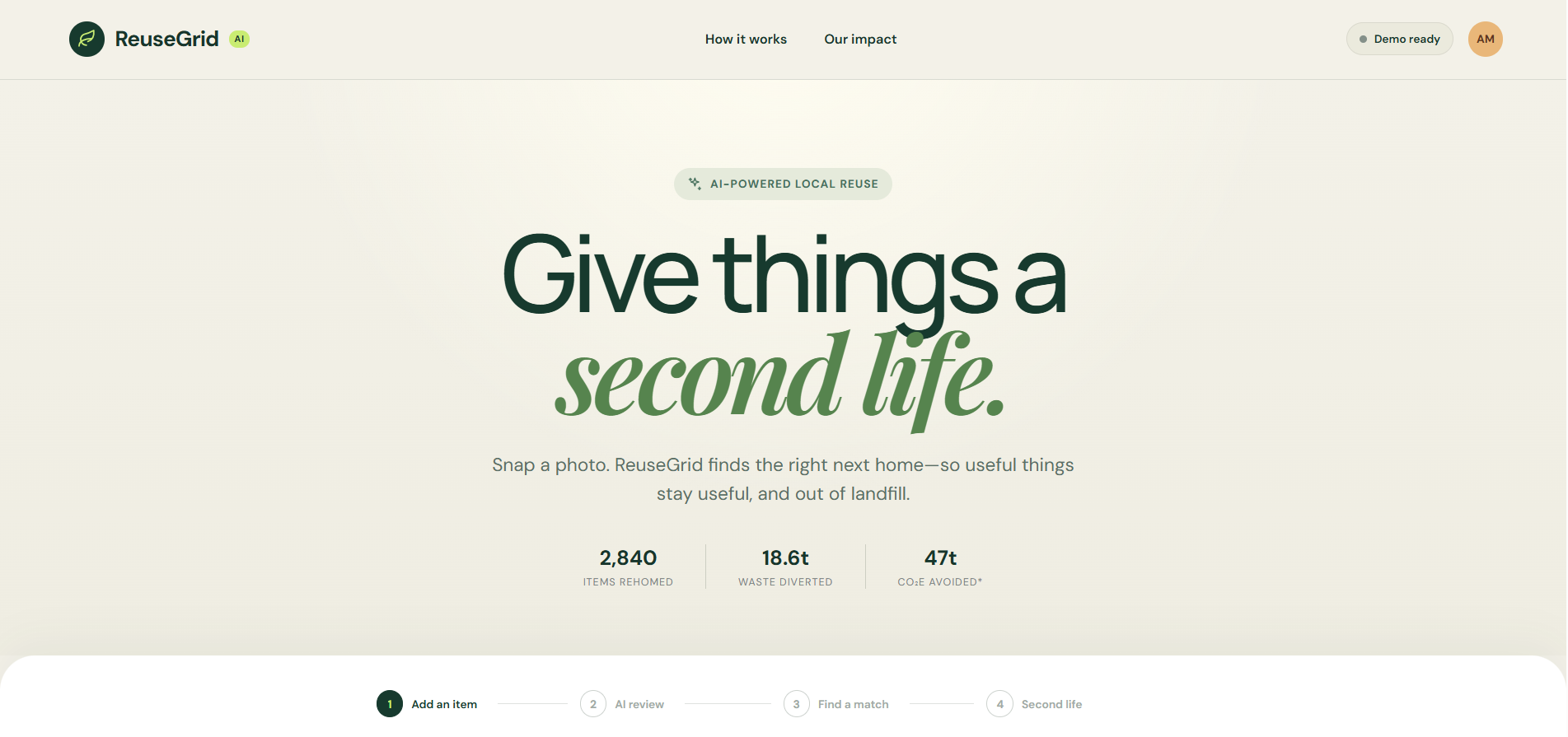
Landing Page
Inspiration
Every year, usable furniture and household goods are discarded while people and community organizations nearby still need them. It could be a young graduate starting life in a local community in Ghana or anywhere else in the world. The problem is often not a lack of generosity—it is the effort involved. Someone must identify the item, describe its condition, create a listing, answer questions, find a suitable recipient, and arrange collection.
We created ReuseGrid AI to make giving something away feel as easy as taking a photo. Our goal is to help useful items find the right next home while reducing waste and supporting local communities.
What it does
ReuseGrid AI is an AI-powered local reuse assistant. A user photographs an unwanted item, and the application:
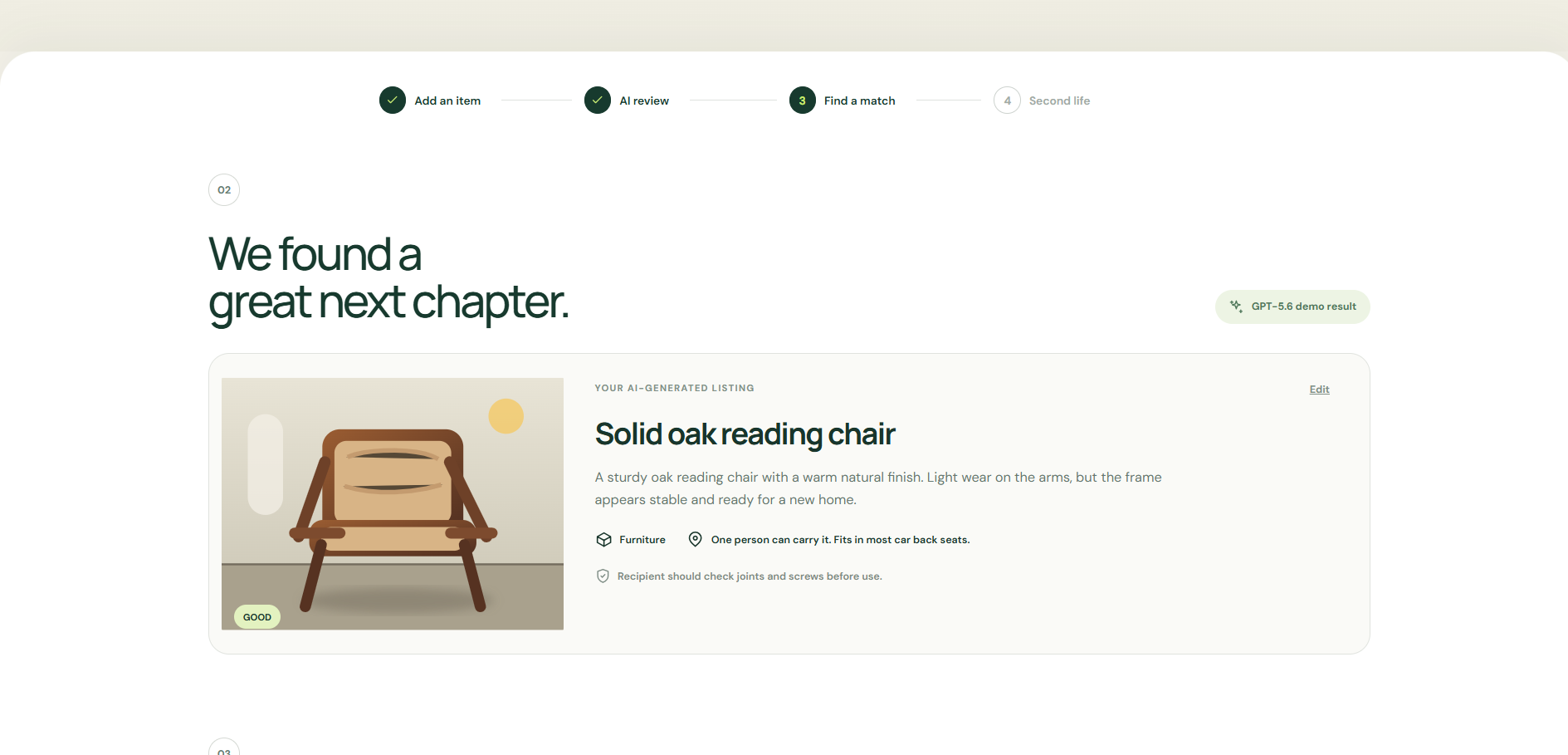
- Generates an editable listing with a title, category, condition description, pickup guidance, and safety note
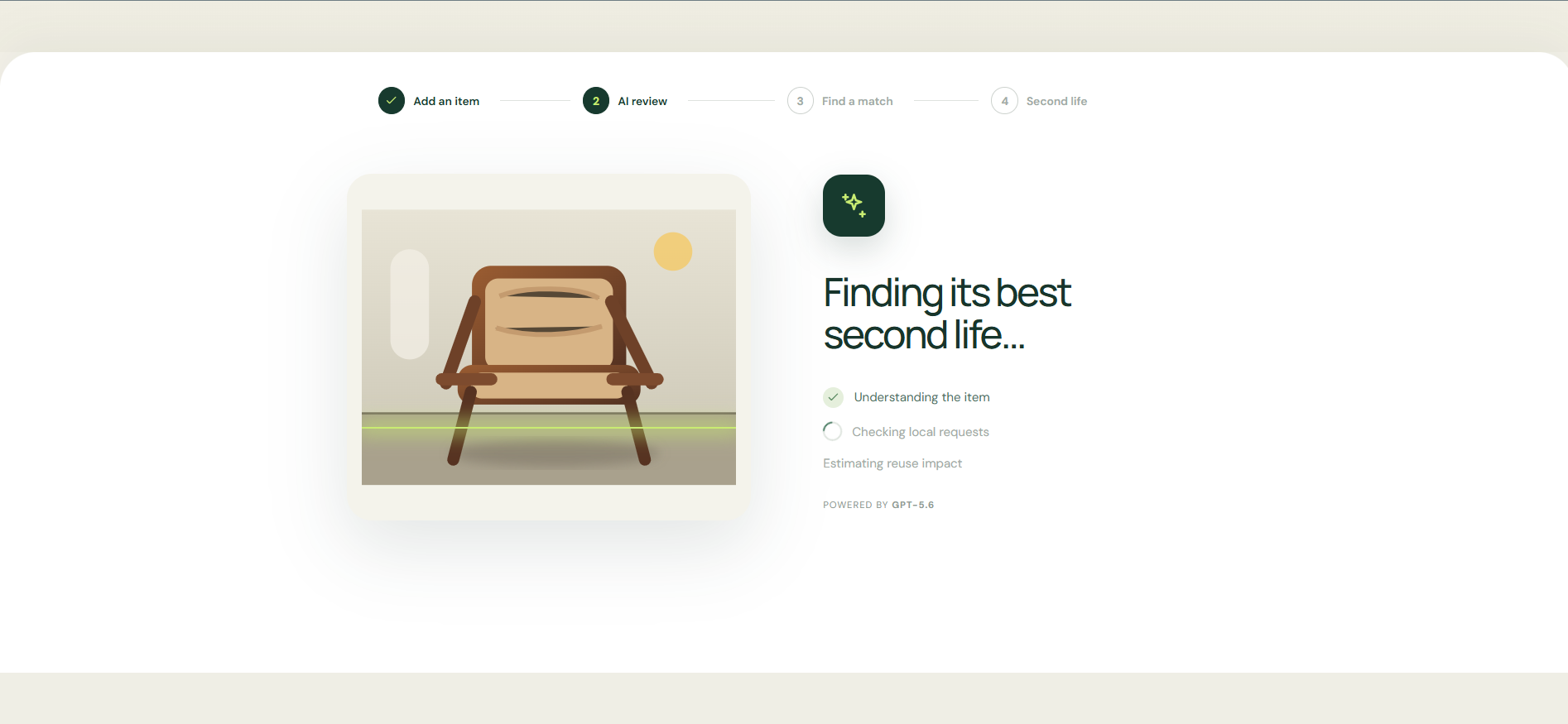
- Compares the item with nearby wanted requests
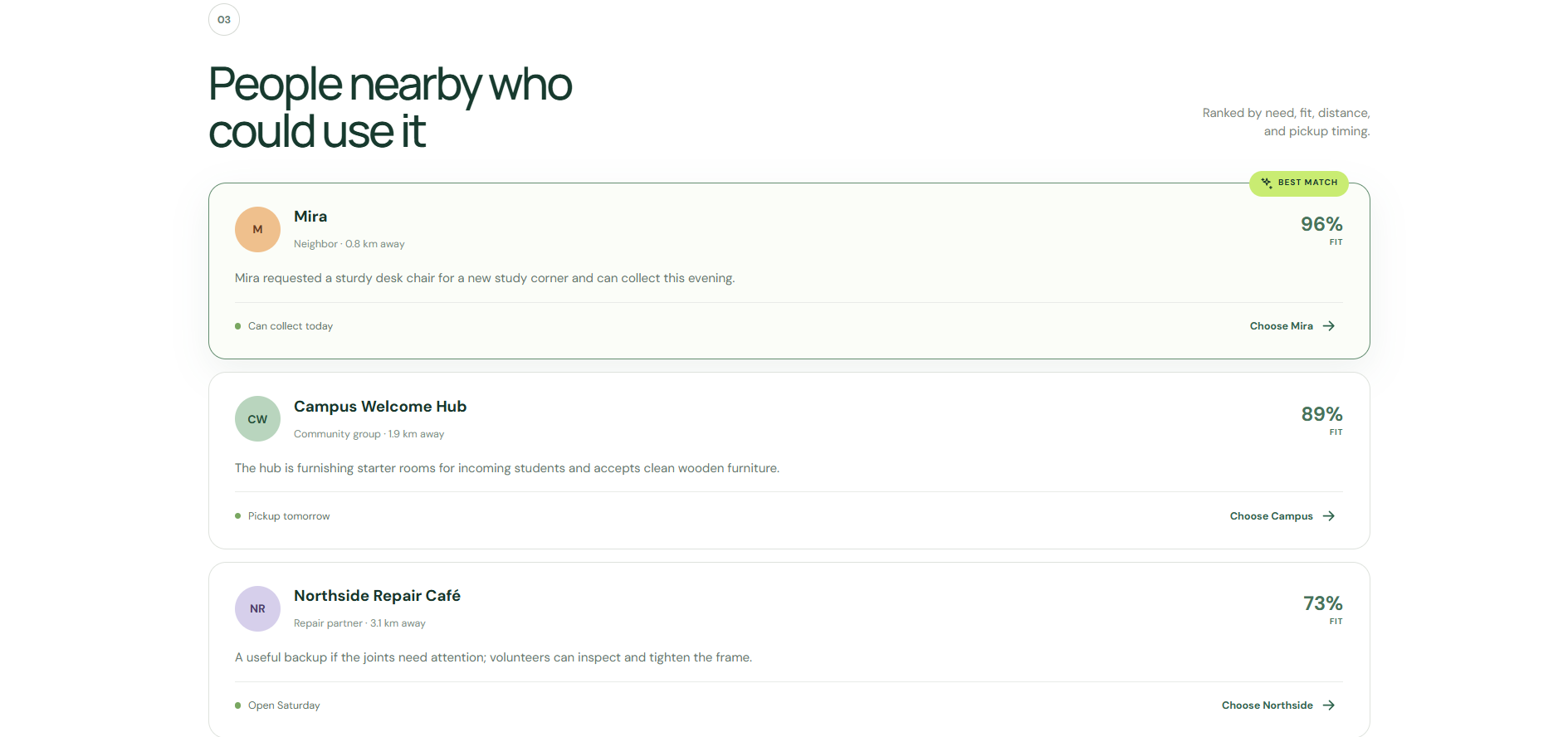
- Ranks potential recipients using suitability, need, distance, and availability
- Explains why each suggested recipient is a good match
- Lets the owner choose the item’s next home
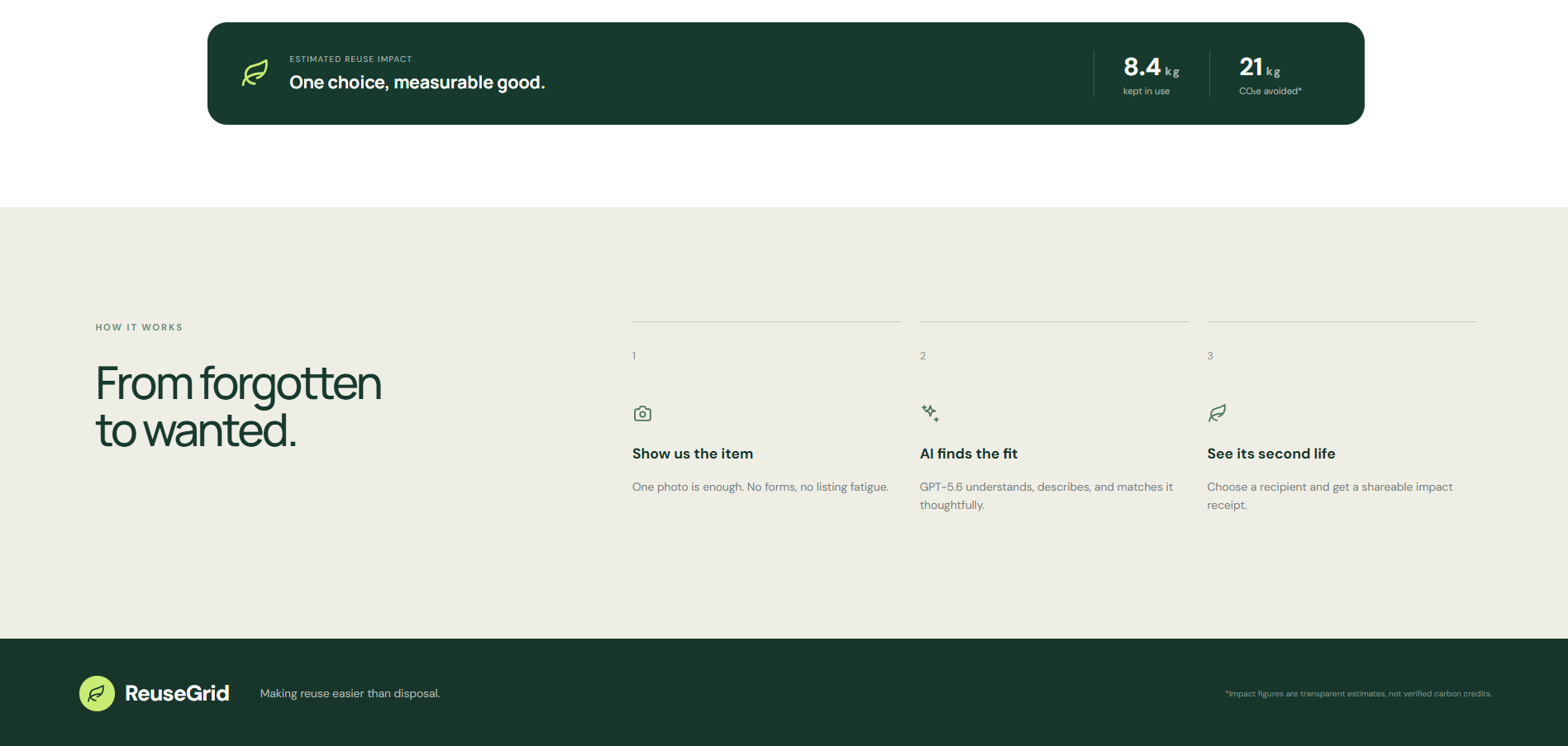
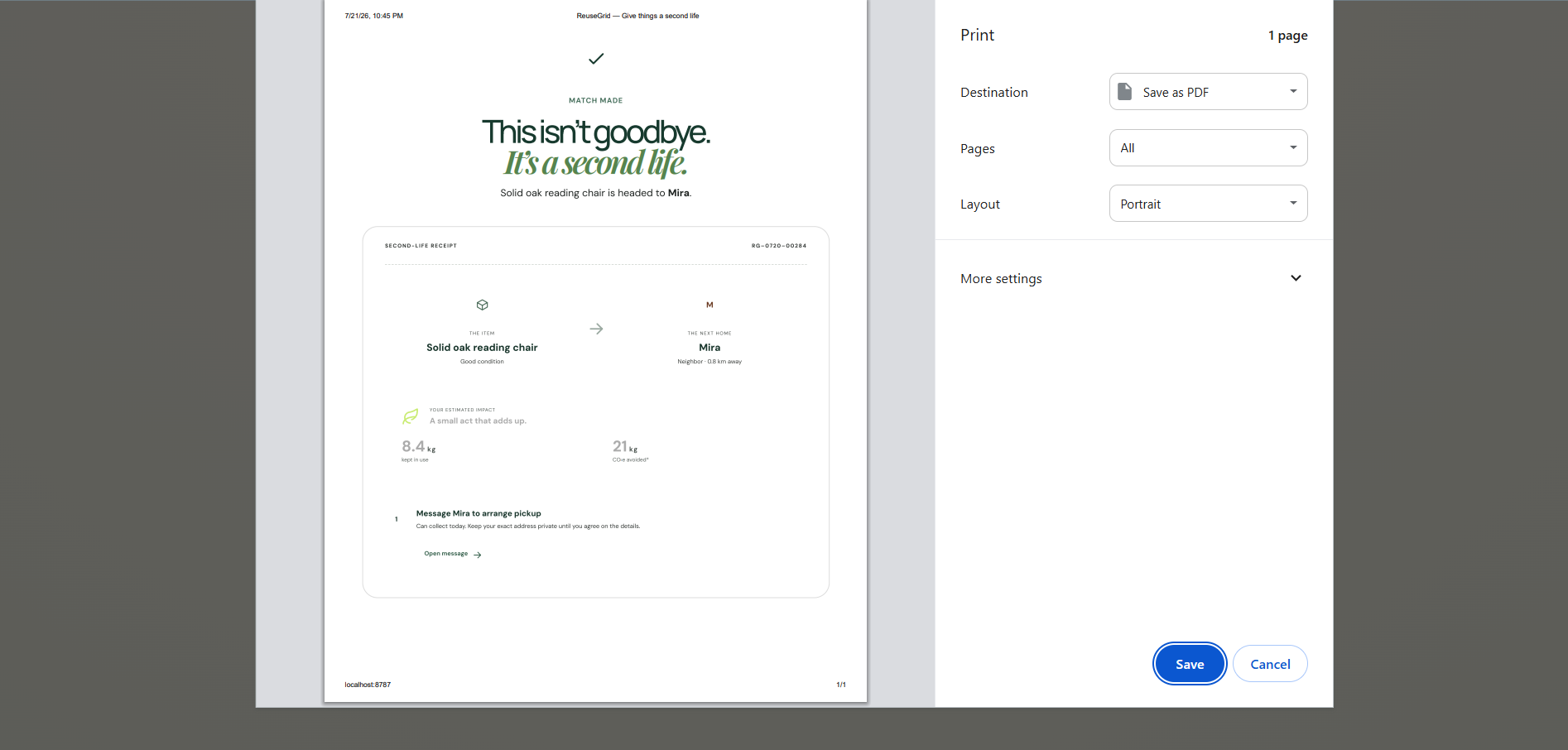
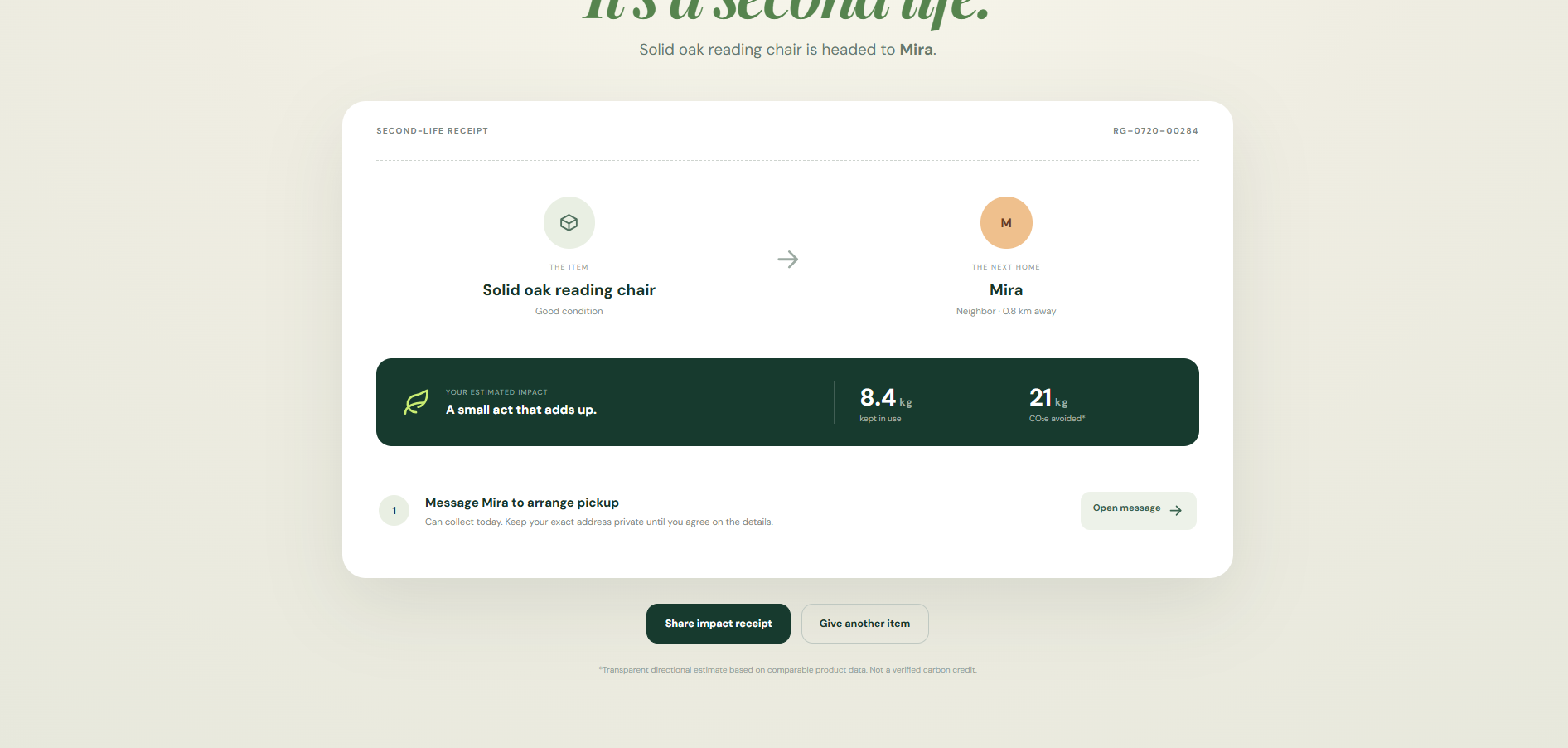
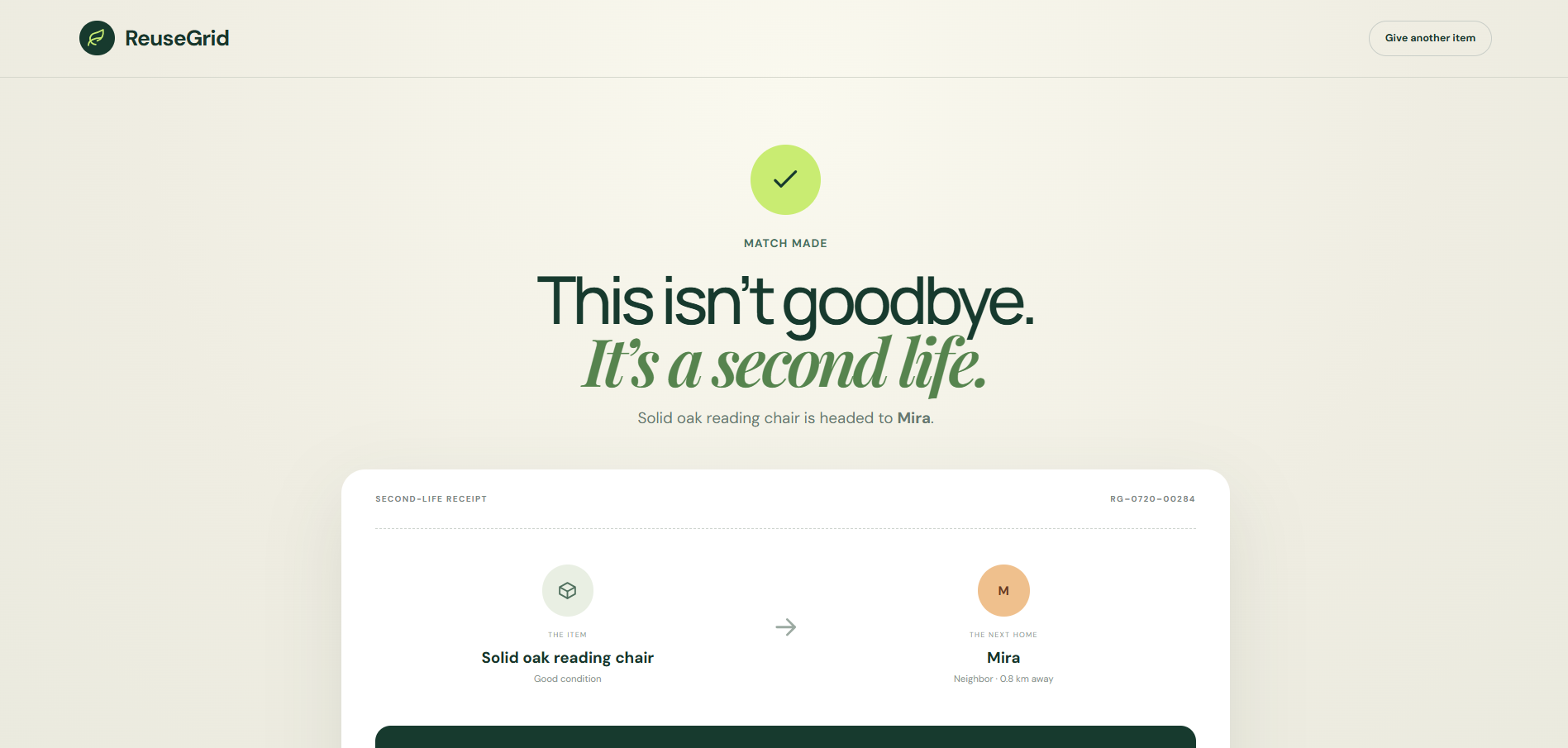
- Creates a shareable second-life receipt with clearly labeled environmental-impact estimates
The prototype includes a deterministic sample-chair journey, allowing judges to test the complete experience without an API key, because we could not afford one currently. It also contains an optional live GPT-5.6 integration for uploaded-image analysis.
The recipient requests shown in the prototype are sample data. Public accounts, user-created wanted requests, notifications, and messaging are planned as future features.
How we built it
We built ReuseGrid AI with React, TypeScript, Vite, and an Express server.
Codex was our primary development environment and collaborator. It helped us transform a broad marketplace idea into a focused product journey, choose the architecture, implement the interface and server, integrate the OpenAI Responses API, debug the application, test the responsive experience, and prepare the documentation and submission materials.
GPT-5.6 Sol powers the optional live image-analysis workflow. The server sends the uploaded image, user notes, and recipient profiles to the model. GPT-5.6 returns a strict structured result containing the listing, environmental estimates, and exactly three ranked recipient matches.
The API key remains on the server and is never exposed to the browser. The system also uses conservative condition and safety language because an image alone cannot certify that an item is safe.
Challenges we ran into
The biggest challenge was managing scope. A complete reuse marketplace would require accounts, authentication, persistent storage, messaging, notifications, moderation, and location privacy controls. Building all of those features would have distracted from the central innovation.
We therefore focused on proving one complete journey:
Photo → AI-generated listing → intelligent matching → recipient choice → impact receipt
Another challenge was making AI output reliable enough to drive the interface. We addressed this with strict JSON-schema structured output and carefully constrained prompts.
We also had to communicate environmental impact responsibly. The application presents weight and avoided-emissions figures as directional estimates, not verified carbon credits.
Finally, we needed the project to remain testable without requiring judges to supply an API key. The deterministic demonstration mode solves this while preserving the live GPT-5.6 integration in the codebase.
Accomplishments that we're proud of
We are proud that ReuseGrid demonstrates a complete and understandable product experience rather than an isolated AI feature.
The application turns one simple action—providing a photo—into a useful listing, transparent recipient recommendations, an owner-controlled decision, and a positive record of the item’s second life.
We are also proud of the product’s responsible boundaries. ReuseGrid does not claim to certify item safety, does not expose precise pickup details prematurely, explains its match recommendations, and clearly labels its environmental figures as estimates.
ReuseGrid AI is also the first application I have ever built. Bringing it to life required me to learn and manage many unfamiliar parts of product development—from shaping the initial idea and designing the user journey to writing code, testing the application, using GitHub, and deploying it publicly. With Codex and ChatGPT as development collaborators, I was able to work through each challenge and turn an idea into a functioning product. Reaching this final result is an accomplishment I am genuinely proud of. It is fascinating to me what we can achieve with the help of AI.
What we learned
We learned that AI is most valuable here when it reduces practical friction rather than replacing human judgment. GPT-5.6 can understand an item, organize unstructured information, and compare it with recipient needs, but the owner should remain in control of the final decision.
We also learned the importance of narrowing a hackathon idea to its strongest product loop. By concentrating on item understanding and destination matching, we could demonstrate what makes ReuseGrid different from a traditional marketplace.
Codex helped us work iteratively across product strategy, interface design, engineering, testing, deployment, and documentation. It allowed us to treat those activities as one connected development process.
What's next for ReuseGrid AI
The next milestone is to turn the prototype into a two-sided local reuse network. Recipients will be able to create reusable “I need this” requests containing the item they need, their approximate location, collection radius, availability, and notification preferences.
Public listings will also include an “I’m interested” action. Owners will receive a private queue of interested recipients ranked by suitability, distance, and availability. Private messaging and precise pickup details will become available only after the owner selects a recipient.
Future versions will add:
- User and organization accounts
- Persistent wanted requests and listings
- Notifications and private messaging
- Authentication, moderation, and abuse reporting
- Geospatial privacy controls
- Partnerships with charities, repair groups, universities, retailers, and cities
- More robust and locally relevant environmental-impact factors
Our long-term vision is to make reuse easier than disposal—helping every useful item find the right next home.
Built With
- api
- codex
- css3
- express.js
- github
- gpt-5.6
- html5
- javascript
- node.js
- openai
- pnpm
- react
- render
- responses
- sdk
- typescript
- vite


Log in or sign up for Devpost to join the conversation.