Inspiration
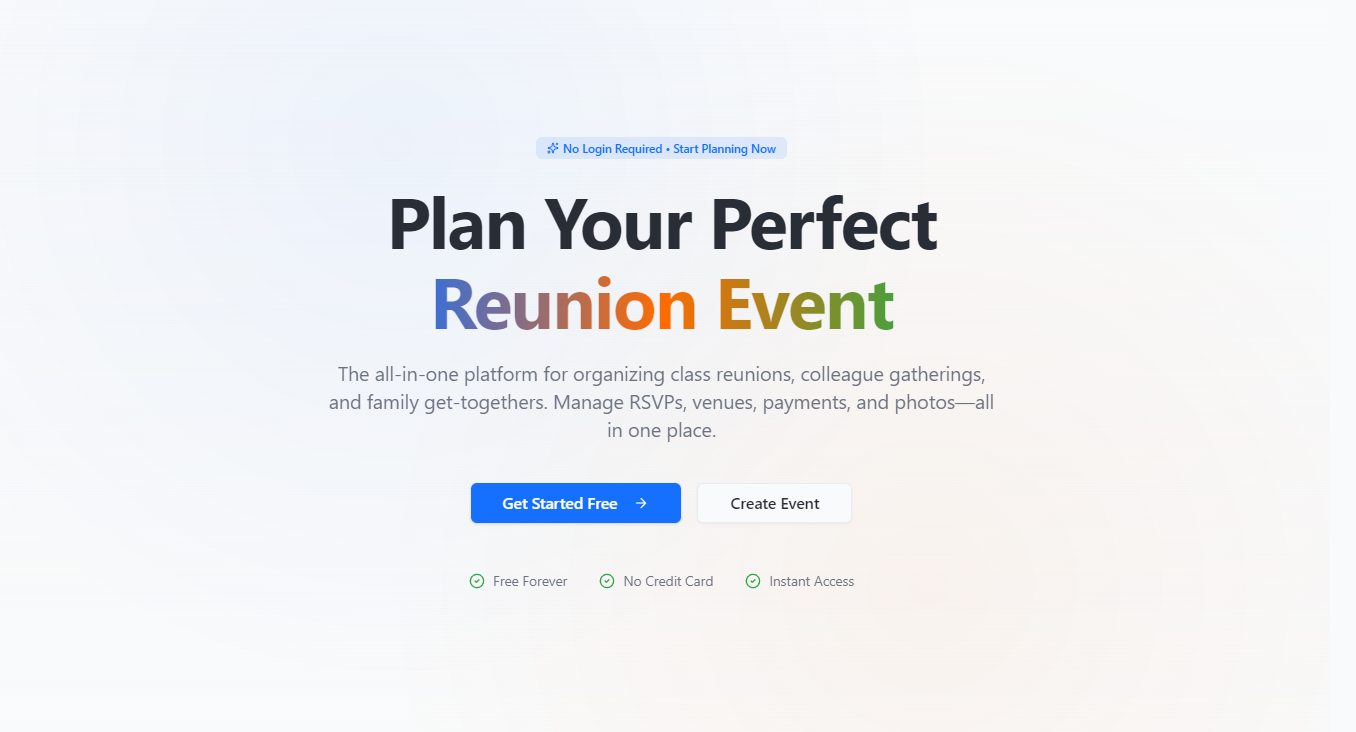
As a former college class rep, I spent weeks bouncing between spreadsheets, messaging apps, and venue booking sites to plan our 10-year reunion—frustrated by how fragmented the process was. I wanted to build a tool that stripped away the chaos, putting every reunion task in one simple, accessible place—no logins, no complicated setups, just straightforward planning for anyone organizing gatherings.
What it does
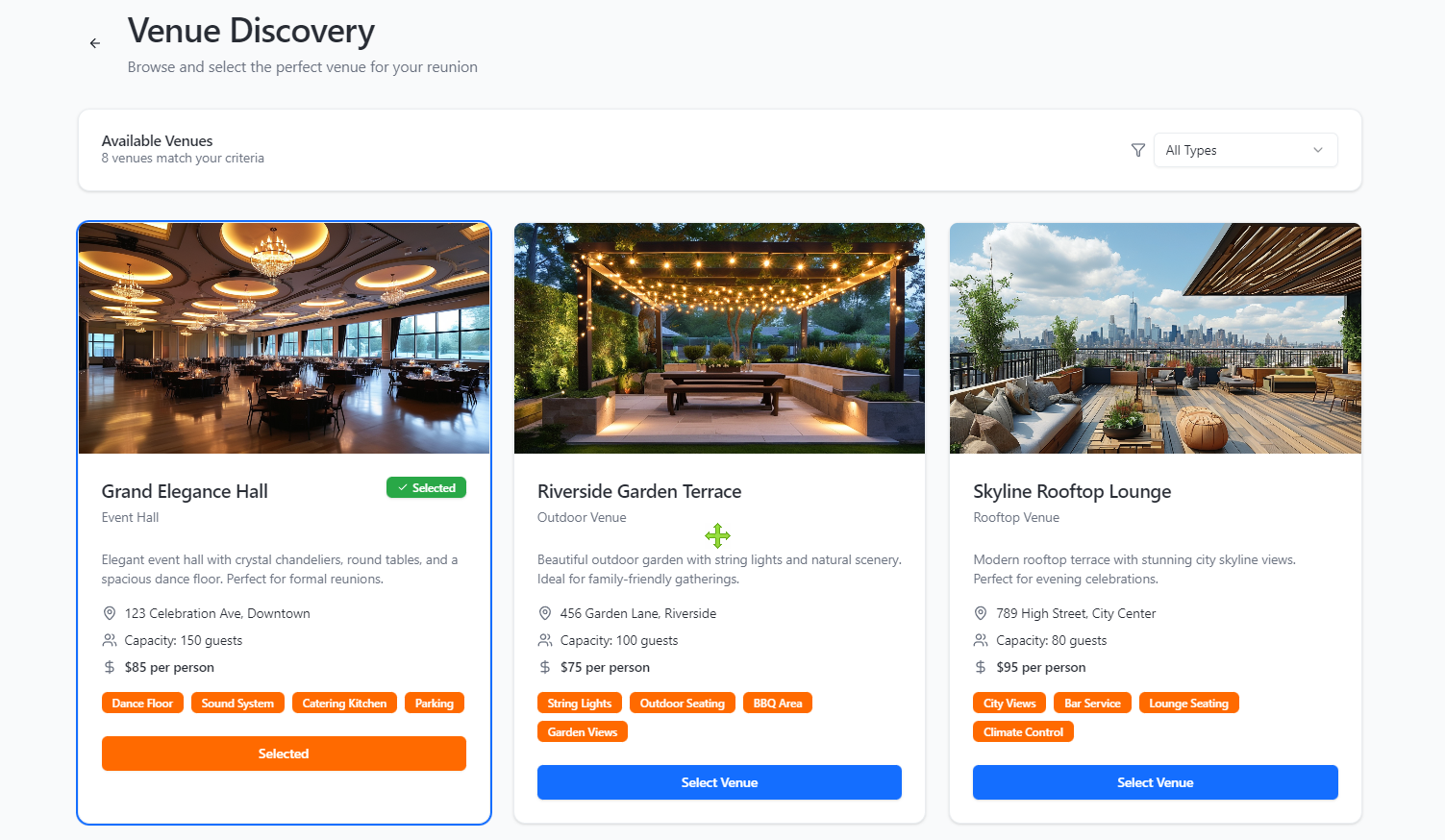
Reunion Planner is a web app that centralizes reunion planning: create events, track RSVPs with visual breakdowns, browse/book venues, split costs evenly among attendees, and share photos in password-protected albums—all without needing to create an account. It streamlines planning for class, colleague, family, or community reunions, so organizers focus on connecting, not admin.
How we built it
We started with wireframing core pages (dashboard, RSVP tracker, venue browser) in Figma, prioritizing one-click navigation for simplicity. We built the frontend with React/Bootstrap for responsiveness, used Node.js for backend logic (like auto-calculating per-person costs: $totalCost / $confirmedGuests), and integrated Chart.js for visualizing RSVP/payment data. Firebase handled lightweight data storage, and Cloudinary API managed photo upload/organization.
Challenges we ran into
The biggest hurdle was balancing simplicity with functionality—we didn’t want to overwhelm users, but needed to cover all key planning tasks. Calculating guest counts (including plus-ones) for cost splitting also required precise logic to avoid errors, and ensuring the app worked seamlessly on mobile (critical for on-the-go organizers) took multiple rounds of responsive design tweaks.
Accomplishments that we're proud of
We created an intuitive, login-free experience that puts all reunion tools in one place—users can go from landing on the dashboard to mock-booking a venue or generating a photo share link in seconds. The auto-calculation of per-person costs and visual RSVP breakdowns eliminate manual math and spreadsheets, and the responsive design works flawlessly on both desktop and mobile.
What we learned
We learned the value of user-centric design—prioritizing the pain points of real reunion organizers (fragmented tools, manual calculations) over "nice-to-have" features. We also gained hands-on experience integrating multiple APIs (Chart.js, Cloudinary) while keeping the codebase clean, and learned how to test for edge cases (e.g., zero guest counts for cost splitting) to ensure reliability.
What's next for this project
We plan to add real integration with calendar apps (Google/Apple Calendar) to sync event details, enable real email/SMS invite delivery, and partner with local venue platforms to connect users with actual booking options. We also want to add a collaborative feature, so multiple organizers can edit event plans together—all while keeping the core simplicity that makes the app unique.

Log in or sign up for Devpost to join the conversation.