-
-
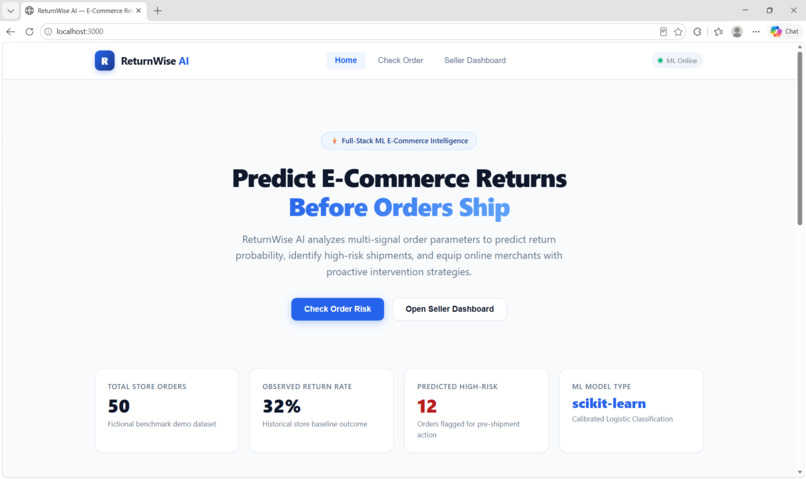
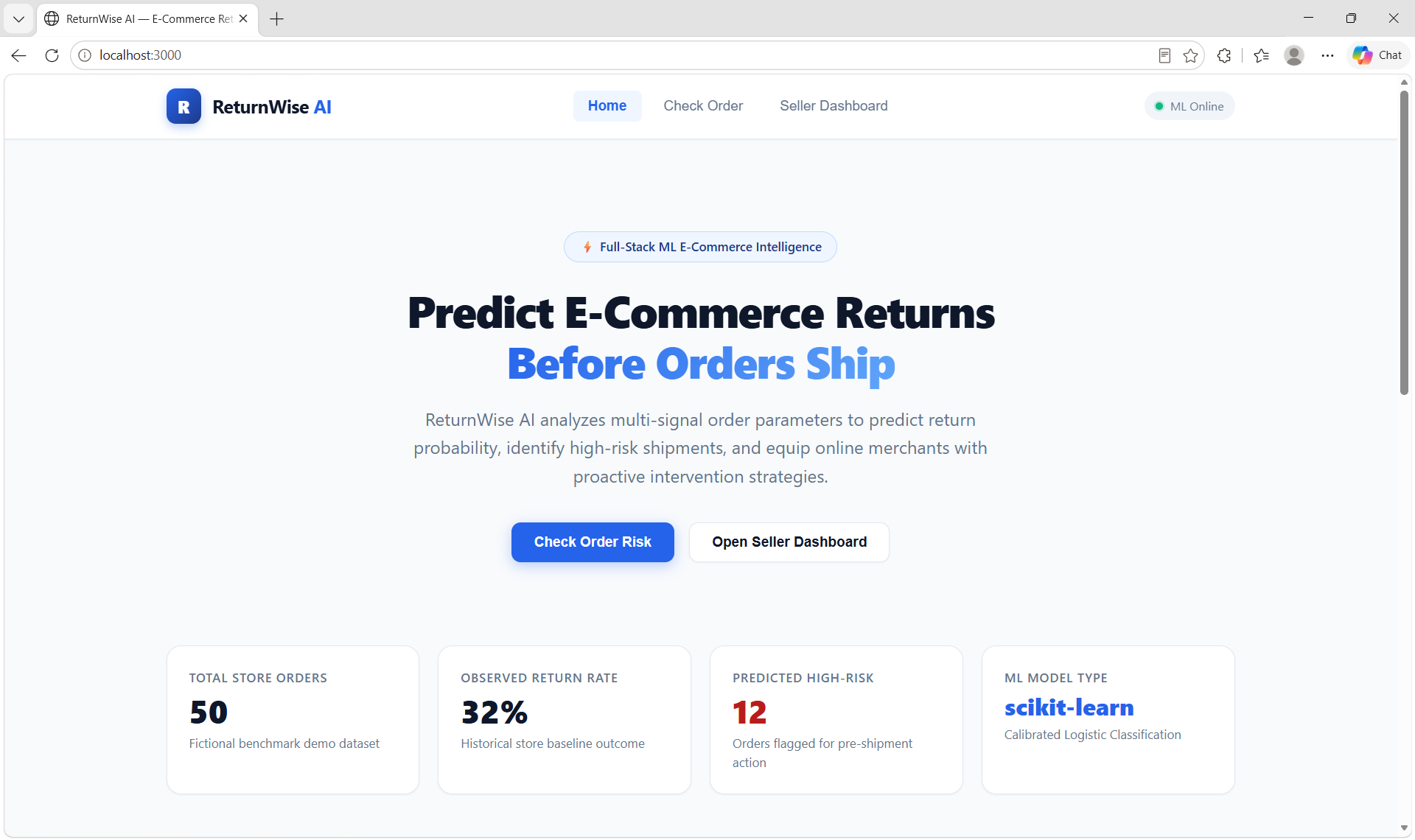
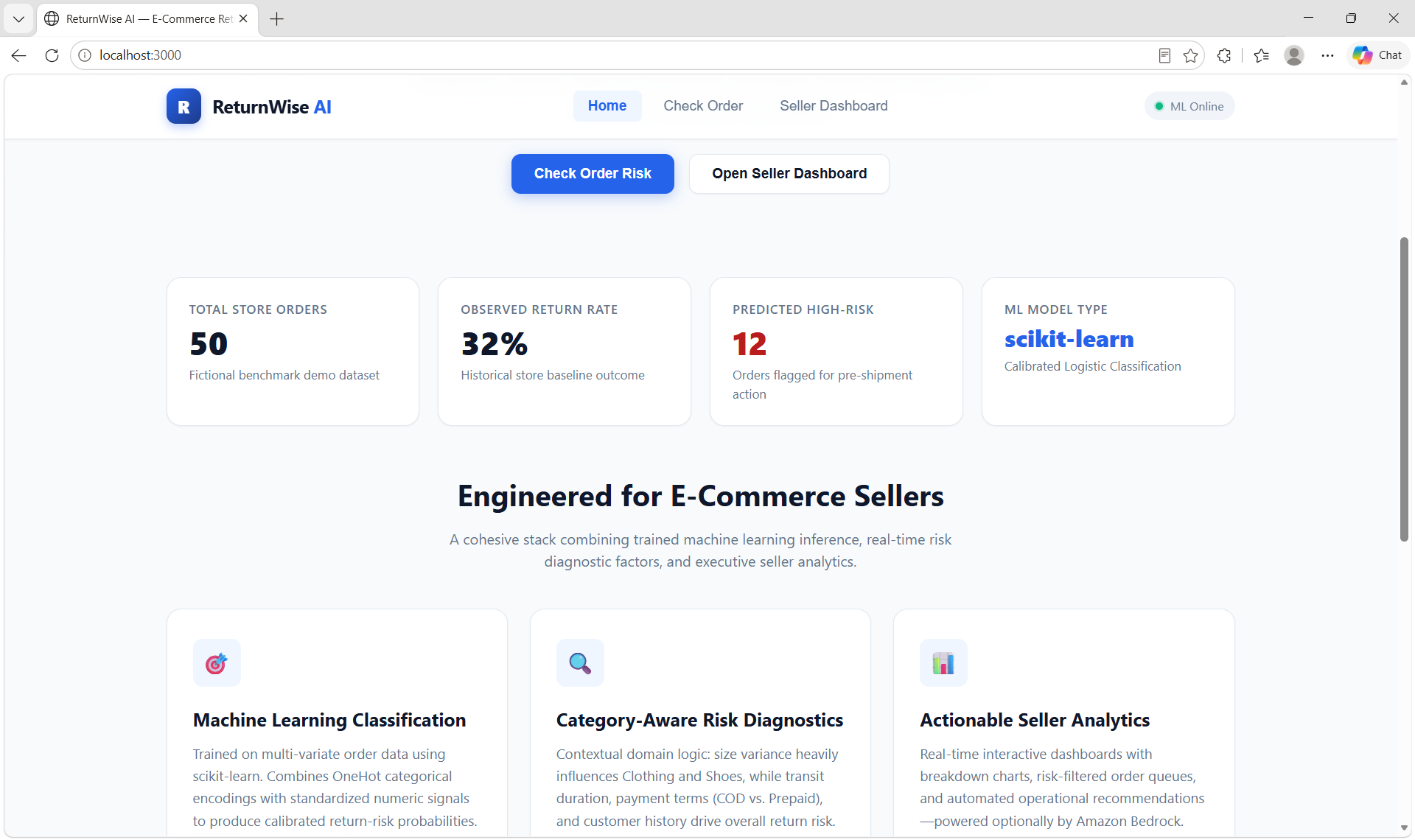
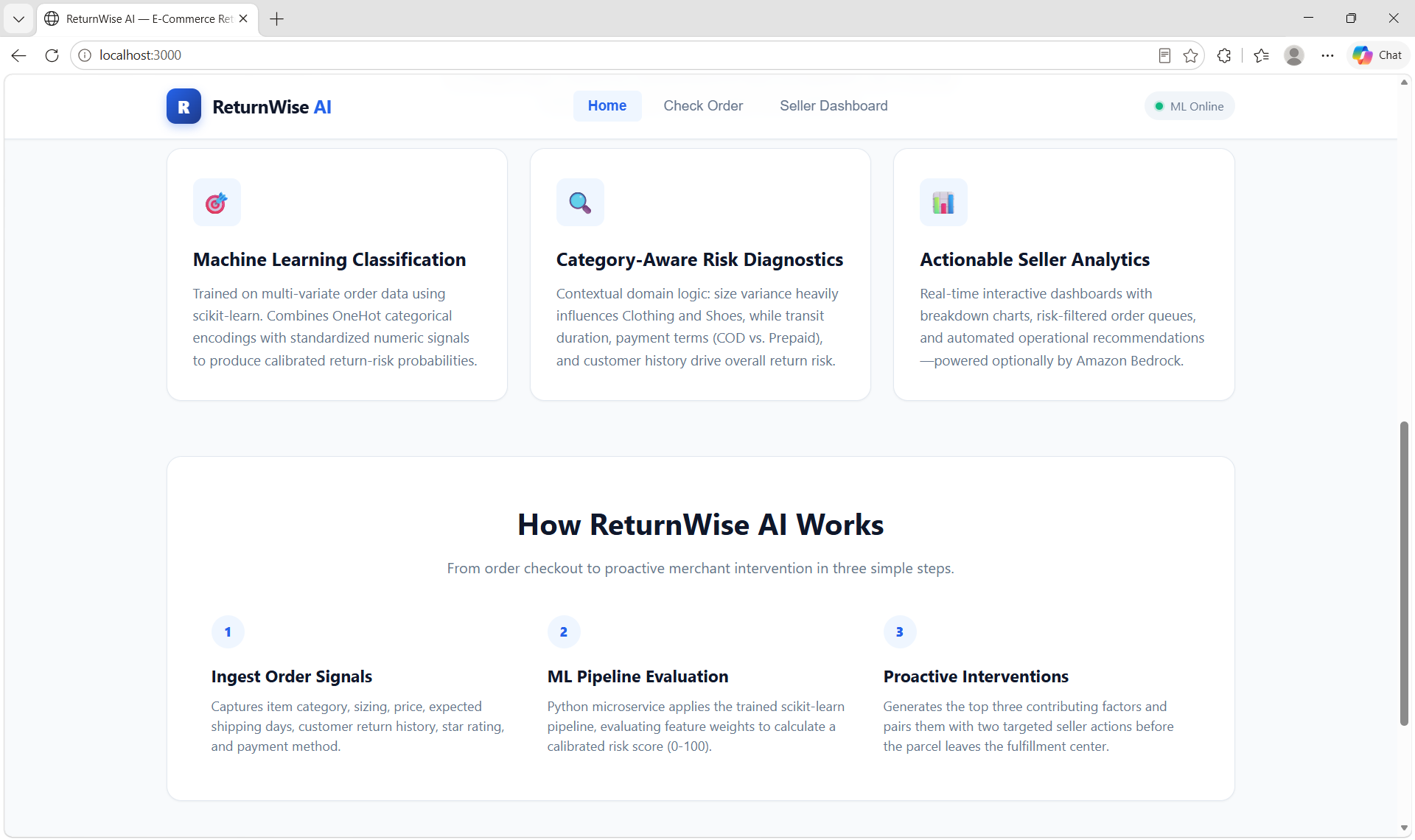
Home page
-
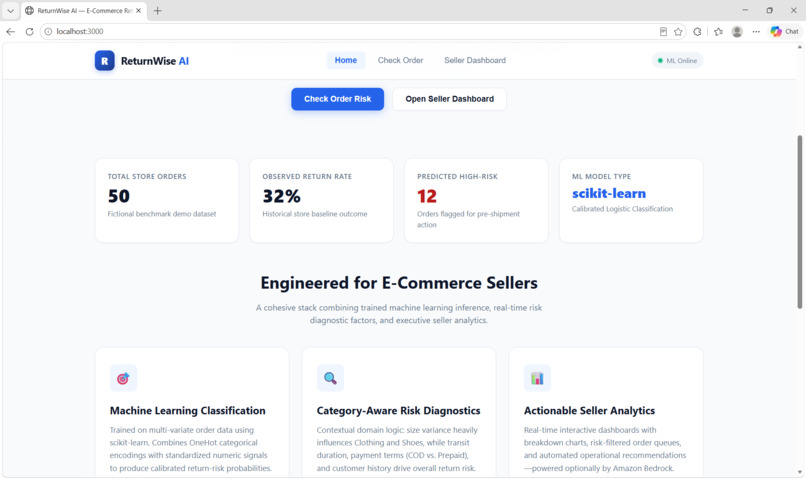
Home page
-
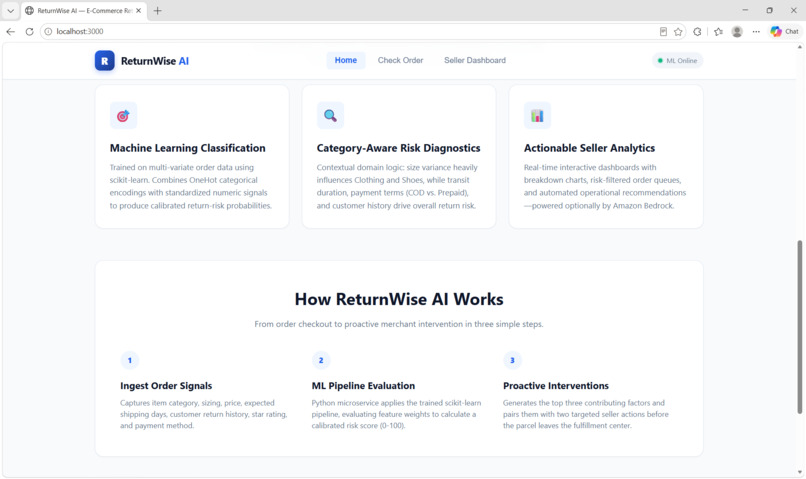
Home page
-
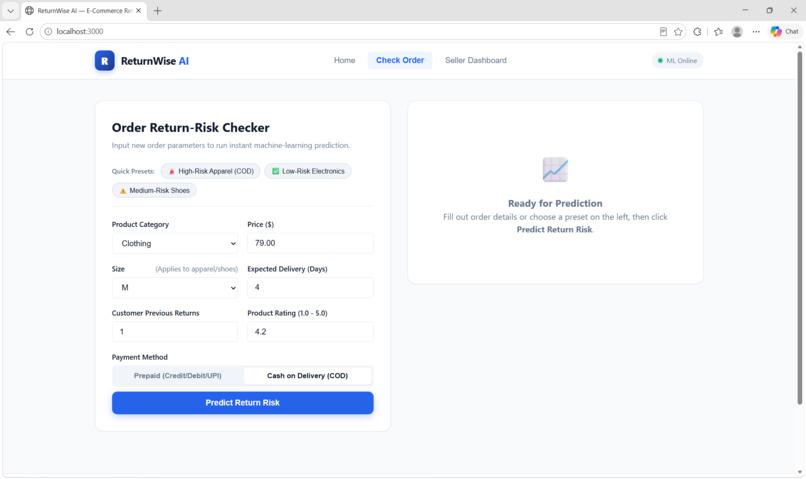
Ai prediction Order
-
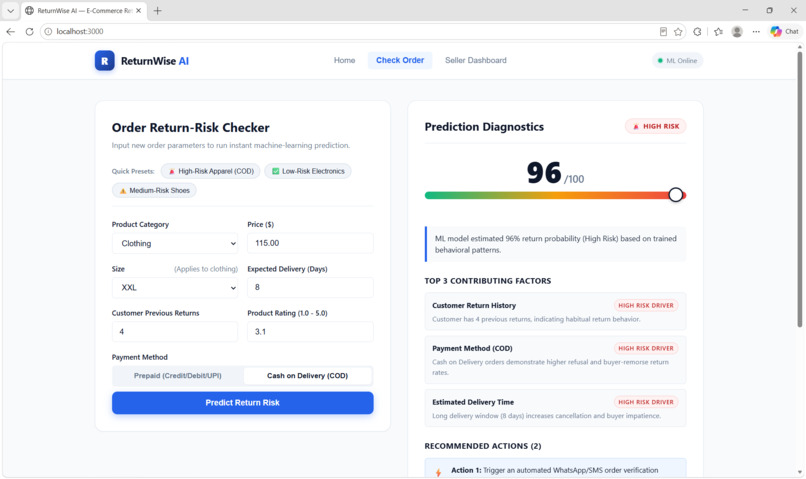
Ai prediction Order
-
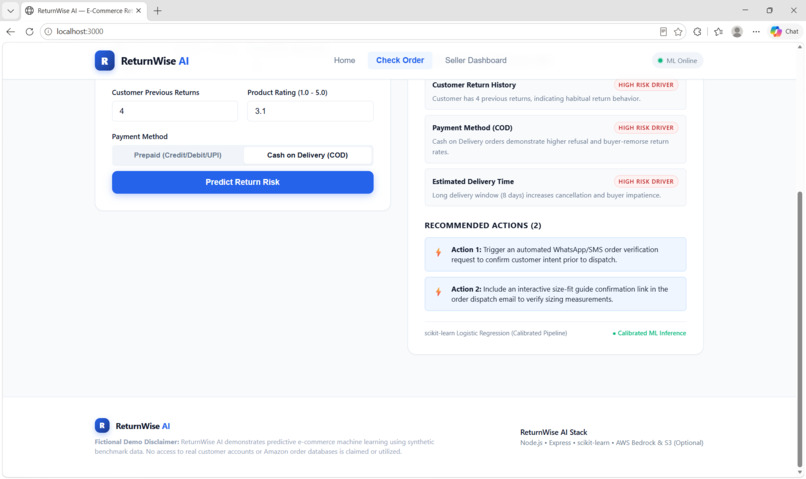
Ai prediction Order
-
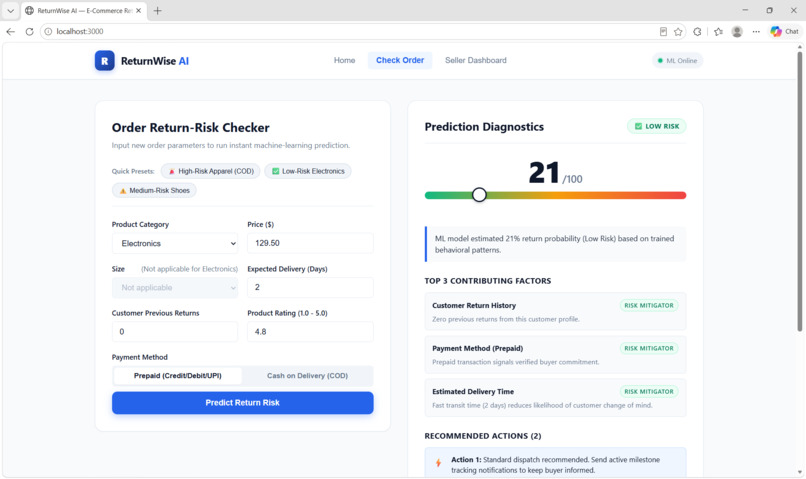
Ai prediction Order
-
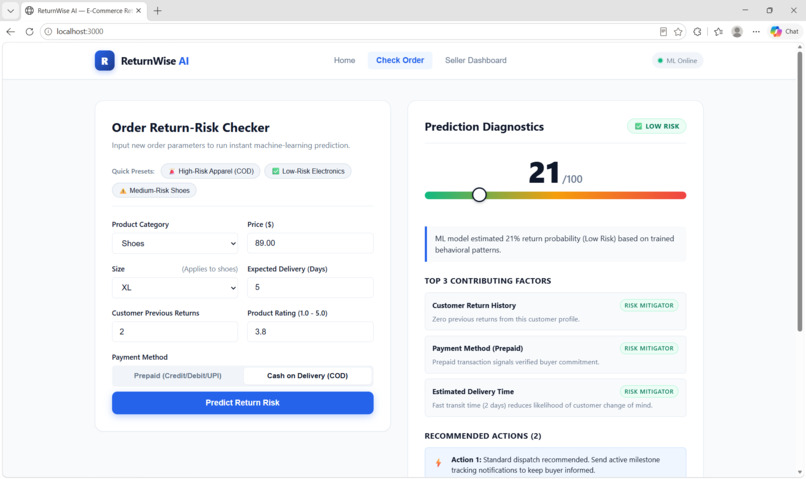
Order check
-
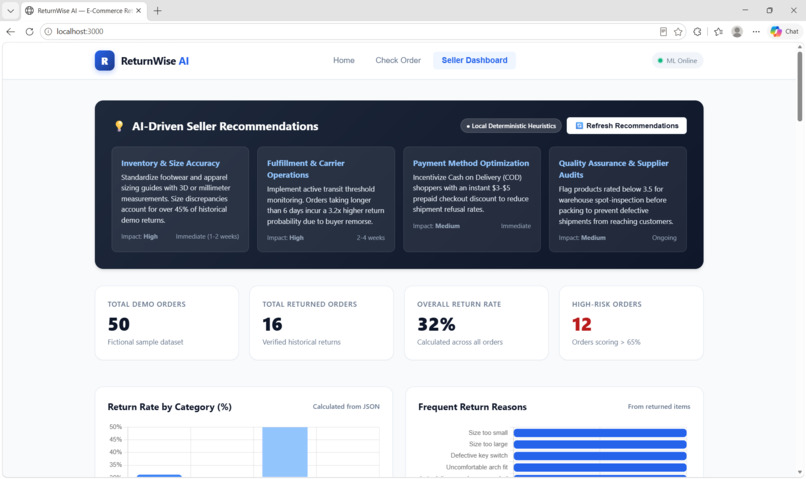
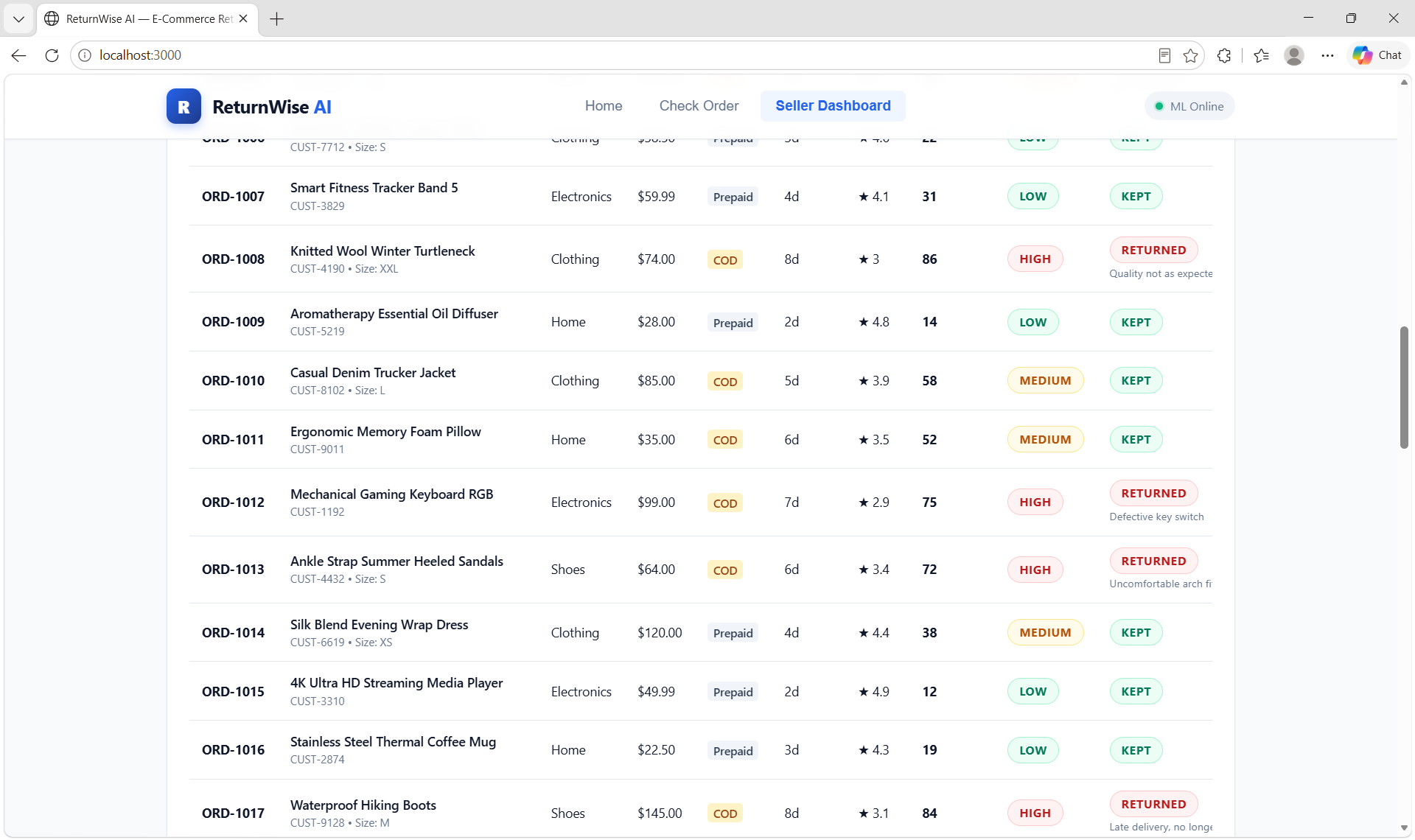
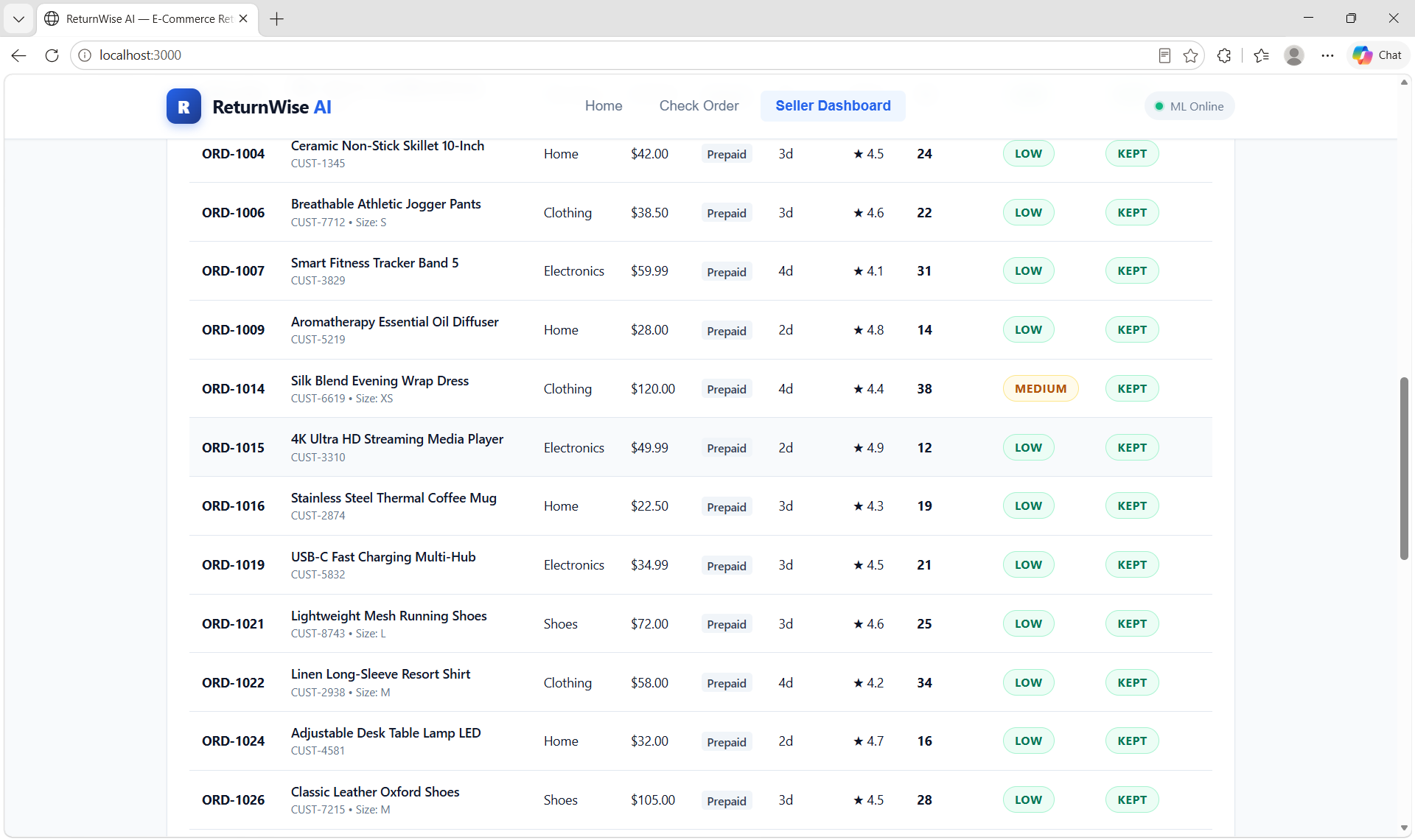
Seller dashboard
-
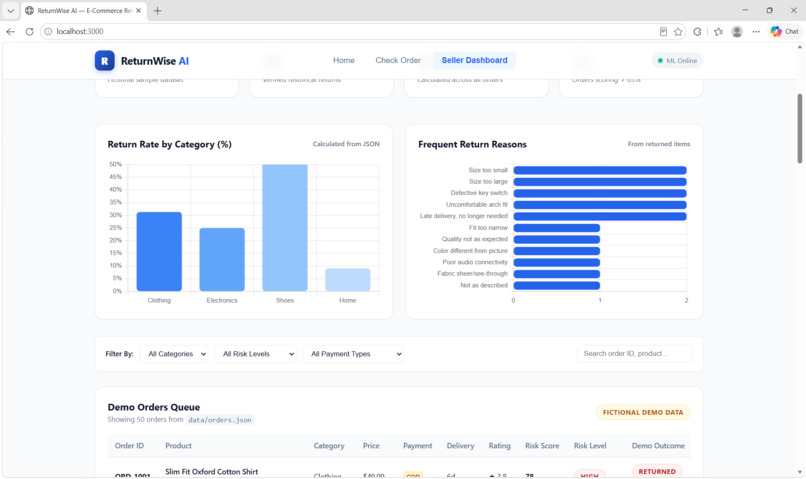
Seller dashboard
-
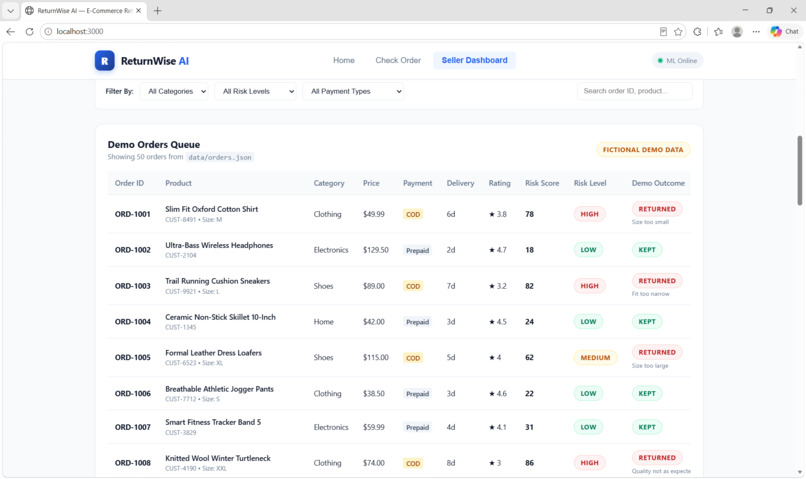
Seller dashboard
-
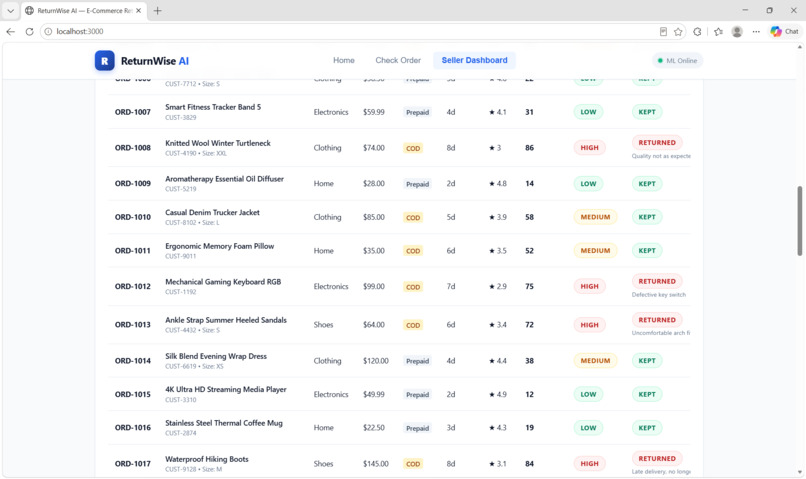
Seller dashboard
-
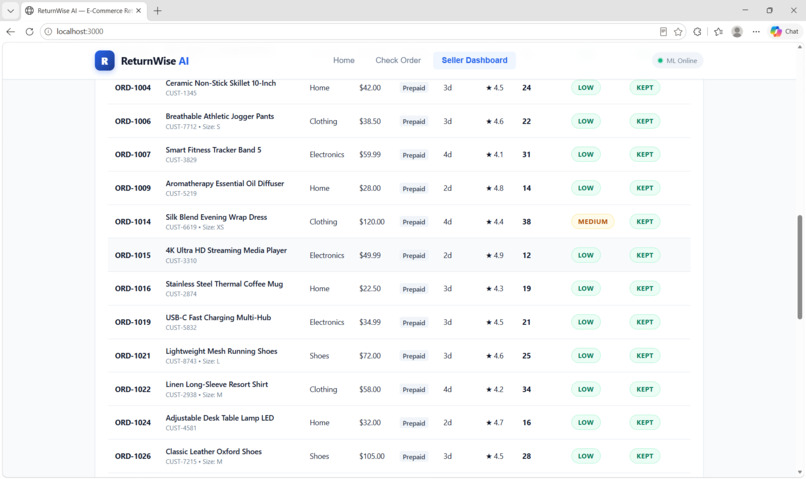
Seller dashboard
Inspiration
Online shopping has made life easy, but returns are a huge hidden problem. Sellers lose money on shipping, repackaging and unsold stock, shoppers waste time on exchanges, and the planet pays the price in extra packaging and emissions. We noticed that most returns happen for a few repeated reasons like wrong size, wrong expectations or poor product information. We built Returnwise to fix the problem before the return happens.
What it does
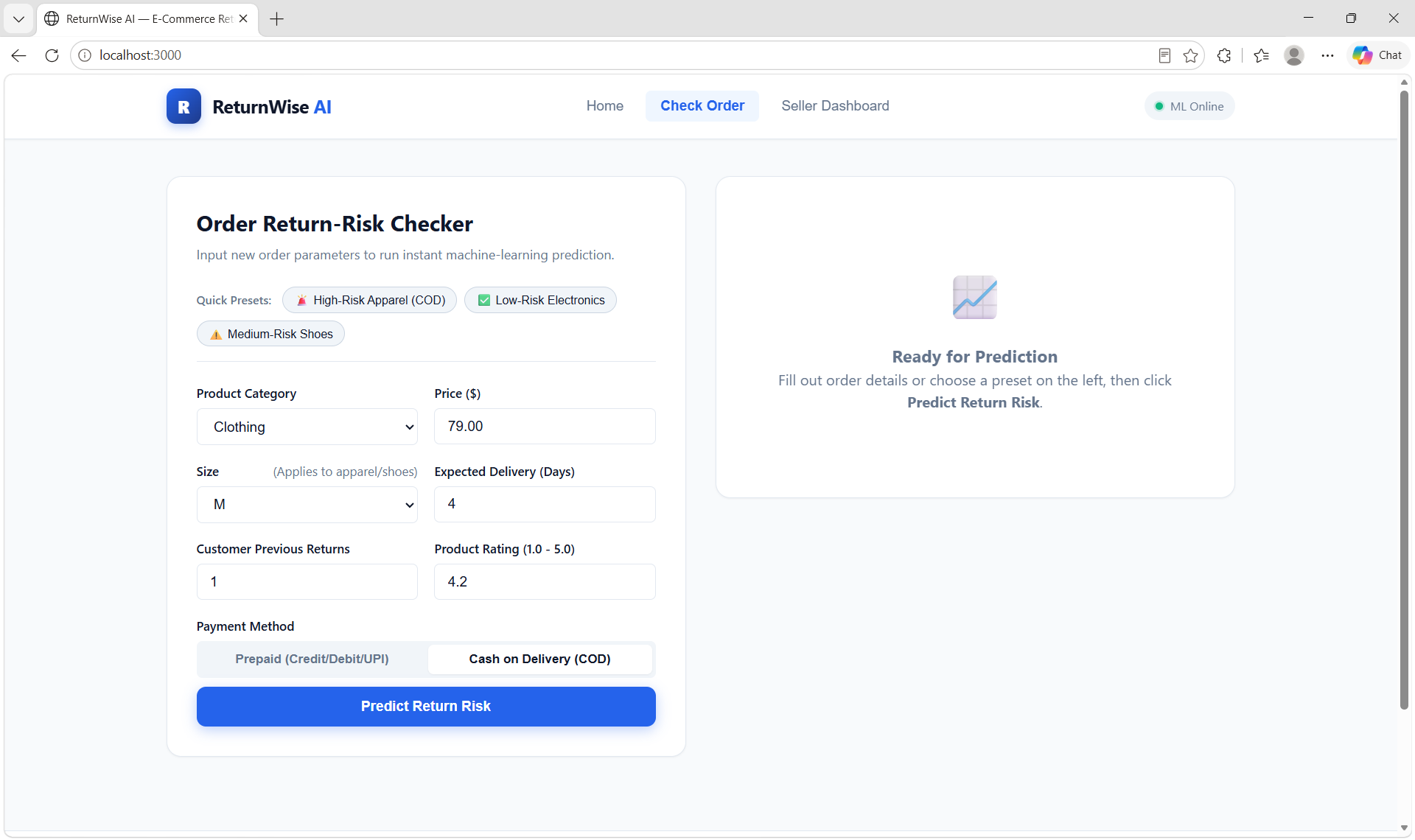
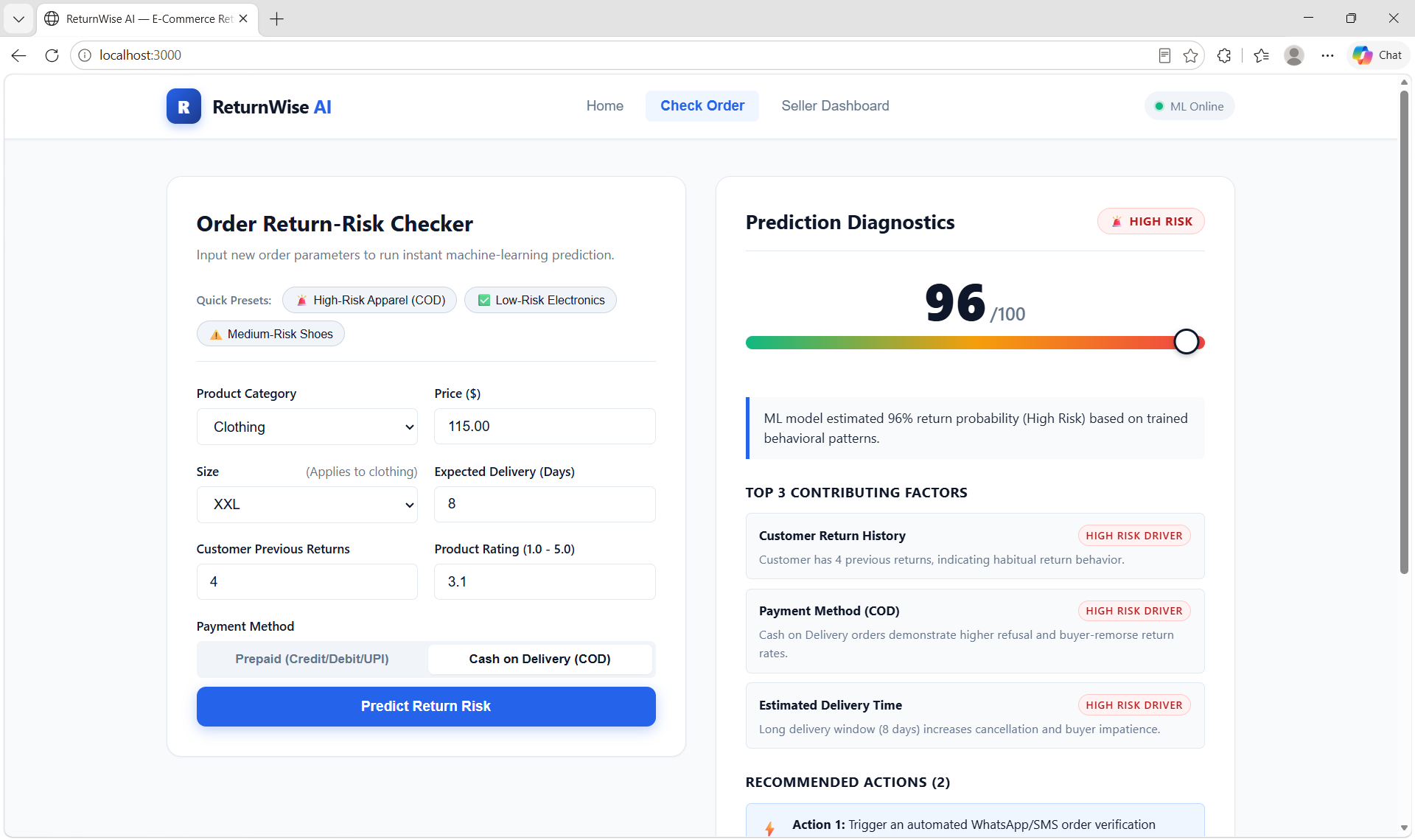
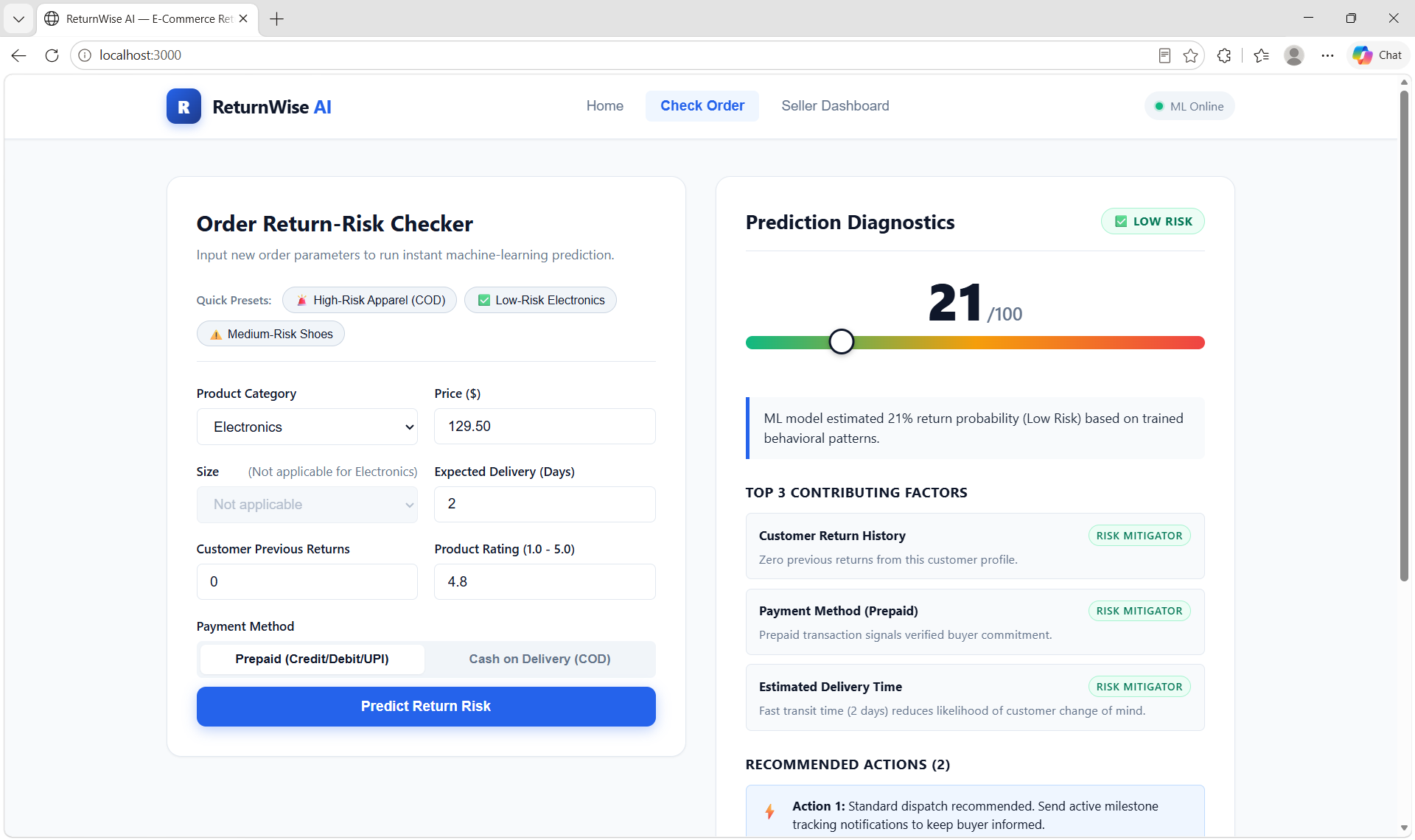
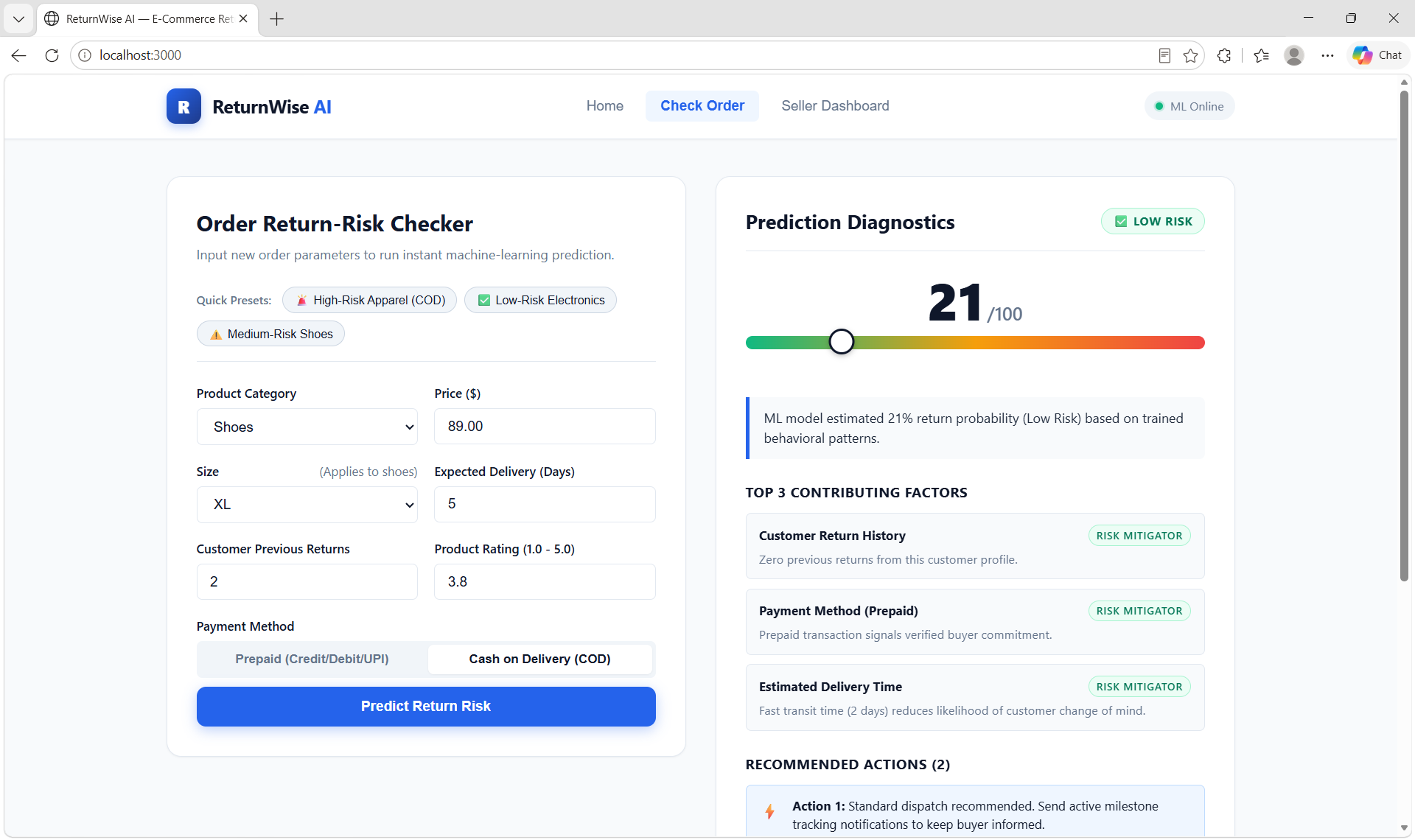
Returnwise is an AI-powered platform that helps reduce product returns in e-commerce.
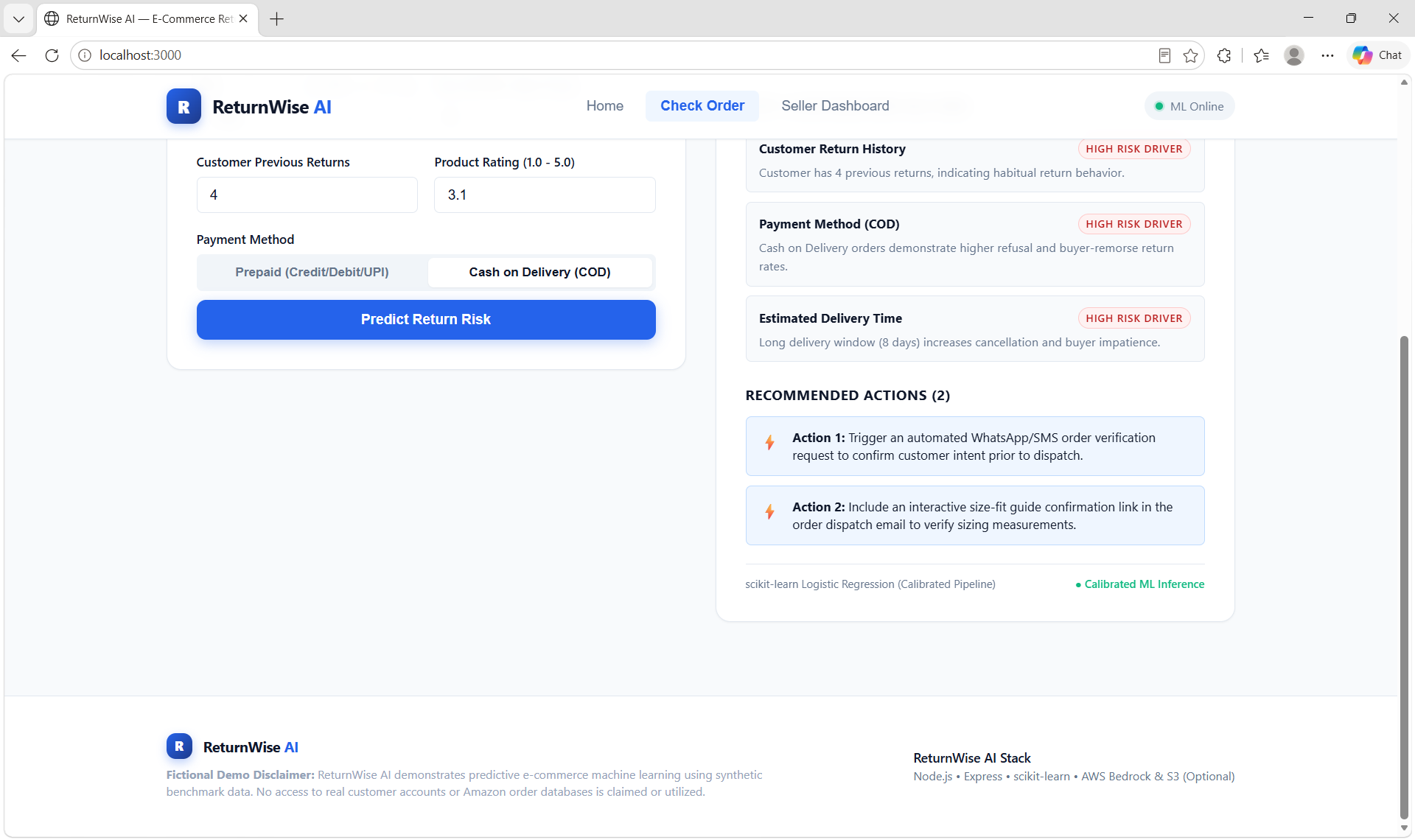
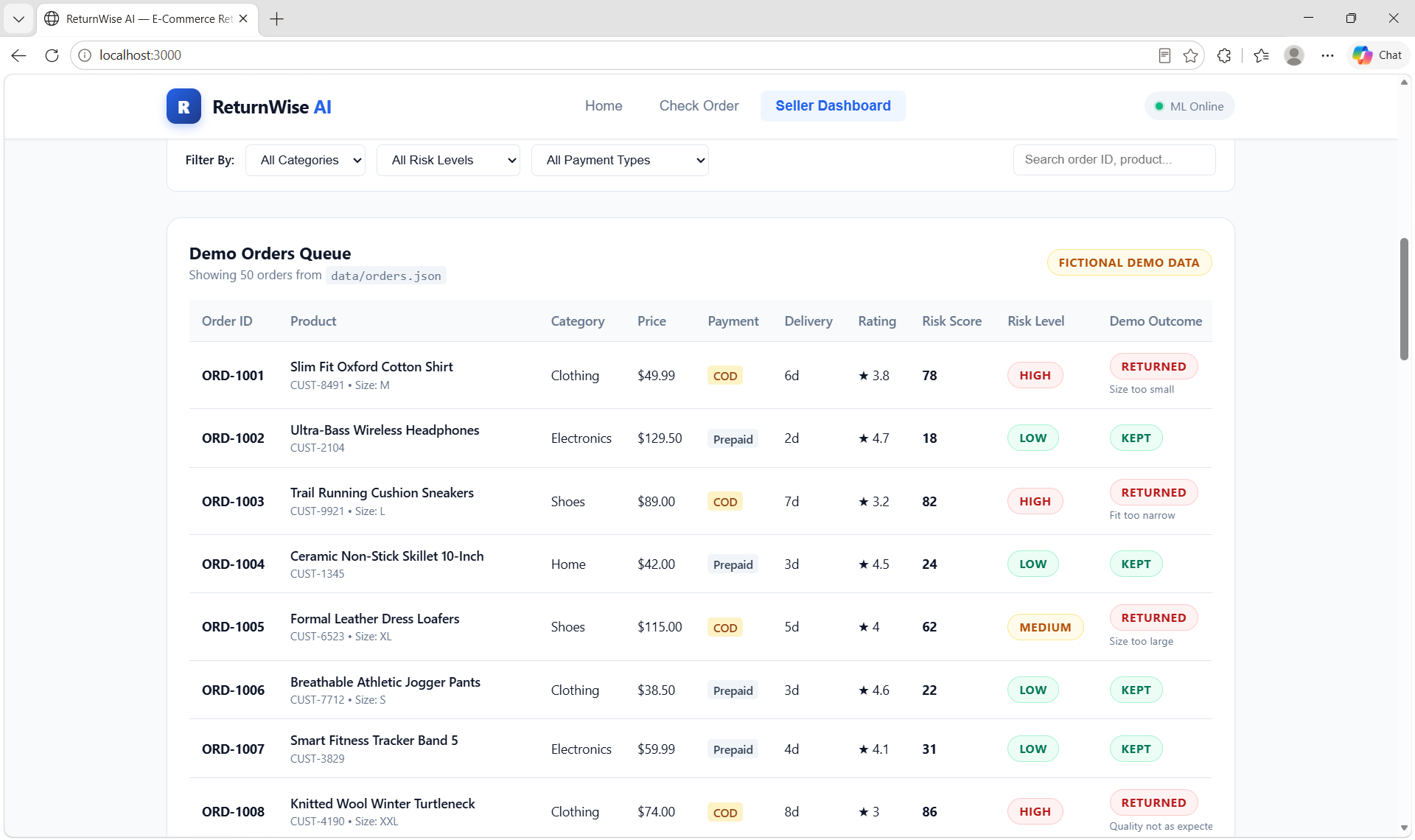
- Predicts return risk: it analyzes order and product details to flag items likely to be returned.
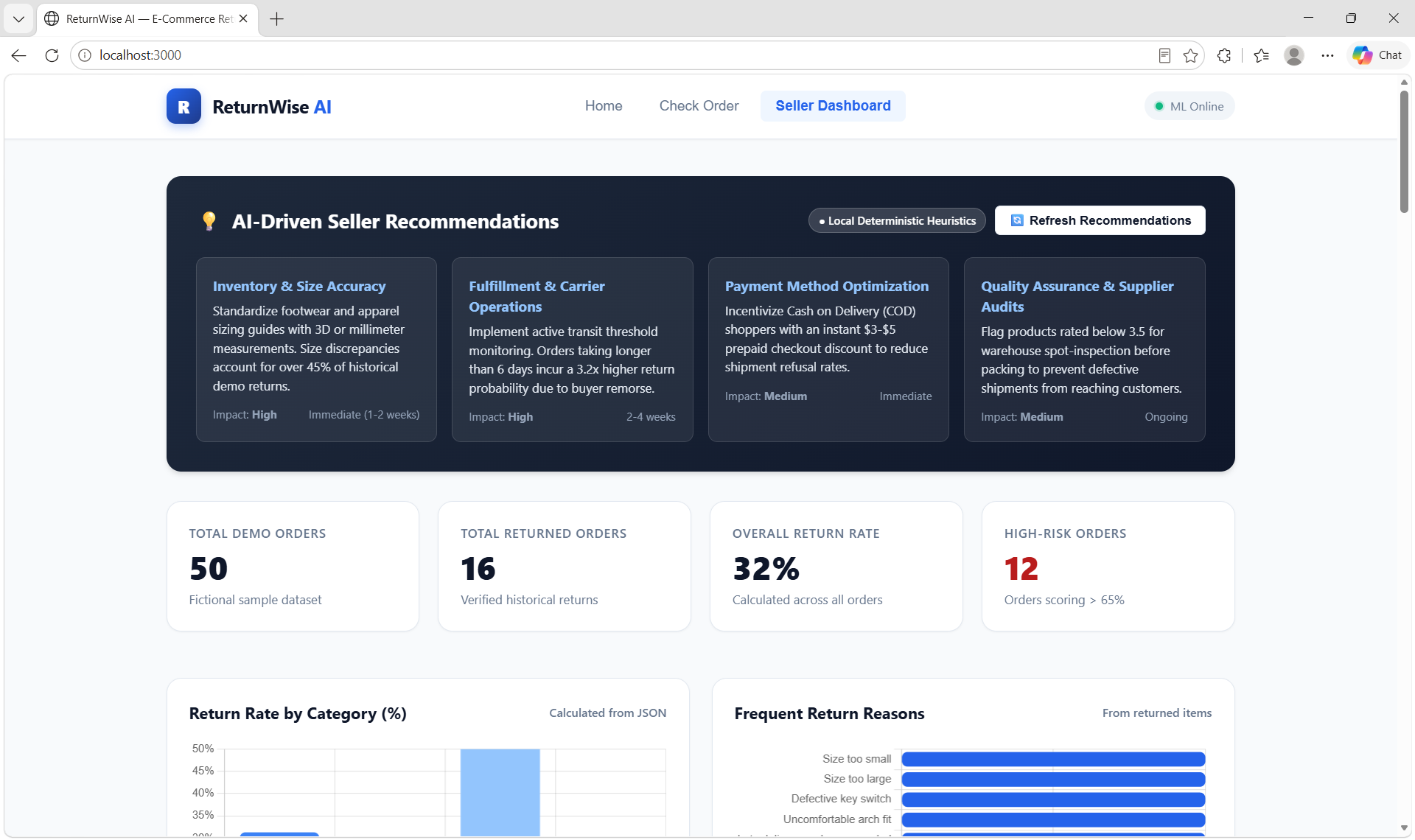
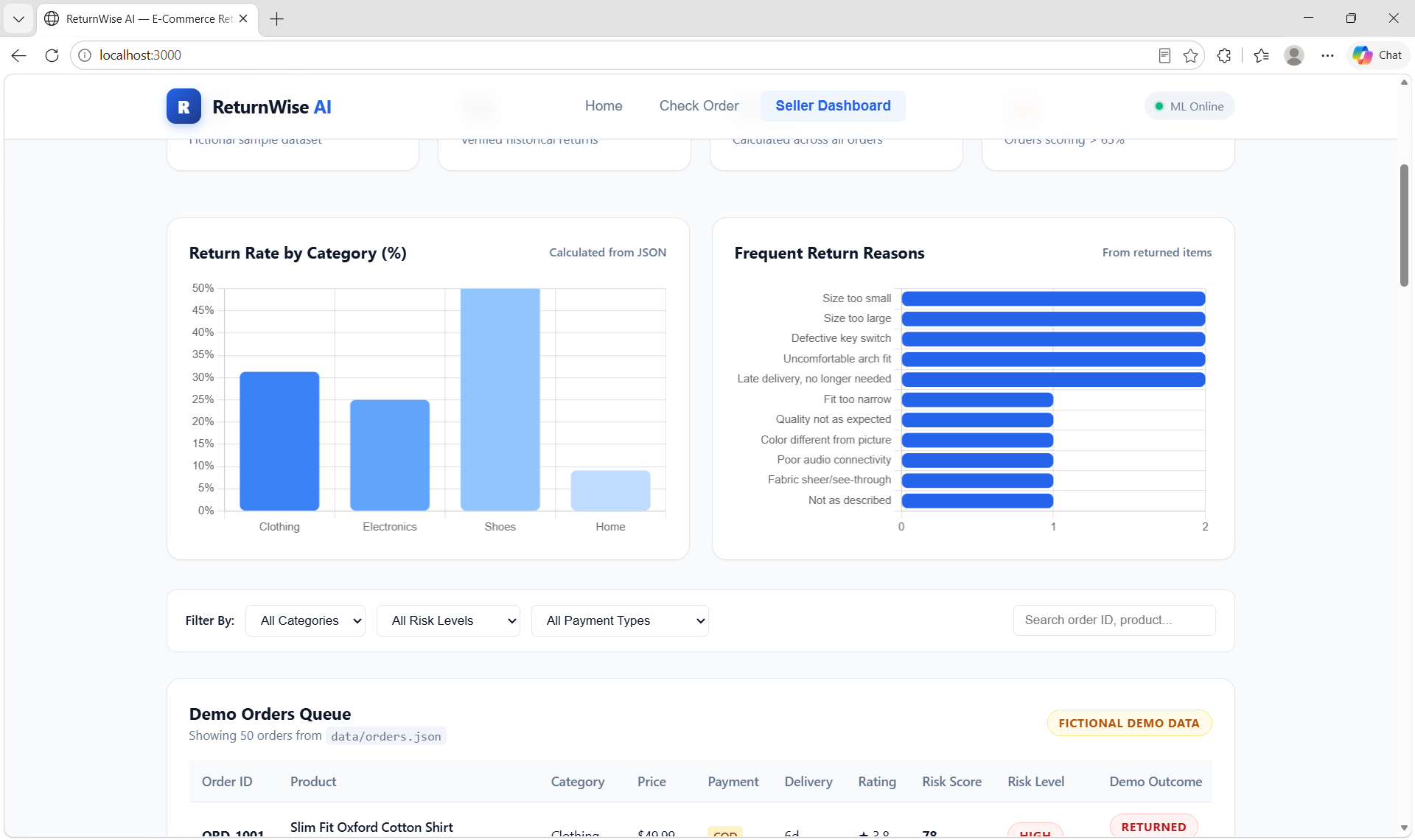
- Finds the real reasons: it groups return reasons (size, quality, mismatch, damage) so sellers see what is actually going wrong.
- Guides smarter decisions: it gives shoppers better purchase guidance and gives sellers clear suggestions to improve listings.
- Saves money and waste: fewer returns means lower costs for sellers and less waste for everyone.
How we built it
- Frontend: HTML, CSS and JavaScript for a clean, simple dashboard.
- Backend: Python / Node.js APIs that handle data and predictions.
- AI/ML: a machine learning model that learns patterns from order and return data to estimate return risk.
- Cloud: AWS services for hosting and AI capabilities. We started with the core idea, built a working prototype first, and then improved the interface and accuracy step by step.
Challenges we ran into
- Limited real data: real return data is hard to find, so we had to create and clean sample data that still reflects real shopping behavior.
- Making predictions understandable: a risk score alone is not useful, so we spent time showing clear reasons behind each prediction.
- Tight deadline: we had to decide what to build first and what to leave for later, so we focused on the features that give the most value.
- Connecting frontend, backend and AI: getting all parts to work smoothly together took a lot of testing and debugging.
What we learned
- How to take an idea from a real-world problem to a working prototype in a short time.
- How to design an AI solution around a business problem, not just around the model.
- The importance of clean data and clear explanations for building trust in AI.
- How to plan, prioritize and manage time during a hackathon.
What's next for Returnwise
- Train on larger, real-world datasets to improve prediction accuracy.
- Add size and fit recommendations to prevent wrong-size returns.
- Build plugins and APIs so online stores can integrate Returnwise easily.
- Add a seller analytics dashboard with trends and weekly insights.
- Launch a mobile-friendly version for shoppers.
What it does
How we built it
Challenges we ran into
Accomplishments that we're proud of
What we learned
What's next for ReturnWise AI
Built With
- amazon-bedrock
- amazon-web-services
- aws-lambda
- css3
- express.js
- github
- html5
- javascript
- machine-learning
- node.js
- numpy
- pandas
- python
- rest-api
- scikit-learn

Log in or sign up for Devpost to join the conversation.