-
-
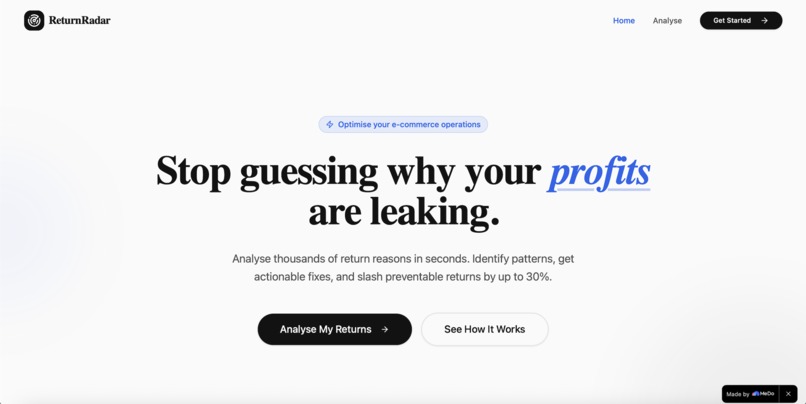
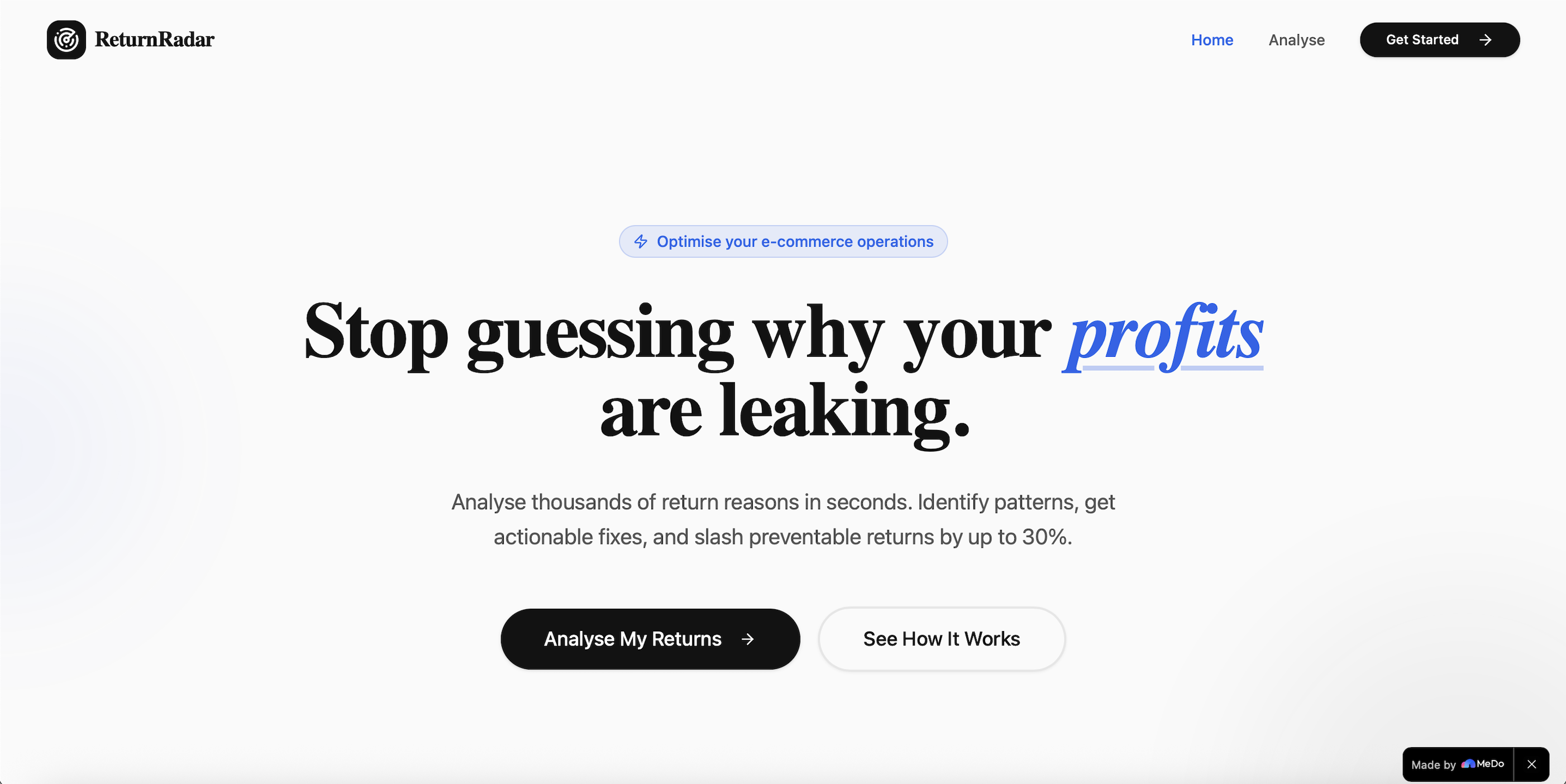
Homepage.
-
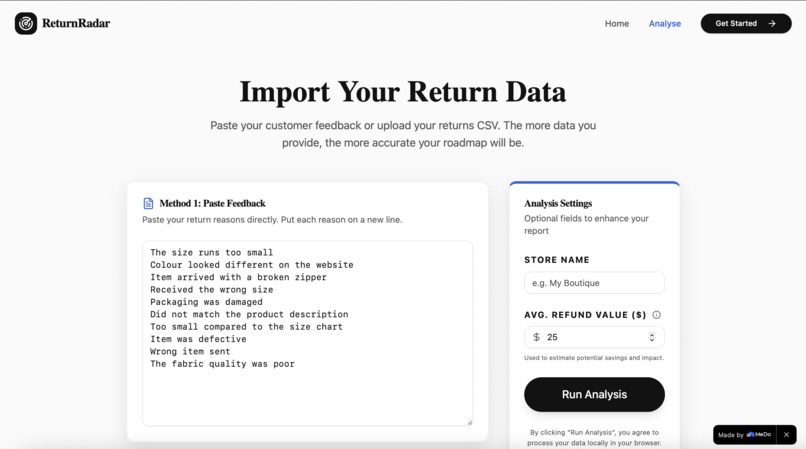
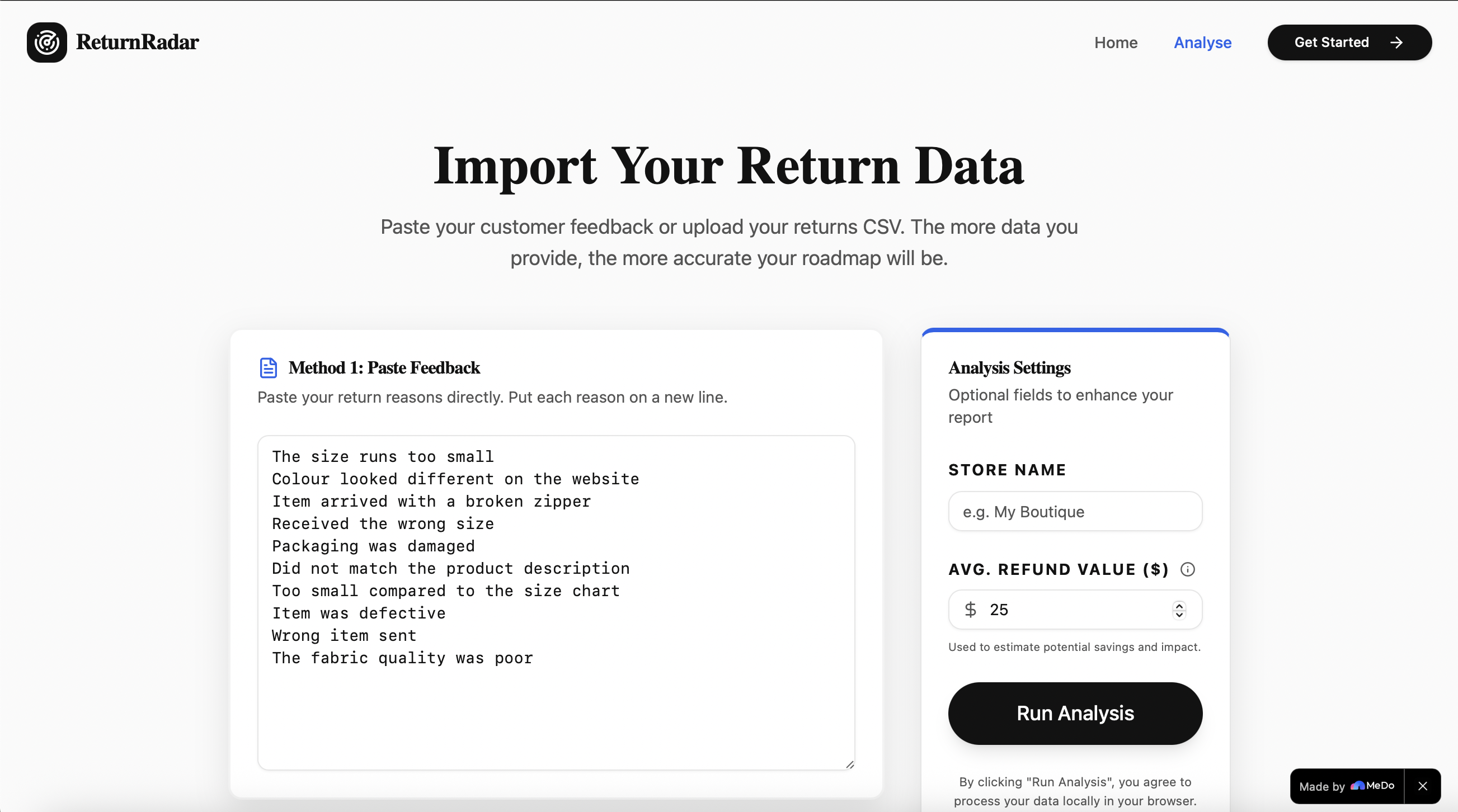
Paste return reasons as text and write the average refund value,
-
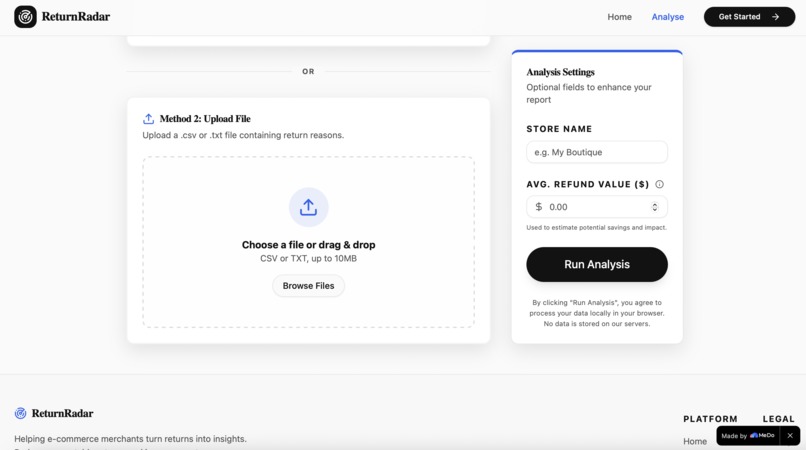
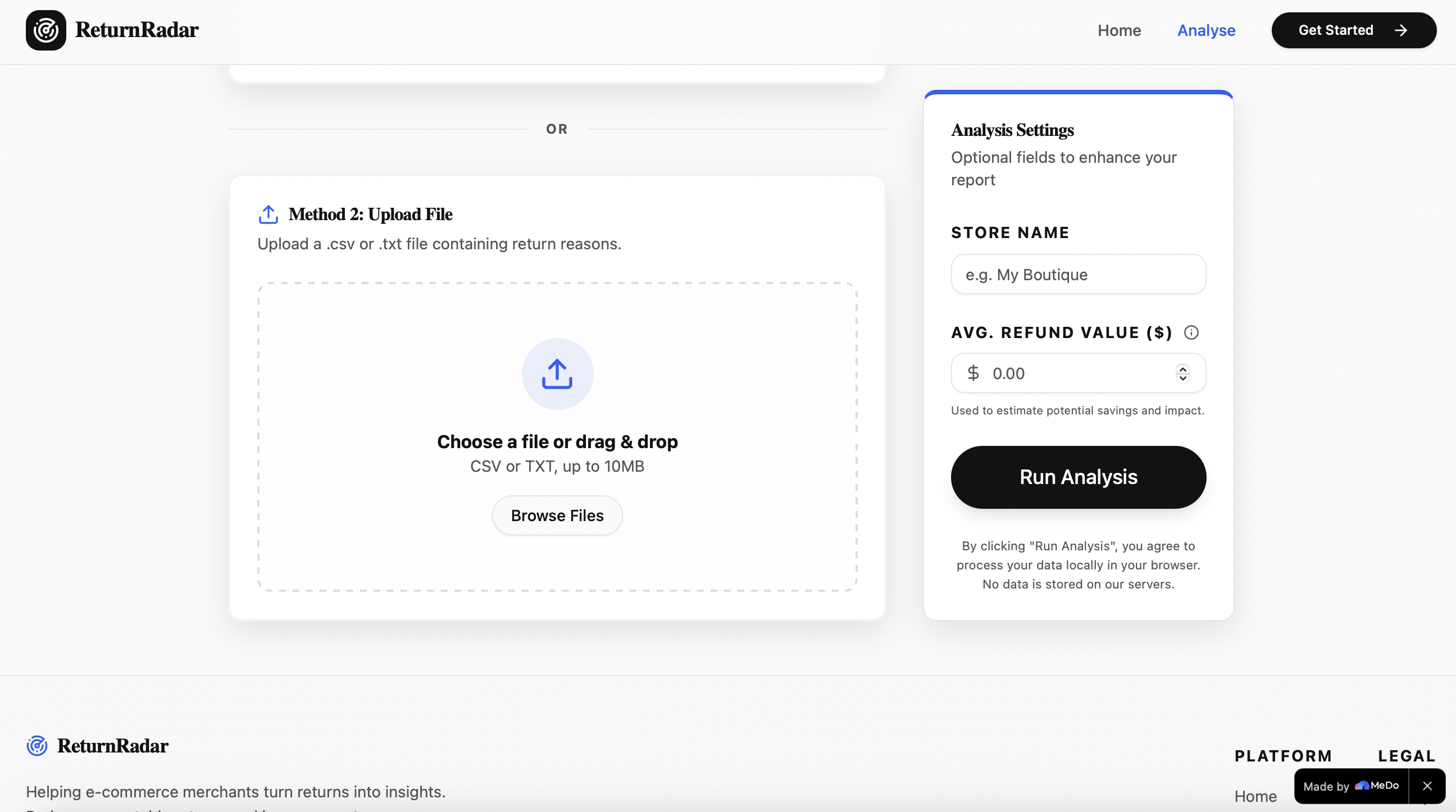
or import a csv or txt file and write the average refund value.
-
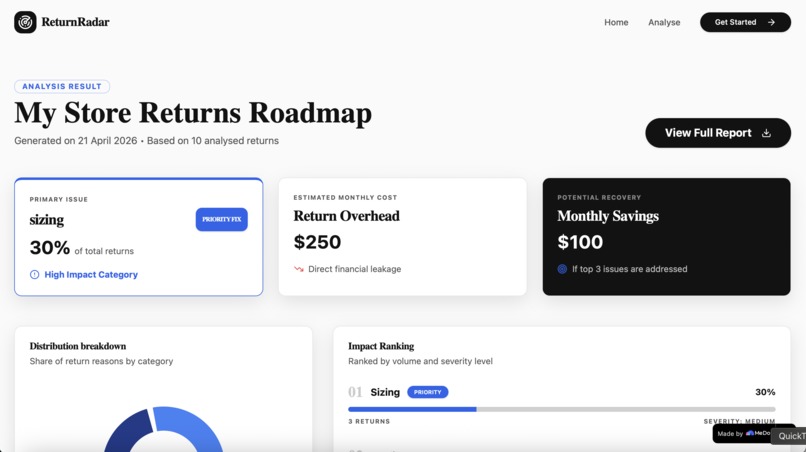
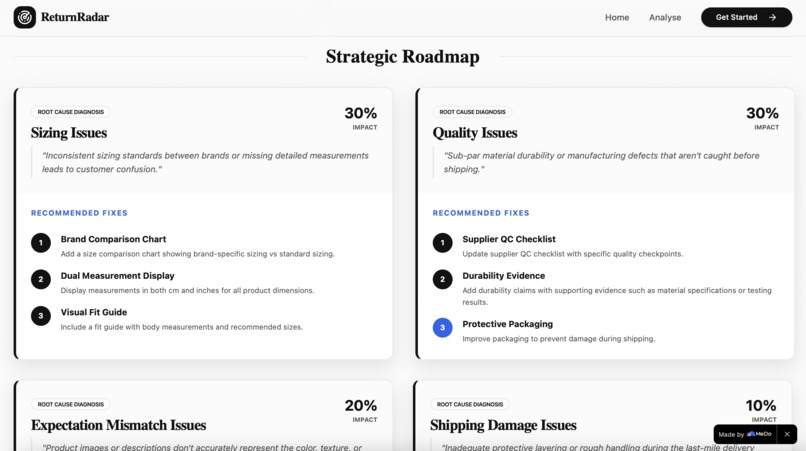
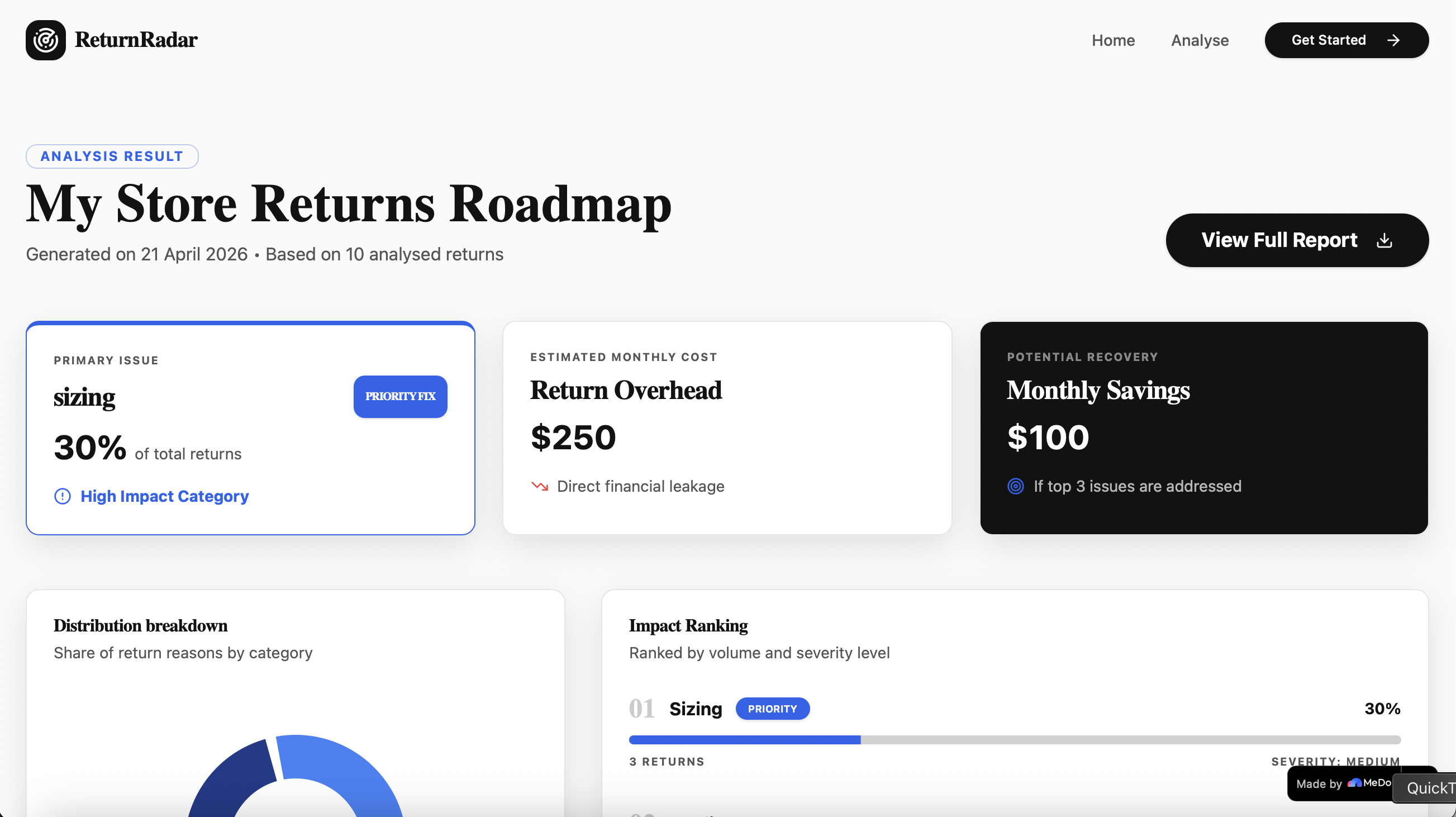
ReturnRadar analyzes, then gives you a report and many recommendations.
-
Inspiration
Every e-commerce merchant faces the same problem. Returns are eating into their margins, and the data needed to fix it is sitting right there in their admin panel, completely ignored.
A Shopify store with 500 monthly returns might have the answer to 80% of them buried in free-text fields like "didn't fit as expected" or "colour looked different on screen." Nobody has time to read all of that. So the same problems repeat. Every single month.
I built ReturnRadar to turn that messy, ignored data into a clear action plan in under 60 seconds.
What It Does
ReturnRadar takes raw customer return reasons, pasted as text or uploaded as a CSV, and uses AI to:
- Cluster similar reasons into five categories: sizing, quality, expectation mismatch, shipping damage, and wrong item
- Rank issues by volume and estimated revenue impact
- Diagnose likely root causes, for example "sizing complaints suggest a missing or inaccurate size guide"
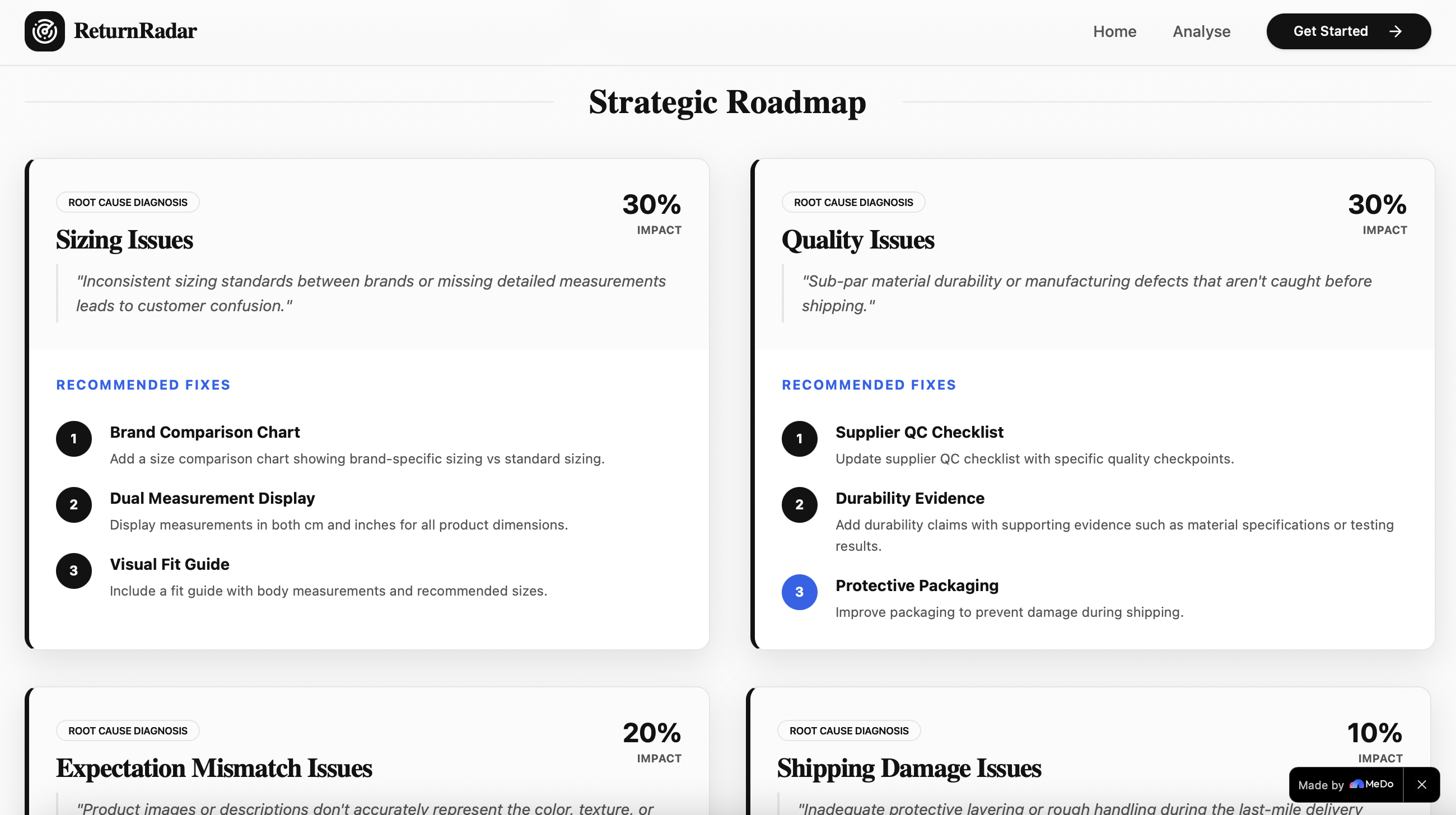
- Recommend specific, actionable fixes per category
- Generate a clean, shareable report for your team or supplier
How I Built It with MeDo
MeDo made this possible without writing a single line of code.
Phase 1 — Describing the Core Problem
I started with a single multi-turn conversation:
"I want an app where a user pastes e-commerce return reasons, and the AI groups them into categories, ranks the top issues, identifies root causes, and suggests fixes. Output should be structured and visual."
MeDo generated the full app skeleton including the input form, processing state, and dashboard layout in the very first conversation turn.
Phase 2 — The Pattern Dashboard
The most impressive feature MeDo generated was the live pattern dashboard: a ranked breakdown of return categories with percentage share, colour-coded severity bars, a red Priority Fix badge on the worst offender, and expandable fix suggestions per category. Building this manually would have taken days.
Phase 3 — Plugins and Integrations
I used MeDo's plugin system to extend the app with two key integrations:
CSV upload so users can export data directly from Shopify or WooCommerce and drop the file straight in without any manual copying.
PDF report export so the final analysis becomes a one-click shareable document ready for team meetings or supplier negotiations.
Phase 4 — Iterative Refinement
When early root cause suggestions felt too generic, I simply told MeDo:
"For sizing issues, suggest specific fixes like adding a size comparison chart, updating measurements in both cm and inches, or linking a fit guide."
MeDo updated the logic immediately. No code changes, no config files, just conversation.
Challenges
The biggest challenge was getting the AI clustering precise enough. Early versions merged distinct issues, treating "wrong size sent" and "size ran small" as one category when they actually have completely different fixes. I resolved this by iterating the categorisation prompt across several MeDo conversation turns, adding explicit definitions for each category so the AI could tell them apart reliably.
What I Learned
MeDo's multi-turn chat feels less like a code generator and more like a collaborative product partner. Describing outputs visually, for example "show it as a ranked list with severity colours," produced far better UI results than describing them in functional terms. And no-code does not mean no-thinking. The quality of what MeDo builds is directly proportional to how clearly you can articulate the problem.
Impact
A store processing 500 returns per month at an average refund value of $15, with 30% of those returns being preventable, stands to save $2,250 every month by acting on ReturnRadar's recommendations.
ReturnRadar pays for itself on the very first use.
Built With
- csv
- ernie
- markdown
- medo
- natural-language-processing


Log in or sign up for Devpost to join the conversation.