Inspiration
The idea for Retronet came directly from my own experience in retrospectives. Too often I’d sit in a retro and either draw a blank or fixate on one detail, while important discussions from Slack or GitHub never even made it into the conversation. I wanted a way to “throw a net” over all our work — GitHub, Linear, Slack — and walk into the retro with the full picture. That frustration, plus the opportunity to experiment with Kiro at the hackathon, became the spark for Retronet.
What it does
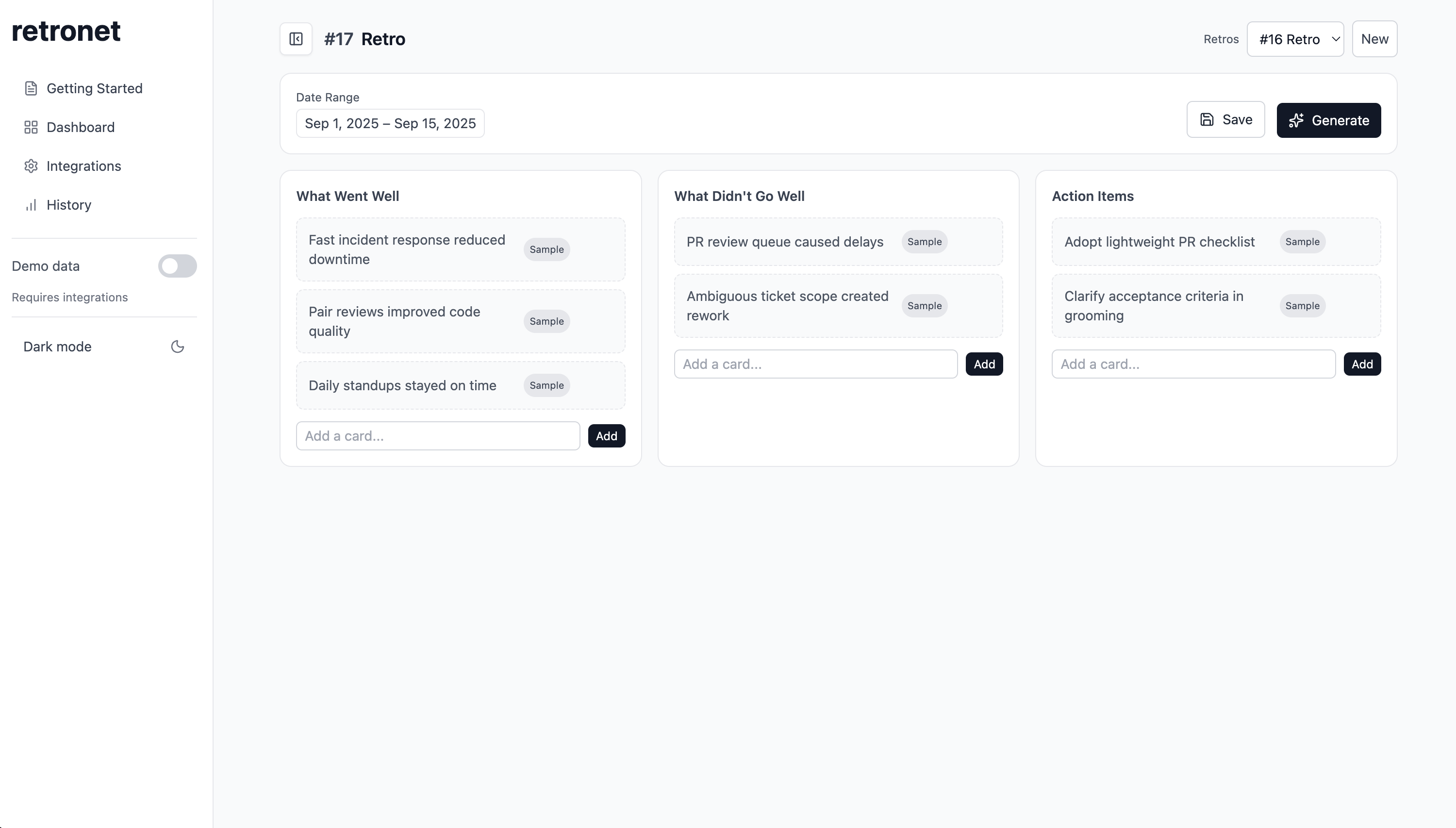
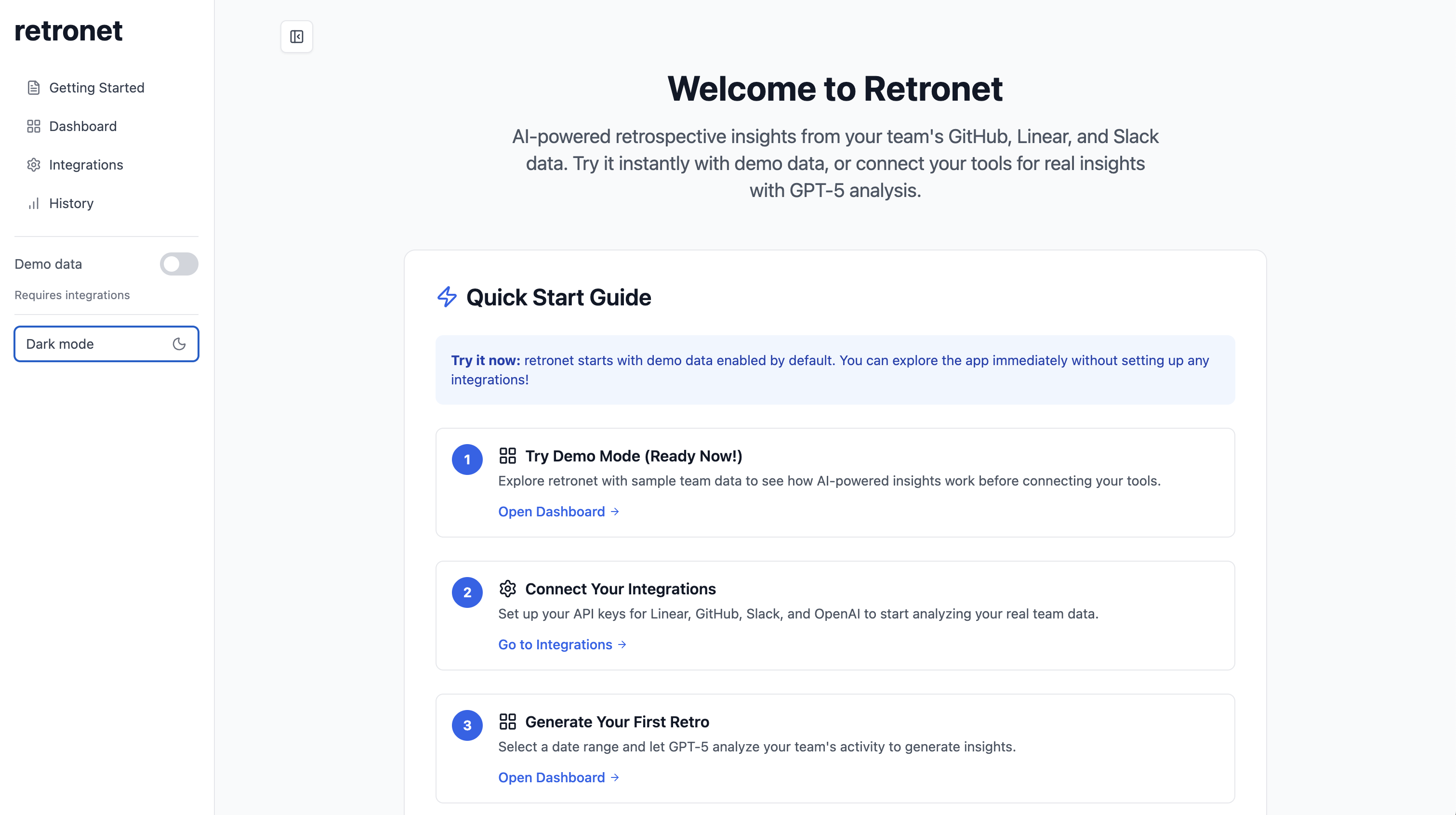
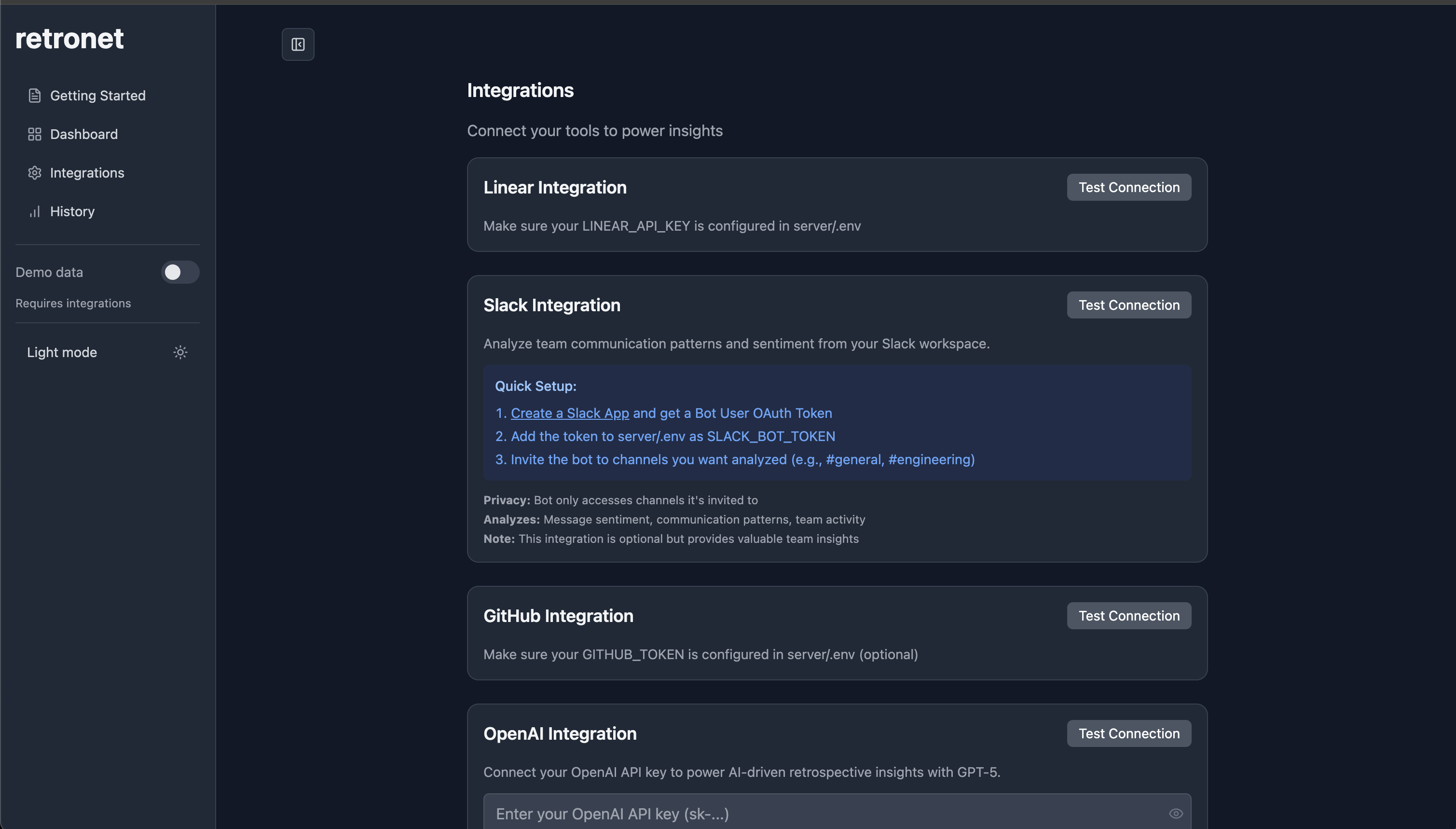
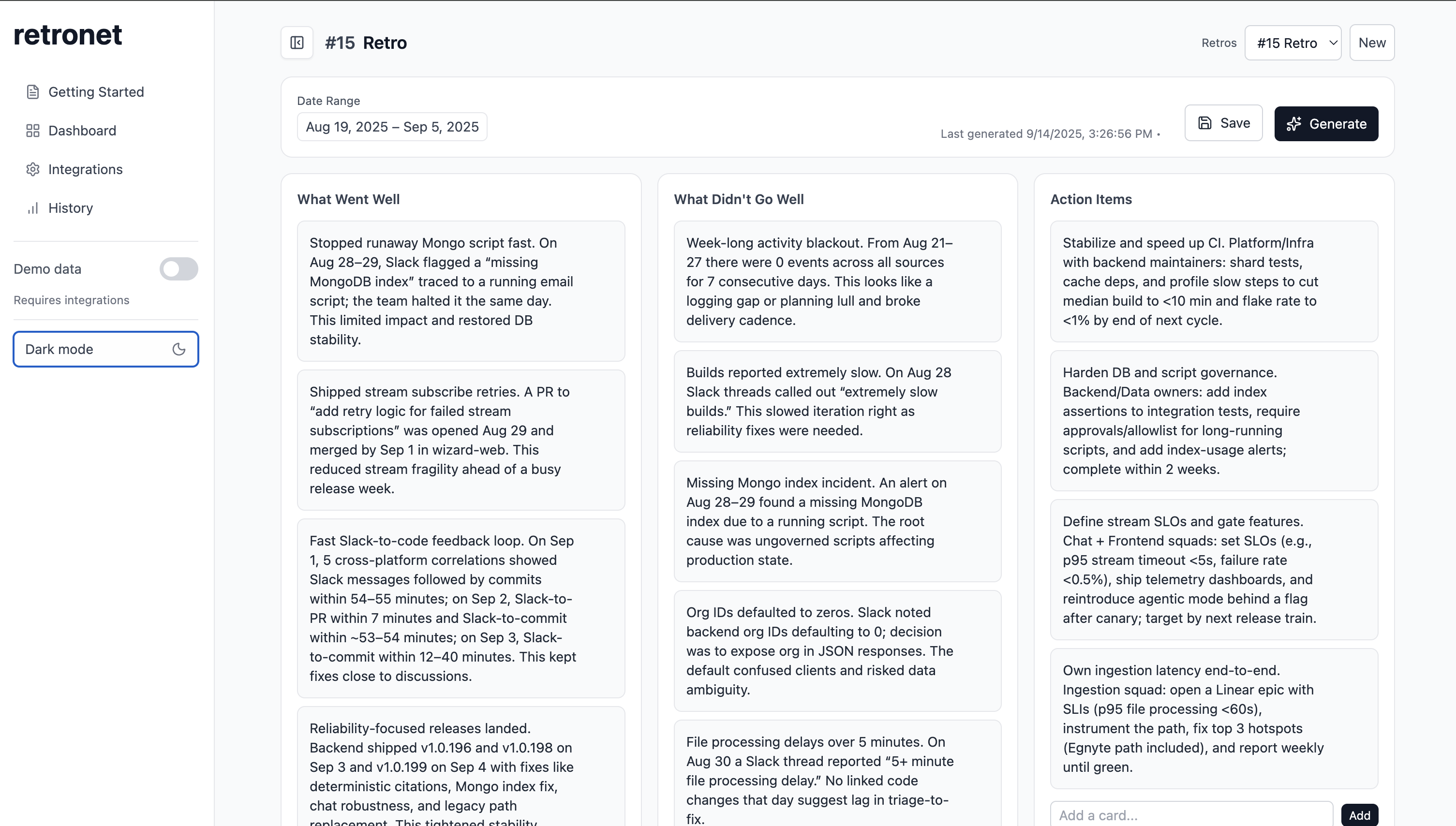
Retronet, automatically generates comprehensive sprint retrospectives by analyzing your team's actual work patterns. It pulls data from data sources, such as Linear, GitHub, and Slack to identify patterns, blockers, and achievements you might have missed, turning scattered information into data-driven insights for better retrospectives.
How we built it
I built Retronet with Kiro as a coding partner. Instead of vibe coding, I started with specs that outlined requirements, design, and implementation steps. Kiro generated code for the backend, frontend, and integrations with GitHub, Linear, and Slack. Hooks kept the codebase clean, and Kiro’s test-driven approach meant every feature shipped with unit, integration, and performance tests.
Challenges we ran into
- LLM context window limits when analyzing large date ranges → solved with a chunk-and-merge workflow.
- Integrating three APIs with different auth models and docs.
- Keeping track of code quality while moving fast.
Accomplishments that we're proud of
- Fully working end-to-end retro assistant in a short hackathon window.
- Automatic test generation for every feature → production-ready code quality.
- Pulling GitHub, Linear, and Slack data together seamlessly.
- Turning retros from fuzzy memory into actionable, data-backed insights.
What we learned
- Specs before coding = clarity and speed.
- AI coding assistants can enforce best practices, not just generate code.
- Hooks and automated tests feel like working with a teammate who keeps you honest.
- Chunking data makes large-scale LLM analysis feasible.
What's next for Retronet
- Adding vector database support for long-term memory across many sprints.
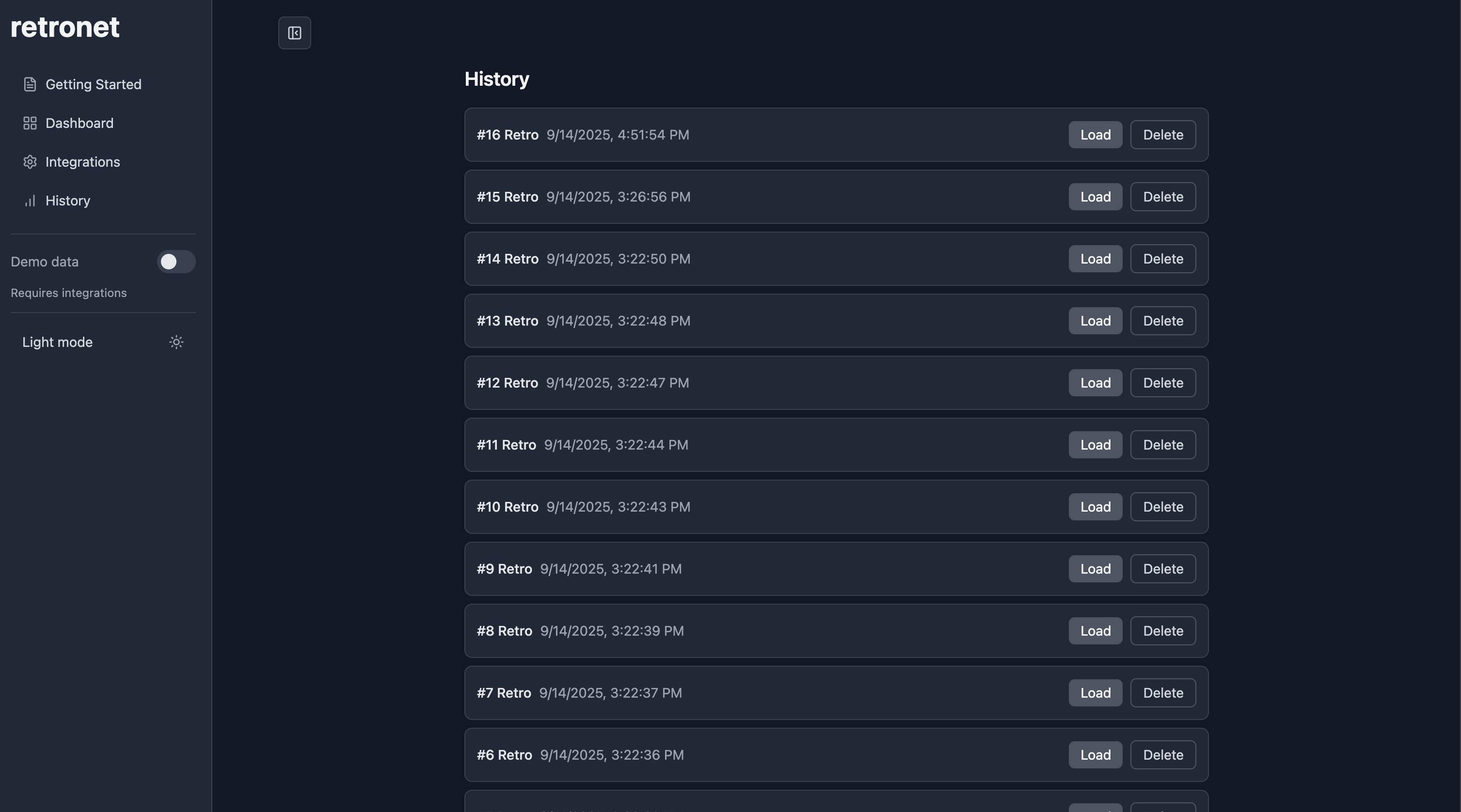
- Building a team-facing dashboard for trends across retros.
- More flexible custom retro formats beyond the 3 classic categories.
- Exploring multi-LLM support for performance and cost optimization.
Built With
- kiro
- node.js

Log in or sign up for Devpost to join the conversation.