Inspiration
As a lifelong retro game collector, I grew frustrated with the hassle of valuing my collection—jumping between platforms to check prices, guessing rarity, and never knowing the best place to sell. I wanted a tool that simplified this for fellow collectors, resellers, and casual owners alike—something fast, accurate, and tailored to the real needs of the retro gaming community.
What it does
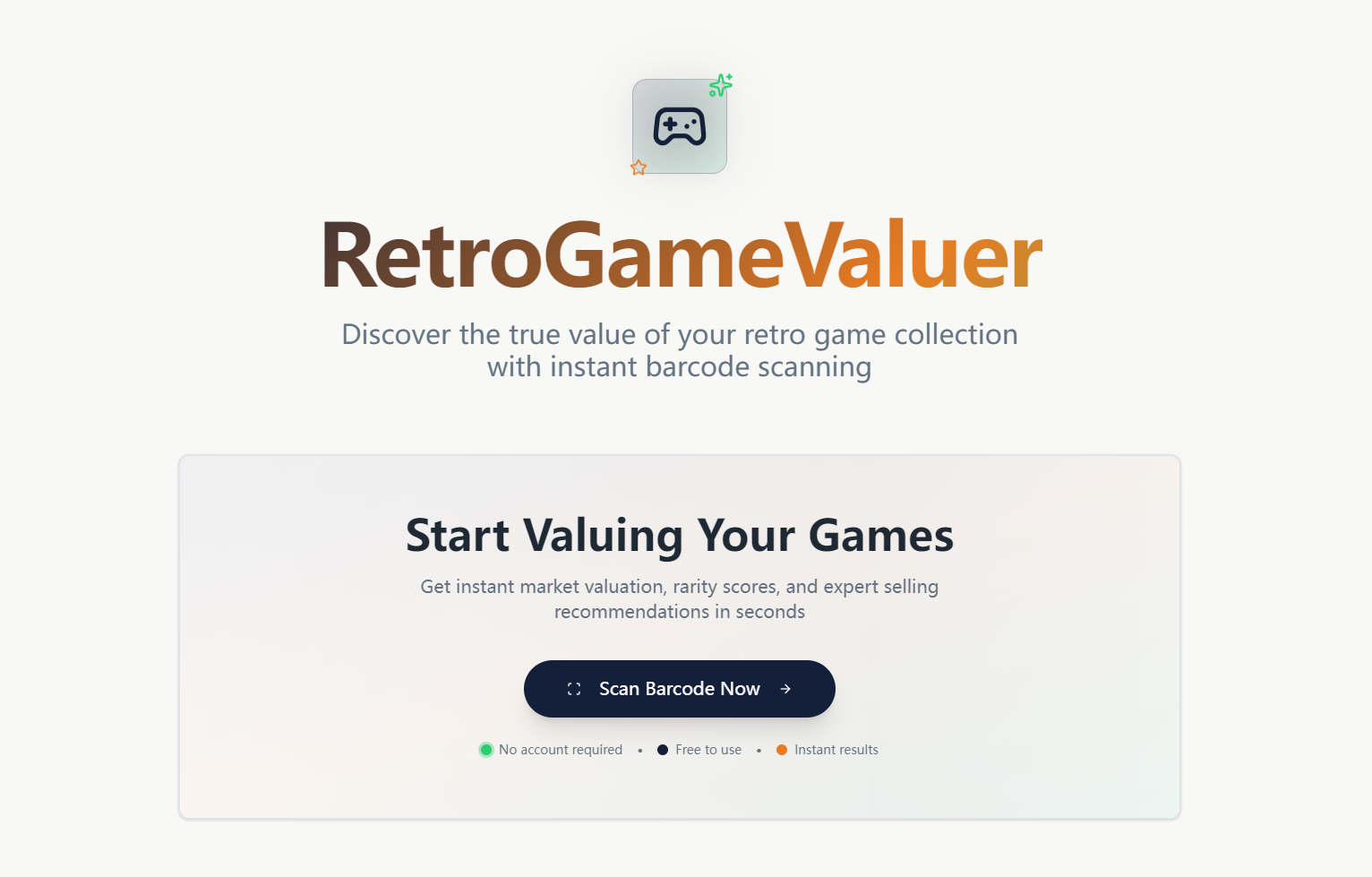
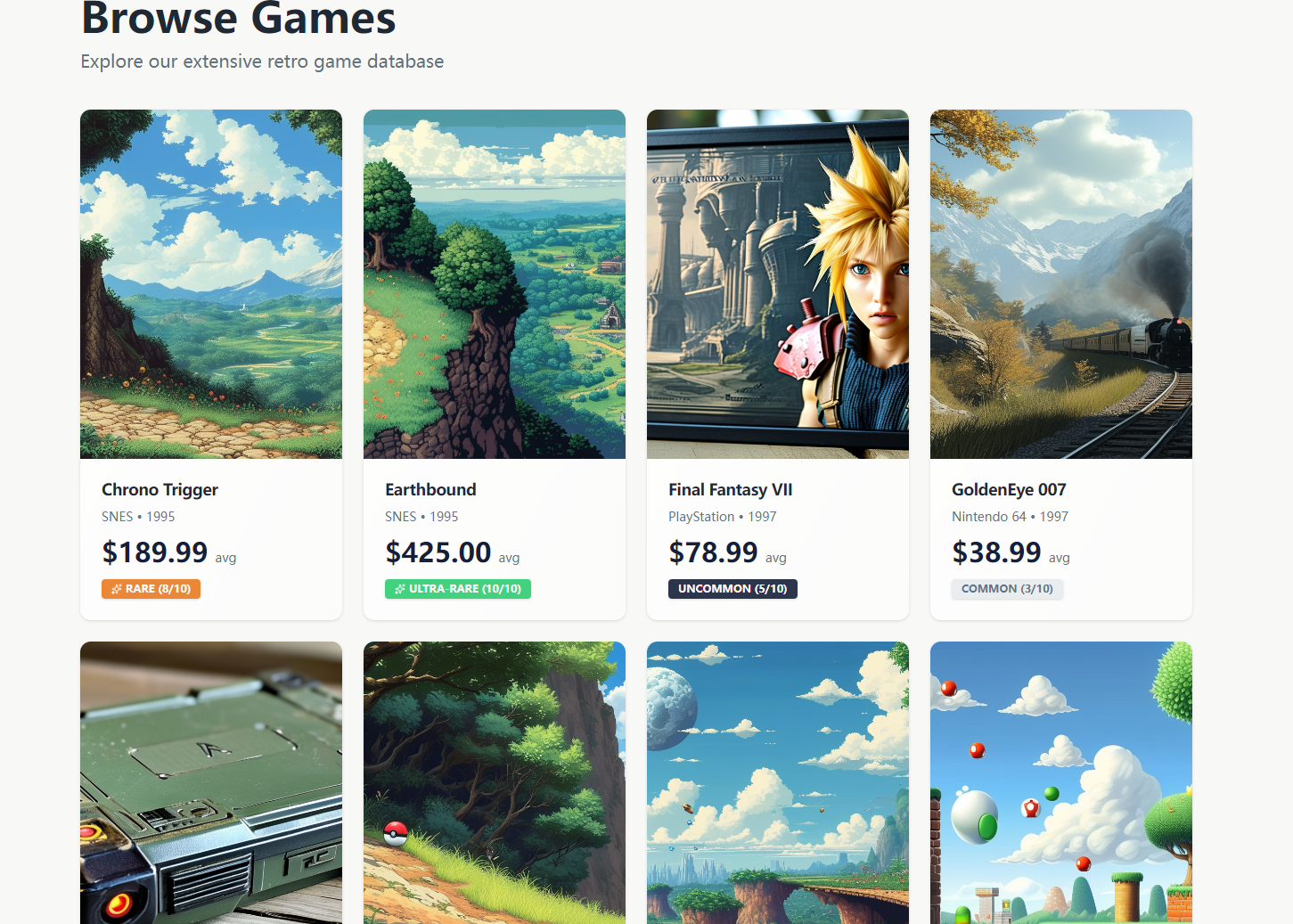
RetroGameValuer lets users scan a retro game’s barcode to get instant market valuations (broken down by condition), a 1-10 rarity score with context, personalized selling platform recommendations, and historical price trend charts. It also tracks a user’s collection, auto-calculating total value and letting them export summaries.
How we built it
We started by curating a retro game database linked to barcode data, then integrated camera APIs for fast scanning. We aggregated price data from 3+ secondhand platforms via REST APIs, built a rarity algorithm (weighting production volume, demand, availability), and designed a mobile UI focused on simplicity—prioritizing core actions like scan, view trends, and sell. We used Firebase for offline data caching and PostgreSQL for persistent collection storage.
Challenges we ran into
The biggest hurdle was refining the rarity algorithm to match real market perceptions—balancing production data with current demand took dozens of iterations. We also struggled with inconsistent barcode recognition for older games, so we added error handling and manual search fallback. Offline functionality was tricky too; we had to ensure cached price data stayed accurate with timestamps.
Accomplishments that we're proud of
We hit 95%+ accuracy for game identification, built a valuation system that updates in real time, and created platform recommendations that balance profit, speed, and fees. Users love the seamless collection tracking—total value updates instantly when adding/removing games, and offline access works flawlessly for previously scanned titles.
What we learned
We deepened our understanding of mobile camera permissions and barcode recognition, mastered real-time data aggregation from multiple APIs, and learned to design for edge cases (e.g., no internet, unrecognized barcodes). Most importantly, we learned to center user needs—every feature was tested with actual collectors to ensure it solved real pain points.
What's next for this project
We plan to expand the game database to include more regional releases, add support for manual game entry (for unlabeled cartridges), and test early versions of cloud sync (even though it was out of scope for v1). We also want to refine the platform recommendation logic to include local retro game stores’ commission structures for more personalized advice.
Built With
- firebase
- kotlin
- postgresql
- reactnative
- swift

Log in or sign up for Devpost to join the conversation.