

Inspiration
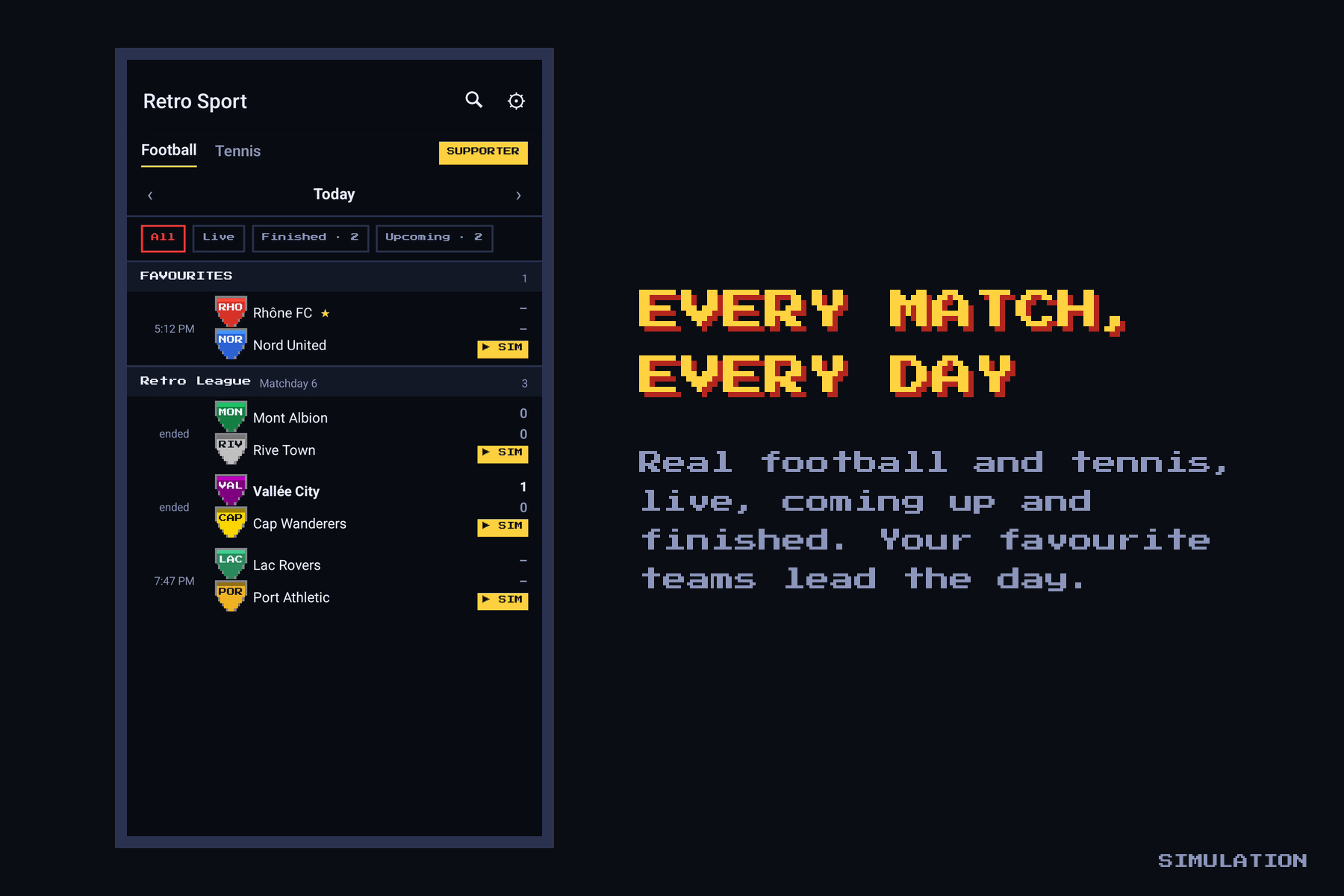
Some sports require expensive TV subscriptions to watch, and apps that track scores aren’t exciting enough to get us pumped up while watching a game. That’s where the idea for Retro Sport came from.
What it does
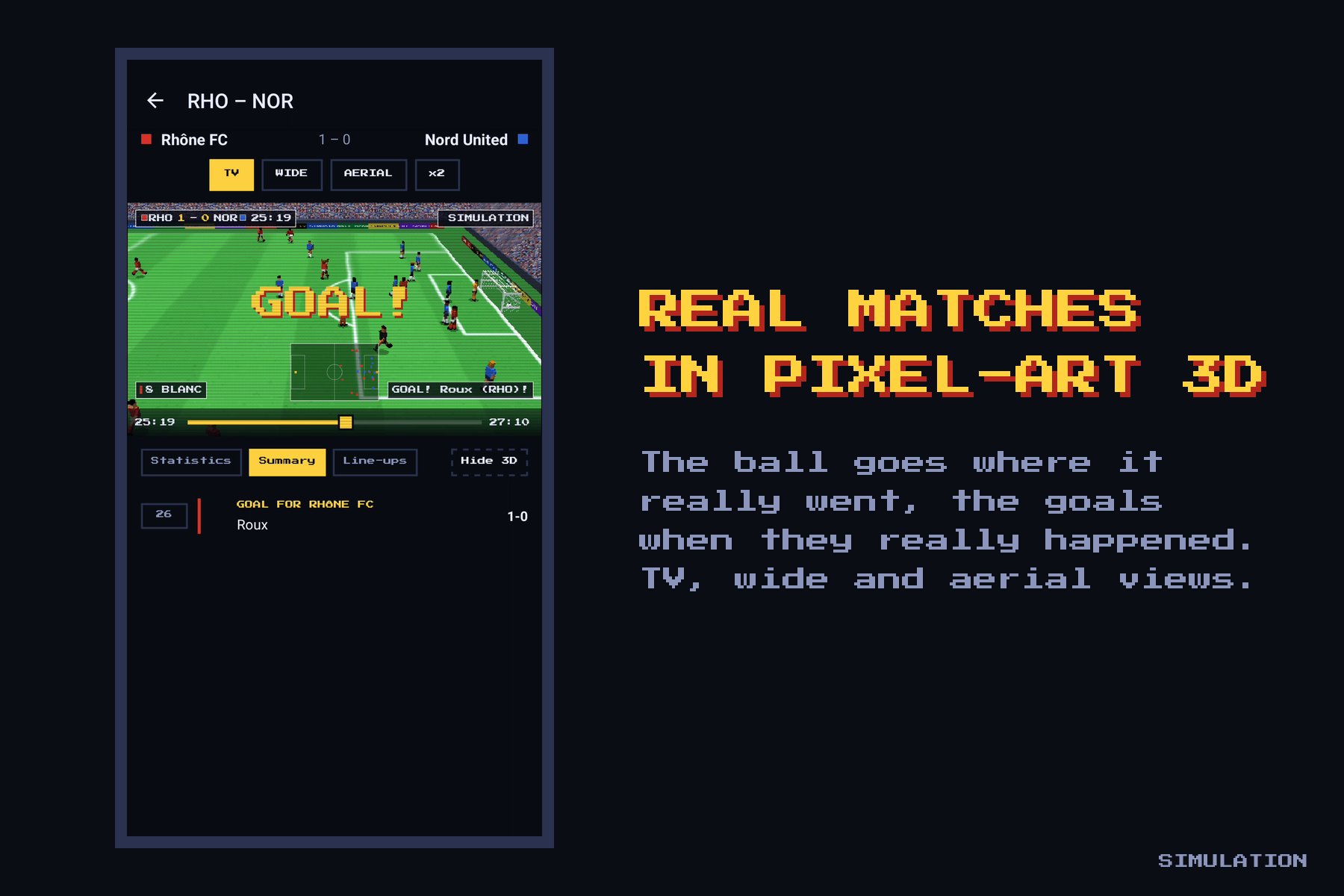
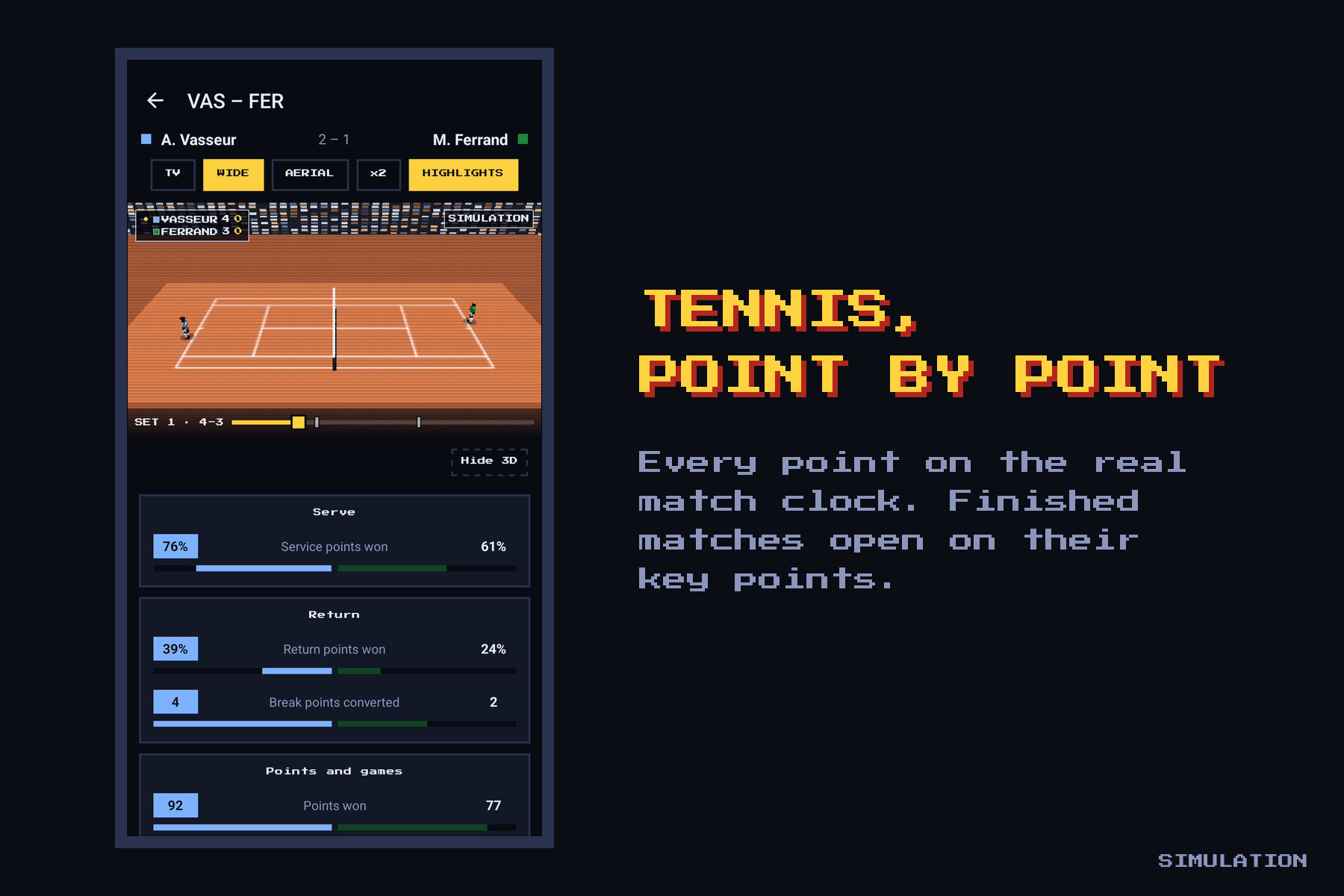
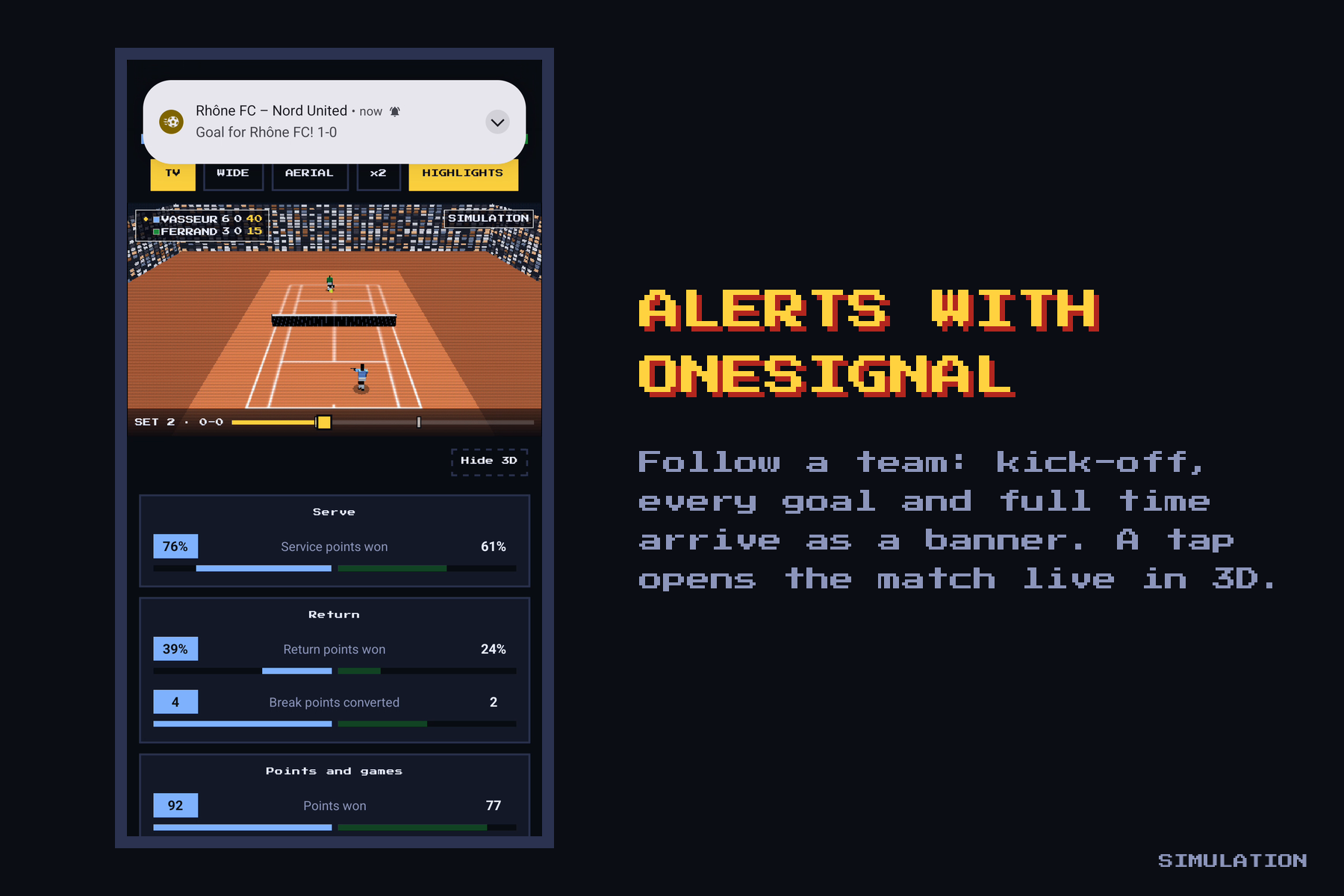
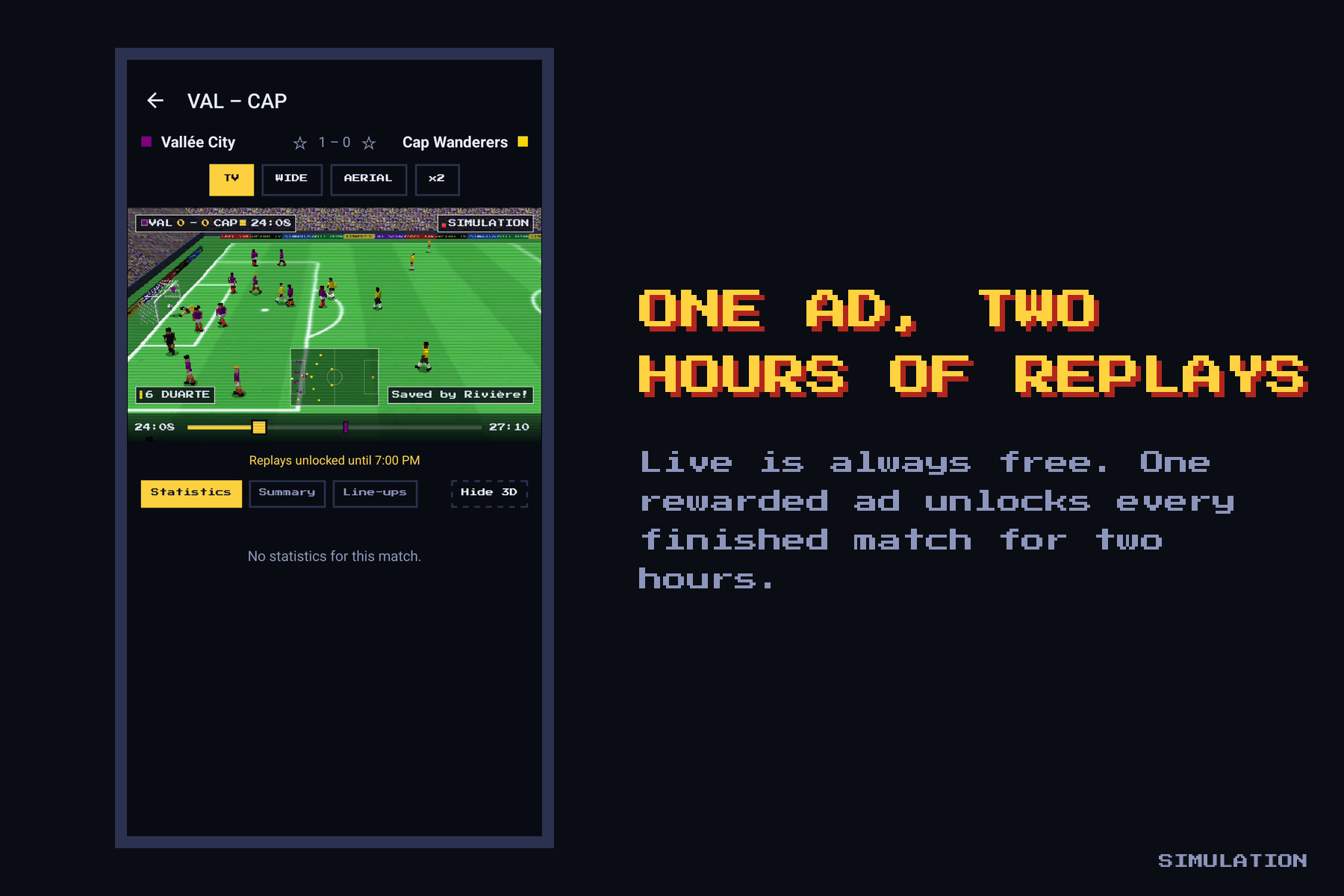
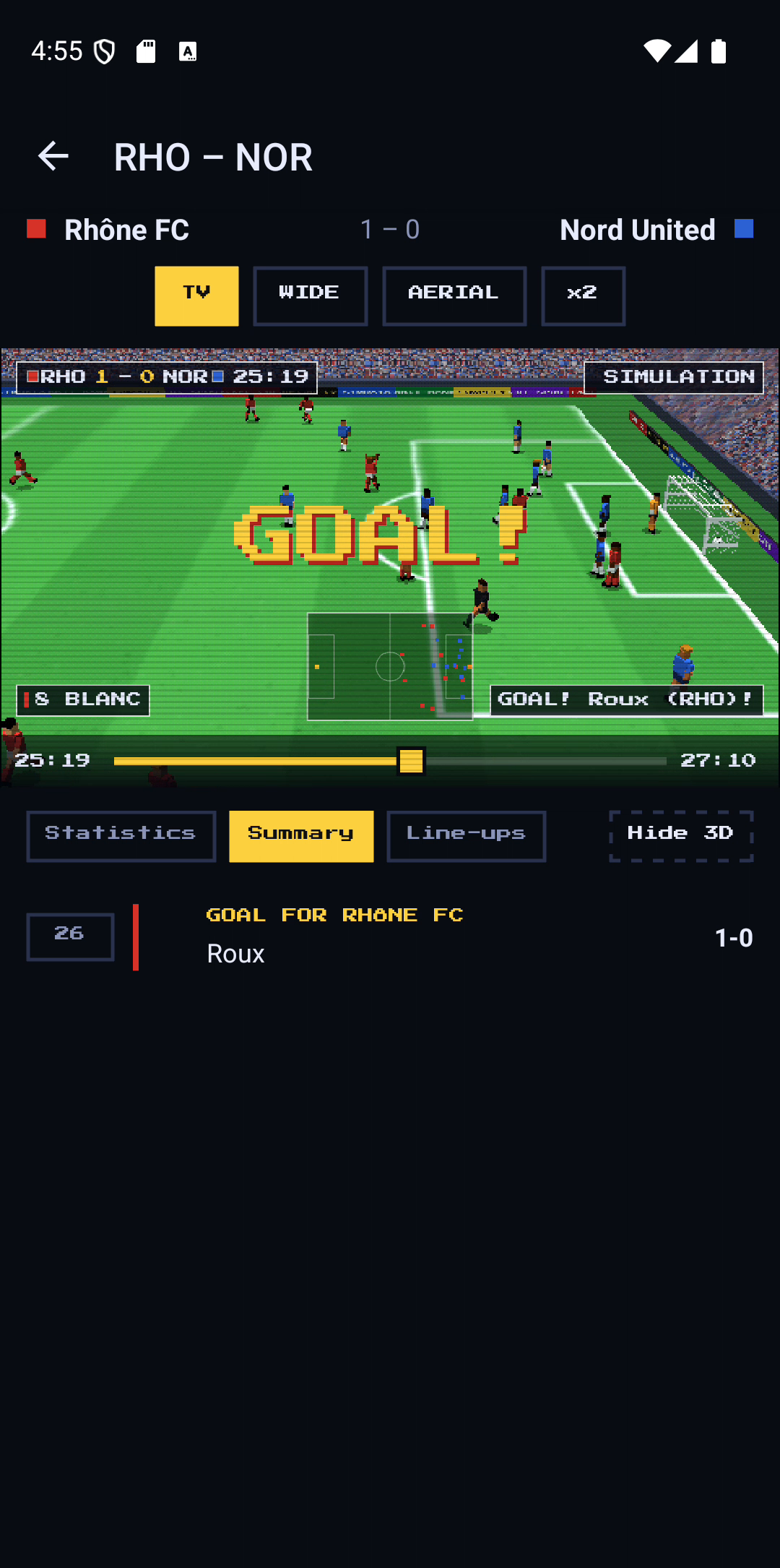
Retro Sport creates a simulation based on real-world data, such as the ball's position or the result of a round.
How we built it
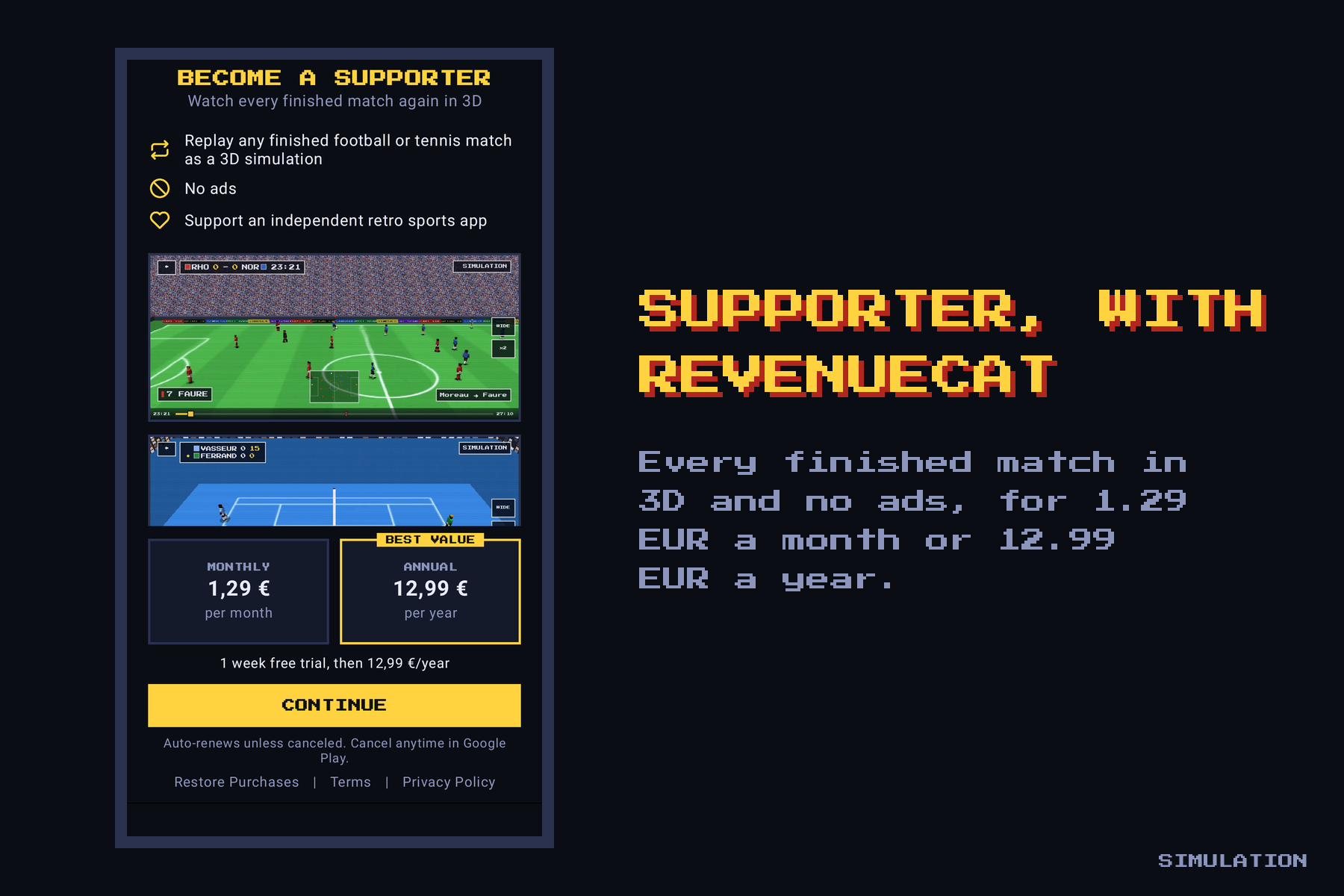
I use Expo/React Native for the mobile app, Fastify for the API server, Postgres as the database, Three.js for the 3d simulation, RevenueCat for the subscription system and ad revenue tracking, and OneSignal for push notifications. Sportmonks for the football, livetennisapi for the tennis.
Challenges we ran into
Find the right provider for the API data, and make sure the simulation isn't too boring to watch.
Accomplishments that we're proud of
It creates a 3D simulation in an app that doesn't require a high-end phone to run, offering an innovative concept where other sports apps simply display 2D fields with virtual players.
What we learned
It's not easy to create a 3D simulation, and managing the APIs so as not to make too many calls and overload the server
What's next for Retro sport
Add more sports, improve the simulations, and add iOS support.

Log in or sign up for Devpost to join the conversation.