Inspiration
Retro Coder 2000 started as a prop. In my VR survival game AB AETERNO there's an old PC on a desk, and I wanted it to actually work. That turned into a full simulated 286-era computer with its own operating system, programming language and compiler. When I saw people's reactions to writing code and playing it on a glowing CRT inside VR, I knew it deserved its own game.
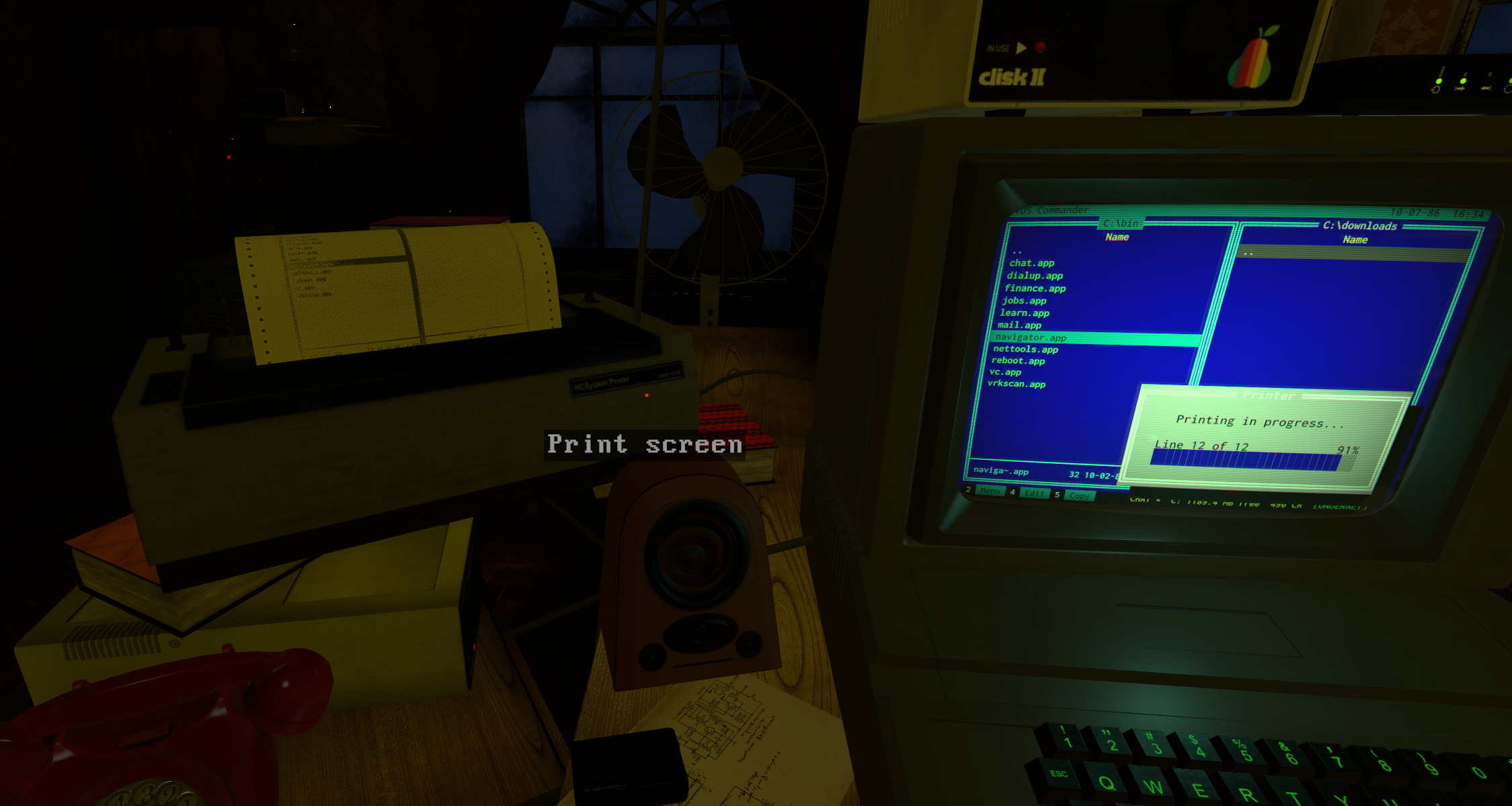
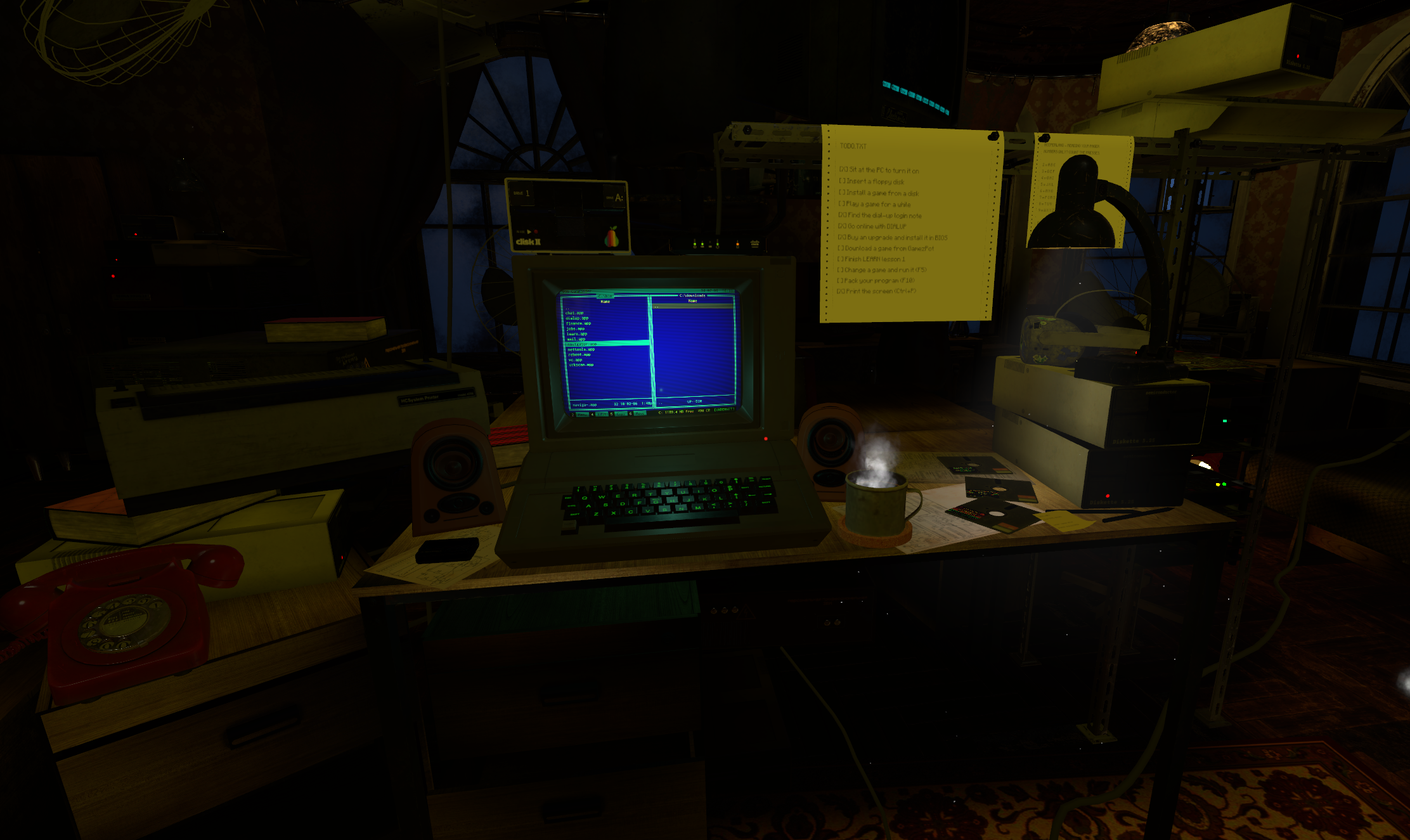
It also comes from nostalgia. Many of us learned to code alone in a room at night: a beige box, a dial-up modem screeching, games copied from friends' floppies. That room is where the game takes place. It's March 1991. Your older brother has been gone for nineteen days, and his room is all he left behind: a PC, a modem, a dot-matrix printer, a pager and a red phone. Follow the breadcrumbs.
What it does
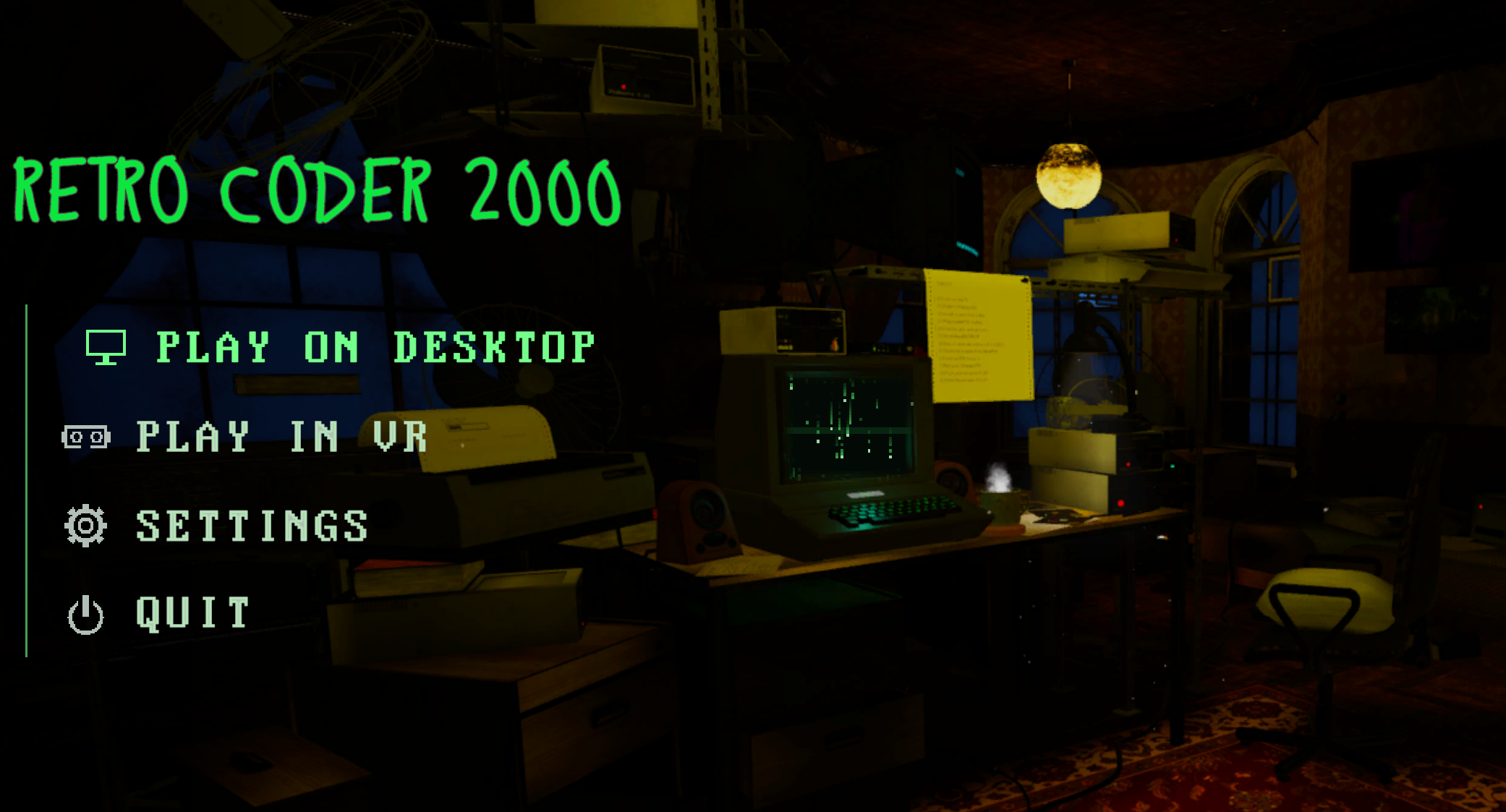
Retro Coder 2000 is a retro PC simulator where you write real code, make your own games, and get pulled into a 90s hacker underground.
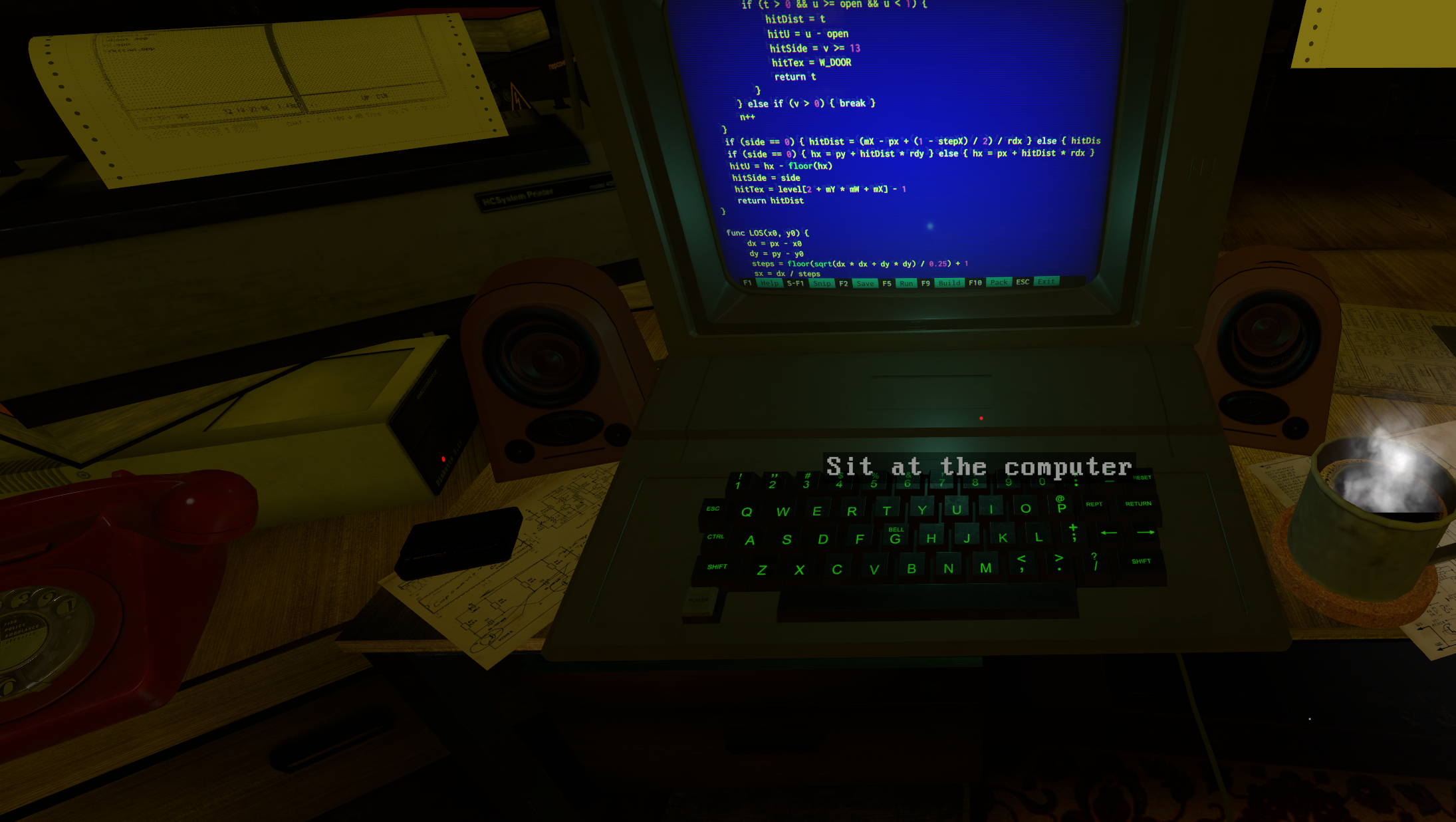
- Code your own games. V-OS ships with .vrk, a C-like language, and EDIT, a Turbo Pascal-style IDE with syntax highlighting, go-to-definition, snippets and F1 help. Write, compile and play without leaving the room.
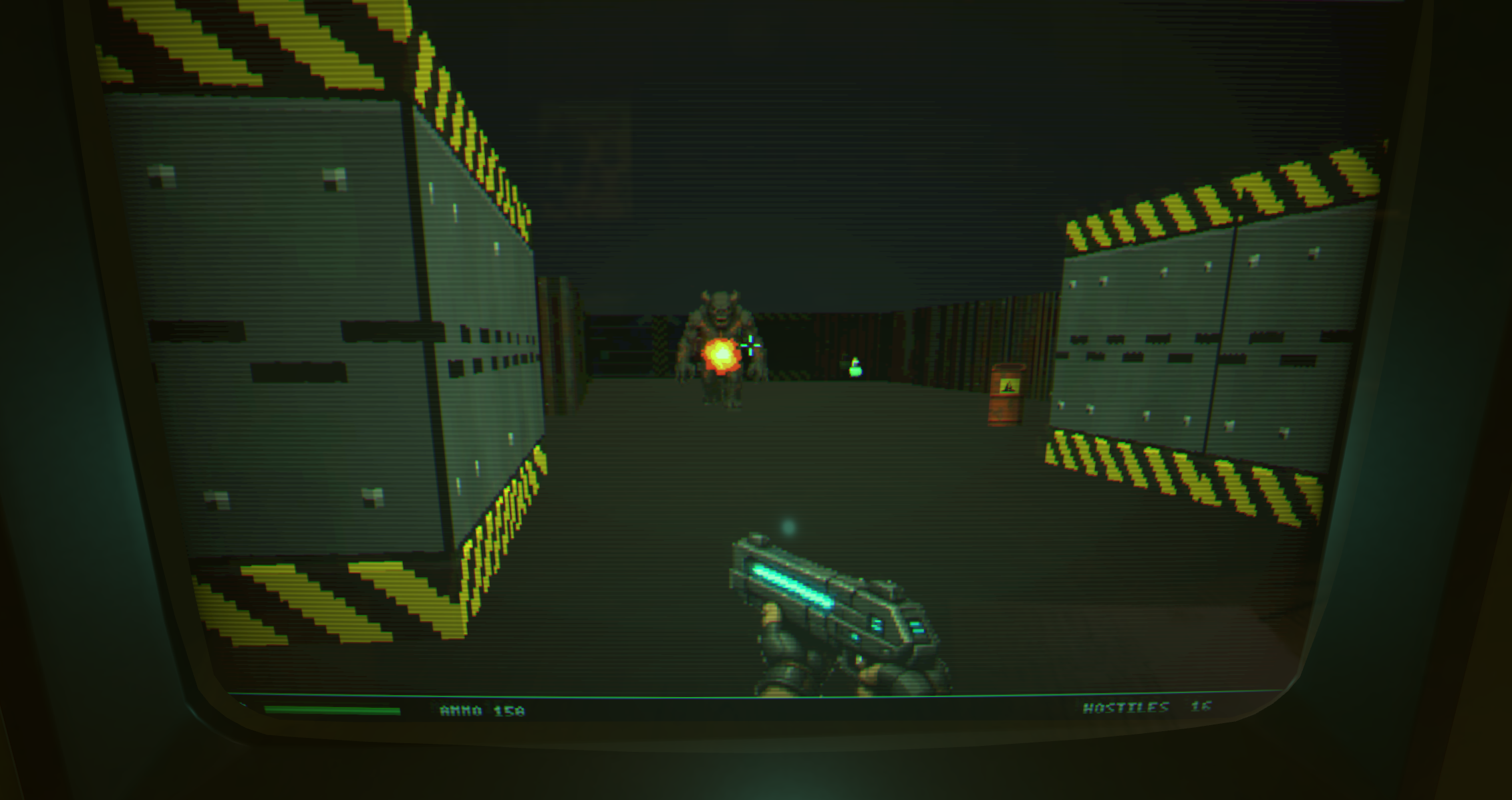
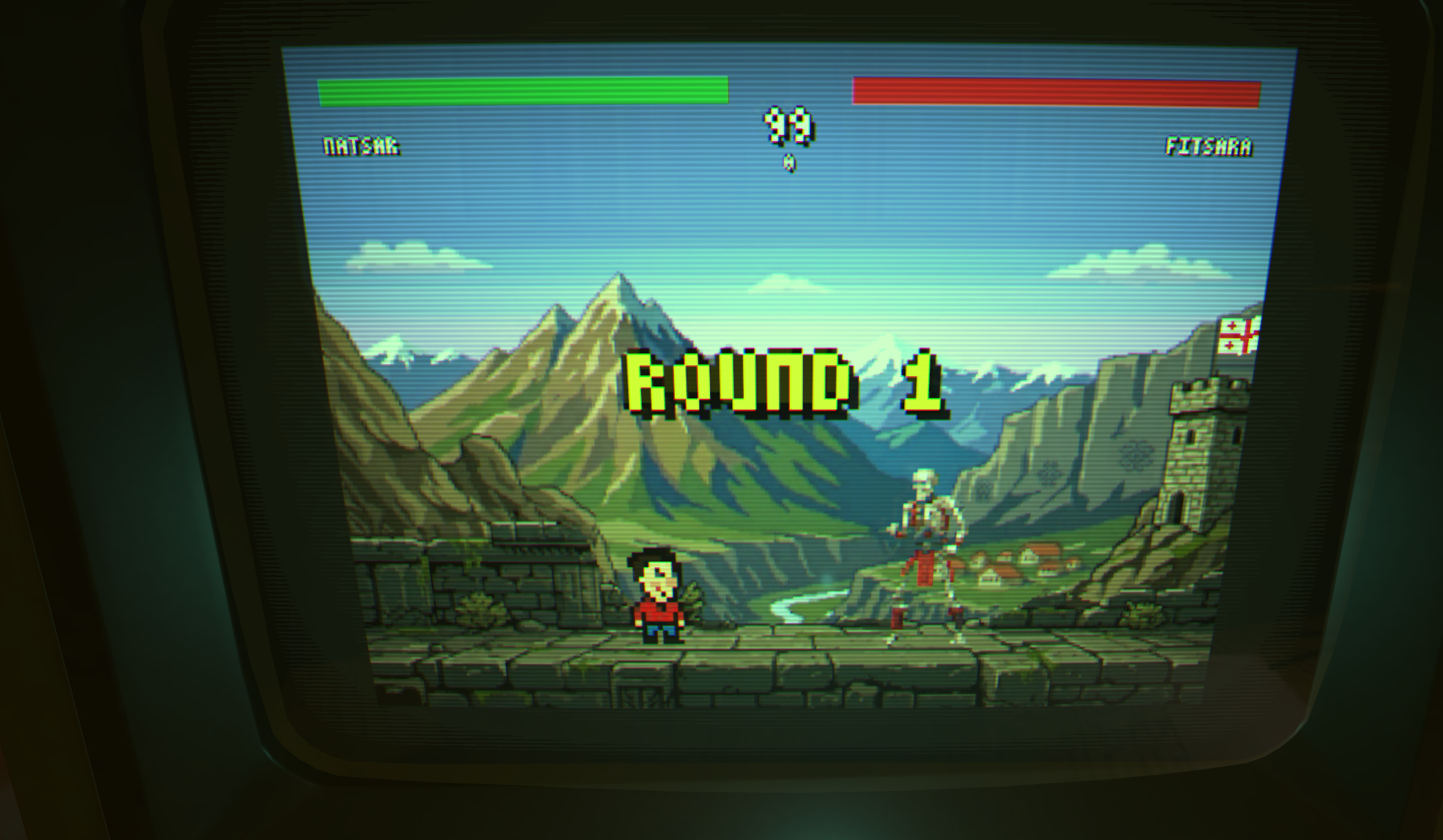
- A real engine inside the PC. 2D tile maps, sprites, sound, a map editor (MAPEDIT) with scripted actors, and VRK-GL, a 3D pipeline that grows from wireframes to shaders, particles, spot lights and shadow maps as you buy better video cards.
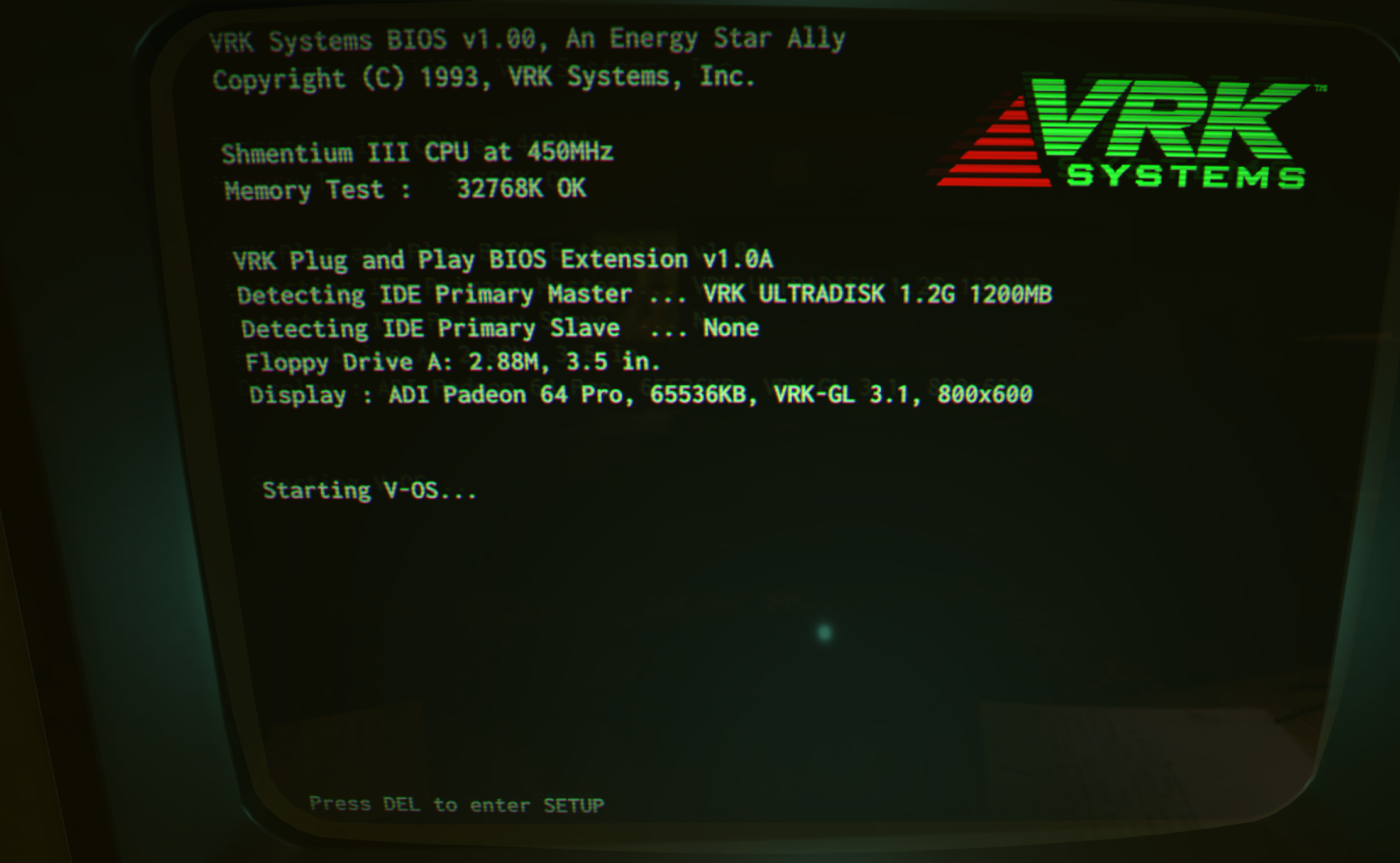
- Hardware that matters. CPU speed, RAM, hard disk and the video card are real limits. A game that runs smoothly on a Shmentium may crawl on a 286, and 3D features need the right card. You upgrade through the BIOS.
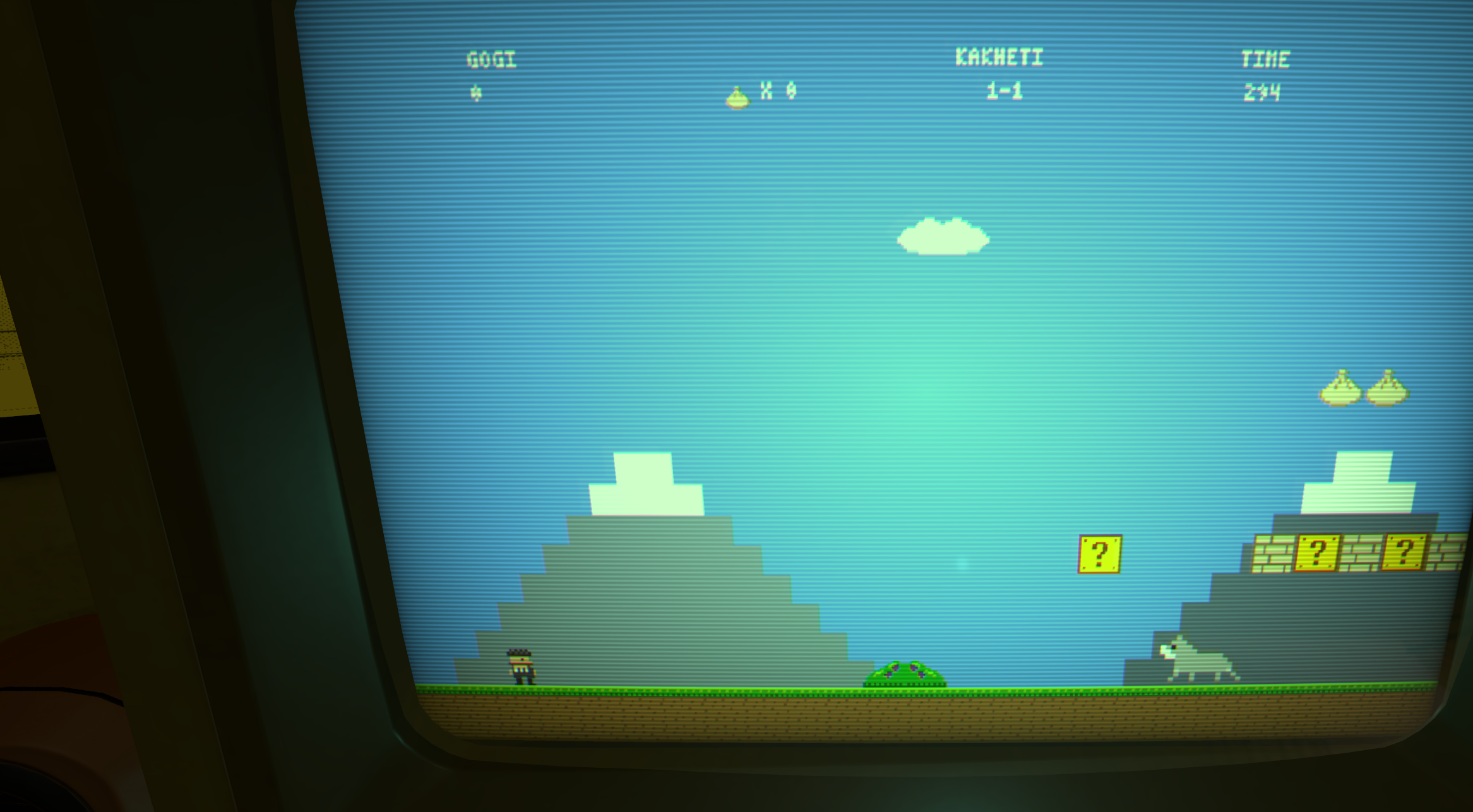
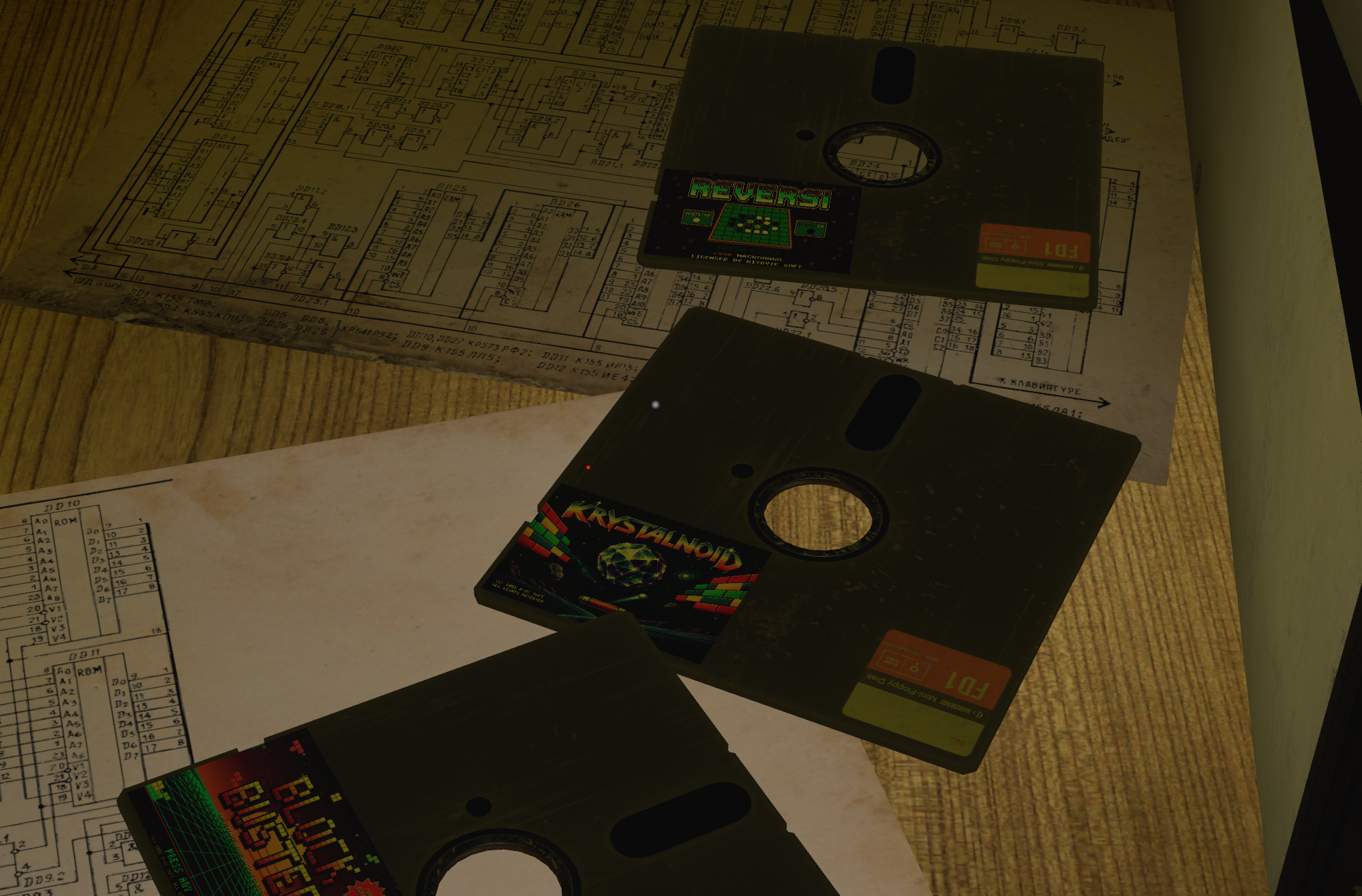
- Games on floppies and on the net. Programs pack into packages that install from physical floppy disks, multi-disk sets included, with slow realistic install bars. Floppy games like Block Buster and Krystalnoid come with full sources to read and modify. Bigger titles such as DZMARIO, MURTAL COMBAT and a fully 3D Chess are sold on the in-game store, and some unreleased games leak onto warez sites. Every one of them was built in .vrk.
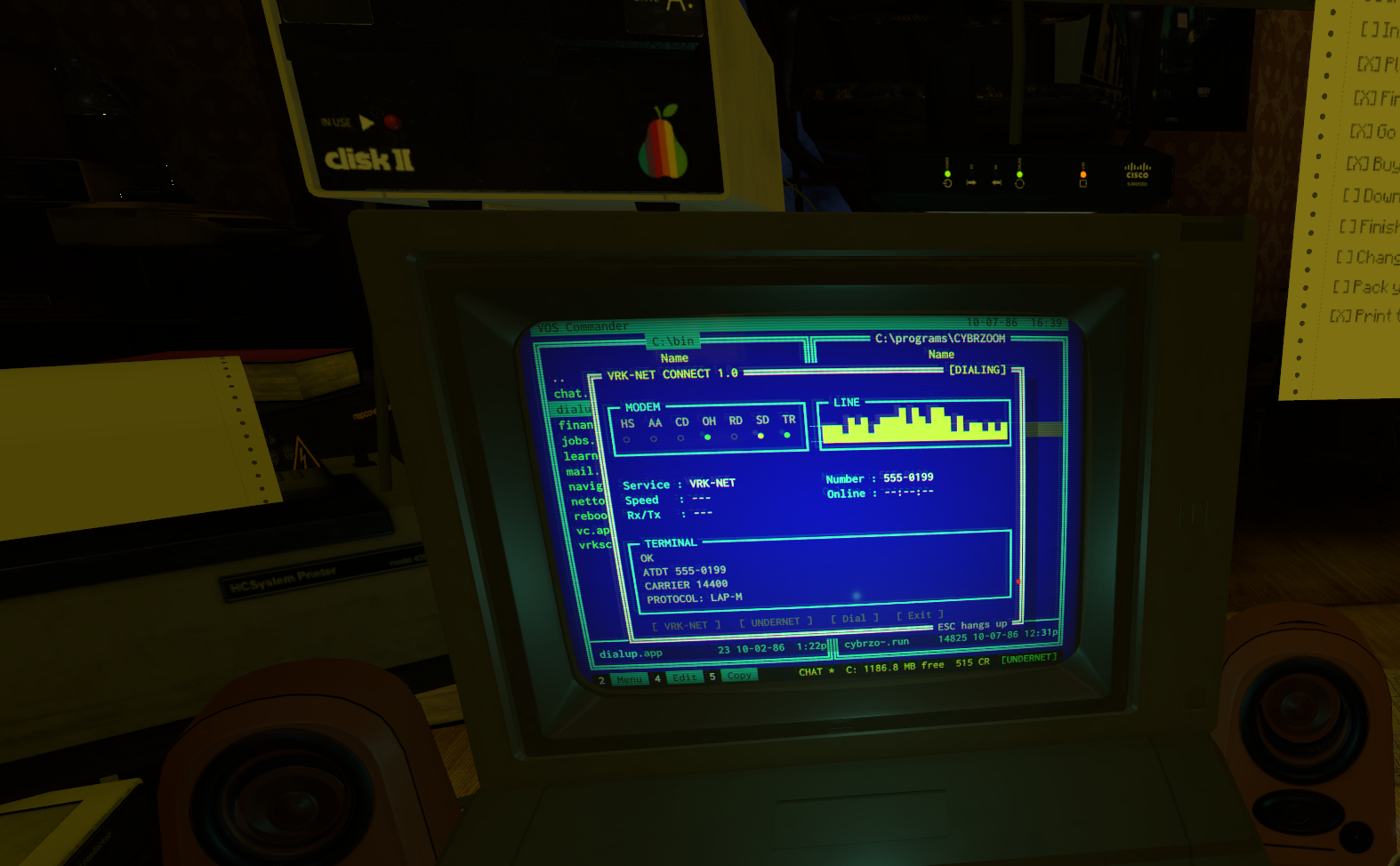
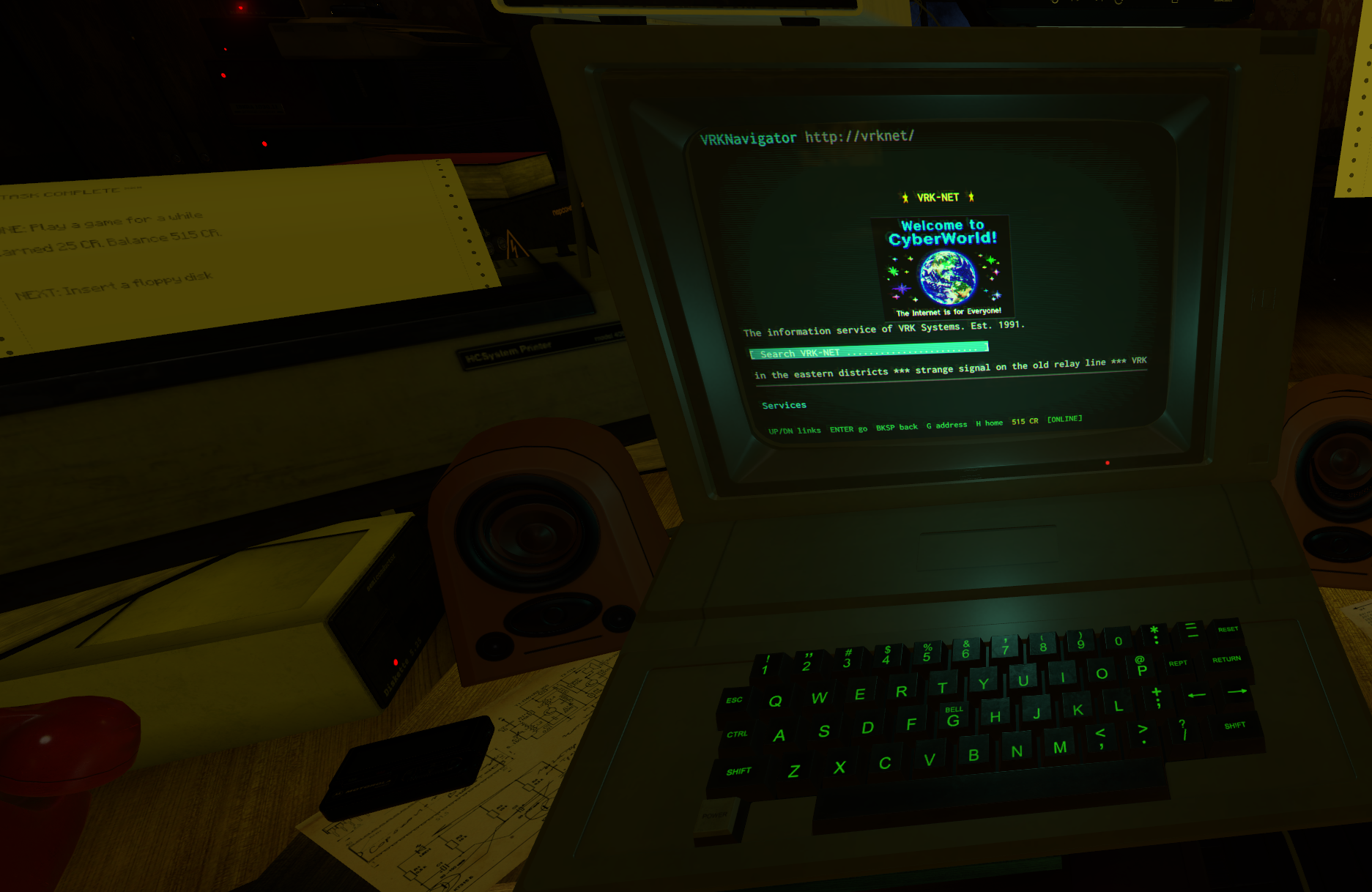
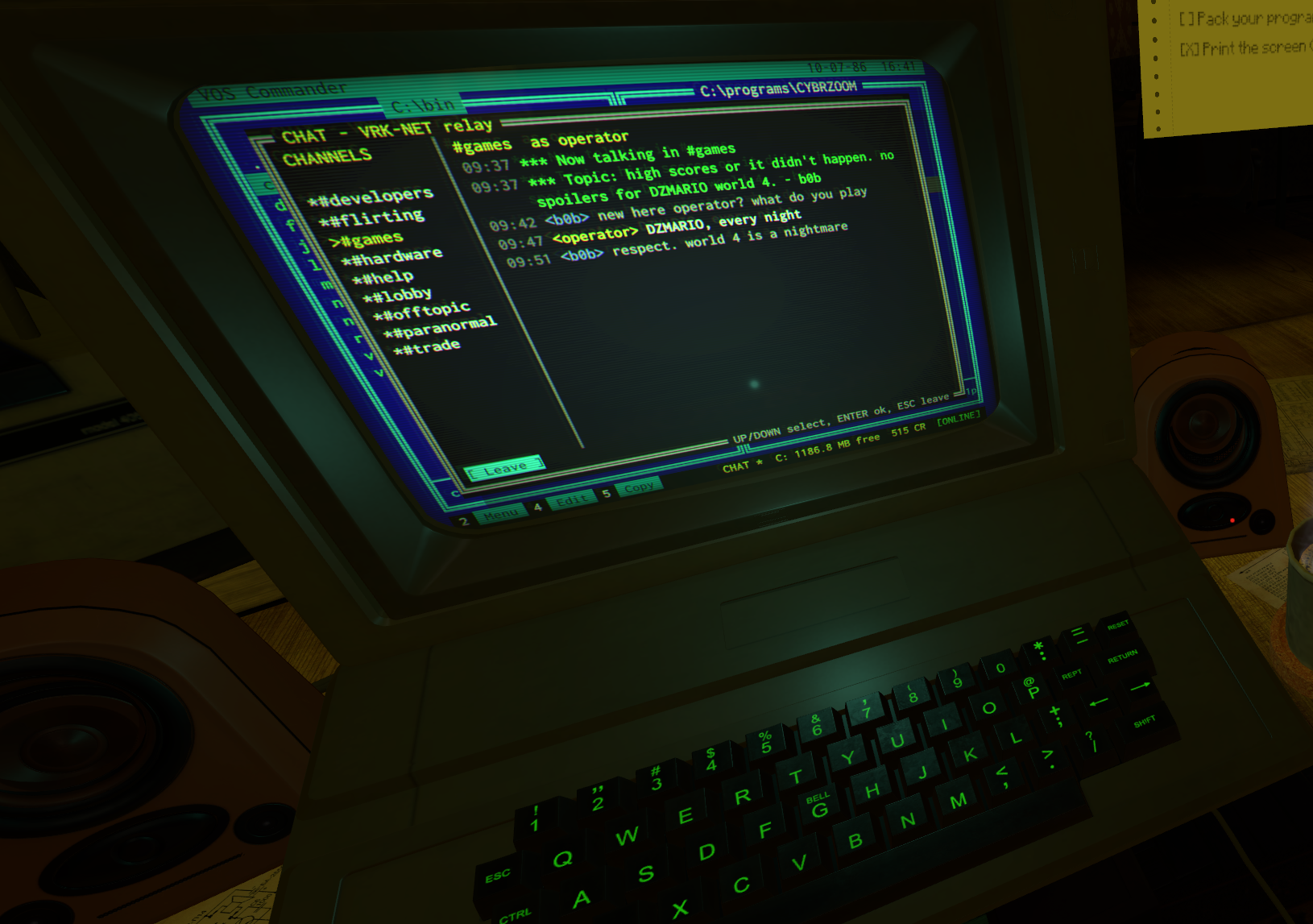
- Go online. Dial up with the modem and browse VRKNavigator, a GeoCities-era web full of shops, BBSes, scam pages and weird nonsense. Buy hardware and games, catch viruses from dodgy downloads, and buy an antivirus to clean them up.
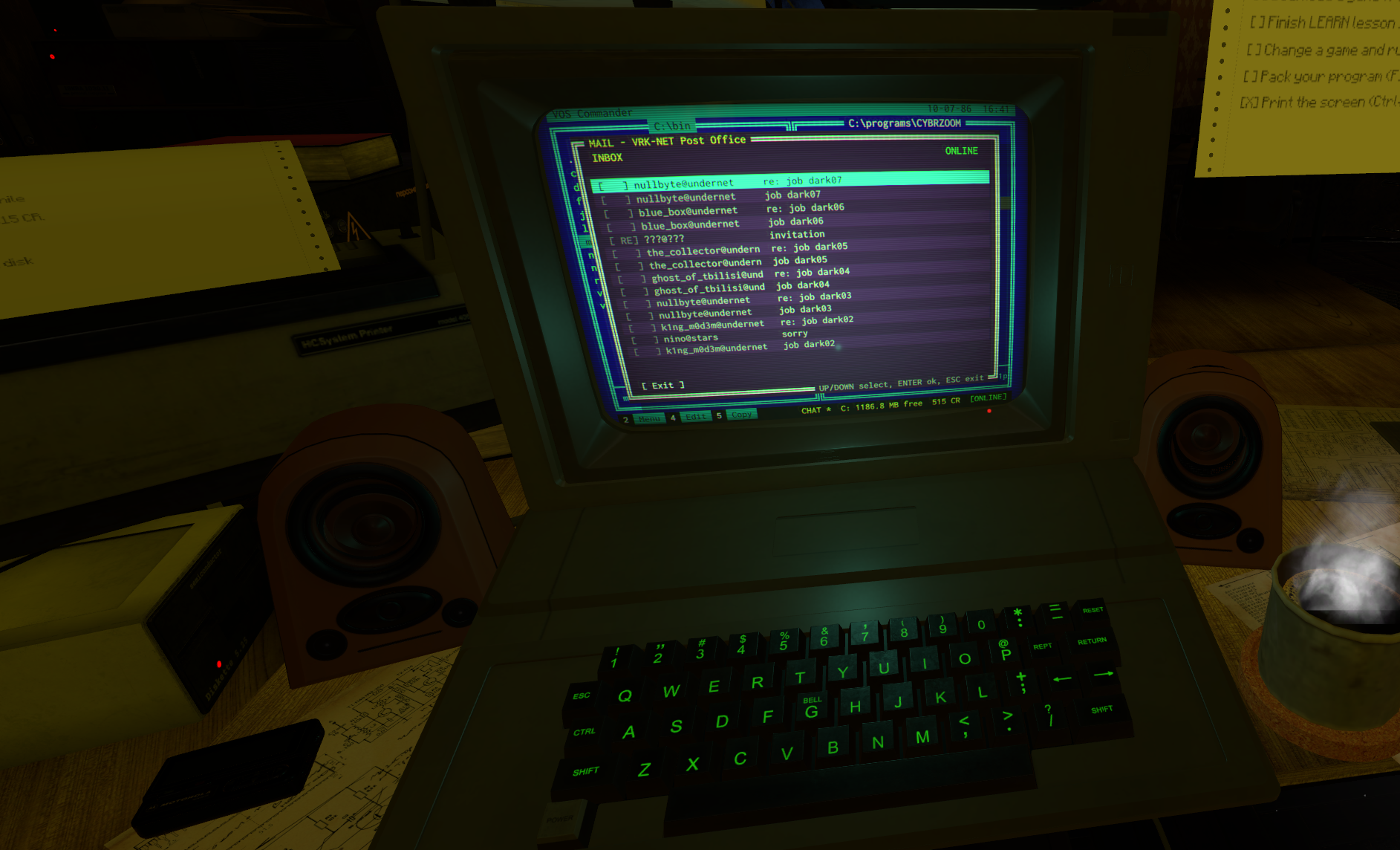
- A career. The JOBS and MAIL apps bring clients who need bugs fixed, data converted, databases repaired and messages decoded. They pay late, get angry, or get a little too attached. The first jobs teach you the basics, so there's no separate tutorial. Earn Trust, then get noticed by the underground.
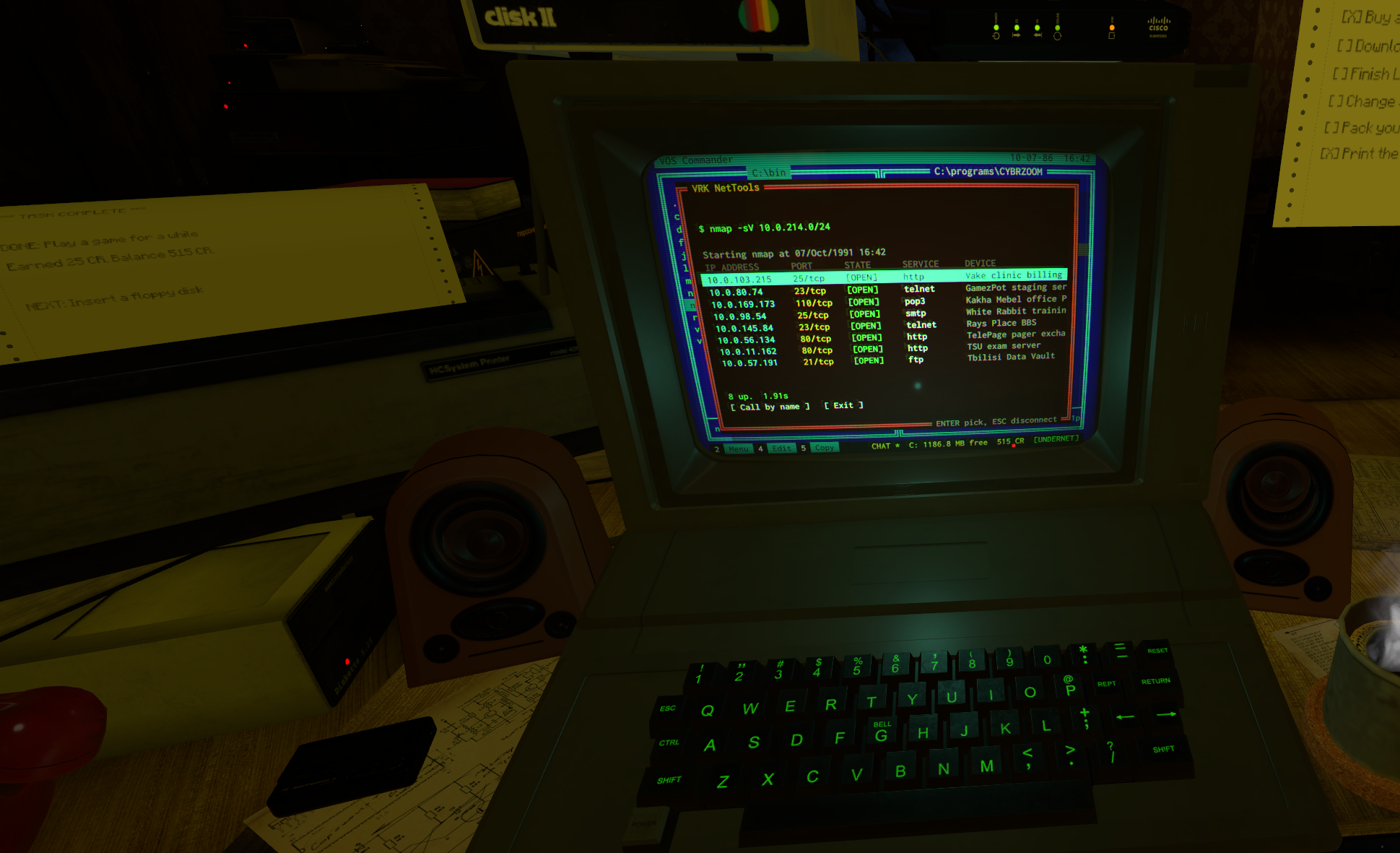
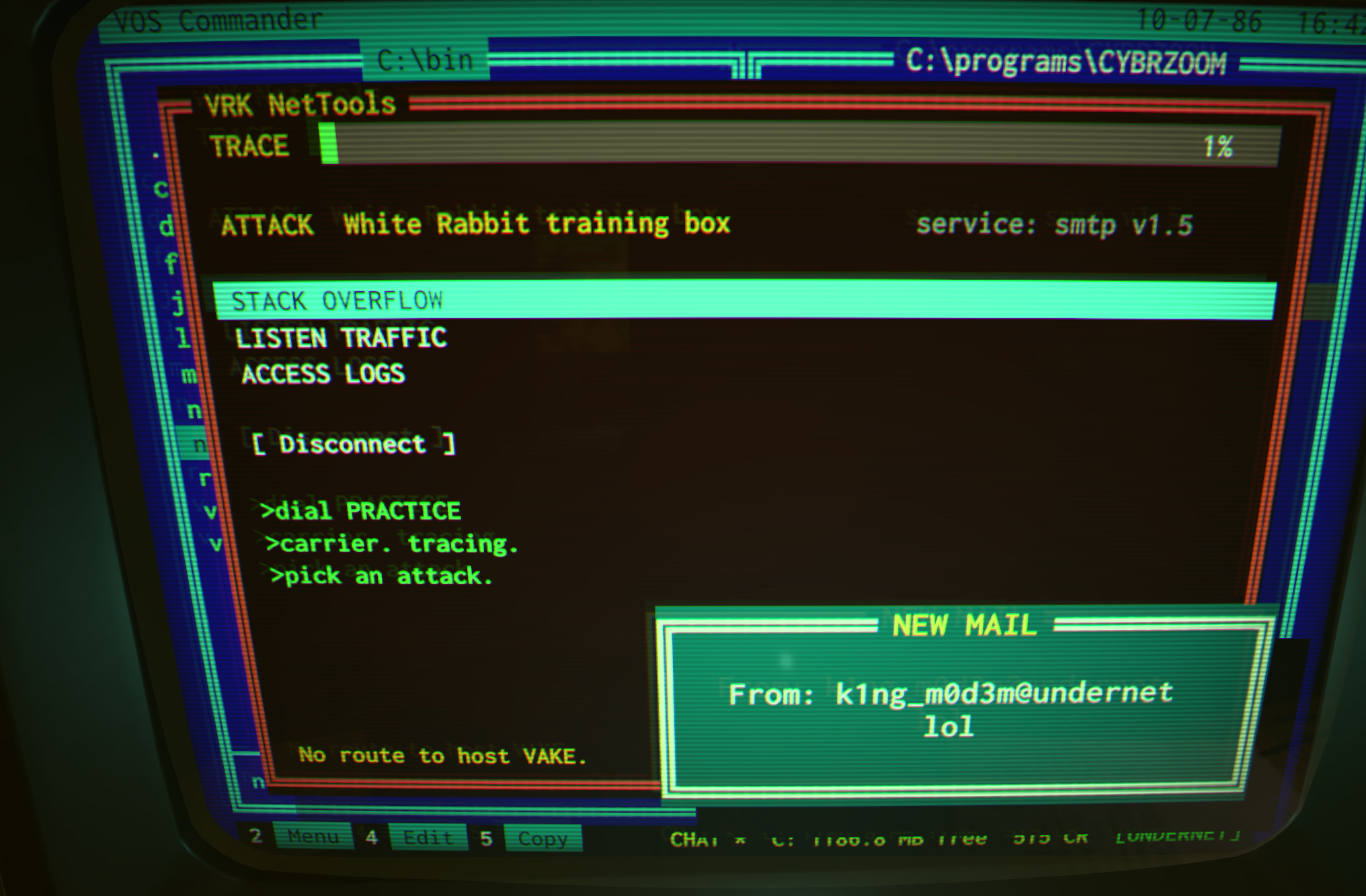
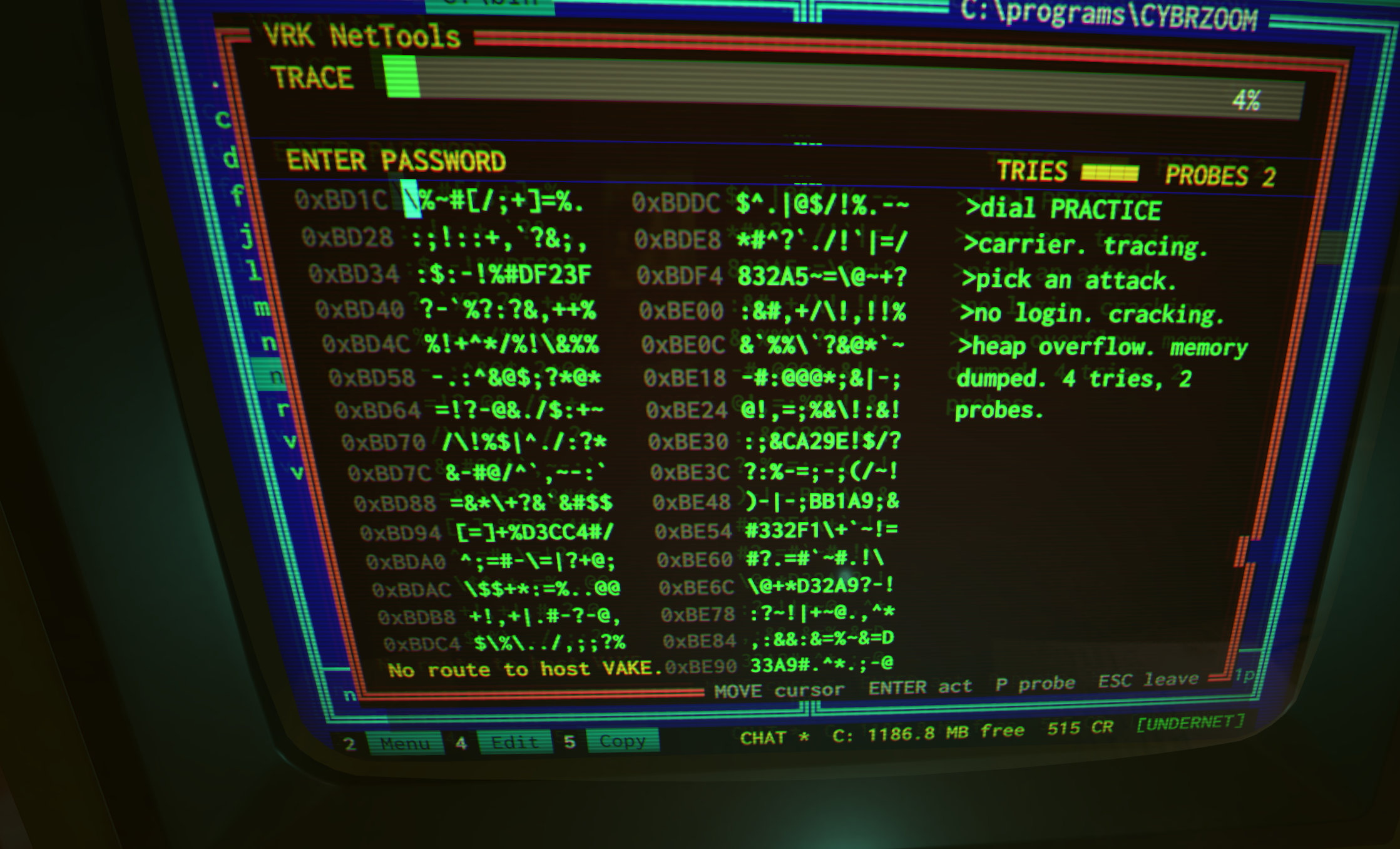
- The darknet. Follow the white rabbit to UNDERNET. Get NetTools and break into hosts using deduction minigames: password memory dumps, traffic sniffing, log analysis, code-breaking, social engineering in chat and phone phreaking. Steal data, decrypt it for more money, and build your Cred. Passwords arrive on your desk pager.
- A finale. A mysterious group called MAYFLY sends you into a Cicada 3301-style puzzle hunt across the net, and the answers are different for every player. It ends with the red phone ringing.
- Free play. After the story, or from the start, the PC is yours: code games, publish them, and play other people's.
It runs as flat PC, PC VR and standalone Meta Quest, and games made by players work on all of them.
Competition update: hands-first
For this competition I'm making Retro Coder 2000 fully playable with hands only, from first boot to the ending. The room is seated and desk-sized, which makes it a natural fit:
- Poke-typing on the real 3D keyboard. Every key on the in-game keyboard is pressable with your fingertips, so you can type logins, search the net and write code by hand.
- A desk joystick for everything that used the controller pad: menus, lists, EDIT value tweaks, line puzzles and games.
- Hand grabbing for every prop: floppies into the drive, tearing printouts and pinning them to the cork board, the pager, and the rotary phone dial turned with a finger.
- Hand-friendly menus and hints, using Meta's palm-pinch menu gesture.
This section is updated as features ship. See the Updates tab for progress.
How I built it
- Unity 6, using one shared V-OS core between Retro Coder 2000 and AB AETERNO (linked via directory junctions), so programs and fixes flow between both games.
- The .vrk toolchain: lexer, compiler to a versioned bytecode format, and a VM with call frames, records, enums, strings,
mem[]memory and hundreds of native functions. - **The VM and software


Log in or sign up for Devpost to join the conversation.