-
-
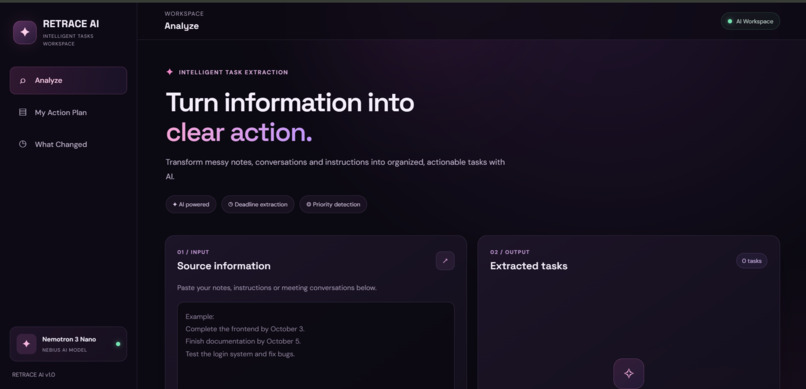
Project cover image
-
-
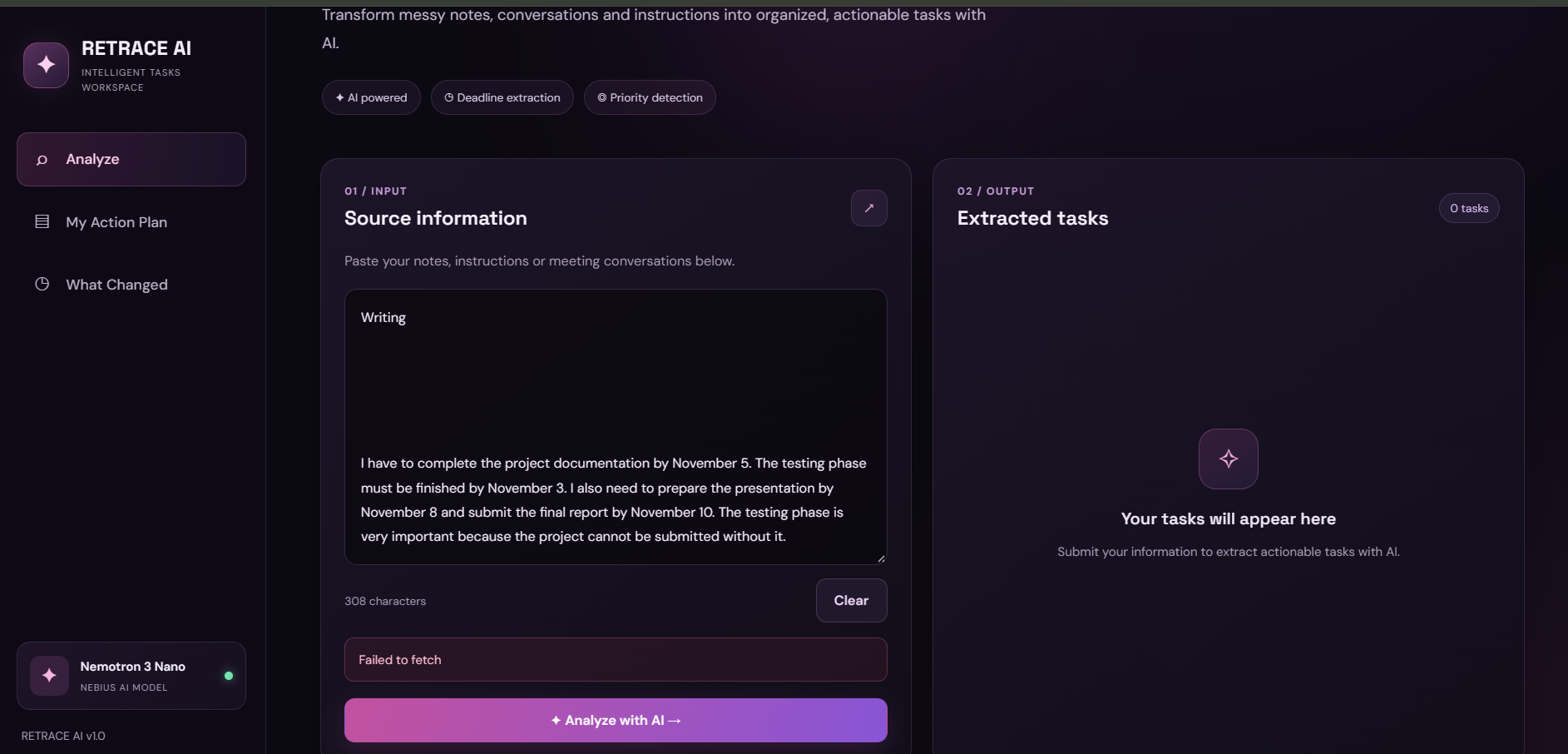
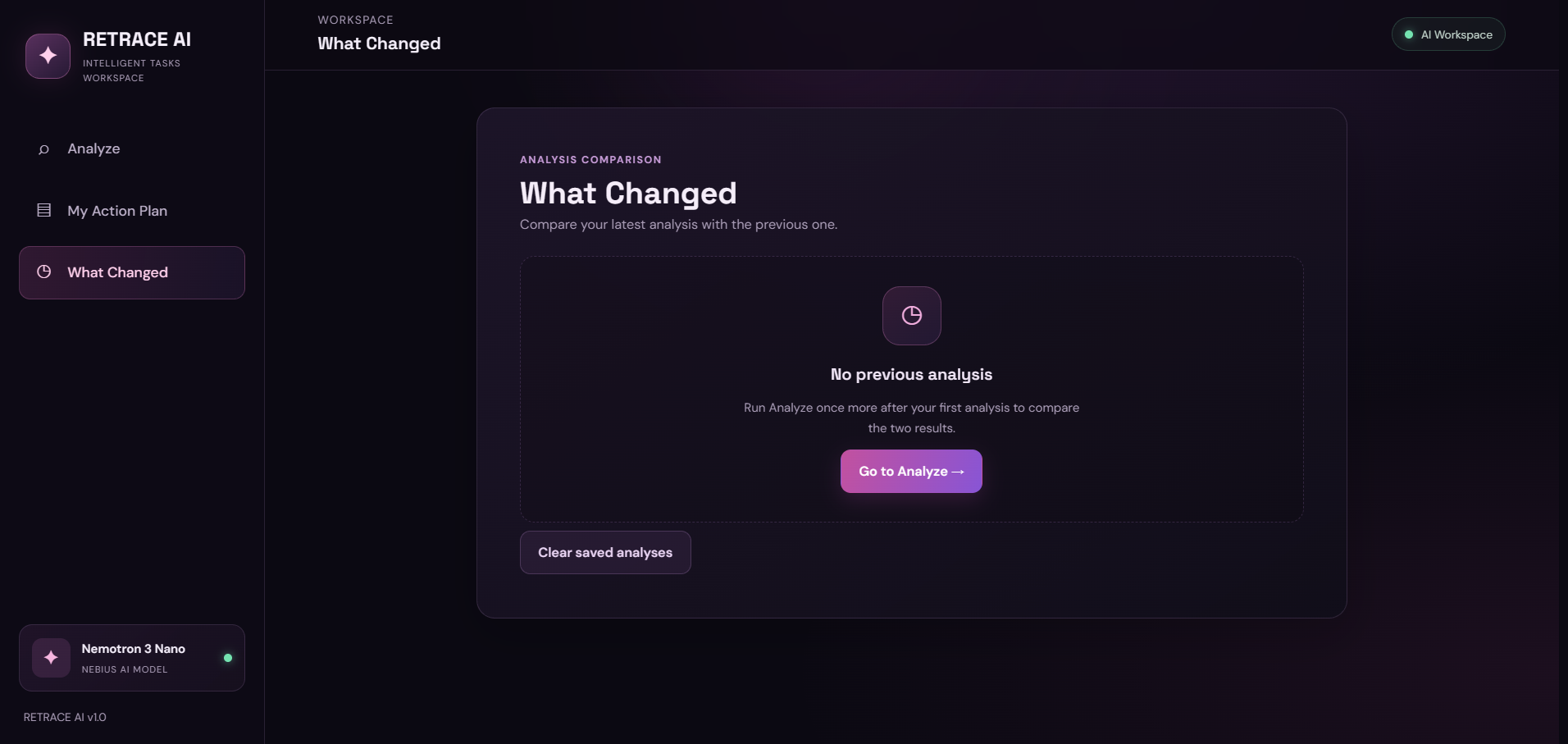
Inspiration
In our everyday lives, we deal with large amounts of unstructured information through messages, notes, reminders, and conversations. Important tasks, deadlines, and priorities can easily get buried in this information.
We wanted to solve this problem by using Artificial Intelligence to transform unstructured text into clear, organized, and actionable information. This idea inspired us to build RETRACE AI — a platform that helps users identify what needs to be done, when it needs to be completed, and how important it is.
What it does
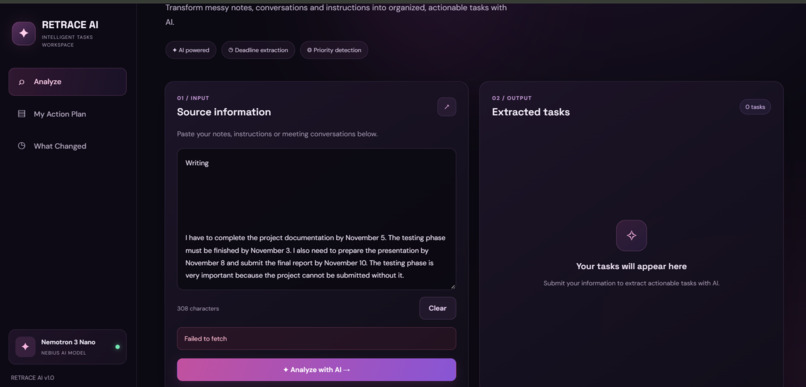
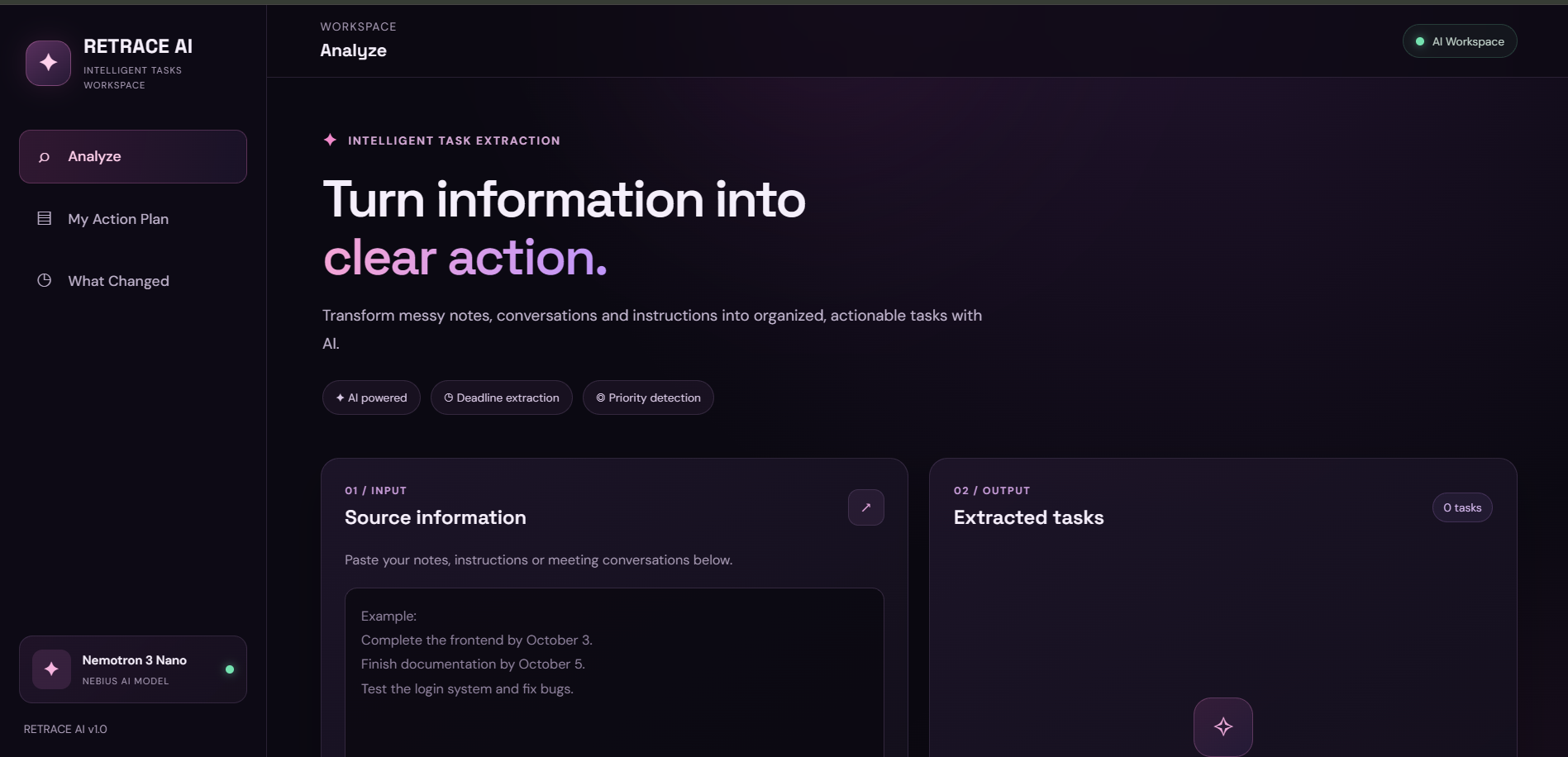
RETRACE AI is an AI-powered text analysis platform that extracts meaningful task information from user-provided text.
It helps users:
- Identify important tasks from unstructured text.
- Extract deadlines and time-related information.
- Assign priority levels such as HIGH, MEDIUM, and LOW.
- Understand why a task has been assigned a particular priority.
By converting lengthy text into structured results, RETRACE AI makes important information easier to understand and act upon.
How we built it
We built RETRACE AI using a combination of frontend, backend, and AI technologies.
- Frontend – React.js and Vite: Used to develop the user interface and provide an interactive user experience.
- Backend – Python and FastAPI: Handles user requests, processes input, and connects the frontend with the AI model.
- AI Model – NVIDIA Nemotron: Integrated through the Nebius Token Factory API to analyse text and generate structured results.
- Version Control – Git and GitHub: Used to manage the source code and track development.
- Deployment – Vercel and Render: Used to host the frontend and backend separately.
The workflow begins when a user submits text through the frontend. The backend receives the input and sends it to the NVIDIA Nemotron model through the Nebius API. The model analyses the content and returns structured task information, which is then displayed to the user.
Challenges we ran into
One of our major challenges was integrating the AI model with the application and ensuring smooth communication between the frontend and backend.
We also faced difficulties during deployment, particularly with API endpoint configuration, CORS settings, dependency management, and connecting separately hosted services.
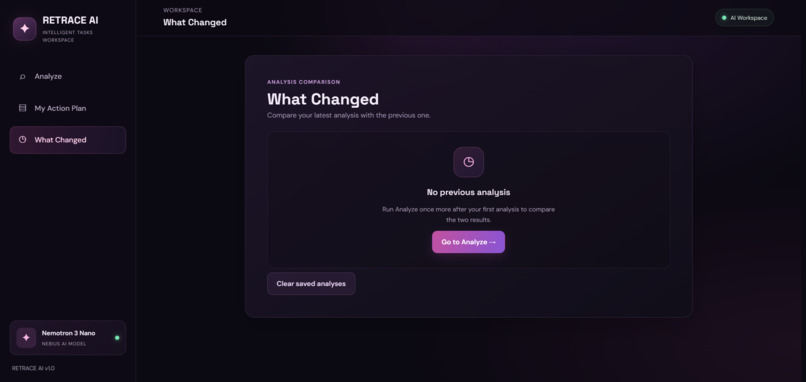
Debugging errors such as failed API requests and deployment issues required repeated testing and troubleshooting. We also worked on making the AI output structured and relevant instead of returning generic responses.
These challenges helped us understand the importance of testing every component and verifying the complete application workflow.
Accomplishments that we're proud of
We are proud of turning our idea into an AI-powered application that connects a modern web interface with a large language model.
Some of our key accomplishments include:
- Successfully integrating NVIDIA


Log in or sign up for Devpost to join the conversation.