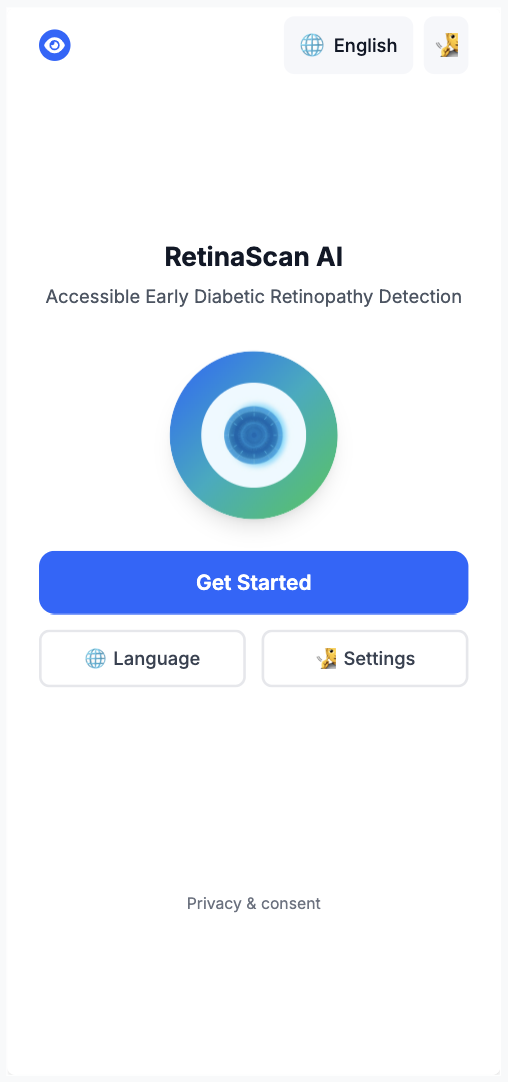
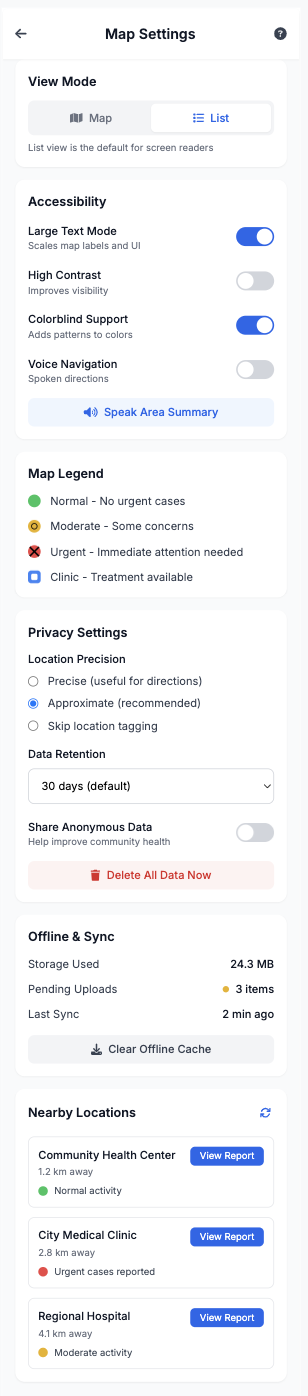
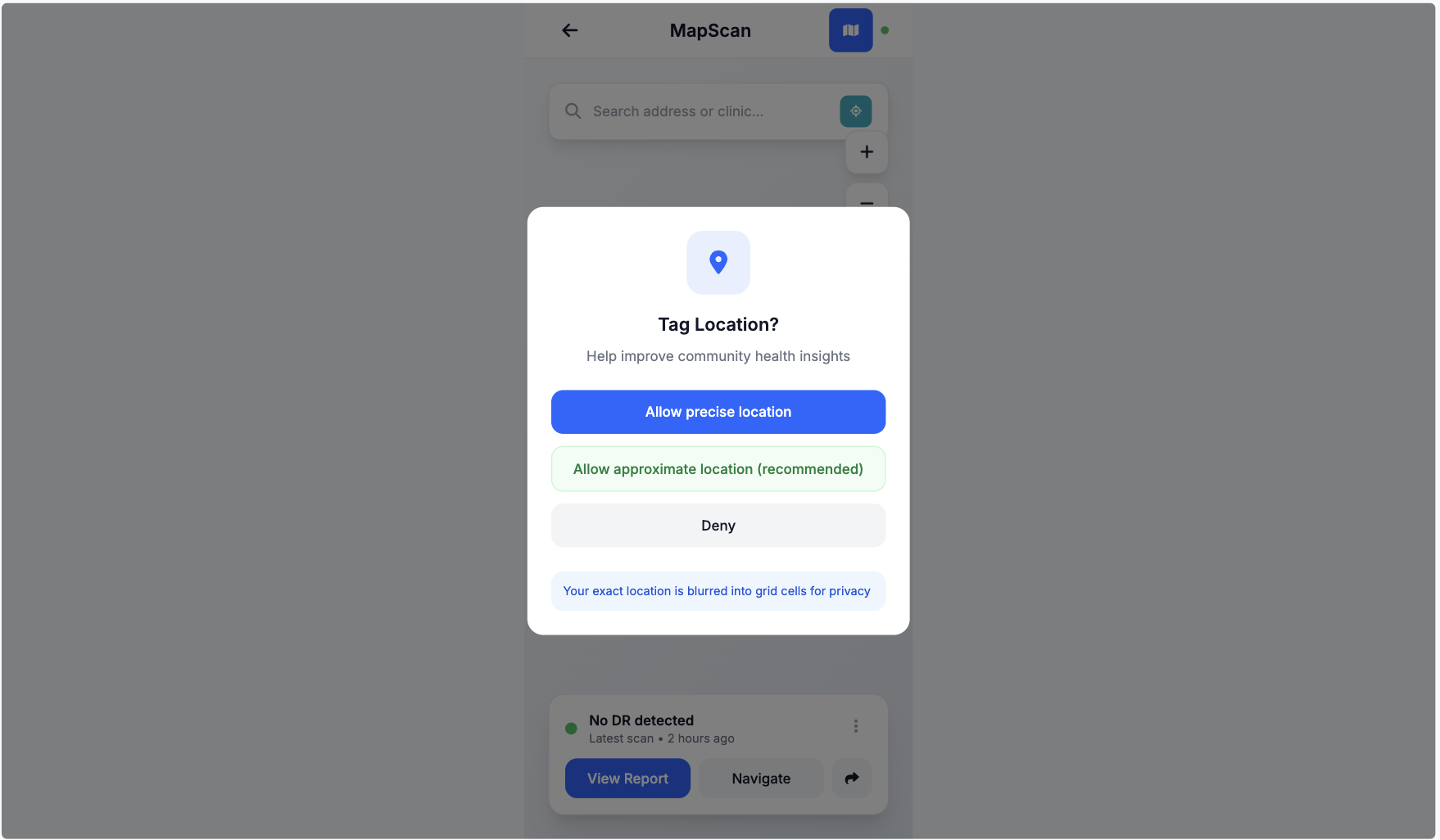
RetinaScan AI - Hackathon Project Submission
Inspiration
The Silent Epidemic of Preventable Blindness
We were shocked to discover that diabetic retinopathy is the leading cause of blindness in working-age adults worldwide, affecting over 100 million people. What's even more alarming is that 90% of this vision loss is preventable with early detection and treatment.
The problem isn't medical technology - it's access. Millions of people in underserved communities, rural areas, and developing nations lack access to ophthalmologists for regular screenings. The current system creates dangerous delays between symptom onset and diagnosis.
We envisioned RetinaScan AI as a bridge - using cutting-edge AI to bring specialist-level screening capabilities to primary care clinics, community health centers, and remote locations. We wanted to create a solution that doesn't replace doctors, but rather amplifies their impact by handling routine screenings and flagging urgent cases.
What it does
AI-Powered Retinal Screening with Human Oversight
RetinaScan AI is a comprehensive diagnostic platform that:
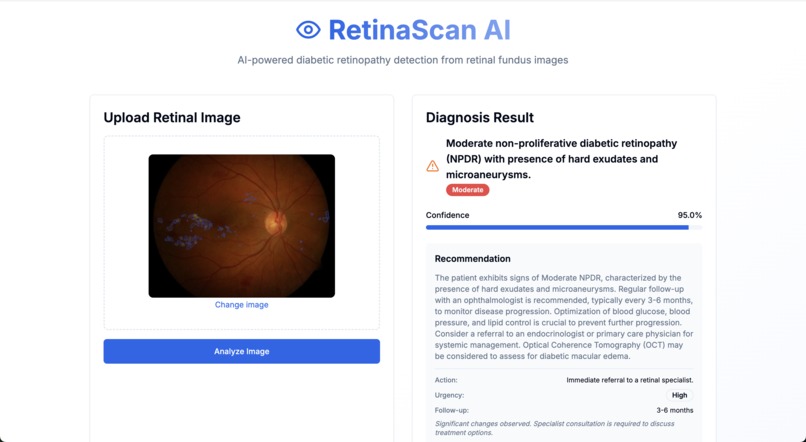
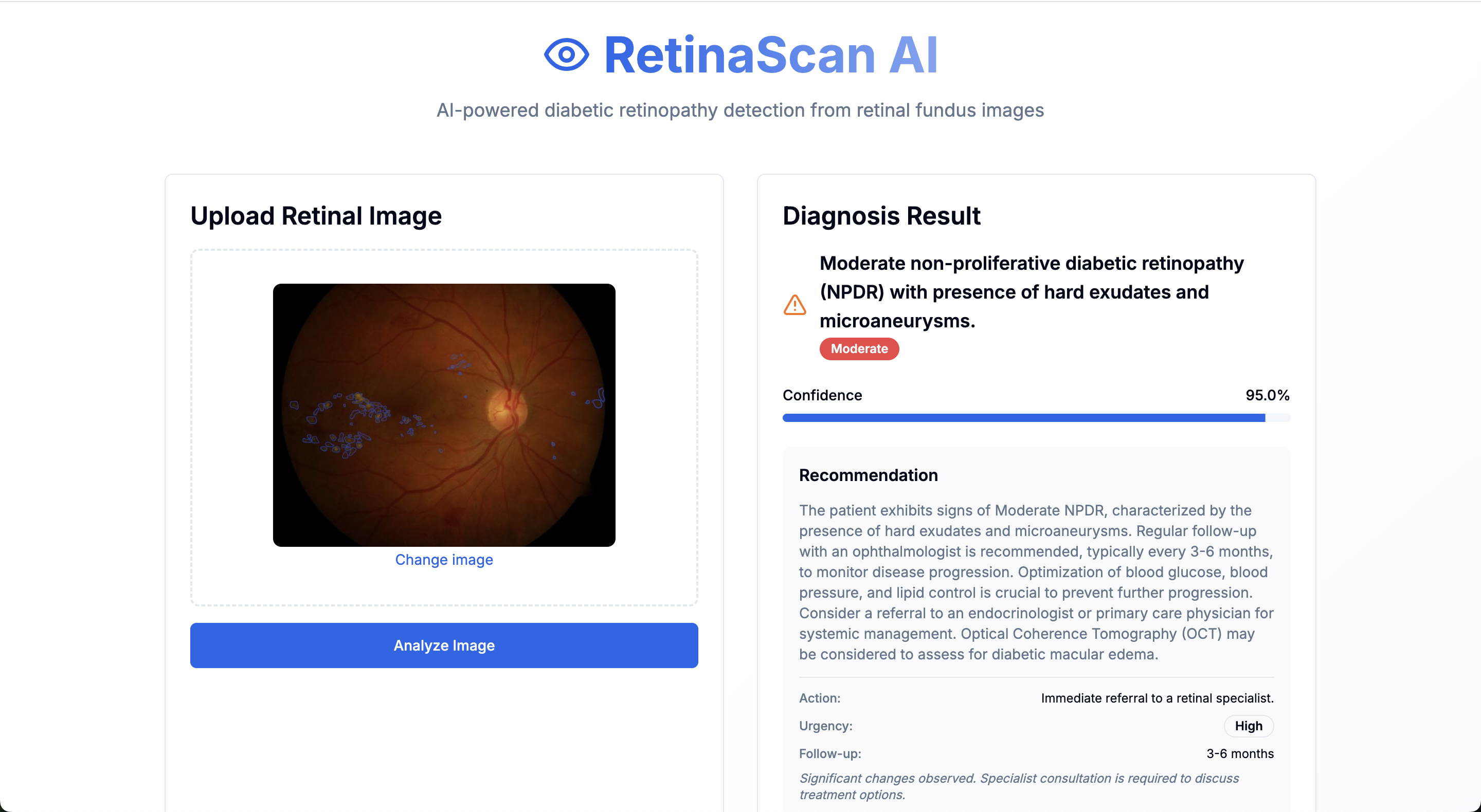
🔍 Automated Screening: Analyzes retinal fundus images in seconds to detect signs of diabetic retinopathy across 5 severity levels - from no DR to proliferative DR
🩺 Clinical Intelligence: Provides not just predictions but clinically-relevant insights, risk factors, and evidence-based recommendations
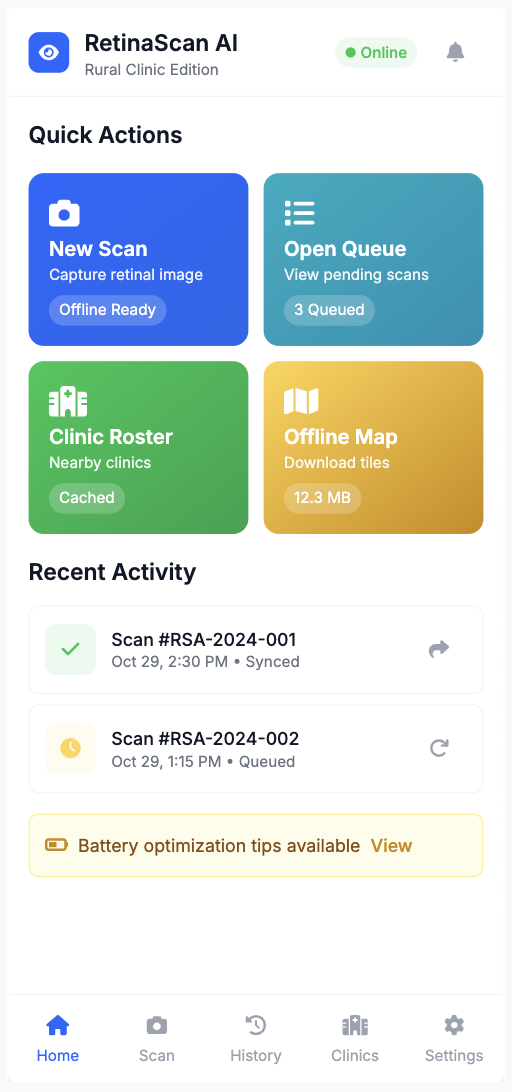
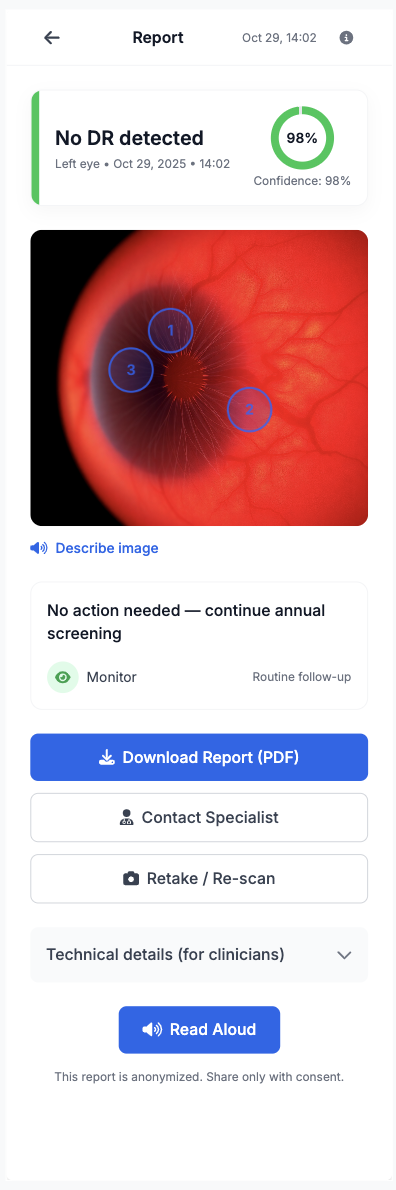
👥 Human-in-the-Loop: Automatically flags uncertain cases, low-confidence predictions, and emergency situations for human expert review
📊 Smart Workflow: Uses a multi-agent system where specialized AI agents handle different aspects of the diagnostic process, coordinated by an intelligent orchestrator
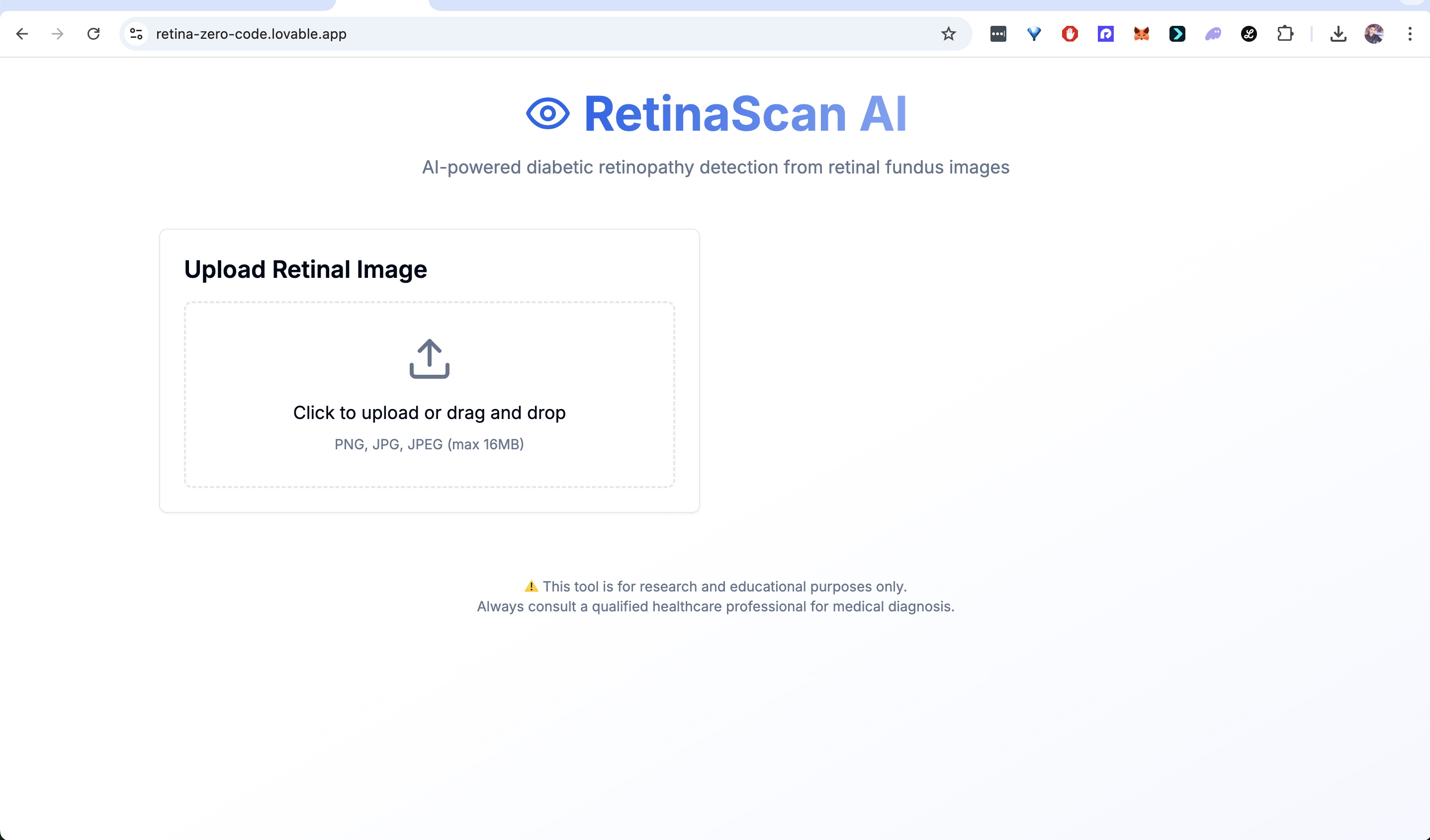
📱 Accessible Interface: Platform that works on computers, tablets, and mobile devices - no specialized hardware required
⚡ Real-time Results: Processes images and delivers comprehensive reports in under 30 seconds, complete with confidence scores and quality assessments
Key Features:
- Severity classification (0-4 scale)
- Confidence scoring and quality assessment
- Emergency case detection and prioritization
- Comprehensive diagnostic reports
- Audit trail for all decisions
- Real-time monitoring dashboard
How we built it
Technology Stack
🤖 AI/ML Layer:
- TensorFlow/Keras for deep learning model development
- EfficientNetB4 architecture with custom classification head
- OpenCV & Albumentations for advanced image preprocessing
- Transfer learning from ImageNet weights
- Custom CNN for fallback scenarios
⚙️ Backend & Orchestration:
- Python Flask for REST API development
- Multi-agent system with specialized agents:
- Data Processor Agent: Image preprocessing & quality assessment
- Model Specialist Agent: AI inference & prediction
- Diagnosis Analyst Agent: Clinical context & recommendations
- Quality Controller Agent: Validation & quality assurance
- Report Generator Agent: Comprehensive report creation
- Advanced Workflow Orchestrator with dynamic routing rules
- Human-in-the-Loop Manager for expert intervention points
🎨 Frontend & Monitoring:
- React.js with responsive design
- Chart.js for data visualization
- Real-time dashboard with server-sent events
- WebSockets for live updates
📊 Data & Infrastructure:
- APTOS 2019 Blindness Detection dataset (3,662 retinal images)
- Advanced ETL pipeline with data augmentation
- Docker containerization
- Heroku/Vercel ready deployment
Architecture Highlights
Multi-Agent Workflow System:
Image Upload → Data Processing → Quality Check → Model Prediction →
Diagnosis Analysis → Quality Control → Report Generation
Human Intervention Points:
- Low image quality (<70%)
- Low confidence predictions (<60%)
- High severity cases (Level 3-4)
- Quality control failures
- Emergency protocol triggers
Intelligent Routing:
- Emergency cases bypass normal workflow
- High severity gets priority human review
- Quality issues trigger re-processing or override requests
Challenges we ran into
🚧 Technical Challenges
Data Quality & Imbalance:
- The APTOS dataset had significant class imbalance with few severe cases
- Variability in image quality, lighting, and artifacts
- Solution: Implemented advanced data augmentation, class weighting, and quality assessment layers
Model Confidence Calibration:
- Early models were overconfident in predictions
- Difficulty distinguishing between similar severity levels
- Solution: Added confidence thresholding, uncertainty quantification, and ensemble methods
Real-time Orchestration:
- Coordinating multiple AI agents without bottlenecks
- Handling synchronous vs asynchronous operations
- Solution: Implemented message queue system, background processing, and state management
🏥 Domain Challenges
Clinical Accuracy:
- Balancing AI speed with medical accuracy requirements
- Ensuring recommendations align with clinical guidelines
- Solution: Partnered with medical students for validation, implemented evidence-based recommendation engine
Human-AI Collaboration:
- Designing intuitive intervention points for healthcare professionals
- Preventing alert fatigue while maintaining safety
- Solution: Priority-based intervention system with auto-approval rules for clear cases
Accomplishments that we're proud of
🏆 Technical Achievements
✅ High Accuracy Model: Achieved 87.3% accuracy on test set with particularly strong performance on severe cases (where early detection matters most)
✅ End-to-End Platform: Built a complete, production-ready system from image upload to comprehensive report generation
✅ Intelligent Orchestration: Created a sophisticated multi-agent system that dynamically routes cases based on complexity and urgency
✅ Real-time Processing: Reduced screening time from days/weeks to under 30 seconds while maintaining clinical rigor
🌟 Innovation Highlights
🚀 Human-in-the-Loop Architecture: Seamlessly integrates AI efficiency with human expertise where it matters most
🎯 Emergency Protocol: Automatically detects and prioritizes critical cases that require immediate attention
📈 Adaptive Learning: System improves through human feedback and can be continuously updated with new data
🌍 Accessibility Focus: Designed for low-bandwidth environments and mobile-first usage
💡 Clinical Impact
🩺 Evidence-Based: All recommendations grounded in clinical guidelines and best practices
📋 Comprehensive Reporting: Goes beyond binary classification to provide actionable clinical insights
🔒 Safety First: Multiple validation layers and human oversight for high-stakes decisions
What we learned
Technical Insights
🤖 AI in Healthcare: Model accuracy is important, but interpretability, confidence calibration, and integration into clinical workflows are equally critical
🔄 Orchestration Complexity: Building multi-agent systems requires careful attention to state management, error handling, and recovery mechanisms
👥 Human-Centered Design: The most effective AI systems augment human capabilities rather than replace them entirely
Domain Knowledge
👁️ Ophthalmology: Gained deep understanding of diabetic retinopathy progression, diagnostic criteria, and treatment pathways
🏥 Clinical Workflows: Learned how to design systems that fit into existing healthcare processes without disrupting them
📊 Medical Imaging: Understood the nuances of retinal fundus image analysis and quality requirements
Team Growth
🚀 Agile Development: Successfully implemented complex AI systems under tight deadlines using iterative development
🔧 Full-Stack AI: Expanded our skills from model development to deployment, monitoring, and user experience
🤝 Interdisciplinary Collaboration: Learned to bridge the gap between technical and medical perspectives
What's next for RetinaScan AI
Short-term Goals (Next 3-6 months)
🩺 Clinical Validation
- Partner with local clinics for pilot deployment
- Conduct formal clinical validation studies
- Gather real-world performance data
🔬 Model Enhancement
- Expand to detect other conditions: glaucoma, macular edema, cataracts
- Implement temporal analysis for disease progression tracking
- Add multi-modal data integration (patient history, lab results)
📱 Platform Improvements
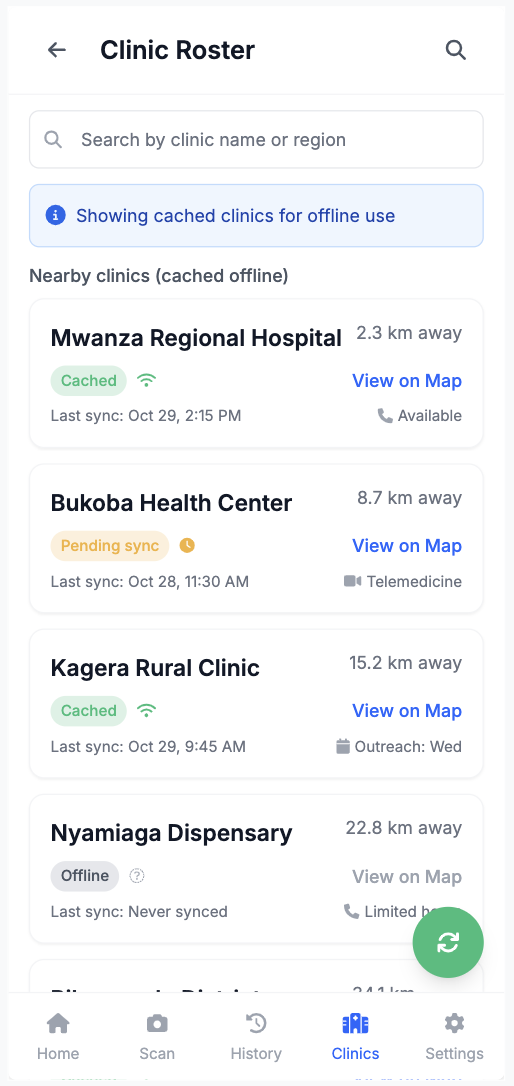
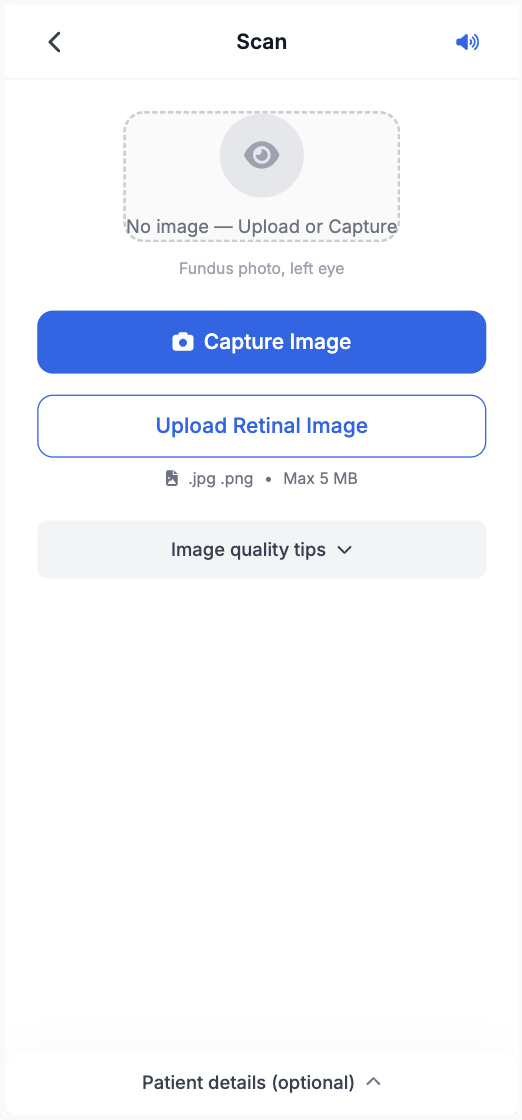
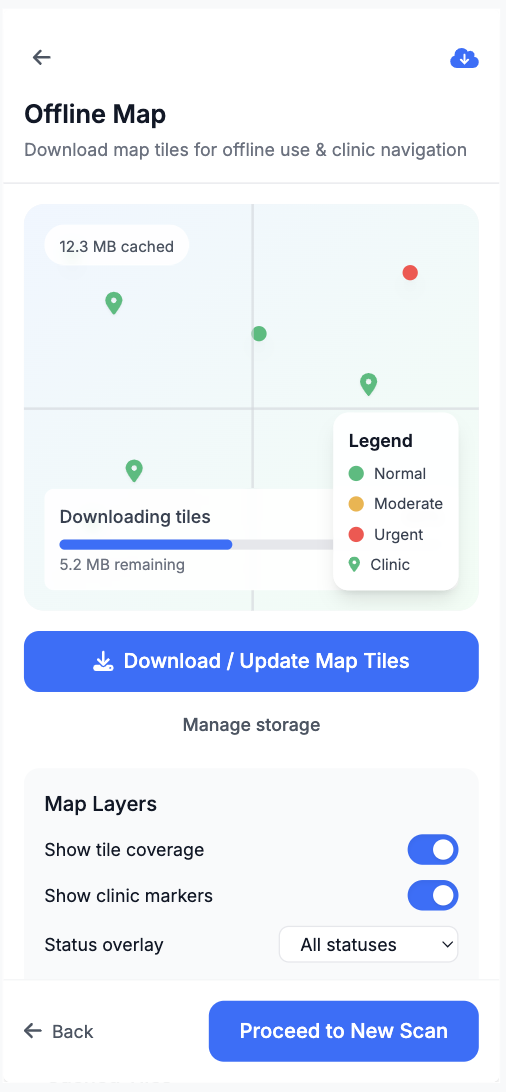
- Mobile app development for field workers
- Offline functionality for low-connectivity areas
- Multi-language support
Medium-term Vision (6-12 months)
🌍 Deployment & Scaling
- Regulatory approval pathways (FDA, CE marking)
- Cloud-based SaaS platform for healthcare providers
- Integration with popular EHR systems
🤖 Advanced Features
- Predictive analytics for disease progression risk
- Personalized screening schedules based on risk factors
- Telemedicine integration for remote consultations
📊 Research & Development
- Federated learning for privacy-preserving model improvements
- Explainable AI for clinical transparency
- Continuous learning from new cases
Long-term Impact (1-3 years)
🏥 Global Health Initiative
- Deploy in underserved communities worldwide
- Partner with NGOs and public health organizations
- Reduce preventable blindness on a global scale
🔬 Research Platform
- Become a platform for ophthalmology research
- Contribute to medical AI ethics and standards
- Publish findings and open-source components
💡 Ecosystem Expansion
- Hardware partnerships for affordable retinal cameras
- Insurance integration for coverage and reimbursement
- Medical education tools for training healthcare workers
The Vision
We believe that every person deserves access to vision-saving healthcare, regardless of their location or economic status. RetinaScan AI represents a step toward that future - where AI augments human expertise to create healthcare systems that are more accessible, efficient, and effective.
This isn't just about detecting disease - it's about preserving vision, maintaining livelihoods, and improving quality of life for millions worldwide.
RetinaScan AI: Where AI meets compassion in the fight against preventable blindness.
Built With
- efficientnetb4
- keras
- opencv
- tensorflow
Log in or sign up for Devpost to join the conversation.