-
-
Ideation
-
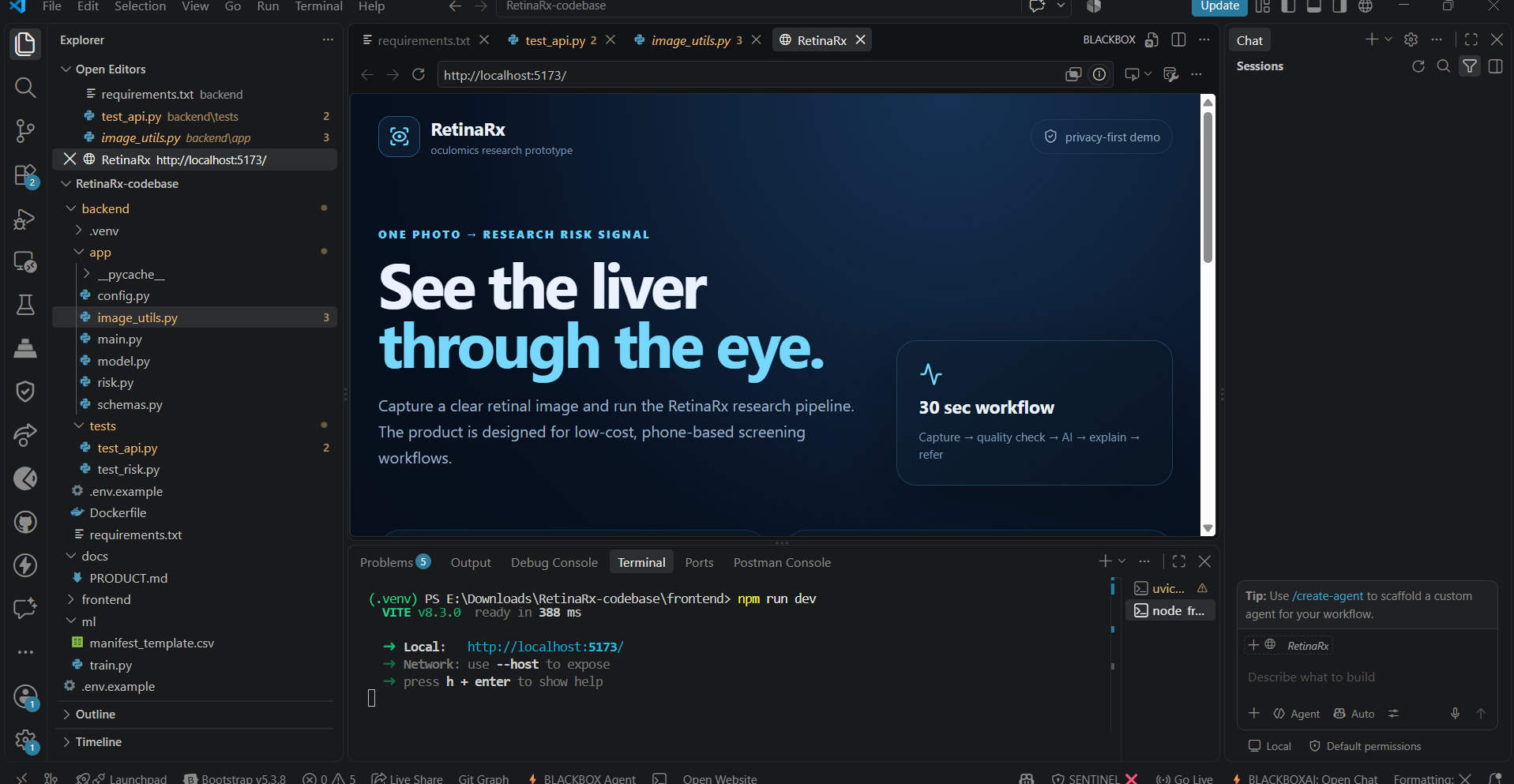
Frontend screenshot
-
Inspiration
What it does
How we built it
Challenges we ran into
Accomplishments that we're proud of
What we learned
What's next for RetinaRx
Inspiration
Liver disease is one of the quietest epidemics in global health — by the time symptoms of cirrhosis or liver failure appear, the disease has often already caused irreversible damage. Diagnosis today relies on blood panels, imaging, or biopsy: accurate, but expensive, invasive, and functionally out of reach for a huge share of the world's population.
[Insert your personal inspiration here — e.g. a family member's late diagnosis, exposure to this research area through Sri Eshwar's PhD research on AI-driven hepatology diagnostics, or a specific statistic that struck you.]
What pulled us toward the retina specifically was discovering the growing field of oculomics — the idea that a single retinal photograph carries systemic health signals far beyond eye disease. Recent research has already shown retinal images can flag cardiovascular risk, diabetes, and even biological aging. Hepatobiliary disease is one of the newest and least-explored frontiers in this space, and we saw an opportunity to build something that could screen for it non-invasively, using nothing more than a phone.
What it does
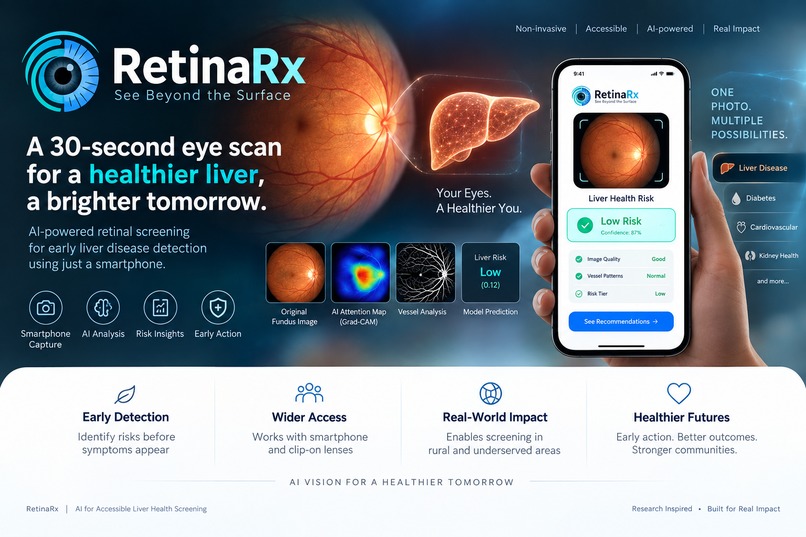
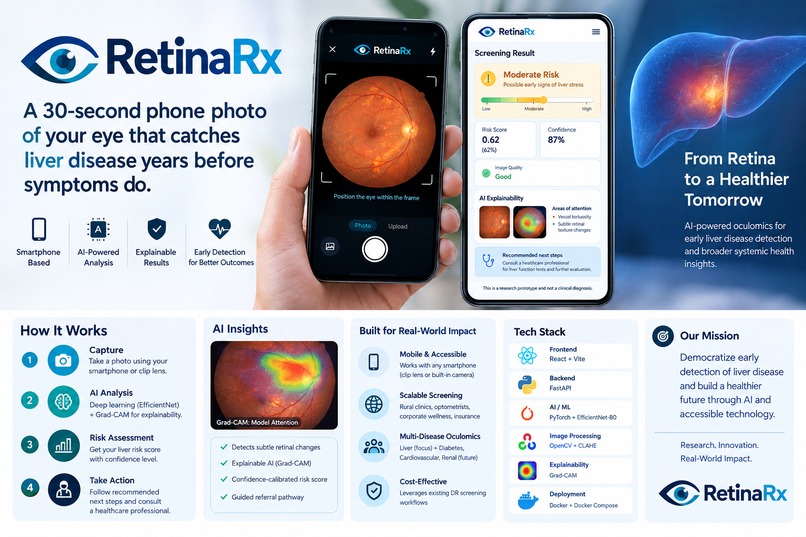
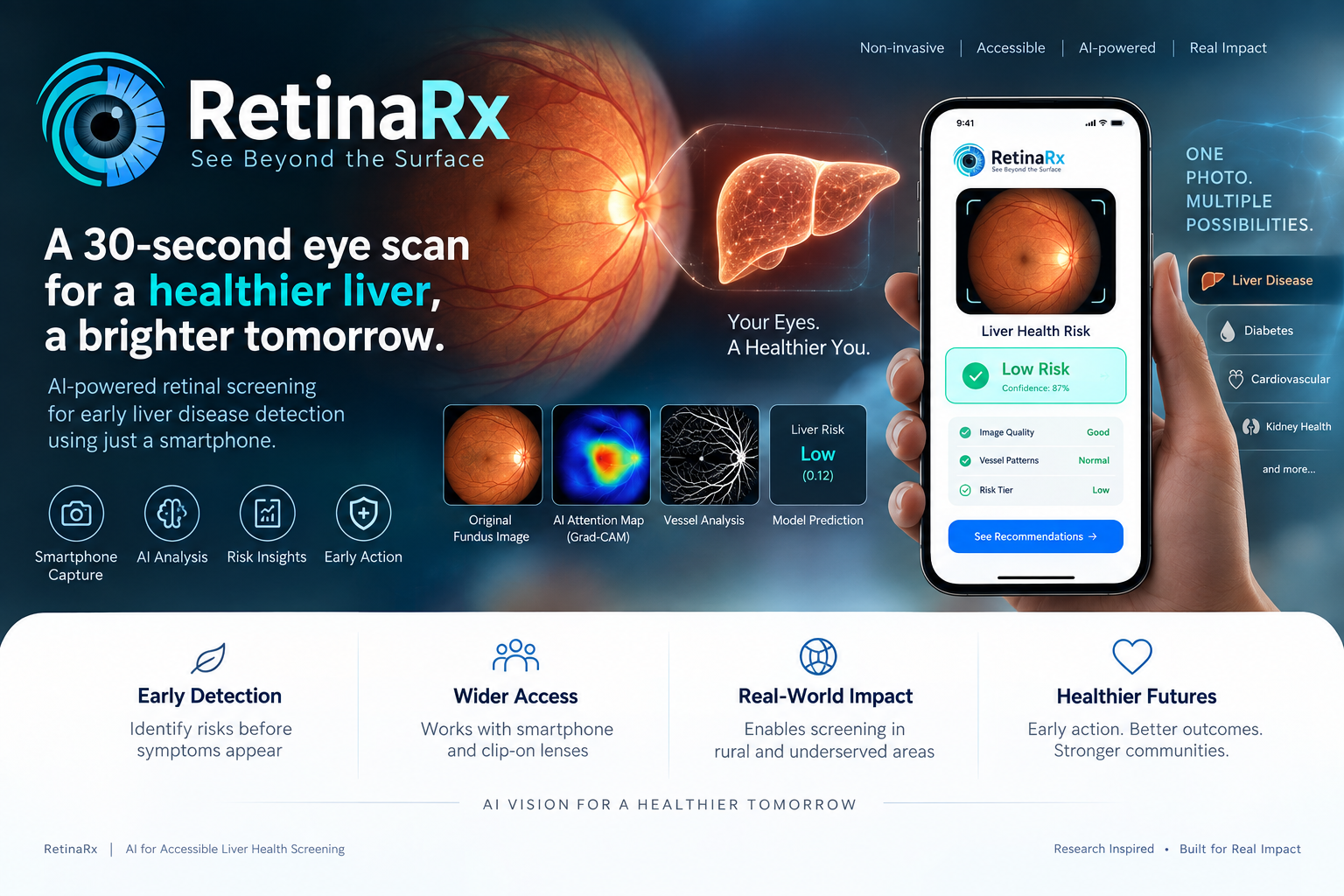
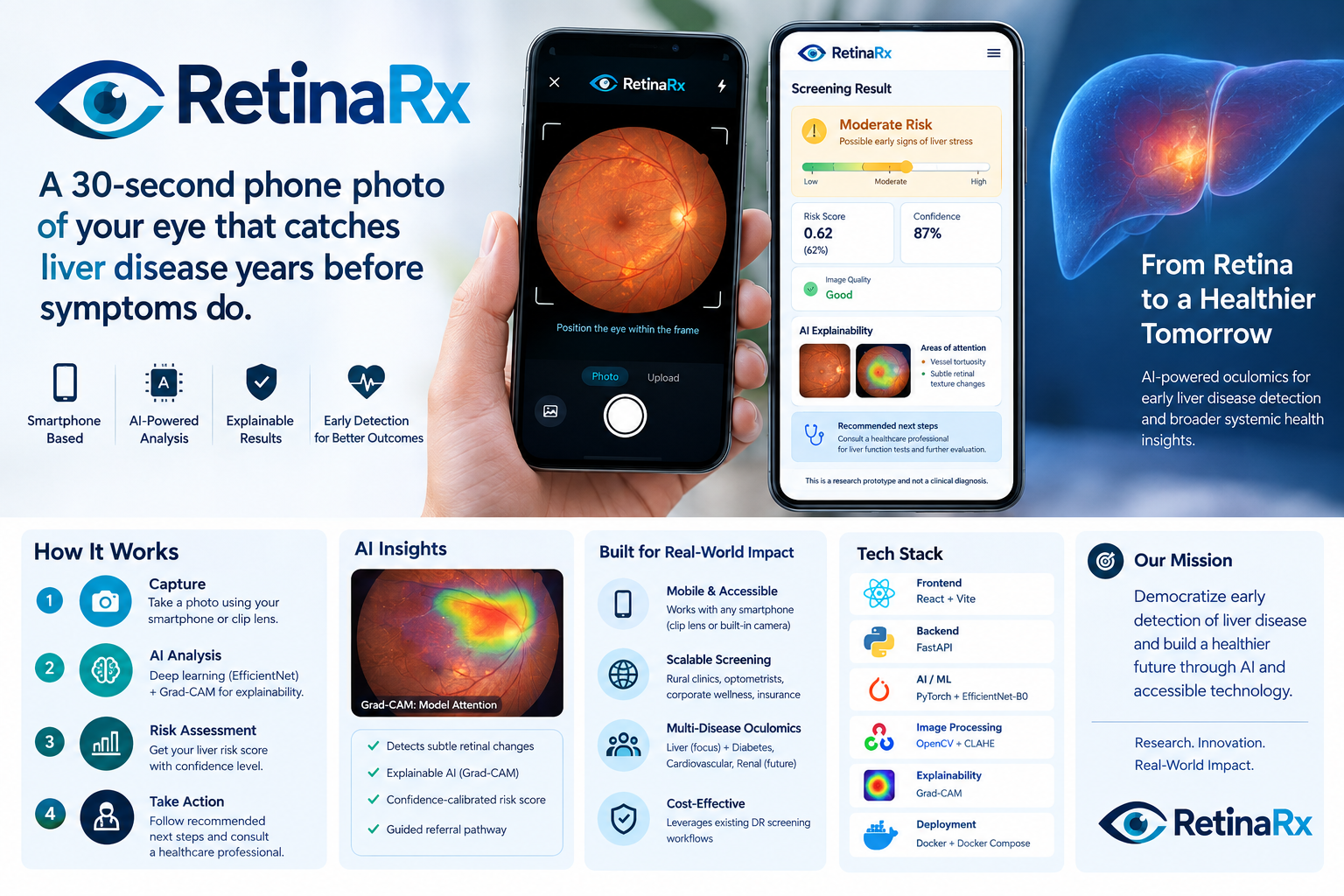
RetinaRx captures a retinal image via a smartphone (with an inexpensive clip-on lens) and runs it through a deep learning pipeline trained to detect subclinical retinal dysfunction (SRD) — a microvascular pattern associated with early-stage liver disease. In under a minute, the user gets:
- A risk tier (low / moderate / high) rather than a blunt yes/no verdict
- A Grad-CAM explainability overlay showing which regions of the retina drove the prediction, so a clinician can sanity-check the model rather than trust it blindly
- A referral recommendation pointing high-risk users toward confirmatory liver function tests or ultrasound imaging
How we built it
- Data: public fundus imaging datasets (e.g. EyePACS, ODIR), augmented with GAN-generated synthetic SRD-positive samples to counter severe class imbalance — genuine liver-disease- labeled retinal data is scarce.
- Model: a transfer-learned CNN backbone (EfficientNet-B0) fine-tuned for SRD classification, with Grad-CAM layered on top for interpretability.
- Pipeline: preprocessing (vessel segmentation, denoising, contrast enhancement) → classification → confidence calibration → risk scoring.
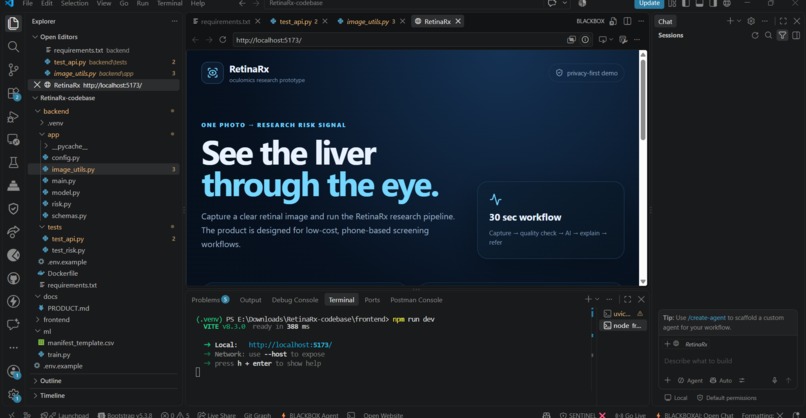
- Frontend: a lightweight mobile-web capture flow so the demo works with just a phone camera, no dedicated hardware required.
[If your team used specific tools you're familiar with — e.g. FastAPI for the backend, a vector store for reference-case retrieval, or a particular training framework — name them here.]
Challenges we ran into
- Data scarcity: very few public datasets link retinal imaging directly to confirmed liver-disease status, which forced us to lean heavily on synthetic augmentation and transfer learning rather than training from scratch.
- Avoiding false confidence: an early version of the model produced overconfident predictions on borderline cases — we had to add calibration and shift from a binary output to a tiered risk score so it wouldn't mislead users.
- Keeping it deployable on a phone: balancing model accuracy against the need for something that runs fast, cheap, and without specialized clinical hardware.
- [Add a real challenge from your build — time constraints, a specific bug, a design pivot mid-hackathon, etc.]
Accomplishments that we're proud of
- Building an end-to-end pipeline — capture, inference, explainability, referral — in the hackathon timeframe
- Grounding the idea in active, peer-reviewed oculomics research rather than a speculative mechanism
- Designing for accessibility from day one: no clinical hardware, no lab, just a phone
What we learned
- How much untapped signal exists in retinal imaging beyond ophthalmology
- The practical difficulty of building trustworthy medical AI — accuracy alone isn't enough without explainability and calibrated risk communication
- [Personal/team learning — new tool, new domain knowledge, teamwork lesson, etc.]
What's next for RetinaRx
- Clinical validation against confirmed liver-disease cohorts
- Expanding the model to a broader oculomics risk panel (diabetes, cardiovascular, renal) from the same retinal capture
- Partnering with existing diabetic-retinopathy screening programs to piggyback on established distribution infrastructure in underserved regions
Built With
- ai/ml
- api
- backend/api
- convolutional
- dataset
- efficientnet
- fastapi
- frontend
- gans
- grad-cam
- healthcare
- infra/tools
- jupyter
- learning
- networks
- neural
- notebook
- numpy
- odir
- opencv
- pytorch
- react
- rest
- scikit-learn
- tensorflow


Log in or sign up for Devpost to join the conversation.