-
RETINALYTIC
-
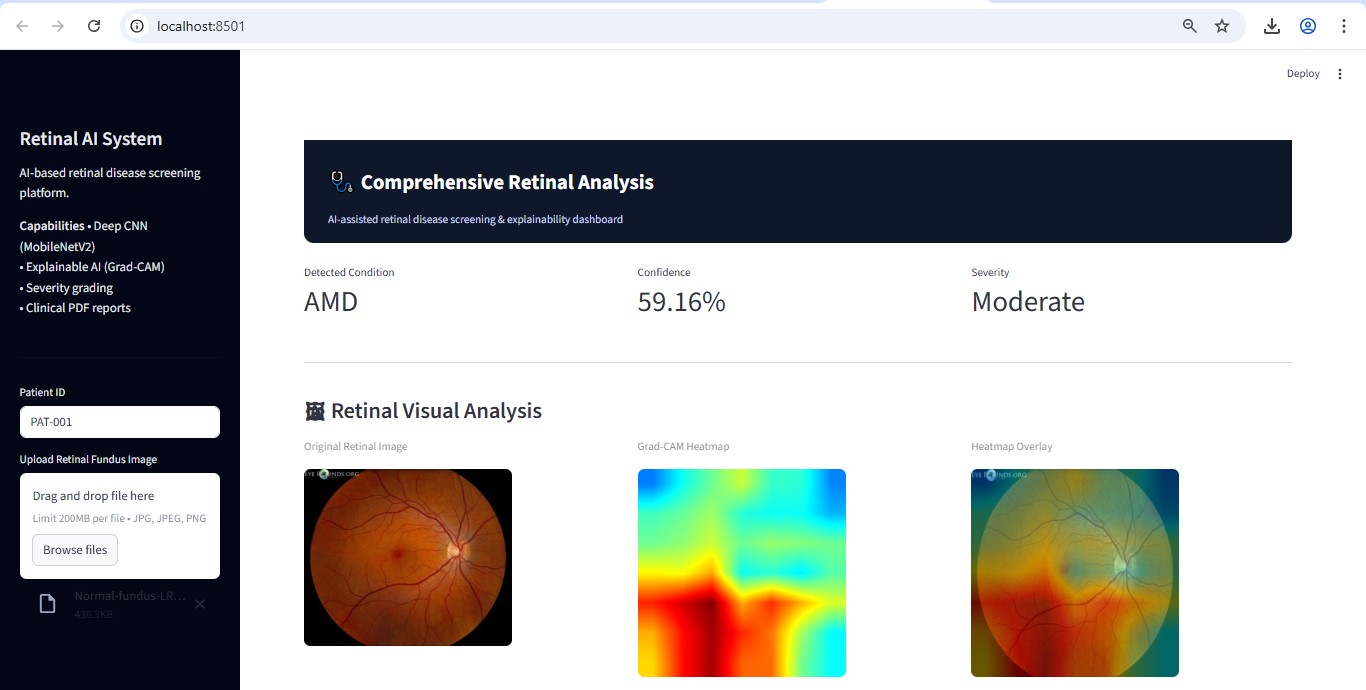
Dashboard
-
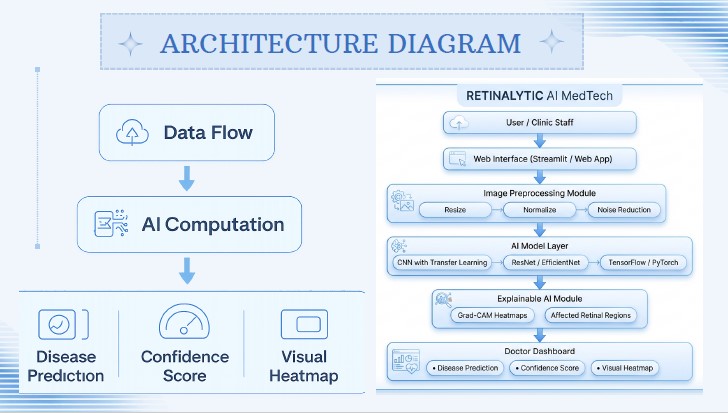
Architecture Diagram
-
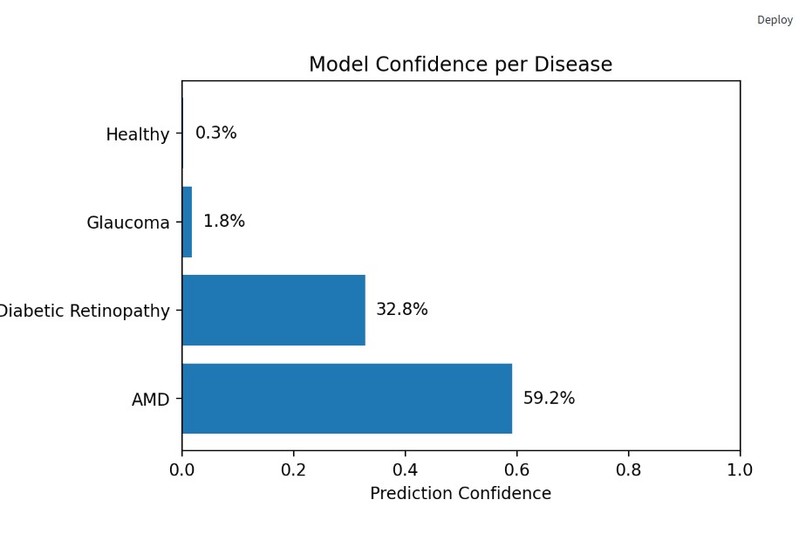
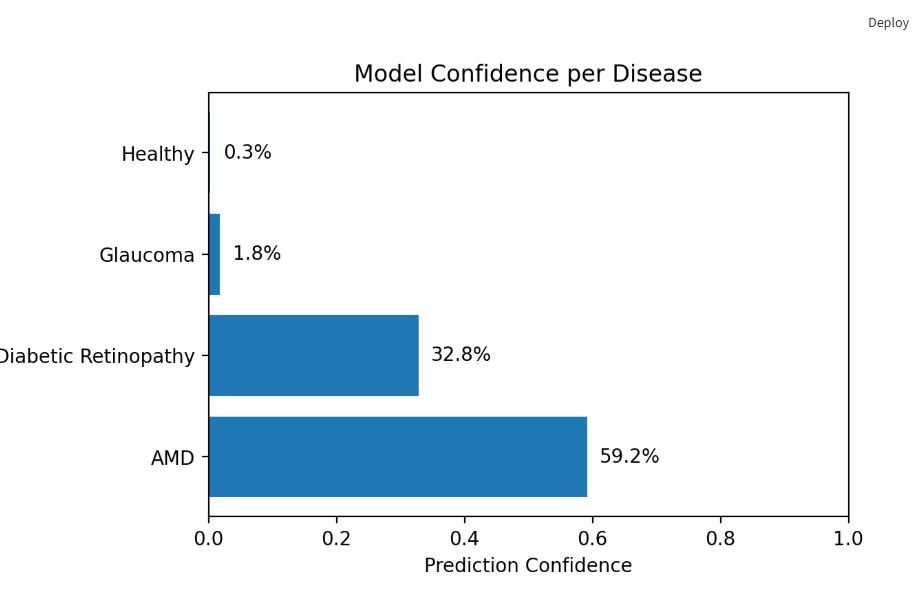
Chart Analysis
-
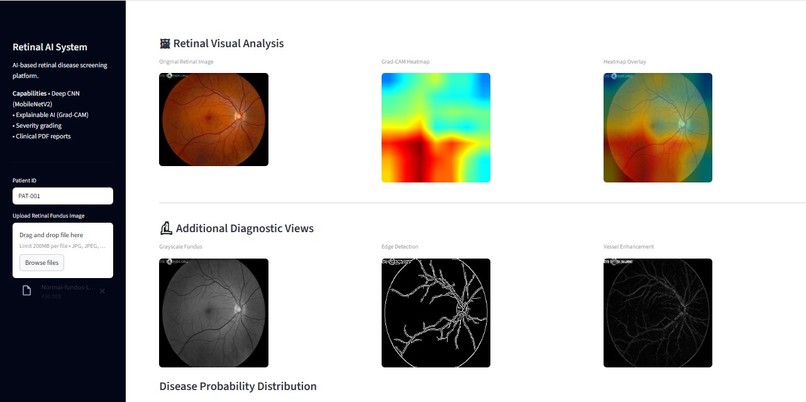
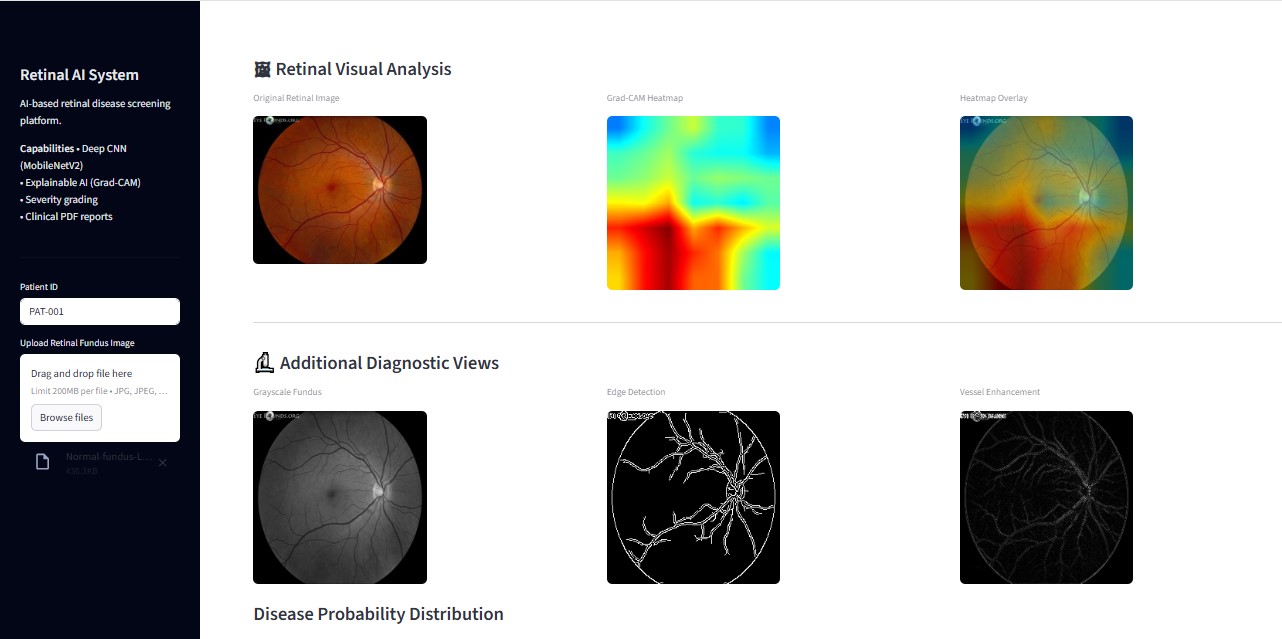
Image Analysis
-
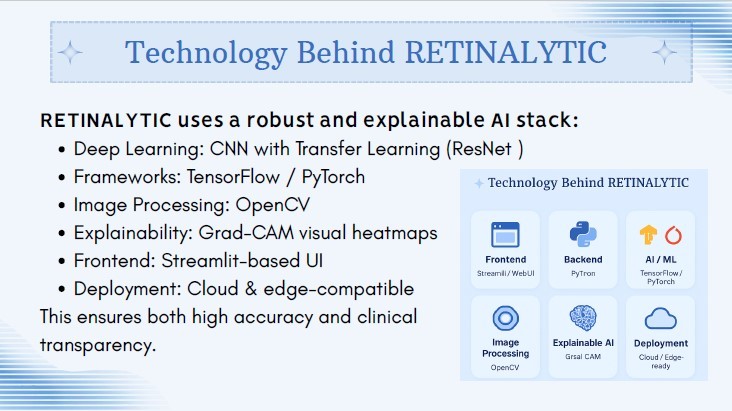
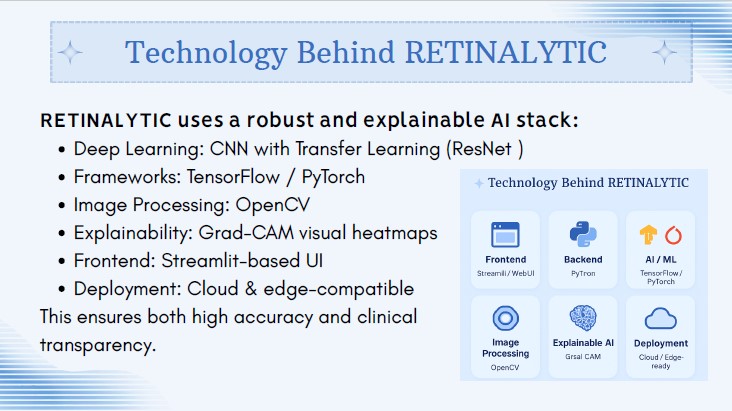
Tech-Stack
-
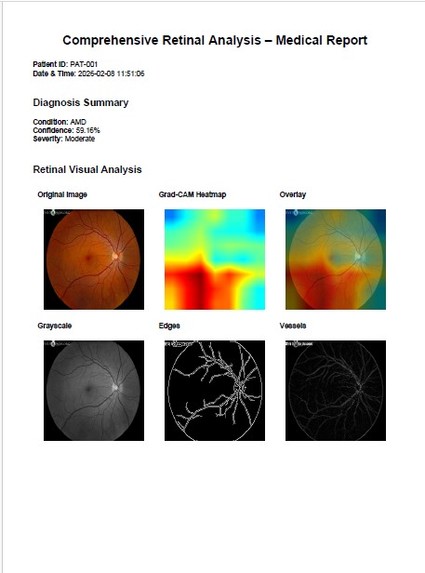
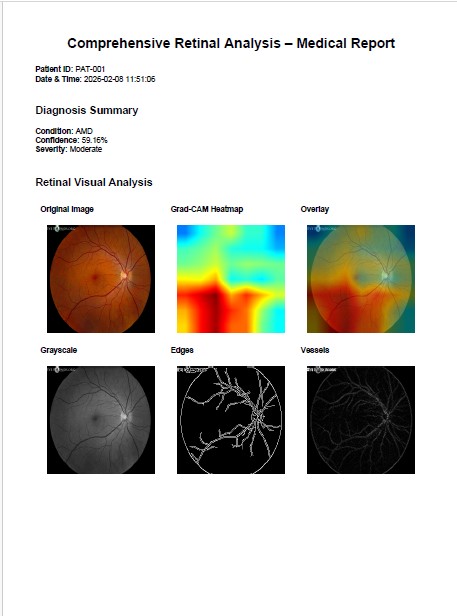
PDF Format
Inspiration 💡👁️
Retinal diseases such as Diabetic Retinopathy, Glaucoma, and Age-Related Macular Degeneration (AMD) are among the leading causes of preventable blindness worldwide 🌍.
One of the biggest problems is that early symptoms are often silent, and diagnosis happens too late ⏳. During my research, I noticed a clear gap between powerful AI research and tools that doctors can actually trust and use in real clinical settings 🏥.
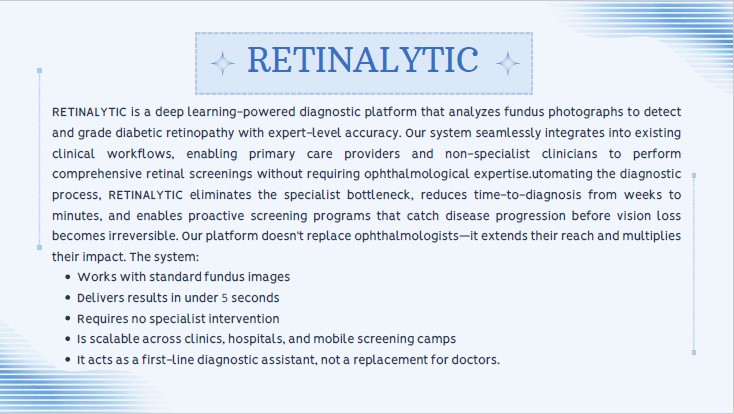
Most existing systems provide a prediction, but very few explain why a particular diagnosis was made. This inspired me to build RETINALYTIC ⭐ — an AI system that not only detects retinal diseases but also visually explains its decisions using medical-grade outputs.
What it does 🔍📊
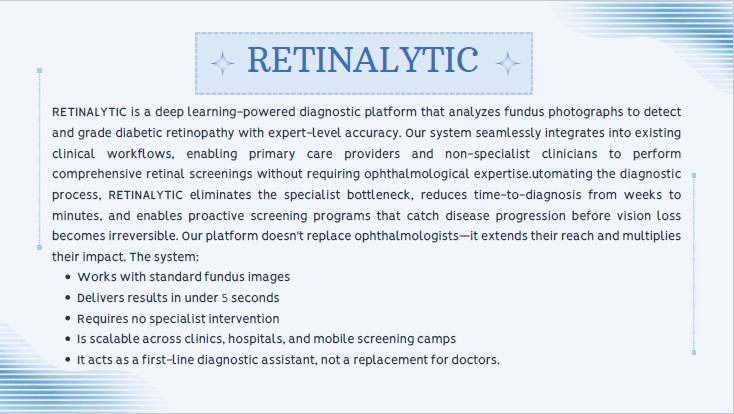
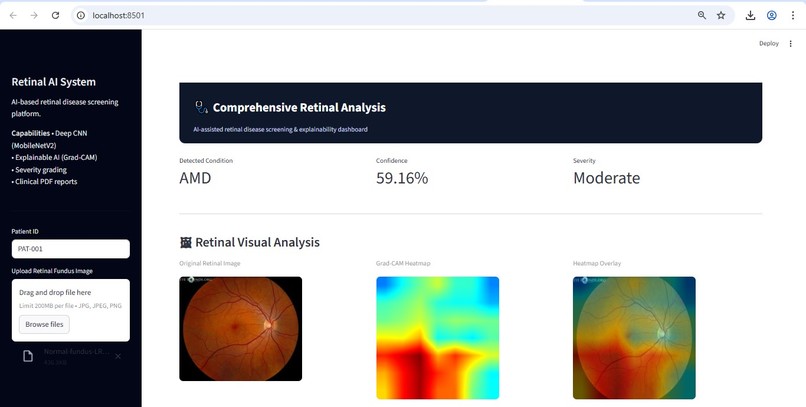
RETINALYTIC ⭐ is an end-to-end AI application that analyzes retinal fundus images and provides explainable medical insights.
• Detects multiple retinal conditions including Diabetic Retinopathy, Glaucoma, AMD, and Healthy Retina • Displays prediction confidence and severity levels • Generates Grad-CAM heatmaps to highlight affected retinal regions • Produces multiple diagnostic views: – Original image – Grad-CAM heatmap – Overlay visualization – Grayscale image – Edge detection – Vessel enhancement • Creates a professional hospital-style PDF medical report • Provides a clean, clinician-friendly dashboard interface
How I built it 🛠️🤖
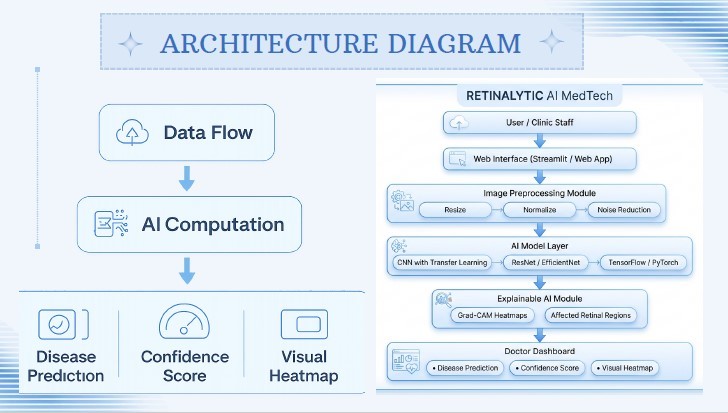
I built RETINALYTIC ⭐ as a fully modular medical AI pipeline.
• Deep learning model using TensorFlow / Keras (MobileNetV2-based CNN) • Explainable AI implemented using Grad-CAM • Image preprocessing and enhancement with OpenCV • Interactive dashboard built with Streamlit • Medical-grade PDF report generation using ReportLab • Structured UI with tabs for measurements, charts, findings, and reports
The entire system works with a single image upload and produces complete clinical insights in one flow 🚀.
Challenges I ran into ⚠️🧩
• Ensuring high accuracy while maintaining explainability • Preventing image overlap and layout issues in PDF reports • Debugging model output shape mismatches • Designing a UI that feels clinical rather than experimental • Translating AI outputs into information useful for doctors
Each challenge significantly improved both the technical quality and real-world usability of the system.
Accomplishments that I'm proud of 🏆✨
• Built a fully functional end-to-end medical AI application • Successfully integrated explainable AI for healthcare • Designed a hospital-style user interface • Automated generation of structured medical reports • Created a project suitable for demos, hackathons, and clinical research showcases
What I learned 📚🧠
• Explainability is essential for medical AI adoption • UI/UX plays a major role in clinician trust • Deploying AI systems involves far more than model training • Medical AI must always prioritize clarity, safety, and accountability • Real-world healthcare problems require interdisciplinary thinking
What's next for RETINALYTIC ⭐ 🚀🔮
• Support for additional retinal and optic nerve diseases • Disease progression tracking over time • Clinically standardized severity grading • Cloud deployment and hospital system integration • Multi-modal imaging support (Fundus + OCT) • Validation using real-world clinical datasets

Log in or sign up for Devpost to join the conversation.