-
RetinaTransform
-
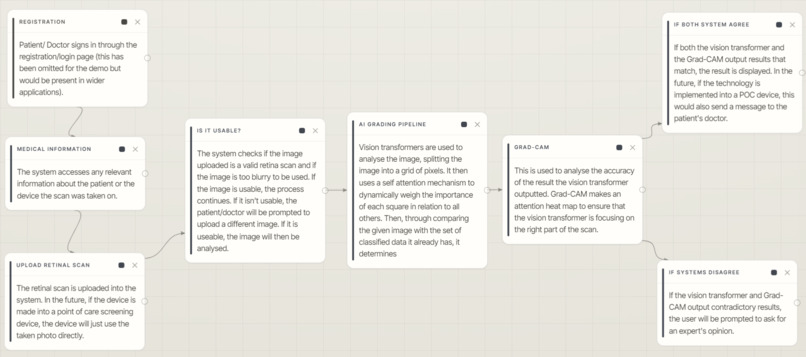
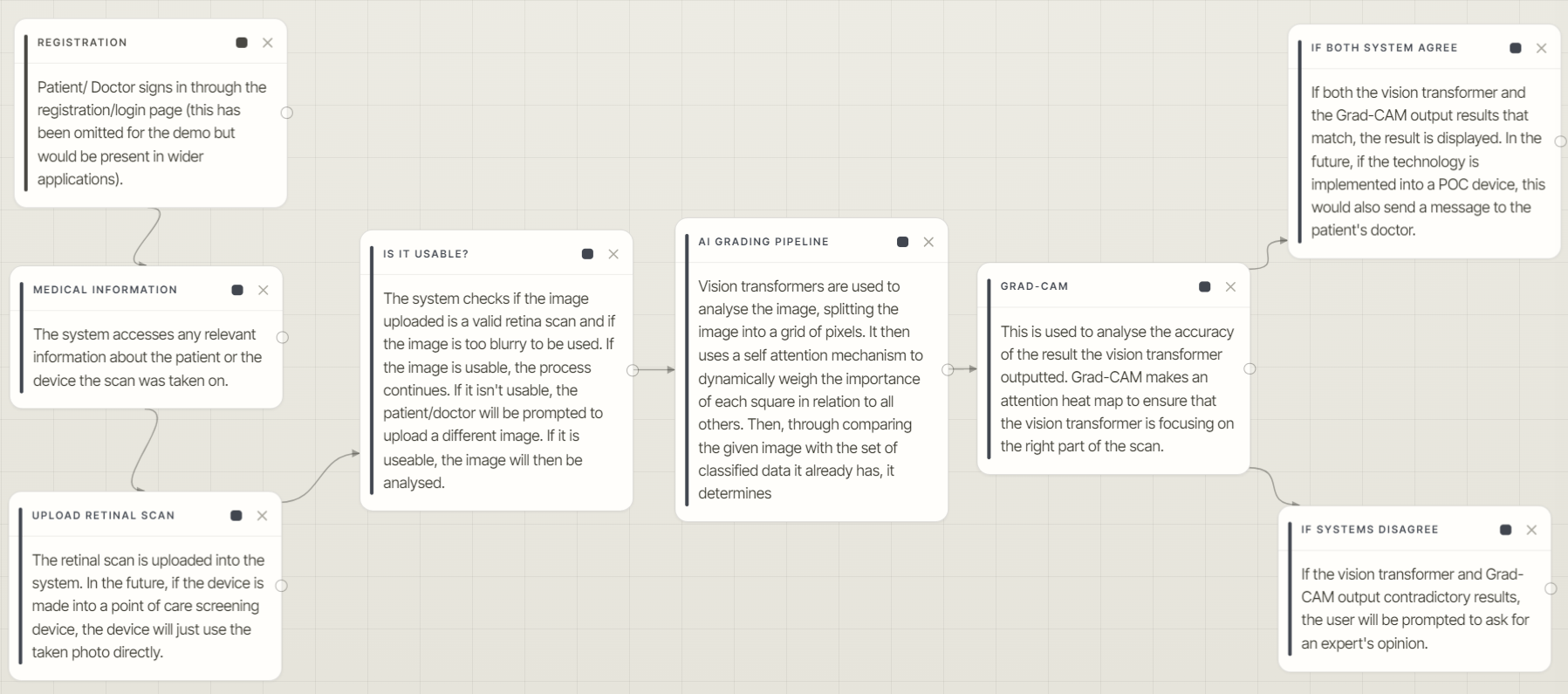
Flowchart explanation of how the system works
-

Sunset image: the model will identify that it isn't a valid image.
-
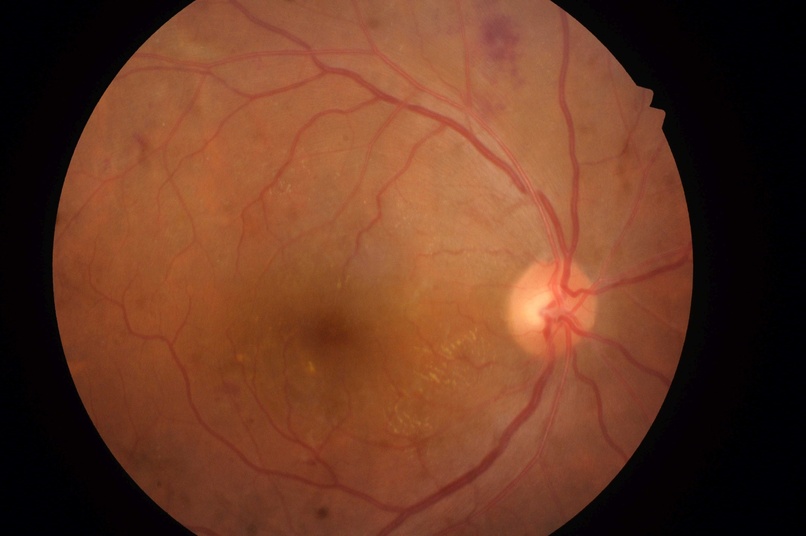
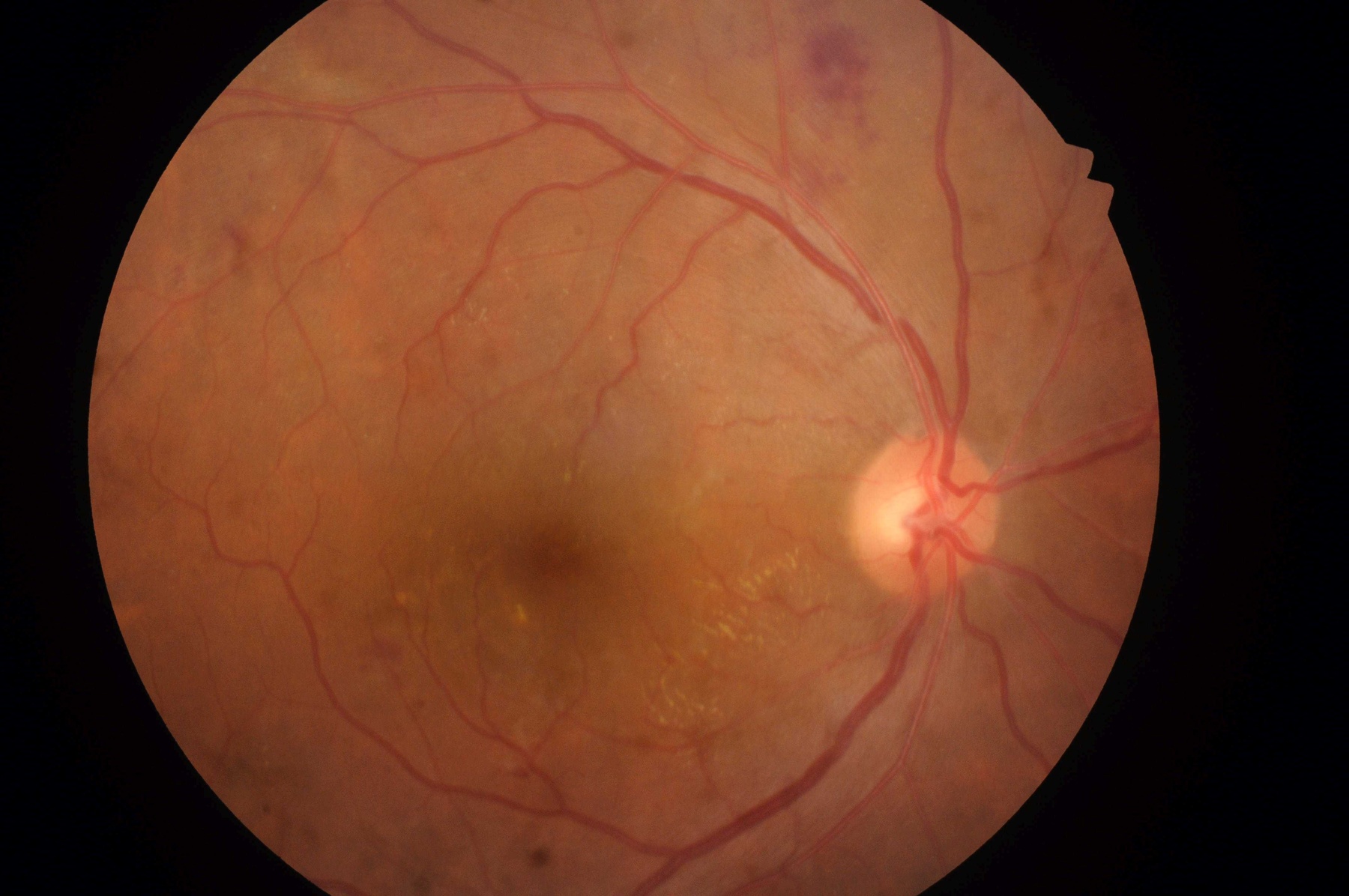
Retina Scan

The Problem:
Diabetic Retinopathy is the most common cause of sight loss in diabetic patients (affecting approx. 1 in 3 people with diabetes). It can be a consequence of patients experiencing long-term hyperglycaemia, as continuous high glucose levels damaged blood vessels in the retina. Diabetic Retinopathy is typically classified in three stages:
- background diabetic retinopathy (eyesight isn’t yet affected but is indicative of future issues). Note that this is labelled as mild DR in the model.
- pre-proliferative diabetic retinopathy (some changes to eyesight, high risk vision could be affected). Note that this is labelled as moderate DR in the model.
- proliferative diabetic retinopathy (high risk of losing vision completely). Note that this is labelled as high DR in the model.
- Diabetic maculopathy can also occur, which affects your central vision and can impact your ability to read or drive. It can cause blindness in working age adults (ages typically ranging from 20-65). As a result, patients with diabetes in the UK typically have an eye screening every 1-2 years from the age of 12, but each test requires an expert to analyse, and results tend to take ~3 weeks to be released to patients. Diabetic retinopathy requires early intervention to avoid severe long term consequences (as there are no treatments or permanent solutions), but the system currently in place takes too much time to process the data, meaning that it takes too long to identify the issue.
What we built:
We used AI grading pipelines to detect diabetic retinopathy from an openly licensed sample set that has been pre-analysed. The model will then identify the stage of DR and give the user advice for further steps.
See attached image of the flowchart and the GitHub README for explanation of how it works.
What’s next for RetinaTransform:
In the future, the project could be scaled up to hold databases for each individual patient. As the process of analysing results has become significantly faster, tests could be taken more frequently for patients exhibiting signs of pre-proliferative diabetic retinopathy, which will allow doctors to provide necessary treatment as soon as possible. The concept could even be applied to develop point-of-care screening devices that patients could use at home (in a similar manner to glucose sensors). Doctors could then request the patient to take readings at specified intervals/ under different light conditions see from their screen and could then only book appointments only if necessary. This will simplify the process for both patients and the doctors, allowing quicker diagnosis and has the potential to prevent blindness for countless patients.
Built With
- gradcam
- javascript
- python
- react
- sqlite
- streamlit

Log in or sign up for Devpost to join the conversation.