-
-
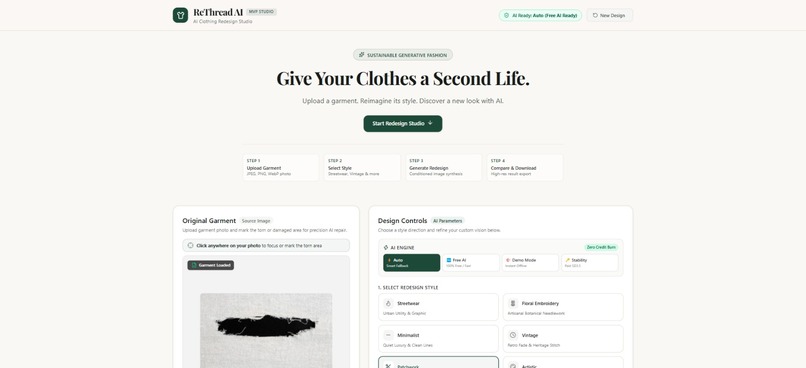
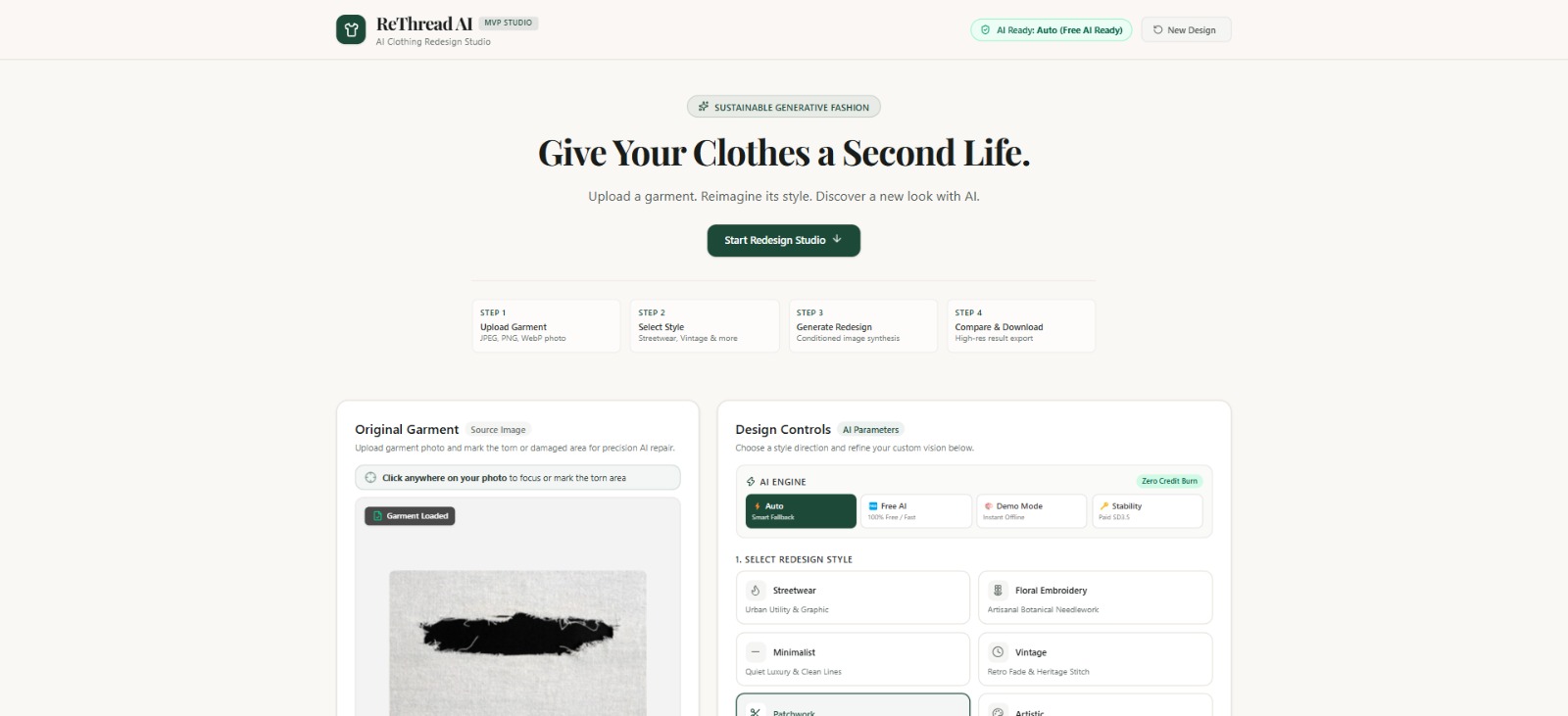
Main Screen
-
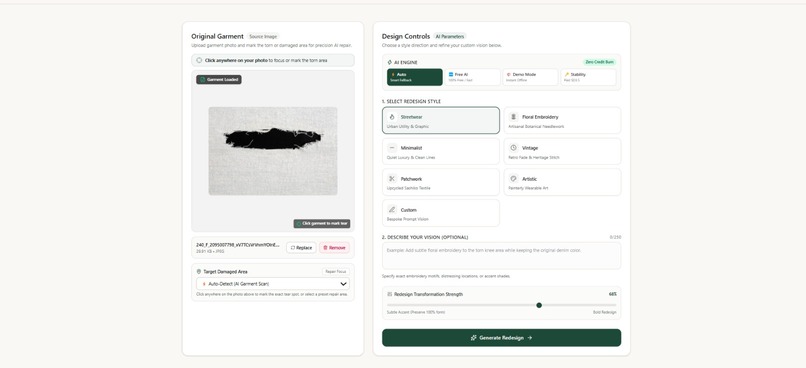
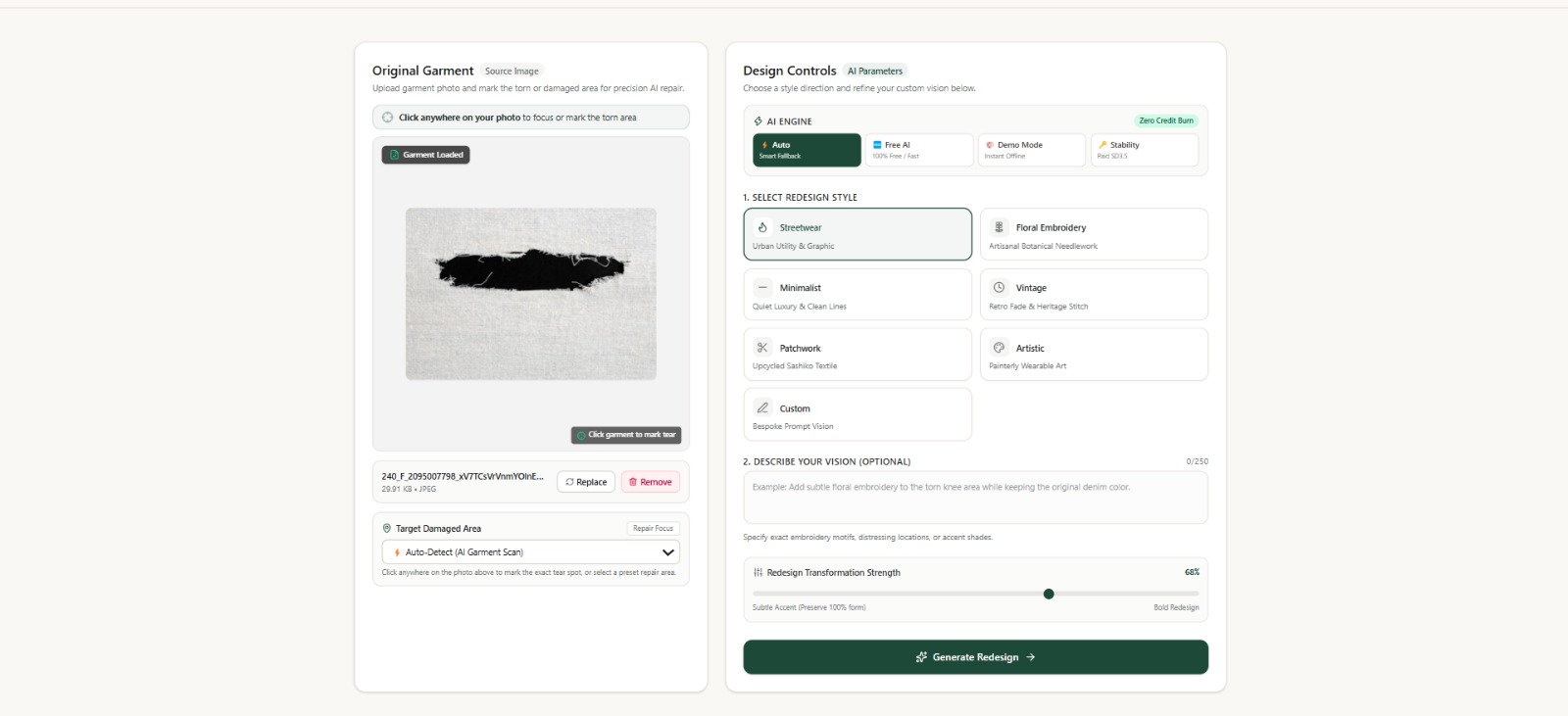
Upload Image
-
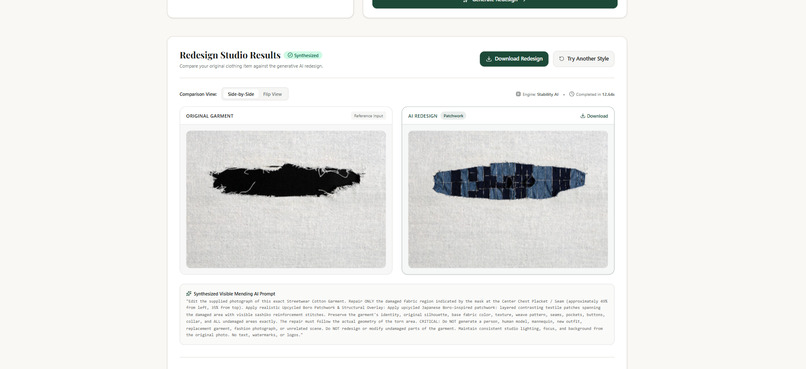
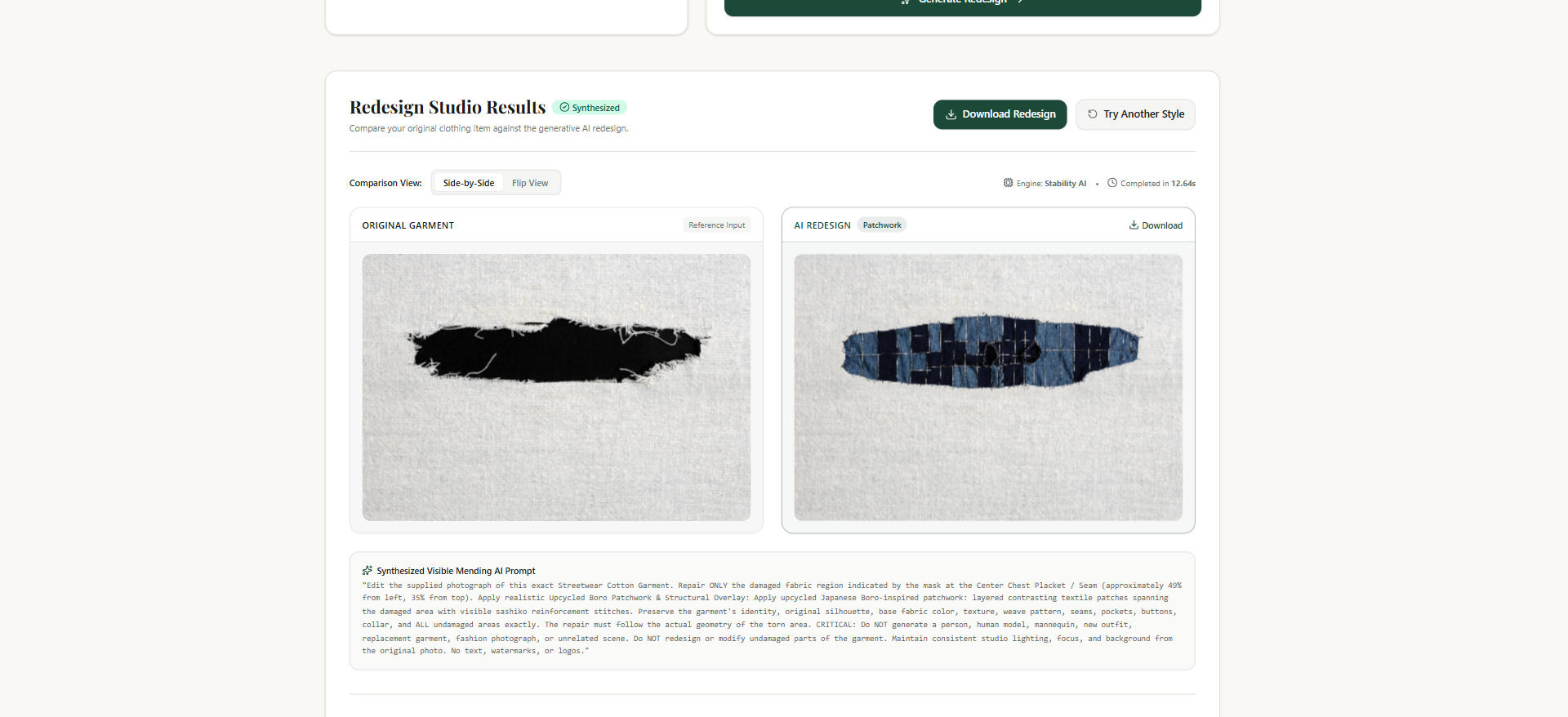
Redesign Result
-
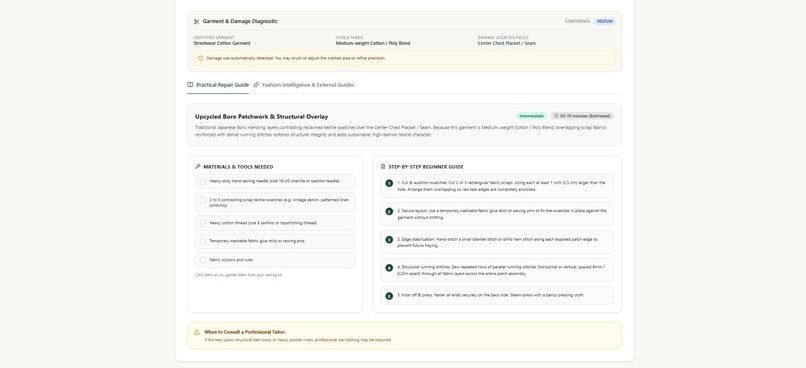
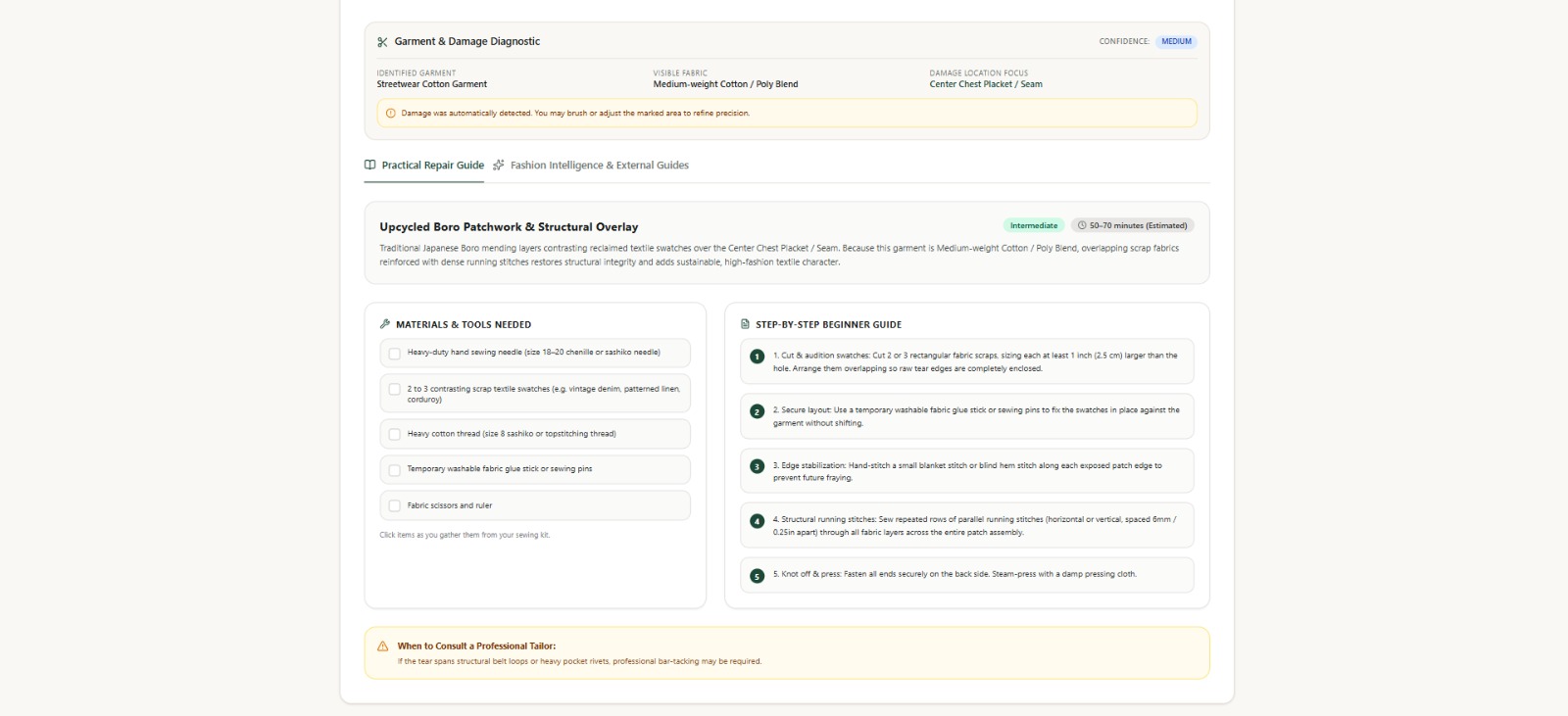
Pratical Guide
-
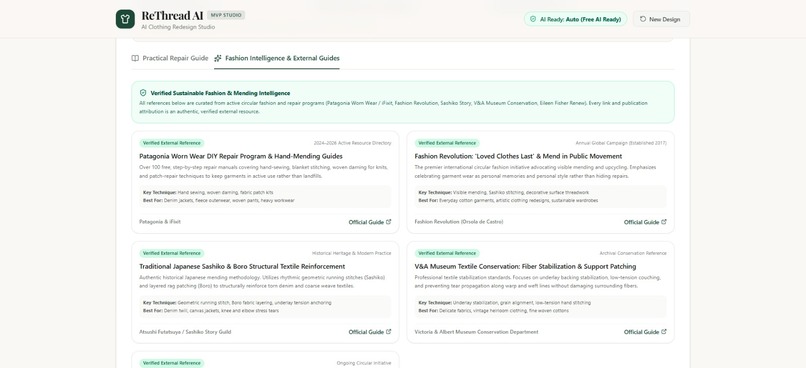
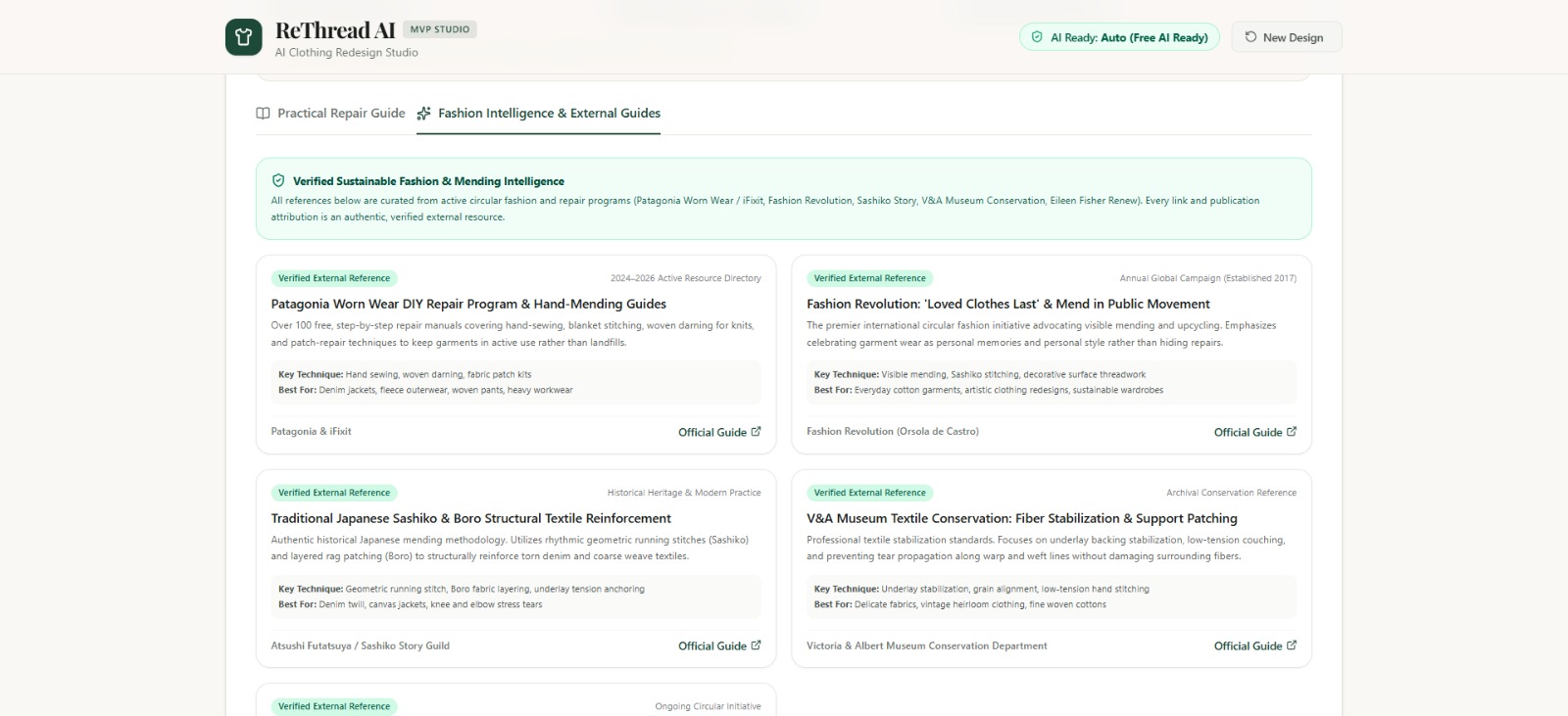
Fashion Intelligence and External Guides
Inspiration
What if a small tear could ruin your favorite outfit, but AI could help bring its beauty back?
This question inspired ReThread AI. We wanted to explore how artificial intelligence could help identify damaged areas in fabric images and restore their appearance. Our vision is to combine technology and creativity to support clothing repair and reduce textile waste.
What it does
ReThread AI is an AI-powered fabric damage detection and restoration project. It aims to identify torn regions in fabric images and reconstruct damaged areas while preserving the original texture, colors, and patterns.
Users can upload a fabric image, process it through the application, and view the resulting output. Our goal is to make fabric restoration more accessible through a simple, user-friendly interface.
How we built it
We built ReThread AI using Python and Streamlit to create a web-based application. Our approach focuses on image processing and computer vision to analyze fabric images and handle damaged regions.
The workflow is designed around image upload, damage analysis, restoration, and result visualization. We focused on keeping the interface simple so users can interact with the application without needing technical expertise.
Challenges we ran into
One of our main challenges was understanding how to distinguish actual fabric tears from shadows, folds, and natural texture variations. Different fabrics have unique patterns, colors, and structures, making accurate damage detection challenging.
Another challenge was exploring how to reconstruct damaged regions without making them look artificial. We also needed to consider processing efficiency and how to make the application accessible through a web interface.
Accomplishments that we're proud of
We are proud to turn an everyday problem into an AI-focused project with a practical purpose. ReThread AI brings together computer vision, image processing, and web development to explore a new approach to fabric restoration.
We are also proud of our modular approach, which allows us to consider damage detection and image restoration as separate stages that can be improved independently. The project has helped us connect technical learning with a sustainability-focused idea.
What we learned
Through ReThread AI, we learned that identifying damaged regions and restoring them are two different technical challenges. A useful restoration system must consider not only the damaged area but also the texture, colors, and patterns surrounding it.
We also learned the importance of testing with different images, evaluating output quality, and designing an interface that makes AI functionality accessible to users.
What's next for ReThread AI
Our next steps are to improve fabric damage detection, explore more effective restoration techniques, and test the application on different fabrics and patterns.
We also aim to improve the user experience by displaying original and processed images side by side. In the future, we hope ReThread AI can help people visualize clothing repair possibilities and encourage more sustainable fashion practices.
Our vision is simple: give damaged fabric a second chance through AI.

Log in or sign up for Devpost to join the conversation.