-
-
poster
Inspiration
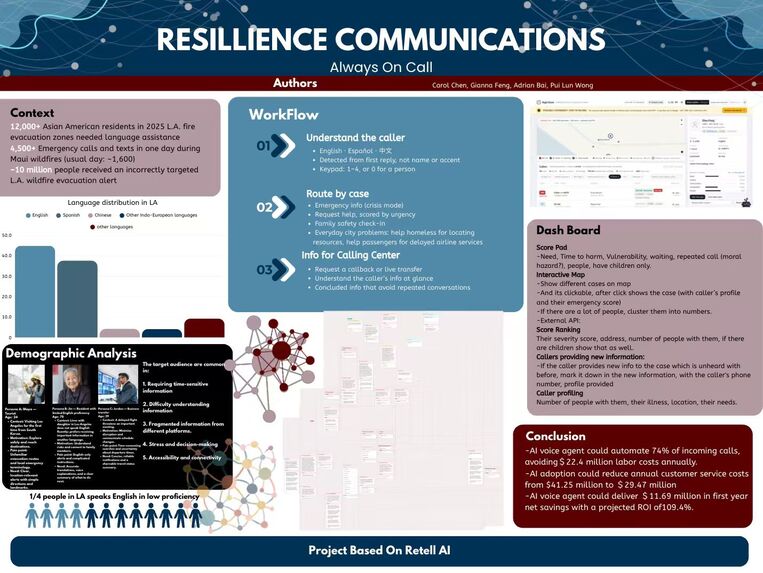
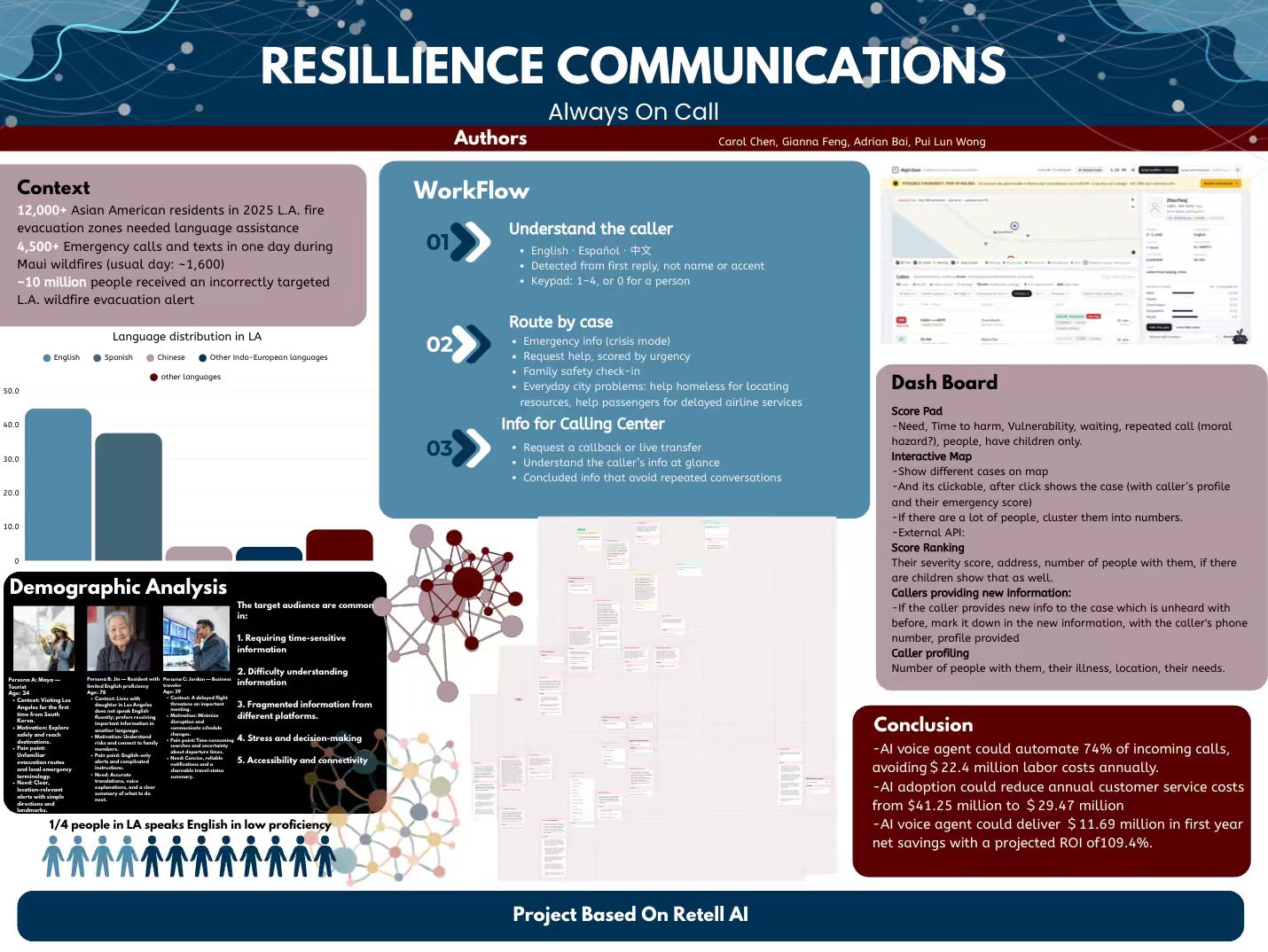
Our inspiration came from past cases: During LA’s 2025 wildfires, over 12,000 Asian Americans in evacuation zones needed language assistance, underscoring our hotline’s need for multilingual intake and clear guidance. The 2024 AT&T outage prompted warnings against testing 911, highlighting why our hotline should separate routine inquiries from calls requiring urgent human attention. New York’s COVID-19 hotline received over 90,000 calls by May 1, 2020 and needed nearly 450 clinicians daily at peak, motivating our prioritized human handoff.
What it does
We offer multi-language ai agents to help you connect to your family and other agencies in the highest efficiency without you feeling lost. We envision a future to waste no time on paralyzed emergency calls and equal priority for those who speak the right language when encountering problems.
How we built it
We used retell's voice agent to buid a sophisticated workflow to tackle the routing of different callers
Challenges we ran into
It was a challenge to consider different edge cases that would be encountered during a crisis. Who to prioritise and who not would be an ethical challenge which ignites a lot of our discussion. Tech challenge would be integrating the data we collected from the call to the database then to the dashboard without any bugs
Accomplishments that we're proud of
We build a dashboard, a workflow, a database that works seamlessly tpgether and we believe it opens a new chapter of crisis management
What we learned
We learned that effective emergency communication is not just about answering calls quickly, but also about making sure everyone can access help, regardless of their language. AI can reduce the workload of human operators by handling routine inquiries, while urgent and complex cases should be transferred to human responders. We also learned the importance of building a reliable, user-friendly system that can work under stressful situations. Most importantly, technology should support human decision-making, not replace it, especially during emergencies.
What's next for Always On Call
Looking for customers to buy our system. After proficient use of the system, we would like to demonstrate our system to government agencies like FEMA, Local emergency management and fire departments, and U.S. Department of Homeland Security (DHS) with a hope to help more people in local hazards. If success, we can expand our system and adapt into other countries.
Built With
- api
- communication
- javascript
- python


