-
-
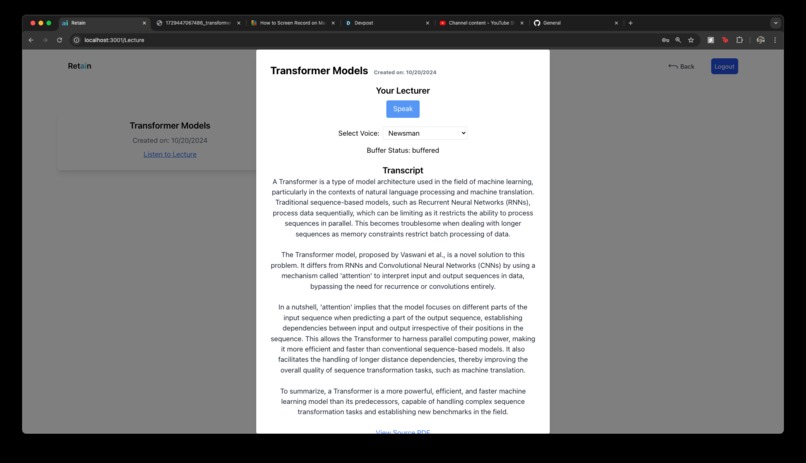
Generated transcript
-
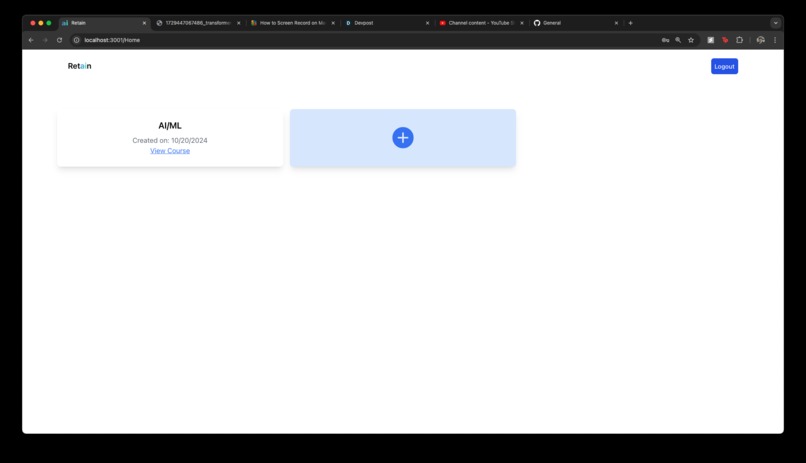
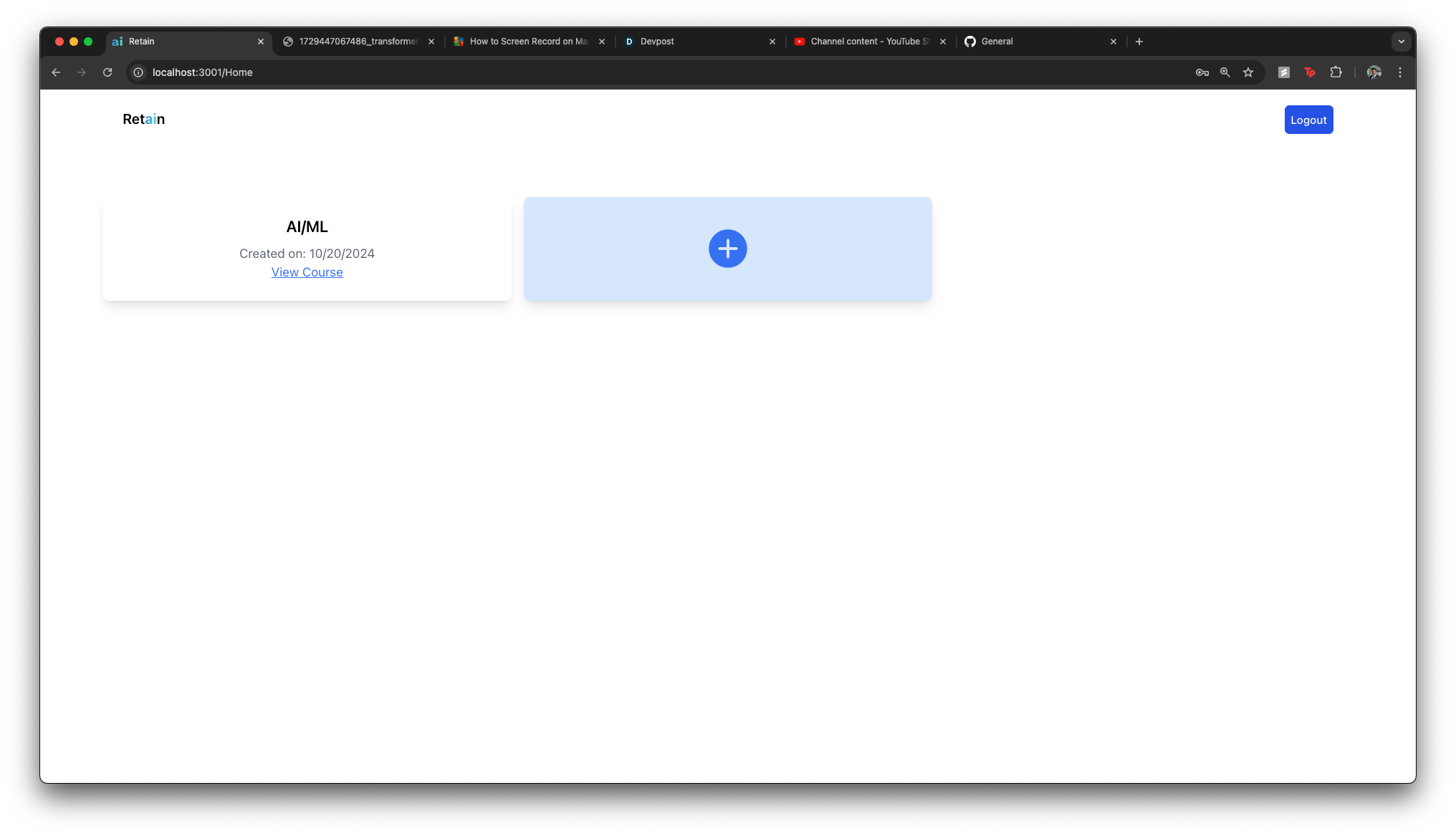
Add courses
-
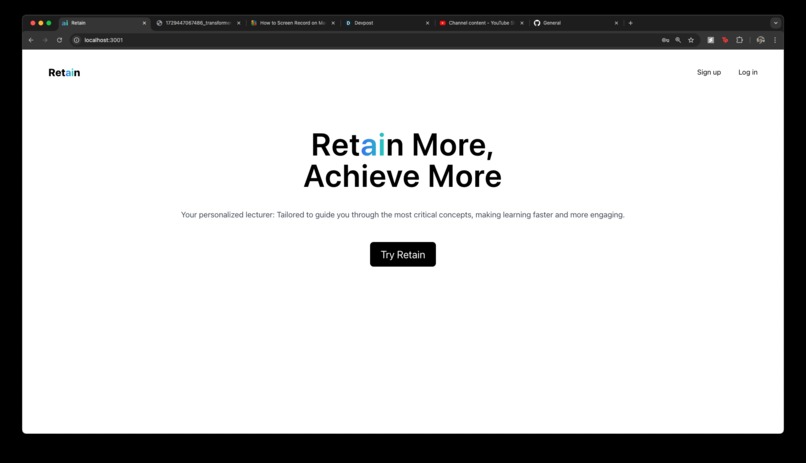
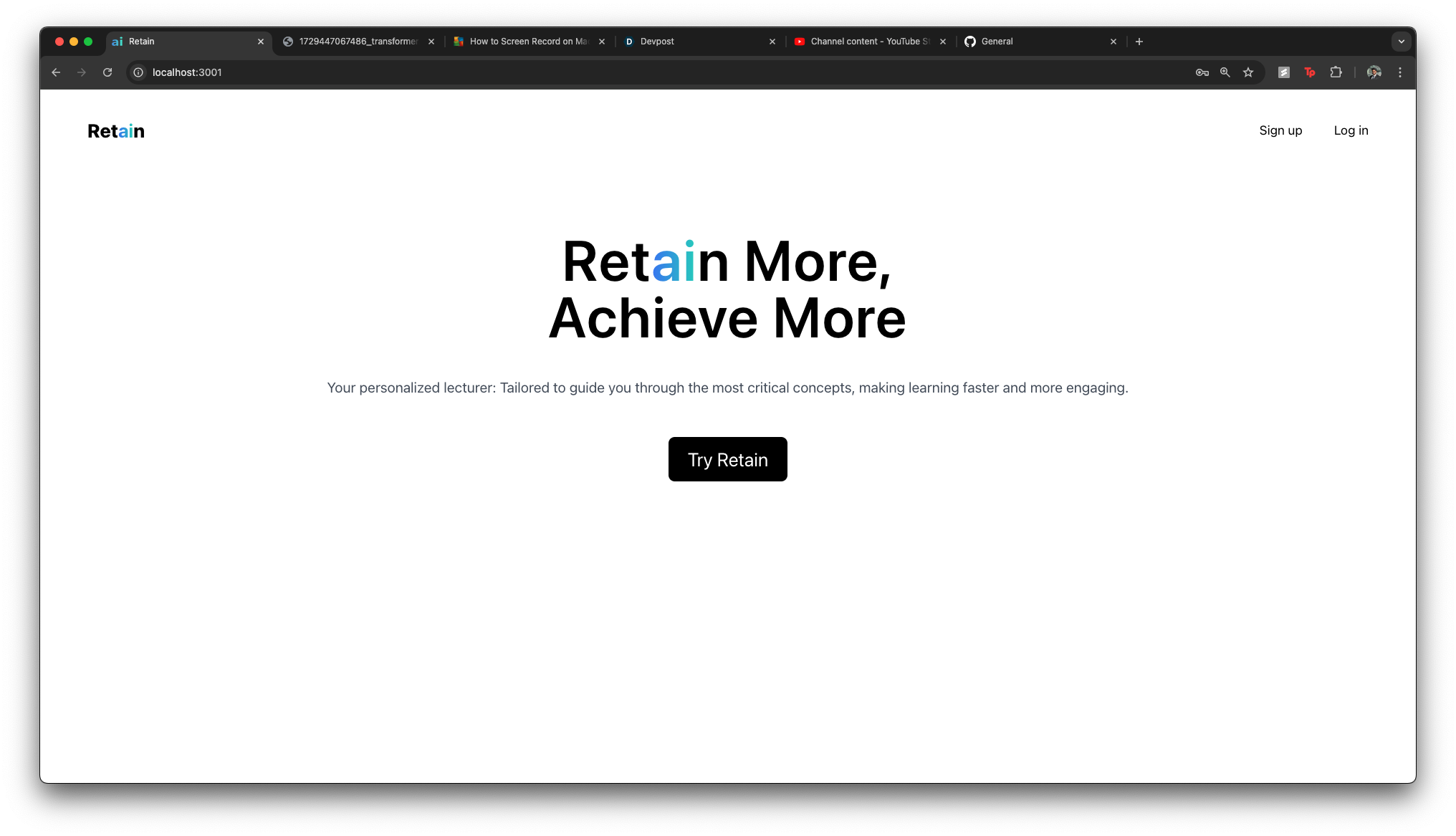
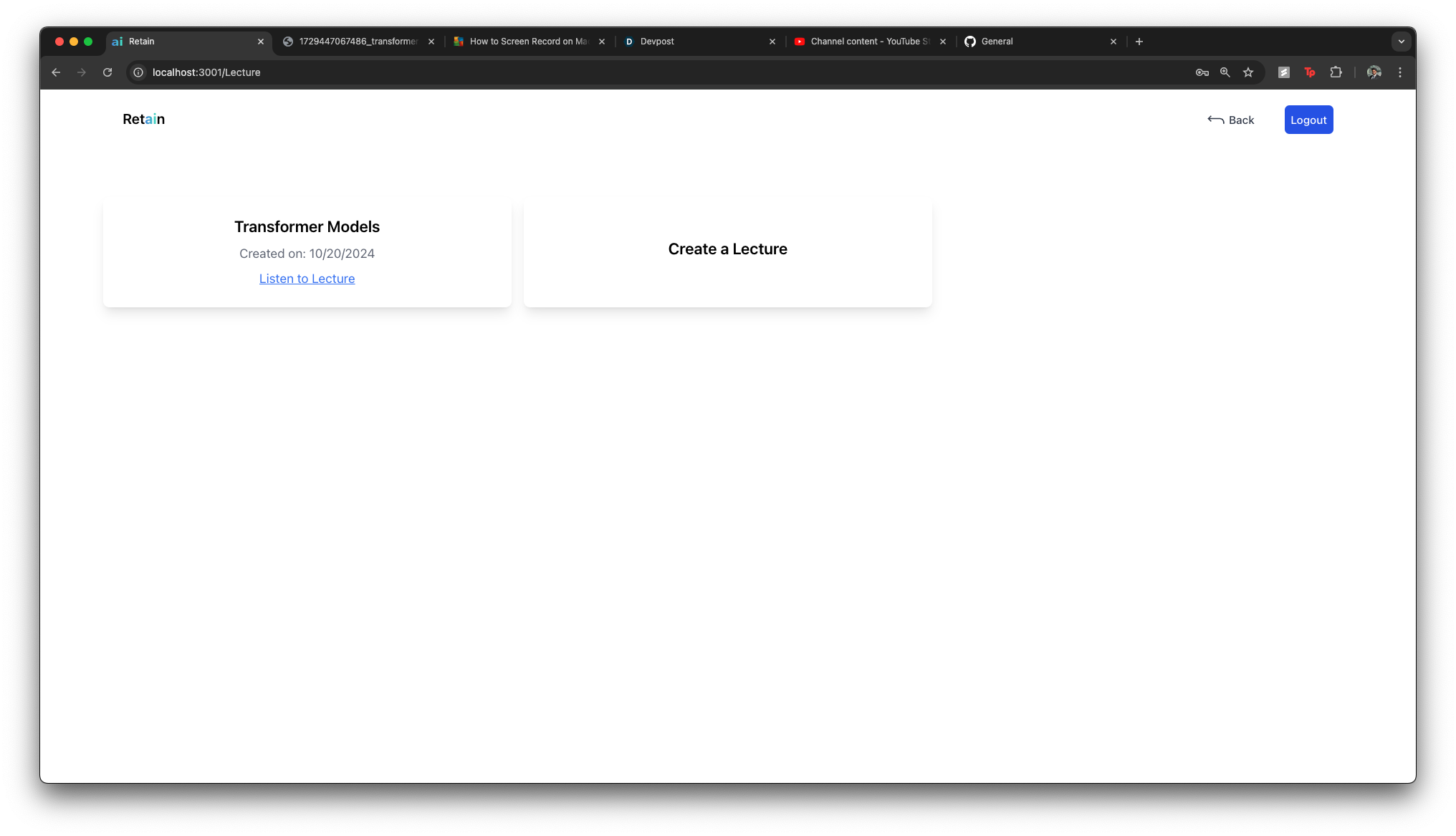
Homepage
-
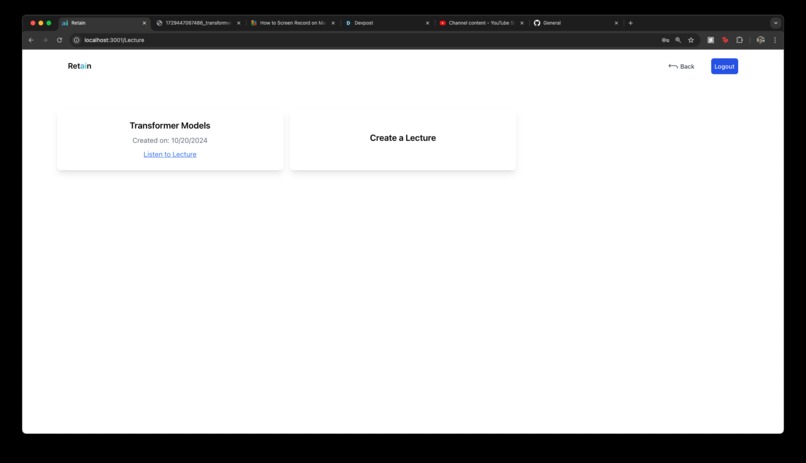
Course
-
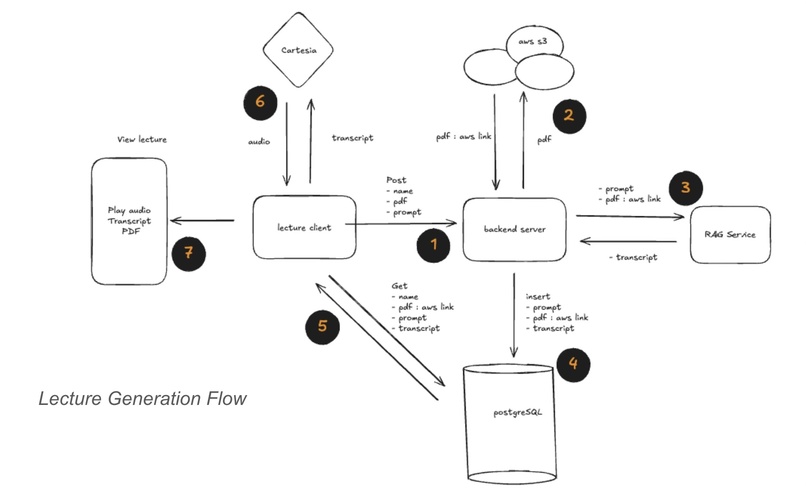
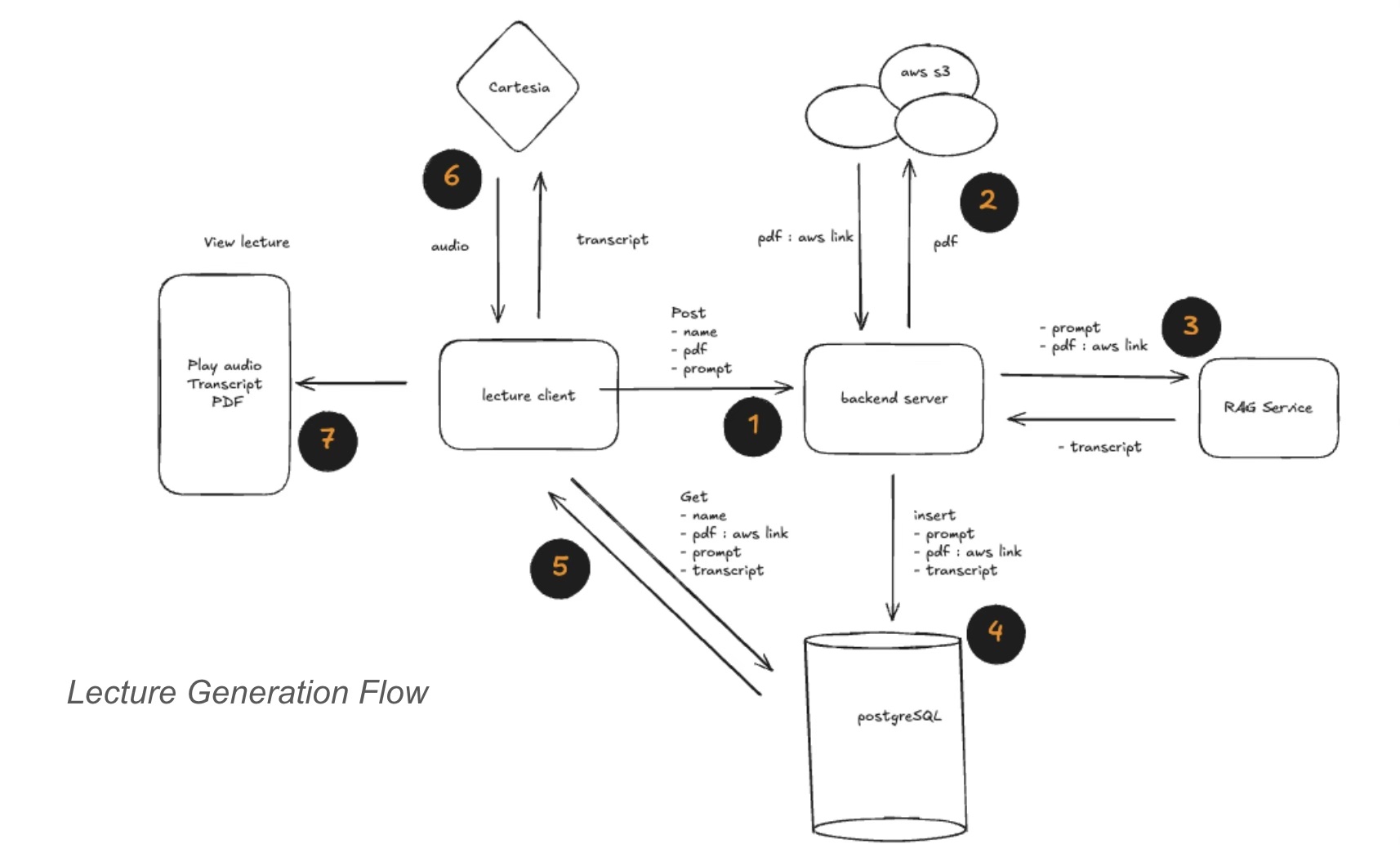
Overall flow
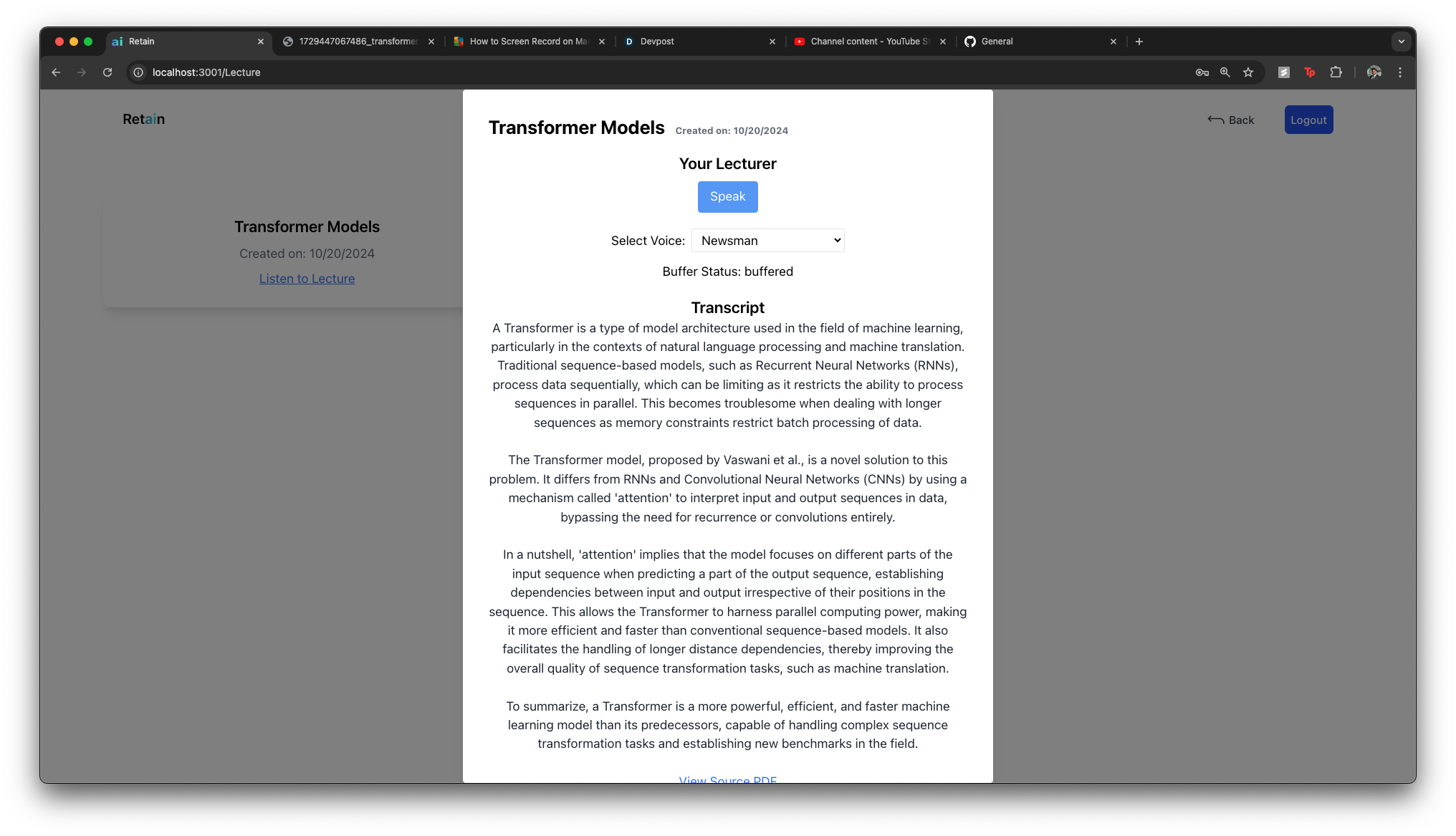
AI-Powered Lecturer
Inspiration
In today's fast-paced academic world, students and young professionals often find themselves overwhelmed by complex concepts and dense academic materials. Whether it's sifting through lecture notes, deciphering lengthy reports, or struggling to understand a difficult research paper, the challenge of grasping key ideas can feel daunting. This confusion can slow down the learning process, leaving students frustrated and unsure of where to focus their efforts. This struggle highlights the necessity for tools that can bridge the gap between overwhelming content and true understanding, offering a more efficient and accessible way to digest critical information.
What RetAIn does
RetAIn harnesses the power of AI to transform academic materials into personalized, easy-to-understand audio lectures. Whether you’re dealing with notes, research papers, or reports, RetAIn takes your content and breaks it down into tailored explanations, guiding you through the most important concepts. By identifying key themes and simplifying complex information, RetAIn turns your study materials into a structured learning experience, helping you focus on what really matters.
How we built it
We designed the project specifically for school students, aiming to help them streamline their learning process.
- Frontend We used React to create a clean and user-friendly interface.
- Backend Our backend stack consisted of Node.js and an Express server connected to a PostgreSQL database and Amazon S3, which managed user data and stored documents.
- AI Integration Our flask service implements a Retrieval-Augmented Generation (RAG) model using a Flask API. It processes PDF documents, generates embeddings using OpenAI's model, and stores them in a Pinecone vector database for efficient retrieval. When a question is asked, the system queries Pinecone to find relevant text chunks, then uses OpenAI's GPT-4 model within an AutoGen multi-agent framework to generate a comprehensive response. This RAG system enables intelligent processing of lecture materials, generating summaries, answering questions, and creating study guides based on uploaded documents. For text-to-speech generation, we leveraged the Cartesia TTS API to provide a clear and natural-sounding speaking experience.
Challenges we ran into
One of the biggest challenges we faced was downsizing the project scope. Initially, we wanted to implement highly advanced features, such as generating article-like outputs with animated visualizations. However, this idea proved too complex for our timeline and resources, as it would have required incorporating rendering engines and advanced animation technologies. After realizing the technical and time constraints, we shifted our focus to building a more streamlined application that handled note summarization and study guide generation effectively. It also became a difficulty incorporating sponsor material effectively, so we ended up falling back on our technical backgrounds more with the experience we had before coming here. Another challenge was finding a balance between simplicity and functionality. We had to make sure the AI-generated content was useful without overwhelming the user with too much information, which required fine-tuning the RAG AI model for better relevance and accuracy.
What we learned
Throughout this project, we gained valuable insights into both front-end and back-end development as well as the use of AI in practical applications. We learned how to effectively build an intuitive user interface, manage databases for large sets of documents, and integrate AI for real-time note summarization and study guide generation. We also gained experience in scaling back ambitious features in favor of a more focused and usable product, learning to prioritize simplicity and functionality.
Conclusion
Despite the hurdles, we successfully built a functional and user-friendly AI-powered note-taking app. The project not only provided a valuable learning experience in full-stack development and AI integration but also helped us understand the importance of prioritizing and adapting our goals to match our capabilities and timeline.

Log in or sign up for Devpost to join the conversation.