-
-
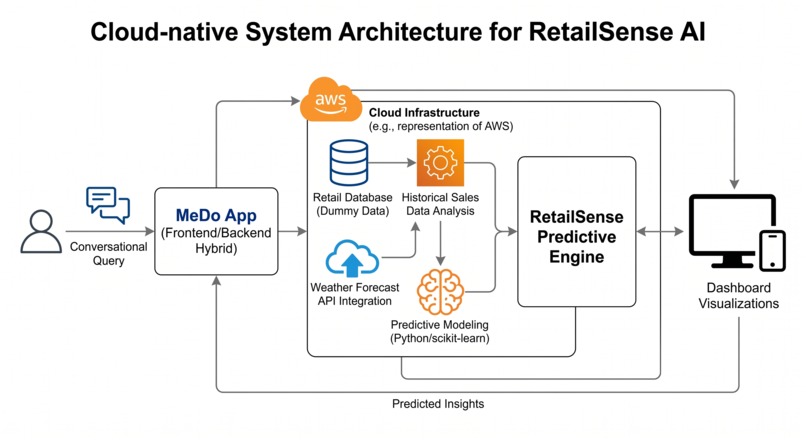
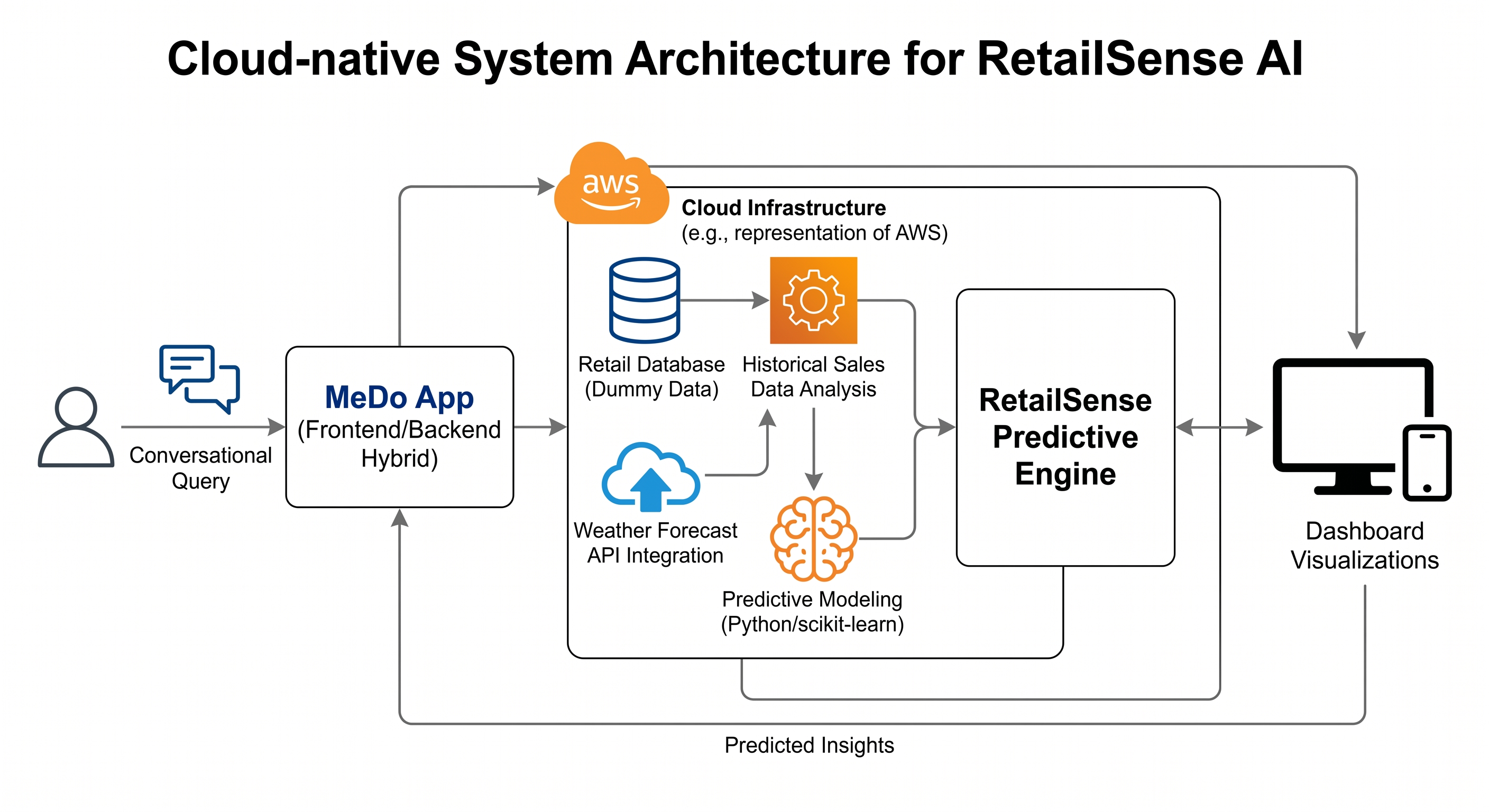
System architecture detailing the flow from the MeDo UI to the AWS-hosted Python predictive engine.
-
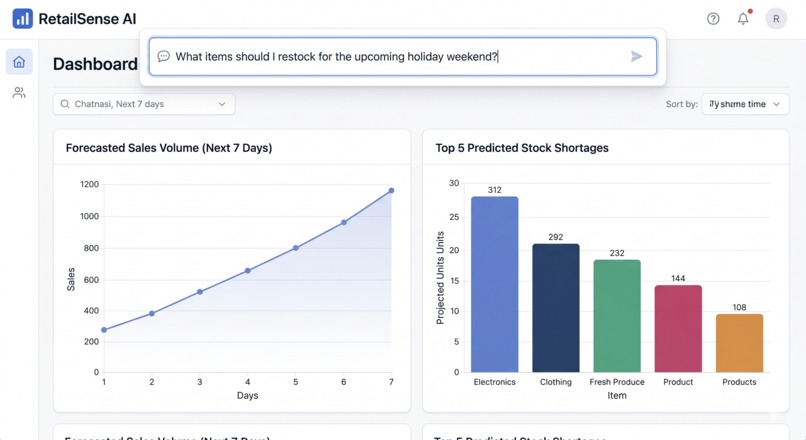
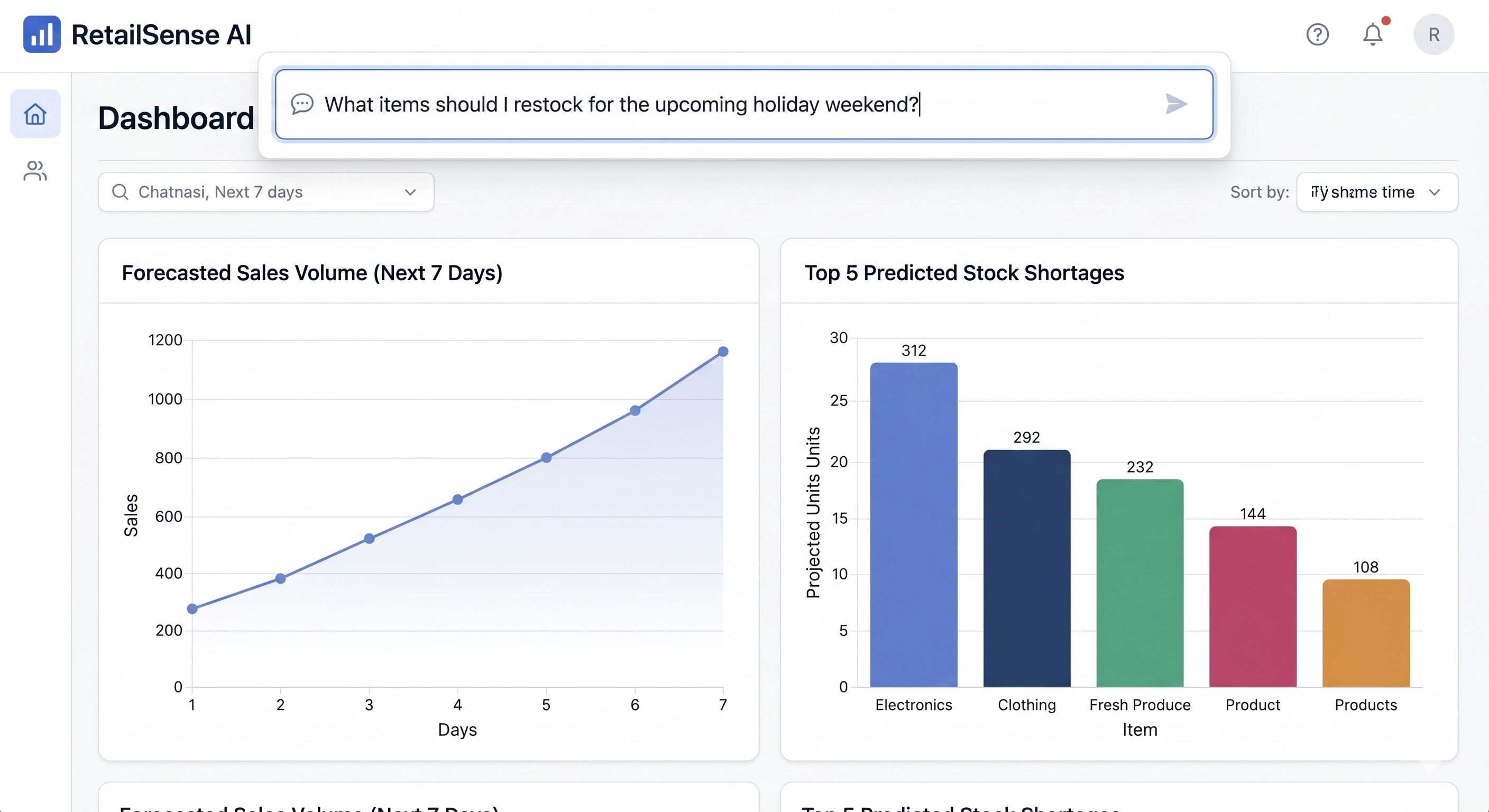
Main dashboard highlighting the conversational query bar alongside AI-generated sales forecasts and stock alerts.
Inspiration
Managing a local retail store involves juggling a massive amount of data—from daily foot traffic to weather-dependent inventory needs. However, most store managers aren't data scientists, and traditional point-of-sale systems lack predictive power. I wanted to bridge this gap by creating a tool that makes complex predictive analytics as easy as having a conversation. The goal was to build a system where managers can just "talk to their data" to get actionable business insights without needing a technical background.
What it does
RetailSense AI is a conversational intelligence hub designed specifically for retail management. Instead of clicking through complex spreadsheets or static dashboards, a manager can simply ask the app, "What should I stock up on for next week based on the weather?"
The platform processes this natural language query, queries the backend predictive models, and instantly generates a visually intuitive dashboard displaying forecasted foot traffic, automated inventory restocks, and optimized staff schedules.
How we built it
I leveraged the MeDo platform to rapidly generate the full-stack web interface and handle the deployment, which allowed me to focus the heavy lifting on the backend logic.
The core intelligence relies on a robust cloud-native architecture. I utilized Python—specifically leveraging data science libraries like scikit-learn and pandas—to build the machine learning models responsible for the predictive forecasting. These models are hosted on cloud services, exposing secure API endpoints that the MeDo frontend calls whenever a user submits a natural language request.
Challenges we ran into
The most significant hurdle was architecting the bridge between the flexible, natural language frontend and the strict, structured data requirements of the machine learning backend. Designing the API layer so that MeDo's outputs could seamlessly trigger the Python models—while handling unexpected conversational inputs gracefully—required rigorous testing and careful endpoint mapping.
What we learned
Building RetailSense AI provided massive insight into pairing AI-generated frontends with custom machine learning architectures. I deepened my understanding of how to deploy cloud-native ML models and learned how to iterate rapidly using MeDo without sacrificing the complexity or power of the underlying code.
What's next for RetailSense AI
The next step is to integrate a wider array of real-time APIs, such as live local event trackers and hyper-local weather services, to make the inventory predictions even more granular. I also plan to implement an automated ordering feature that directly interfaces with wholesale suppliers once inventory hits a critically low threshold.
Built With
- amazon-web-services-(aws)
- medo
- pandas
- python
- restapi
- scikit-learn


Log in or sign up for Devpost to join the conversation.