-
-
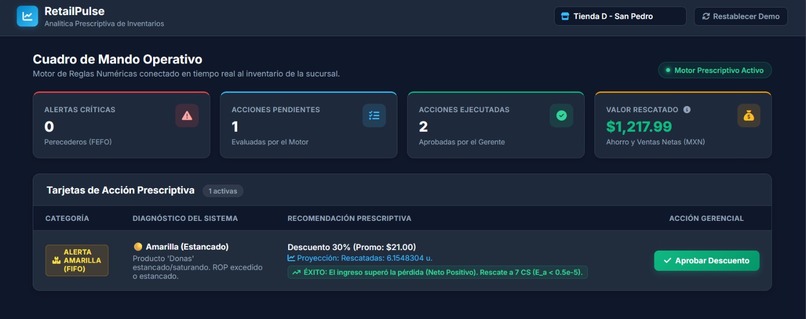
Dashboard Principal
-
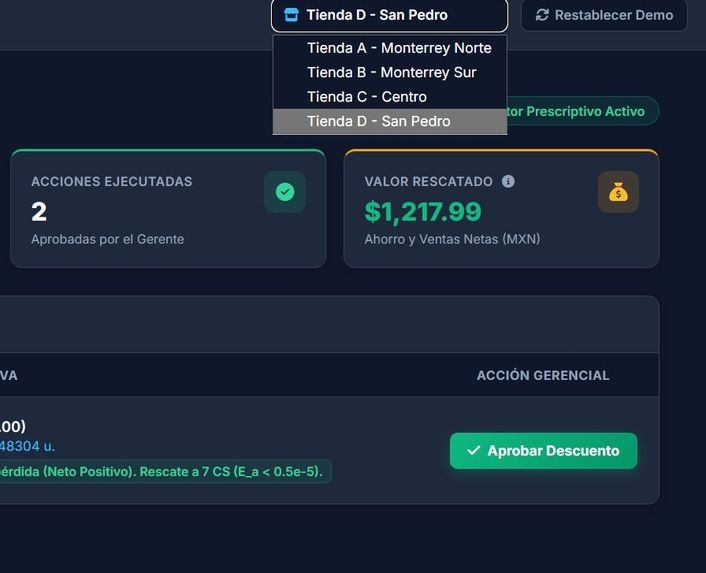
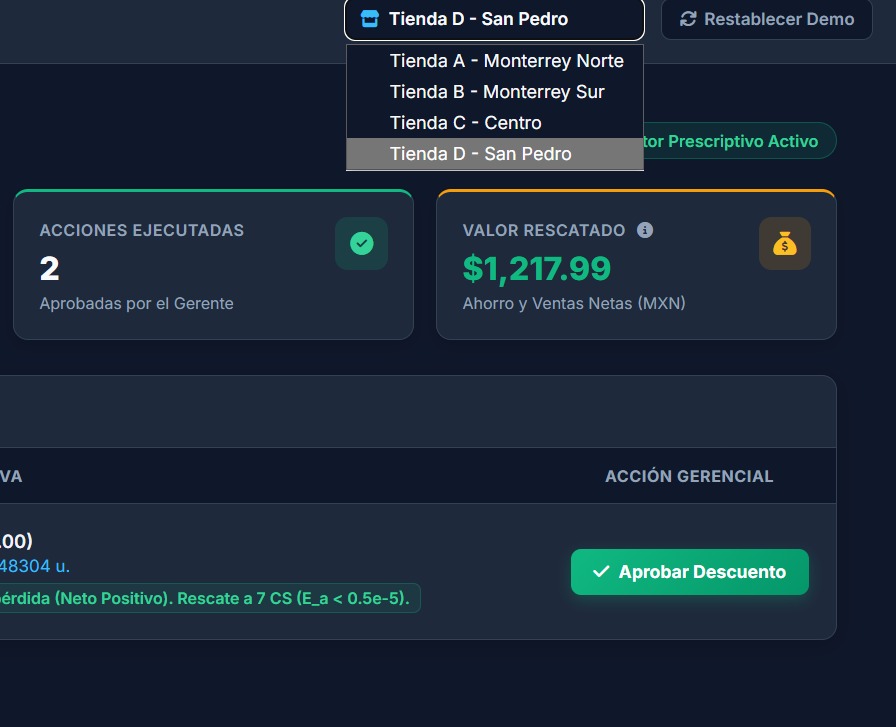
Tiendas disponibles
-
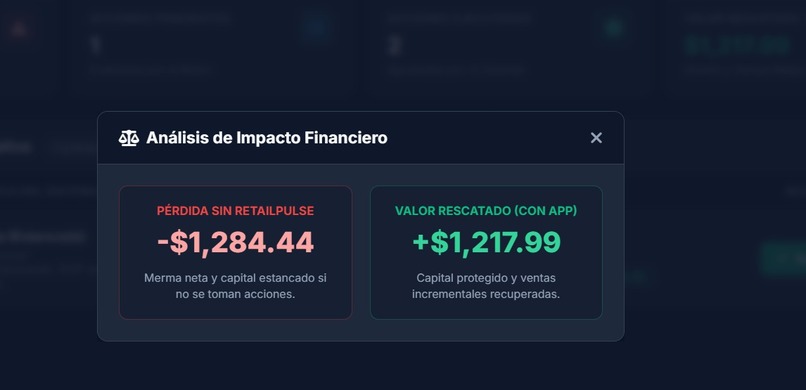
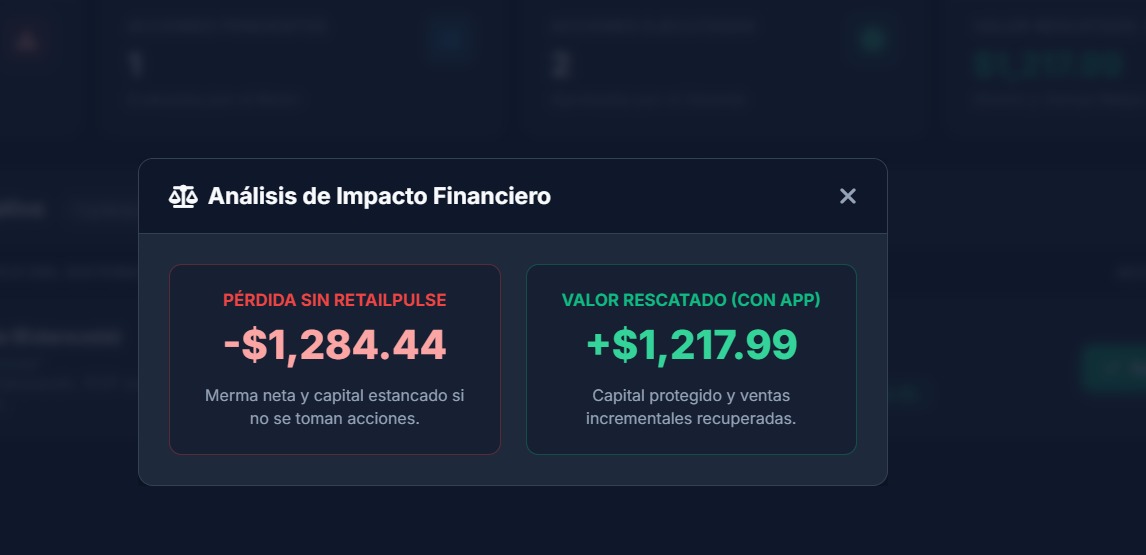
Analisis Financiero
-
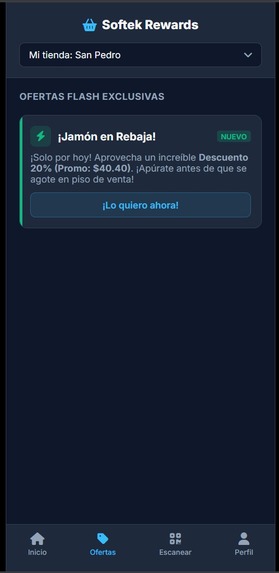
App Demo del Cliente
-
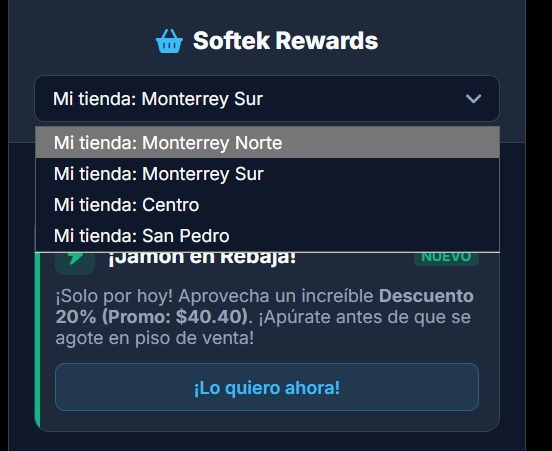
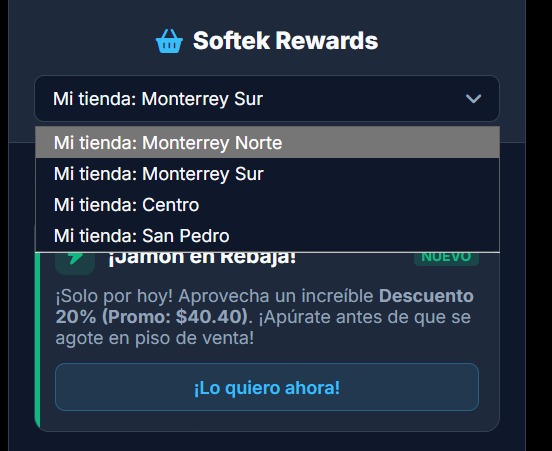
Tiendas Disponibles para el cliente
Inspiration
The idea was born from a multidisciplinary team: three Computer Systems Engineering students and one Industrial Engineering student. For some of us, this is our very first hackathon. We were looking for a challenge that would force us to step out of our comfort zones, merge our different skill sets, and truly push our limits as a team.
Combining our software engineering skills with industrial operations research, we decided to tackle a massive, real-world issue: retail shrinkage. Every year, supermarkets lose millions of dollars due to perishable products expiring on shelves (FEFO) and frozen capital from stagnant inventory (FIFO). We realized that traditional analytics only warn managers when it's already too late. We wanted to build something that fixes the problem before the waste happens.
What it does
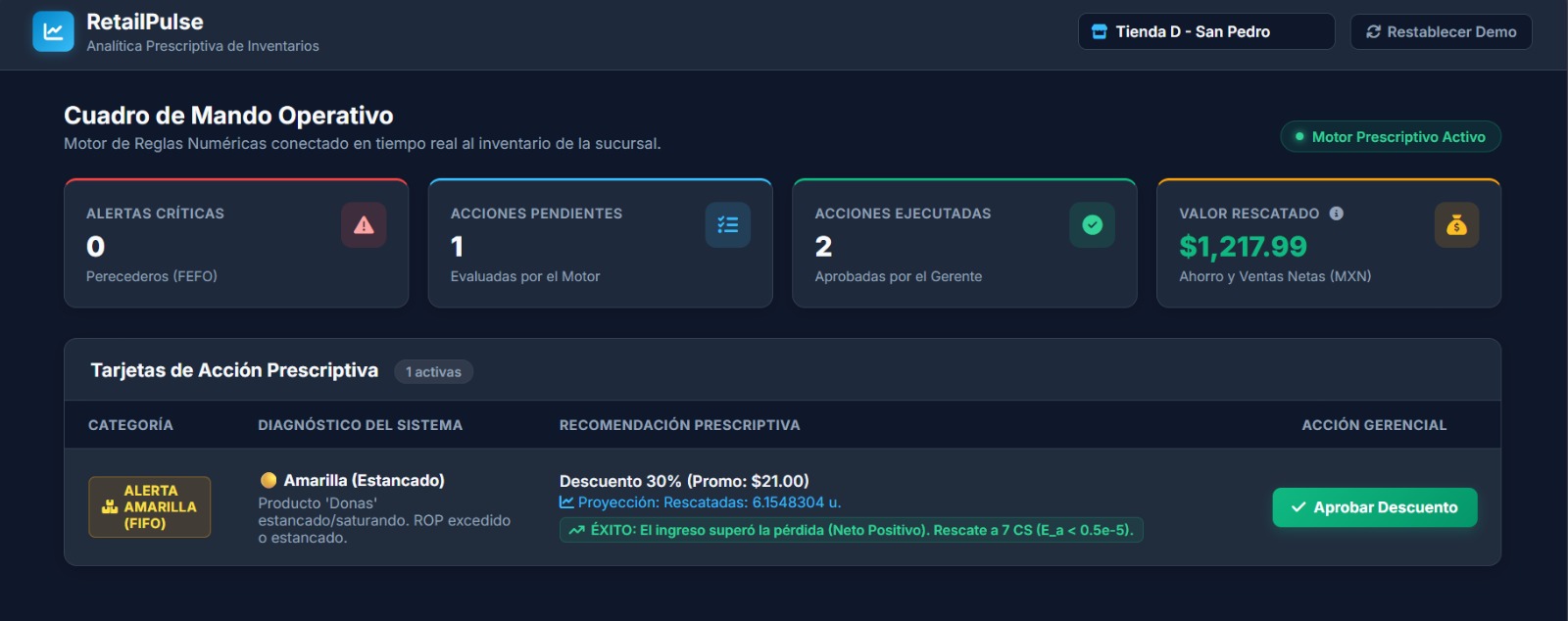
RetailPulse is a prescriptive analytics platform that stops retail waste in its tracks. Instead of just showing descriptive graphs of past losses, our system tells the store manager exactly what action to take right now (e.g., "Apply a 20% discount on Milk").
It features a dual-interface system:
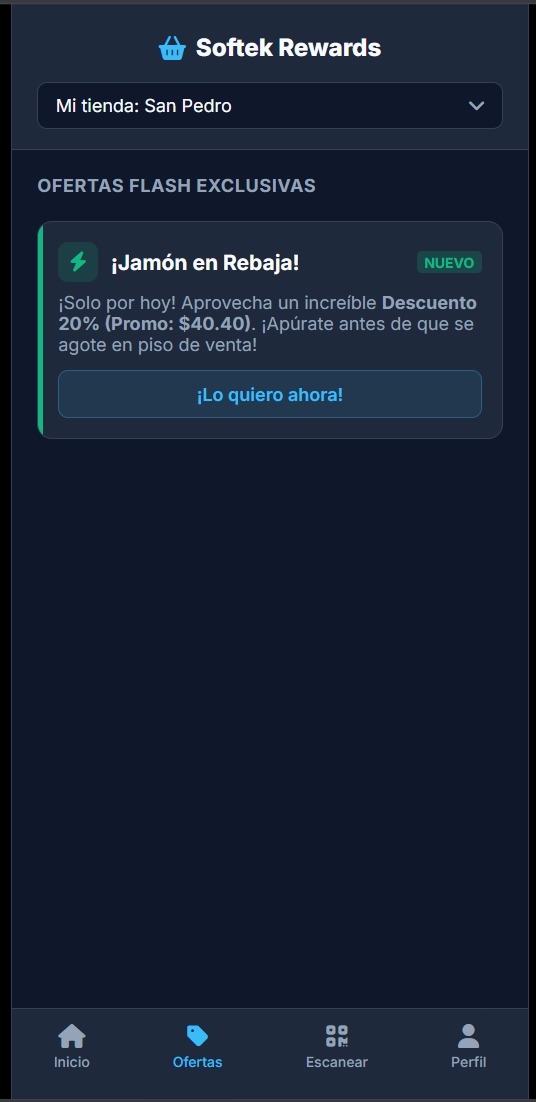
B2B Manager Dashboard: A control panel where managers see mathematically calculated alerts and the exact financial impact of their decisions. B2C Client App: Once the manager approves an action, the system instantly triggers an omnichannel flash offer straight to the end-consumer's phone, selling the inventory before it becomes waste. How we built it
We built our backend using Python and Flask to serve a custom REST API. To manage the complex relationships between stores, inventory lots, and frequent customers, we used TigerGraph (Graph Database).
The brain of the platform is a custom Deterministic Rule Engine (Expert System) that calculates exact financial mitigations up to 7 significant digits, avoiding the hallucinations of Generative AI. The dual frontends were built using HTML5, CSS3, and Vanilla JavaScript, utilizing asynchronous long-polling to achieve real-time synchronization between the manager and the client.
Challenges we ran into
One of our biggest challenges was communication across disciplines: translating complex Operations Research formulas (from the Industrial Engineering side) into a fast, reliable backend algorithm (for the Systems side). We also struggled with aggressive browser caching when trying to synchronize the B2B dashboard and the B2C client app in real-time, which required us to rethink our API payloads and make our backend highly resilient.
Accomplishments that we're proud of
We are incredibly proud of building a fully functional, end-to-end omnichannel prototype in such a short time, especially since it's the first hackathon for part of the team. We didn't just build a static mock-up; we built a dual-screen system where a click on the manager's dashboard instantly updates a simulated customer's mobile app. We are also proud that we built a mathematically sound Deterministic Expert System rather than relying on LLMs to guess pricing.
What we learned
We learned the true power of Graph Databases. Seeing how seamlessly TigerGraph can map the path from a decaying product in a specific aisle to the exact customer who usually buys it was eye-opening. Most importantly, we learned the value of multidisciplinary teamwork—how merging industrial supply chain theory with full-stack software engineering creates incredibly robust solutions.
What's next for RetailPulse
We plan to develop native iOS and Android applications for the consumer side, integrate IoT sensors for automated shelf-life tracking, and scale our graph database to handle complex supply chains across thousands of regional stores.
Built With
- css3
- html5
- javascript
- long-polling
- pydantic
- python
- restful-apis
- tigergraph

Log in or sign up for Devpost to join the conversation.