-
-
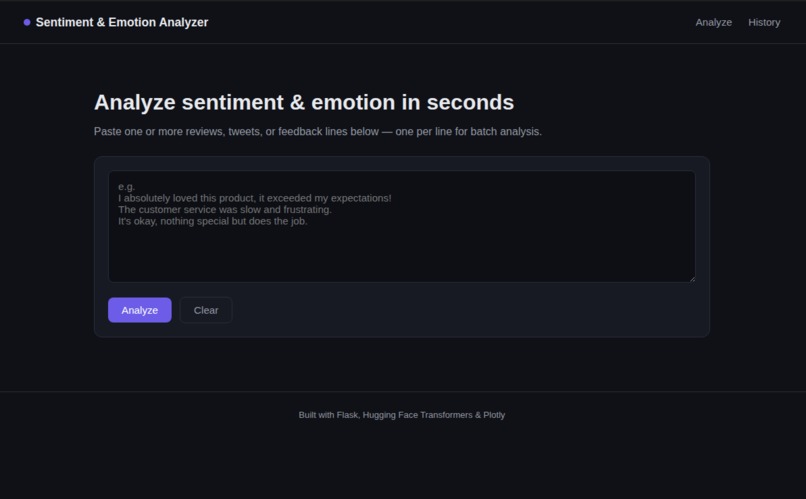
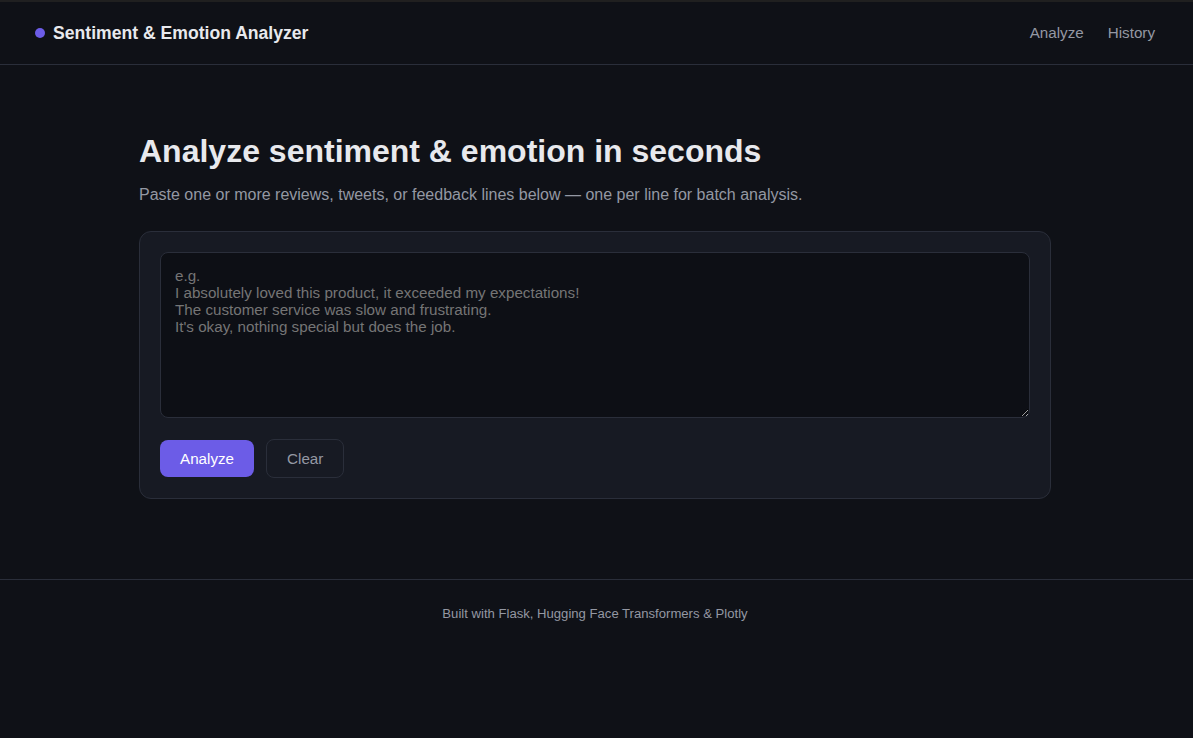
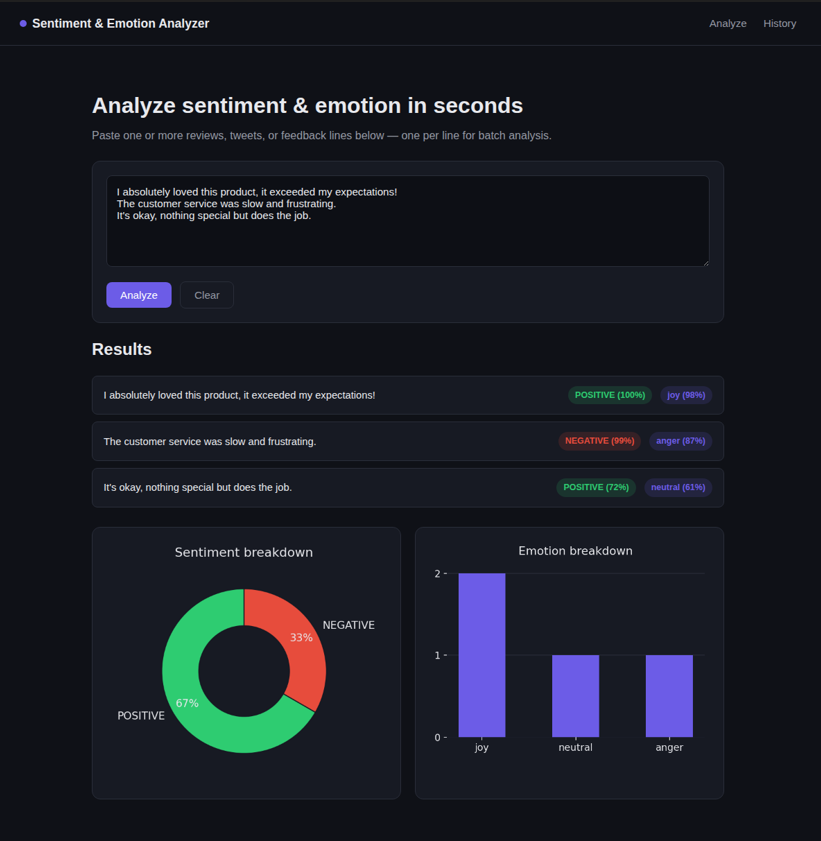
Clean, distraction-free input where users paste one or more reviews/tweets (one per line) for instant batch analysis.
-
-
Inspiration
Online retailers struggle to understand what customers truly feel about their products. Reviews are often scattered, unstructured, and hard to interpret. I wanted to build a tool that transforms this feedback into actionable insights and personalized recommendations, helping businesses grow while improving customer trust.
What it does
RetailMind AI is a web-based platform that:
- Analyzes customer reviews using NLP sentiment analysis.
- Classifies feedback into positive, negative, or neutral categories.
- Generates product recommendations based on sentiment trends and user preferences.
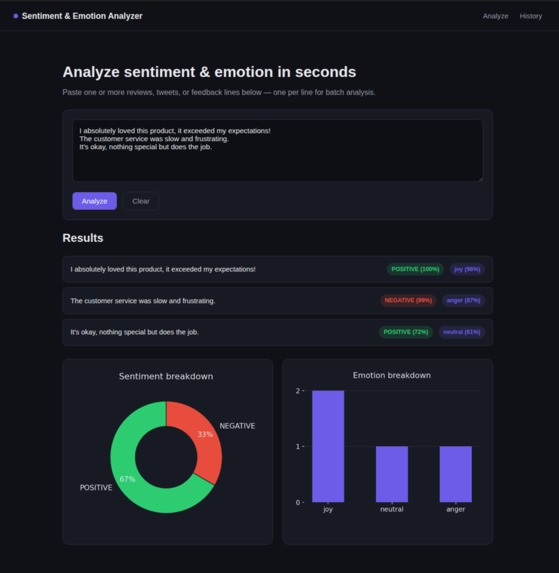
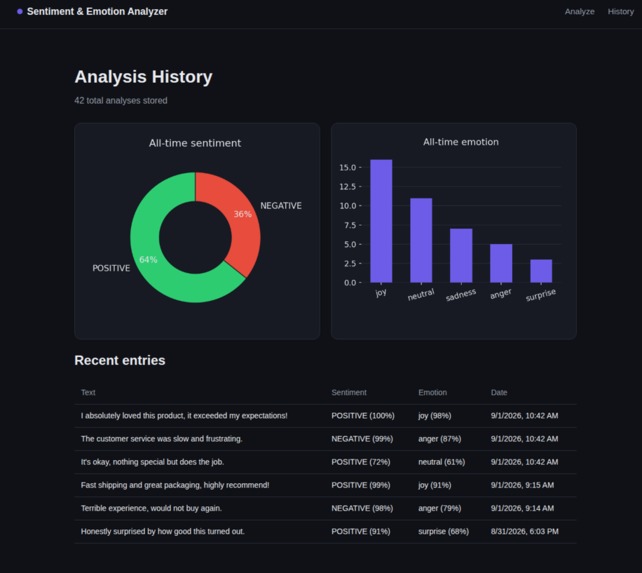
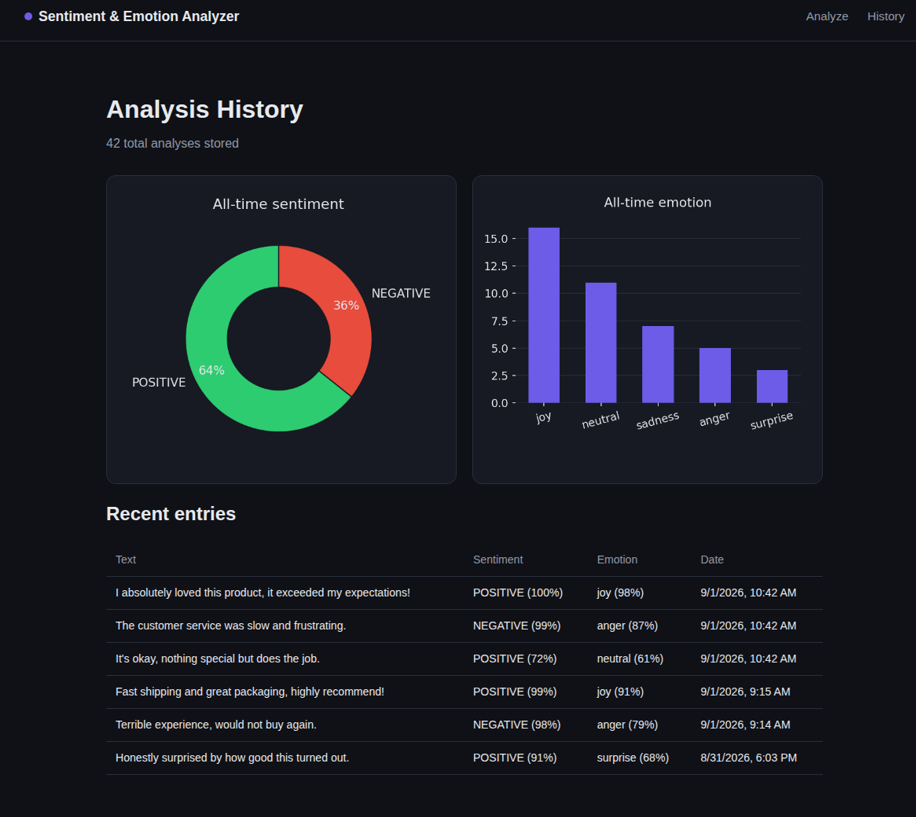
- Provides a simple dashboard with visual insights for retailers. ## How we built it
- Data preprocessing: Cleaned and tokenized review datasets using Python (NLTK, spaCy).
- Modeling: Trained sentiment classifiers with scikit-learn and Hugging Face transformers.
- Recommendations: Implemented collaborative filtering with SQL + Python.
- Web app: Built a Flask/Django interface and deployed on a free cloud tier.
- Visualization: Used Matplotlib/Plotly for sentiment trend charts. ## Challenges we ran into
- Finding a balanced dataset of reviews across categories.
- Optimizing models to run quickly enough for real-time feedback.
- Integrating ML outputs into a lightweight web app under hackathon time constraints. ## Accomplishments that we're proud of
- Successfully built a working prototype in just 4 days that combines sentiment analysis and recommendation systems into one seamless workflow.
- Integrated machine learning models into a live web app, making the project demo-ready and easy for judges to experience.
- Created clear visual dashboards that transform raw customer reviews into actionable insights for retailers.
- Overcame challenges with limited time and resources by focusing on practical impact rather than overcomplicated features.
- Learned how to balance technical depth (NLP + ML) with business relevance, ensuring the project delivers measurable value.
- Built a solution that can genuinely help online retailers boost conversions and customer trust, aligning perfectly with the hackathon’s theme. ## What we learned
- How to combine NLP and recommendation systems into a single workflow.
- The importance of clear UI/UX in demonstrating technical projects.
- That even simple prototypes can deliver strong business impact when focused on solving a real problem. ## What's next for RetailMind AI
- Expand datasets: Incorporate multilingual and cross-platform reviews (Amazon, Flipkart, Shopify) to make the model more robust and globally applicable.
- Real-time integration: Connect directly with e-commerce platforms via APIs so retailers can get instant sentiment insights and recommendations.
- Advanced personalization: Enhance the recommendation engine with deep learning models (transformers, embeddings) to deliver hyper-personalized product suggestions.
- Scalability & deployment: Migrate to cloud-native solutions (AWS, Azure, GCP) for handling large-scale data and real-time traffic.
- Security & trust: Add features like fake review detection and bias mitigation to ensure recommendations are reliable and ethical.
- Business dashboards: Build advanced analytics dashboards for retailers to track sentiment trends, product performance, and customer loyalty metrics.
- Mobile app version: Create a lightweight mobile interface so sellers and customers can access insights on the go.

Log in or sign up for Devpost to join the conversation.