-
-
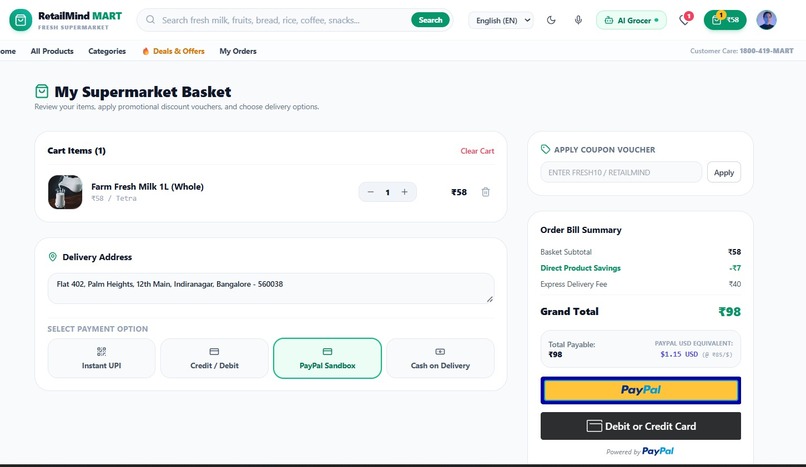
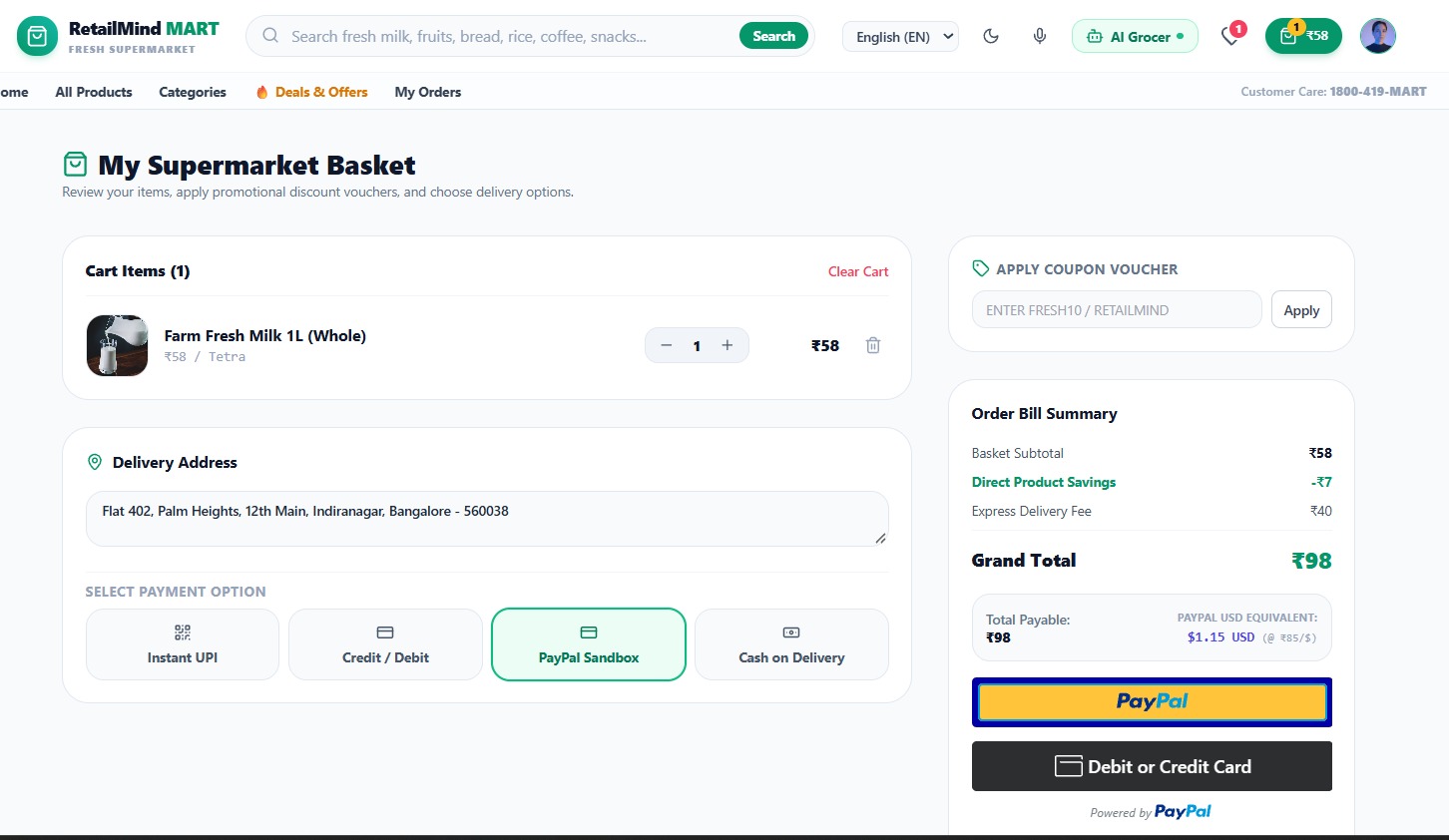
Review the shopping basket, apply promotional discounts, select a payment method, and proceed with PayPal Sandbox checkout
-
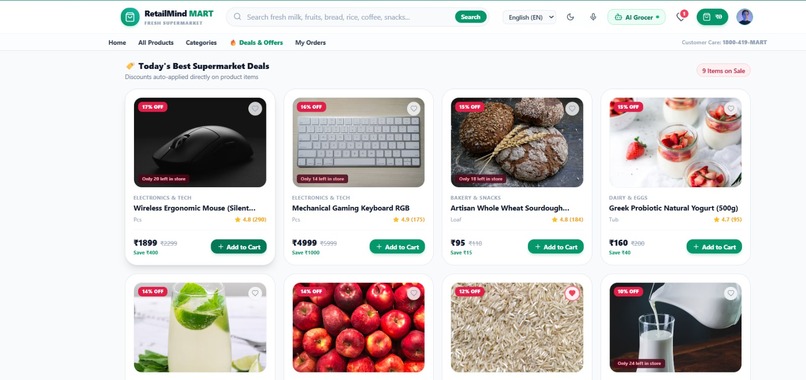
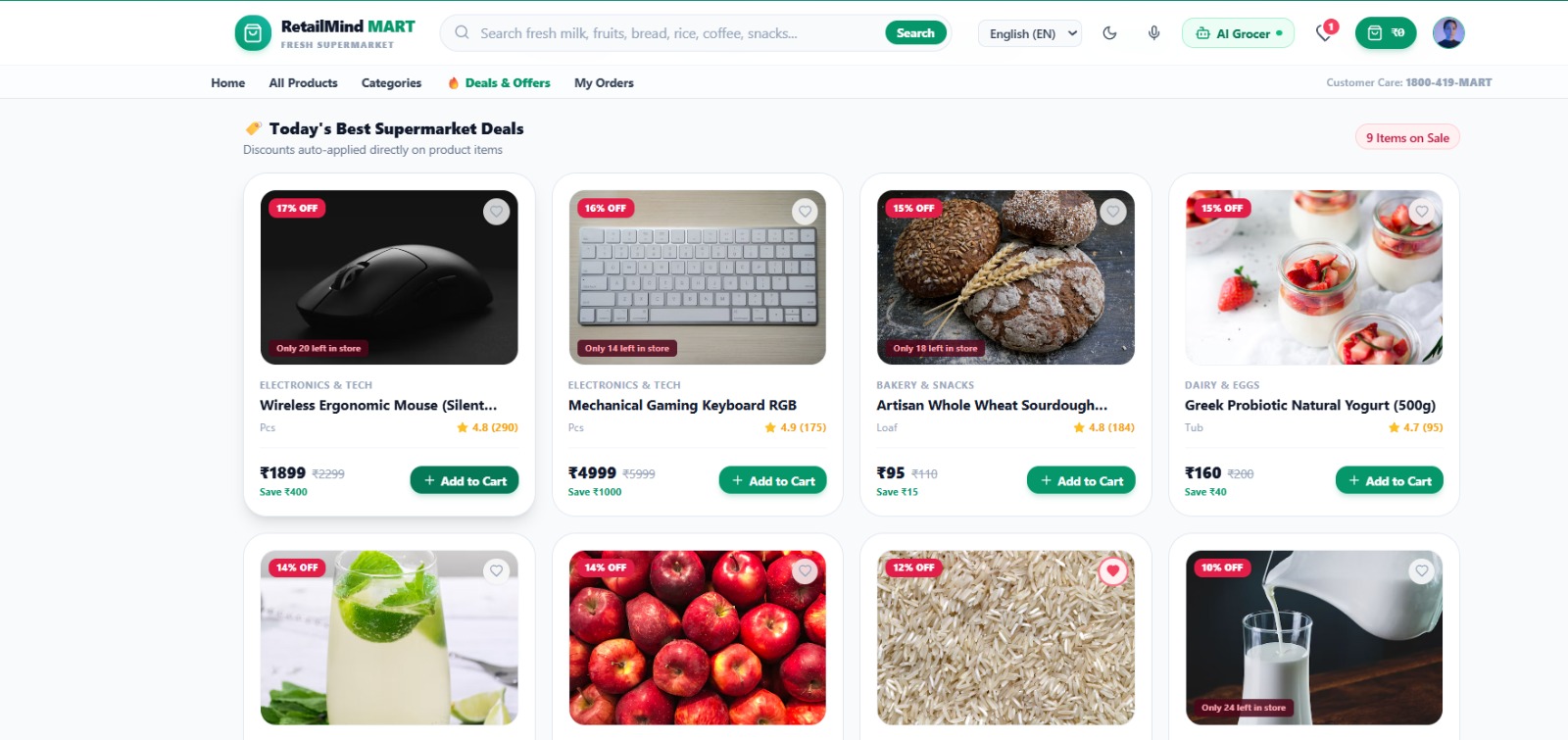
Discover discounted products, compare prices, view available savings, and add products directly to the shopping cart.
-
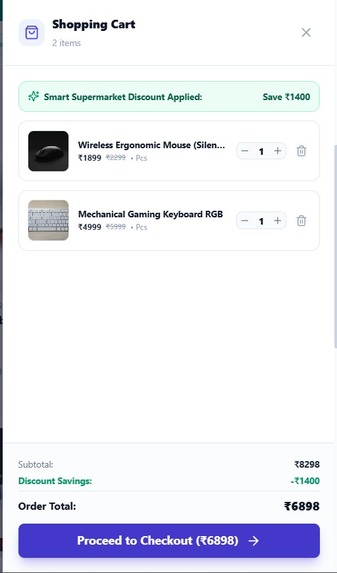
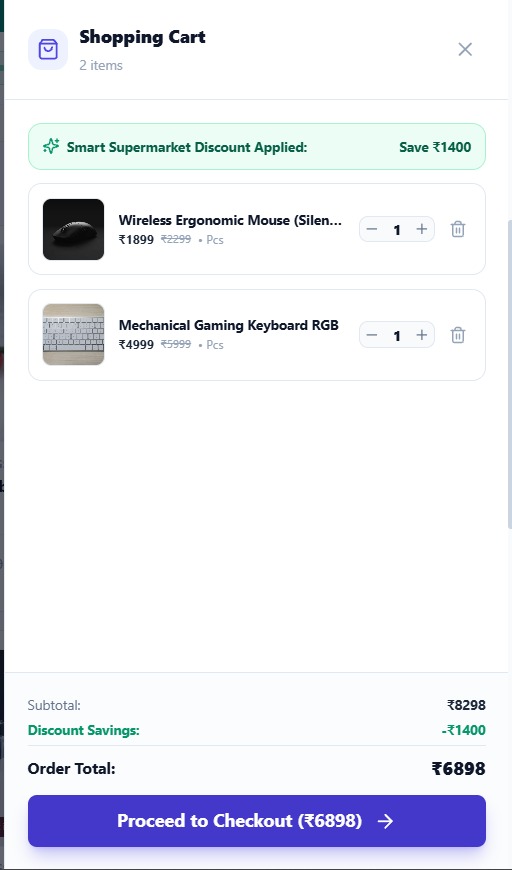
Review selected products, adjust quantities, and automatically apply smart supermarket discounts before checkout.
-
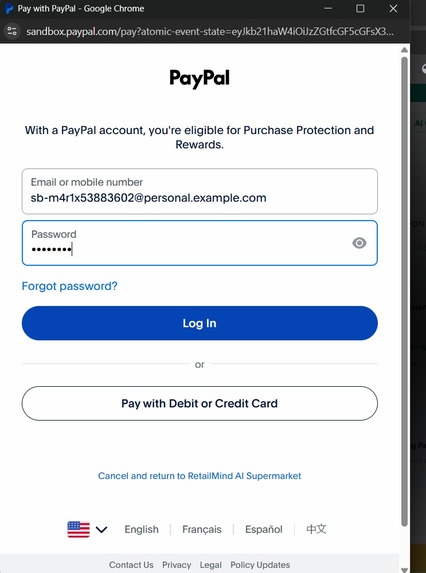
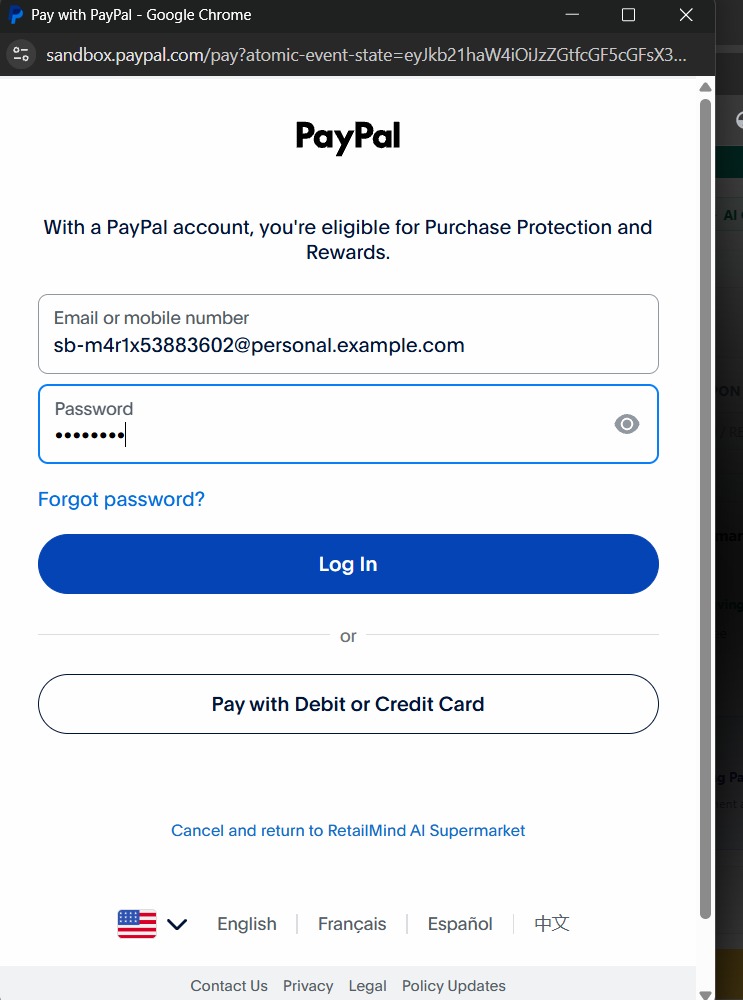
Securely authenticate using a PayPal Sandbox account to complete the payment process.
-
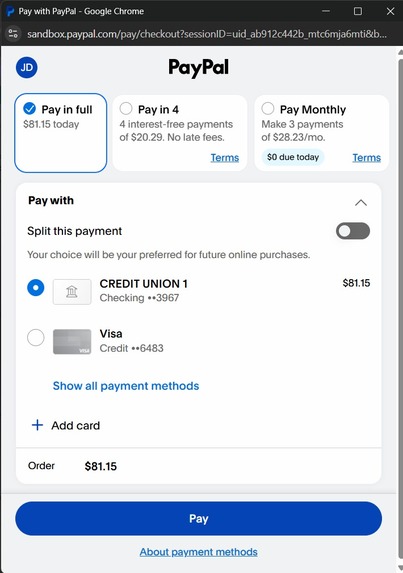
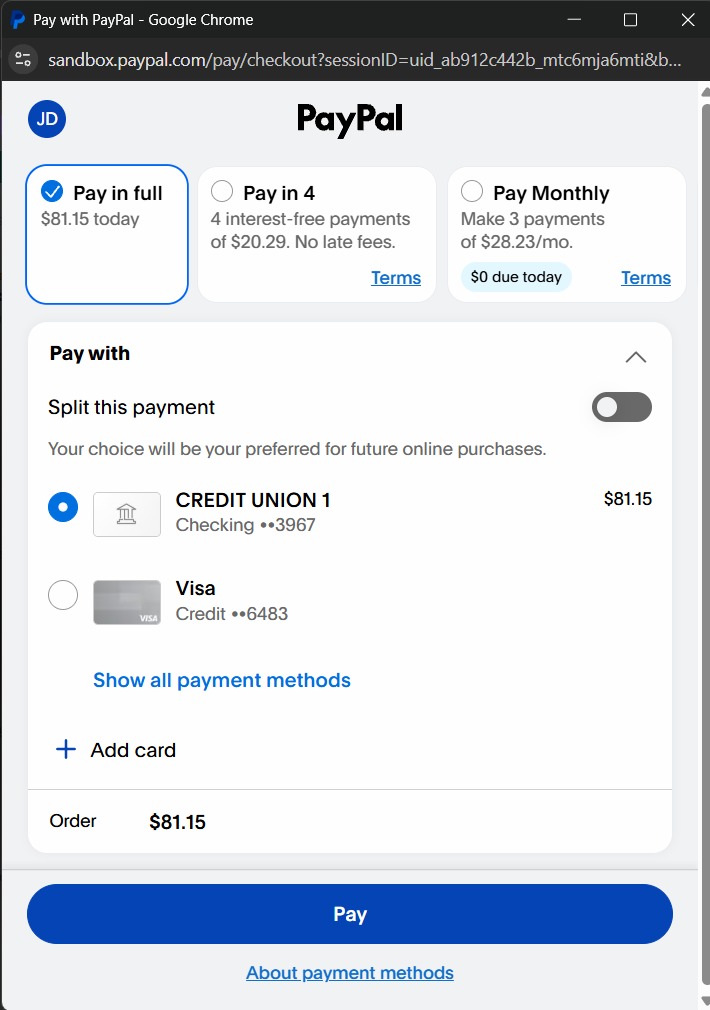
Complete purchases through PayPal with flexible payment options, including full payments and installment-based payment methods.
-
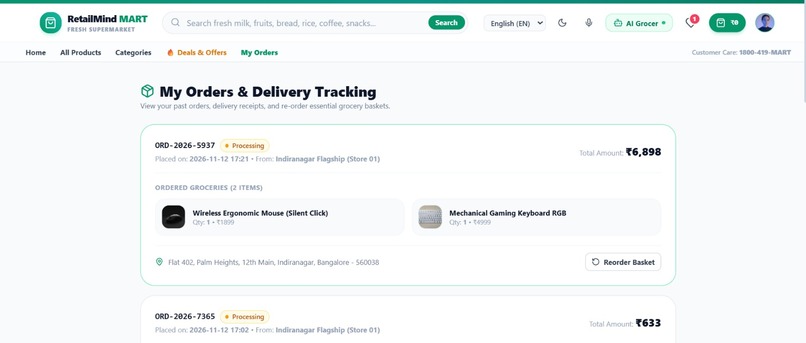
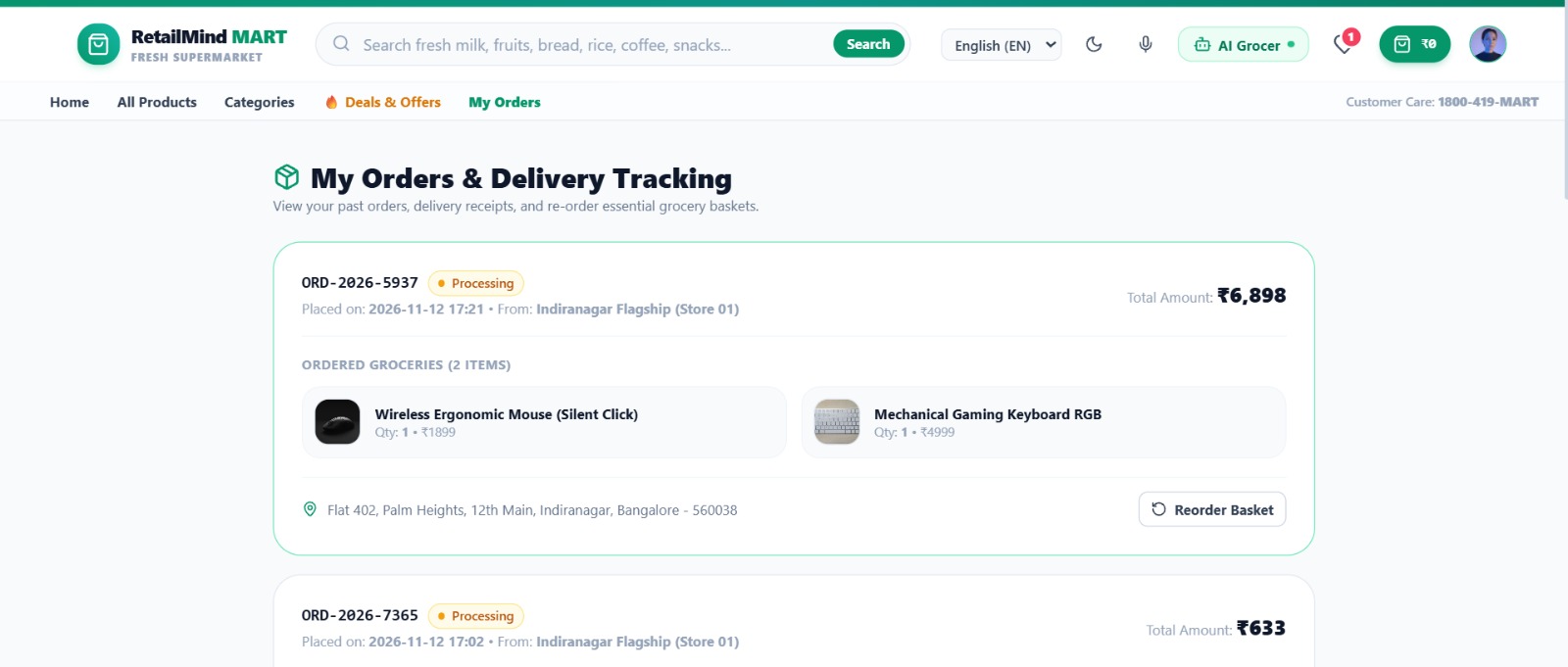
View previous purchases, track order statuses, check delivery details, and reorder products easily.
-
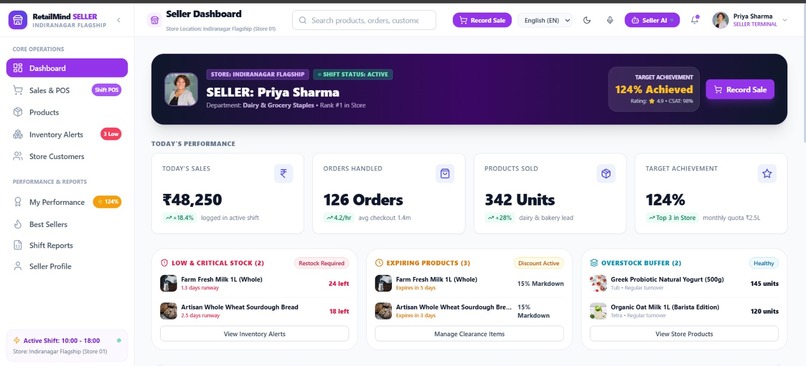
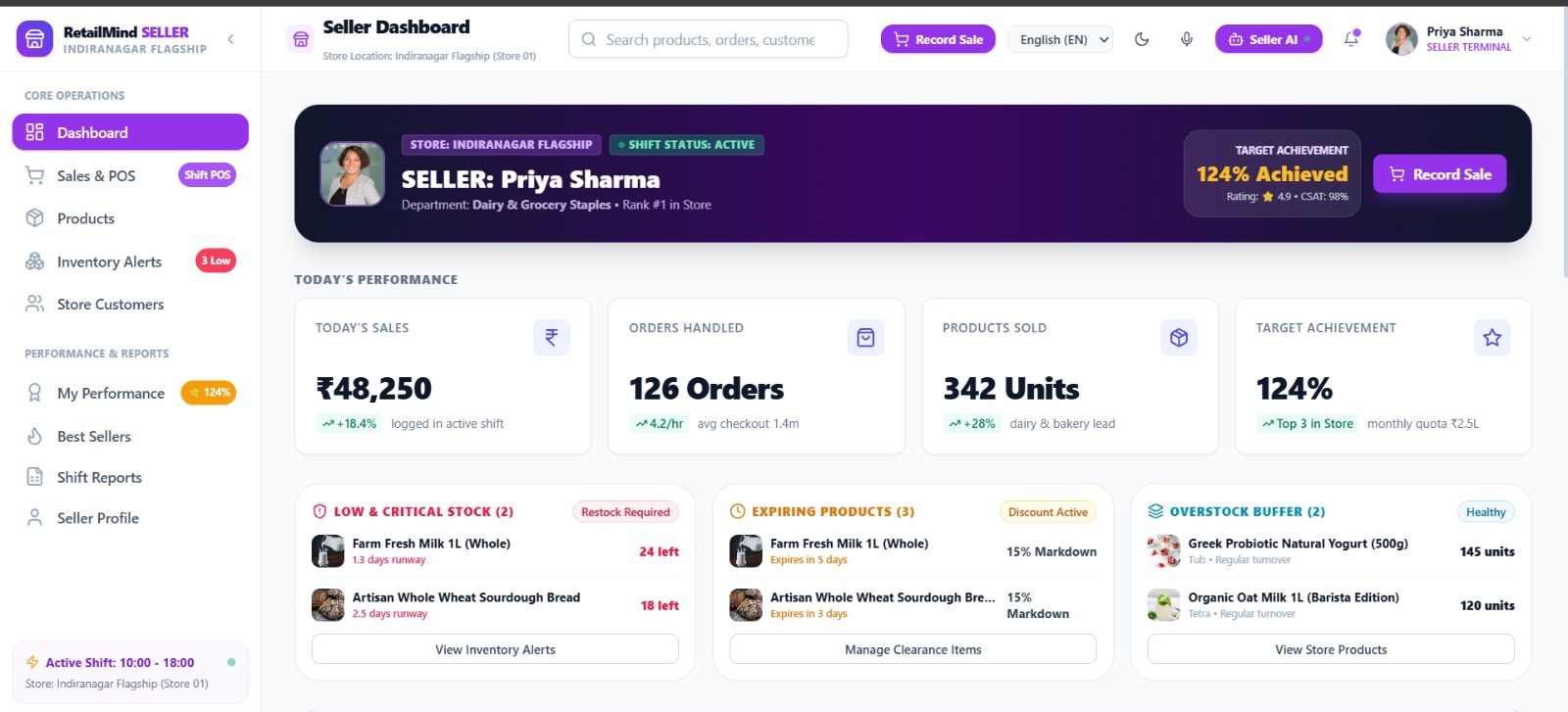
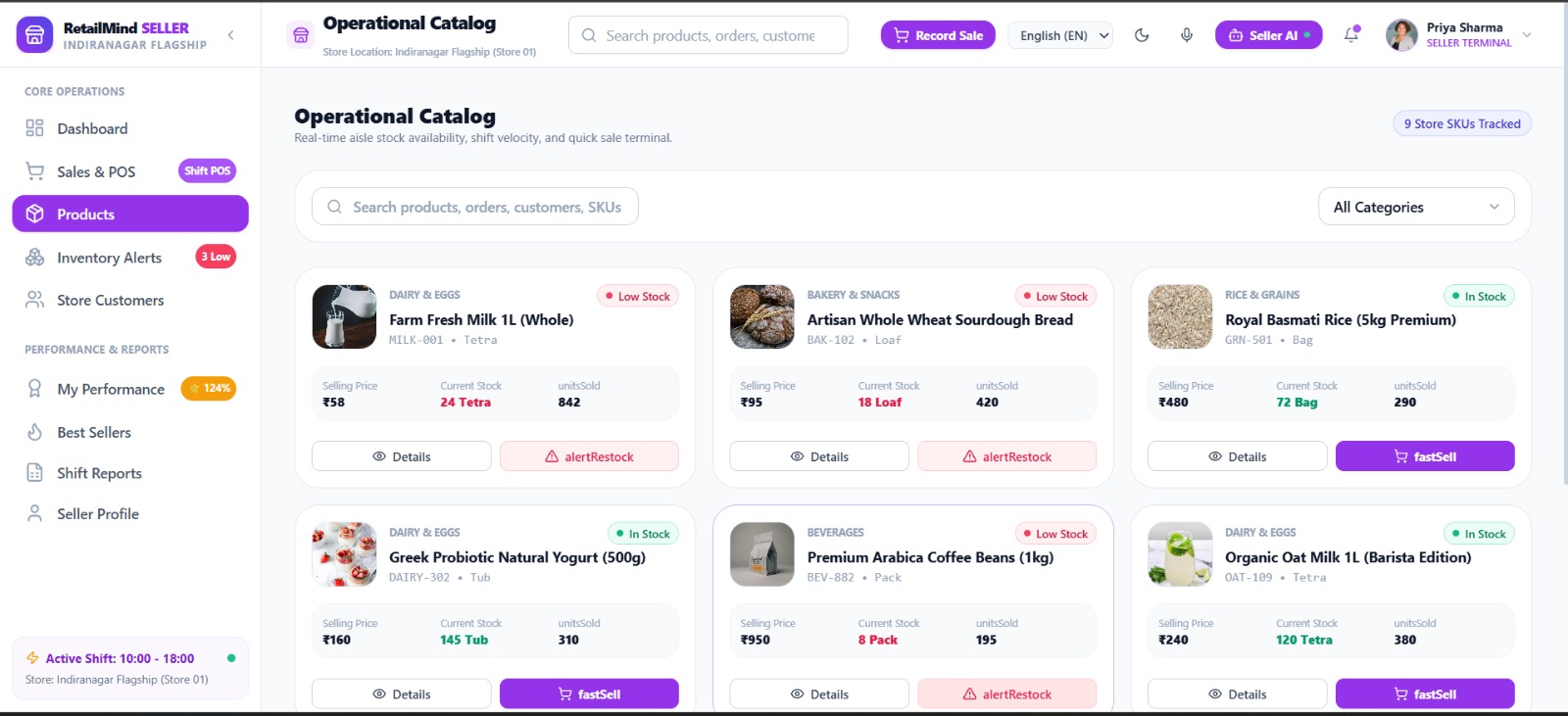
A dedicated seller dashboard to monitor daily sales, orders, performance, inventory alerts, and sales targets.
-
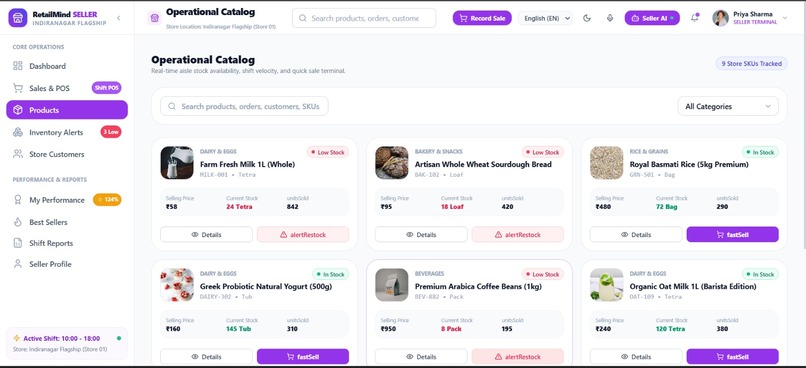
Manage store products, monitor available stock, identify low-stock items, and take quick actions to avoid stock shortages.
-
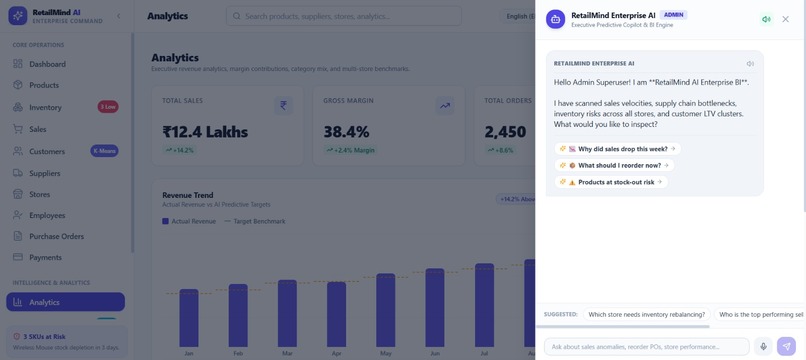
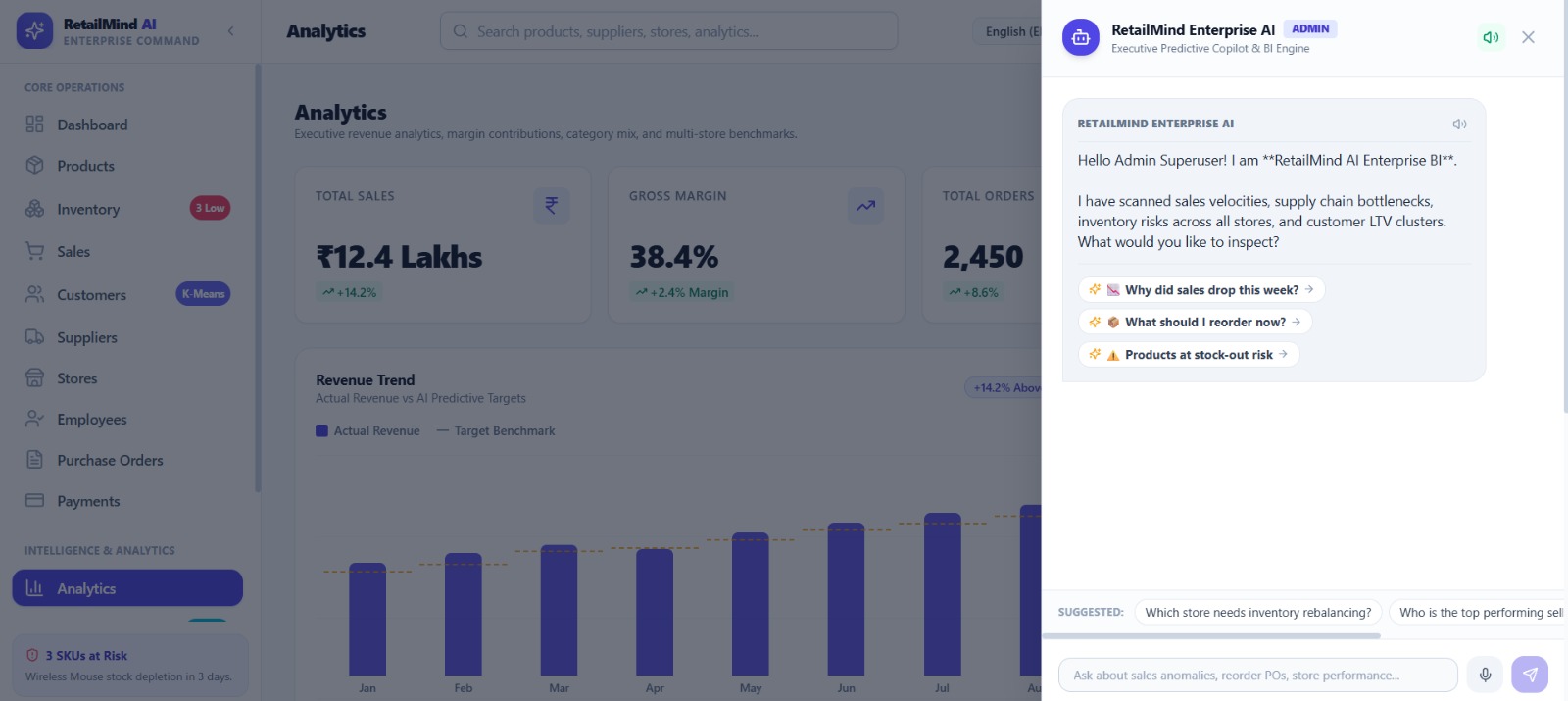
Explore sales trends, revenue performance, inventory risks, and business insights through the RetailMind AI assistant.
Inspiration
We started RetailMind with a simple thought: Why should retail businesses depend only on manual calculations and guesswork to manage their inventory? In many retail businesses, deciding when to restock a product or how much to purchase is still a challenging task. Sometimes businesses order more than they need, while at other times they run out of products when customers need them. We wanted to solve this problem by building something more useful than a normal inventory management system. Instead of just storing product and sales details, we wanted our application to understand the data and help retailers make better decisions. That’s how RetailMind started.
What it does
RetailMind is a smart retail management platform that helps businesses manage their daily operations and make better decisions using data. Some of the main things our platform can do are:
- Manage products, inventory, sales, suppliers, and customers.
- Predict future product demand using historical sales data.
- Identify products that are likely to run out of stock.
- Suggest how much stock should be reordered.
- Analyse customer purchasing behaviour using RFM analysis.
- Provide sales and inventory insights through dashboards.
- Integrate PayPal to enable digital payments within the retail workflow.
- Provide an AI assistant to make business information easier to understand. Our main idea is to help retailers not just manage their business but also understand what is happening and what they should do next.
How we built it
We built RetailMind using React.js for the frontend and Node.js with Express.js for the backend. MySQL is used to manage the application’s data, including products, inventory, sales, suppliers, and customers. For the data science part, we used Python along with Pandas, NumPy, and Scikit-learn to process data and implement machine learning functionalities. We worked on features like demand forecasting, customer segmentation using K-Means clustering, and inventory recommendations. We also integrated PayPal into RetailMind to bring payment functionality into the retail workflow. One important thing we focused on was making all these modules work together as a single application instead of building them as separate features.
Challenges we ran into
Building RetailMind was not as simple as we initially thought! One of our biggest challenges was designing the database because the application contains multiple interconnected modules. We had to carefully plan how products, sales, inventory, suppliers, and transactions would communicate with each other. Integrating machine learning with the actual application was another challenge. Getting predictions from a model is one thing, but displaying those predictions in a way that helps a store manager take action is completely different. We also faced challenges while connecting the frontend, backend, database, and external payment services. There were several situations where something worked independently but created issues when integrated with the complete application. Debugging and fixing these issues helped us understand the importance of proper system integration.
Accomplishments that we're proud of
We are proud that we didn’t stop with building another basic inventory management application. We brought together full-stack development, database management, machine learning, business analytics, and PayPal integration in one platform. We are particularly happy with the idea of connecting demand forecasting with inventory recommendations because it makes the application more useful in actual retail scenarios. We also worked on designing different user roles and creating a structured platform where different stakeholders can access the functionalities they need. Seeing our initial idea gradually turn into a working application has been one of the most satisfying parts of this project.
What we learned
This project taught us a lot beyond just learning new technologies. We understood how challenging it is to build a complete application where multiple modules depend on each other. We got practical experience in database design, API development, frontend-backend integration, machine learning implementation, and third-party payment integration. Most importantly, we learned that adding AI to an application is not just about running an algorithm. The real value comes from understanding the problem and using the results to help someone make a better decision. We also learned how to approach problems step by step, debug integration issues, and improve our application through continuous development.
What's next for RetailMind
We don’t want RetailMind to remain just a project that manages retail operations. We want to improve its prediction capabilities, make procurement workflows smarter, and enhance the AI assistant so that retailers can interact with their business data more naturally. We also plan to improve the PayPal integration, introduce more advanced analytics, and extend the platform to support multiple stores. Our ultimate goal is to make RetailMind a practical solution that helps retail businesses move from manual decision-making to smarter, data-driven operations.
Built With
- artificial-intelligence
- avascript
- customer-segmentation
- data-analytics
- demand-forecasting
- express.js
- full-stack-development
- github
- inventory-management
- machine-learning
- mysql
- node.js
- numpy
- pandas
- payment-integration
- paypal
- python
- react.js
- rest-api
- scikit-learn

