-
-
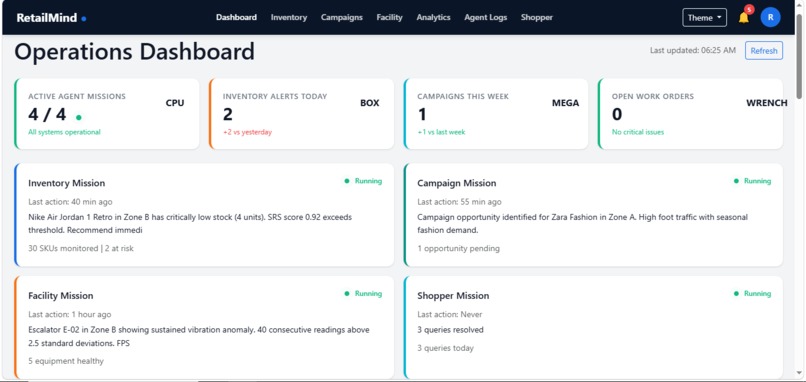
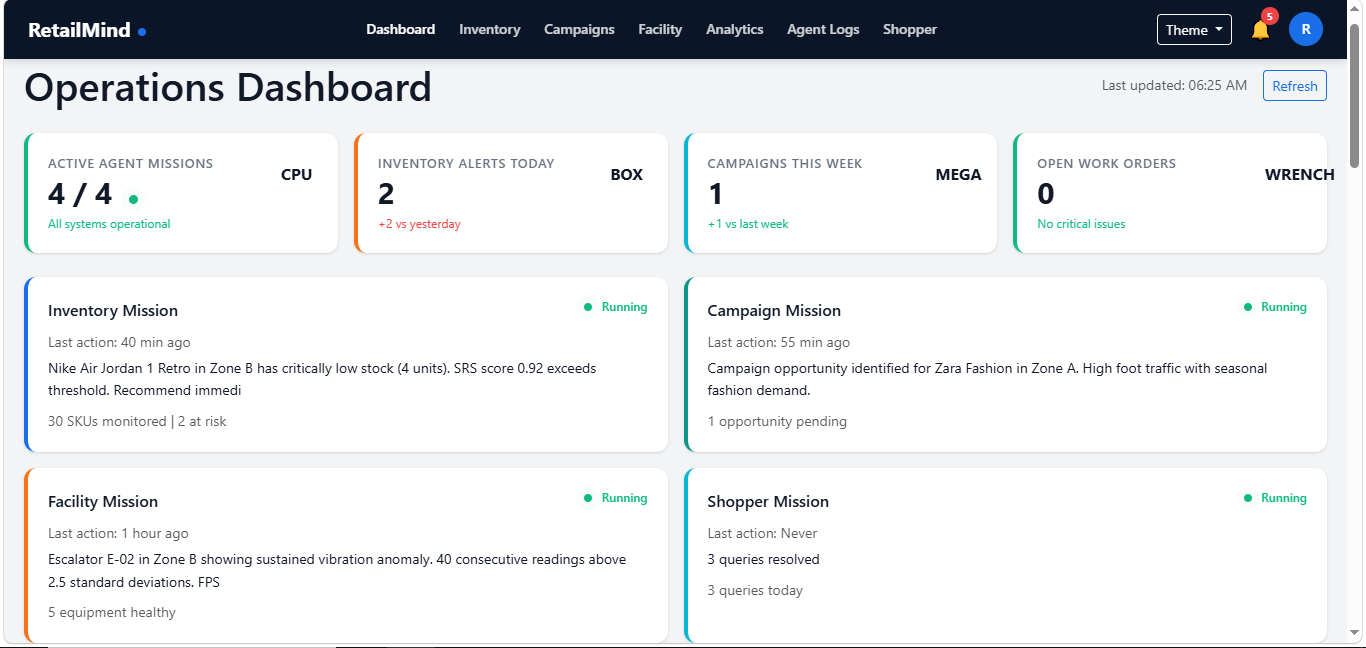
Operations Dashboard
-
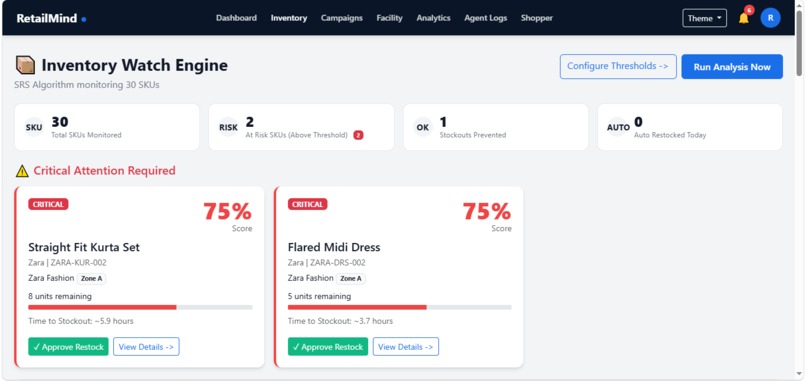
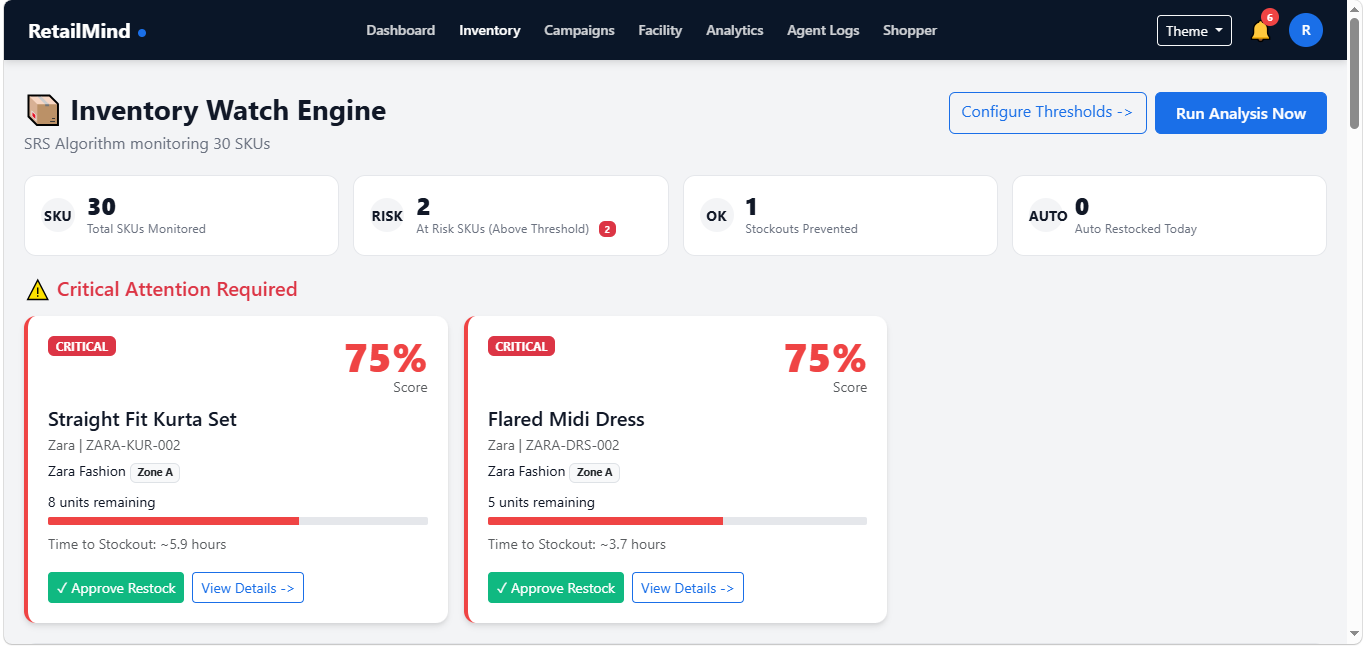
Inventory Watch Engine
-
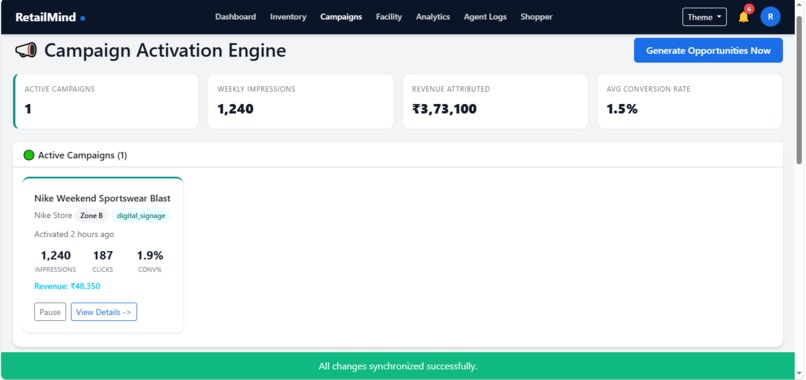
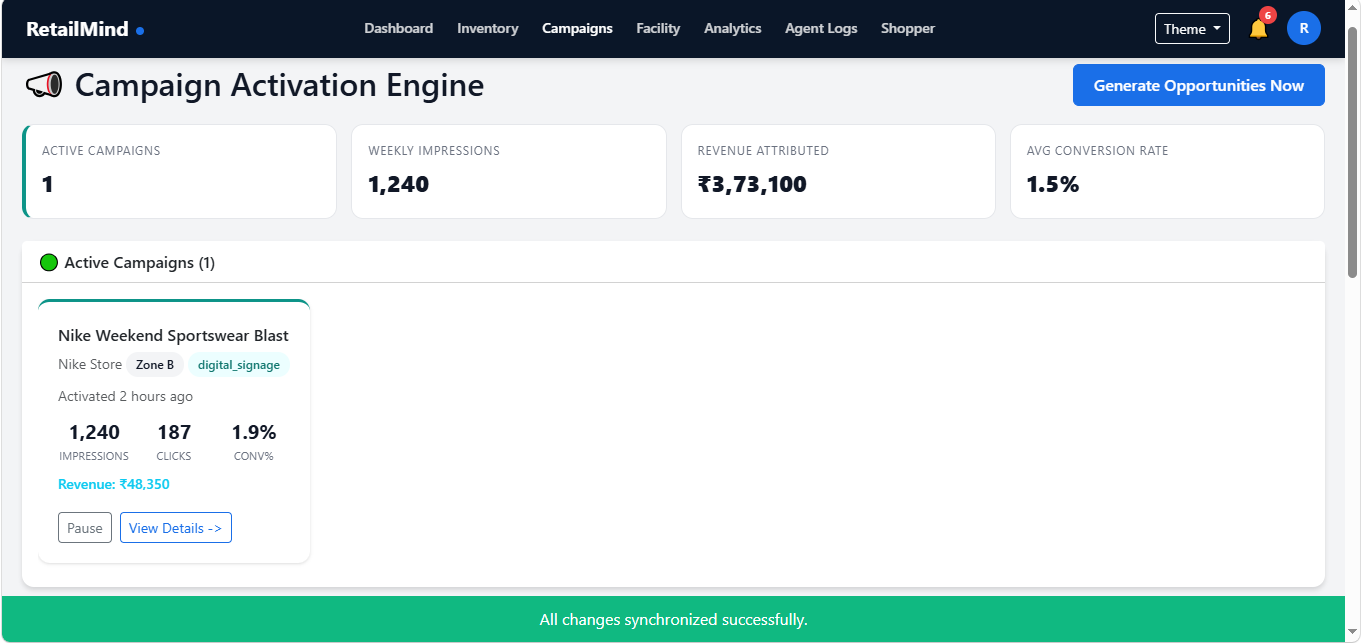
Campaign Activation Engine
-
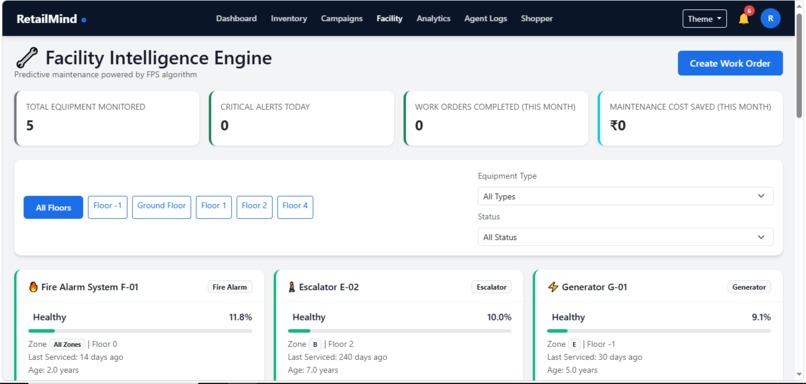
Facility Intelligence Engine
-
Analytics & Reporting
Inspiration
Modern malls generate huge amounts of operational data every single day, but most of it stays unused until a real problem appears. Store managers react after inventory runs out. Maintenance teams respond only after equipment fails. Marketing campaigns are often based on guesswork instead of real shopper behavior.
We wanted to solve this gap by building a system that thinks proactively instead of reactively.
That idea became RetailMind, an AI powered mall operations platform designed to help mall operators manage inventory risks, marketing opportunities, facility monitoring, and shopper assistance from one intelligent system.
The goal was simple: make physical retail operations as smart, responsive, and data driven as modern digital platforms.
Another major inspiration came from real world reliability issues in India. Many operational systems fail when internet connectivity becomes unstable. That is why RetailMind was designed as a Progressive Web App with offline support, background sync, and real time recovery features so teams can continue working even during connectivity disruptions.
What it does
RetailMind uses autonomous AI agents to continuously monitor mall operations in real time.
The platform currently handles four major operational missions:
Inventory Intelligence The system calculates Stock Risk Scores using sales velocity, supplier lead time, reorder thresholds, and SKU criticality. It predicts inventory risks before stockouts happen and generates human readable reasoning using Gemini AI.
Campaign Intelligence RetailMind analyzes foot traffic trends, seasonal patterns, and weather context to identify campaign opportunities automatically. It can even generate targeted marketing copy for specific stores and shopper segments.
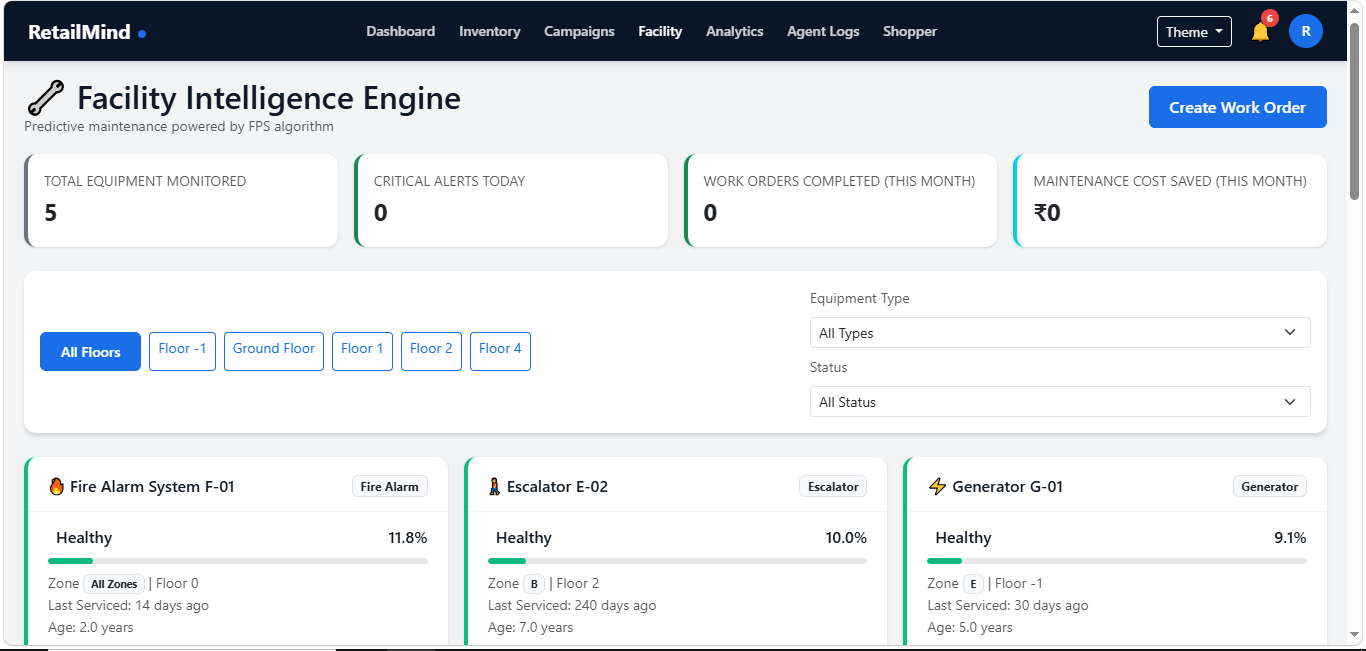
Facility Monitoring Sensor data from escalators, elevators, HVAC systems, and other equipment is analyzed using anomaly detection techniques like Z score analysis. Critical anomalies automatically create maintenance work orders.
AI Shopper Assistance Shoppers can search naturally using queries like:
“black running shoes under 5000 rupees”
Gemini AI extracts intent such as category, price range, color, and brand, then ranks products across all tenants in the mall.
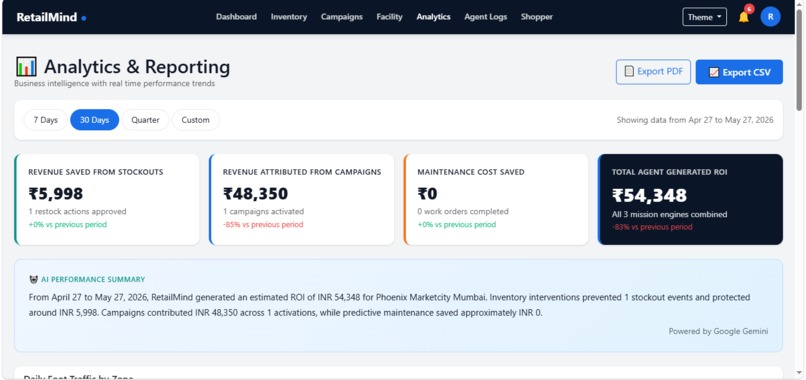
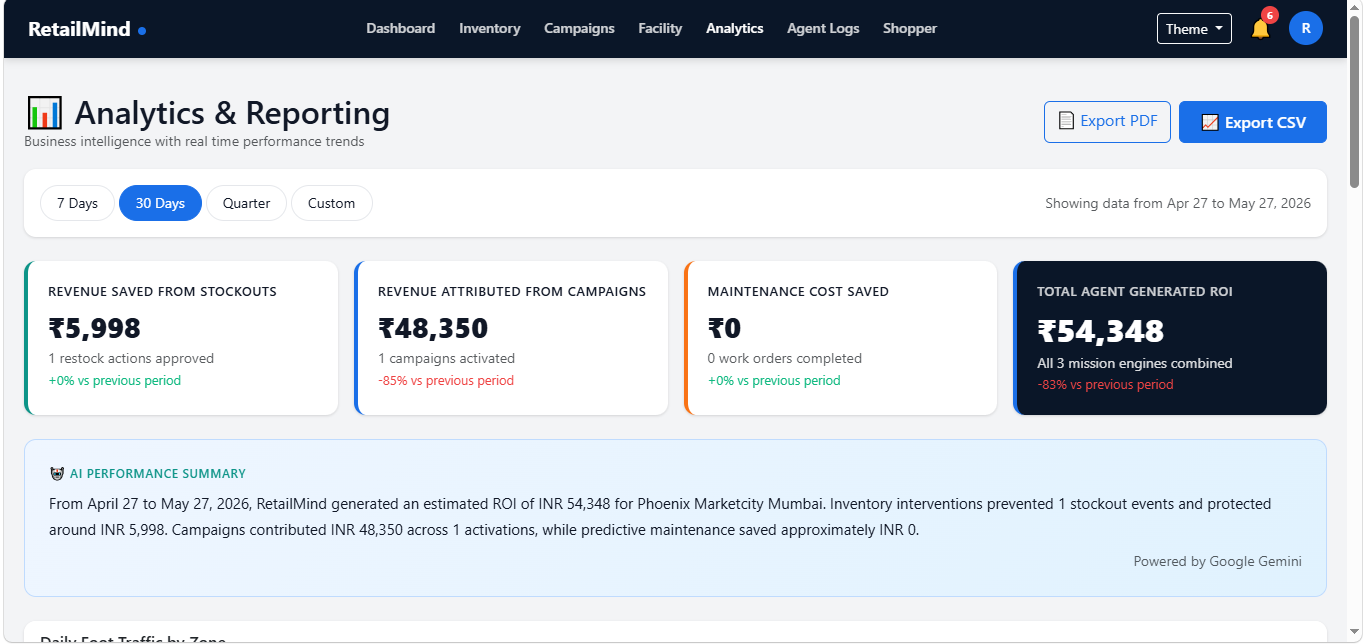
The platform also includes: offline ready PWA support background sync push notifications analytics dashboards PDF reporting subscription billing with Razorpay role based access control and a dedicated superadmin platform console.
How we built it
RetailMind was built using a full stack Python and JavaScript architecture.
Backend development was done using Flask with modular blueprint routing and a service oriented architecture. SQLAlchemy handled database modeling and migrations while APScheduler powered the autonomous background agent system.
Gemini 2.5 Flash was integrated for: inventory reasoning campaign generation weather aware recommendations and shopper intent extraction.
For frontend development, we used Jinja2 templates, Bootstrap, Chart.js, and vanilla JavaScript for interactive dashboards and analytics.
To make the platform reliable in unstable network conditions, we implemented: Service Workers IndexedDB based offline queues background synchronization and Progressive Web App support.
The platform also integrates: Razorpay for subscription billing Elasticsearch for accelerated search ReportLab and WeasyPrint for PDF exports and pywebpush for browser notifications.
Challenges we faced
One of the biggest challenges was designing an architecture that could combine multiple operational domains inside one unified system without becoming overly complex.
Balancing AI automation with human approval workflows was another important challenge. We wanted the AI agents to feel proactive without removing operational control from real users.
Building offline first reliability was also technically demanding because actions performed offline needed to sync safely once connectivity returned.
Another challenge was ensuring graceful degradation. RetailMind was intentionally designed so that optional services like Elasticsearch, Gemini AI, or push notifications can fail independently without breaking the entire platform.
Designing realistic operational workflows for malls while keeping the experience simple and intuitive also required a lot of iteration.
What we learned
This project taught us how difficult real world operational intelligence systems actually are compared to traditional dashboards.
We learned: how to architect modular AI assisted workflows how to design scalable role based systems how to combine predictive analytics with practical business actions how to build resilient offline capable web applications and how important explainability is when AI systems influence operational decisions.
We also learned that AI becomes far more valuable when it is connected directly to operational workflows instead of acting only as a chatbot layer.
Future scope
RetailMind is designed to evolve into a complete retail operations intelligence platform.
Some planned improvements include: real POS integrations multi property orchestration CI/CD automation Docker based deployment CSV exports two factor authentication in app collaboration tools and eventually a dedicated mobile application.
The long term vision is to help malls operate with the same level of intelligence, automation, and responsiveness that users already expect from modern digital platforms.
Built With
- apscheduler
- bootstrap
- chart.js
- elasticsearch
- flask
- flask-bcrypt
- flask-login
- flask-mail
- flask-wtf
- gemini-2.5-flash
- gunicorn
- indexeddb
- javascript
- postgresql
- pwa
- pytest
- python
- pywebpush
- razorpay
- reportlab
- service-workers
- sqlalchemy
- sqlite
- weasyprint


Log in or sign up for Devpost to join the conversation.