-
-
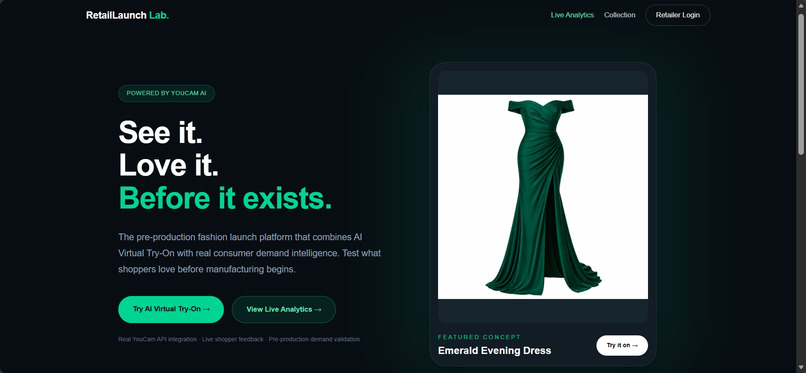
Homepage
-
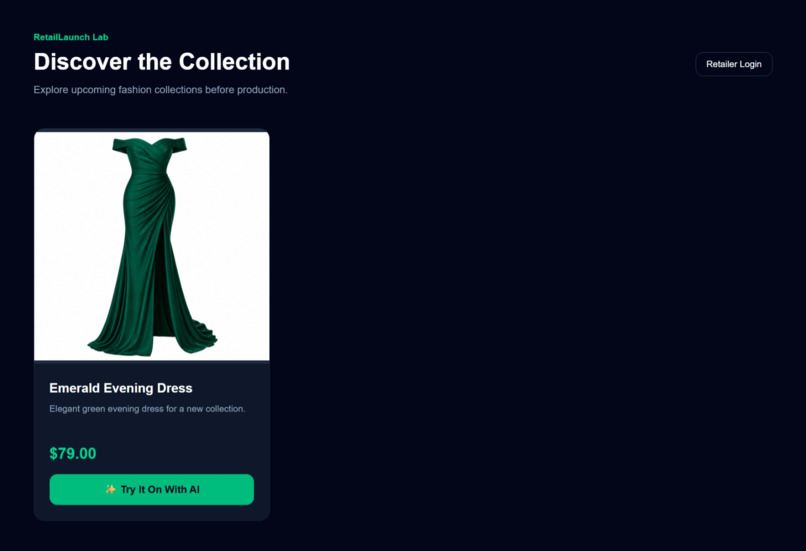
Collection
-
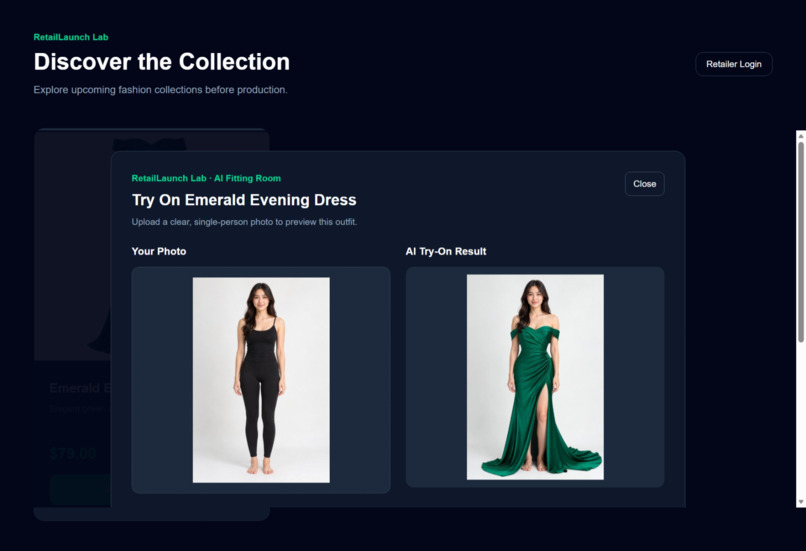
AI Virtual Try-On
-
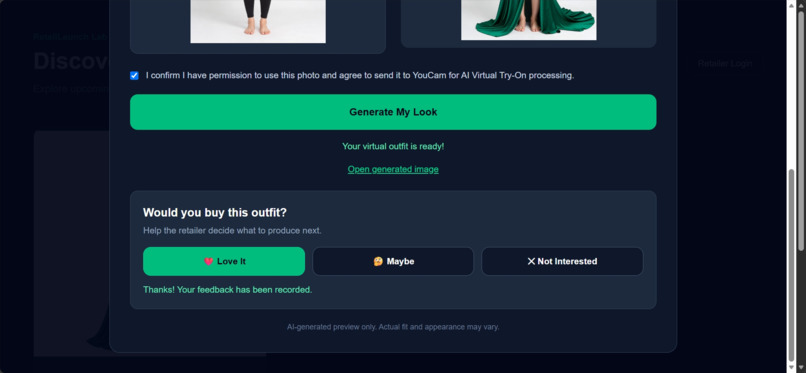
Purchase Intent Voting
-
Demand Intelligence Dashboard
Inspiration
Fashion brands face a costly problem: they often commit to production before knowing whether customers actually want a new design. Traditional product photography, physical samples, and inventory decisions require significant investment, while customer feedback often arrives too late.
We built RetailLaunch Lab to reverse that process.
What if shoppers could experience a fashion concept virtually, express their purchase intent, and help retailers validate demand before manufacturing begins?
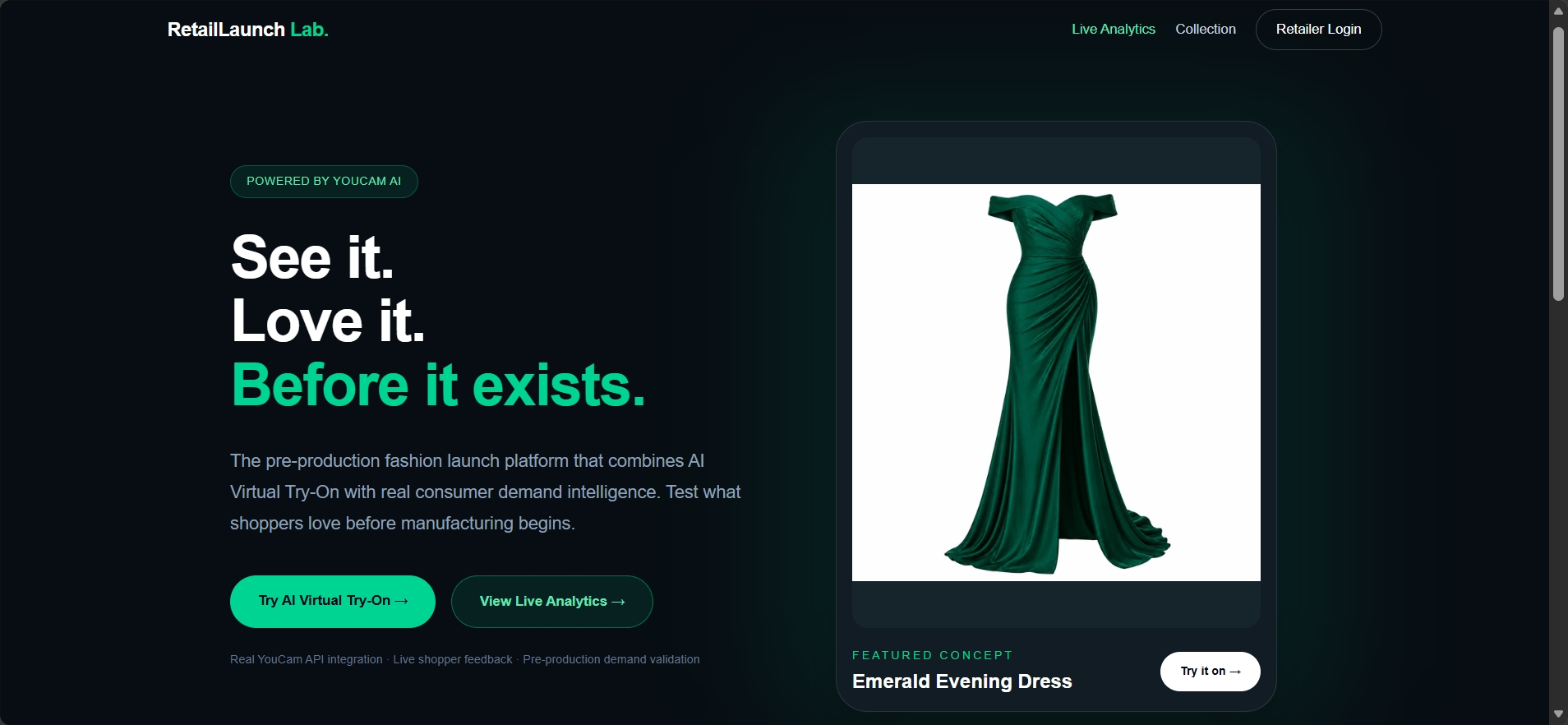
Our vision is simple: See it. Love it. Before it exists.
What It Does
RetailLaunch Lab combines AI-powered virtual try-on with purchase-intent analytics in a single fashion validation platform.
The experience follows four steps:
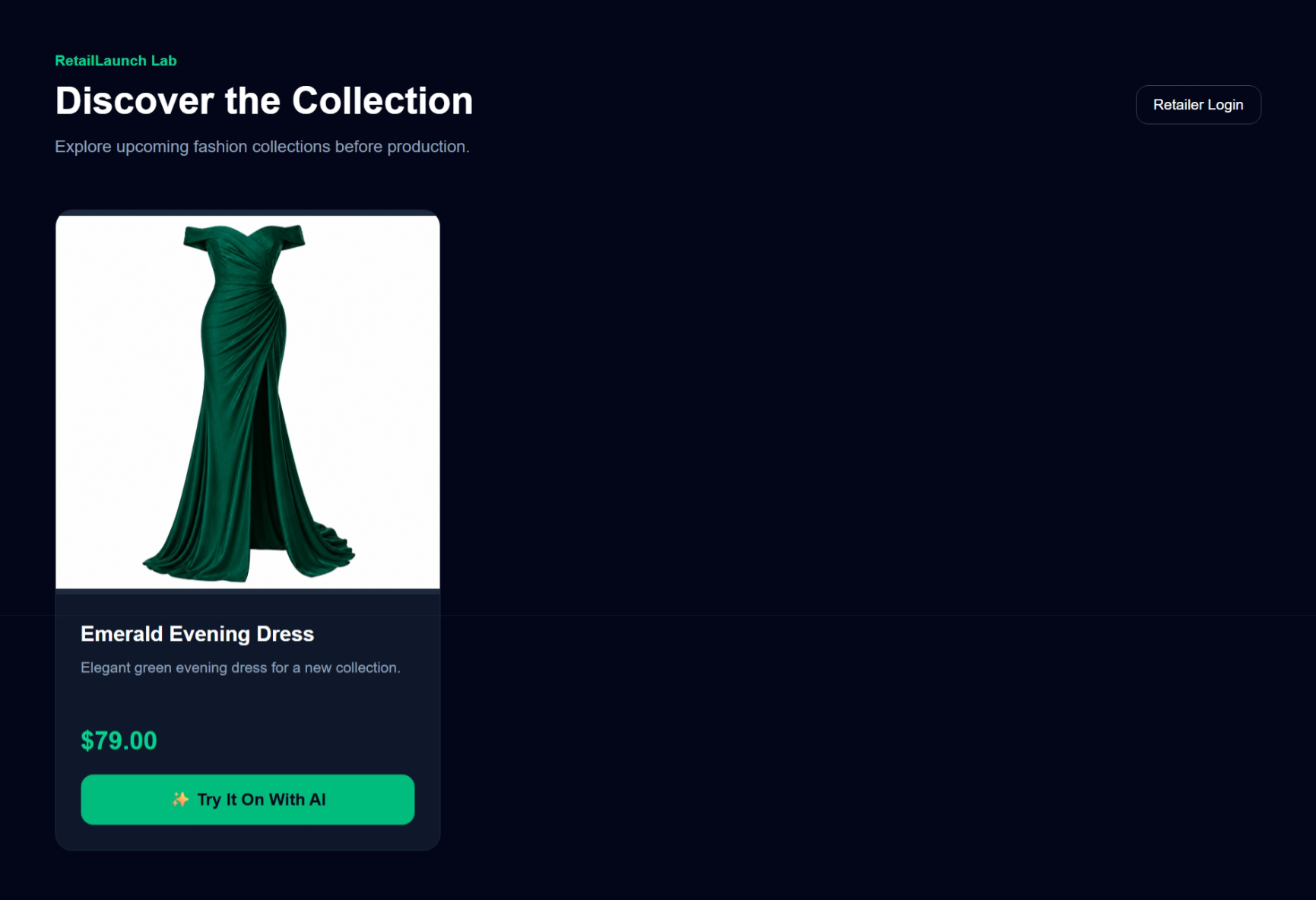
- Discover: Shoppers explore a fashion concept, starting with our featured Emerald Evening Dress.
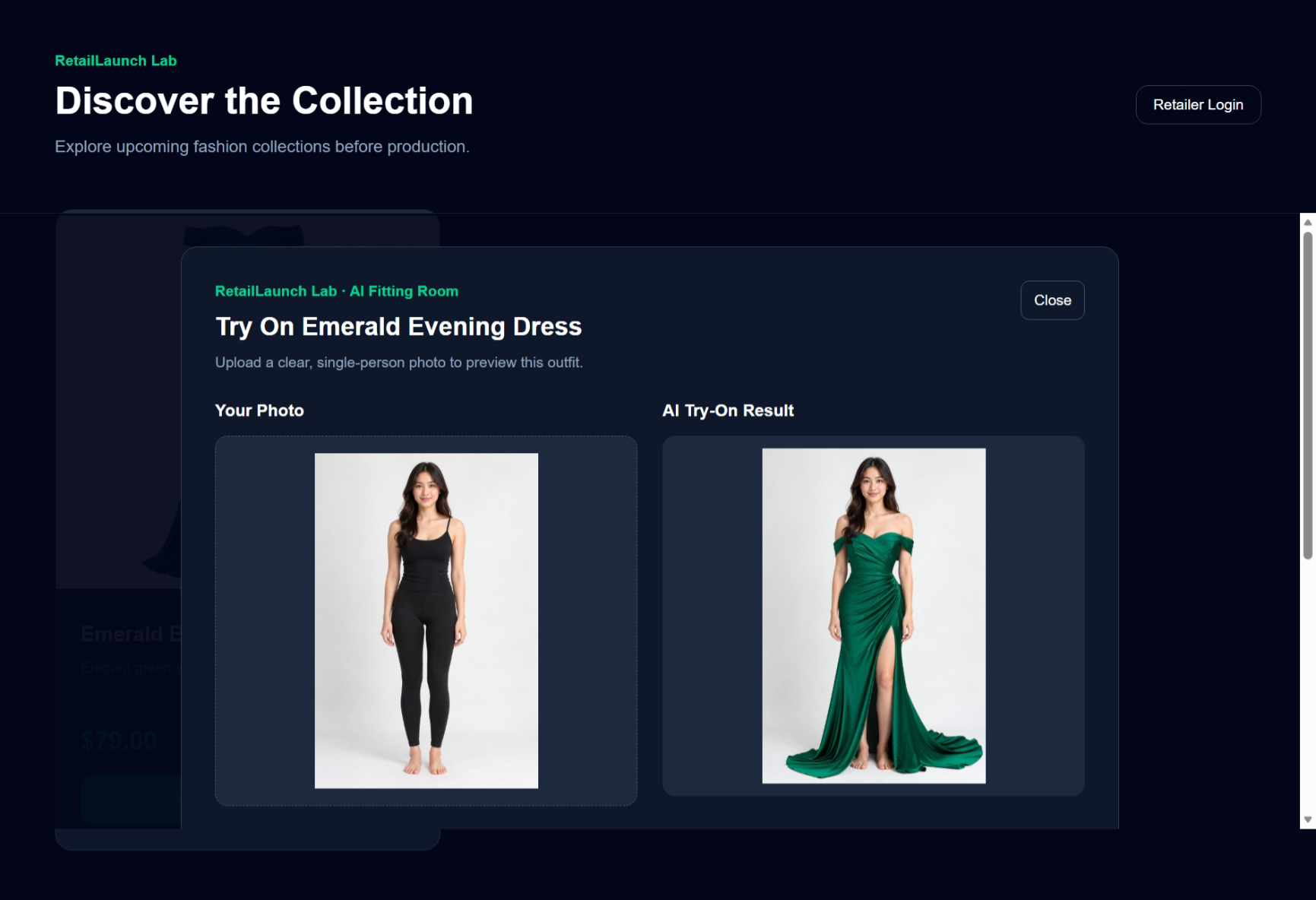
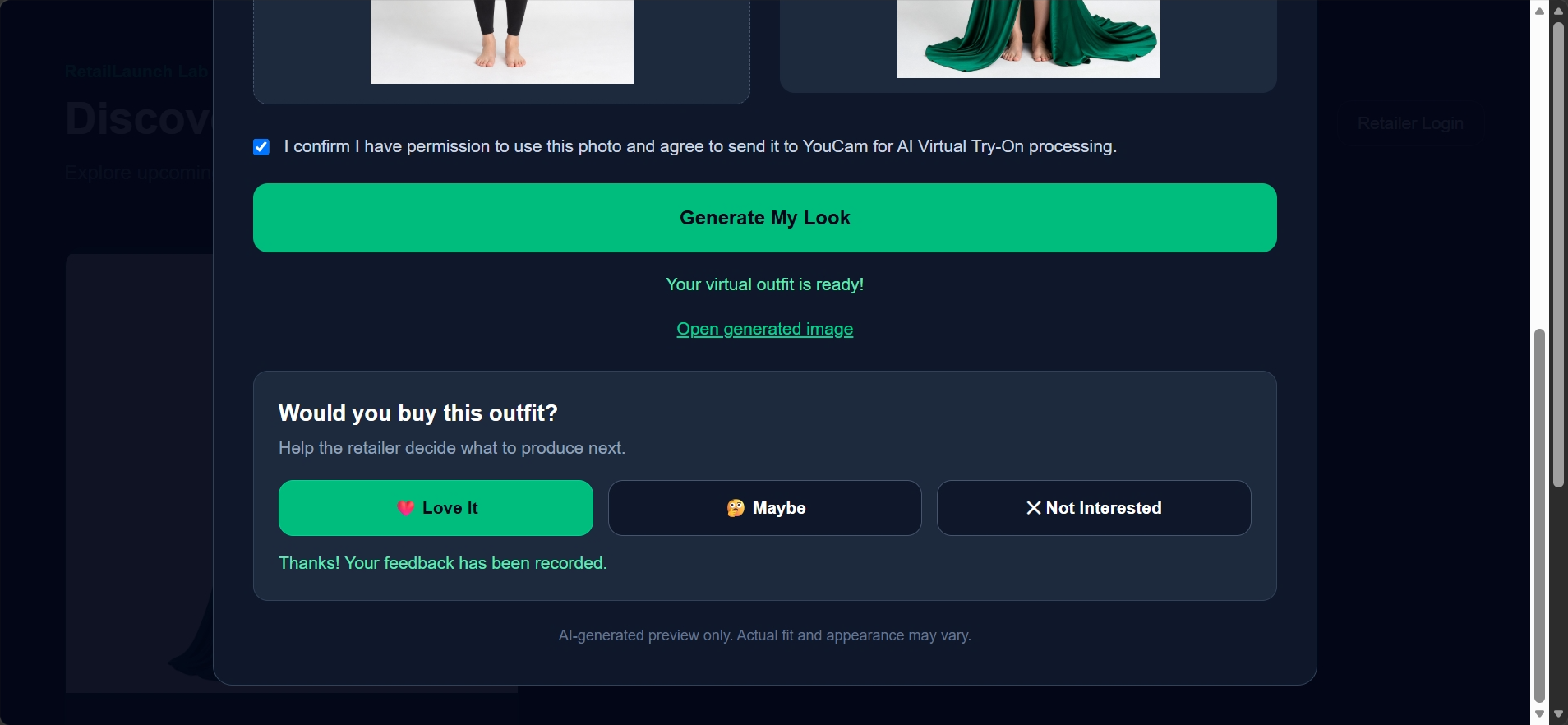
- Try On: Users upload a model photo and generate an AI-powered outfit visualization using the YouCam Clothes V4 API.
- Express Intent: Shoppers vote Love It, Maybe, or Not Interested. They can change their selection without creating duplicate active votes.
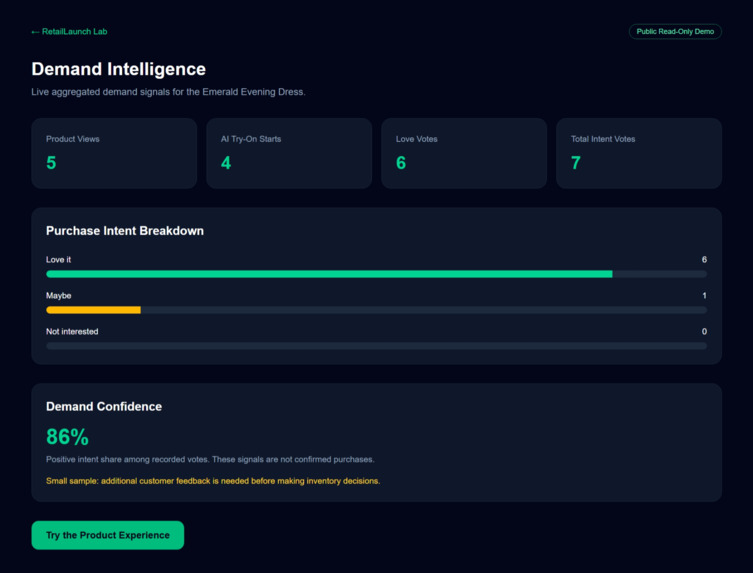
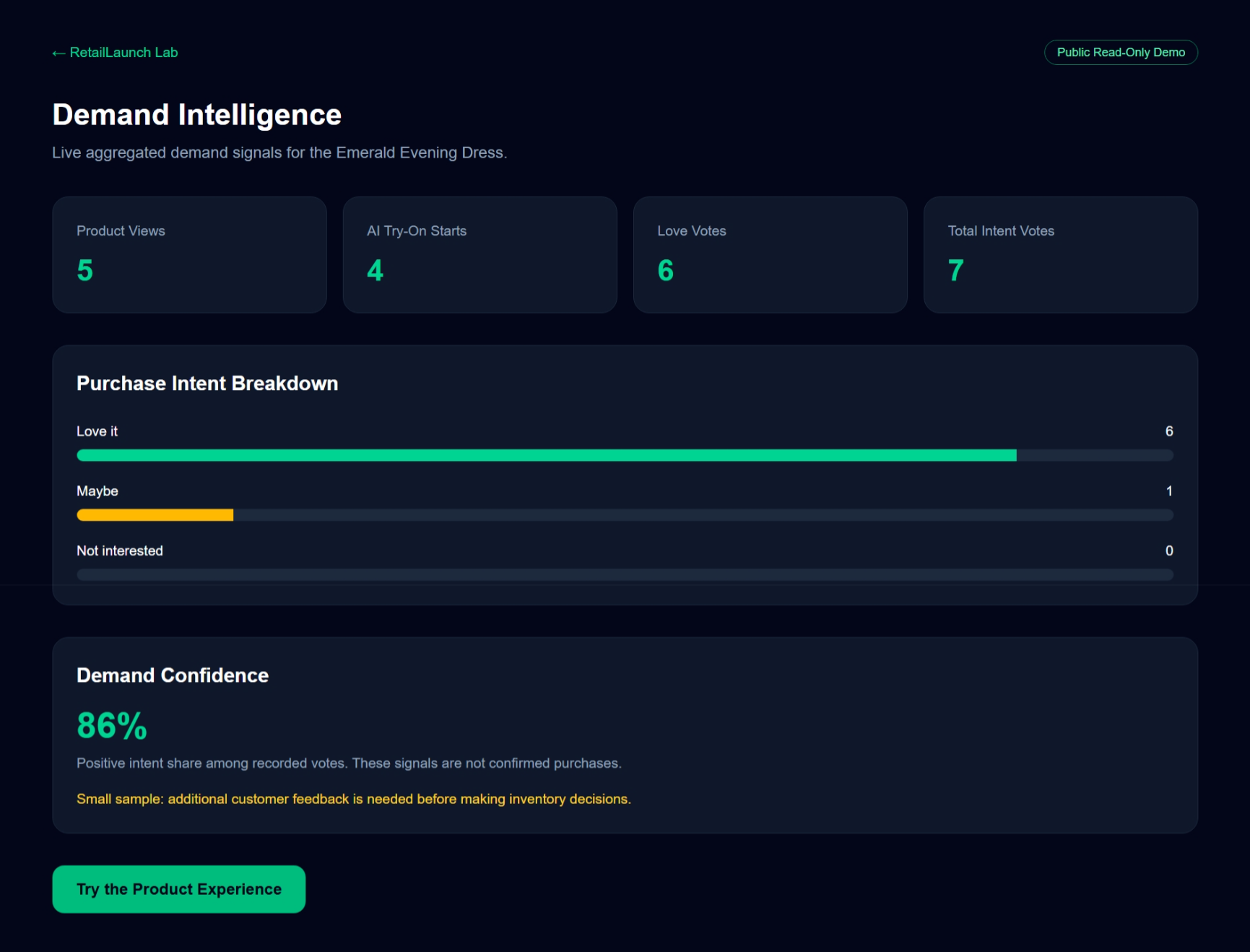
- Analyze: Retailers explore demand signals through a dashboard featuring product views, virtual try-on activity, purchase-intent distribution, and sample-size awareness.
Instead of treating virtual try-on as an isolated shopping feature, RetailLaunch Lab connects the experience to measurable consumer feedback.
How We Built It
We developed RetailLaunch Lab as a full-stack web application using Next.js, React, TypeScript, Tailwind CSS, Supabase, and Vercel.
The core AI experience integrates the YouCam Clothes V4 API. Users upload an image, initiate a virtual try-on request, and receive an AI-generated visualization after asynchronous processing.
Our backend handles the image submission, task creation, and generation-status checks.
We use Supabase PostgreSQL to store product interaction events and purchase-intent signals. A database function supports atomic vote updates, helping ensure that changing a preference replaces the visitor's existing active vote for that product.
We also built two analytics experiences:
- Public Demo Analytics: An accessible dashboard showing aggregate demand signals without requiring an account.
- Retailer Analytics: A protected dashboard using Supabase authentication.
The application is deployed on Vercel, allowing judges to access the live product without running any local services.
Challenges We Faced
Building a real AI workflow
AI virtual try-on involves more than displaying a generated image. We needed to coordinate uploads, asynchronous API requests, task-status polling, loading states, and result presentation.
Connecting AI engagement to business intelligence
A successful try-on does not necessarily indicate purchase intent. We designed a separate voting mechanism to capture shopper preferences and connect them to product-level analytics.
Preventing duplicate purchase-intent signals
Allowing visitors to change their preferences without inflating vote totals required careful database design and atomic updates.
Presenting analytics responsibly
Early-stage fashion concepts often have limited interaction data. We explicitly communicate sample-size limitations rather than presenting a small number of positive votes as proof of market demand.
Accomplishments We're Proud Of
- Integrated the real YouCam Clothes V4 API into a working fashion try-on experience.
- Built a complete shopper journey from product discovery to AI visualization and purchase-intent voting.
- Implemented vote updates that avoid duplicate active responses.
- Connected shopper interactions to a live demand analytics dashboard.
- Created both public aggregate analytics and authenticated retailer analytics.
- Deployed a publicly accessible application with a documented architecture and testing guide.
What We Learned
We learned that AI-powered commerce experiences become more valuable when connected to measurable decisions.
Virtual try-on helps shoppers visualize products. Purchase-intent signals help retailers understand customer preferences. Combining both creates a stronger foundation for evaluating fashion concepts before committing to inventory.
We also learned the importance of asynchronous API reliability, privacy-aware analytics, and clearly communicating uncertainty in small datasets.
What's Next
Our roadmap includes:
- Multi-product and multi-collection demand comparisons.
- More advanced purchase-intent and engagement analytics.
- Retailer tools for evaluating designs before production.
- Improved confidence indicators as sample sizes grow.
- Additional virtual try-on experiences and fashion categories.
- Exportable demand reports for merchandising teams.
Our long-term goal is to help fashion retailers reduce uncertainty and make more informed product decisions.
RetailLaunch Lab — See it. Love it. Before it exists.
Built With
- ai-virtual-try-on
- analytics
- clothes-v4
- e-commerce
- fashion-tech
- next.js
- postgresql
- react
- rest-api
- supabase
- supabase-auth
- tailwind-css
- typescript
- vercel
- youcam-api

Log in or sign up for Devpost to join the conversation.