-
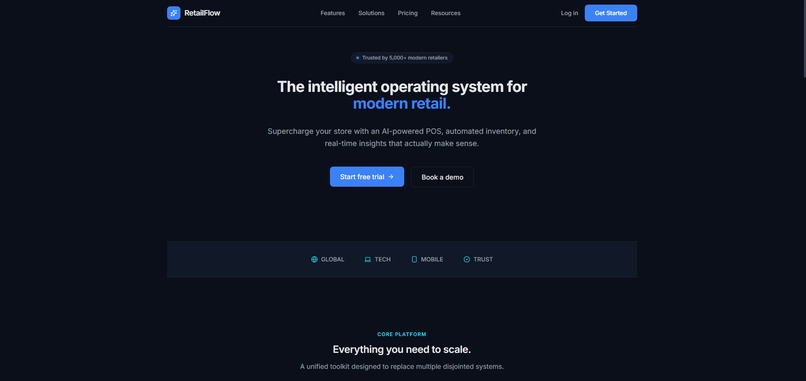
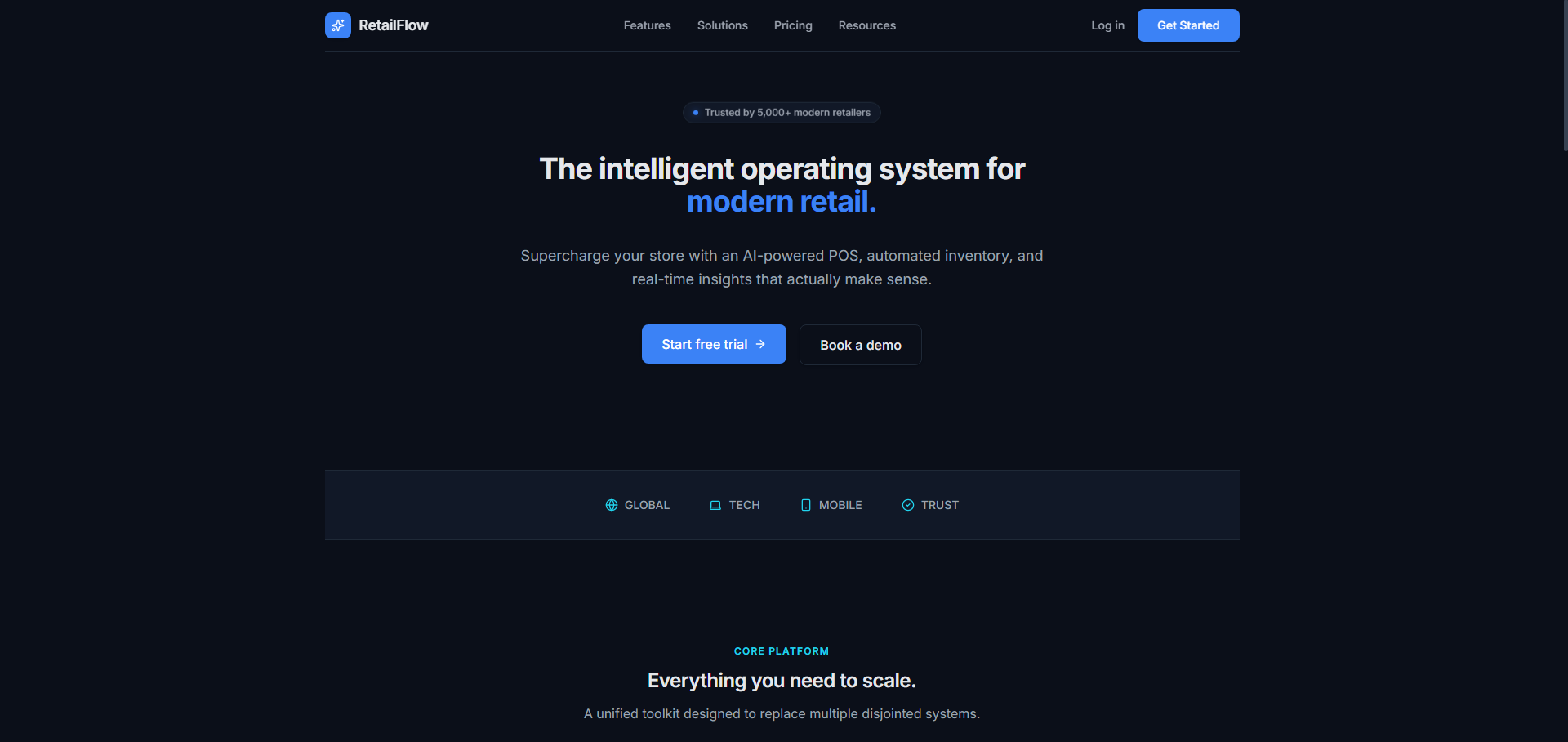
HOME PAGE
-
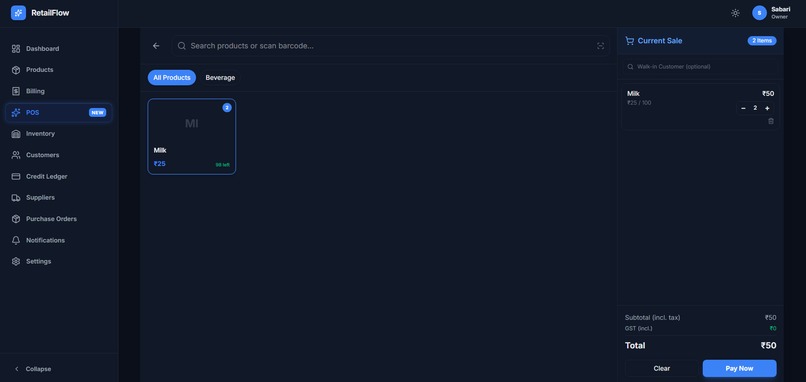
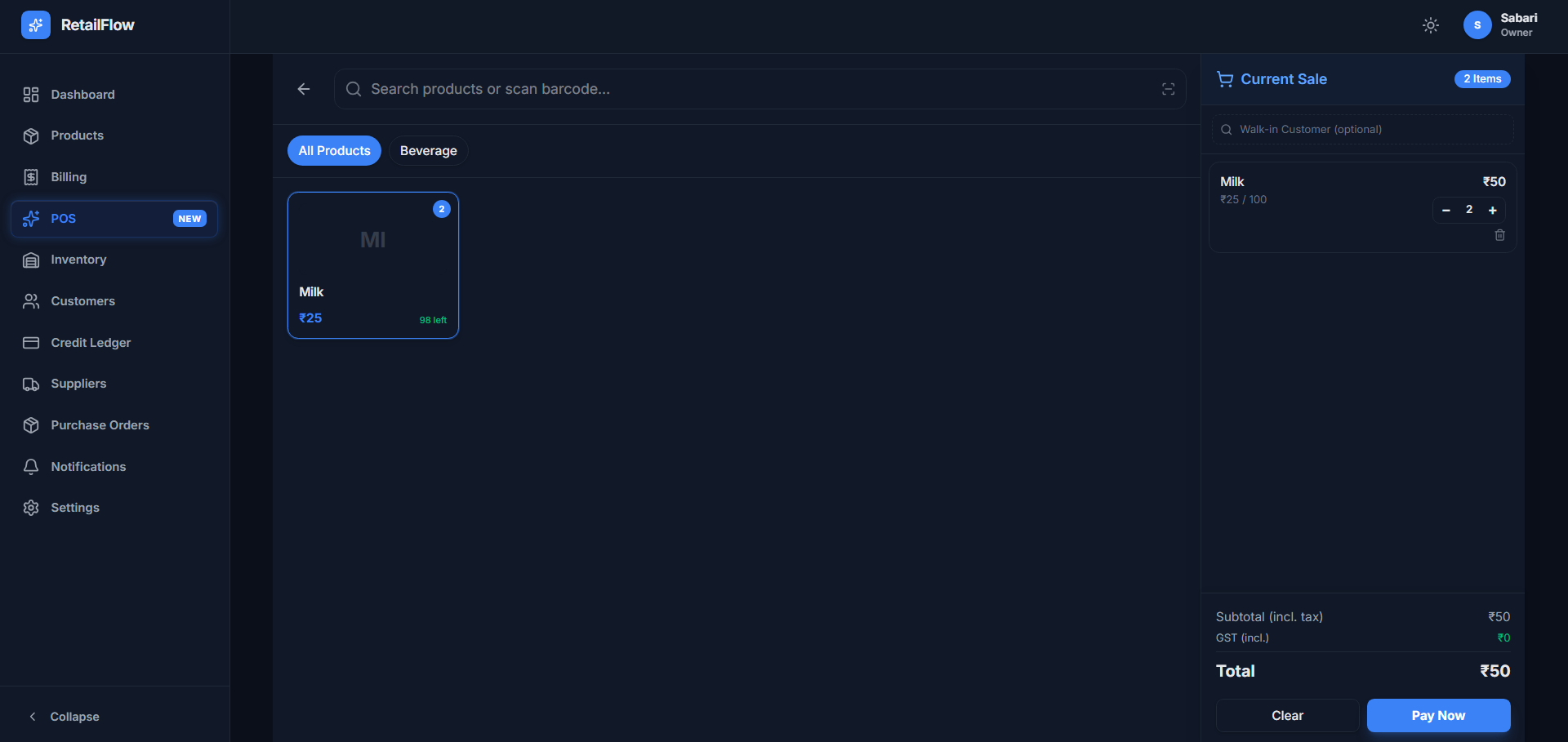
POS
-
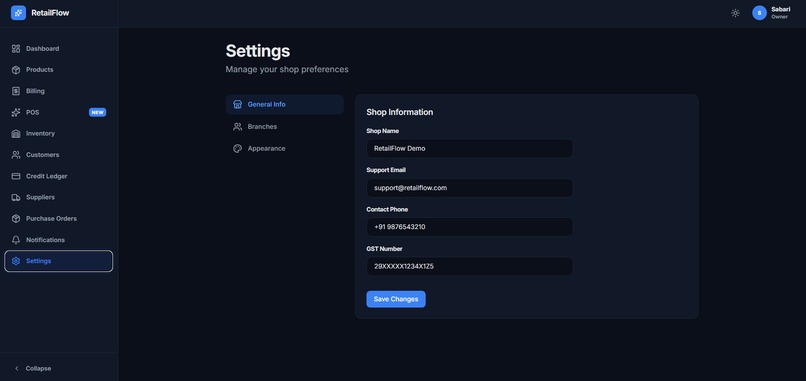
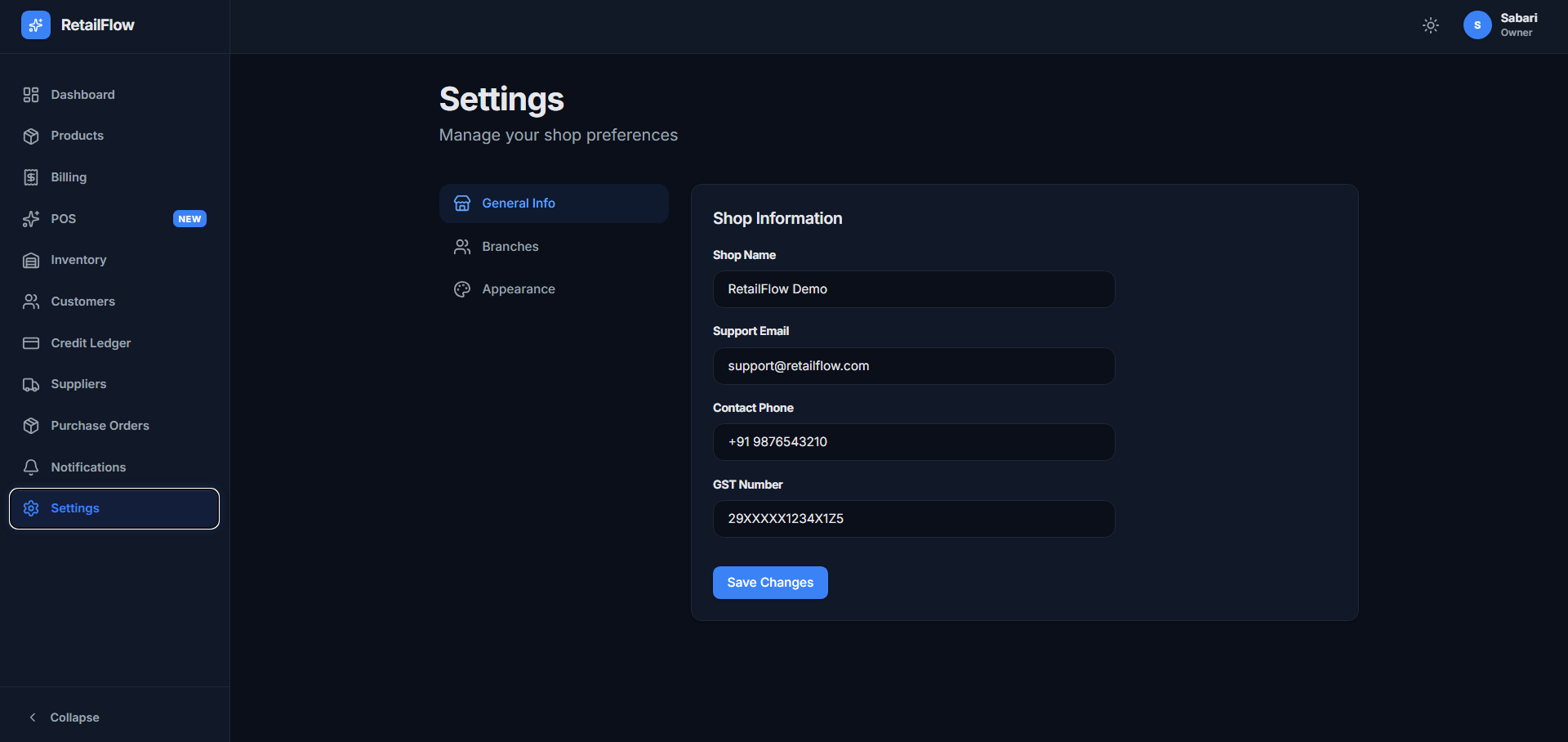
SETTINGS
-
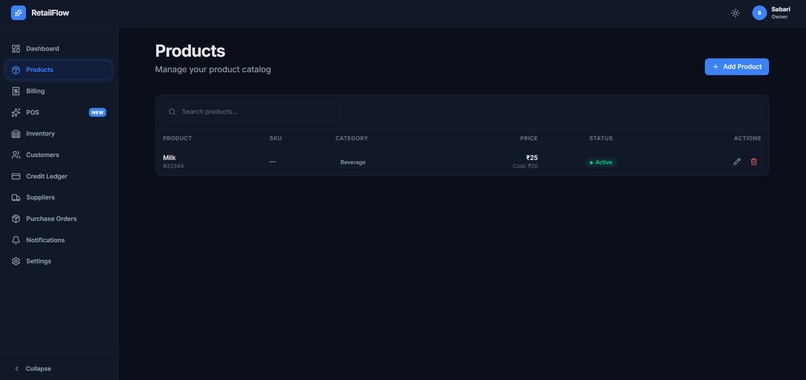
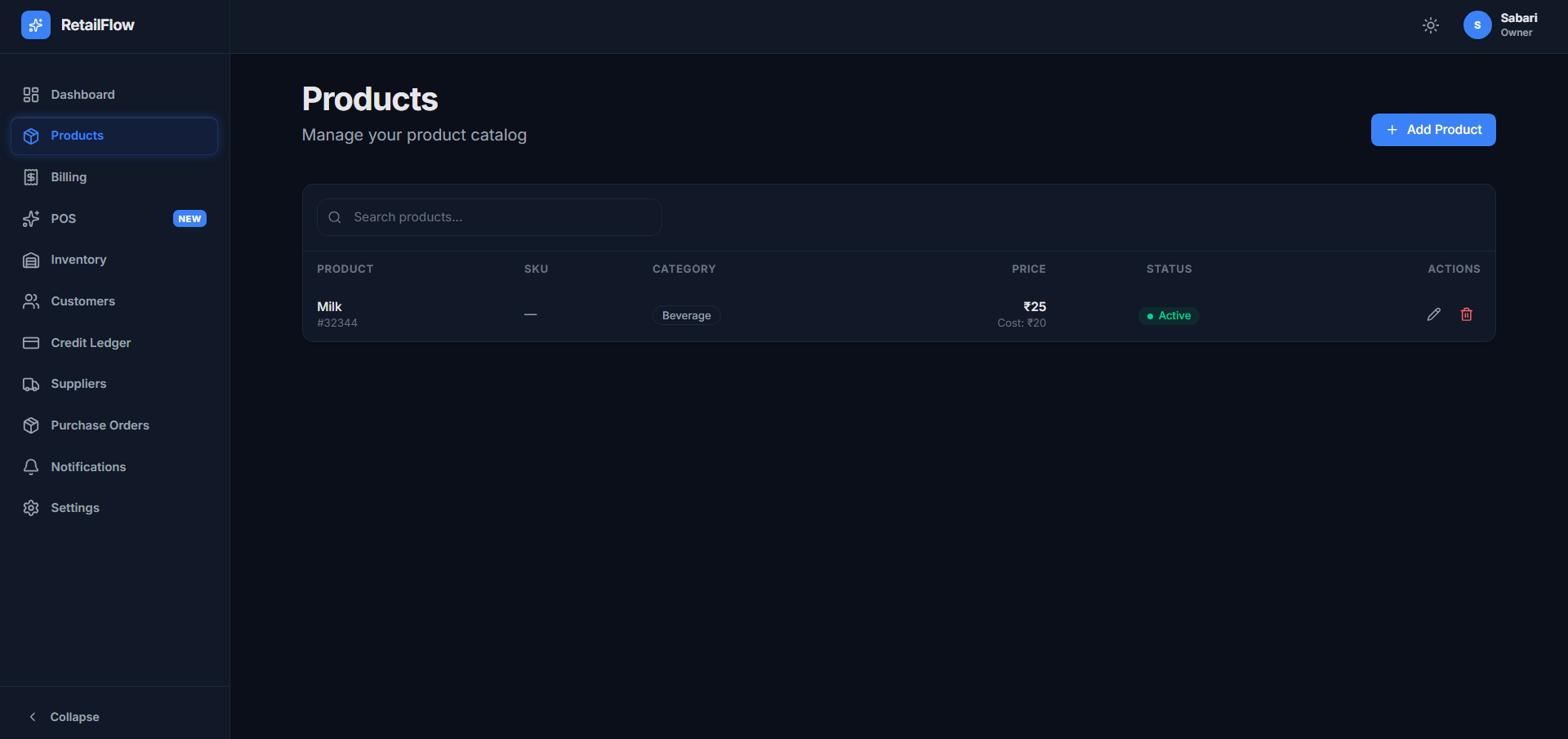
PRODUCTS
-
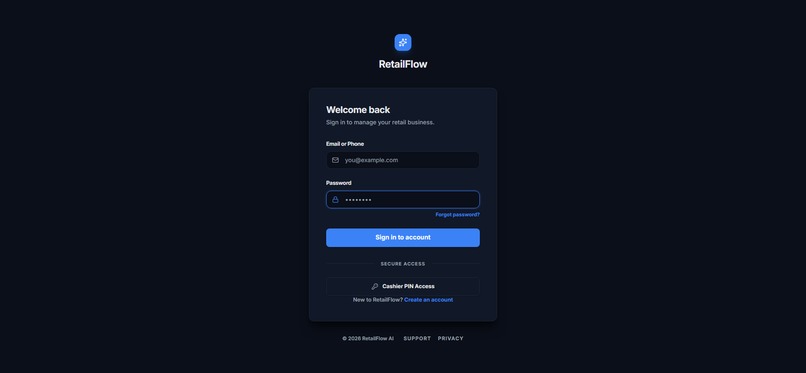
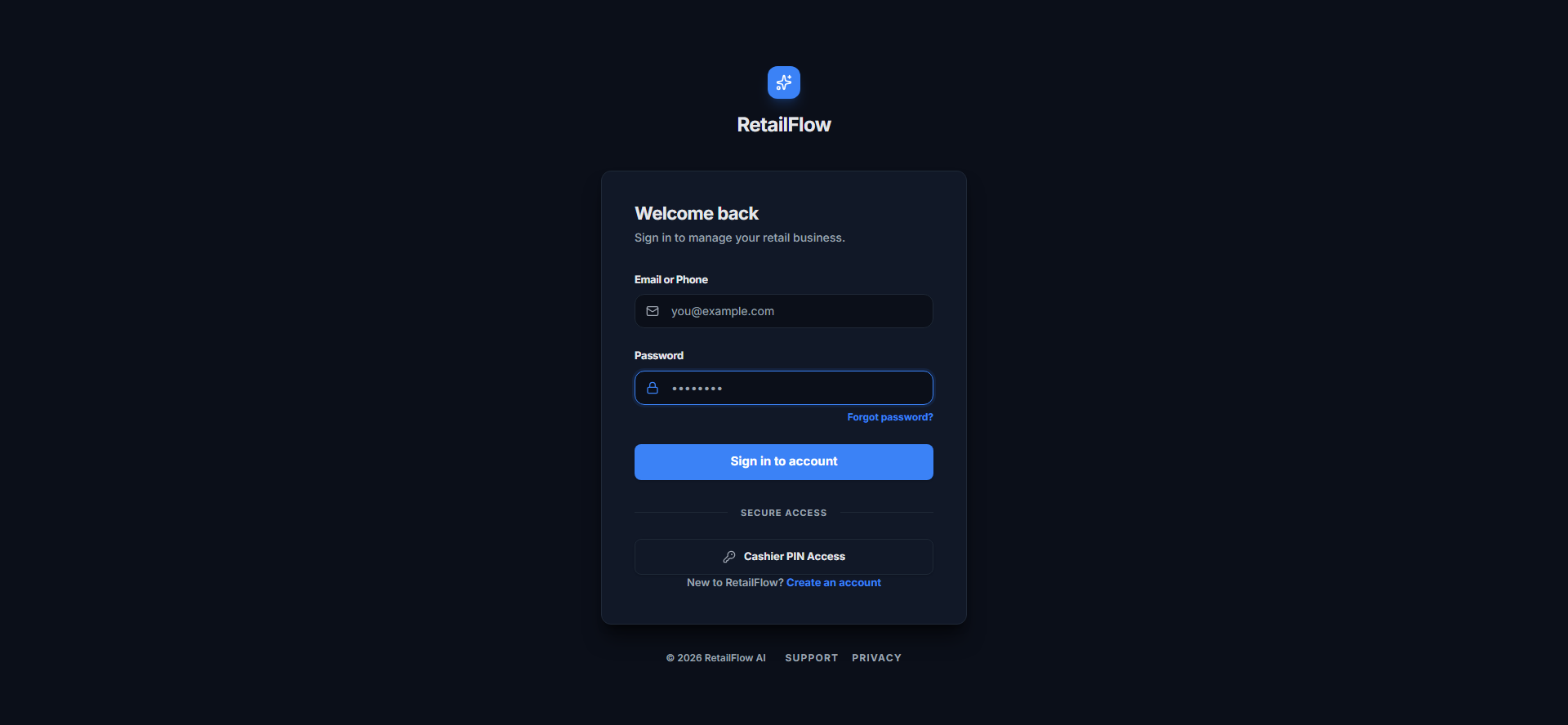
SIGN IN
-
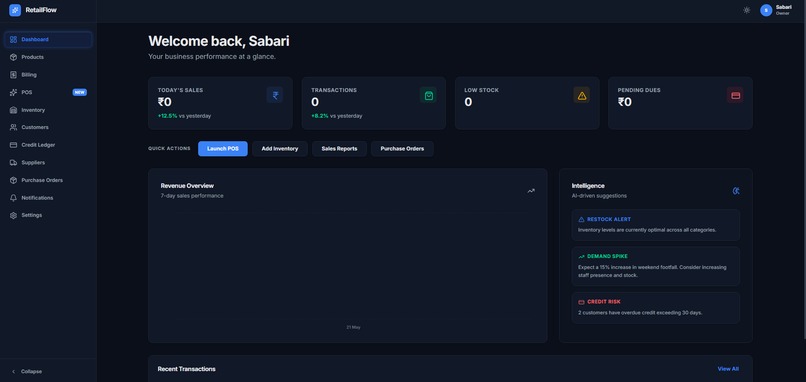
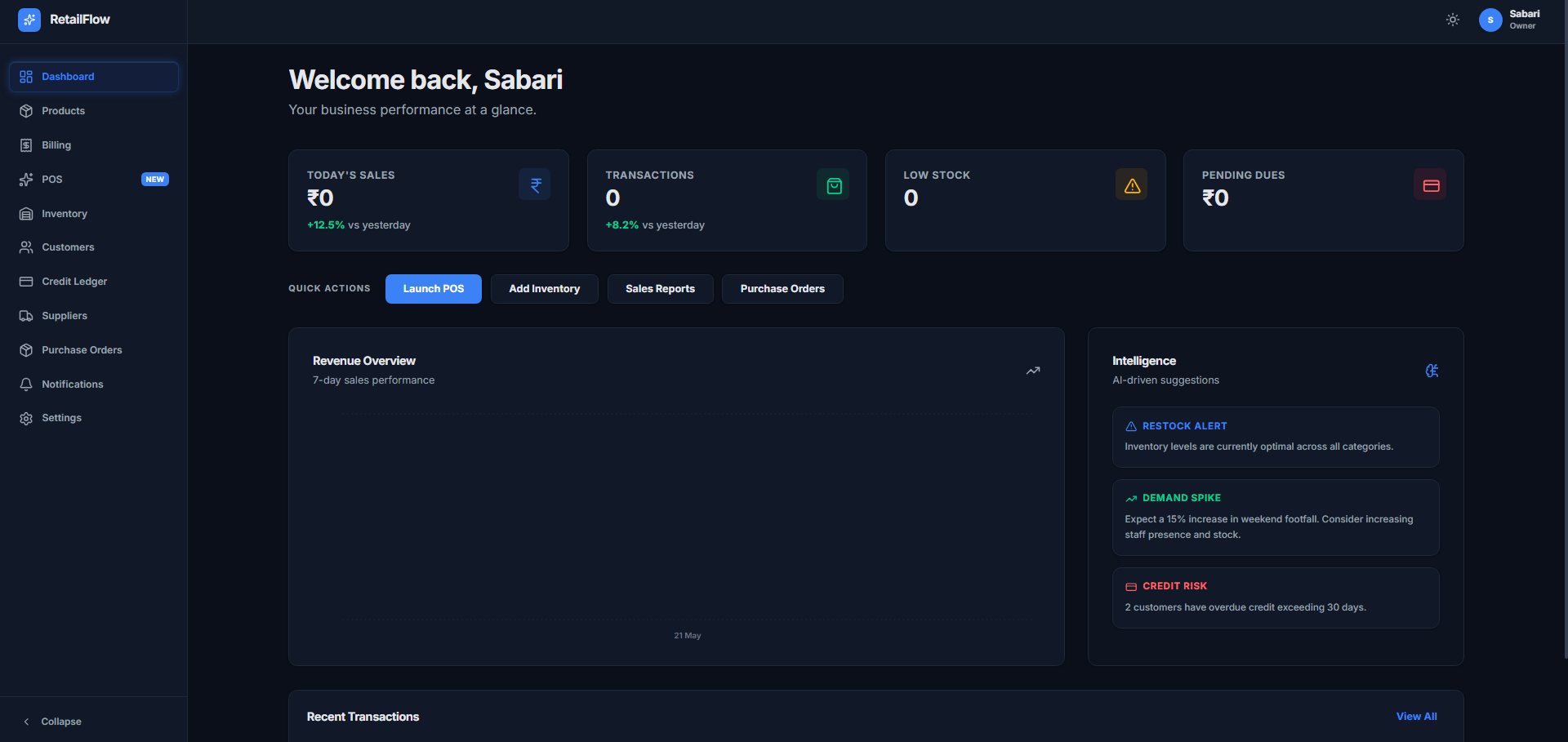
DASHBOARD
-
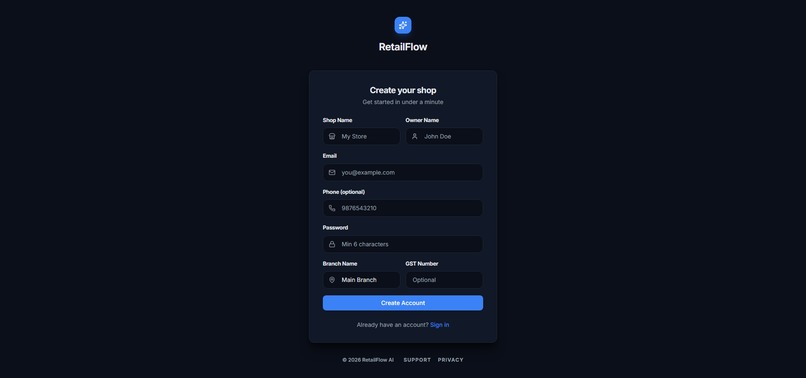
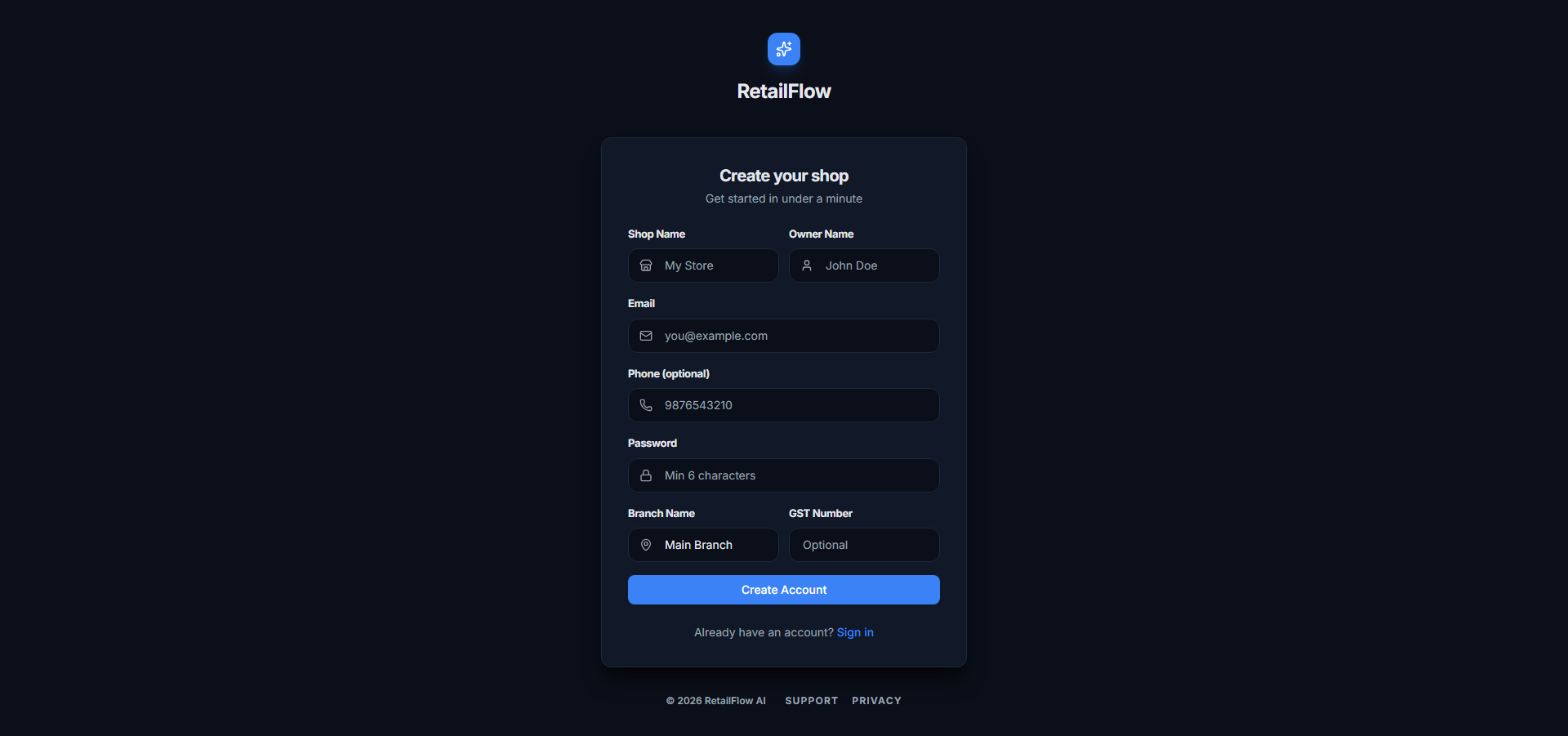
CREATE NEW ACCOUNT PAGE
-
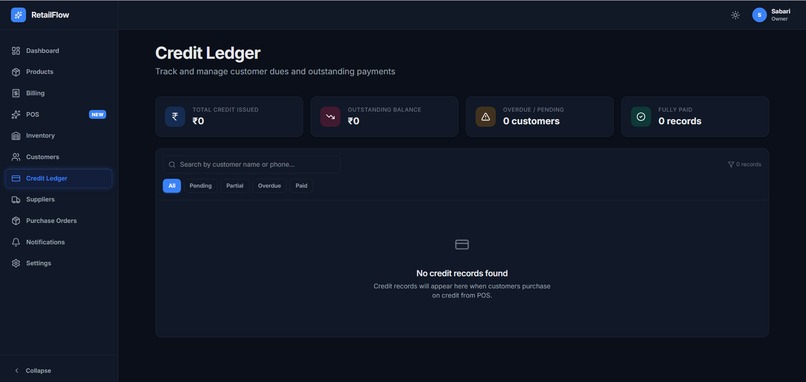
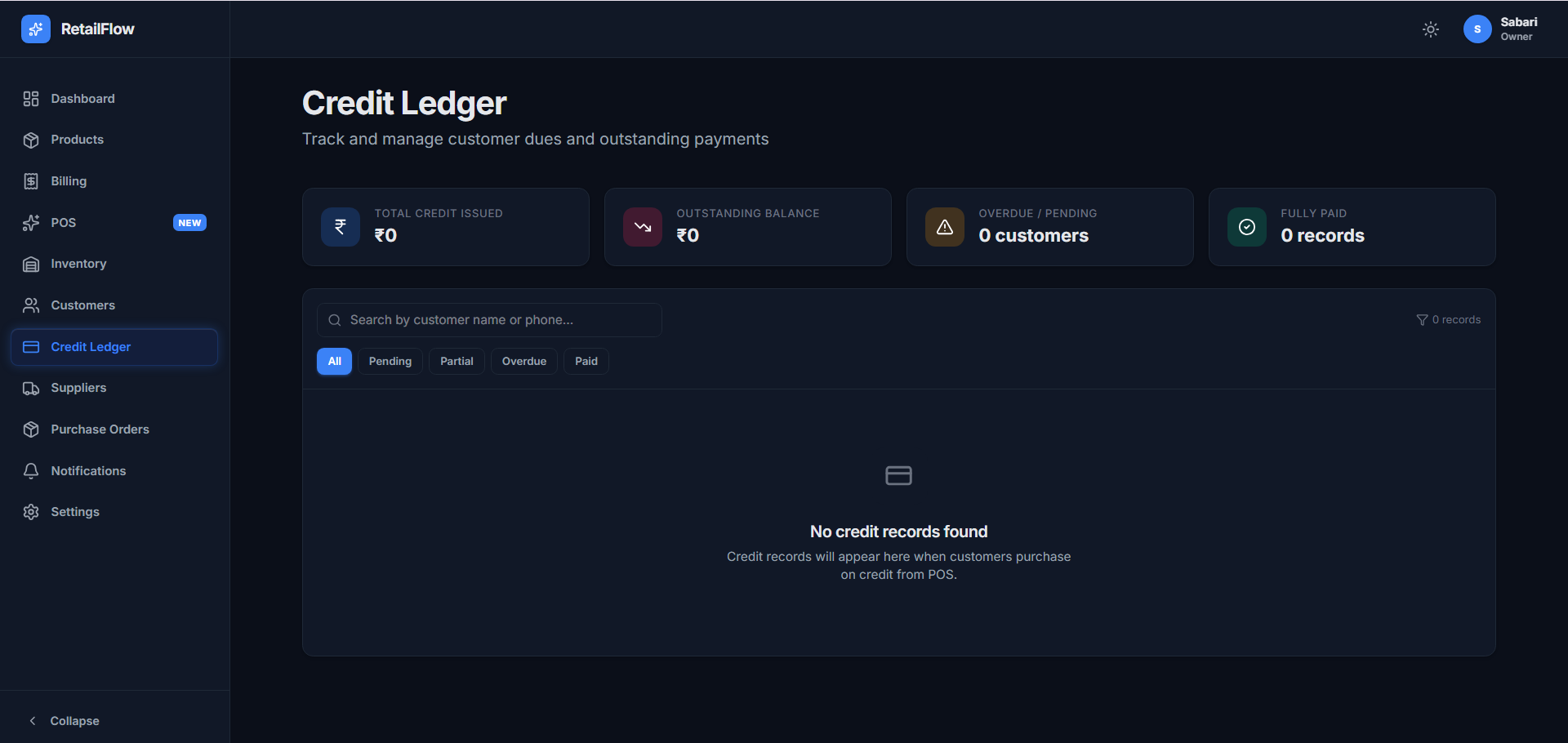
CREDIT LEDGER
-
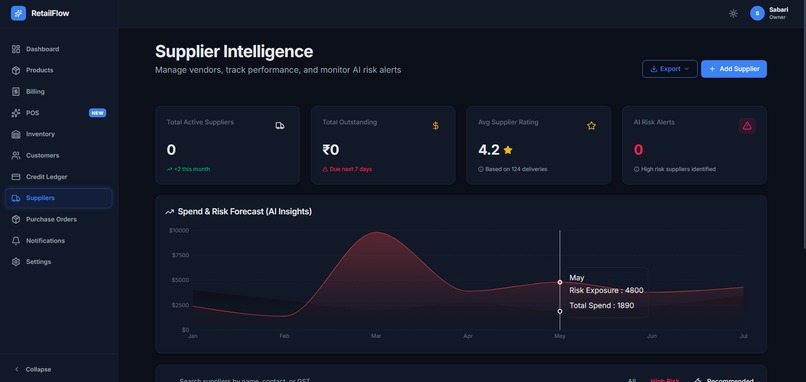
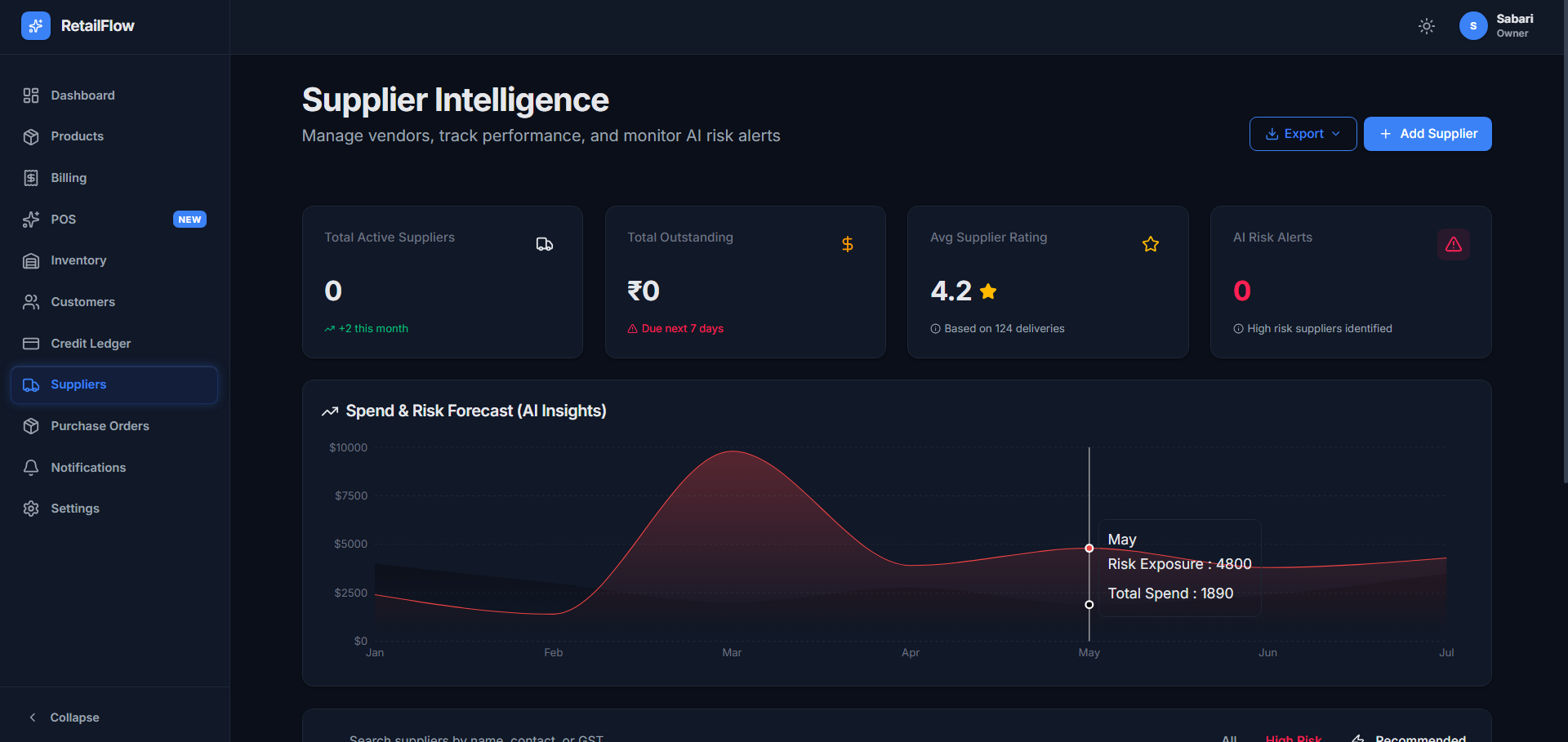
SUPPLIERS PAGE
🚀 Inspiration
Small and medium-sized retailers generate enormous amounts of business data every day, but much of it still remains trapped in billing systems, spreadsheets, handwritten credit ledgers, and disconnected inventory tools.
A retailer may know what they sold yesterday, but often cannot easily answer:
What products are likely to run out next? Which inventory is becoming dead stock? How much should I reorder? Which products are driving revenue? Where am I likely to lose money? What should I do about it?
We wanted to bridge this gap.
Instead of building another billing or inventory application, we built RetailFlow AI — an intelligent retail operating system that transforms operational data into predictive insights and actionable business decisions.
💡 What It Does
RetailFlow AI is a multi-tenant SaaS platform that unifies retail operations while adding an intelligent decision layer on top of the business data.
It combines:
🧾 Smart POS & Billing 📦 Real-time Inventory Management 🏪 Multi-Branch Operations 🤝 Supplier & Procurement Management 💳 Credit Ledger / Udhaar Management 📊 Business Analytics 🤖 AI Demand Forecasting ⚠️ Inventory Risk Detection 🔐 Role-Based Access Control 🔔 Real-Time Notifications
The key idea is simple:
RetailFlow AI doesn't just show retailers what happened. It helps them understand what is likely to happen next and what they can do about it.
🧠 From Data → Intelligence → Action
RetailFlow AI is designed around an intelligent decision pipeline:
Retail Operations ↓ Sales + Inventory + Supplier Data ↓ AI Analytics & Forecasting ↓ Risk & Opportunity Detection ↓ Business Recommendation ↓ Human Decision ↓ Action
For example, instead of simply displaying a low-stock warning, RetailFlow AI can analyze sales velocity, historical demand, current inventory, and procurement information to identify potential stockout risks and provide actionable recommendations.
This transforms the platform from a record-keeping system into a decision-support system.
🤖 AI Capabilities
RetailFlow AI integrates intelligent analytics into everyday retail operations.
🔮 Demand Forecasting
Analyze historical sales patterns to estimate future product demand and help retailers prepare inventory ahead of time.
⚠️ Low-Stock & Stockout Risk
Identify products approaching critical inventory levels and surface potential stockout situations.
📈 Sales Intelligence
Analyze sales trends and product performance to help retailers understand what is driving their business.
🚀 Fast-Moving Product Detection
Identify products with rapidly increasing demand so retailers can prioritize replenishment.
📦 Overstock & Understock Analysis
Detect inventory imbalance and provide insights that can help reduce unnecessary capital locked in stock.
🧠 Intelligent Retail Analytics
Transform raw operational data into meaningful business insights through centralized analytics dashboards.
⚙️ How We Built It
RetailFlow AI was designed as a scalable full-stack SaaS platform using a modern monorepo architecture.
Frontend React 19 + Vite Tailwind CSS Zustand Framer Motion Recharts React Hook Form Zod Backend Node.js Express.js TypeScript PostgreSQL Prisma ORM Redis BullMQ JWT Authentication Node-cron PDFKit Architecture
The platform separates the frontend and backend into independently maintainable applications while using PostgreSQL as the core transactional database.
Redis and BullMQ support asynchronous background processing, notifications, and scalable workloads.
The architecture also incorporates:
Multi-tenant data isolation RBAC authorization JWT-based authentication Redis caching Queue-based background workers Scheduled jobs AI-powered analytics
This allows RetailFlow AI to move beyond a simple CRUD application toward a production-oriented SaaS architecture.
🏗️ Technical Architecture RetailFlow AI │ ┌──────────┴──────────┐ │ │ React Web App REST API │ │ │ Node.js + Express │ │ └──────────┬──────────┘ │ Prisma ORM │ PostgreSQL │ ┌──────────────┴──────────────┐ │ │ Redis BullMQ │ │ └──────────────┬──────────────┘ │ Background Workers │ ↓ AI Analytics │ ↓ Predictive Insights ⚡ Challenges We Faced
Building RetailFlow AI involved challenges that went beyond implementing individual features.
Multi-Tenant Architecture
We needed to design the platform so that multiple businesses and branches could operate independently while maintaining secure data isolation.
Inventory Consistency
Keeping inventory accurate across sales, purchases, branches, and stock movements required careful backend workflows.
Asynchronous Processing
Notifications and background workloads needed to execute reliably without blocking user-facing operations, leading us to implement Redis and BullMQ-based processing.
Secure Authorization
Different users require different levels of access. We therefore implemented role-based authorization to control access to business operations and resources.
Analytics Performance
Retail analytics can involve processing large amounts of transactional data. We had to consider caching, background processing, and efficient database operations to keep the platform responsive.
AI Integration
The biggest challenge was integrating predictive analytics into actual retail workflows rather than treating AI as an isolated feature.
📚 What We Learned
Building RetailFlow AI gave us practical experience in:
Designing multi-tenant SaaS systems Building scalable REST APIs PostgreSQL database architecture Prisma ORM Redis caching BullMQ background workers Authentication and RBAC AI-powered analytics Demand forecasting Performance optimization Full-stack system integration Deploying a production-oriented web application
More importantly, we learned that AI becomes significantly more valuable when it is connected to real operational workflows and business decisions.
🌍 Future Scope
RetailFlow AI is designed as a foundation that can evolve into a broader intelligent retail ecosystem.
Our future roadmap includes:
👁️ Computer Vision
Shelf monitoring and product recognition using computer vision to detect inventory conditions automatically.
🎙️ Voice-Enabled Retail Assistant
Allow store owners to query their business using natural language or voice.
For example:
"Which products should I reorder this week?"
🤖 AI Procurement
Automatically analyze demand, inventory, supplier lead times, and purchasing history to recommend optimal procurement decisions.
📱 Mobile POS
Extend RetailFlow to mobile devices for flexible point-of-sale operations.
🔄 Offline-First Synchronization
Enable stores with unreliable connectivity to continue operating and synchronize transactions when connectivity is restored.
📡 IoT Inventory
Integrate smart sensors and connected devices for automated inventory monitoring.
📊 Advanced Predictive Intelligence
Expand forecasting into revenue prediction, customer behavior analysis, pricing intelligence, and business risk prediction.
🏆 Why RetailFlow AI Stands Out
RetailFlow AI is not just another POS or inventory management application.
Its core differentiator is the combination of:
Retail Operations + Scalable SaaS Architecture + AI-Powered Intelligence
Traditional systems primarily answer:
"What happened?"
RetailFlow AI aims to answer:
"What is likely to happen, why is it happening, and what should I do next?"
By connecting POS transactions, inventory, procurement, analytics, and predictive intelligence in one platform, RetailFlow AI creates a bridge between traditional retail operations and intelligent decision-making.
Our vision:
Make intelligent business decisions accessible to every retailer — not just large enterprises with expensive analytics teams.
Built With
- bullmq
- express.js
- framer-motion
- jwt-authentication
- node.js
- pdfkit
- postgresql
- prisma-orm
- react.js
- recharts
- redis
- tailwind-css
- typescript
- vite
- zod
- zustand


Log in or sign up for Devpost to join the conversation.