-
-
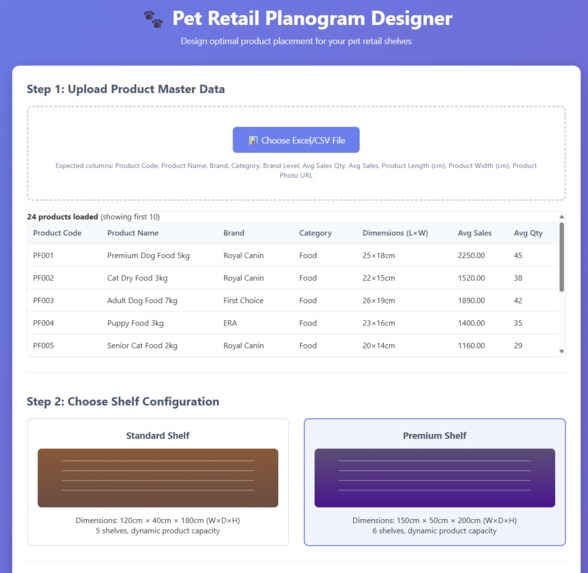
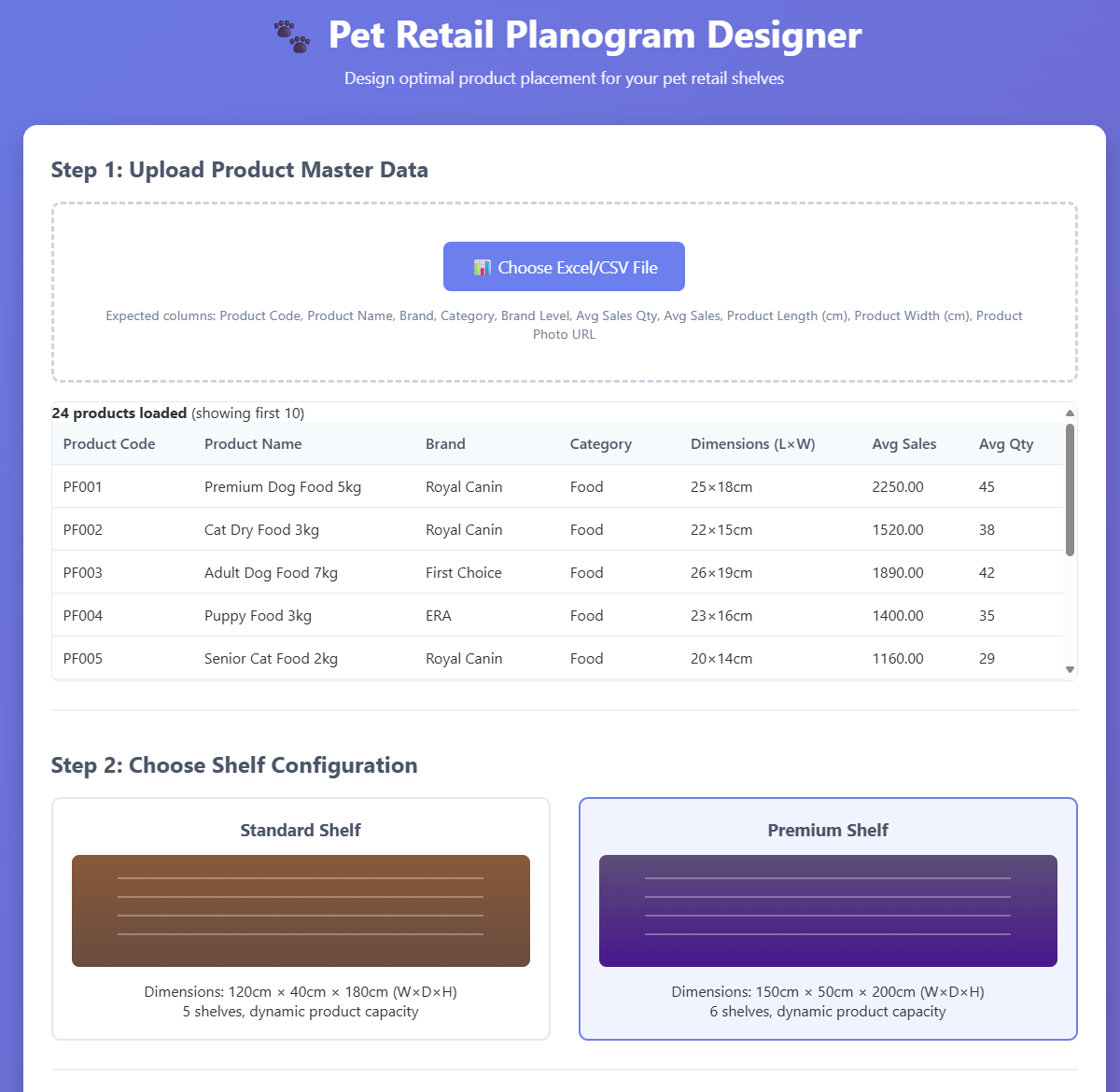
Pet Planogram_Step 1,2
-
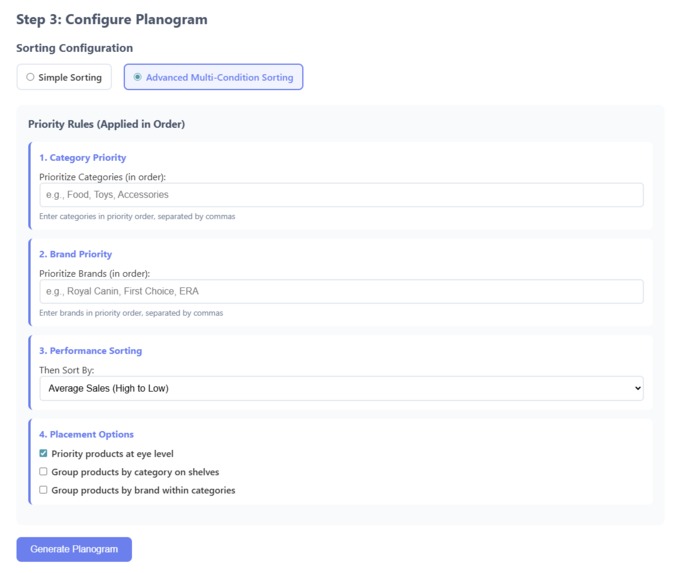
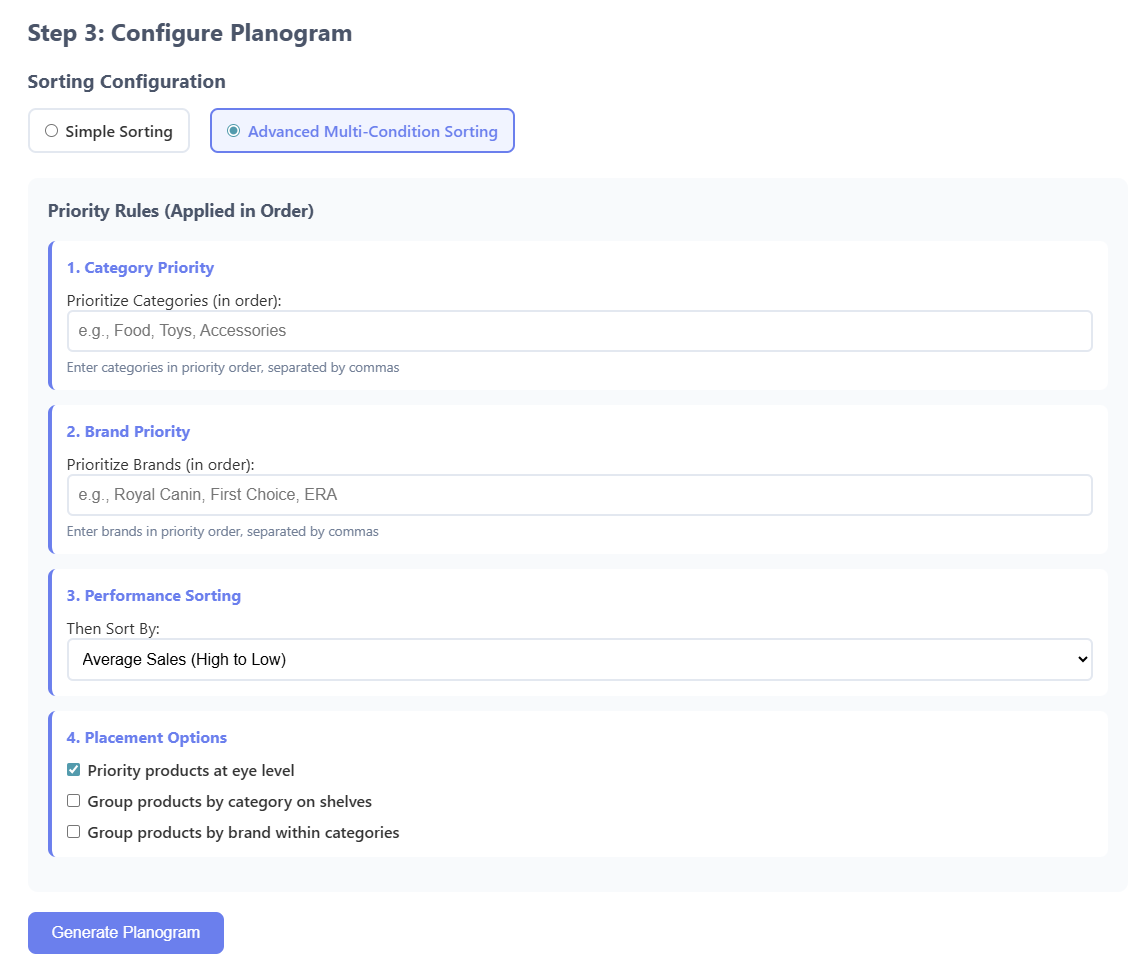
Pet Planogram_Step 3
-
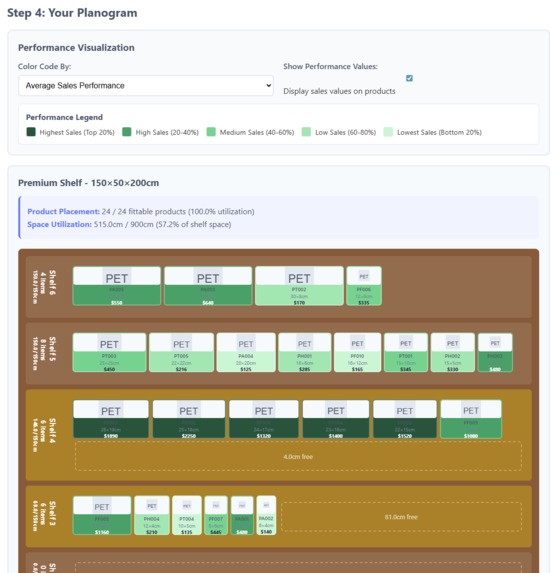
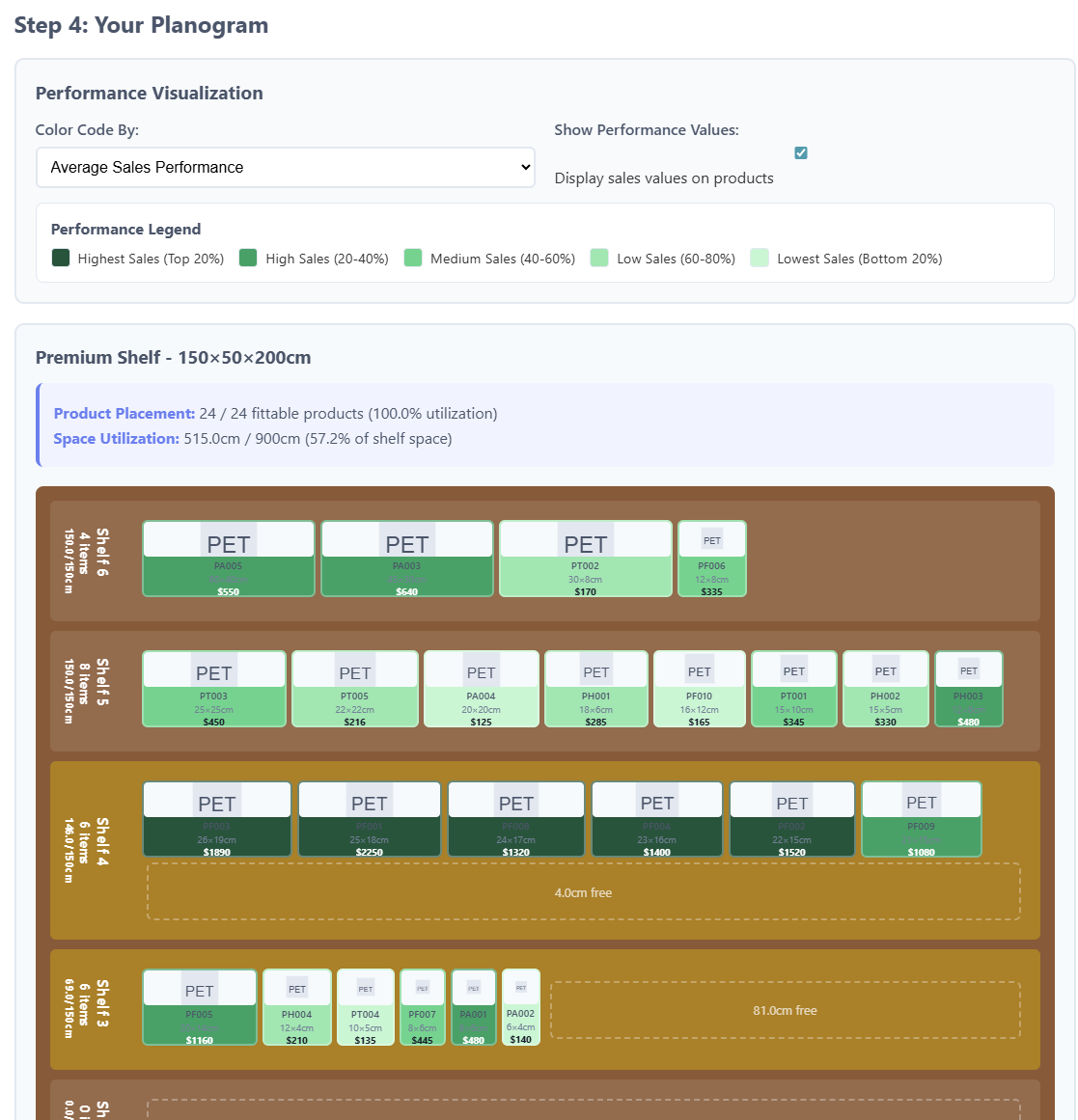
Pet Planogram_Step 4
-
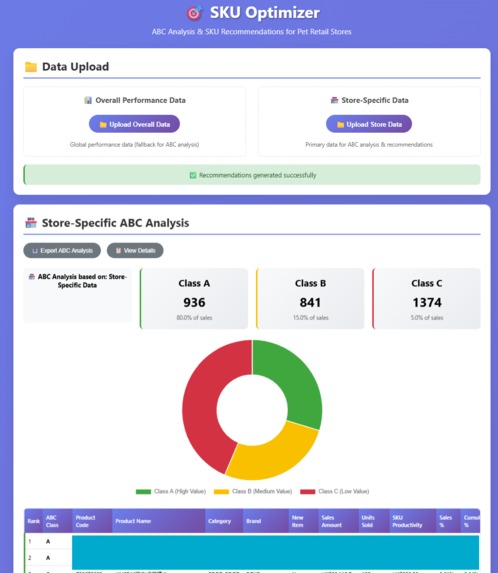
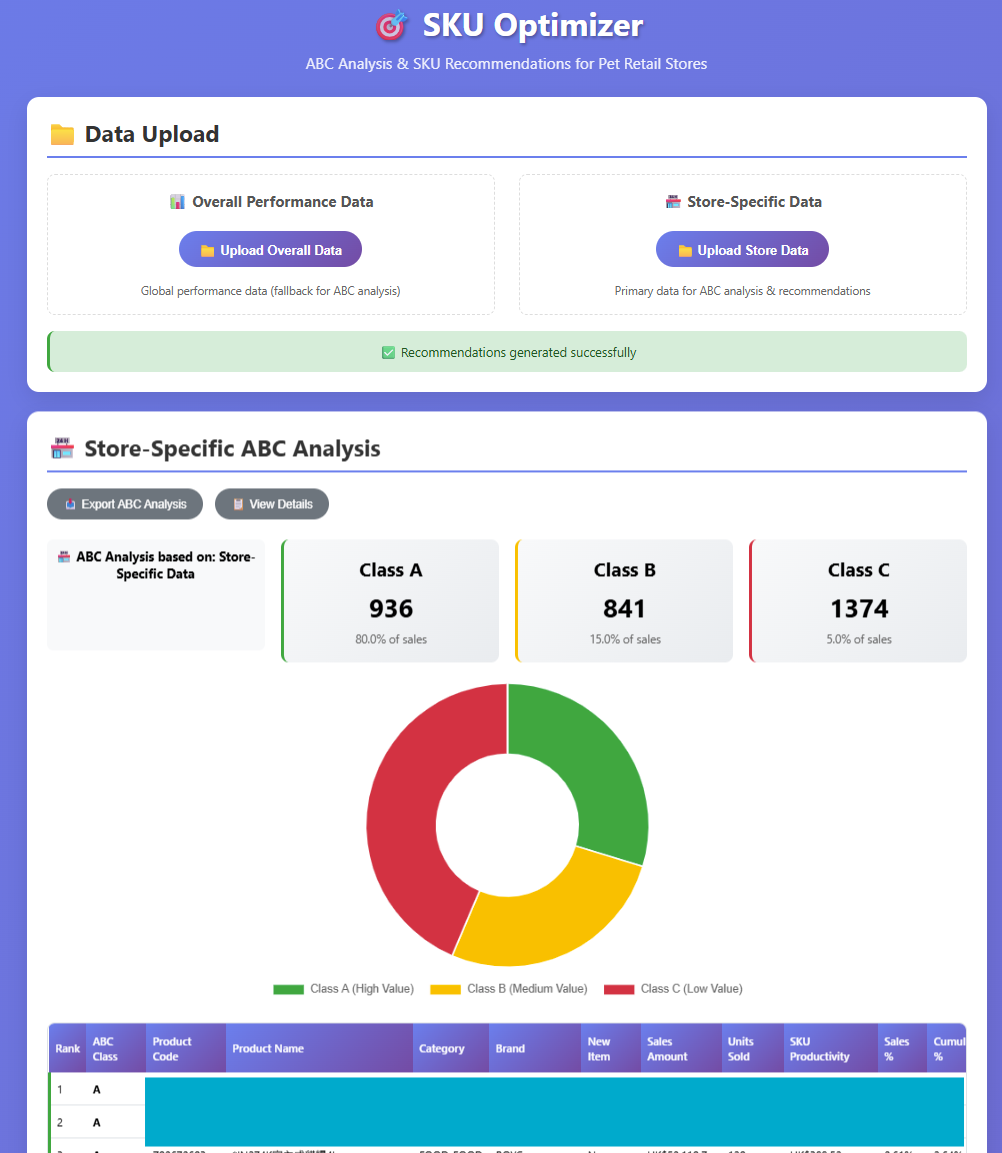
SKU optimiser_Store-Specific ABC Analysis
-
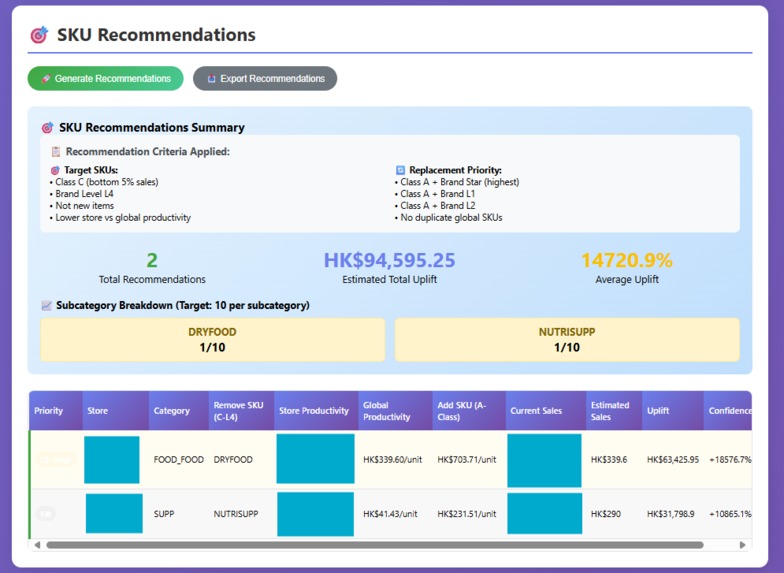
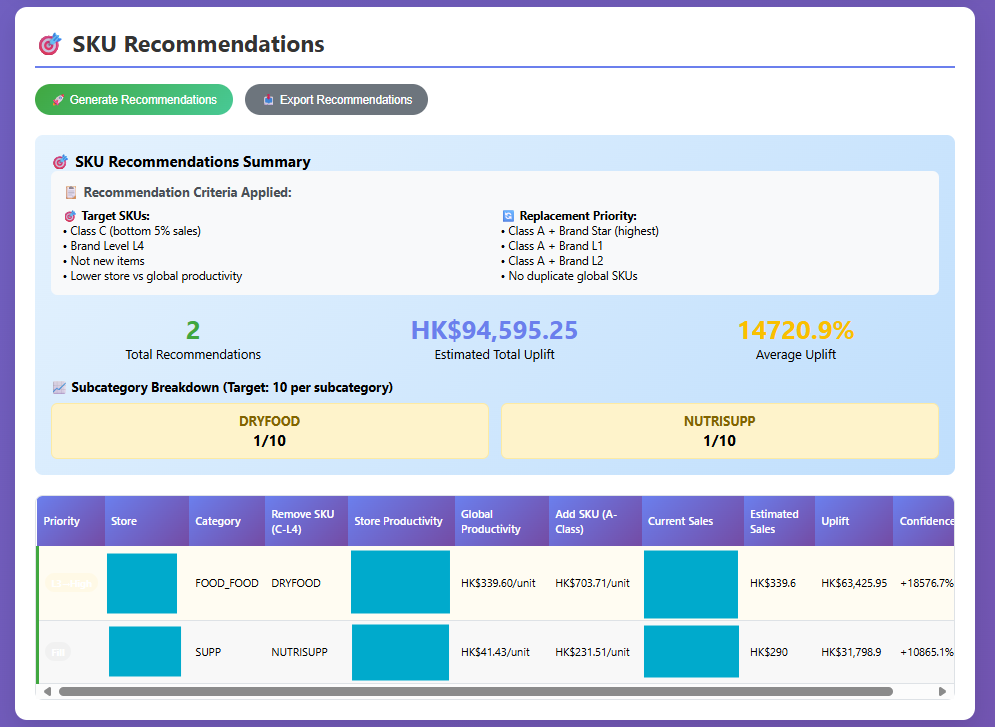
SKU optimiser_SKU Recommendation
-
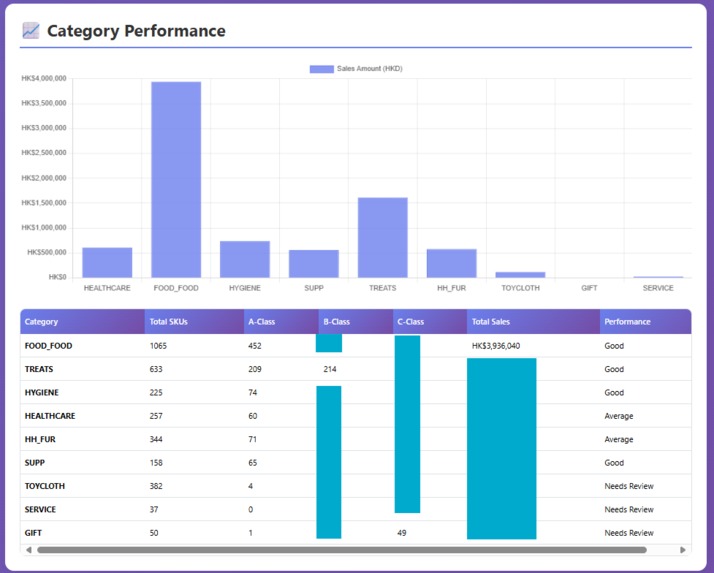
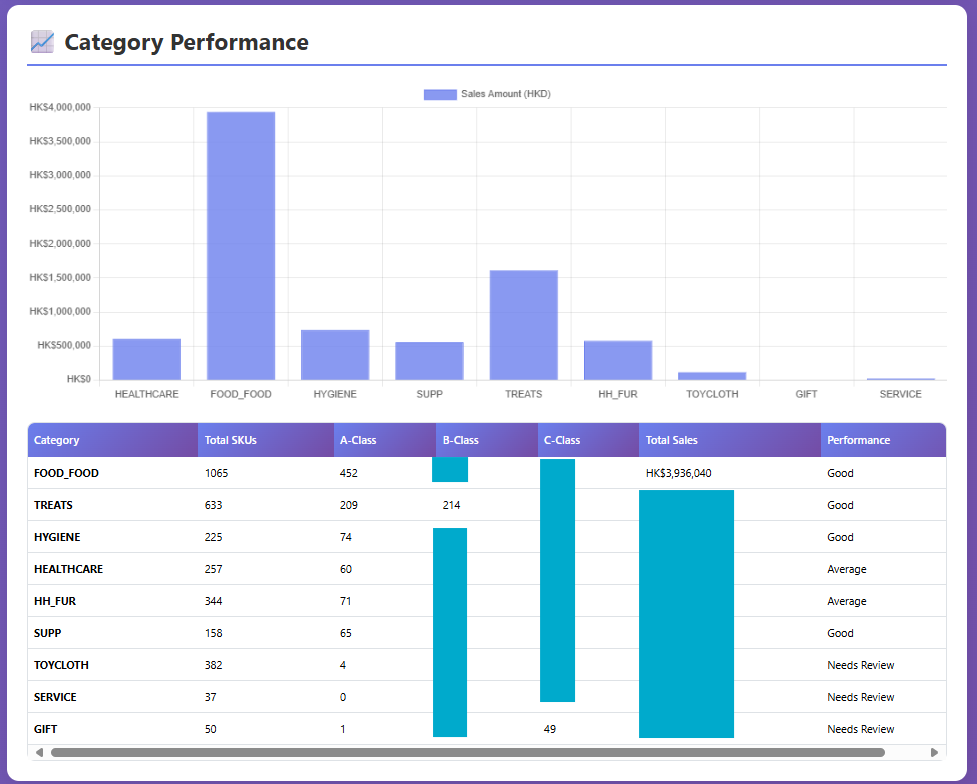
SKU optimiser_Category Performance
-
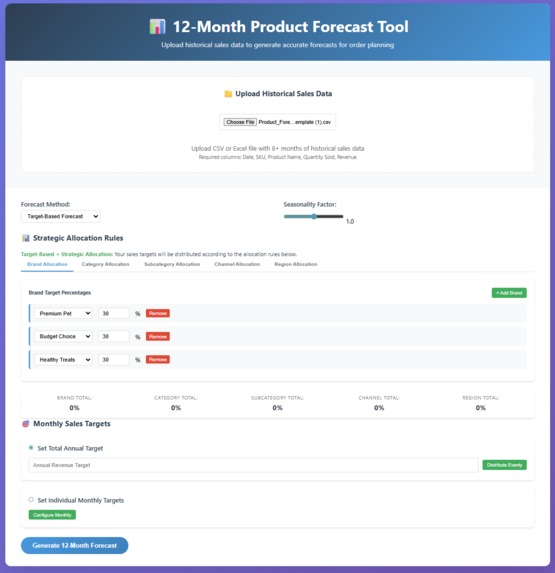
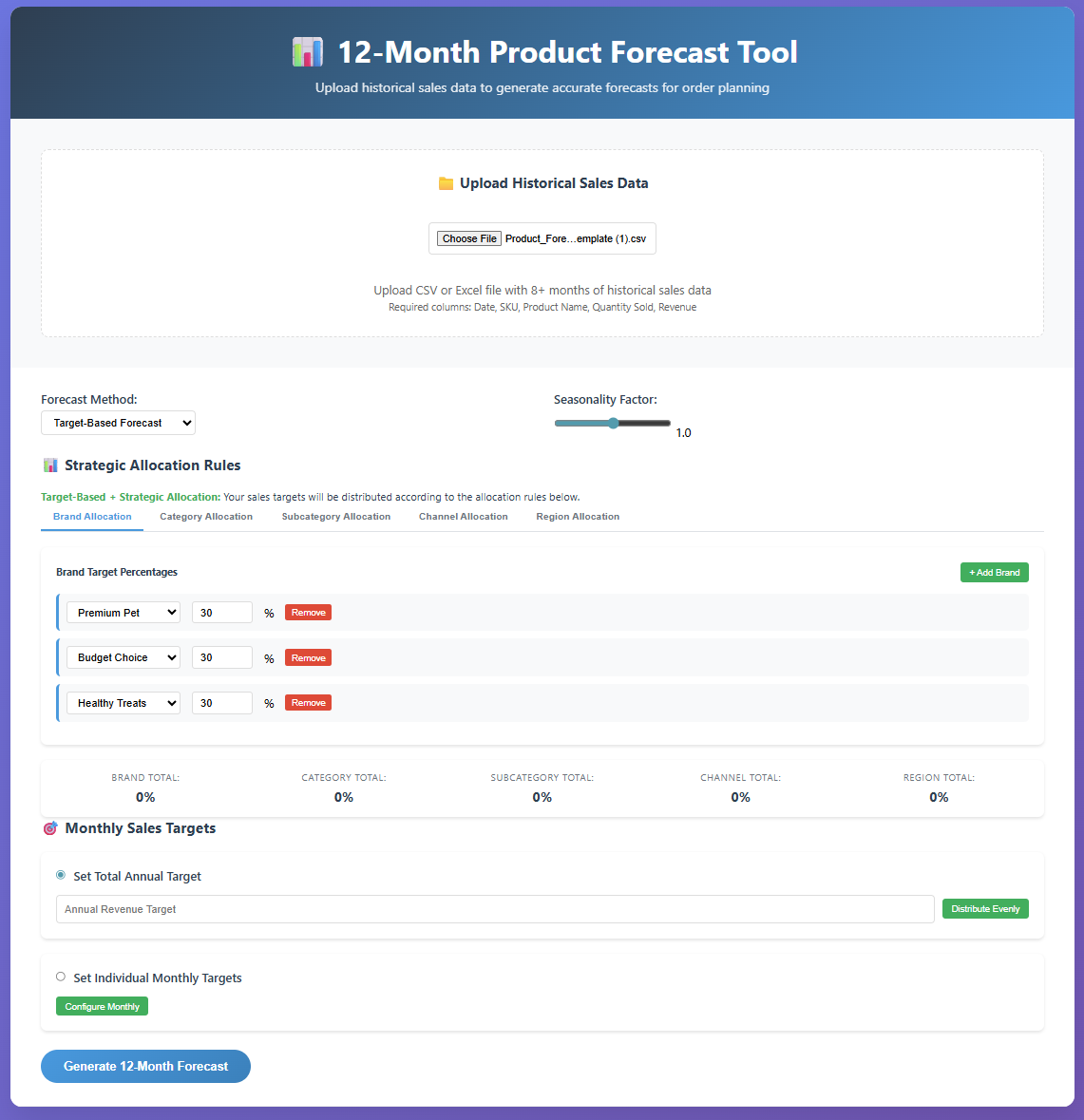
12M Forecast_Target setting
-
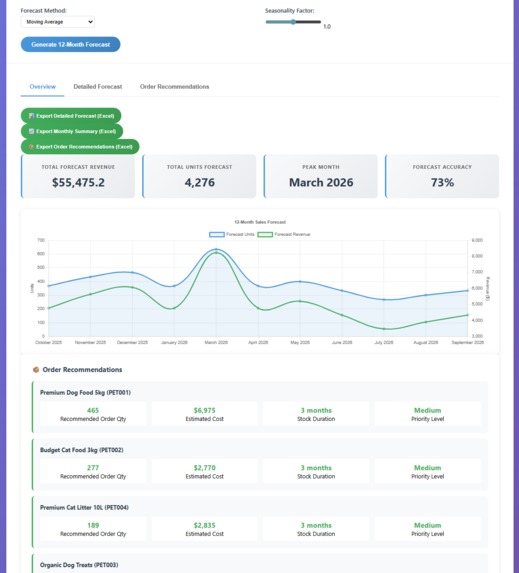
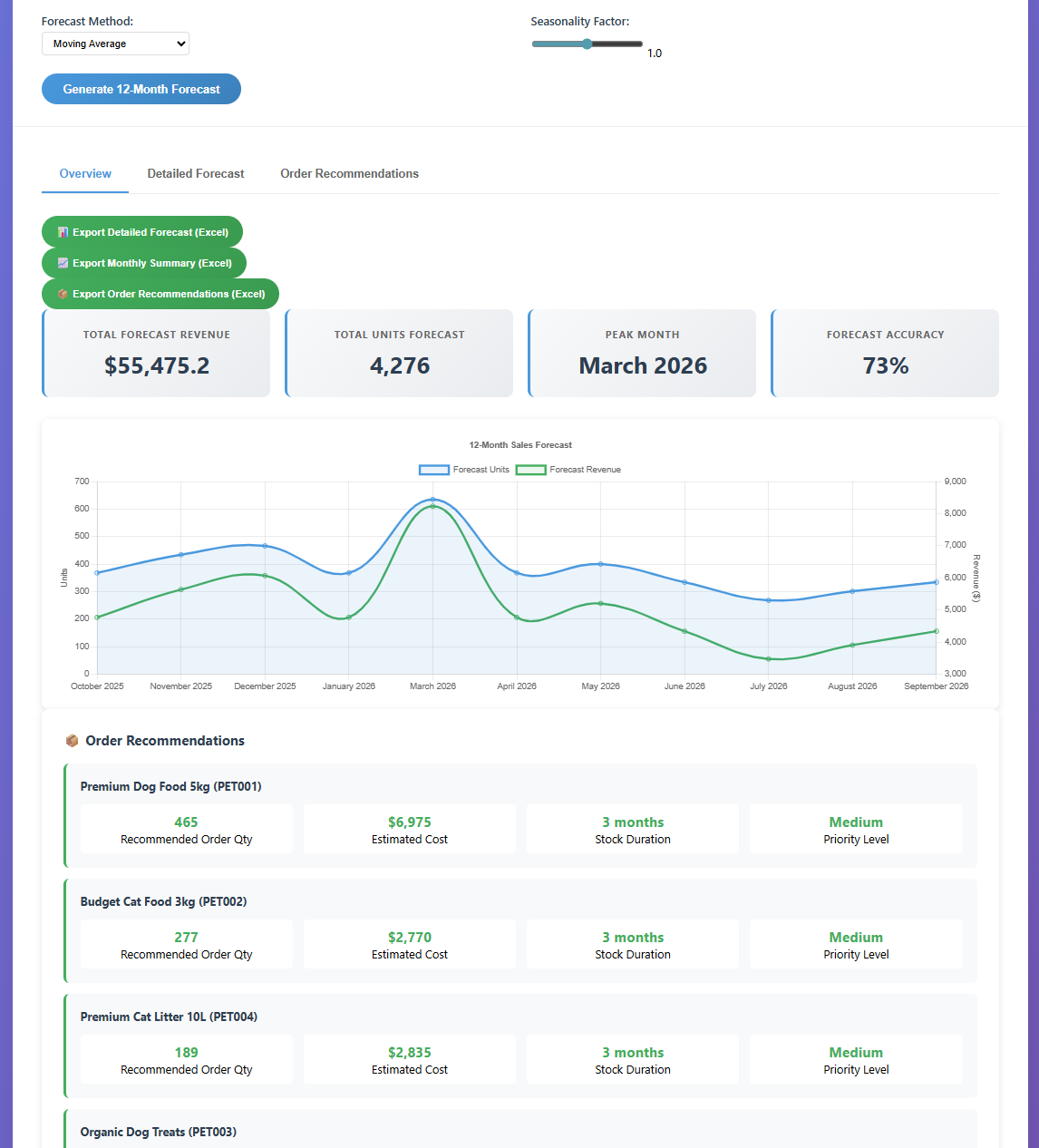
12M Forecast_Moving Average Result
Retail_ShelfSense
SKU Optimizer, 12-Month Product Forecast Tool, and Pet Retail Planogram Designer
Inspiration
Brick-and-mortar pet retailers face three linked operational gaps: unclear core product portfolios across stores, poor demand visibility that causes stockouts or excess inventory, and suboptimal shelf layouts that reduce conversion. These gaps increase inventory carrying costs, depress turnover, and prevent local stores from quickly capitalizing on high-performing national SKUs.
What it does
A browser-based suite of three integrated web apps that convert sales data into an operational product plan for each store.
- SKU Optimizer identifies store-specific hero products and underperforming SKUs, producing prioritized, no-duplicate replacement suggestions and projecting estimated uplift with graphs.
- 12-Month Product Forecast Tool converts historical sales into monthly forecasts and order suggestions by SKU, brand, category, subcategory, and store target, enabling rapid scenario planning across many simultaneous targets.
- Pet Retail Planogram Designer turns the product plan into store-level planograms that reflect each store’s targets and preferences and maximizes shelf space and sales efficiency with minimal inputs.
How we built it
Three-Step Operational Workflow Step 1 Use SKU Optimizer to analyze the current situation and define a core portfolio
- Run store-specific ABC analysis to identify Class A hero products and reveal Class C underperformers.
- Benchmark underperforming SKUs against other stores’ high-performing SKUs within the same category to find best-fit replacements.
- Recommend a replacement SKU for each candidate, enforce no-duplicate recommendations across stores, estimate sales uplift, and visualize impact with charts and summary metrics.
- Produce a ranked core-portfolio per store and a consolidated global hero SKU list for rollout. Step 2 Use 12-Month Product Forecast Tool to build the sales plan
- Generate 12-month forecasts using Moving Average, Exponential Smoothing, Seasonal Decomposition, or Trend Analysis.
- Create scenario forecasts and order suggestions by SKU, brand, category, subcategory, and store sales targets.
- Apply safety stock, lead-time assumptions, and confidence weighting to convert forecasts into prioritized order recommendations.
- Automate what is otherwise a tedious manual calculation so complex target mixes are computed in minutes. Step 3 Implement the product plan in stores using Planogram Designer
- Import hero SKUs and forecasted replenishment plans per store.
- Apply store-specific targets and preferences such as eye-level priority, brand prominence, and category mix.
- Generate shelf-accurate planograms automatically from the product master by setting a few criteria; output high-quality PNGs and Excel position lists for store execution.
- Maximize shelf utilization, brand sales, and overall sales efficiency while saving merchandiser time.
How Kiro Was Leveraged
Kiro translated merchandising heuristics into deterministic rules and UI flows. Kiro codified the brand-level priority sequence, productivity-gap sorting, no-duplicate recommendation constraint, uplift/confidence scoring, and scenario parameter choices for forecasts. Kiro’s guidance reduced iteration time on matching logic, new-item handling, and multi-store aggregation.
Challenges we ran into
SKU Optimizer Upload Limits and Fix
- Challenge: The app initially could not handle uploading large volumes of historical data for multi-store analysis.
- Action: Requested Kiro to split the upload flow into two clear inputs: Global Data Upload for all-store aggregated benchmarks and Store-Specific Data Upload for the target store’s historical.
- Result: Improved scalability and clarity; users can now provide global benchmarks and per-store files separately so ABC classification and benchmarking work reliably. 12-Month Forecast Tool Targeting Limitations and Fix
- Challenge: The tool could not generate SKU forecasts when multiple, simultaneous targets (brand, category, subcategory, store) were applied.
- Action: Kiro revised the forecast parameter engine to accept and apply multiple criteria concurrently and updated the scenario computation pipeline.
- Result: The app now produces multi-dimensional forecasts and order recommendations in minutes, making complex planning feasible for merchandising teams. Pet Planogram Space Optimization and Fix
- Challenge: The initial planogram output left suboptimal unused shelf space and did not maximize product placement efficiency.
- Action: Asked Kiro to implement improved space-packing and shelf allocation logic and tune placement rules for eye-level priority and product dimensions.
- Result: Shelf layouts are now optimized with remaining free space reduced, improving real-world implement ability and maximizing SKU exposure.
Accomplishments that we're proud of
- Single-page web apps runnable in any modern browser with CSV/XLSX upload and client-side processing.
- Deterministic rule engine for ABC classification, productivity calculation, replacement matching, and duplicate avoidance.
- Lightweight statistical forecasting algorithms with configurable seasonality and confidence scoring.
- Interactive charts, estimated-uplift visualizations, exportable Excel reports, and PNG planogram images for operational handoff.
- Optimized for thousands of rows with progressive validation and clear error feedback.
What's next for Retail_ShelfSense
- Rapid identification of hero SKUs and replacement of low-productivity items to increase category sales and store productivity.
- Faster, more accurate forecasting across multiple target dimensions to reduce stockouts and excess inventory.
- Time savings for merchandisers through automated planogram generation and improved shelf productivity for featured SKUs.
- Key KPIs: A-class SKU penetration by category, forecast MAPE, stockout rate, inventory days of supply, inventory turnover, and measured sales uplift after implementation.
Built With
- kiro

Log in or sign up for Devpost to join the conversation.