-
-
ChannelNewsAsia
Elevator pitch
We solve one of the primary obstacles to the adoption of CBDC as a replacement for physical cash: a cash-like payment experience that is resilient in any situation.
Inspiration
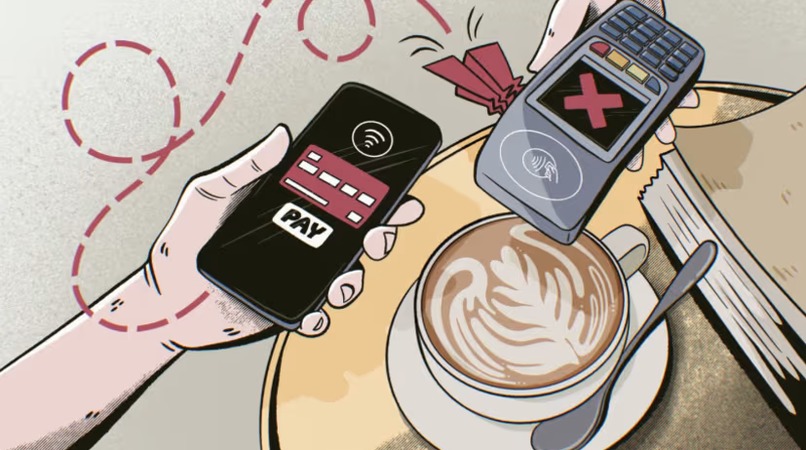
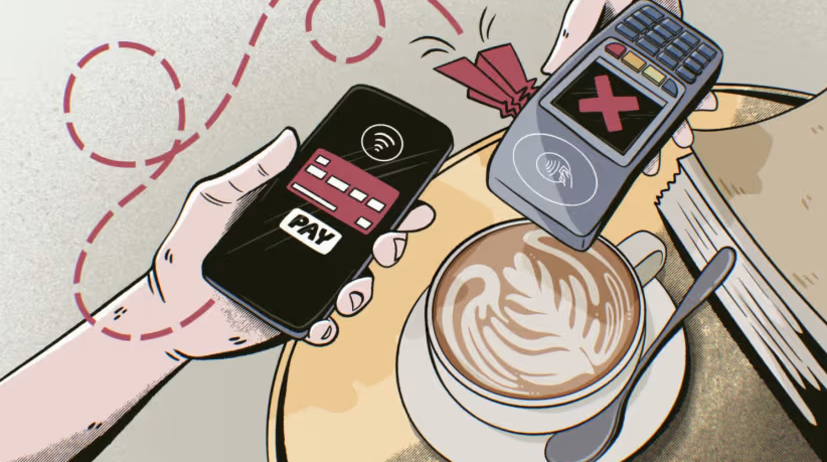
ChannelNewsAsia: "DBS and Citibank digital banking and e-payments services were down for hours this month. With no foolproof way to prevent banking and e-payment outages, what can businesses and consumers do?" [^3]
CBDC is built to replace M0 physical cash for daily use. Therefore, the challenge is to provide:
a “cash-like payment experience, the ability to handle peak traffic as well as connectivity breaks or offline”, Bank of International Settlement, and
an “enhanced operational resilience of the payment system, designed with offline capability, that allows some payments to be made without internet access and can be executed during natural disasters or other large disruptions”, US Federal Reserve.
What it does
Our mobile payment system is designed to address this challenge by functioning both online, similar to existing QR code solutions, and offline to effectively handle situations such as peak traffic congestion, connectivity breaks, and system disruptions.
How we built it
XRPL is not designed to handle offline payments as ledgers are on the blockchains. An external mechanism is needed to avoid overspending or double-spending during offline situations.
Offline Mechanism:
- QR-BLE-QR, an NFC replacement, uses a combination of QR code and BLE with fast speed and supports all smartphones (iOS and Android OS).
- Offline DLT, having users carry their own ledger for verification offline, and two trusted systems to avoid the ledger from illegal modifications. Explanation video: https://youtu.be/-xobvJu42W4
Intellectual Property:
- US Patent Pending 16/681,365
- China Patent Pending 201910340975.1
- Singapore PCT/CN2020/078535
In a typical online payment, the user's smartphone displays a QR code and is scanned by the POS device. It is then directed to the payment server and completes the transactions.
When there is no Internet, the payment server is busy, or the transaction value is small, transactions are done offline through direct communication between the user's smartphone and POS device using a QR code and BLE (Bluetooth Low Energy).
Based on payment info such as Invoice ID, r-address, and $ amount, the user will send a signed XRP “Check” with a ticket of a pre-registered sequence number to the POS device. The “Check” will be created on a blockchain and cashed once the Internet is available.
We don’t use “direct payment” as it leaves no trace of failed transactions on the blockchain if the user does not have sufficient funds; on the other hand, “Check” can be created with no restriction, a record to be traced, and re-cashing when the funds become available.
Accomplishments that we're proud of
- Our mobile payment system supports all smartphones (iOS and Android OS) without a need for NFC or secure elements.
- Online to Offline energy saving per transaction is 6.49 Wh or 2.4 grams of CO2 emission [^1].
- We could avoid 240 kilotonnes of CO2 emission in 2022 if small transactions were done offline [^2].
- Significant savings on payment server investment and 7/24 maintenance cost as small transactions can be done offline.
Awards:
- 2020: UK Juniper Research Gold Award - Mobile Payment
- 2021: HK Fintech Award: Offline DLT - CBDC
- 2022: HK ICT Fintech Award: Offline DLT CBDC
- 2022: CBDC Finalists by Hong Kong Monetary Authority
Milestones of CBDC development:
- 2020: Integrated with Paypal wallets
- 2020: Sandbox of e-Yuan CBDC with HSBC Bank
- 2022: Entitled to participate in Rail 2 - e-HKD CBDC pilot
- 2023 Oct: Mr. He Lifeng, the Vice Premier of China acknowledged our technology
- 2023 Oct: PBOC, the Central Bank of mainland China acknowledged our technology.
- 2023 Oct: MOU with Asian Digital Bank to explore Offline DLT with XRPL (https://asiadb.com/)
What's next
Ripple is the founding member of ISO20022.
A huge opportunity as led by SWIFT, is that all legacy banking payment systems will be converted to ISO20022 by 2025.
Footnotes:
- [^1] Source: Deutsche Bank, 2021: assuming all credit card transactions are done online
- [^2] Source: Statista 2023, the retail payment transaction volume in 2022 is $2T and an average of $20 per transaction is assumed.
- [^3] https://www.channelnewsasia.com/singapore/banking-outages-epayment-service-disruption-big-read-3879661
Demo
The demo requires POS hardware. Due to time limitations, we won't be able to ship out POS devices for judges to test out our system.
In the "Try it out" links, it contains only some of the codes for our development.
The demo can only be shown on YouTube video above.


Log in or sign up for Devpost to join the conversation.