-
-
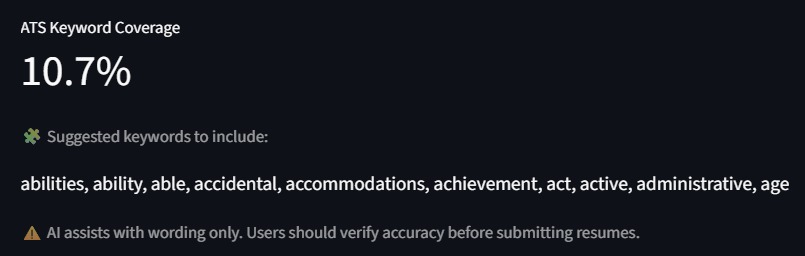
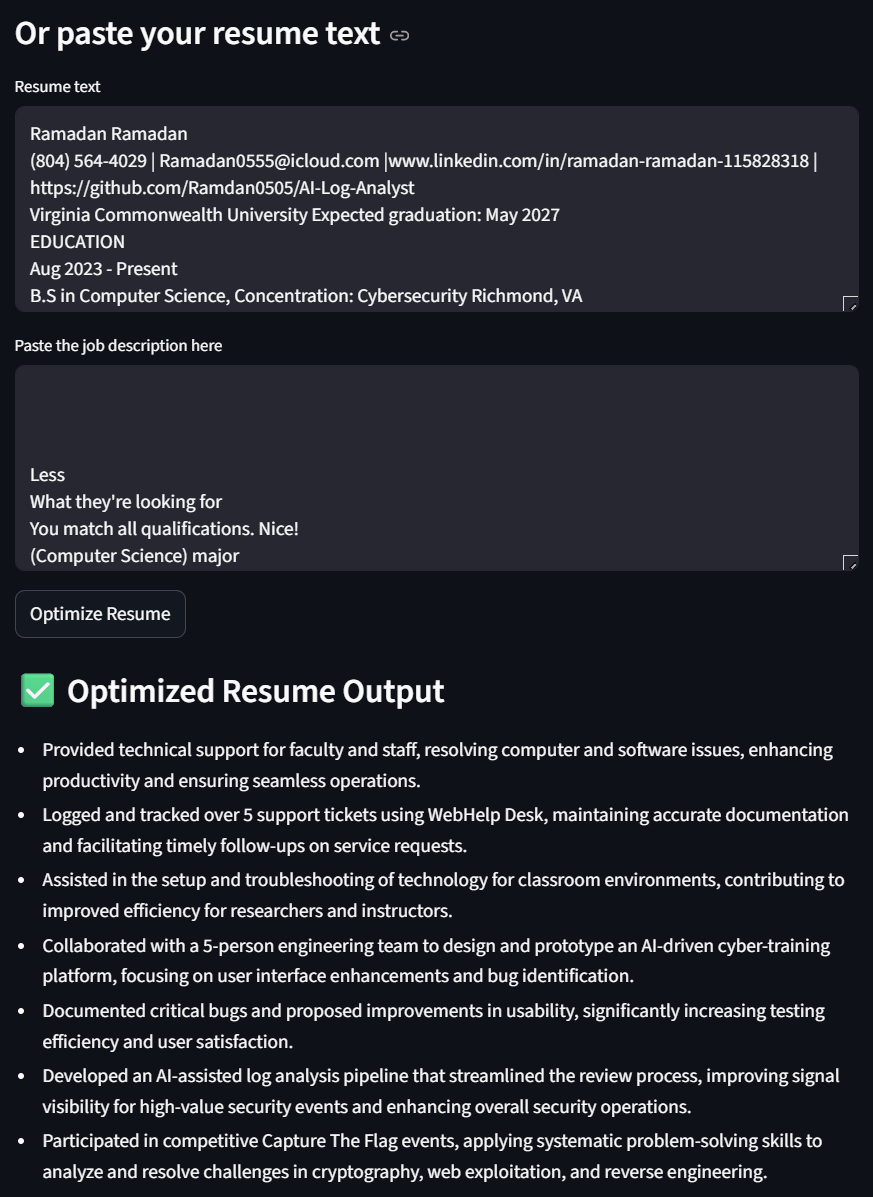
ATS-style keyword coverage and suggested missing terms to improve resume alignment.
-
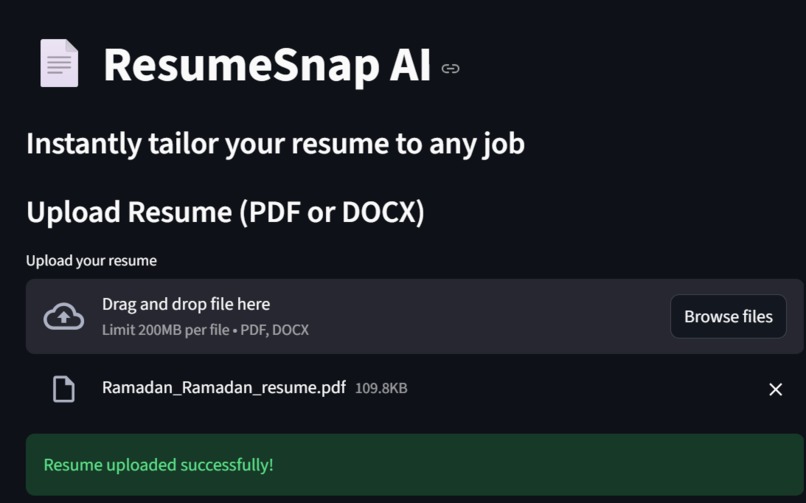
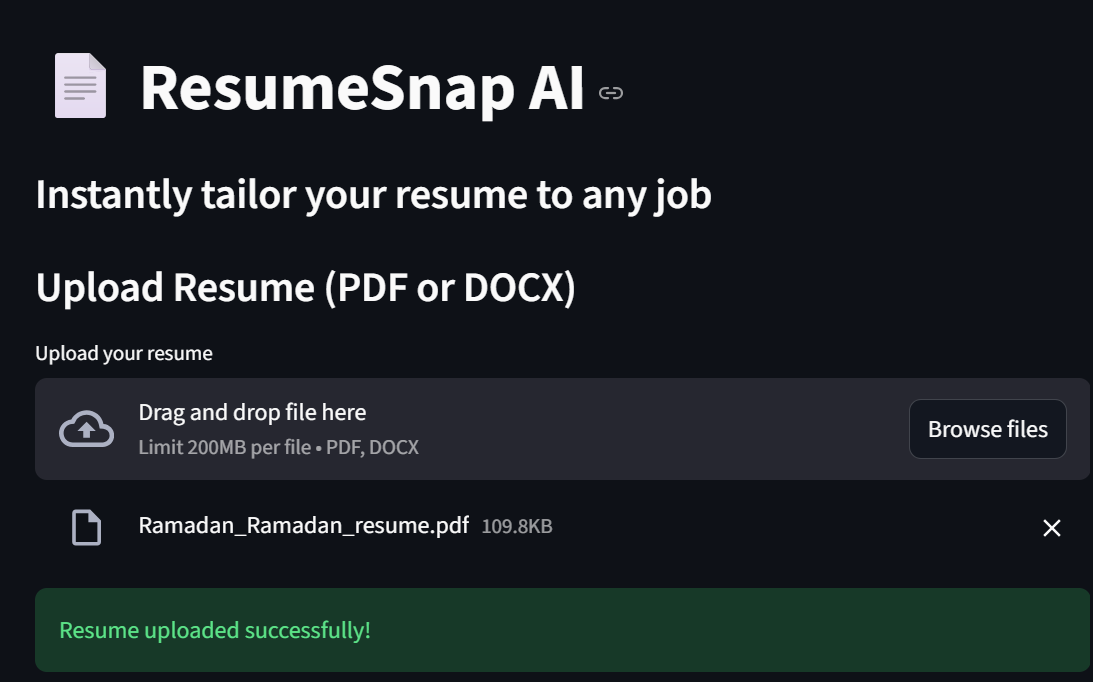
Upload a resume in PDF or DOCX format, or paste text directly for instant analysis.
-
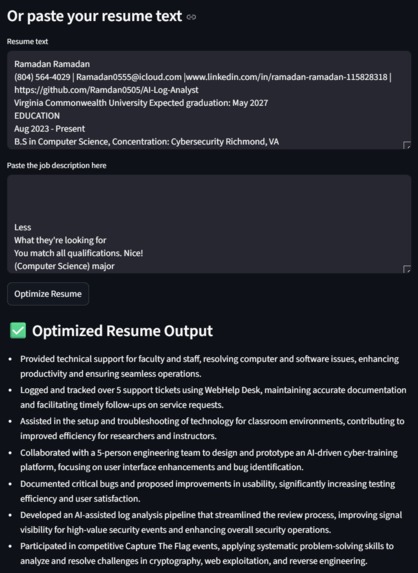
AI-generated resume bullet points tailored to a specific job description.
Inspiration
Job seekers—especially students and early-career professionals—often apply to dozens of roles, each requiring a tailored resume. Manually rewriting resume bullet points for every application is time-consuming, frustrating, and error-prone. Many applicants also struggle to understand how applicant tracking systems (ATS) screen resumes before a human ever sees them.
What it does
ResumeSnap AI helps job seekers instantly tailor their resumes to specific job descriptions. Users can upload a resume (PDF or DOCX) or paste text directly, then paste a job description. The system rewrites resume bullet points to better match the role and provides ATS-style keyword analysis, including keyword coverage percentage and suggested missing terms.
How we built it
We built ResumeSnap AI using Python and Streamlit for a fast, reliable user interface. Resume text is extracted from uploaded PDF and DOCX files and passed through a structured AI prompt designed specifically for resume optimization. We also implemented lightweight keyword analysis to provide quantitative feedback on resume-to-job alignment.
Challenges we ran into
One challenge was balancing feature richness with demo reliability in a 24-hour timeframe. We intentionally avoided fragile features like PDF layout reconstruction or OCR and instead focused on robust text extraction and a single, consistent processing pipeline.
What we learned
We learned the importance of making thoughtful engineering tradeoffs under time constraints. A clear problem, a working demo, and a strong user story matter more than overengineering. We also gained experience integrating AI responsibly by emphasizing accuracy, transparency, and user verification.
What's next
Future improvements could include deeper ATS scoring, resume formatting suggestions, employer-specific templates, and expanded support for different industries and experience levels.
Built With
- openai-api
- pdfplumber
- python
- python-docx
- streamlit


Log in or sign up for Devpost to join the conversation.