Project Story – ResumeScore Pro
Inspiration
The inspiration behind ResumeScore Pro came from a common problem faced by students and job seekers: creating a resume that successfully passes Applicant Tracking Systems (ATS).
Many candidates have the right skills and qualifications but still struggle to get shortlisted because their resumes may lack relevant keywords, strong action verbs, measurable achievements, or an ATS-friendly format.
We wanted to build a tool that helps candidates identify these weaknesses and improve their resumes before applying for jobs. Our goal was to make resume optimization easier, faster, and more accessible.
What We Learned
While developing ResumeScore Pro, we learned how resume screening works and why keyword matching and proper formatting are important in modern recruitment.
We also explored:
- React and TypeScript for building interactive user interfaces.
- Resume text analysis using regular expressions and rule-based logic.
- Keyword extraction and comparison between resumes and job descriptions.
- Resume scoring based on multiple evaluation criteria.
- Designing a clean, user-friendly dashboard.
This project helped us understand how frontend development and text-processing techniques can be combined to solve a real-world problem.
How We Built It
We built ResumeScore Pro as a client-side web application using React, TypeScript, and Vite.
The application analyzes resume content using rule-based logic, regular expressions, and keyword matching techniques. It provides several features:
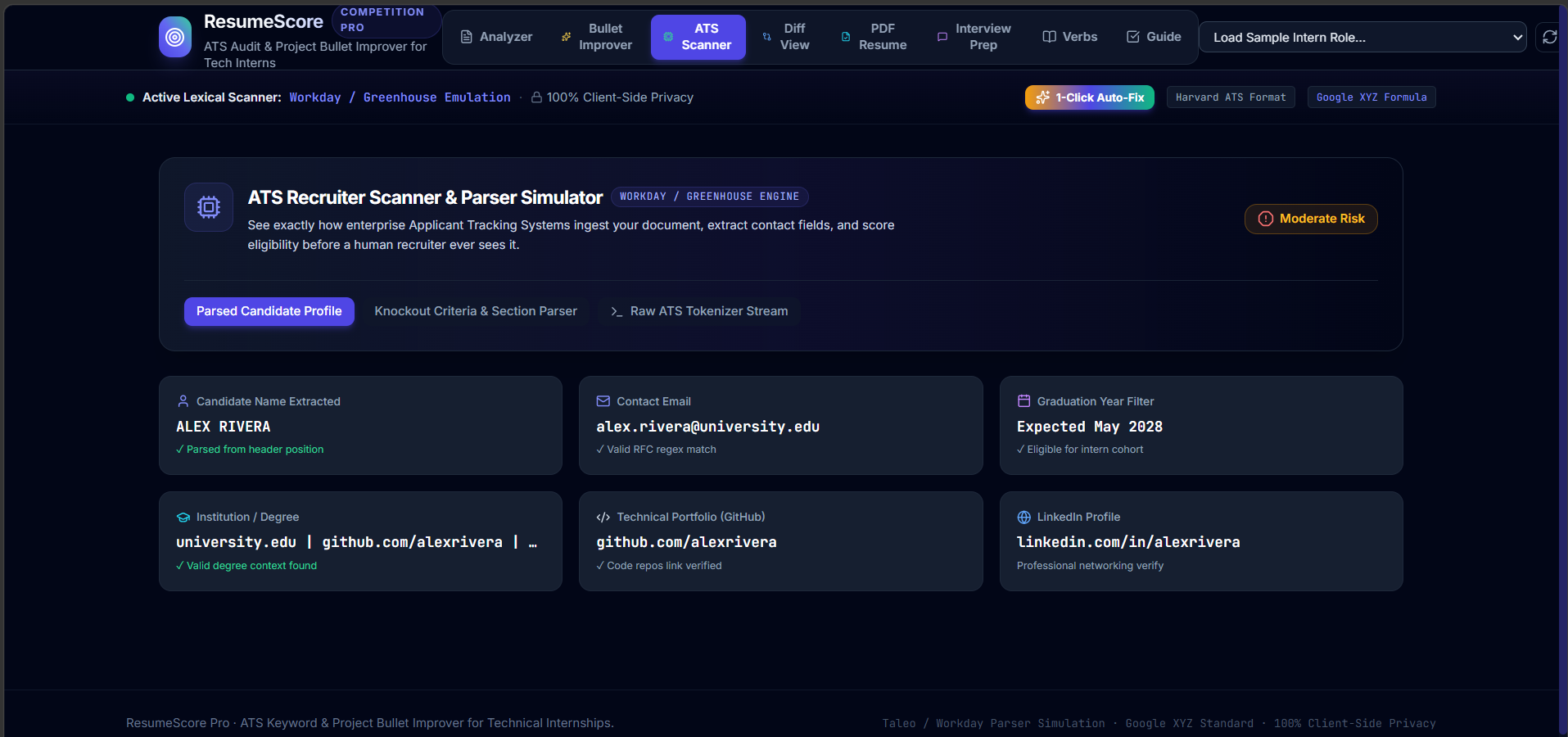
- ATS Resume Scanner: Simulates resume parsing and checks important information such as contact details, education, and portfolio information.
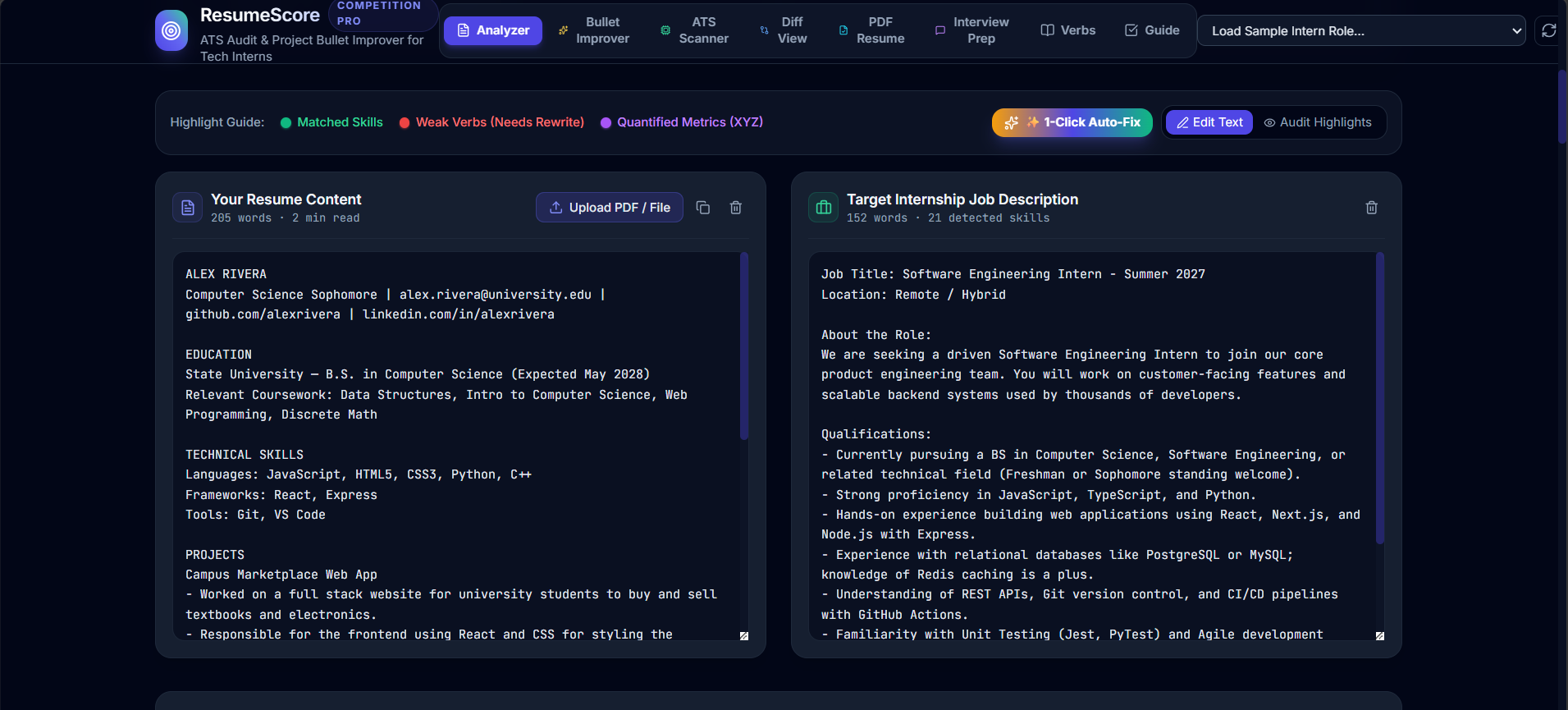
- Keyword Density Analyzer: Compares resume keywords with a job description and highlights missing, underrepresented, or overused keywords.
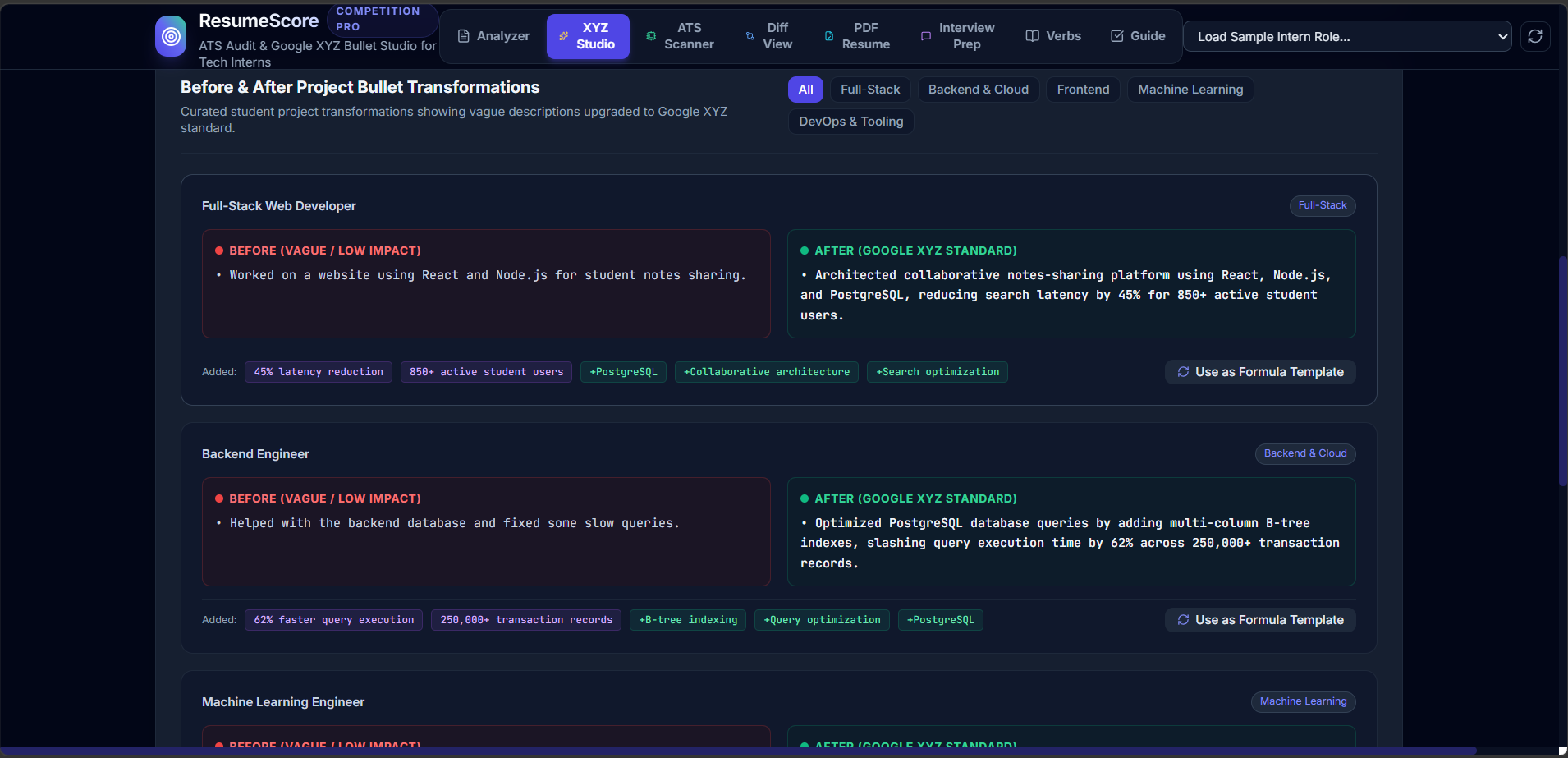
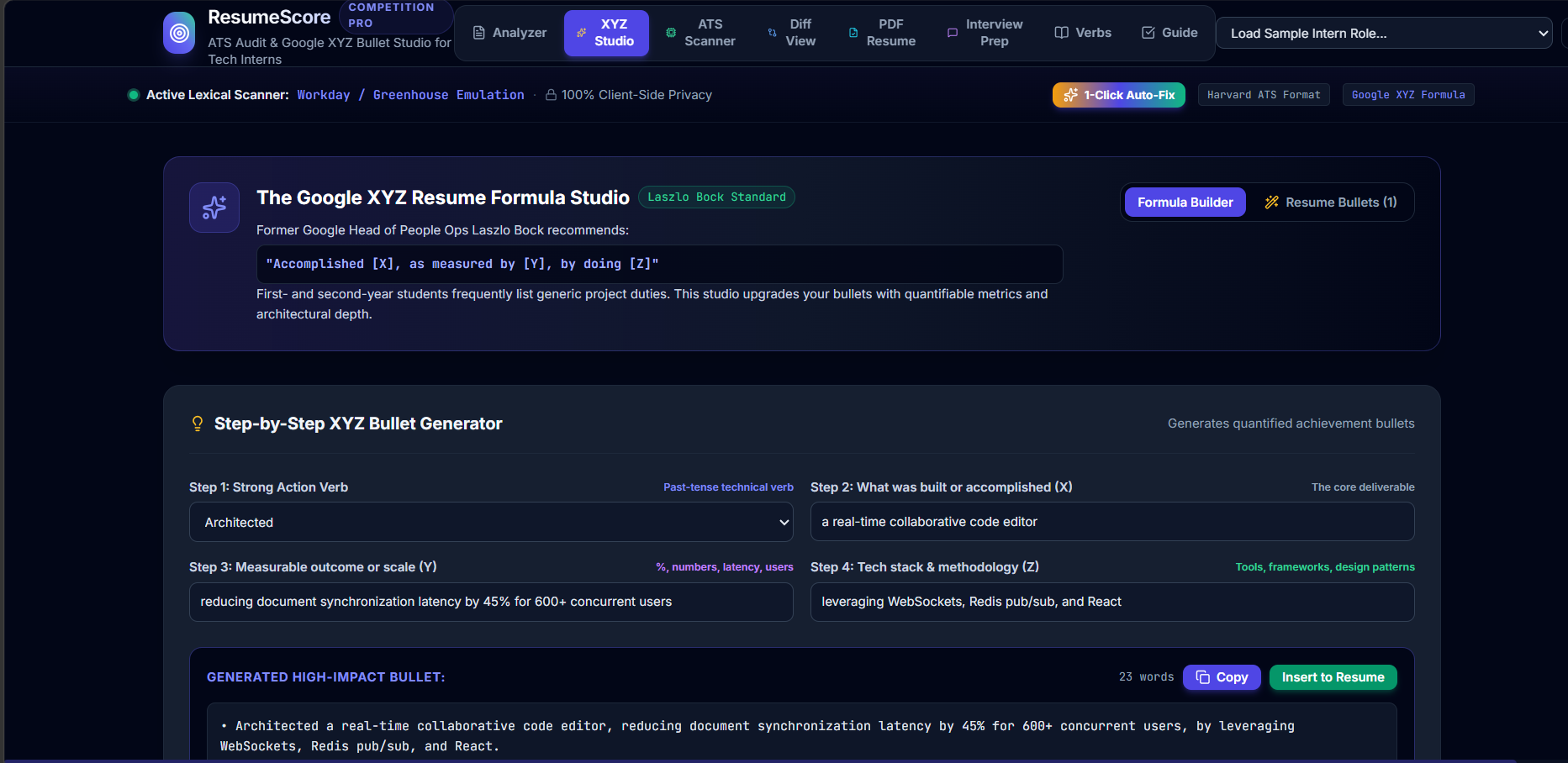
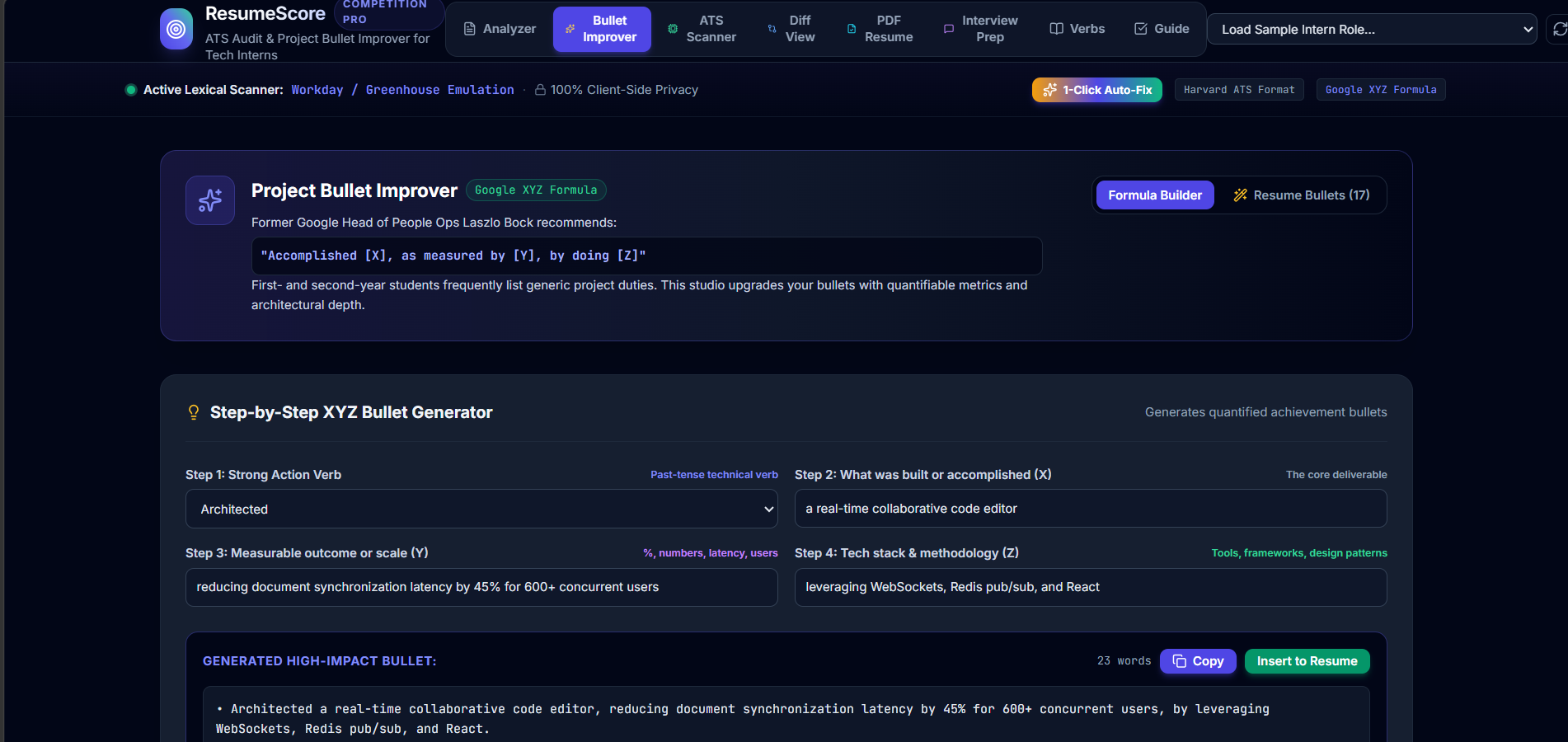
- Bullet Point Improver: Helps users create stronger resume bullet points using the Google XYZ formula: Accomplished X, as measured by Y, by doing Z.
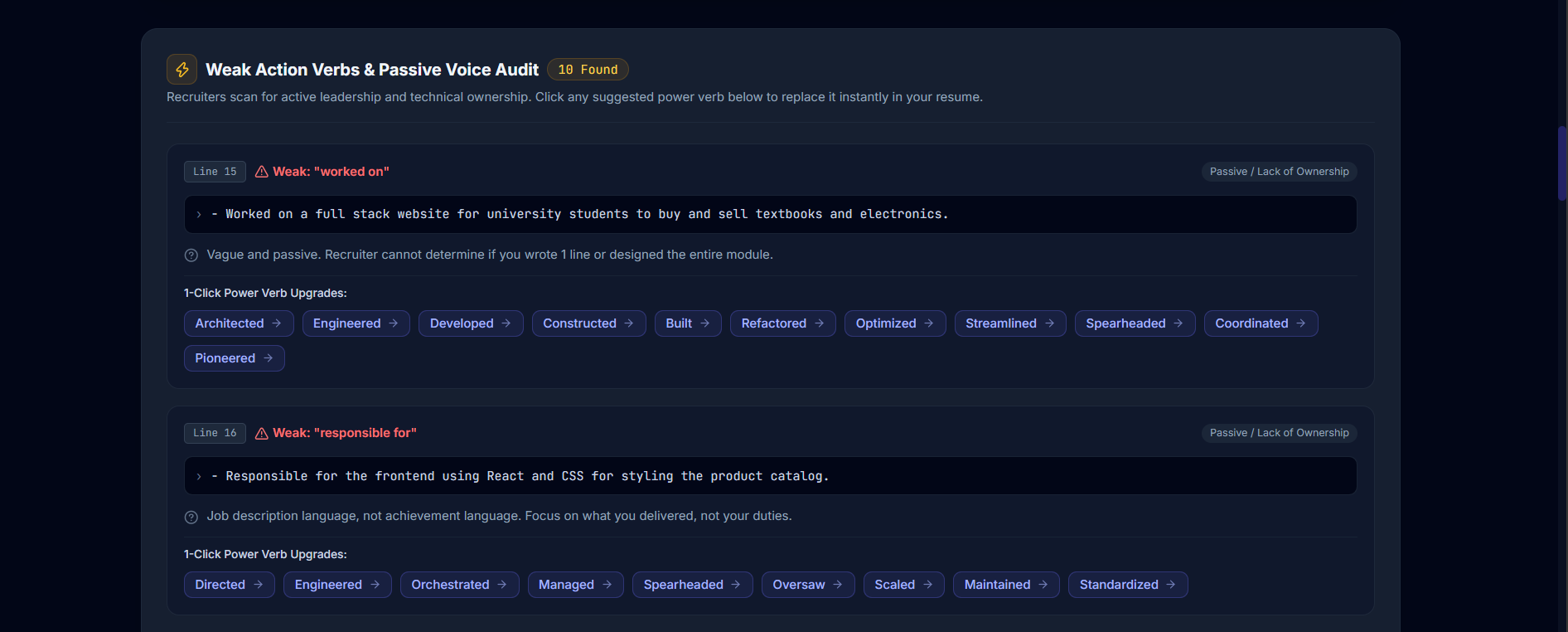
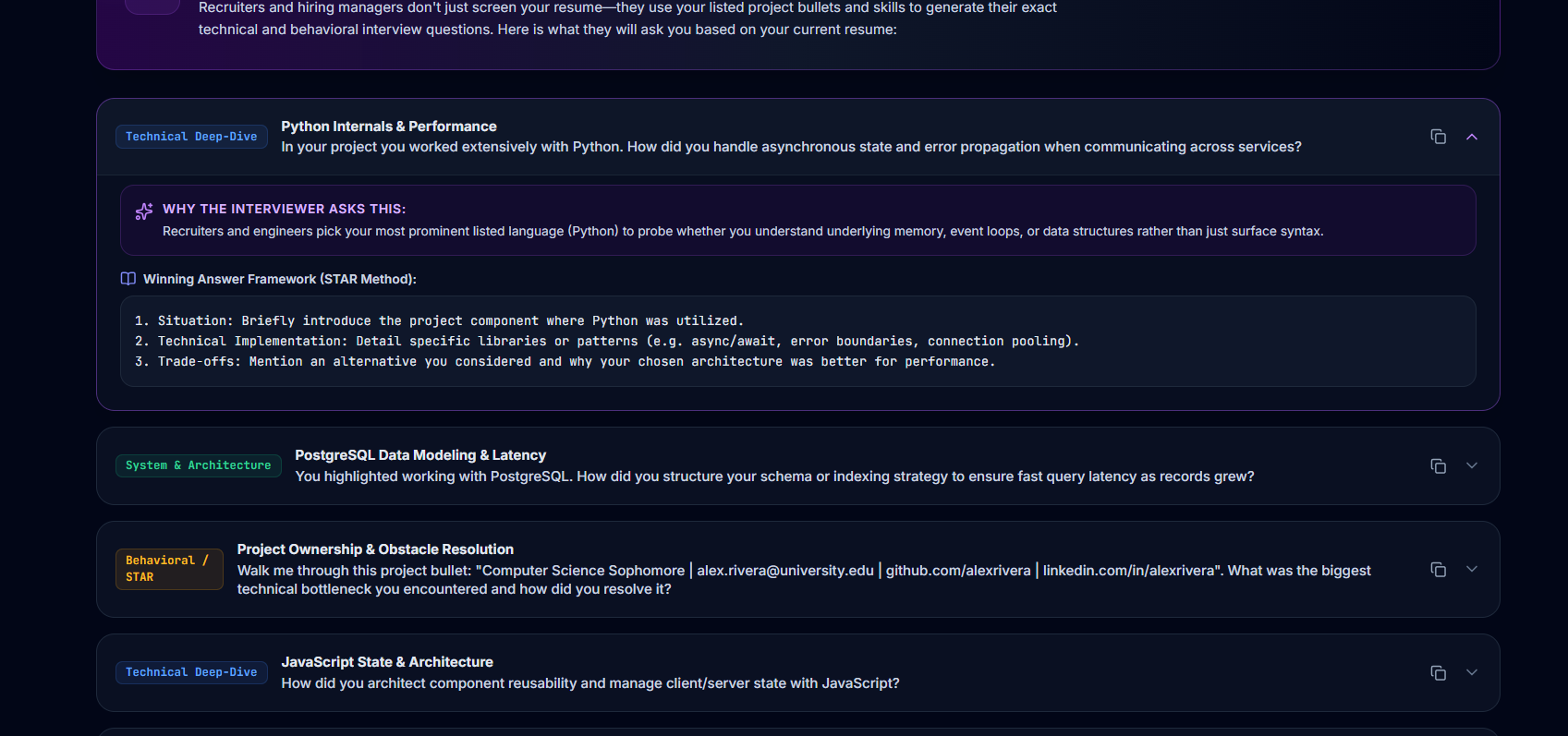
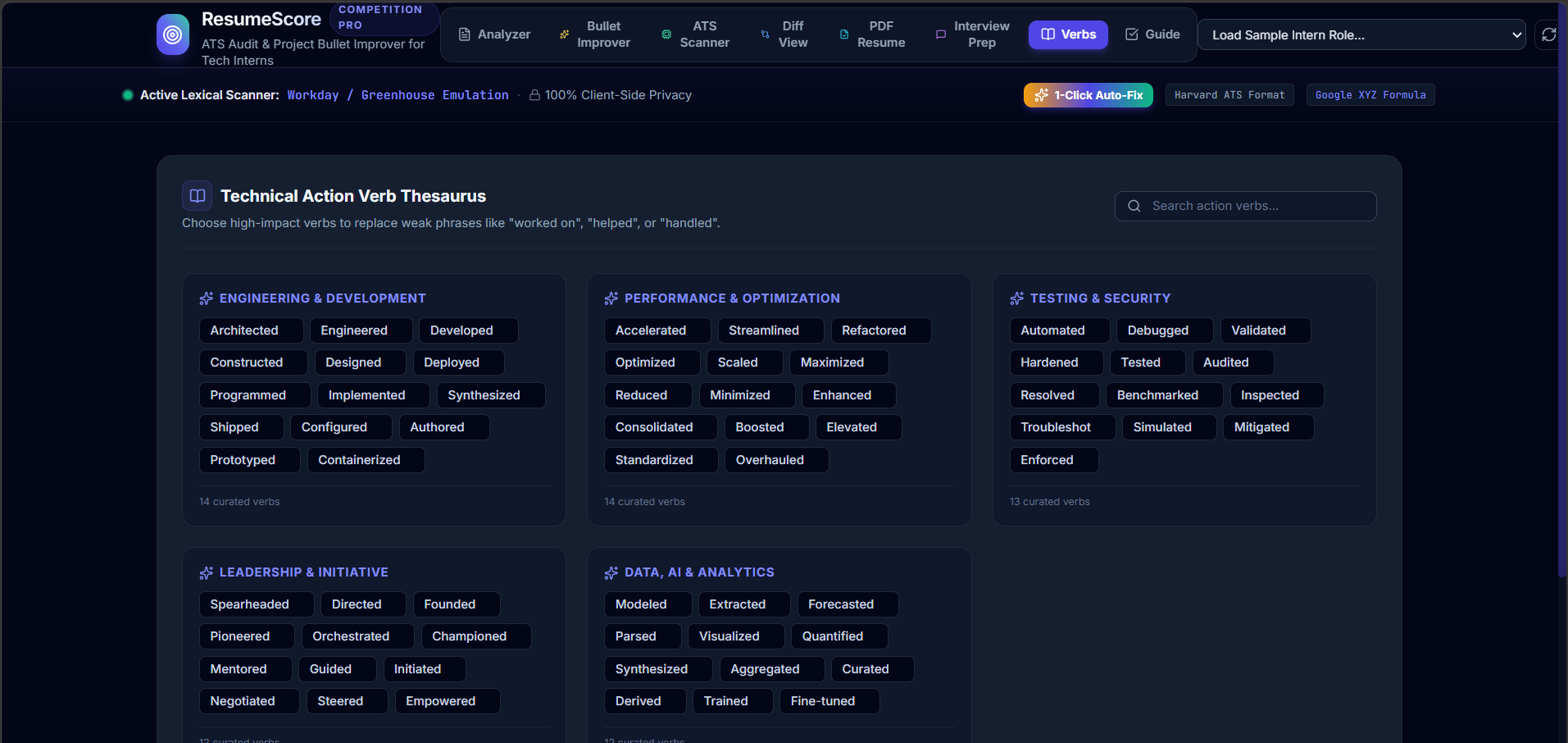
- Weak Verb Detector: Identifies weak phrases and suggests stronger action verbs.
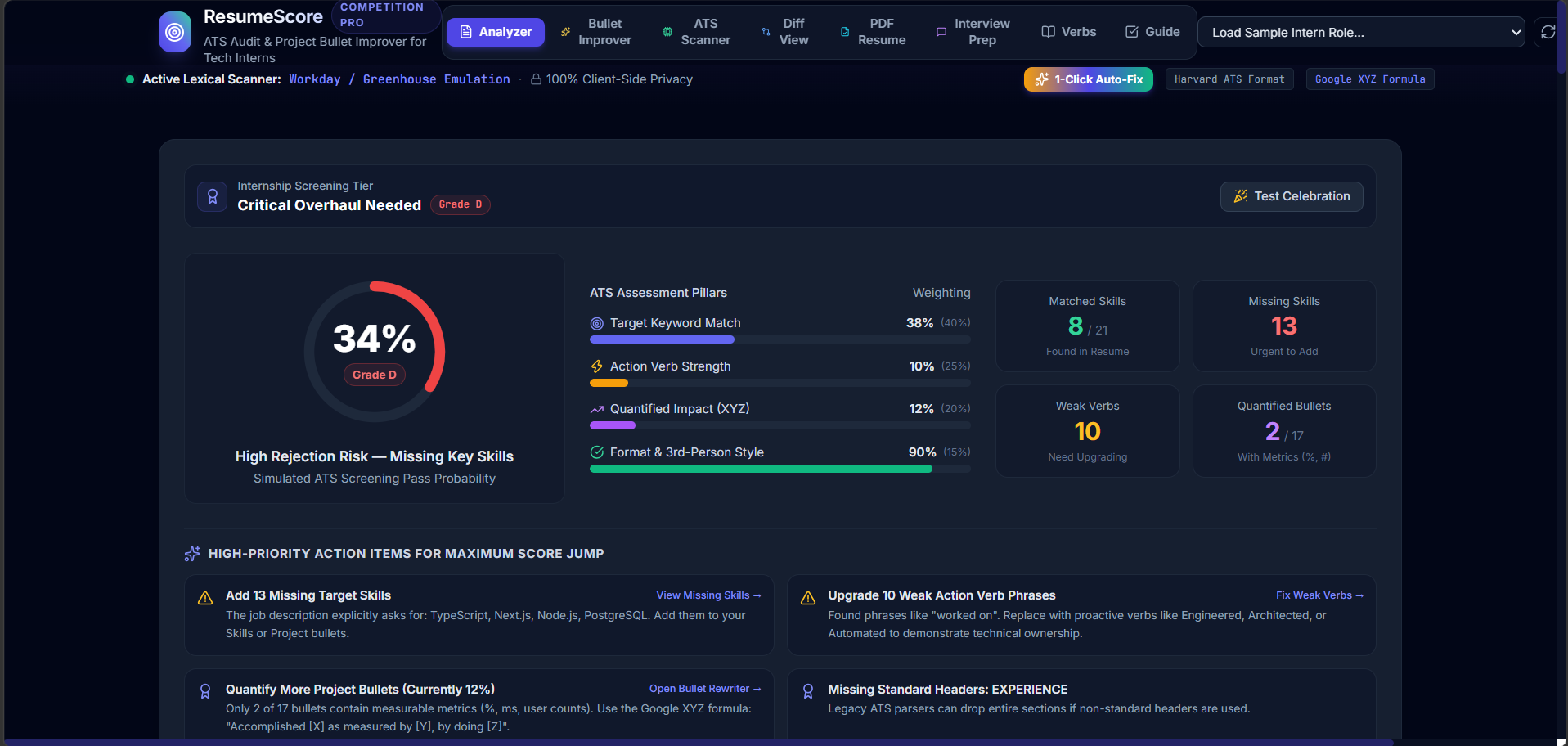
- Resume Score Overview: Evaluates the resume using keyword matching, action verbs, quantified achievements, and formatting criteria.
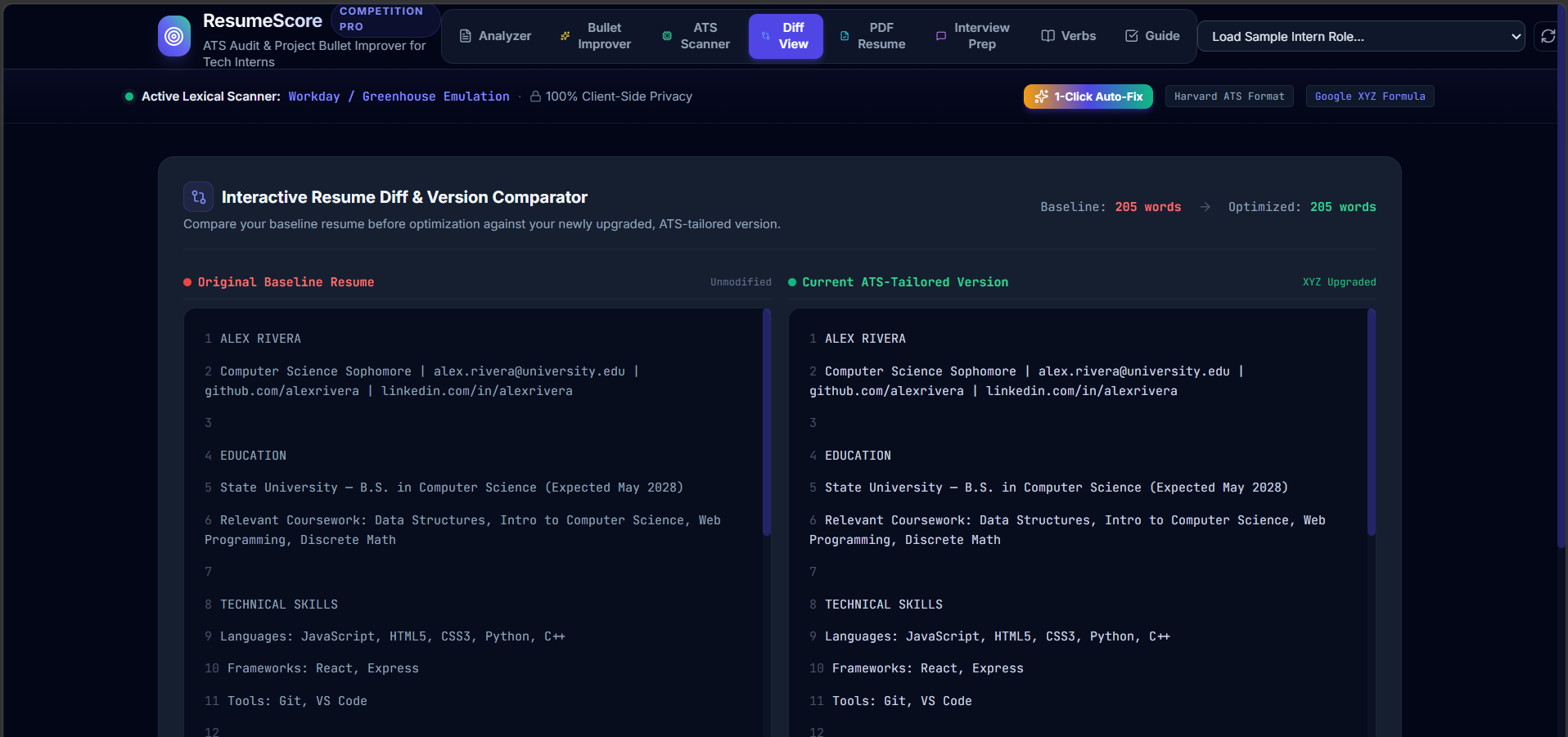
- Resume Diff Viewer: Shows changes between the original and improved resume.
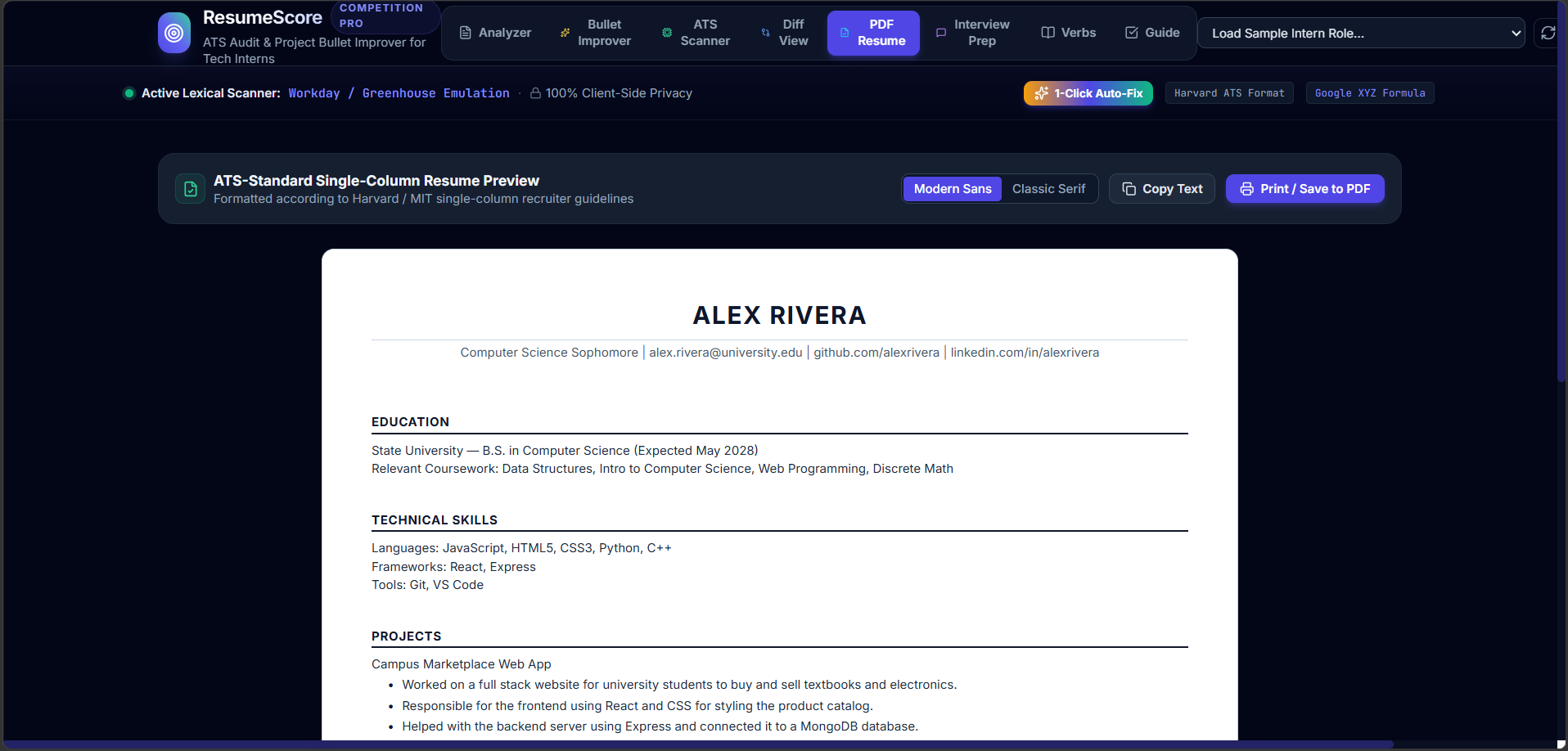
- ATS-Friendly Resume Preview: Generates a clean, single-column resume layout that users can print or save as a PDF.
The application currently performs its analysis in the browser and does not require a backend database.
Challenges We Faced
One of the main challenges was designing a useful resume evaluation system that could analyze different resume formats and job descriptions.
Some of the challenges included:
- Identifying relevant keywords from resumes and job descriptions.
- Detecting weak action verbs and suggesting better alternatives.
- Creating a meaningful scoring system for resume quality.
- Designing an interface that is easy to understand for students and job seekers.
- Presenting resume improvements clearly without making the process complicated.
We addressed these challenges by using rule-based text analysis, keyword comparison, and a modular interface.
Future Scope
In the future, we plan to improve ResumeScore Pro by adding:
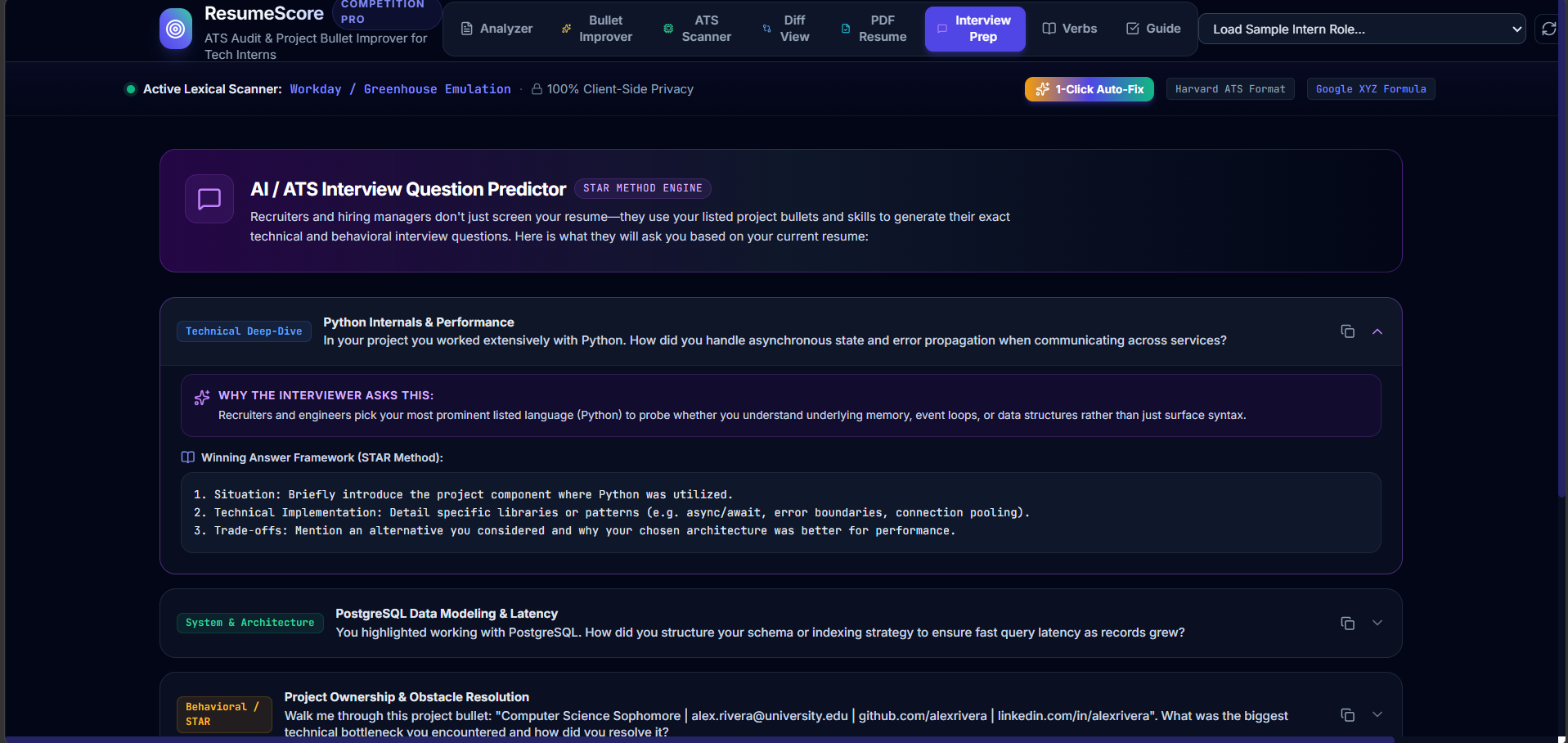
- AI-powered resume suggestions and personalized feedback.
- Support for more resume formats and languages.
- User accounts and saved resume history.
- More advanced job-description matching.
- Integration with job platforms and additional resume templates.
Final Outcome
ResumeScore Pro is our attempt to make resume optimization simpler and more accessible. It helps students and job seekers understand what may be missing from their resumes and gives them practical ways to improve their chances of getting noticed by recruiters.
Through this project, we combined web development and text-analysis techniques to address a real-world challenge in the job application process.
