-
-
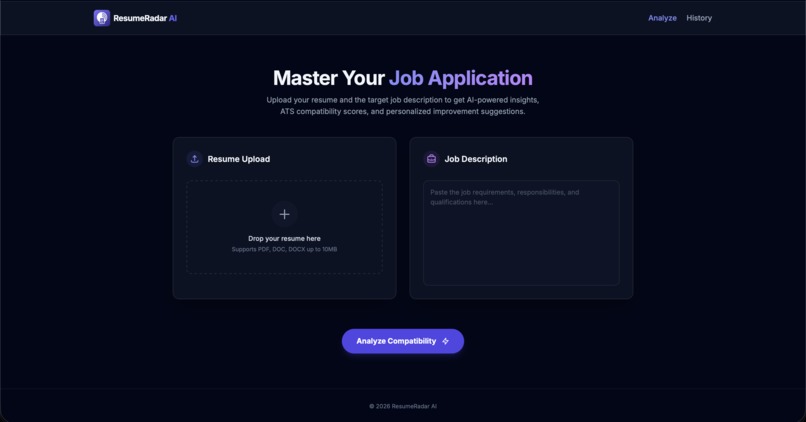
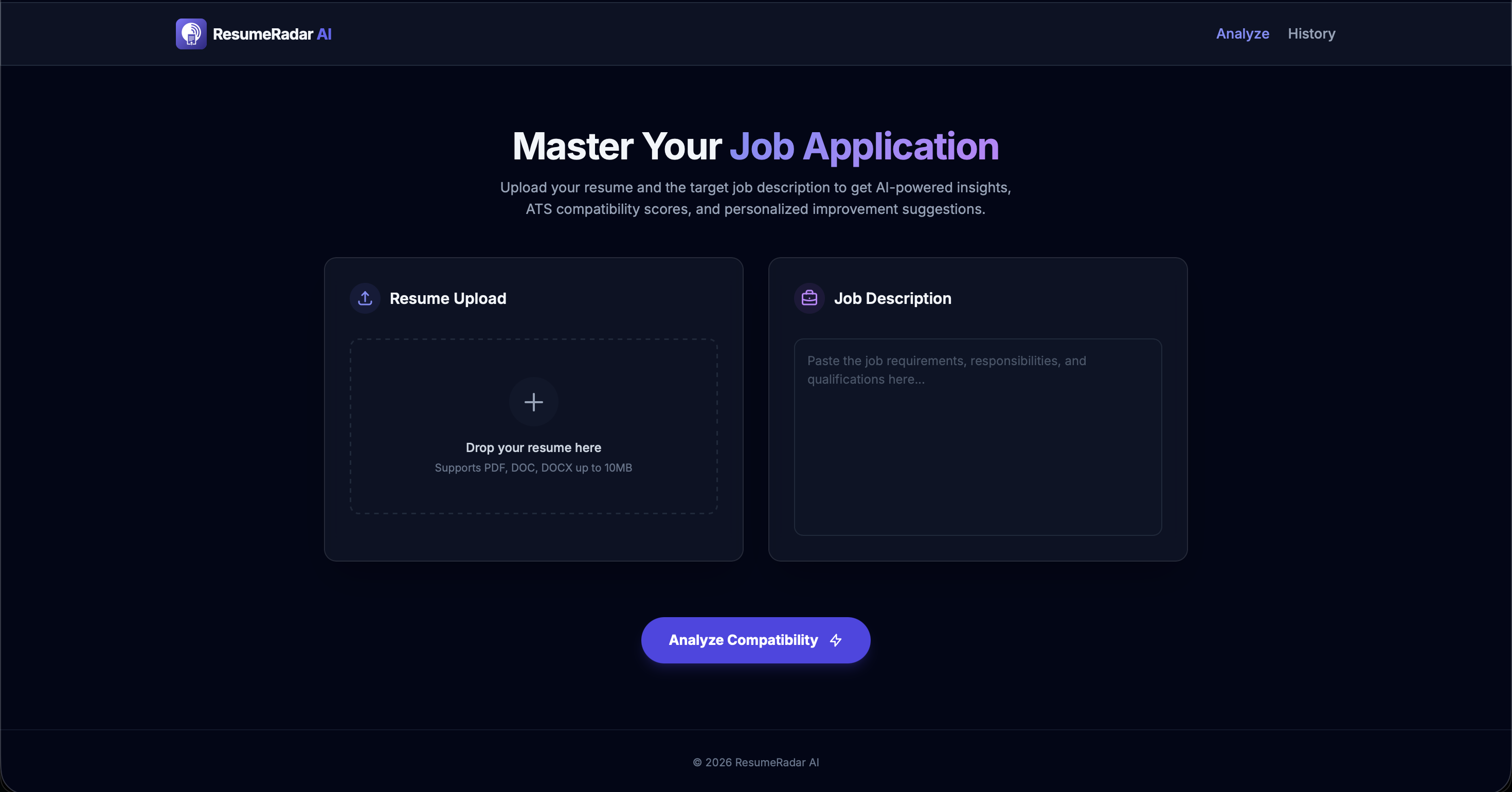
This is the Landing Page the user will see when opening the app.
-
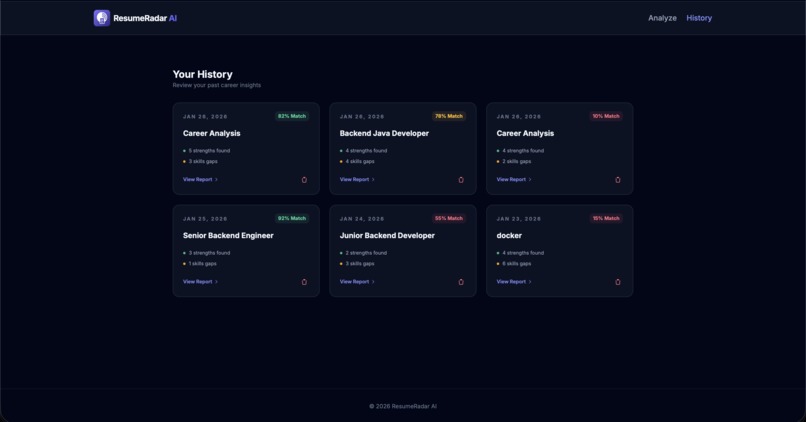
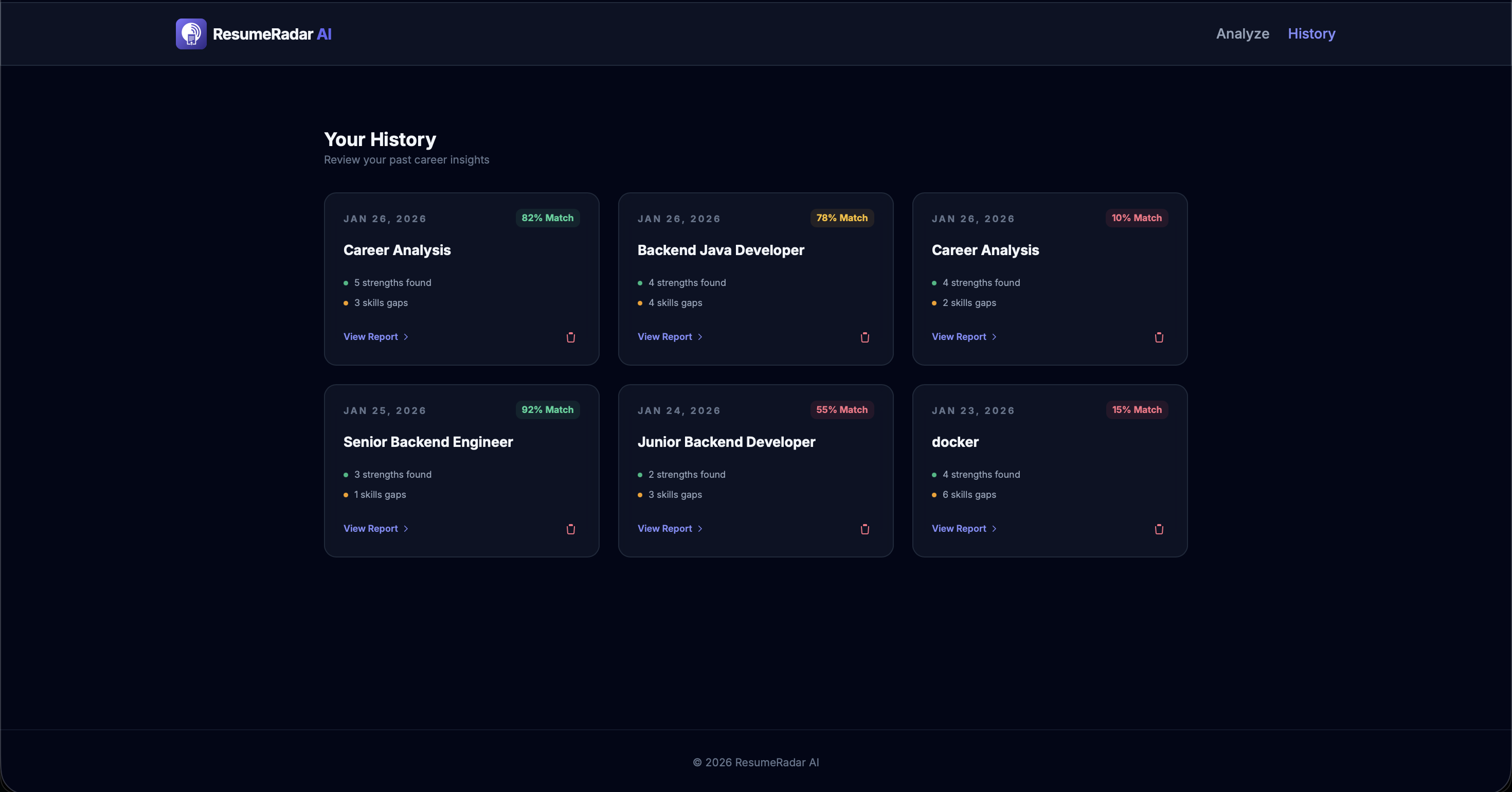
This is the History page where the User can view the history of each resume uploaded and its result.
-
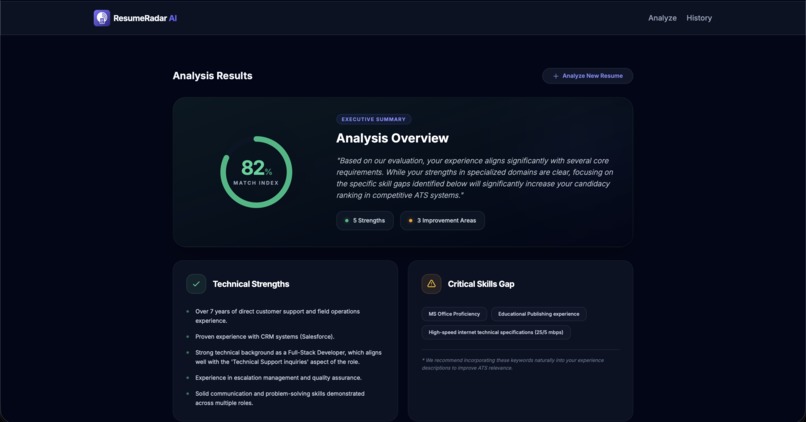
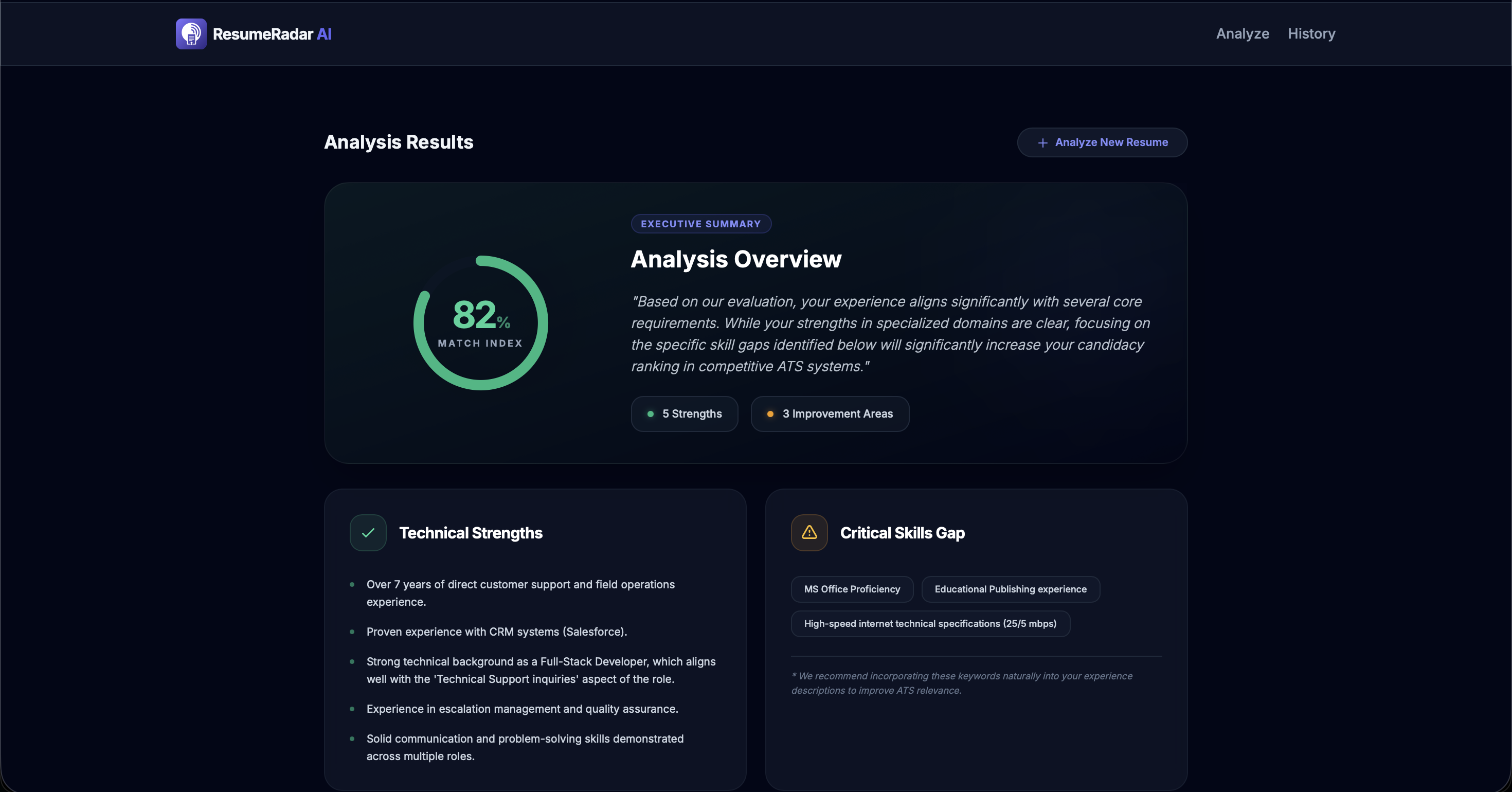
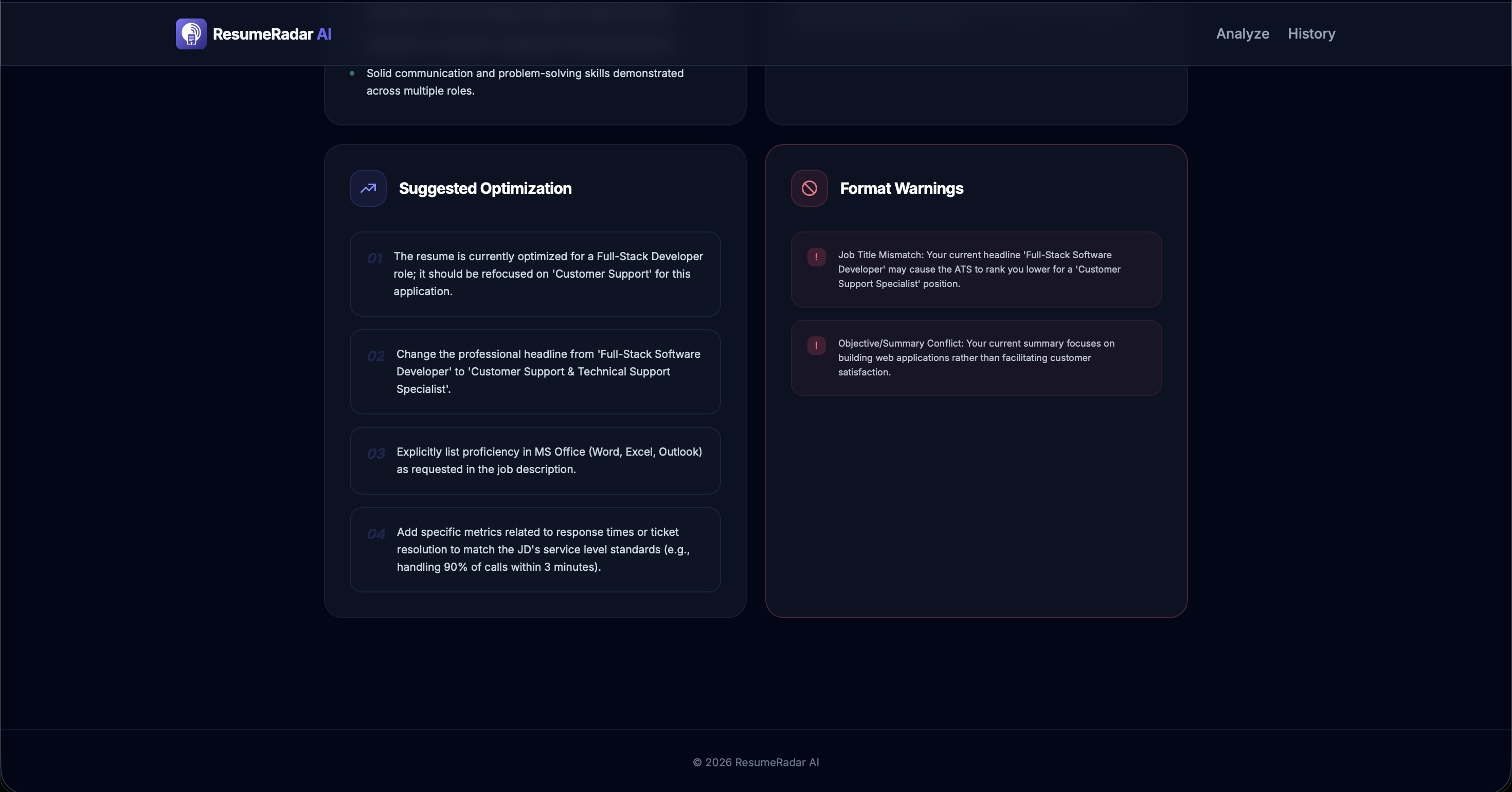
This is how the analysis will look like.
-
Inspiration
The idea for ResumeRadar AI came from a simple but frustrating reality: many qualified candidates get rejected before a human ever sees their resume. Automated Tracking Systems (ATS) often filter resumes based on keywords, structure, and relevance — not potential. After experiencing this firsthand and seeing peers struggle despite strong skills, I wanted to build a tool that makes the hiring process more transparent and fair for job seekers.
What it does
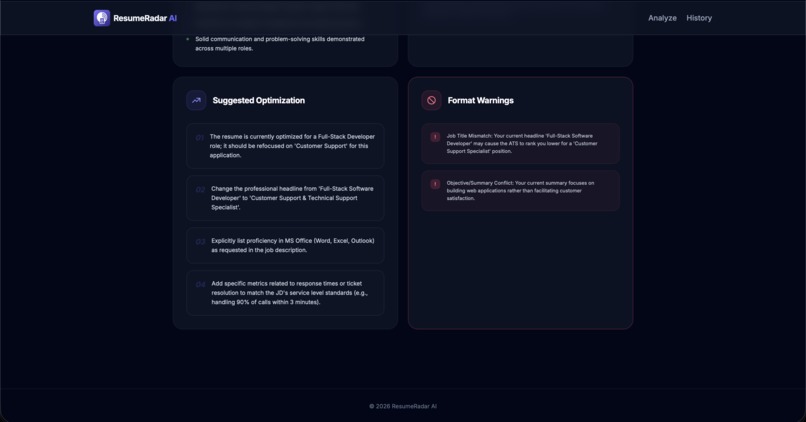
AI-powered web application that analyzes a candidate’s resume against a job description using ATS logic and large language models. It provides a match score, identifies missing skills, highlights strengths, and suggests improvements to optimize resumes for better shortlisting and interview chances.
How I built it
he backend is built using Spring Boot and MongoDB to handle resume analysis, job description matching, and history management. An AI API is used to evaluate resumes against job descriptions, generate ATS scores, and provide improvement insights. The frontend is developed with React to offer a clean, intuitive user experience, and the application is containerized using Docker for easy deployment.
Challenges I ran into
One major challenge was generating consistent, meaningful ATS feedback instead of vague AI responses. Another was designing a scoring system that feels realistic and helpful. Balancing performance, accuracy, and usability within a limited hackathon timeframe was also challenging — but it pushed me to make focused, impactful design decisions.
Accomplishments that I'm proud of
Built an end-to-end, working AI product within a limited timeframe, covering ideation, development, and deployment. Successfully implemented resume-to-job description matching with meaningful ATS-style scoring and actionable feedback. Designed the system to provide specific improvement insights (keywords, skills, formatting) rather than generic suggestions. Containerized the backend using Docker, making the application easy to deploy and scalable. Created a clean, intuitive user experience that allows users to analyze resumes in minutes.
What I learned
Practical integration of AI into a real-world product, focusing on prompt design and response consistency. Full-stack system design: connecting frontend, backend, database, and AI services seamlessly. The importance of balancing accuracy, performance, and usability when building under time constraints. How to make AI feedback actionable and user-centric instead of abstract. And how to generate Docker Image and then deploy the container.
What's next for Untitled
Basically to add Spring Security and to give each user their own history and their own analysis, also to add a payment gateway if I include more features in future, more advanced features which requires gemini PRO.
