-
-
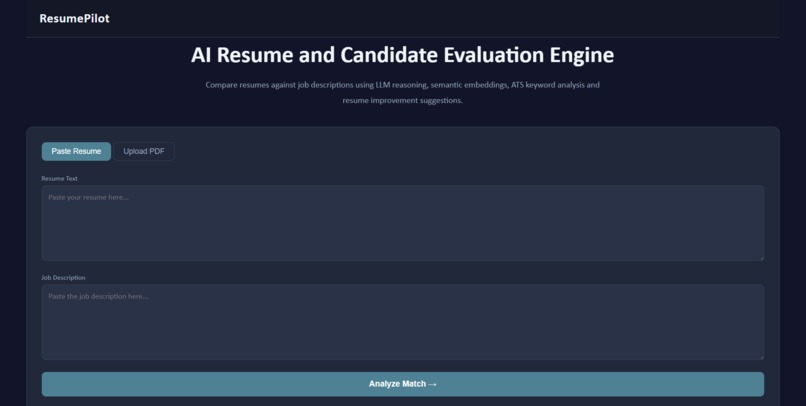
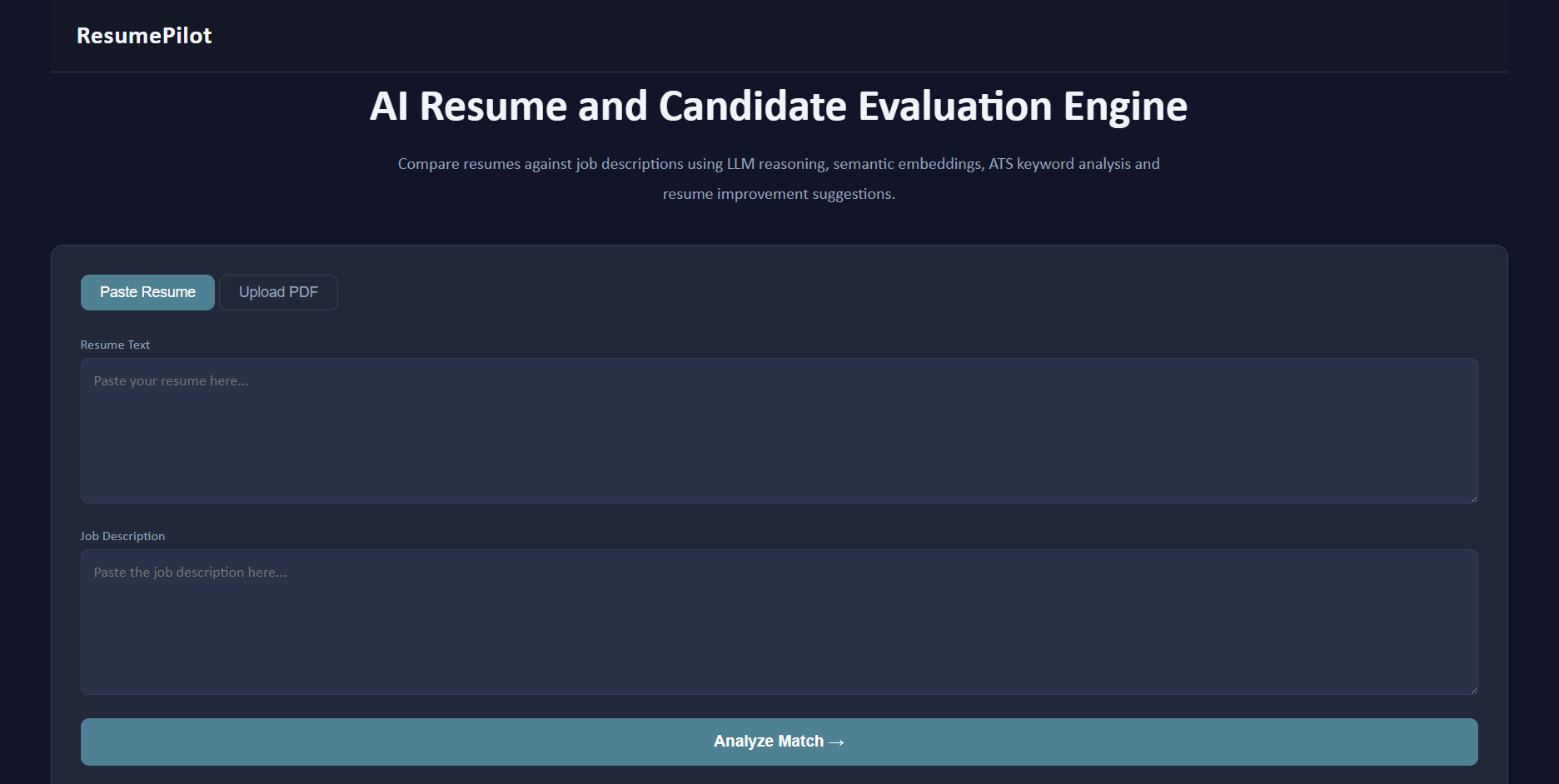
HomePage design to upload resume in text or PDF
-
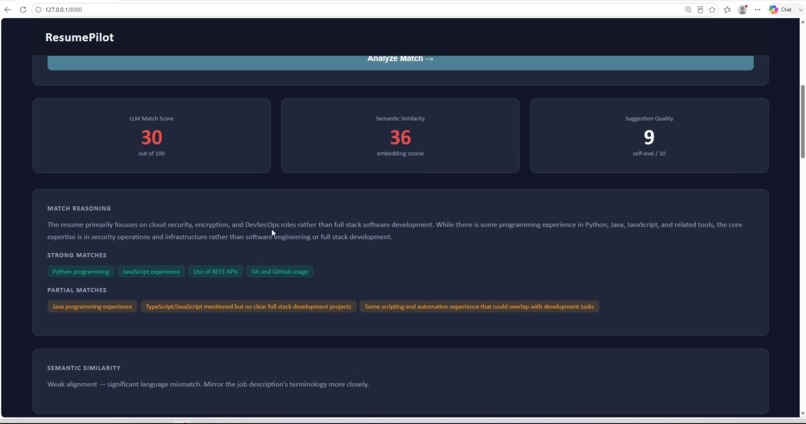
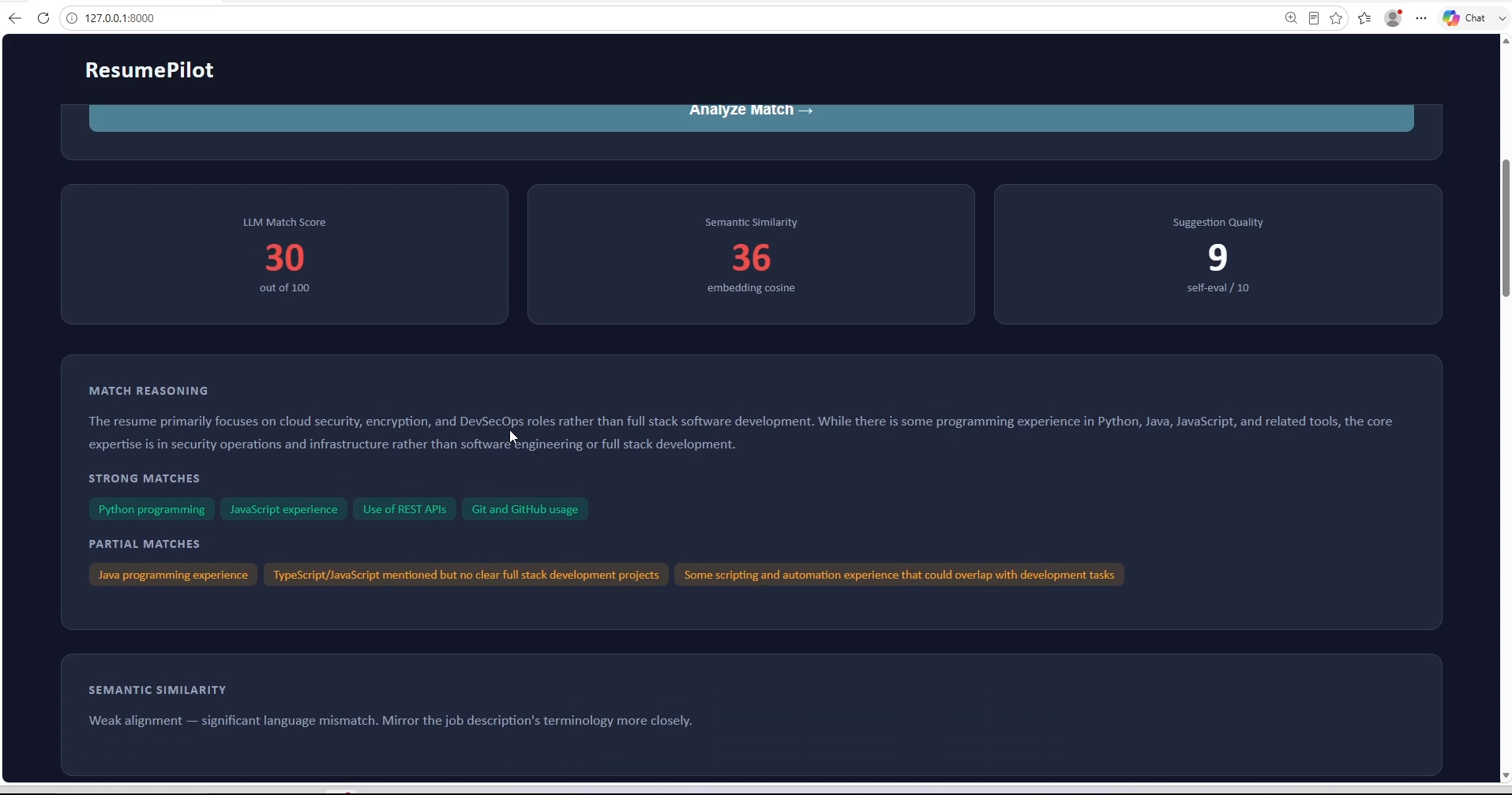
Result obtained after analysing resume
-
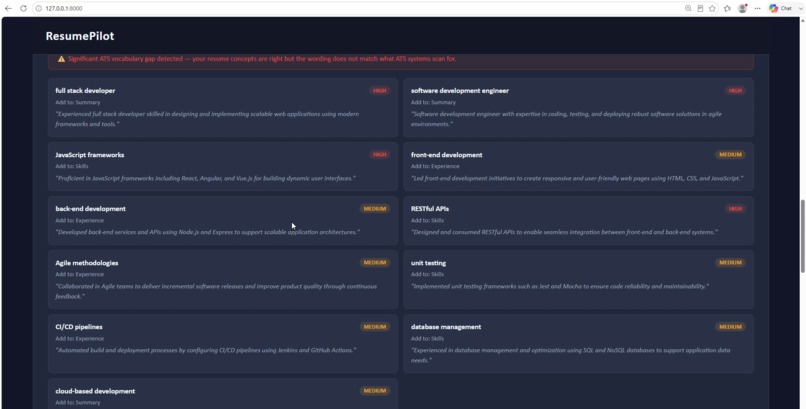
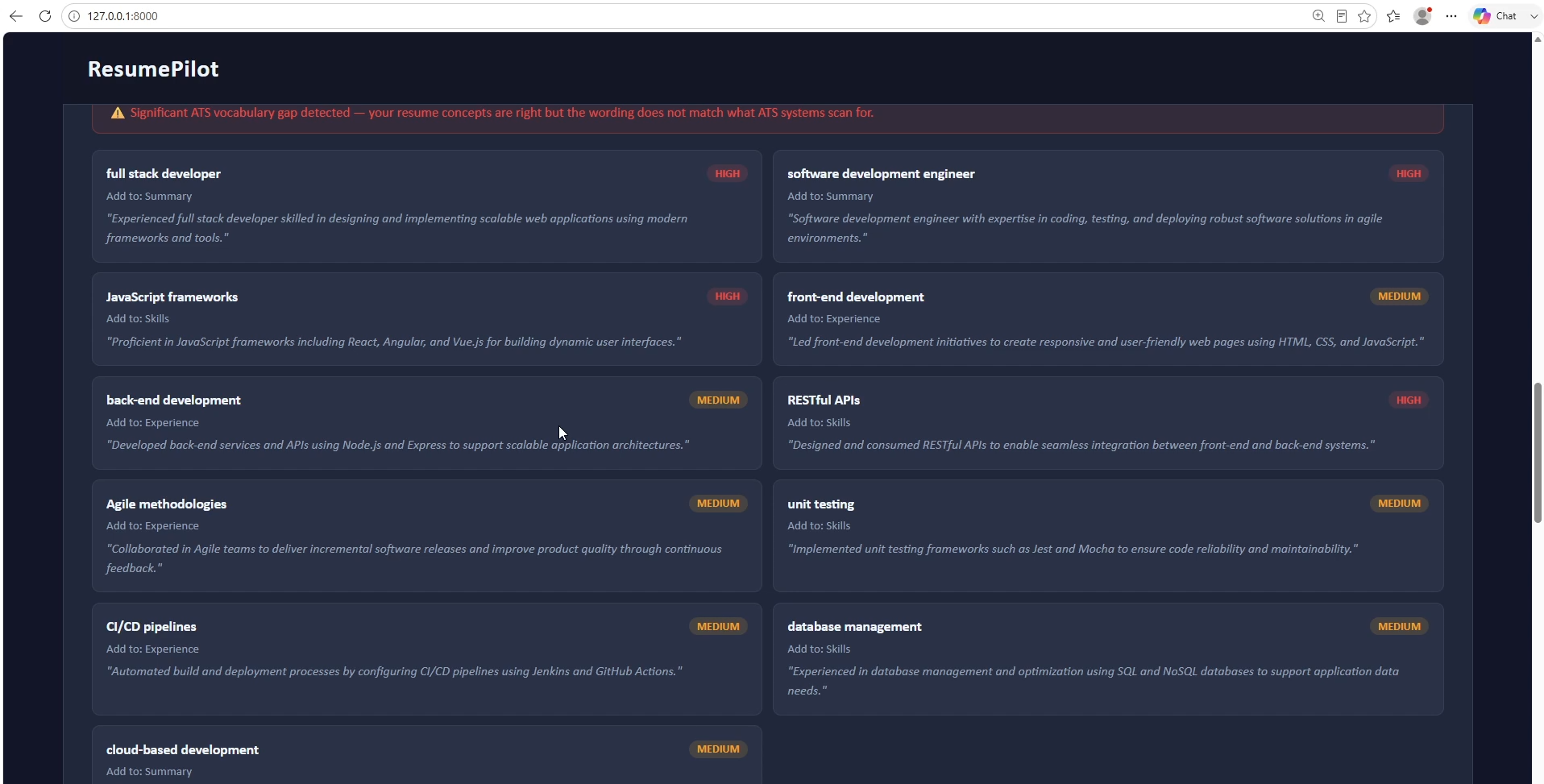
Result and enhancements for resume obtained after analysing resume
-
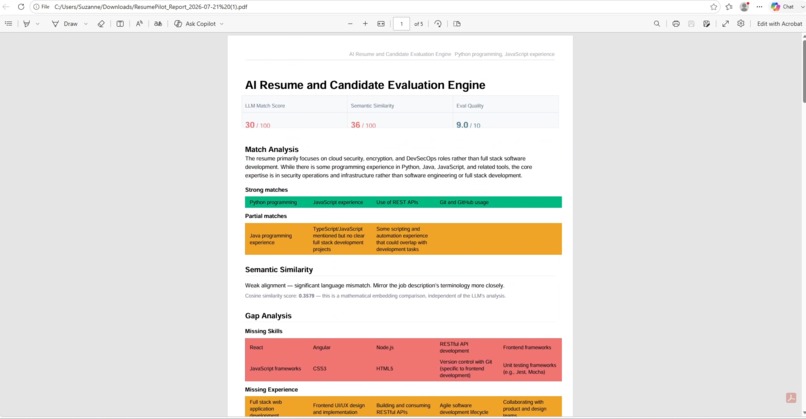
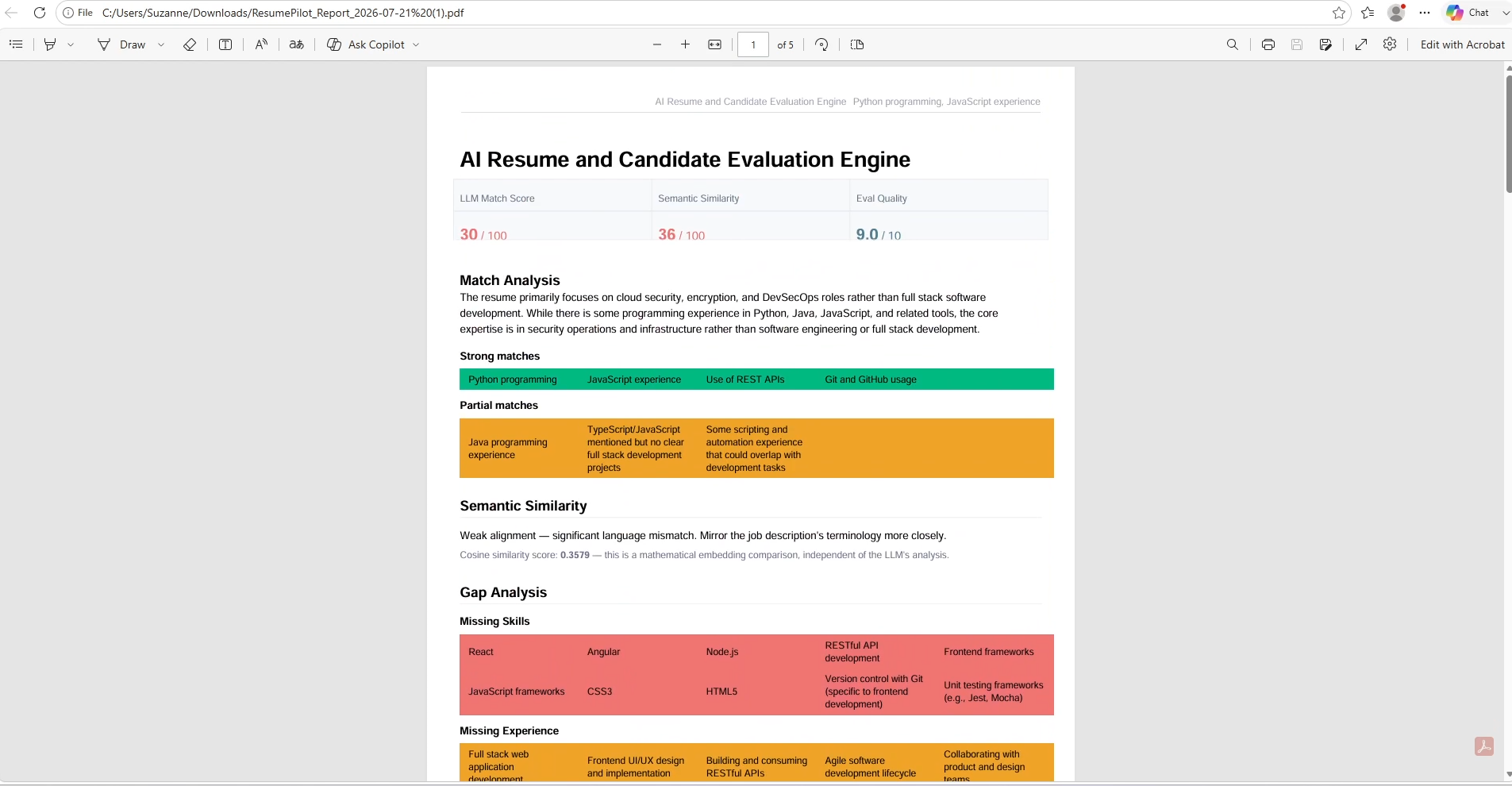
Elaborate PDF report that can be downloaded for more elaborations and questions
-

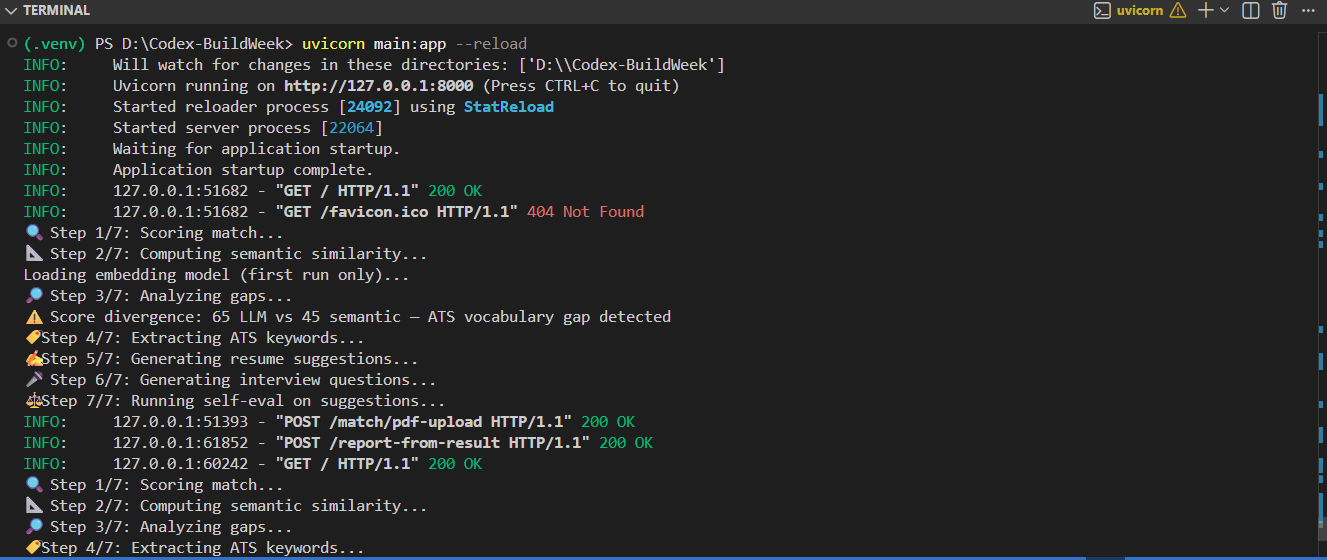
Backend working
-
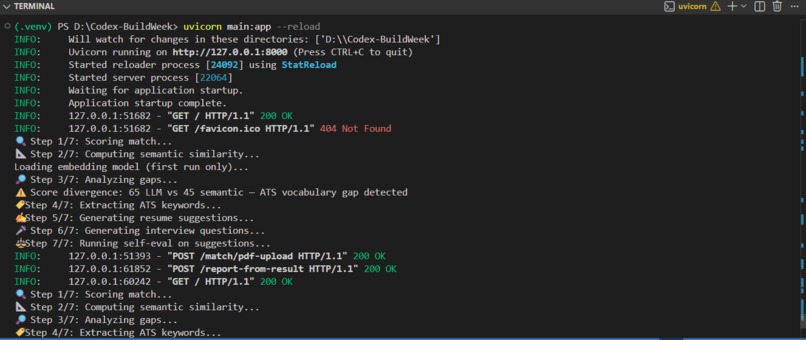
Backend working

ResumePilot
Inspiration
Applying to jobs often involves tailoring the same resume for dozens of different roles. Existing ATS checkers usually provide only a match score or a list of missing keywords, leaving applicants unsure of what to improve. We wanted to build an assistant that goes beyond scoring by explaining why a resume matches a role, identifying missing skills and ATS keywords, suggesting targeted improvements, and producing a professional report; all in a single workflow.
What it does
ResumePilot AI analyzes a resume against a job description using an agentic pipeline.
The application generates:
- AI-powered Resume Match Score
- Semantic Similarity Score using sentence embeddings
- Gap Analysis (missing skills, experience, and ATS keywords)
- Tailored Resume Improvement Suggestions
- ATS Keyword Recommendations
- AI-generated Interview Questions with model answers
- Downloadable multi-page PDF report
The goal is to help job seekers improve their applications before they submit them.
How we built it
The backend is built with FastAPI and follows an agent-based workflow where each step performs a specialized task.
Pipeline:
- Resume Match Scoring
- Semantic Similarity Analysis
- Gap Analysis
- ATS Keyword Extraction
- Resume Improvement Suggestions
- Interview Question Generation
- Suggestion Self-Evaluation
OpenAI models power the reasoning, resume analysis, recommendations, and interview preparation, while sentence-transformers provide an independent semantic similarity score.
The frontend is a lightweight HTML interface, and ReportLab generates downloadable professional PDF reports.
OpenAI technologies used
This project was built during OpenAI Build Week using OpenAI's API ecosystem.
We used:
- GPT models for resume analysis and reasoning
- Codex credits provided during Build Week to accelerate implementation, debugging, refactoring, and feature development inside VS Code
Using Codex significantly reduced development time by helping generate boilerplate code, debug backend issues, improve prompts, and rapidly iterate on new features.
Challenges we ran into
Some of the biggest challenges included:
- Designing structured JSON outputs that remained consistent across multiple AI calls
- Combining LLM reasoning with embedding-based semantic similarity
- Creating clean, multi-page PDF reports using ReportLab
- Building a modular agent pipeline while keeping latency reasonable
- Handling deployment constraints caused by sentence-transformers on serverless platforms
Accomplishments we're proud of
- Built a complete end-to-end AI resume analysis workflow
- Combined LLM reasoning with semantic similarity instead of relying on a single score
- Generated actionable ATS recommendations instead of generic advice
- Added interview preparation based on the candidate's own resume
- Produced downloadable professional PDF reports
What we learned
This project gave us hands-on experience with:
- Agentic AI workflows
- Prompt engineering
- Structured LLM outputs
- FastAPI backend development
- PDF generation with ReportLab
- Embedding models and semantic similarity
- Deploying AI applications
What's next
Future improvements include:
- DOCX resume support
- Live job board integrations
- Personalized cover letter generation
- Resume version history
- Authentication and user dashboards
- Multilingual resume analysis
- Cloud deployment with scalable embedding inference


Log in or sign up for Devpost to join the conversation.