-
-
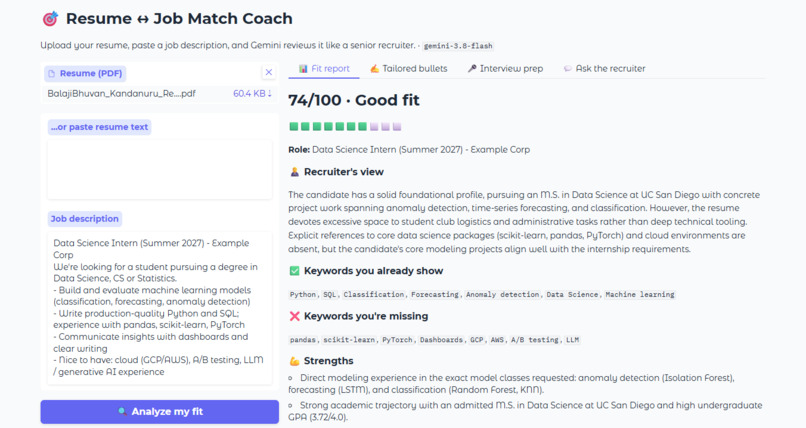
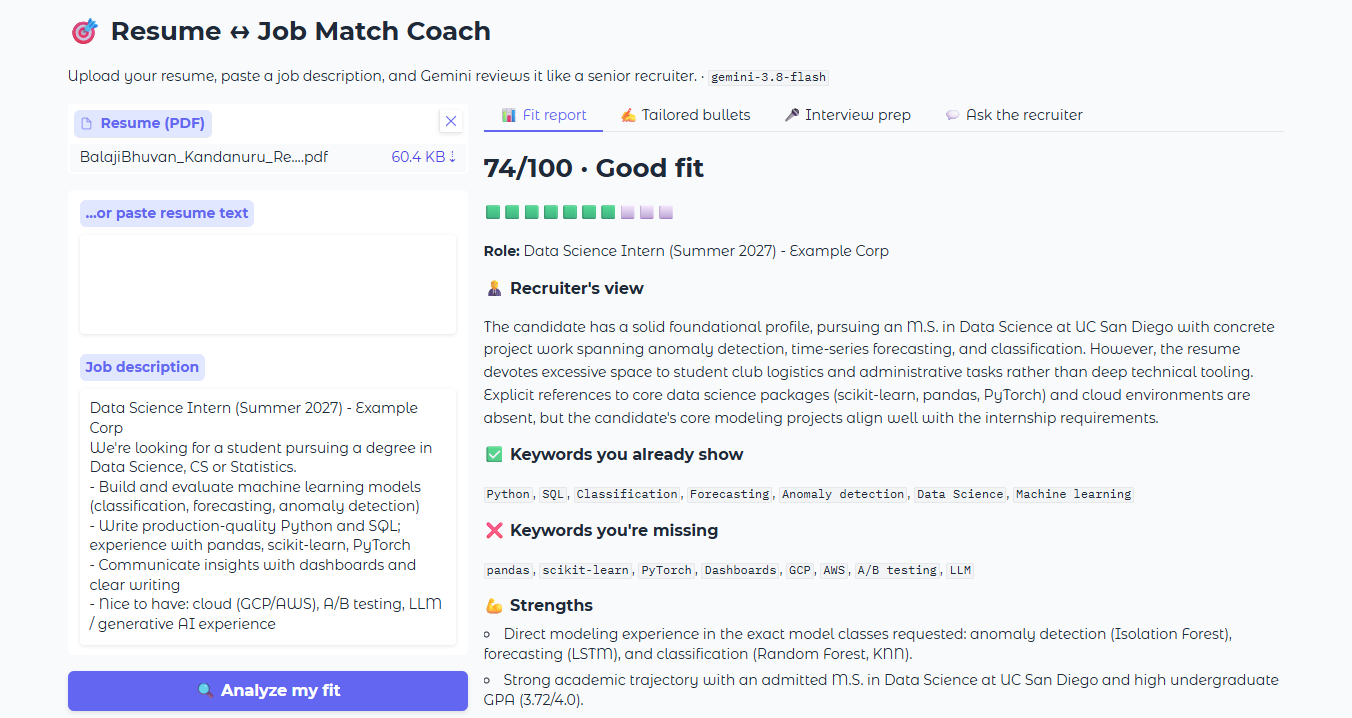
Scores my resume 74/100 ("Good fit") and splits keywords into matched vs. 8 missing.
-
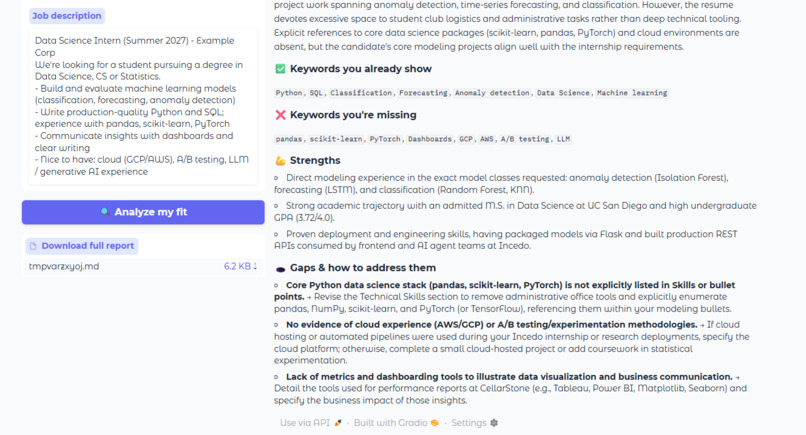
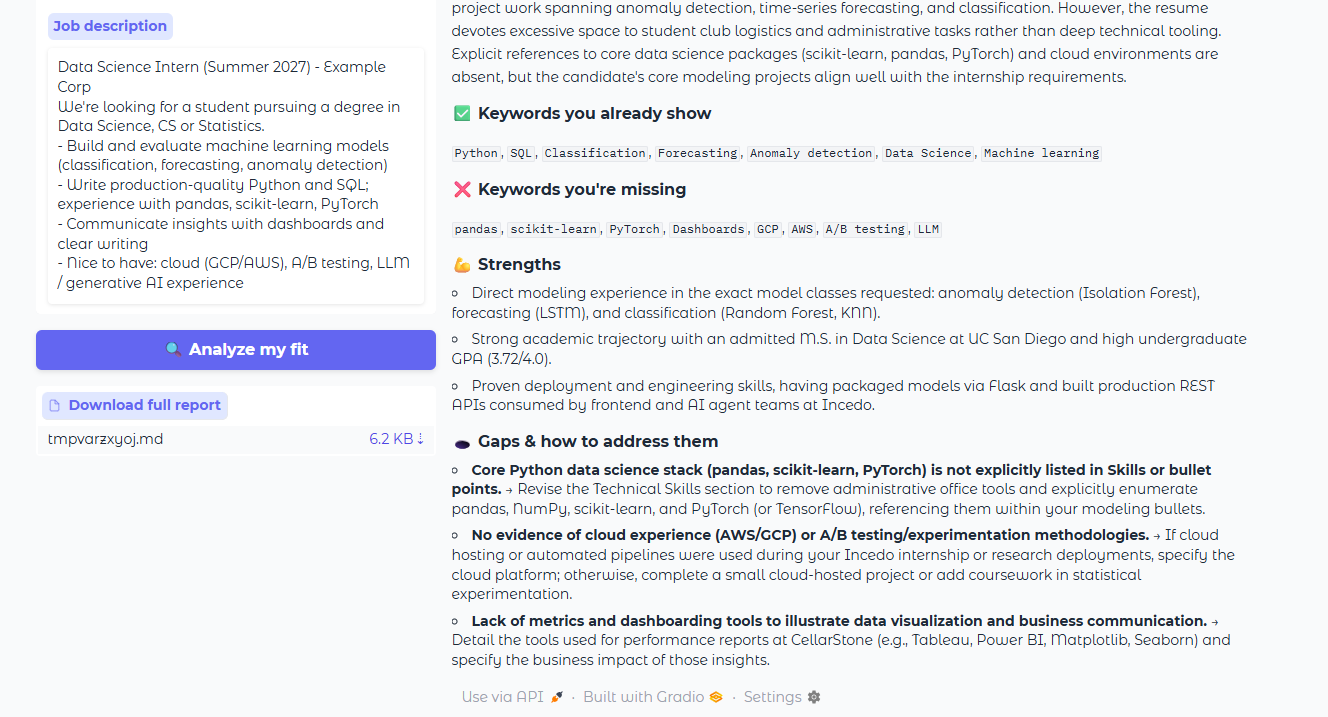
Real strengths from my experience, plus concrete, honest fixes for each gap.
-
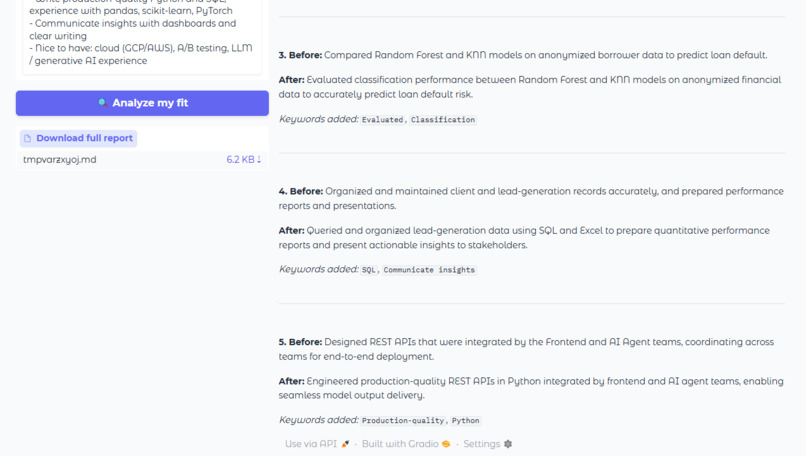
More rewrites adapting my real experience to the job's requirements.
-
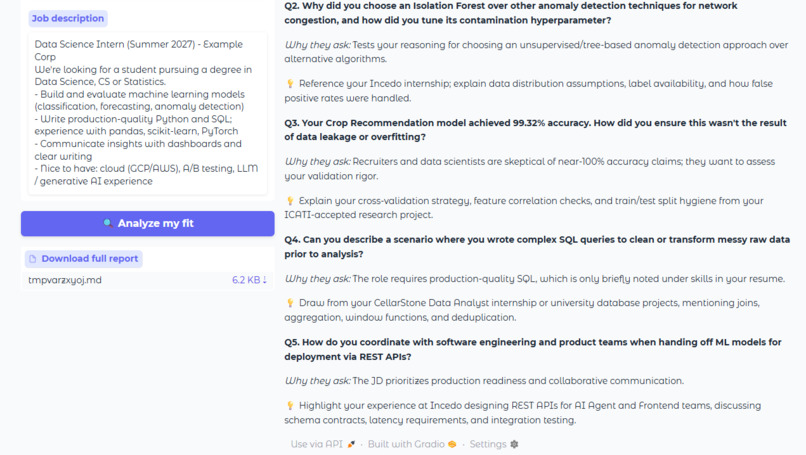
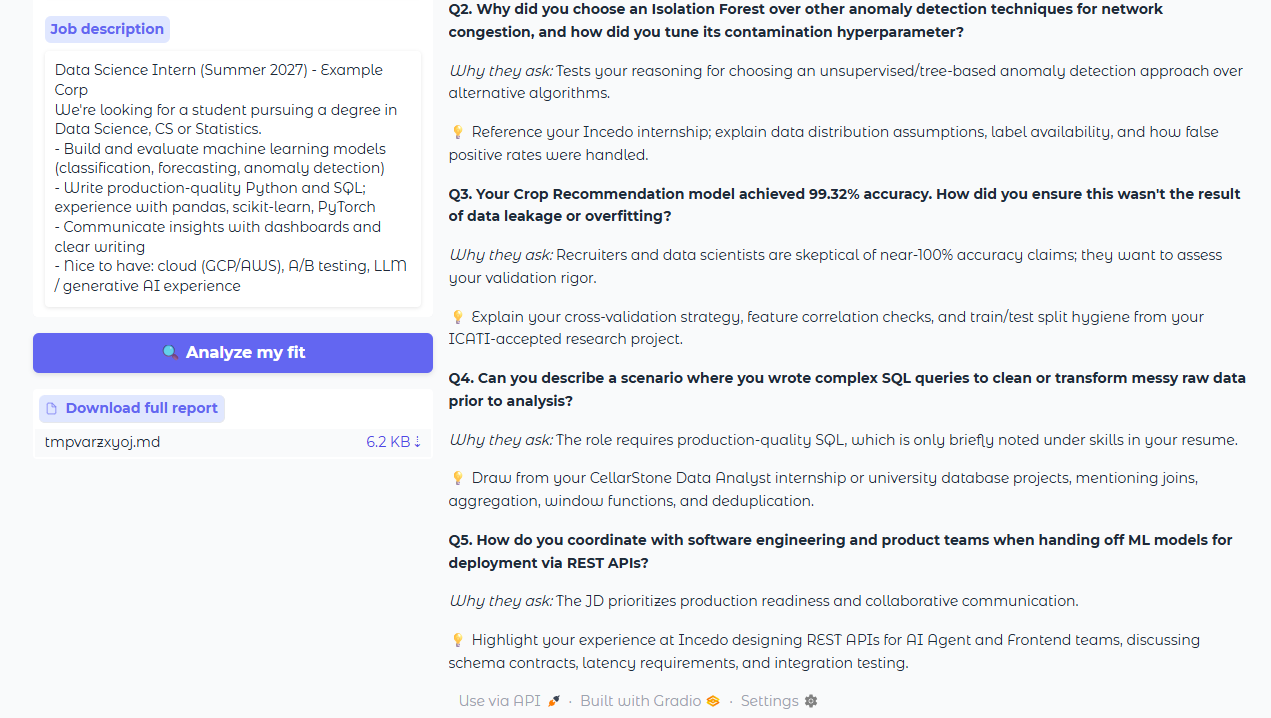
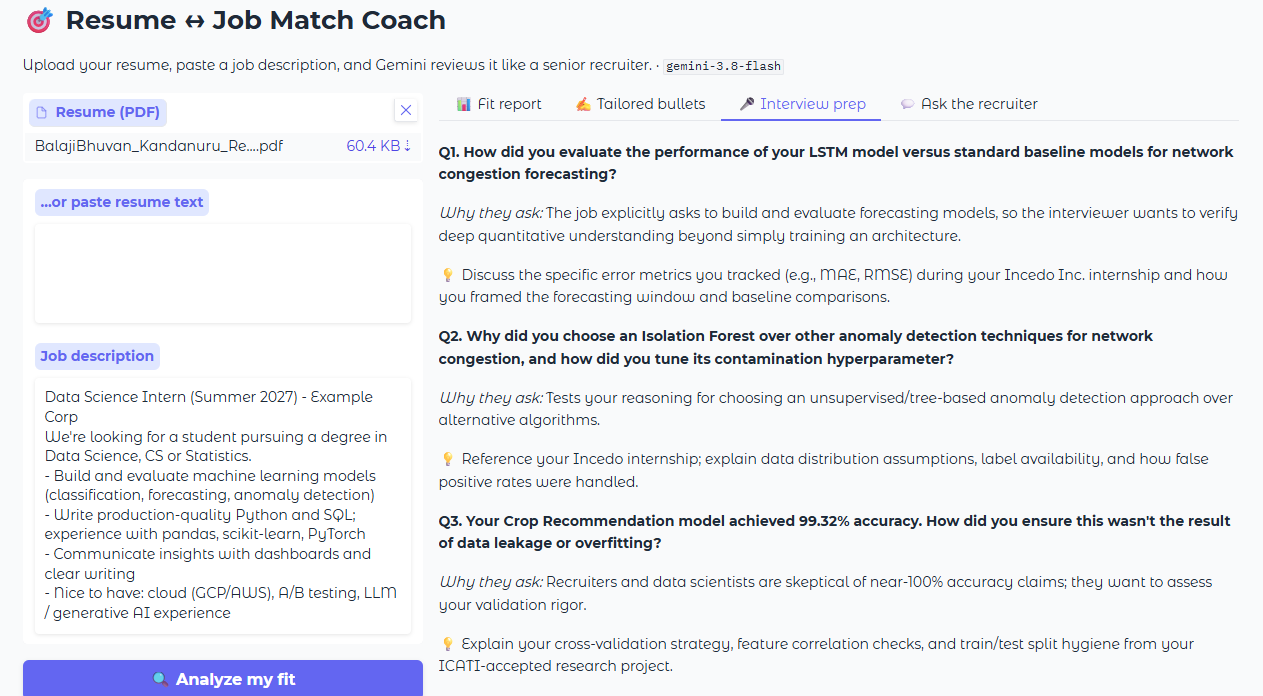
Anticipates tough questions, like whether 99.32% accuracy could be data leakage.
-
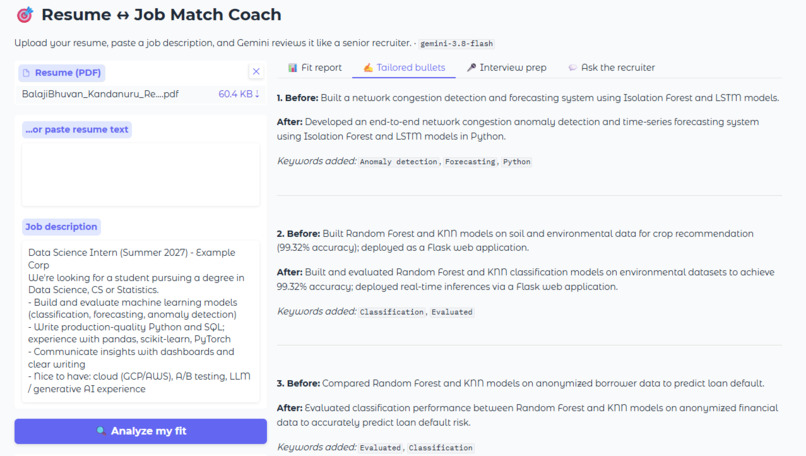
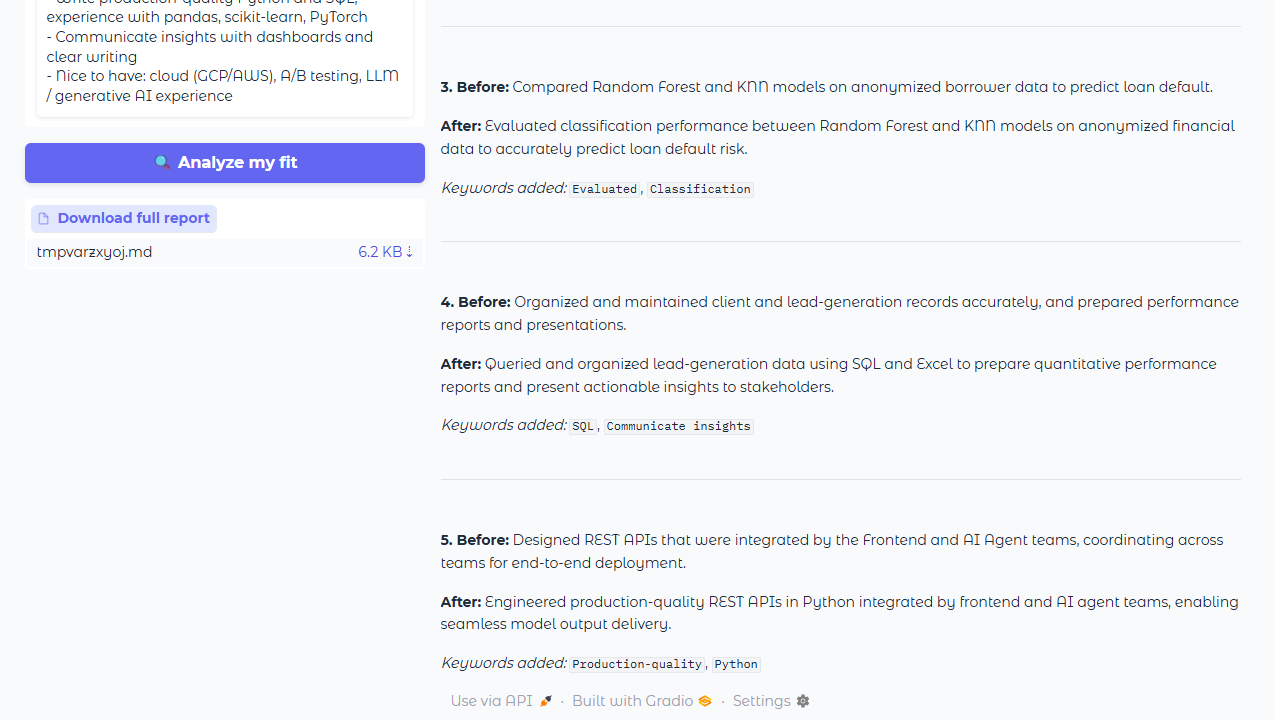
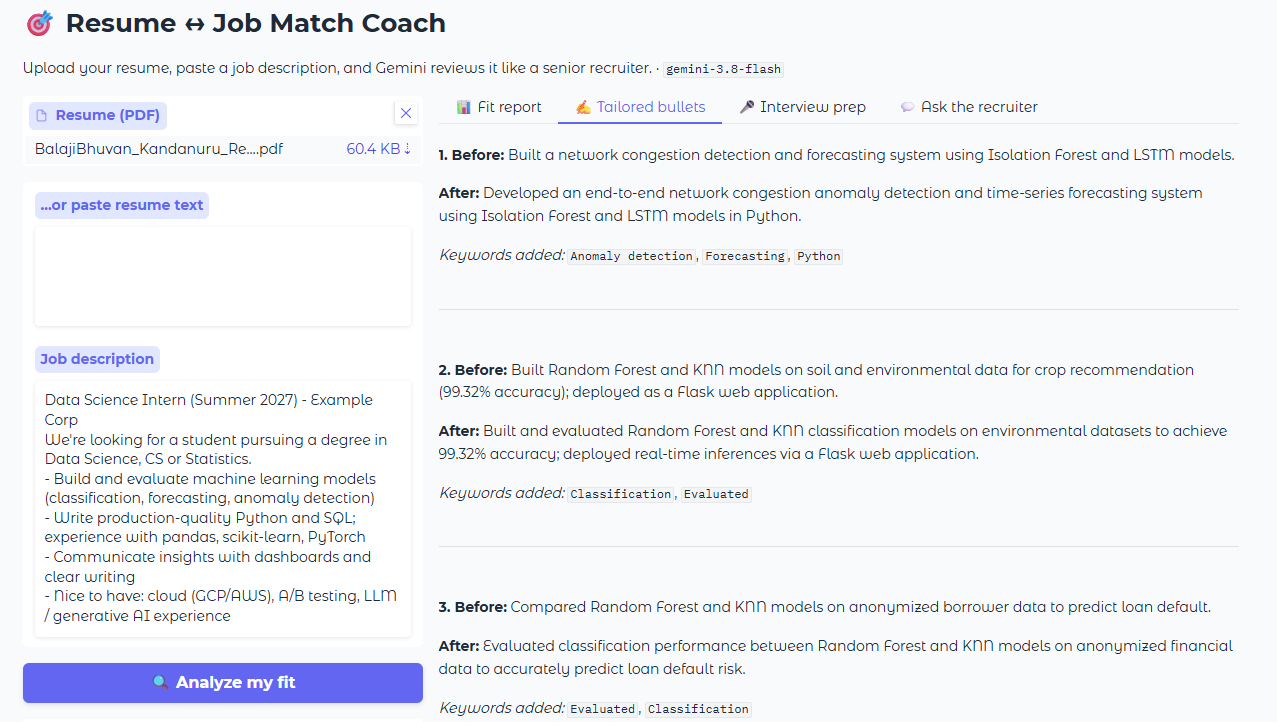
My real bullets rewritten in the job's language, before → after, with keywords added.
-
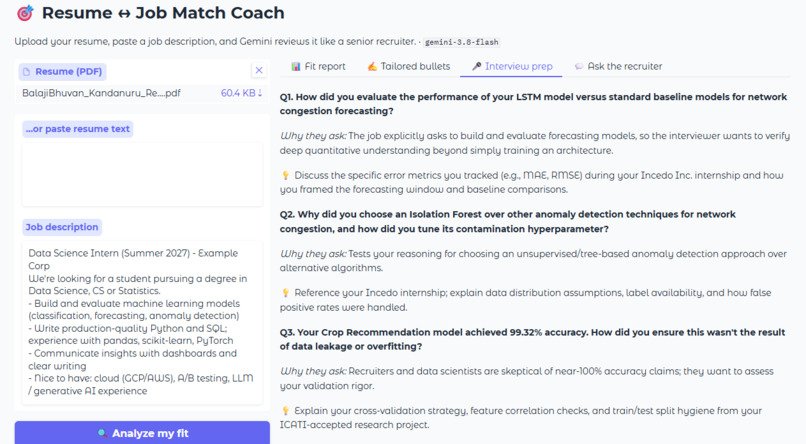
Likely interview questions, why they're asked, and how to answer from my resume.
Inspiration
As a new grad student applying to US summer internships, I kept hitting the same wall: every job description is different, applicant tracking systems (ATS) filter on keywords, and I never knew whether my resume actually fit a role or how to fix it. Career centers are booked for weeks. I wanted a recruiter in my pocket that gives honest, specific feedback in under a minute.
What it does
Upload your resume as a PDF and paste any job description. ResumeMatch Coach then:
- Scores your fit (0–100) with a strict, recruiter-style verdict and summary
- Finds ATS keywords: the ones your resume already shows, and the important ones it's missing
- Lists strengths and gaps, with concrete, honest ways to address each gap
- Rewrites your resume bullets for that specific job (before → after) without ever inventing experience, tools or numbers
- Prepares you for interviews: 5 likely questions, why they're asked, and how you should answer using items from your own resume
- "Ask the Recruiter" chat for follow-ups like "How do I explain this gap?" or "Write my cover letter opening," with your resume and the job description in context
- Downloadable report of the full analysis ## How we built it
- Gemini 3.8 Flash through the Google GenAI Python SDK
- Native PDF understanding: the resume PDF goes straight to Gemini, with no text-extraction step, so layout and formatting are preserved
- Structured output: a Pydantic schema (fit score, keywords, gaps, rewritten bullets, interview questions) enforced with Gemini's JSON response schema, so every result renders reliably in the UI
- Prompt design: a senior-recruiter system prompt with strict honesty rules (no inflated scores, no fabricated experience)
- Resilience: automatic retry with backoff, plus fallback across Gemini models when one is overloaded or retired
- Gradio web app (report, bullets, interview prep and chat tabs) running on Google Colab, shared through a public link
Challenges we ran into
- Model availability: our first model choice had been retired for new API users (404), and under hackathon load the newest model often returned "high demand" errors (503). We built a fallback chain that retries, then switches models automatically, so the app keeps working.
- No local setup: we were on a loaner laptop with no Python, so we built and ran everything in Google Colab.
- Honesty vs. helpfulness: LLMs love to "improve" a resume by sneaking in skills the candidate never had. We wrote strict no-fabrication rules into the prompt and added a "keywords added" field to every rewrite so users can verify each change. It's not perfect yet: in testing, one rewrite added "SQL" to a bullet that didn't mention it, so the app is a coach, and the user stays the final editor. ## Accomplishments that we're proud of
- A working end-to-end app built within the hackathon
- Feedback that is specific to the person: it cites real resume items instead of generic advice
- Reliable, structured results thanks to schema-enforced JSON output
- Tested on my own resume against a Data Science internship job description: scored 74/100 ("Good fit"), found 8 missing keywords (pandas, scikit-learn, PyTorch, dashboards, GCP, AWS, A/B testing, LLM), rewrote 5 bullets in the job's language, and generated 5 interview questions tied to my real projects, including a sharp one asking whether my 99.32% accuracy could be data leakage ## What we learned
- How to combine Gemini's multimodal PDF input with structured output
- Prompt engineering for honesty constraints
- Building for real-world API limits: rate limits, overloads and model deprecations
What's next for ResumeMatch Coach
- Batch mode: rank one resume against 10 job postings
- Auto-generate a tailored resume PDF and cover letter
- Track applications and the keywords each one needed
- A Chrome extension that analyzes a job posting while you browse

Log in or sign up for Devpost to join the conversation.