-
-
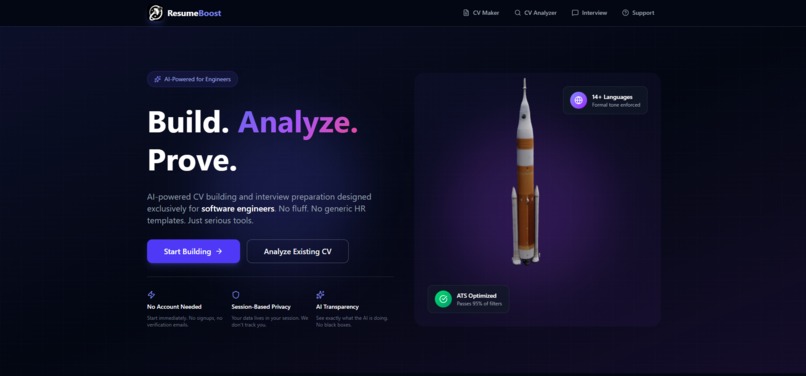
home page
-
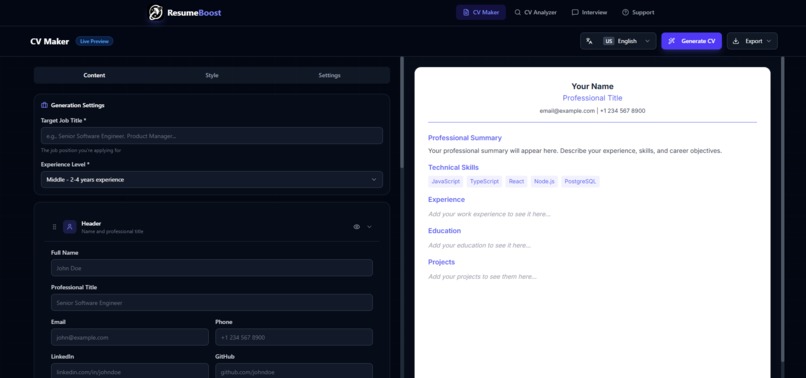
cv-maker page
-
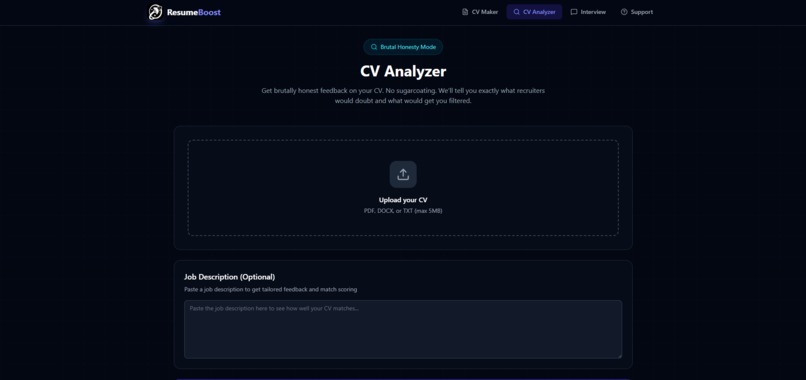
cv-analyzer page
-
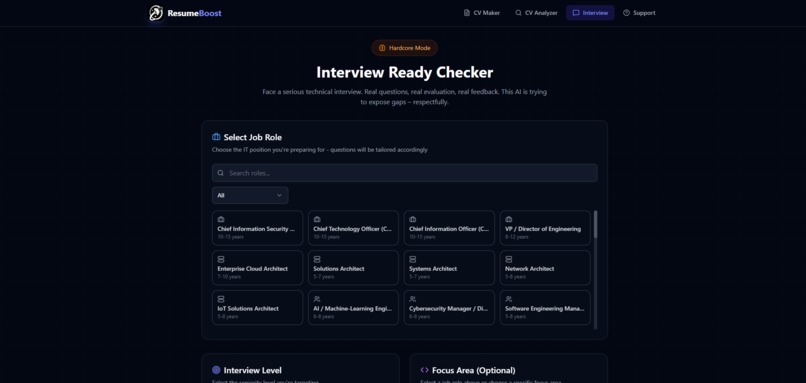
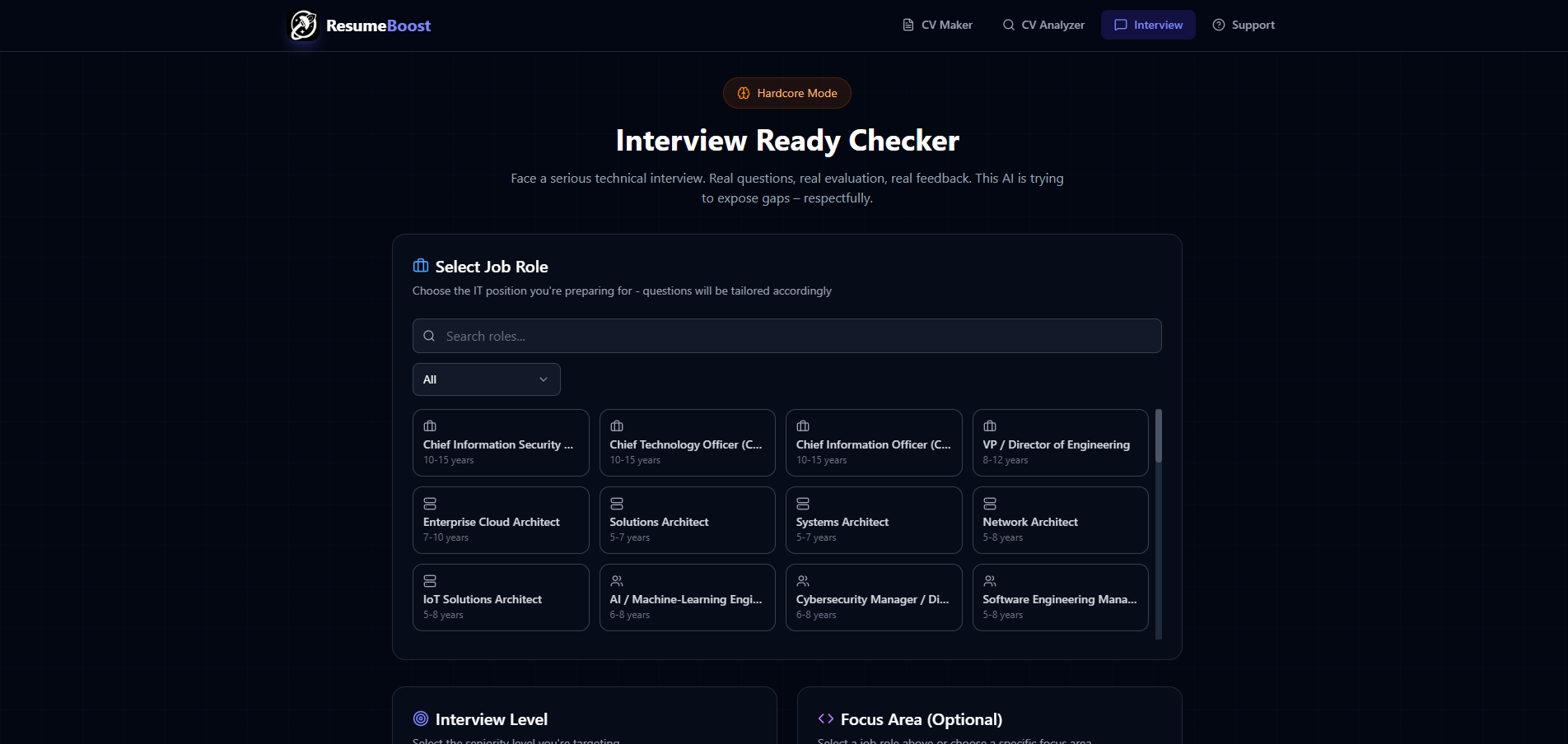
interview page
-
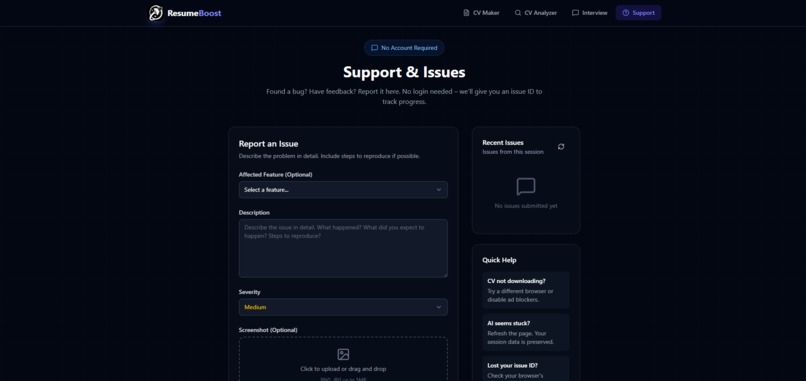
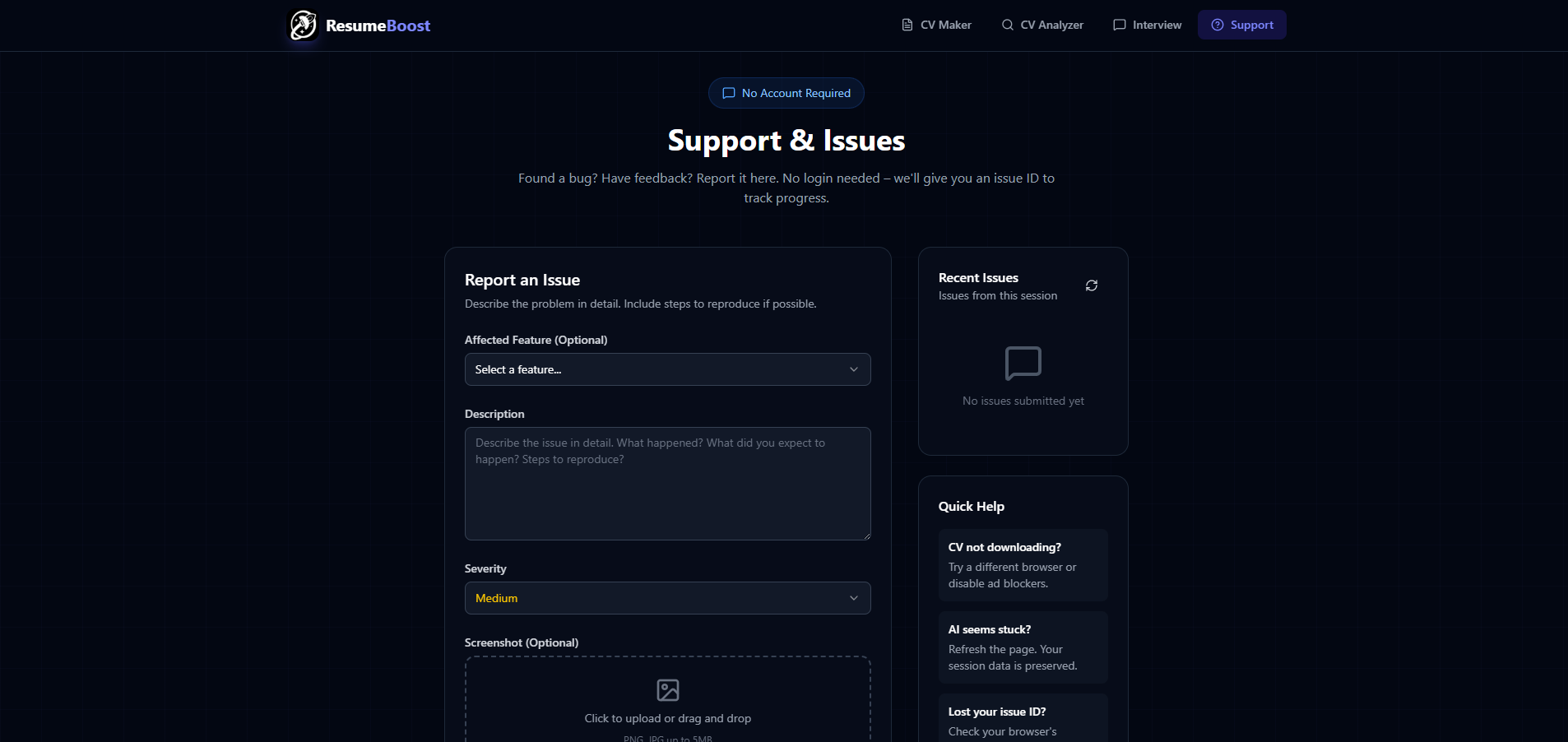
support page
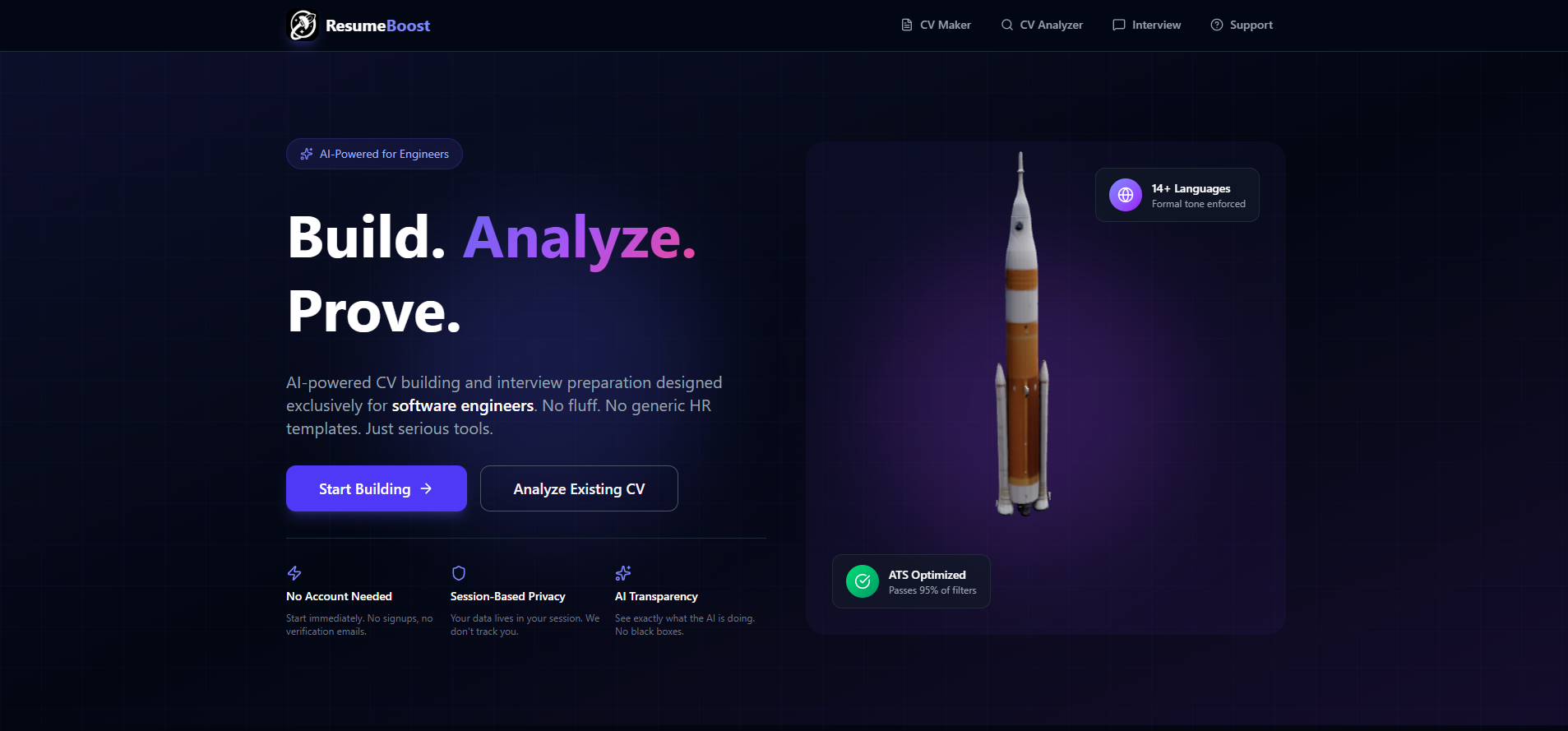
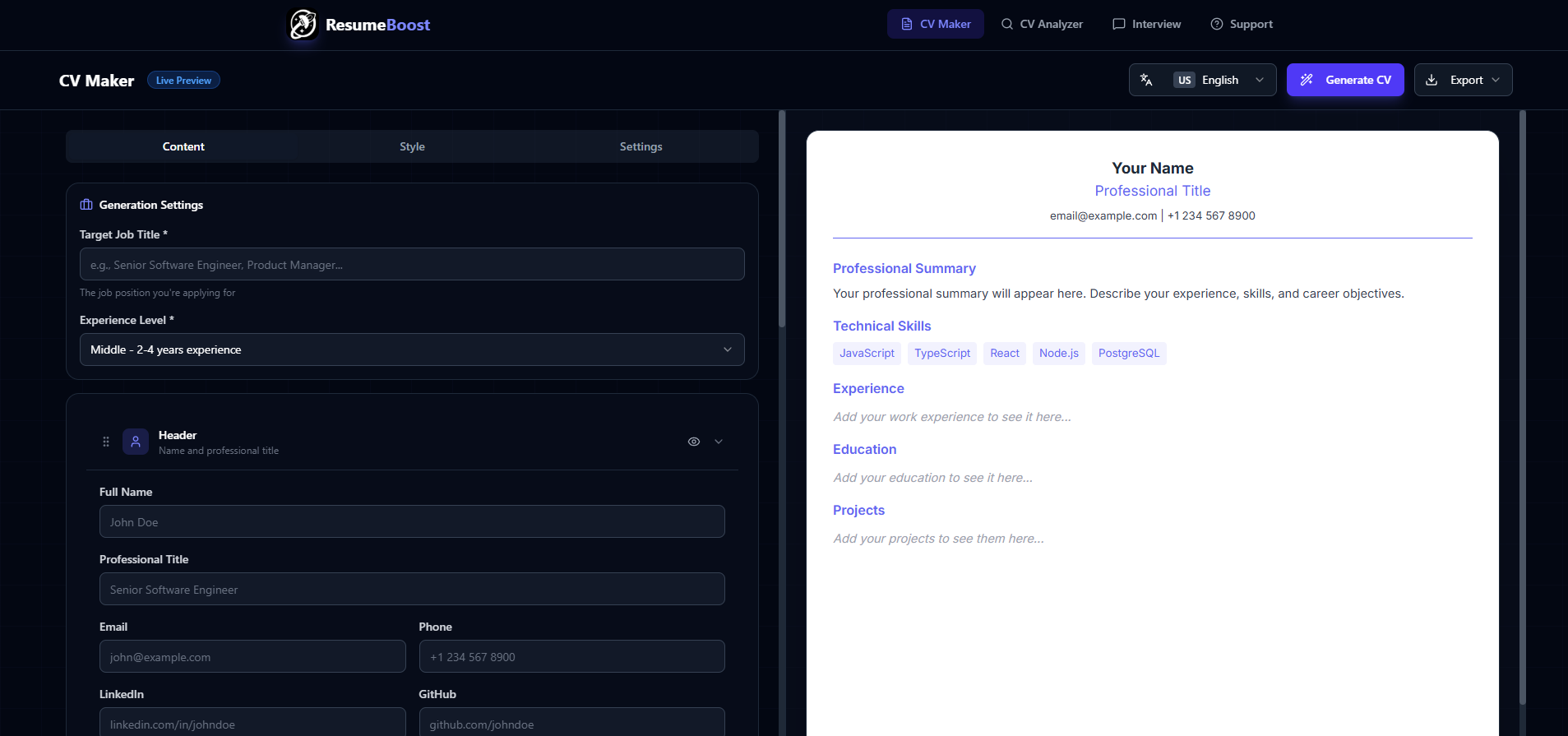
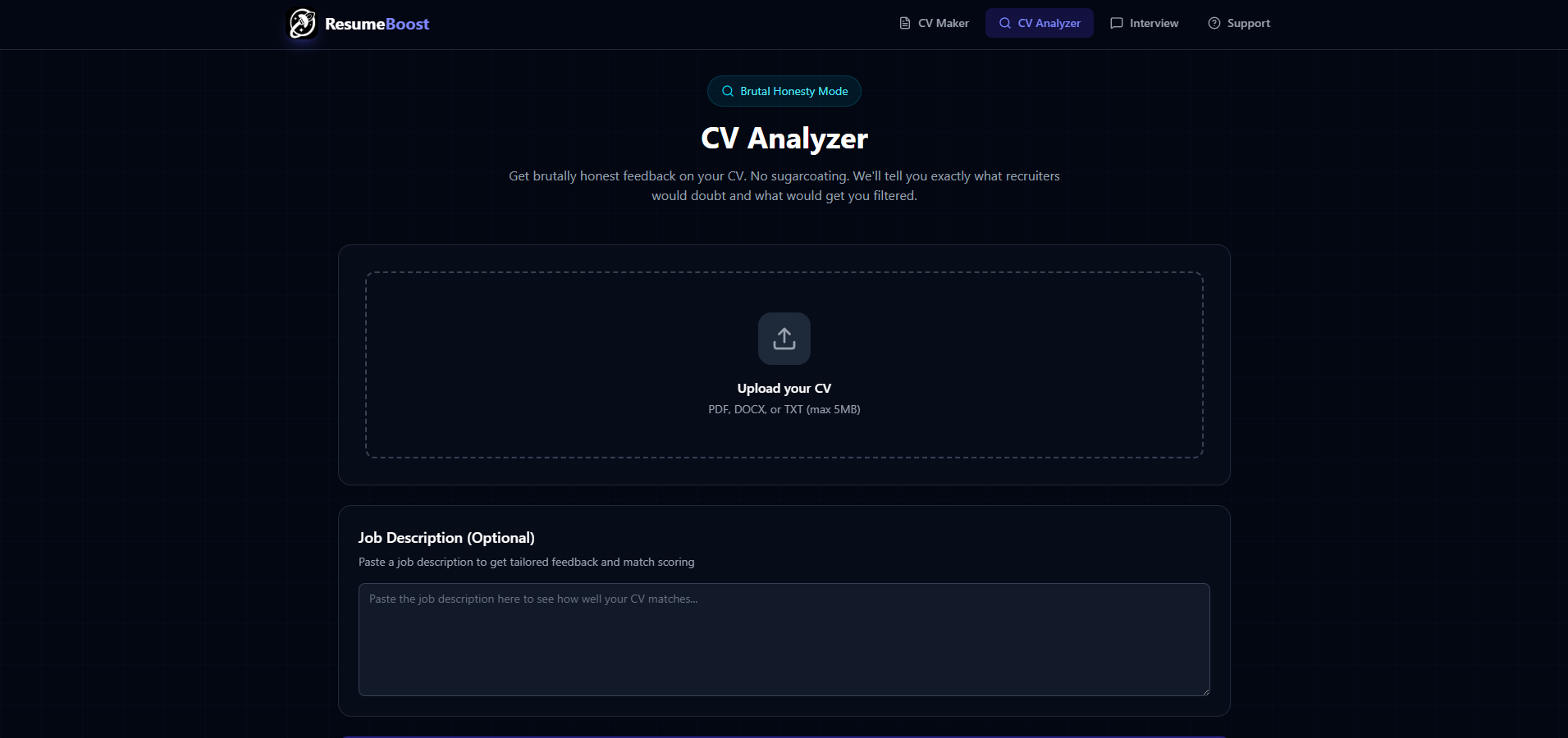
What It Does At its core, ResumeBoost is a career assistant built to solve a very specific problem: people don’t struggle because they’re unqualified — they struggle because they don’t know how to present what they already know.
ResumeBoost helps job seekers take control of that narrative.
It analyzes resumes with attention to structure, wording, and relevance, then offers concrete, role-aware suggestions instead of vague advice. It allows users to practice AI-powered mock interviews that adapt to their skills and experience, helping them think clearly under pressure. It also makes resumes accessible across borders by translating them for global opportunities.
Everything lives in one place, designed to be simple, fast, and genuinely useful — not overwhelming.
How We Built It We built ResumeBoost with the mindset of shipping something real, not just a demo.
The application is powered by Next.js, handling both frontend and backend logic in a single, cohesive system. Prisma manages the database layer, allowing us to move quickly without sacrificing structure. For the intelligence behind resume analysis and interview simulation, we integrated the OpenAI API, focusing heavily on prompt design to ensure responses were helpful rather than generic.
Resume content is extracted through PDF and DOCX parsing, which lets users upload real resumes without manual copying. On the frontend, Tailwind CSS helped us build a clean, responsive interface that stays out of the user’s way.
Every technical choice was made with speed, clarity, and real-world usability in mind.
Challenges We Ran Into The hardest problems weren’t visual — they were subtle.
Resumes come in many formats, and parsing them reliably was far from trivial. Even when the text was extracted correctly, getting the AI to respond with specific, contextual feedback instead of broad advice required careful prompt engineering. Long resumes introduced performance concerns, and poorly designed prompts quickly led to shallow or repetitive output.
We solved these issues through constant testing, iteration, and refinement — adjusting prompts, limiting noise, and focusing on clarity over cleverness.
Accomplishments We’re Proud Of In a short amount of time, we built something complete.
ResumeBoost combines resume analysis and interview simulation into a single platform, rather than treating them as separate tools. We’re proud of the clean, intuitive interface that lets users focus on improvement instead of navigation. Most importantly, we’re proud that the product delivers real value — not just impressive technology, but practical help.
For a hackathon project, it feels surprisingly close to something people could actually rely on.
What We Learned This project taught us that AI is only as useful as the experience built around it.
We learned how to design prompts that guide users instead of confusing them, how to integrate AI into production-style systems, and why UX matters even more when intelligence is involved. We also learned how to make decisions quickly, adapt under pressure, and ship without overengineering.
Those lessons will carry far beyond this project.
What’s Next for ResumeBoost ResumeBoost is only the beginning.
We plan to add ATS compatibility scoring to better reflect real hiring pipelines. Expanding language support will make the platform accessible to more users worldwide. Job-specific optimization will allow resumes to adapt to different roles instead of staying static.
Our long-term goal is to turn ResumeBoost into a full SaaS product — one that genuinely helps people move forward in their careers.
Built With
- ai-prompt-engineering
- next.js
- openai-api
- pdf/docx-parsing
- postgresql
- prisma-orm
- react
- tailwindcss
- typescript
- vercel


Log in or sign up for Devpost to join the conversation.