ScamShield AI
Inspiration
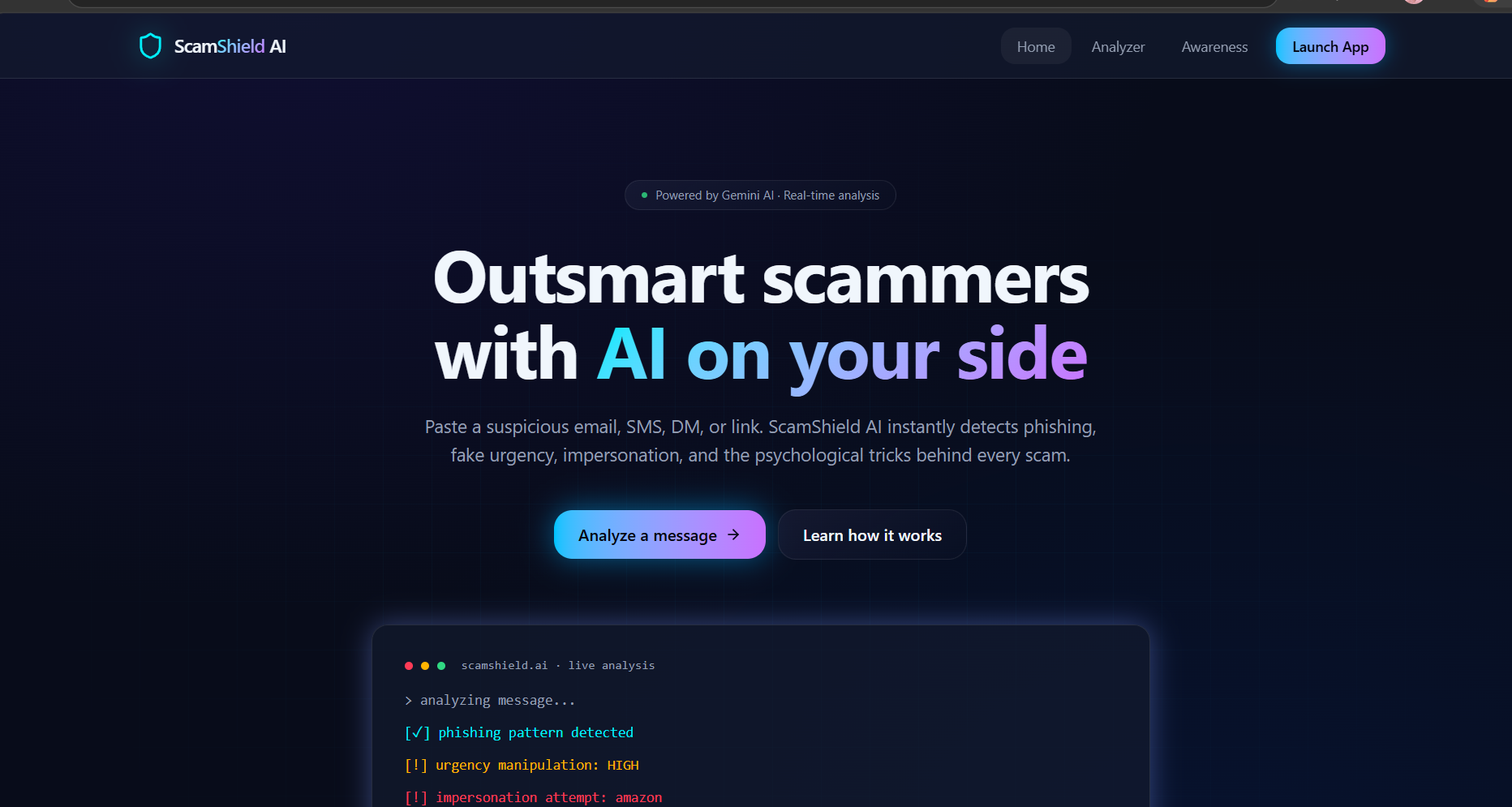
Online scams, phishing attacks, fake messages, and malicious links are increasing rapidly across emails, SMS, WhatsApp, and social media platforms. Many users fall victim because scammers use psychological manipulation techniques such as urgency, fear, fake authority, reward bait, and emotional pressure.
We wanted to create a platform that not only detects scams using AI but also educates users about why a message is dangerous in a simple and understandable way.
ScamShield AI was built to combine artificial intelligence with cybersecurity awareness and help people stay safer online.
What it does
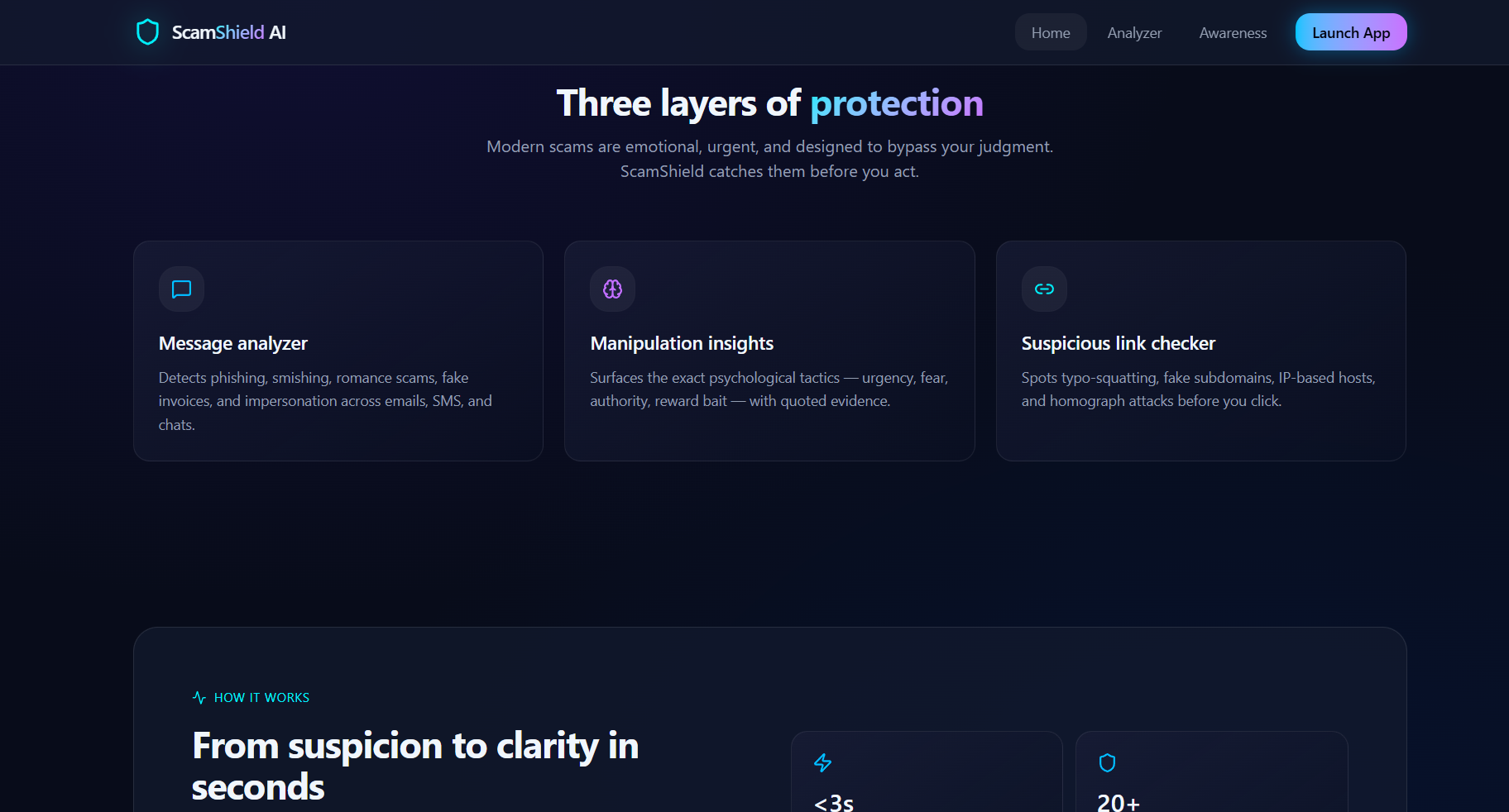
ScamShield AI is an AI-powered cybersecurity assistant that analyzes suspicious messages and phishing links in real time using Gemini AI.
Users can paste:
- Suspicious SMS messages
- Phishing emails
- WhatsApp chats
- Scam URLs and links
The platform then generates:
- Scam probability score
- Threat level analysis
- Scam category detection
- Manipulation tactic identification
- AI-generated explanations
- Personalized safety recommendations
ScamShield AI also explains psychological manipulation methods commonly used in cybercrime, including:
- Urgency pressure
- Fear tactics
- Impersonation attacks
- Reward bait scams
- Fake authority manipulation
This helps users learn about modern scam strategies while protecting themselves online.
How we built it
We built ScamShield AI using:
- React
- TypeScript
- TailwindCSS
- Framer Motion
- Gemini API
- Vite
The frontend was designed with a modern cybersecurity-inspired UI using:
- Glassmorphism effects
- Neon glow visuals
- Animated cards
- Responsive layouts
- Smooth transitions
Gemini AI powers the core scam analysis engine and generates structured cybersecurity insights in real time.
Challenges we ran into
One of the biggest challenges was handling structured AI responses consistently from Gemini API. We faced issues related to:
- Response parsing
- JSON formatting inconsistencies
- Schema validation
- Fallback handling for AI-generated outputs
Another challenge was simplifying technical cybersecurity concepts into explanations that non-technical users could easily understand.
We also focused heavily on balancing functionality, AI integration, and polished UI design within the limited hackathon timeframe.
Accomplishments that we're proud of
- Successfully integrating Gemini AI into a real-world cybersecurity application
- Building a modern and responsive UI/UX
- Creating psychologically-aware scam analysis
- Developing a working AI-powered scam detection platform
- Making cybersecurity awareness more accessible and educational
What we learned
During this project, we learned:
- AI prompt engineering with Gemini
- Structured AI response handling
- Frontend optimization techniques
- Advanced UI/UX design principles
- Error handling for AI-generated outputs
- How AI can improve cybersecurity awareness and education
What's next for ScamShield AI
Future improvements include:
- Screenshot-based scam detection using OCR
- Browser extension support
- Multilingual scam analysis
- Voice scam detection
- Real-time phishing URL verification
- Scam reporting dashboard
- AI-powered email protection
ScamShield AI aims to make digital safety smarter, faster, and more accessible through AI-powered cybersecurity awareness.
Built With
- ai
- api
- framer
- gemini
- motion
- react
- tailwindcss
- typescript
- vite


Log in or sign up for Devpost to join the conversation.