-
-
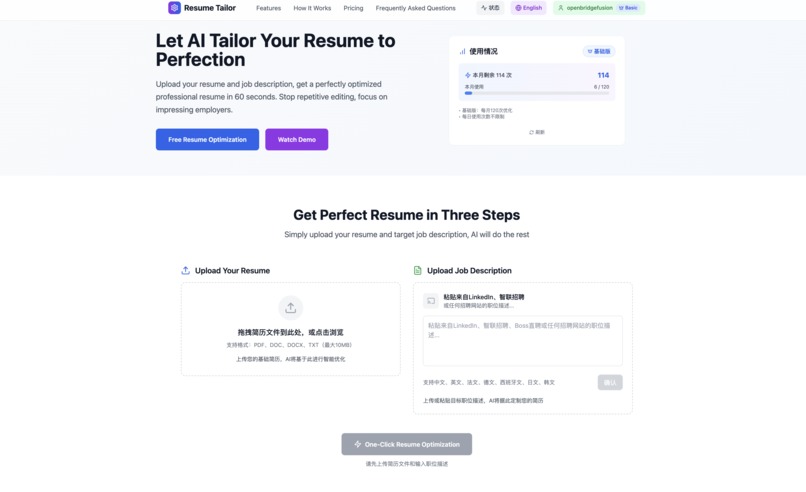
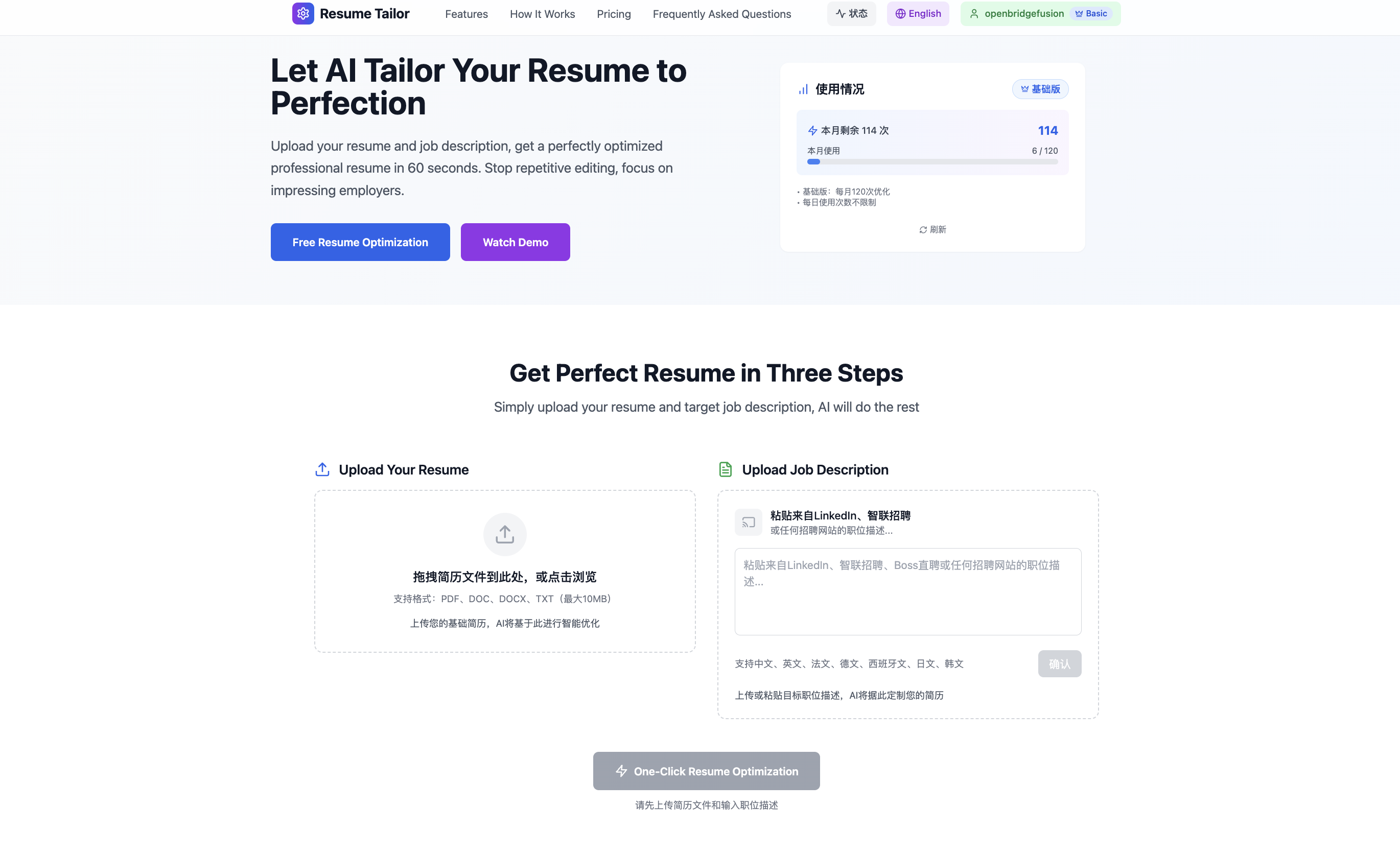
Home Page
-
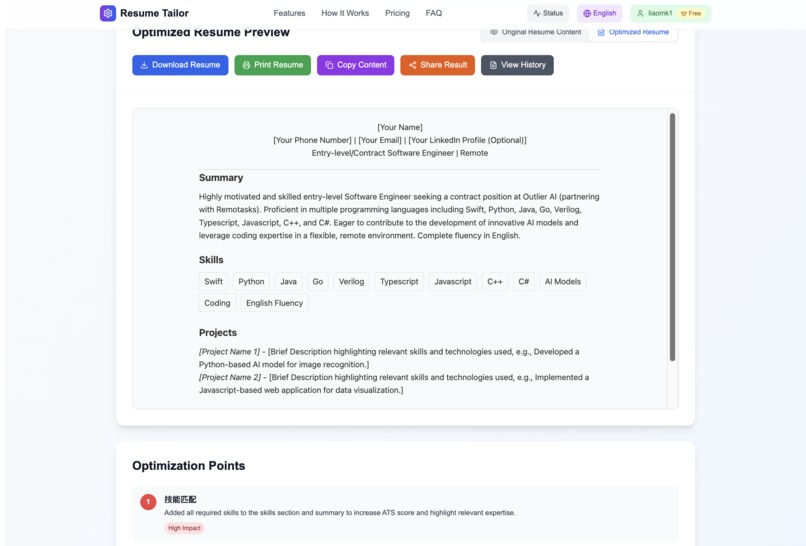
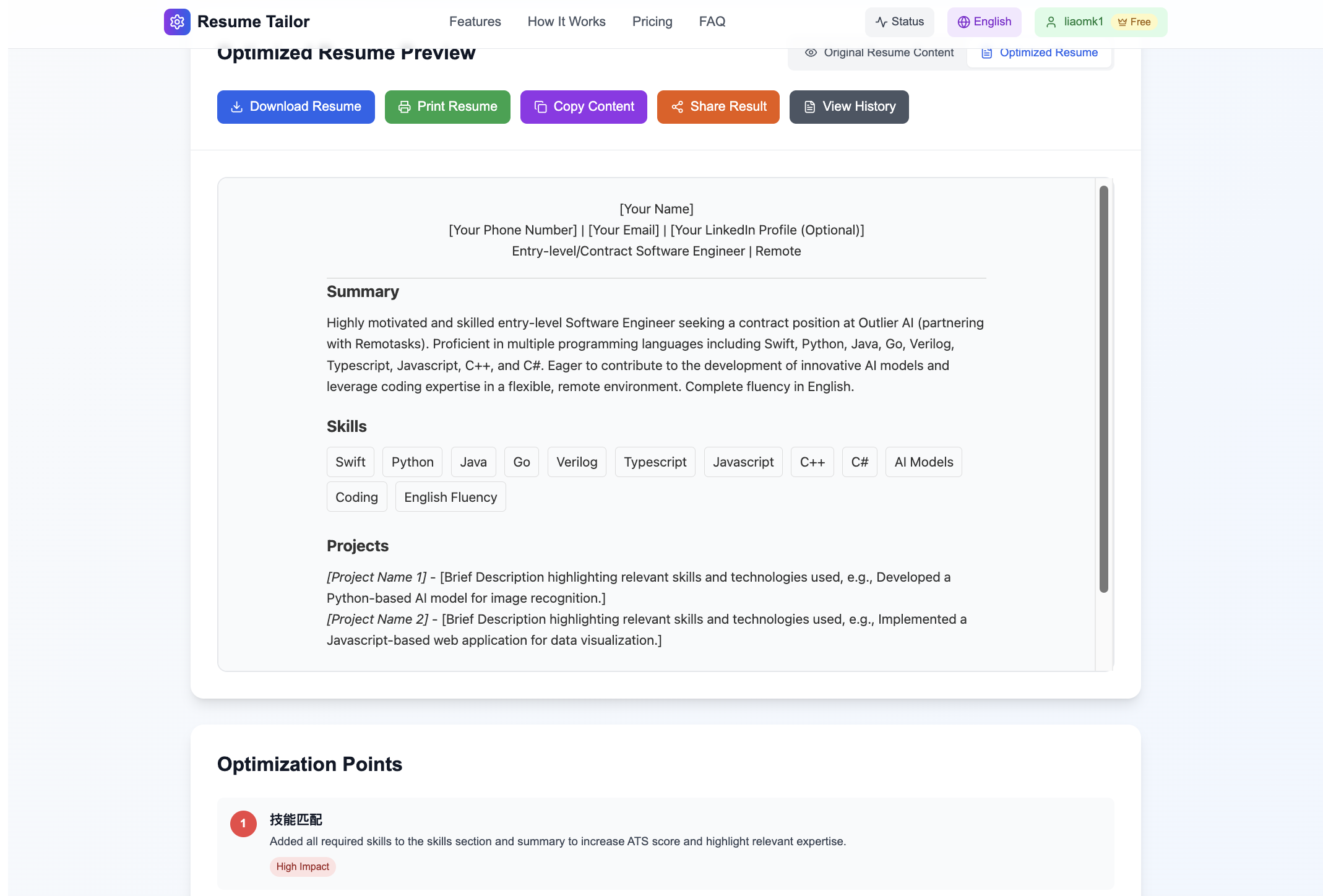
Preview of Resume by Resume Tailor
-
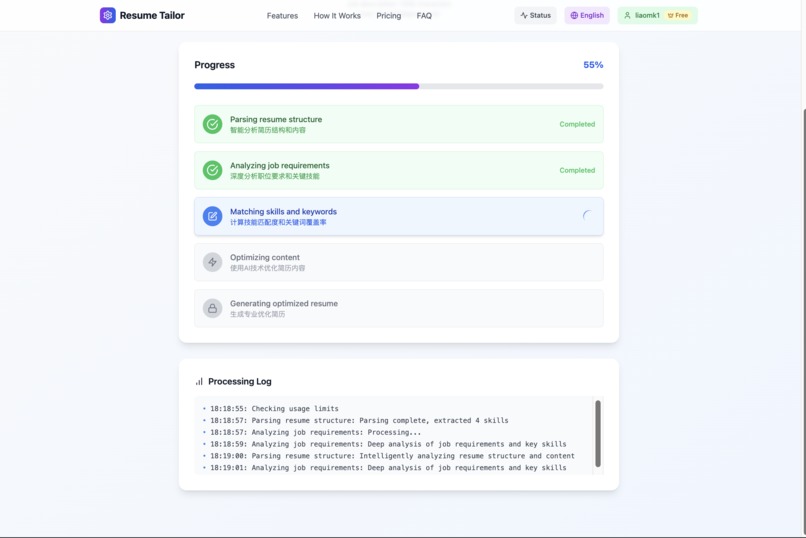
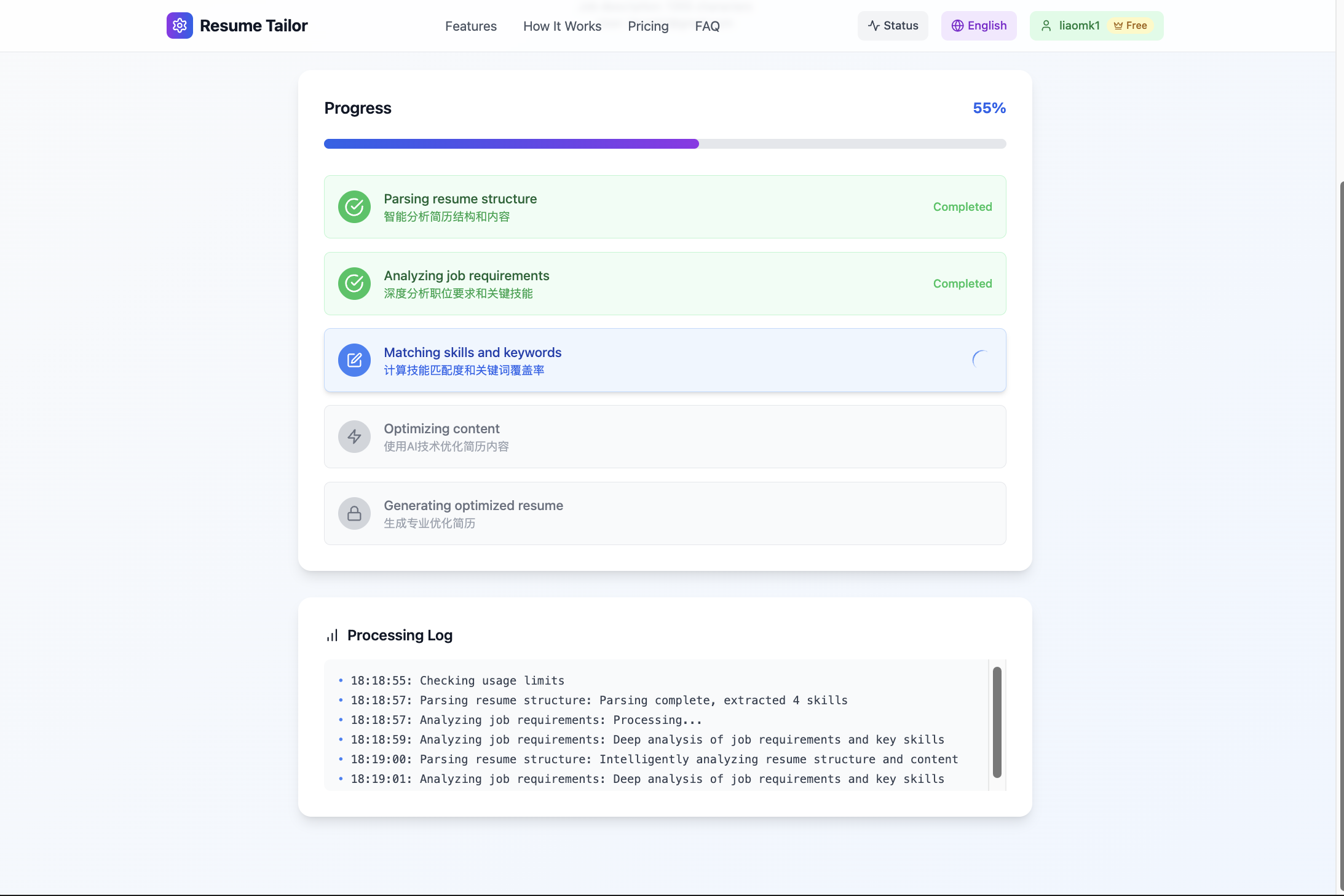
Magic deal of Resume Tailor
-
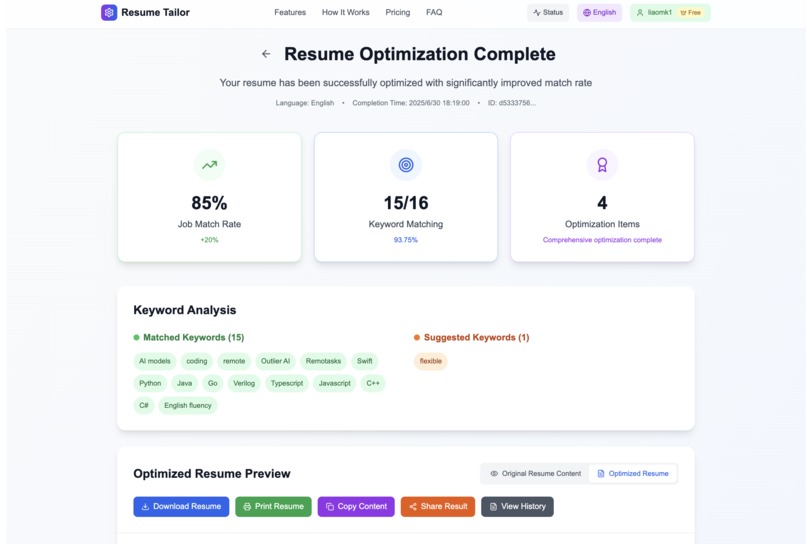
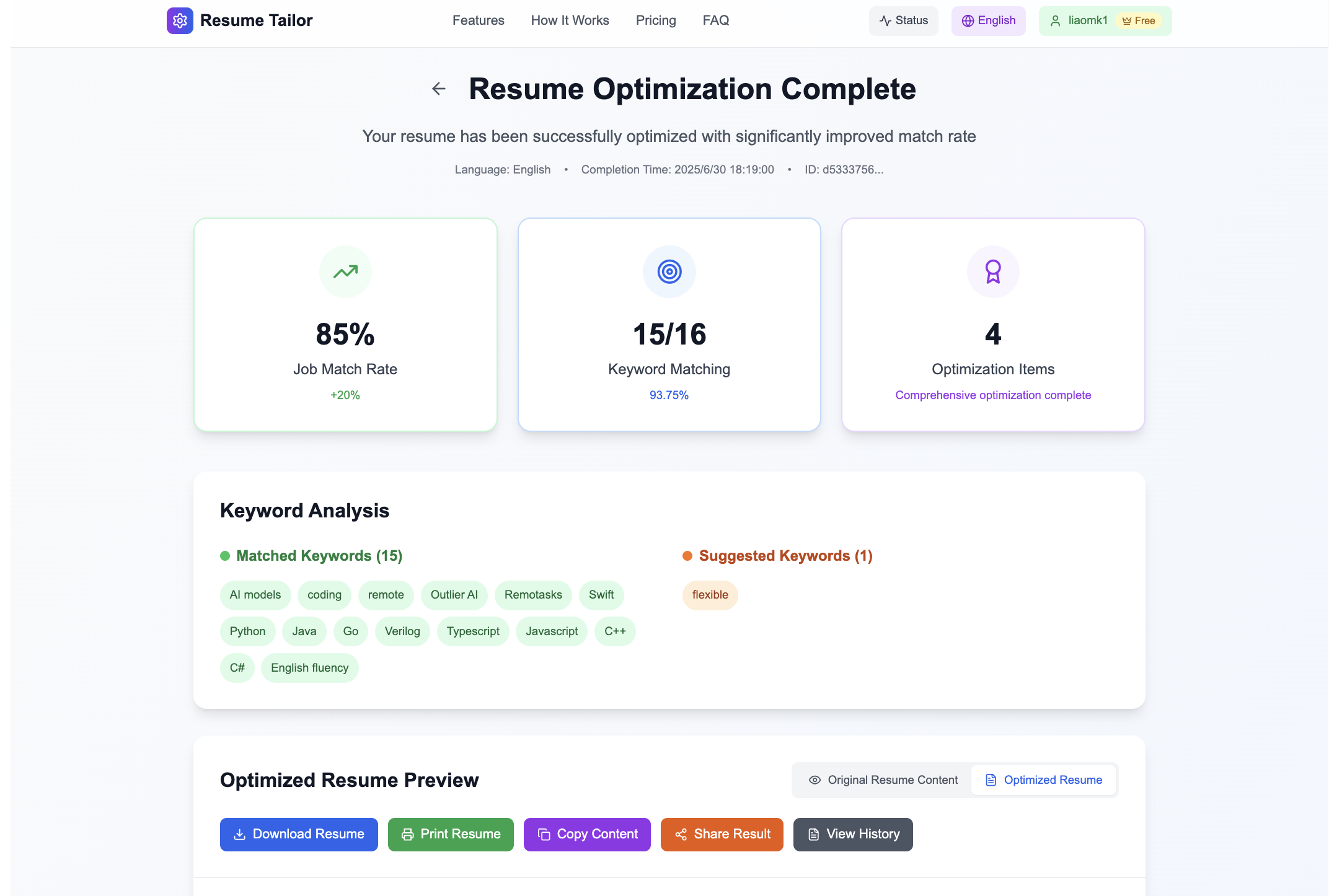
Top notice of Resume
Inspiration
The job market has become increasingly competitive, with recruiters spending only 6-7 seconds on average reviewing each resume. We were inspired by the frustration many job seekers face when trying to tailor their resumes for different positions manually. The traditional approach is time-consuming, often resulting in generic applications that fail to highlight relevant skills and experiences. We envisioned an AI-powered solution that could intelligently analyze job descriptions and automatically optimize resumes to maximize the chances of getting noticed by both ATS systems and human recruiters.
What it does
AI Resume Tailor is an intelligent web application that automatically optimizes resumes for specific job positions. Users simply upload their resume in PDF, DOC, or DOCX format, paste the target job description, and our AI analyzes both documents to create a perfectly tailored resume. The system extracts key information from the original resume, identifies critical keywords and requirements from the job posting, and restructures the content to highlight the most relevant experiences and skills. The application supports multiple languages and provides real-time optimization progress with detailed analytics on keyword matching and improvement suggestions.
How we built it
We built AI Resume Tailor using a modern tech stack centered around React and TypeScript for the frontend, with Tailwind CSS and Shadcn UI components for a responsive, professional design. The application uses React Router for navigation and React Query for efficient data management. For document processing, we integrated specialized libraries including PDF-parse for PDF extraction, Mammoth for Word documents, and react-dropzone for file handling. The AI optimization is powered by OpenRouter API using the DeepSeek model, which provides intelligent analysis and content restructuring. We implemented Clerk for user authentication and used i18next for internationalization support. The entire application is built with Vite for optimal development experience and performance.
Challenges we ran into
One of the biggest challenges was accurately parsing different resume formats while preserving the semantic meaning of the content. We had to handle various document structures, fonts, and layouts that could break traditional parsing methods. Another significant hurdle was creating an AI prompt that could understand job requirements deeply enough to make meaningful optimizations rather than simple keyword stuffing. We also faced challenges in balancing automation with user control - ensuring the AI suggestions were helpful while allowing users to maintain their personal voice and accurate information. Additionally, implementing real-time progress indicators and handling different languages while maintaining optimization quality required careful engineering.
Accomplishments that we're proud of
We're particularly proud of creating an intuitive user experience that makes resume optimization accessible to everyone, regardless of technical expertise. The intelligent document parser we developed can handle multiple file formats and extract information with high accuracy, even from complex layouts. Our AI integration successfully analyzes job descriptions at a deep level, going beyond simple keyword matching to understand role requirements and company culture fit. The multilingual support and responsive design ensure the application works seamlessly across different devices and languages. Most importantly, we've created a tool that genuinely helps job seekers present their best selves to potential employers.
What we learned
Through this project, we gained valuable insights into the complexities of document processing and the nuances of natural language understanding in recruitment contexts. We learned how to effectively integrate multiple AI services and handle their limitations gracefully with fallback mechanisms. The importance of user experience design became evident as we refined the interface based on the typical job seeker's workflow. We also discovered the challenges of internationalization in AI applications and how cultural differences affect resume structures and job expectations. Additionally, we learned about the balance between automation and user agency - providing smart defaults while maintaining user control over their personal information.
What's next for AI Resume Tailor
Looking ahead, we plan to implement advanced features such as ATS compatibility scoring to predict how well a resume will perform with different applicant tracking systems. We're working on integration with major job boards to automatically pull job descriptions and suggest relevant positions based on user profiles. Future enhancements include AI-powered interview preparation based on the optimized resume and job requirements, as well as a comprehensive analytics dashboard showing application success rates and optimization effectiveness. We also plan to expand our AI capabilities to provide industry-specific optimization strategies and add support for cover letter generation that perfectly complements the optimized resume.
Built With
- supabase
- tailwindcss
- vite

Log in or sign up for Devpost to join the conversation.