-

Logo
-
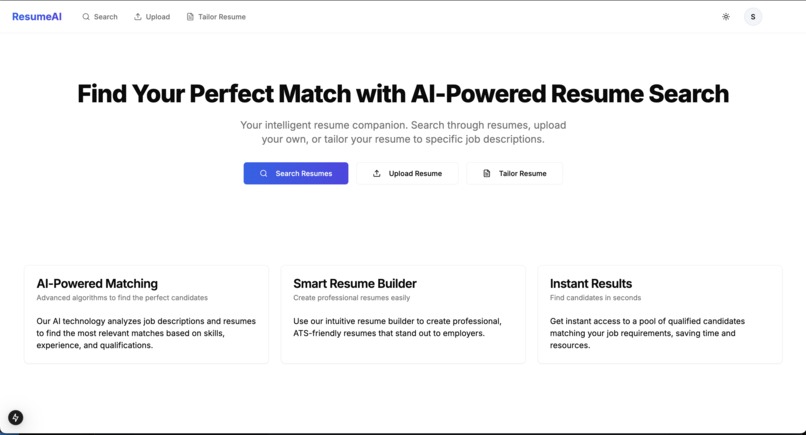
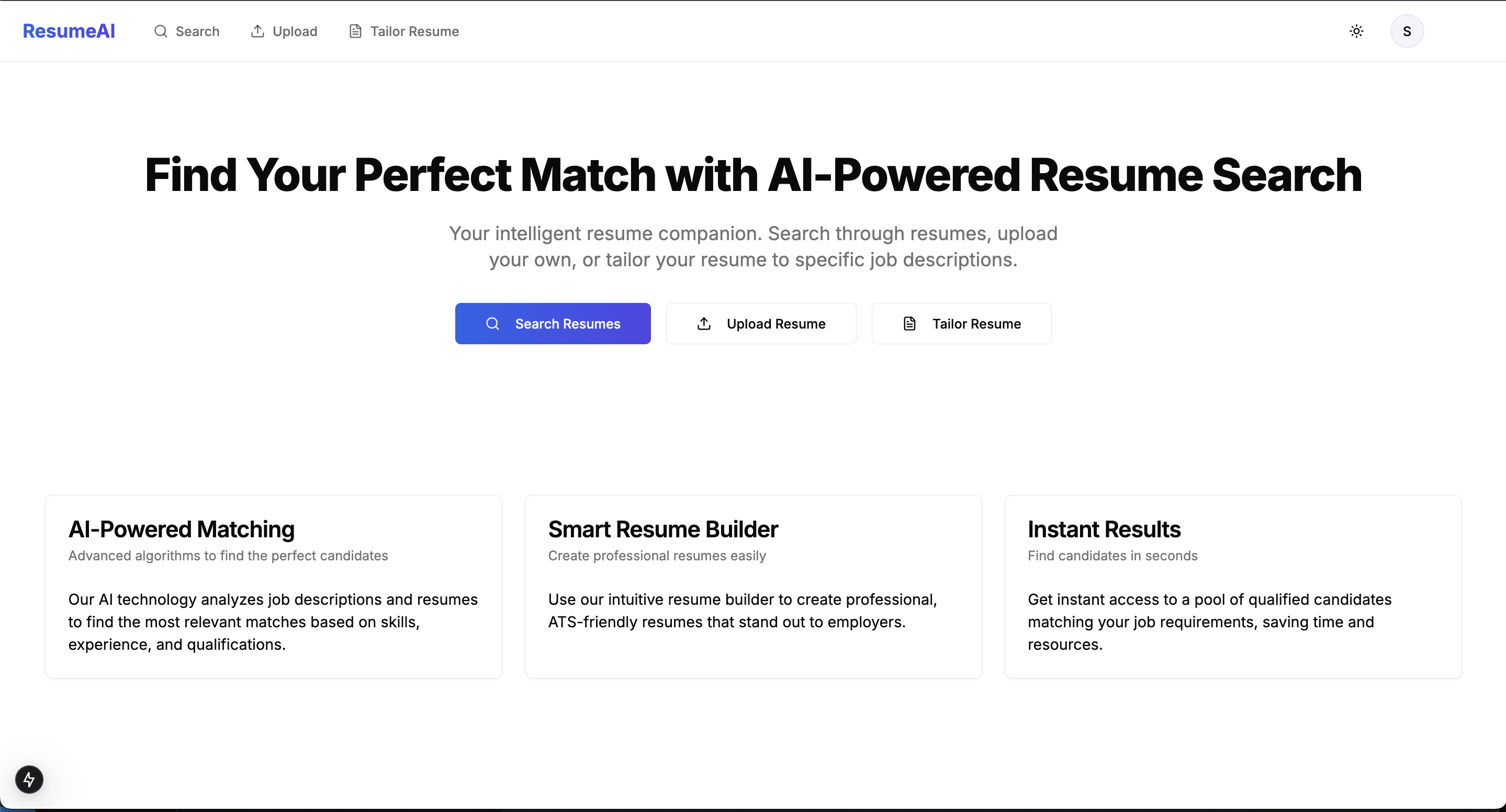
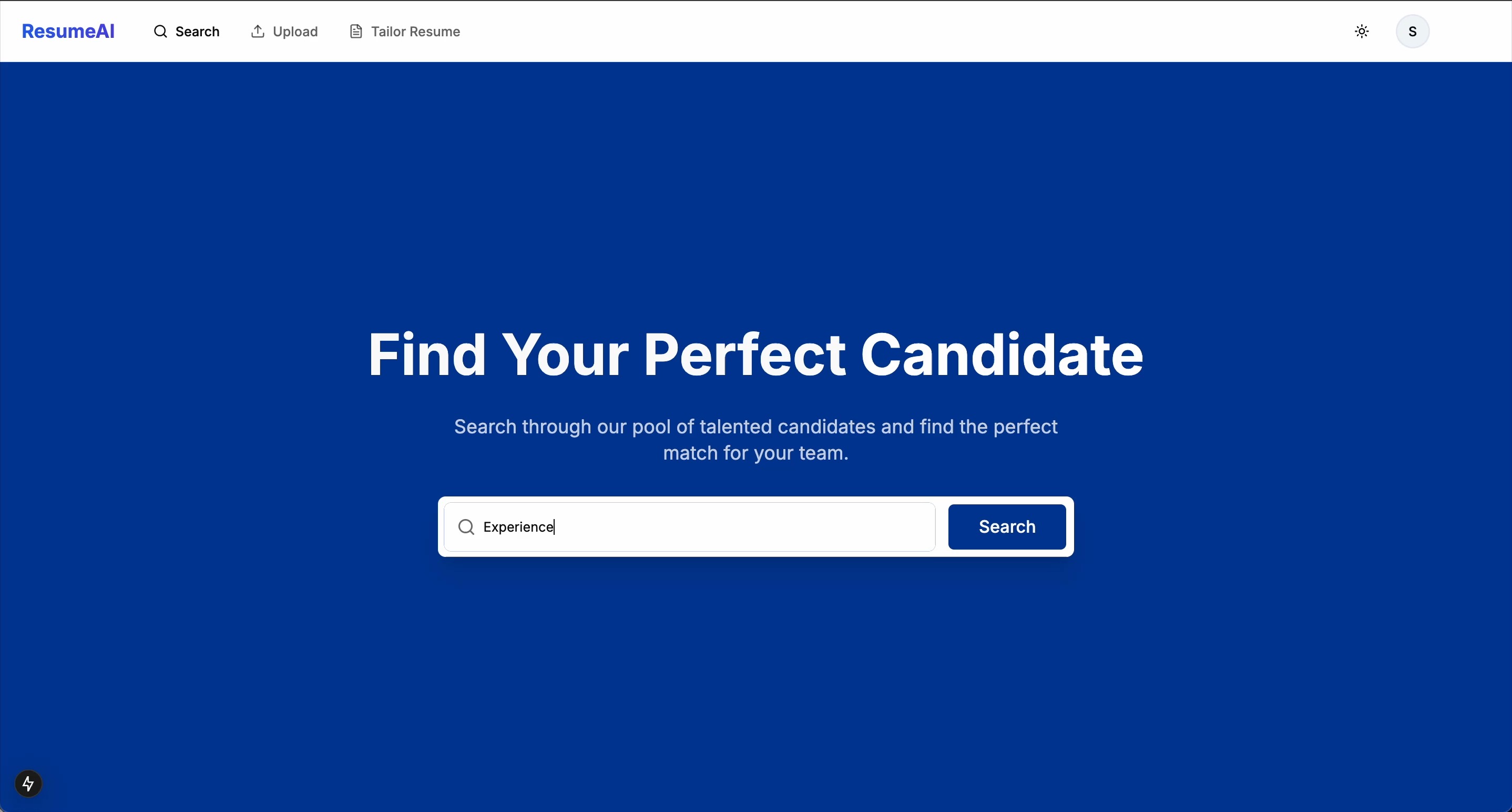
Home Screen
-
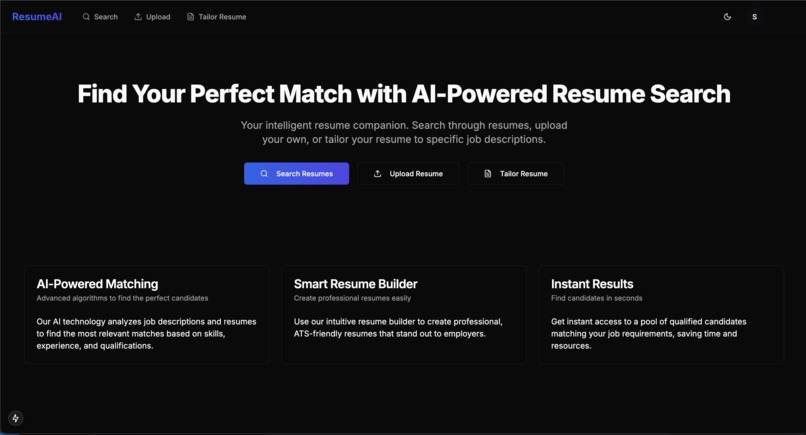
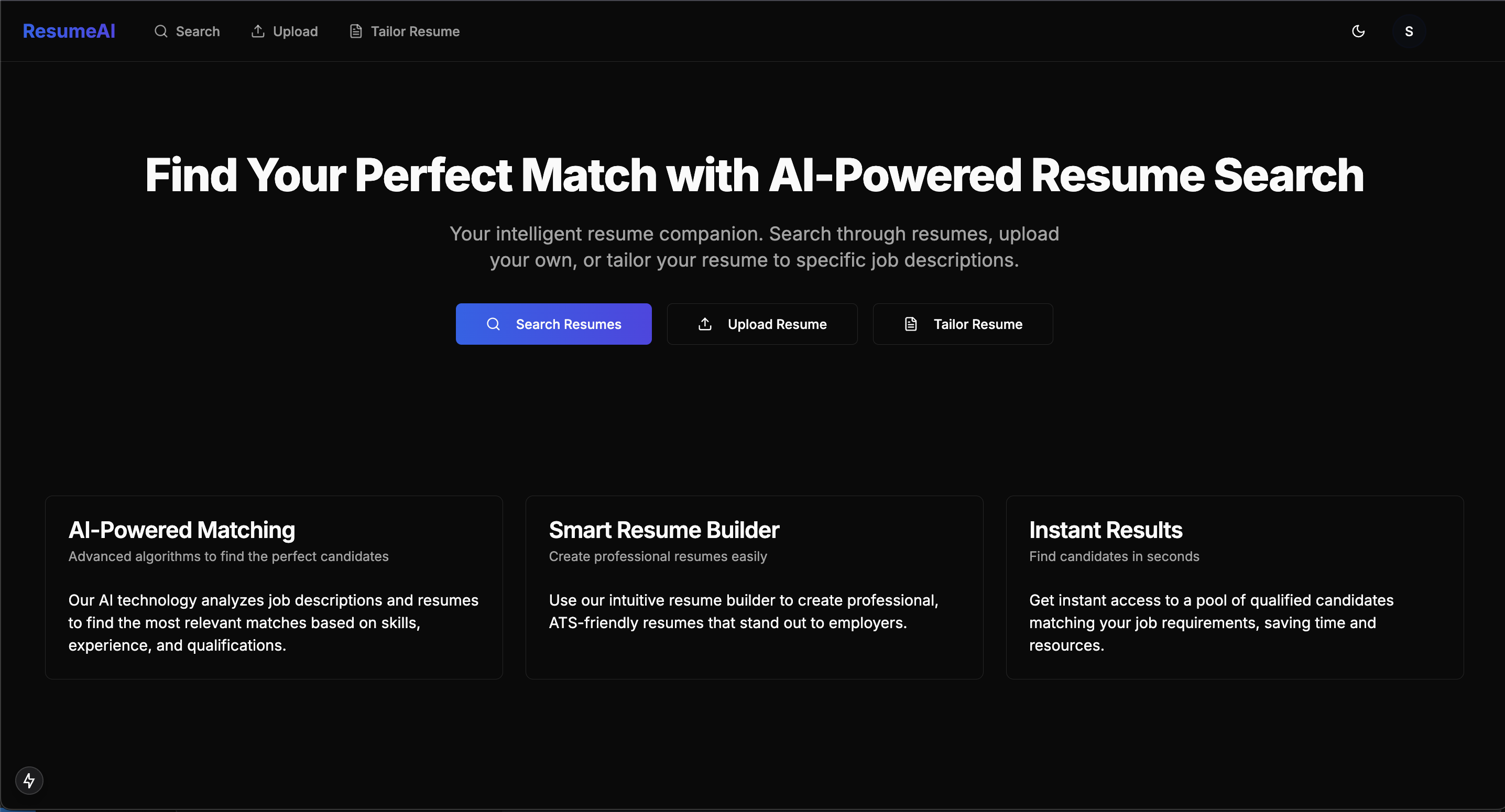
Dark Mode
-
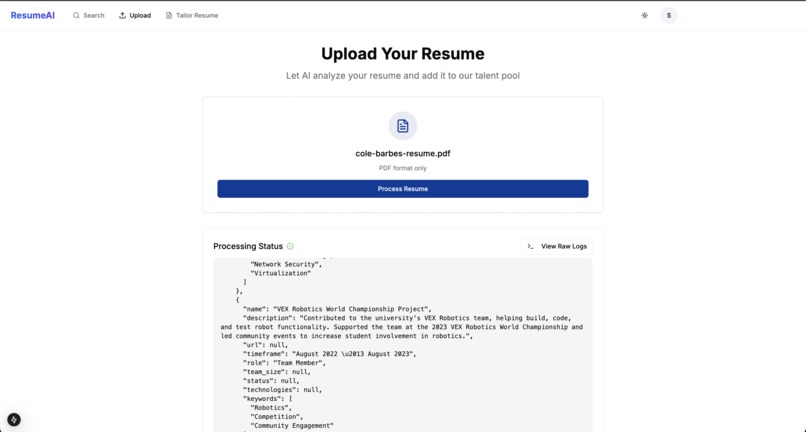
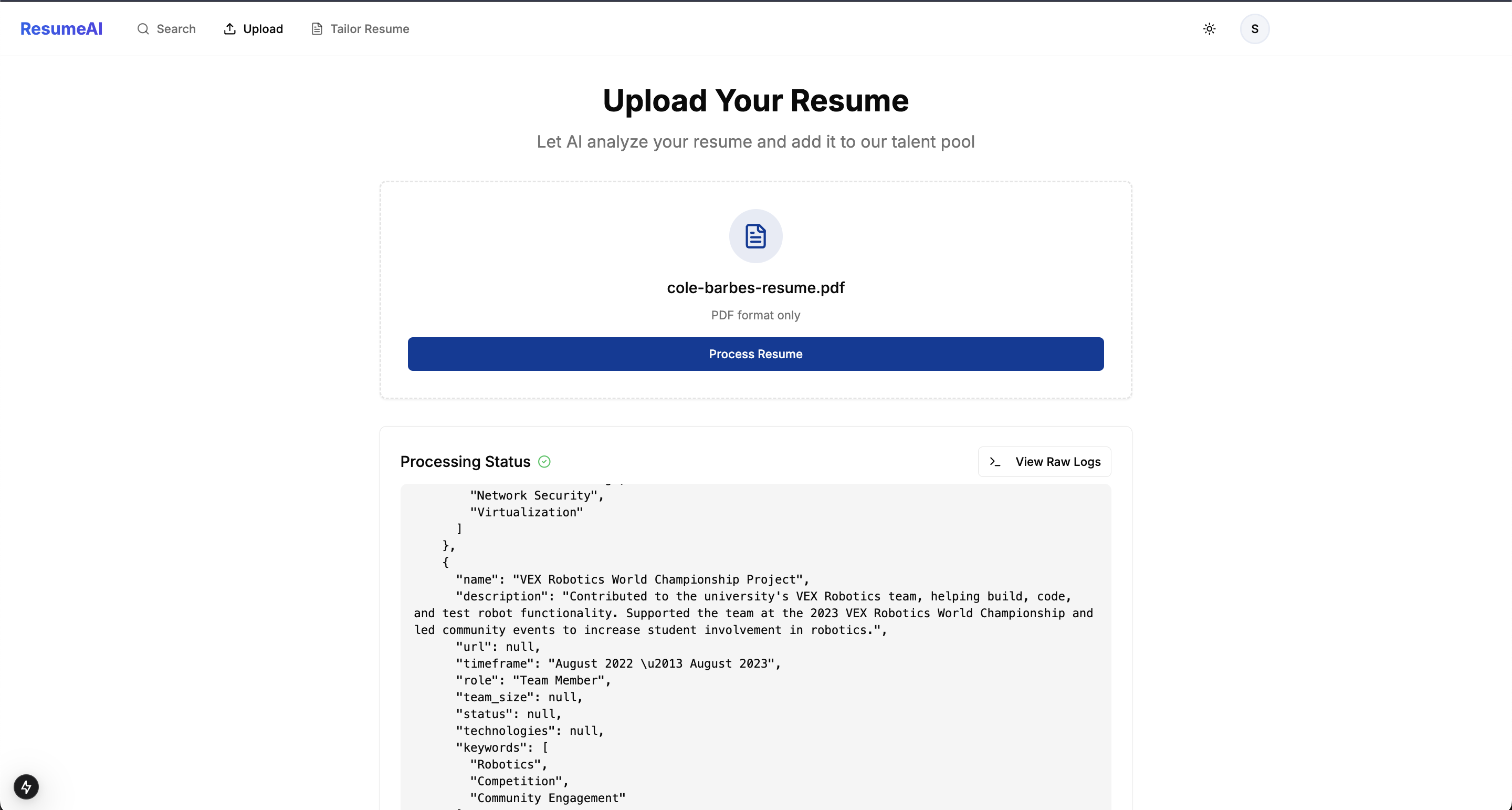
Resume Upload
-
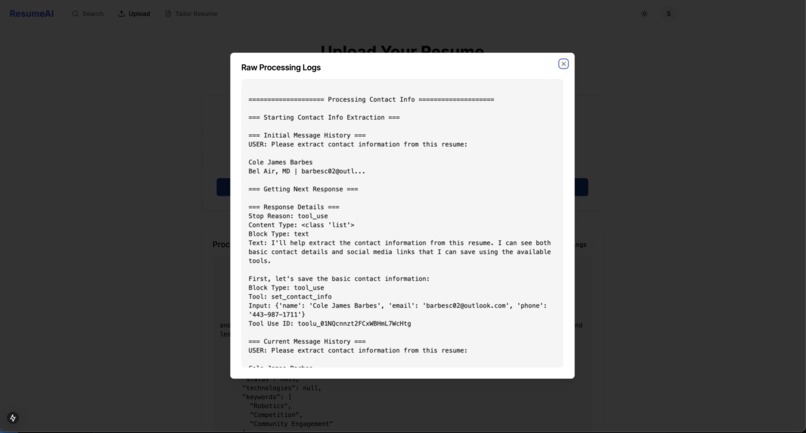
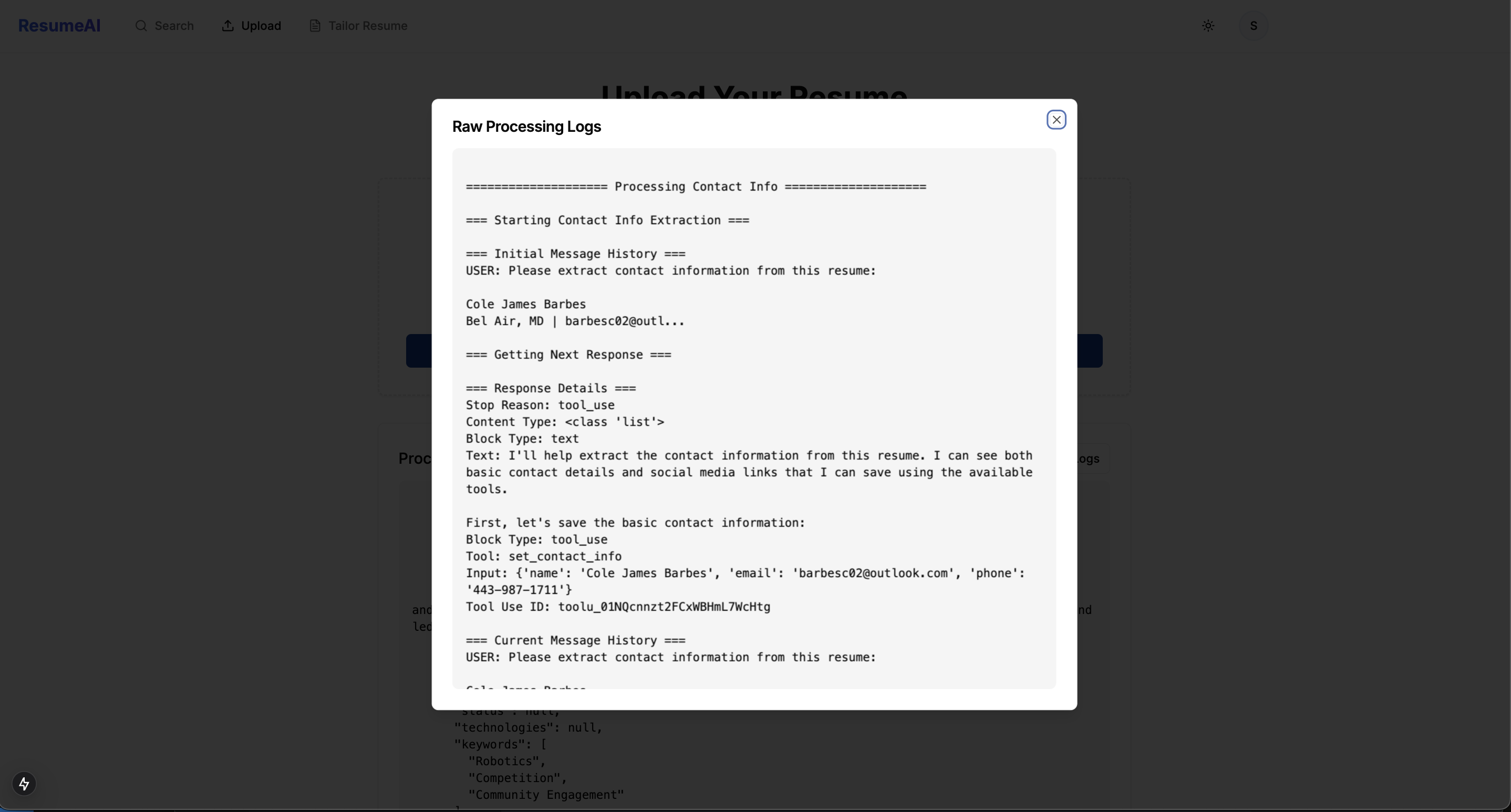
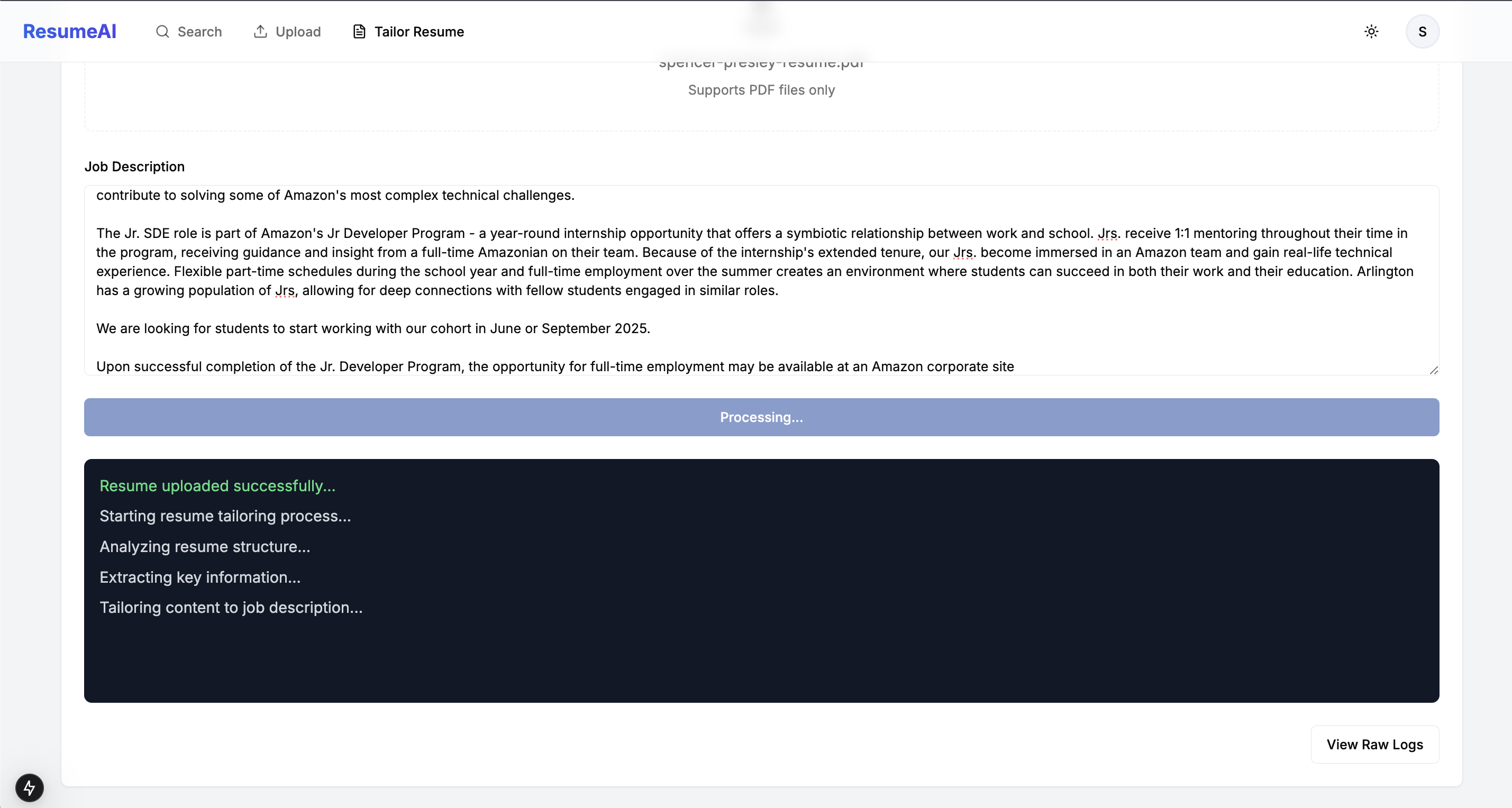
Resume Submission Log
-
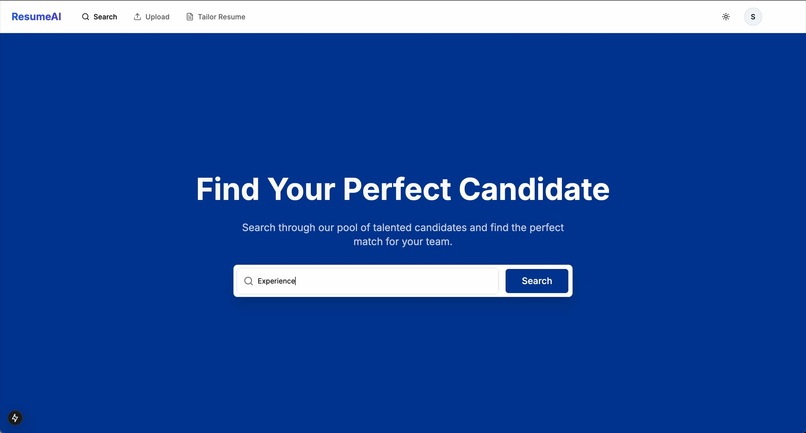
Candidate Query Page
-
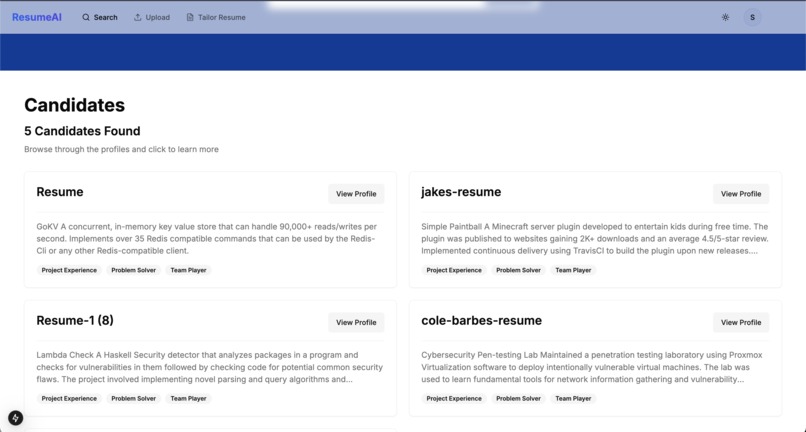
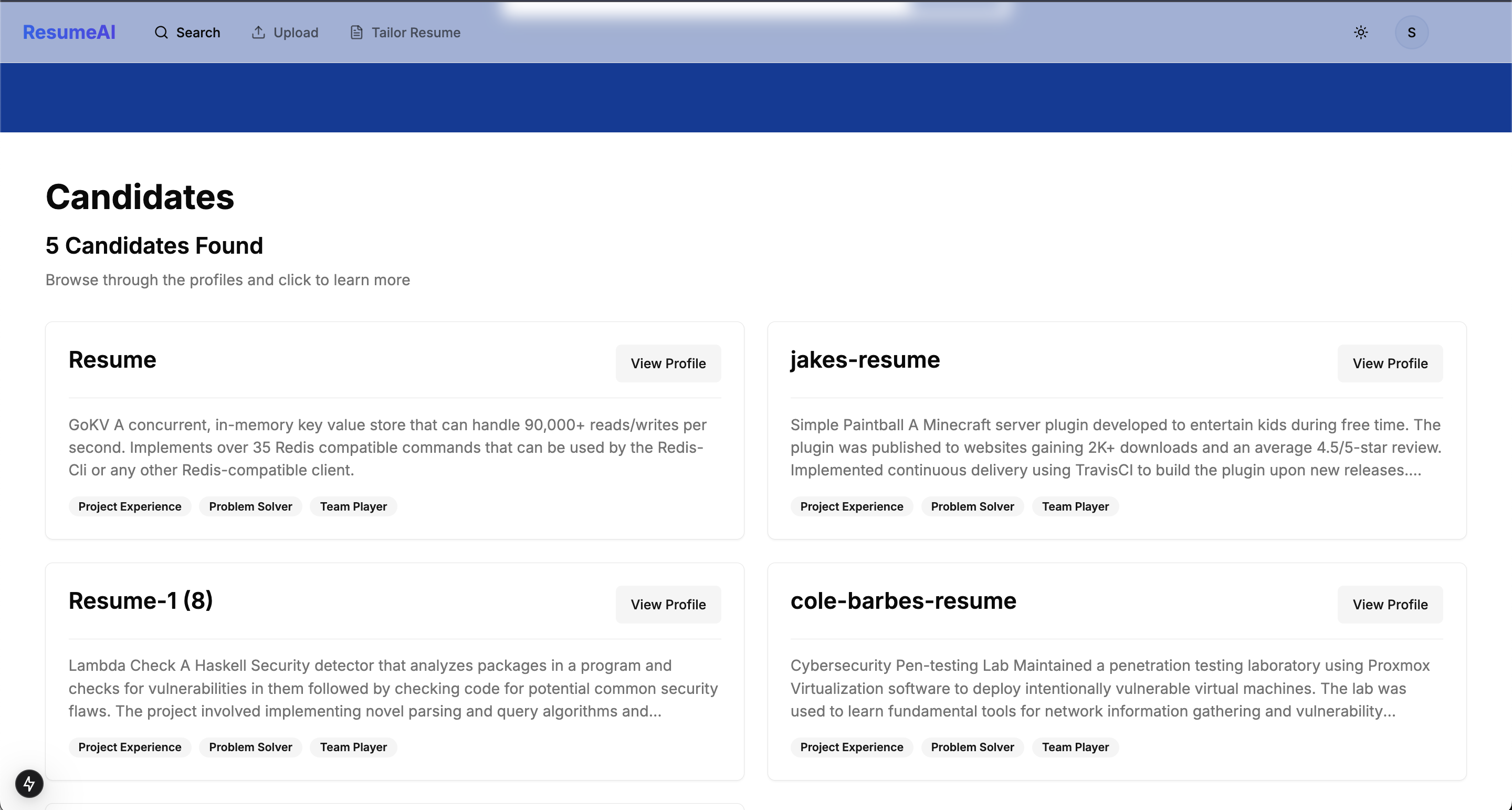
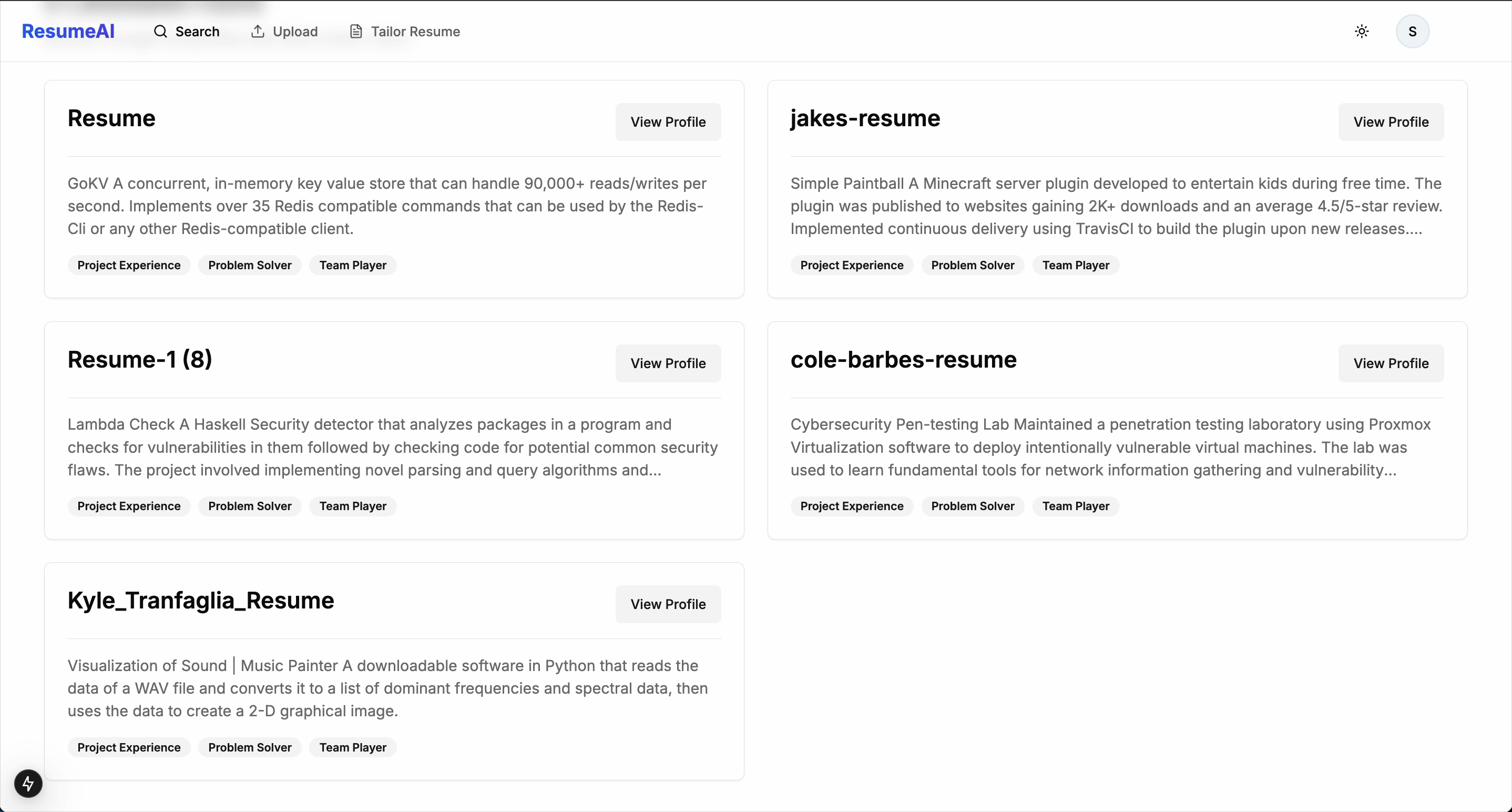
Candidates Example
-
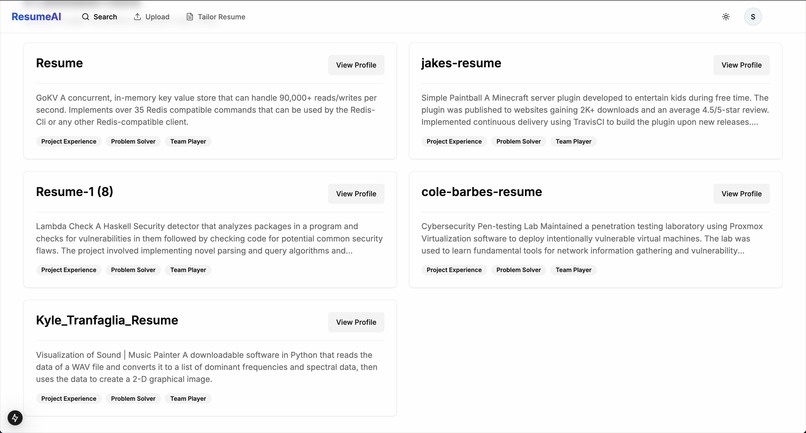
Resume Examples
-
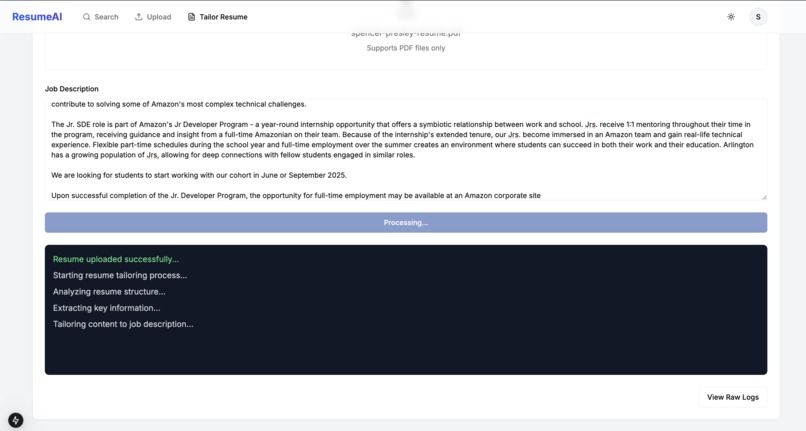
Resume Tailor

Inspiration
Many members of our team have recently navigated the job application process while seeking internships or full-time roles, either for the upcoming summer or post-graduation. Through this experience, we’ve encountered several unnecessary challenges, such as the need to tailor applications repeatedly and the difficulty of identifying job opportunities that align with our skills and goals. These hurdles highlighted the importance of creating a system designed to simplify the process. Our solution aims to eliminate these inefficiencies, streamline connections between recruiters and potential employees, and provide a fast, user-friendly resume tailoring tool.
What it does
Resume Querying and Storage System
This system allows applicants to submit a single application, which is then sent to multiple potential employers simultaneously, simplifying the process for job seekers. The submitted data is extracted, structured, and stored in a vector database, making it easily searchable.
From the recruiter’s perspective, the system includes a powerful search page that lets them input a description of the skills they are seeking. The system then returns a list of applicants whose skills and experience align most closely with the provided description.
Resume Generation Program
Our resume generation tool helps applicants tailor their resumes effortlessly. By taking an untailored resume and a specific job description, the program rewrites the resume to emphasize skills and experiences relevant to the desired position. It ensures a professional, one-page format while improving wording, clarity, and overall layout as needed.
Website Features
Our website includes several internal tools designed to enhance the user experience:
- A sign-in system allows users to create accounts, enabling a clear separation between Recruiter and Applicant pages and tools tailored to their specific needs.
- Light and Dark Modes: Enhance user experience and accessibility by offering customizable themes that cater to different preferences and lighting conditions.
How we built it
Our front-end was built using the Next.js framework, enabling faster website development through its extensive library of prebuilt components, a wide range of accessible resources, and its similarity to widely-used tools like React.
For the back-end, we used Python as the main programming language, incorporating libraries such as LangChain, FAISS, OpenAI, and Claude to handle key technical functionalities. FastAPI served as the backbone for the API, ensuring efficient and scalable communication between components. These libraries were selected for their widespread adoption, advanced capabilities, and ease of use, allowing us to build a sophisticated and technically advanced system within the given timeframe.
Challenges we ran into
During this hackathon, we faced challenges with coordination and communication, with minimal understanding of the API calls required by the frontend and backend, as well as the data that needed to be displayed. Additionally, there was uncertainty about who was responsible for specific tasks. We also had to quickly learn new tools, such as Next.js, which we had not been exposed to before.
Accomplishments that we're proud of
Overall, we are extremely proud of our ability to persevere and overcome the challenges we faced, ultimately delivering a legitimate product. This project pushed our coding capabilities to their limits, given the complexity and novelty of many of the libraries and frameworks we used. Looking back, we realize that we wouldn't have been able to make the same progress in the past, and this experience has significantly broadened our technical skills.
What we learned
During this project, we gained valuable experience with function calling, vector databases, Next.js, and APIs. Additionally, we deepened our understanding of the development process and gained firsthand experience in building software from scratch.
What's next for Resumai
Future Ideas for Resumai was to increase Security and allow for some degree of anonymity to Applicants. One of our biggest concerns was by having peoples data so easily accessible would not be safe from a real world perspective. This would include anonyzing resumes and allowing for our website rather than employers making initial contact with applicants if they are interested in a job before giving personal information.
Built With
- claude
- css
- faiss
- fastapi
- html
- javascript
- langchain
- next.js
- openai
- python
- shadcn

Log in or sign up for Devpost to join the conversation.