-
-
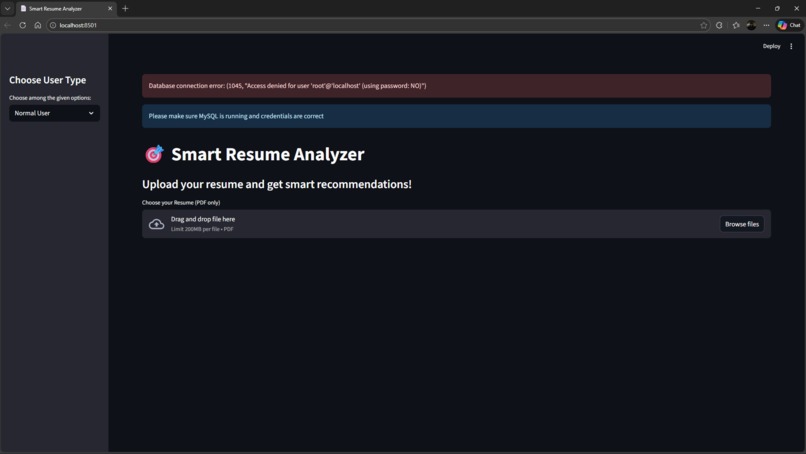
snapshot for resume analyser using python

Inspiration
While applying for jobs and internships, I noticed a common problem. Good candidates often get rejected, not because of a lack of skills, but because their resumes are not optimized for Applicant Tracking Systems (ATS) or specific job roles. This gap between talent and presentation inspired me to build an AI-based resume analyzer that helps users understand how their resume is actually evaluated.
What it does
Through this project, I gained hands-on experience in:
- Natural Language Processing (NLP) for understanding resume content
- Resume parsing and keyword extraction
- Matching resumes with job descriptions using similarity scoring
- Designing simple, user-focused AI solutions
- Improving accuracy using weighted scoring and feedback loops
How we built it
The project works in a few clear steps:
- The user uploads a resume (PDF or text format).
- The system extracts text and identifies sections like skills, experience, and education.
- Keywords are extracted from both the resume and the target job description.
- A similarity score is calculated using cosine similarity:
Challenges we ran into
One major challenge was handling different resume formats and layouts, as resumes are rarely standardized. Extracting meaningful information from unstructured data required careful preprocessing. Another challenge was avoiding false positives in keyword matching, which I addressed by adding context-based weighting instead of simple keyword counts.
Balancing accuracy with speed was also challenging, especially when analyzing longer resumes.
Accomplishments that we're proud of
Built an end-to-end AI resume analyzer from scratch, covering parsing, scoring, and feedback.
- Successfully implemented ATS-style resume scoring aligned with real job descriptions.
- Designed a clean and simple user flow that delivers results in seconds.
- Improved keyword relevance by using context-based weighting instead of basic keyword matching.
- Achieved accurate resume–job matching using cosine similarity and NLP techniques.
- Handled multiple resume formats (PDF and text) with reliable text extraction.
- Turned a common job-seeker pain point into a practical, usable AI solution.
What we learned
What We Learned
- How to apply Natural Language Processing (NLP) to real-world documents like resumes.
- The importance of clean text preprocessing when working with unstructured data.
- How Applicant Tracking Systems (ATS) evaluate resumes beyond simple keyword counts.
- Using similarity metrics like cosine similarity to match resumes with job descriptions.
- Designing AI systems that balance accuracy, speed, and usability.
- Handling edge cases caused by varied resume formats and layouts.
- Translating technical AI outputs into clear, actionable feedback for users.
- Building with a problem-first mindset instead of a feature-first approach.
What's next for Resume analyser
Add role-specific resume templates and formatting suggestions.
- Support multiple languages to help non-native English speakers.
- Integrate skill-gap analysis with learning resource recommendations.
- Improve ATS scoring using advanced semantic embeddings.
- Enable resume version tracking for different job applications.
- Provide recruiter-style feedback using fine-tuned AI models.
- Add dashboard analytics to track resume improvements over time.
- Deploy as a scalable web app with user accounts and saved reports.
Built With
- html5
- matplotlib
- natural-language-processing
- numpy
- panda
- python
- streamlit

Log in or sign up for Devpost to join the conversation.