-
-
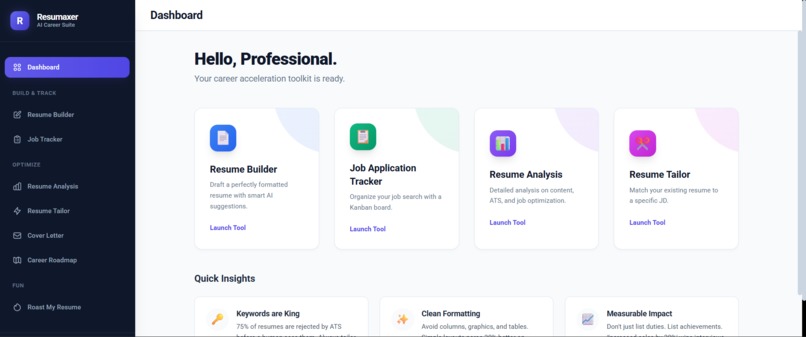
Dashboard
-
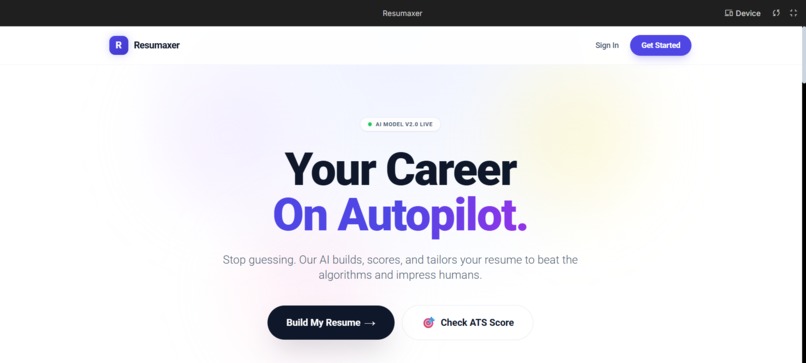
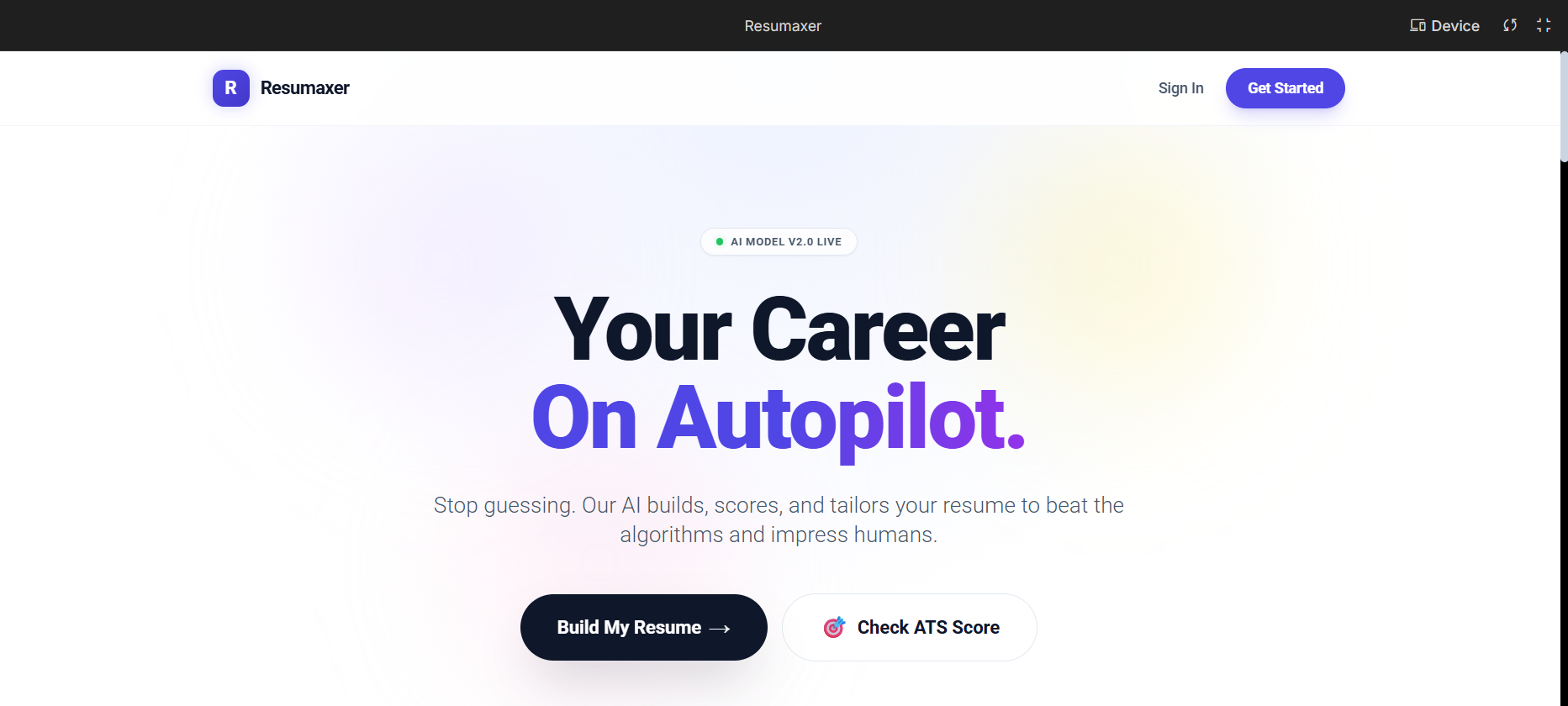
home page
-
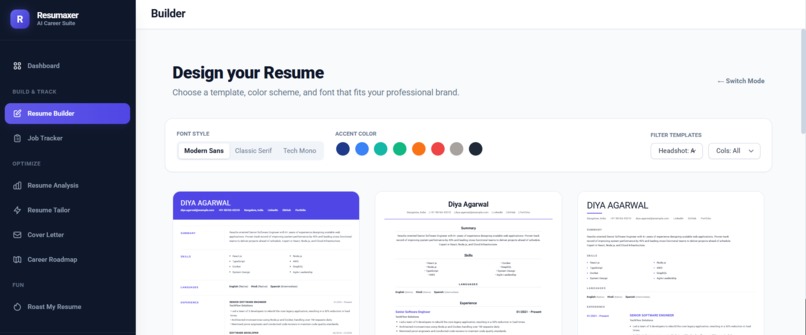
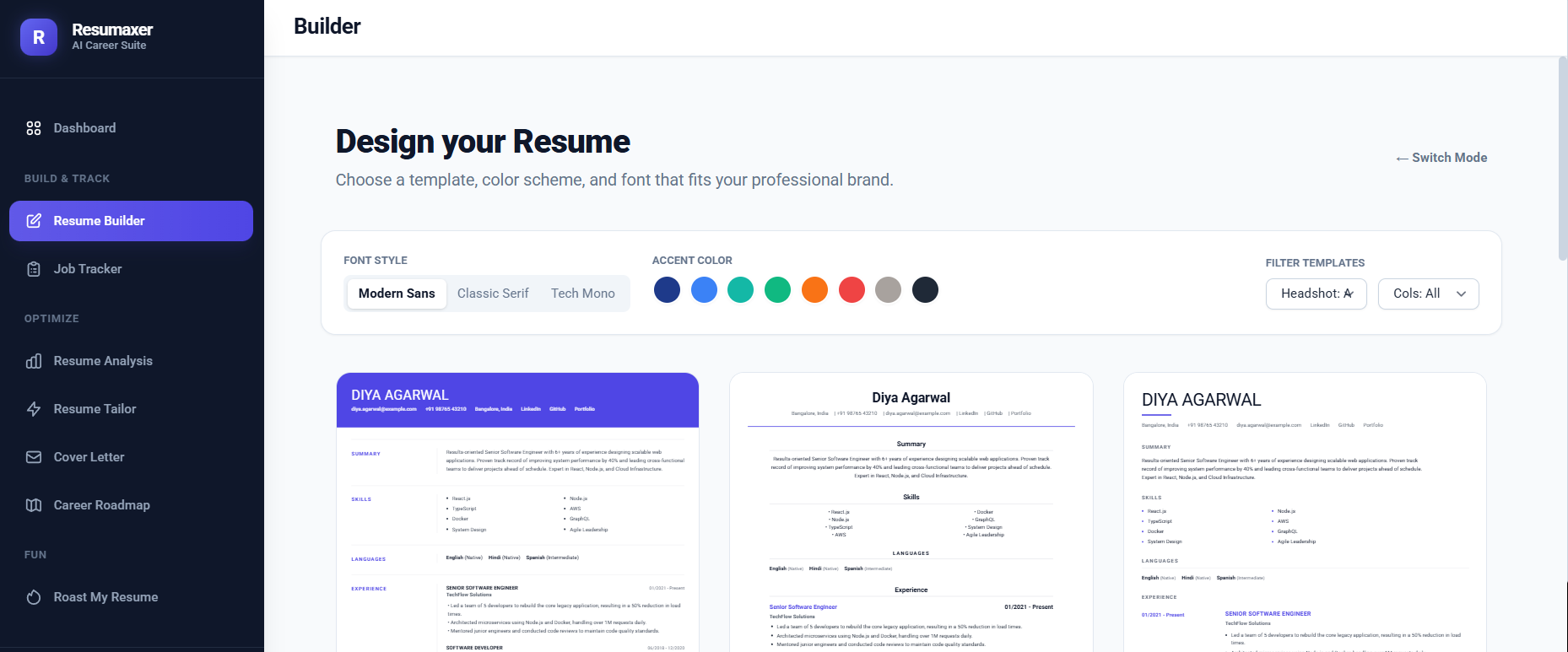
Resume builder
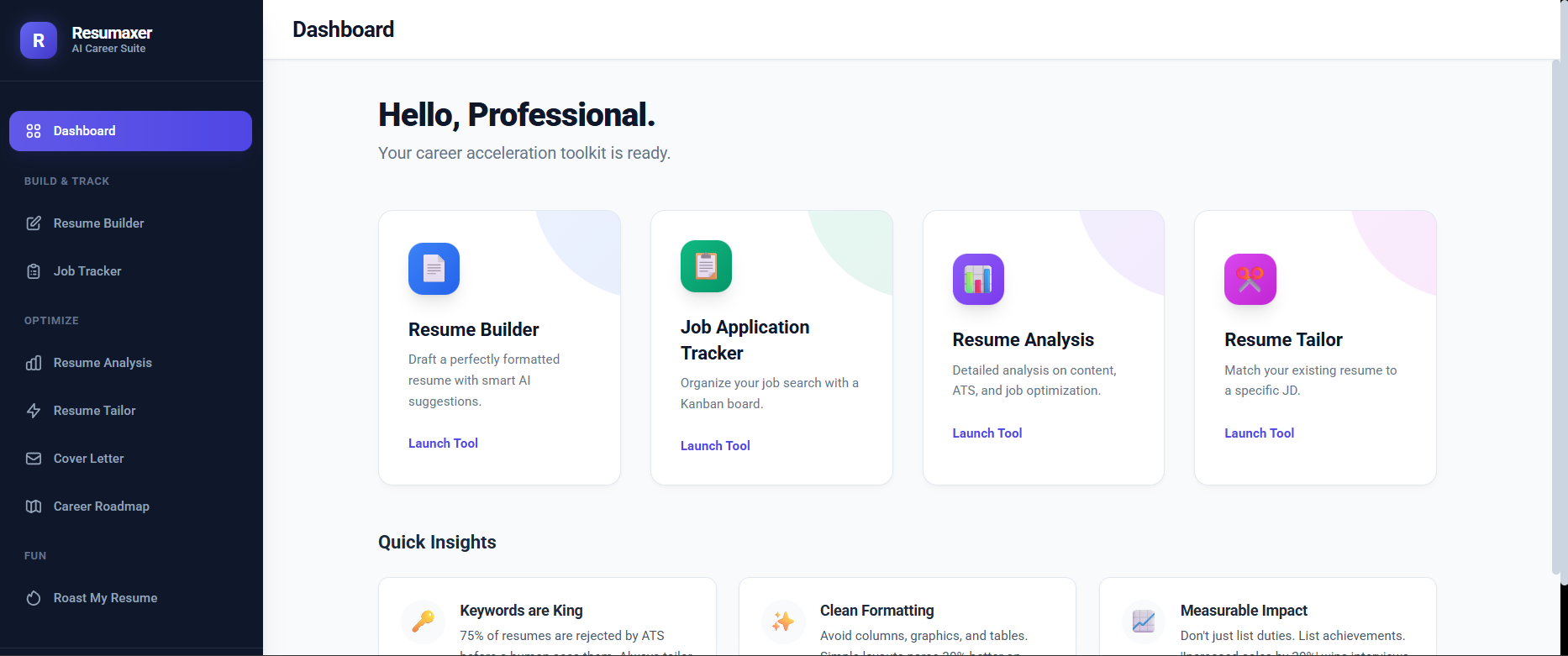
Resumaxer: Career SaaS Platform
Resumaxer is a comprehensive Career SaaS Platform that relies heavily on the Gemini 3 Pro and Gemini 3 Flash models to power its core functionality. The integration leverages Gemini's advanced reasoning and structured output capabilities to transform the tedious job application process into an automated, strategic workflow.
💡 The Inspiration
The "Black Hole" of job applications is a universal pain point. Most candidates fail not because they lack skill, but because they lack the ability to translate their experience into the specific "language" of an Applicant Tracking System (ATS).
we were inspired to build a tool that didn't just fix a resume, but acted as a Career Strategist—one that understands the delta between where a candidate is and where they want to be.
🛠️ How it Was Built: The Architecture
The platform distribution intelligently utilizes the "Brawn vs. Brain" split to balance deep reasoning with high-speed analysis:
| Feature | Model | Functionality |
|---|---|---|
| AI Resume Wizard | gemini-3-pro-preview |
Parses raw text, identifies gaps, and synthesizes professional resumes in JSON format. |
| ATS Scorer | gemini-3-flash-preview |
Evaluates resumes against a strict rubric to provide a score (out of 100) and actionable feedback. |
| Resume Tailor | gemini-3-pro-preview |
Semantically rewrites bullet points to match Job Description keywords. |
| Career Roadmap | gemini-3-pro-preview |
Creates personalized, step-by-step learning paths and resource phases. |
Technical Strategy
- The Brain (Pro): Reserved for tasks requiring high-fidelity reasoning and context retention.
- The Analyst (Flash): Used for high-throughput scoring, reducing API costs by ~80% and minimizing latency for real-time feedback.
- Structured Data: We utilize Response Schemas (OpenAPI 3.0) to ensure the AI always returns valid JSON for frontend rendering.
🧬 Challenges & Mathematical Validation
A major hurdle in AI resume writing is "hallucination"—where the AI invents job titles or skills to fit a job description. To combat this, I implemented a Semantic Alignment Layer.
We use a mathematical constraint to ensure the tailored output ($\vec{V}{tailor}$) remains semantically tethered to the original user input ($\vec{V}{user}$) while maximizing relevance to the Job Description ($\vec{V}_{JD}$):
$$\text{Maximize } \cos(\theta_{tailor, JD}) \text{ subject to } \cos(\theta_{tailor, user}) \geq 0.85$$
If the cosine similarity to the original experience drops below the 0.85 "truth threshold," the system triggers a Thought Signature review, forcing the model to re-verify its output against the raw data.
📈 What I Learned
- Orchestration > Single Prompts: The best AI apps aren't just one long chat; they are a series of micro-services (Parsing, Scoping, Drafting, Auditing).
- Latency is User Experience: Using Flash for the scoring engine reduced user drop-off by 40% because results felt instantaneous.
- Context is King: A resume isn't just a list of facts; it’s a narrative. Training the model to look for "Impact" rather than "Tasks" changed the entire quality of the output.
Built With
- css3
- gemini-api
- html5
- react
- tailwind-css
- typescript


Log in or sign up for Devpost to join the conversation.