Inspiration
We noticed a recurring problem in the job application process—recruiters are overwhelmed and have a hard time finding qualified candidates, and the hiring process is often tiring and long. In a world where hundreds of applications can flood a single job post, the real problem is resume overload.
We asked: What if we could build a tool that does intelligent matching between resumes and job descriptions — not just by keywords, but by meaning and intent?*
That led to ResuMatch: a smart AI assistant that helps recruiters screen resumes more effectively and give score. Then rank resumes based on how well they match with the job description to select candidates with a easier and faster way.
What it does
ResuMatch enables you to:
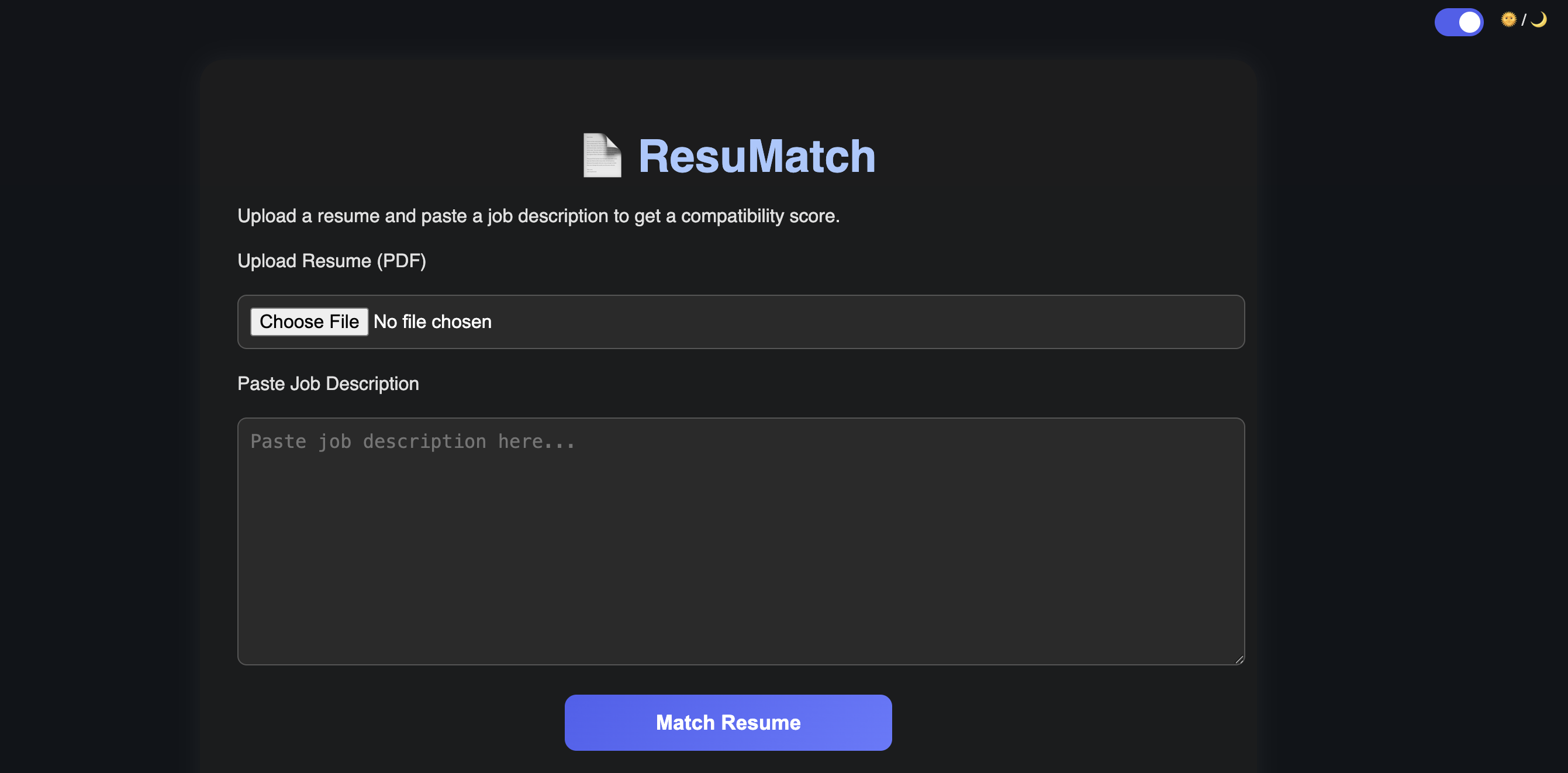
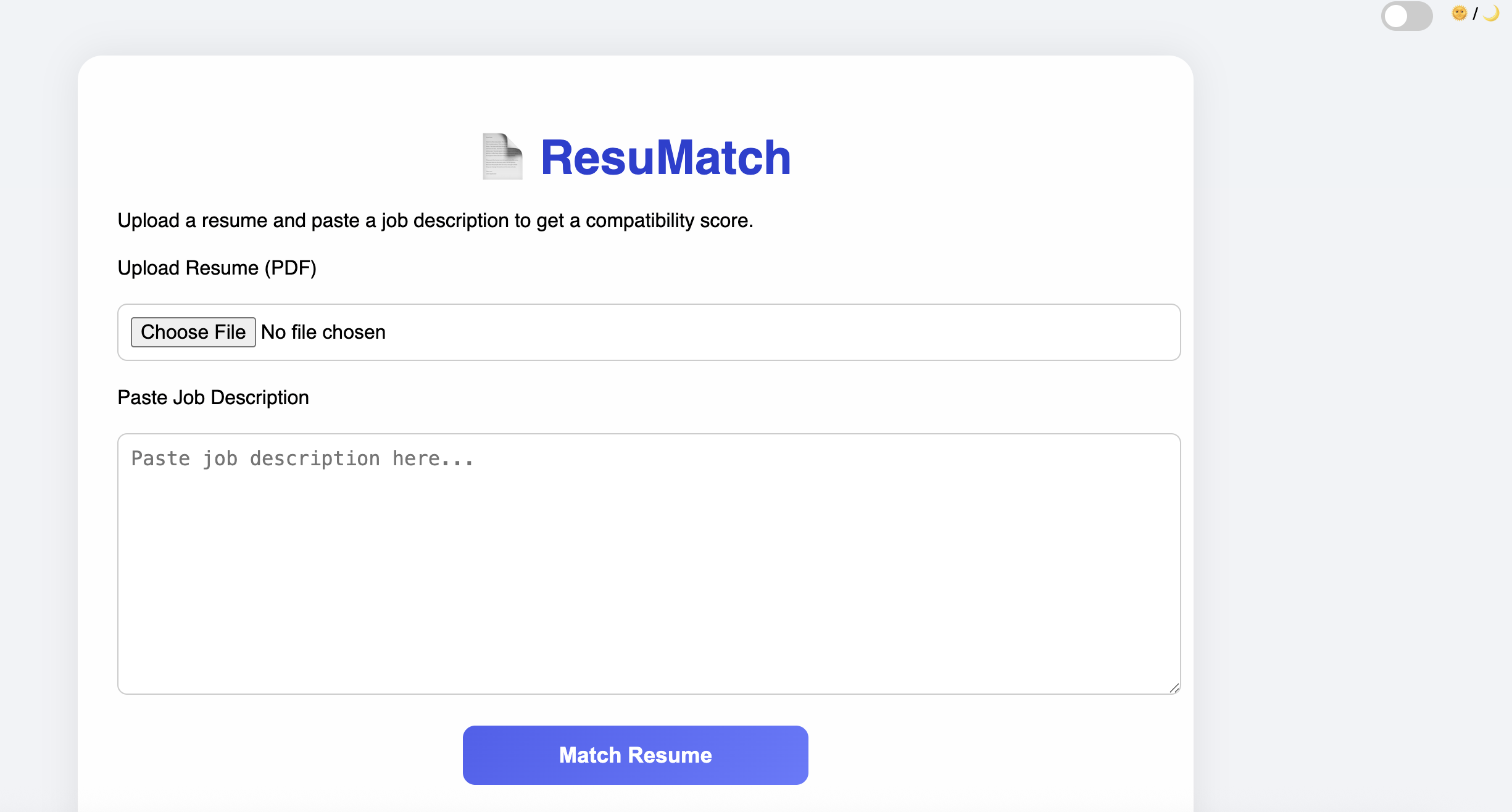
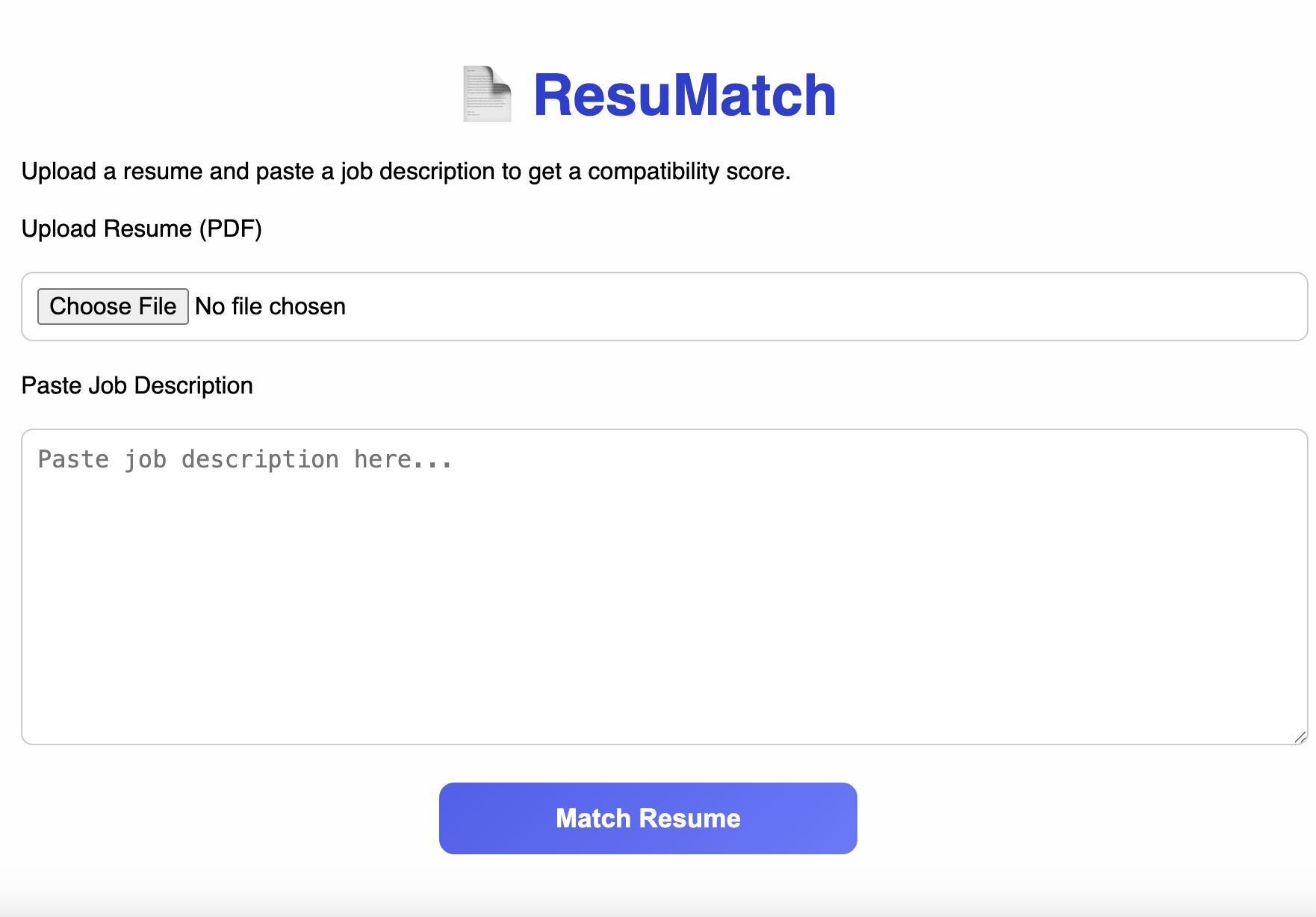
- Upload a PDF resume and paste a job description
- Automatically extract and classify resume sections (Experience, Skills, Education, etc.)
- Extract relevant skills, degrees, languages, experience levels, and keywords from the JD
- Semantically compare resume content with job requirements
- Generate a compatibility report with breakdown scores:
- Tech Skills
- Soft Skills
- Language
- Experience
- Degree
- Total Score
- Score each resume bullet point based on impact and relevance
How we built it
- 🧾 Resume Parsing: Used
PyMuPDFto extract raw text from PDFs, then cleaned and formatted it into line-based data. - 🧠 Resume Section Classification: Trained a
LogisticRegressionmodel on TF-IDF features to label lines as Experience, Education, Skills, Projects, Certifications, or Other. - 🔍 Job Description Analysis: Extracted skills, experience, degree requirements, and key phrases using regex, tokenization (
nltk), TF-IDF, and embeddings. - 🤖 Semantic Matching: Used SentenceTransformers (
all-MiniLM-L6-v2) to compare resume phrases and JD keywords, allowing fuzzy matches like “collaboration” ≈ “worked with a team.” - 📈 Resume Bullet Scoring: Built a
GradientBoostingRegressortrained on 70+ real and synthetic bullet points scored for impact, helping surface stronger resume content. - 🌐 Frontend & API: Flask backend with a custom HTML/CSS/JS UI for uploading resumes and displaying results.
Challenges we ran into
- ⚠️ NLTK Compatibility Issues with Python 3.13 — we had to downgrade to ensure tokenizer functionality
- 🧩 Resume Variability: Real resumes have messy formatting; section labeling required smart keyword design and a flexible classifier
- 🔍 Hard to Find ML Datasets for JD-to-resume matching — we had to work with limited dataset availability and work around using ML models
- 💬 Synonym Semantics: Words like “teamwork” and “collaborated” don't match via keywords. We could not use hardcode as that was time consuming and not accurate. We could not find a ml model that would take a JD keyword, resume keywords and find similarity score.
Accomplishments that we're proud of
- 🚀 Built a full-stack resume-job matcher in under 36 hours
- ✅ Achieved strong section classification accuracy with only ~70 training examples
- 🧠 Developed a working semantic skill matcher with SentenceTransformers
- 📊 Resume bullet scoring felt natural and gave helpful feedback to users
- 🧩 Created a smart scoring system for degree and experience matching using NLP
- 💡 Identified and integrated WordNet, a dataset by Princeton University.
What we learned
- Real-world resumes are noisy — robust preprocessing matters
- Building NLP pipelines for meaning (not just text) requires combining ML, rules, and embeddings
- Simple models (logistic regression, TF-IDF) can go far when thoughtfully applied
- Designing for recruiters vs. applicants demands different UX goals
- Semantic similarity is a better signal than keyword overlap — and harder to build well
- Comparing different writing style and different words is hard without a proper ml model
What's next for ResuMatch
- 📂 Batch Mode — Upload multiple resumes to rank the top candidates for a job
- 🧠 Model Feedback Loop — Learn from recruiter decisions to improve accuracy
- 🔍 LinkedIn Integration — Chrome extension to score LinkedIn profiles against JDs
- ✍️ Resume Rewrite Suggestions — Let users get AI-generated improvements on their resume
- 📈 Data Expansion — Broader, labeled dataset for resume bullet scoring and semantic similarity
- 🧑💻 User Portal — Allow job seekers to save resumes, track job matches, and iteratively improve
Built With
- css
- flask
- github
- html
- javascript
- nltk
- pandas
- pymupdf
- python
- scikit-learn
- sentence-transformers
- tfidfvectorizer
- wordnet


Log in or sign up for Devpost to join the conversation.