Inspiration
Waste management is a real, visible problem in Ghana — from e-waste burning at Agbogbloshie to plastic pollution choking the Korle Lagoon. Community cleanups happen, but there's no easy way to track them, verify they actually occurred, or build momentum around collective impact. We wanted to turn scattered individual effort into something visible, trustworthy, and rewarding.
What it does
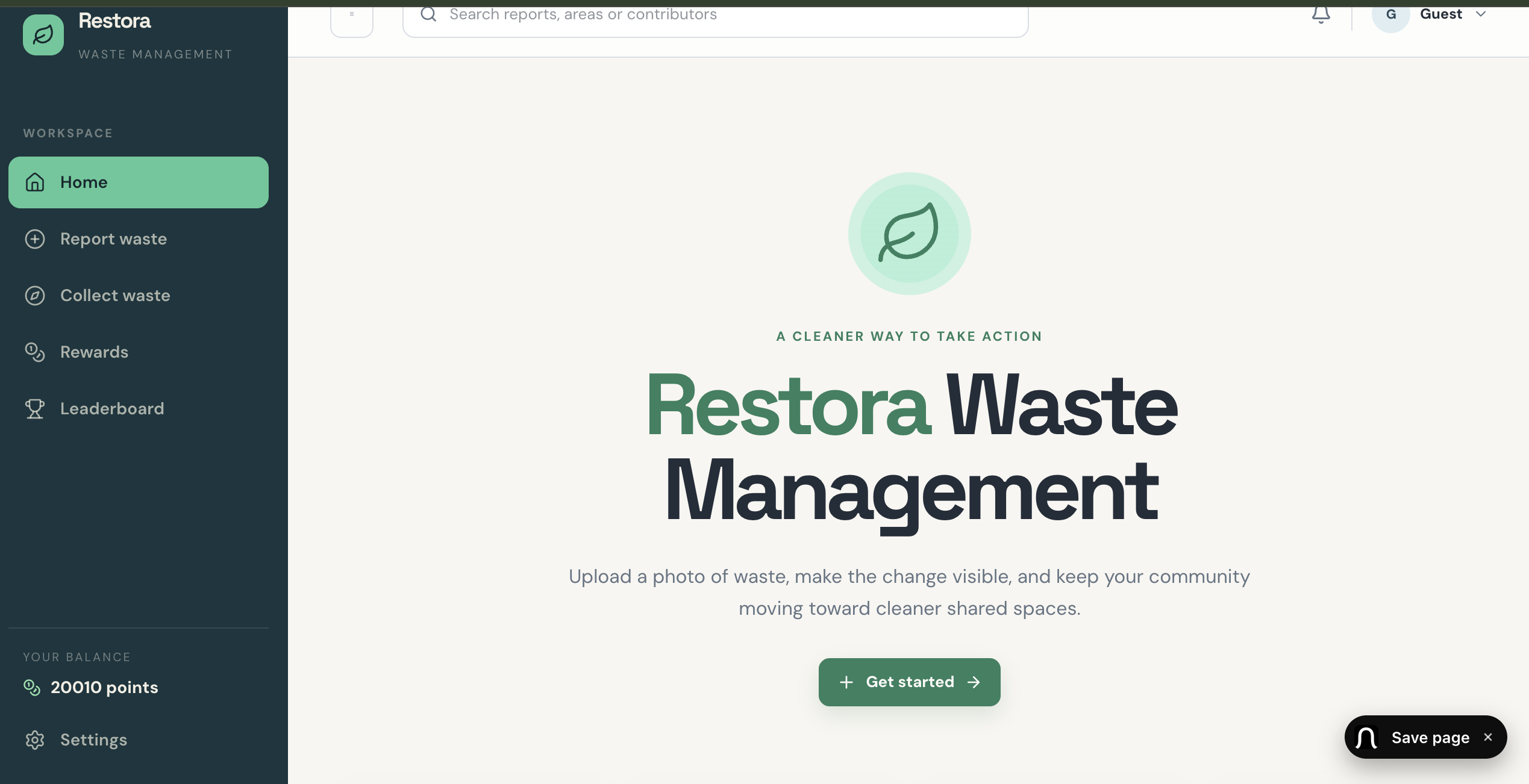
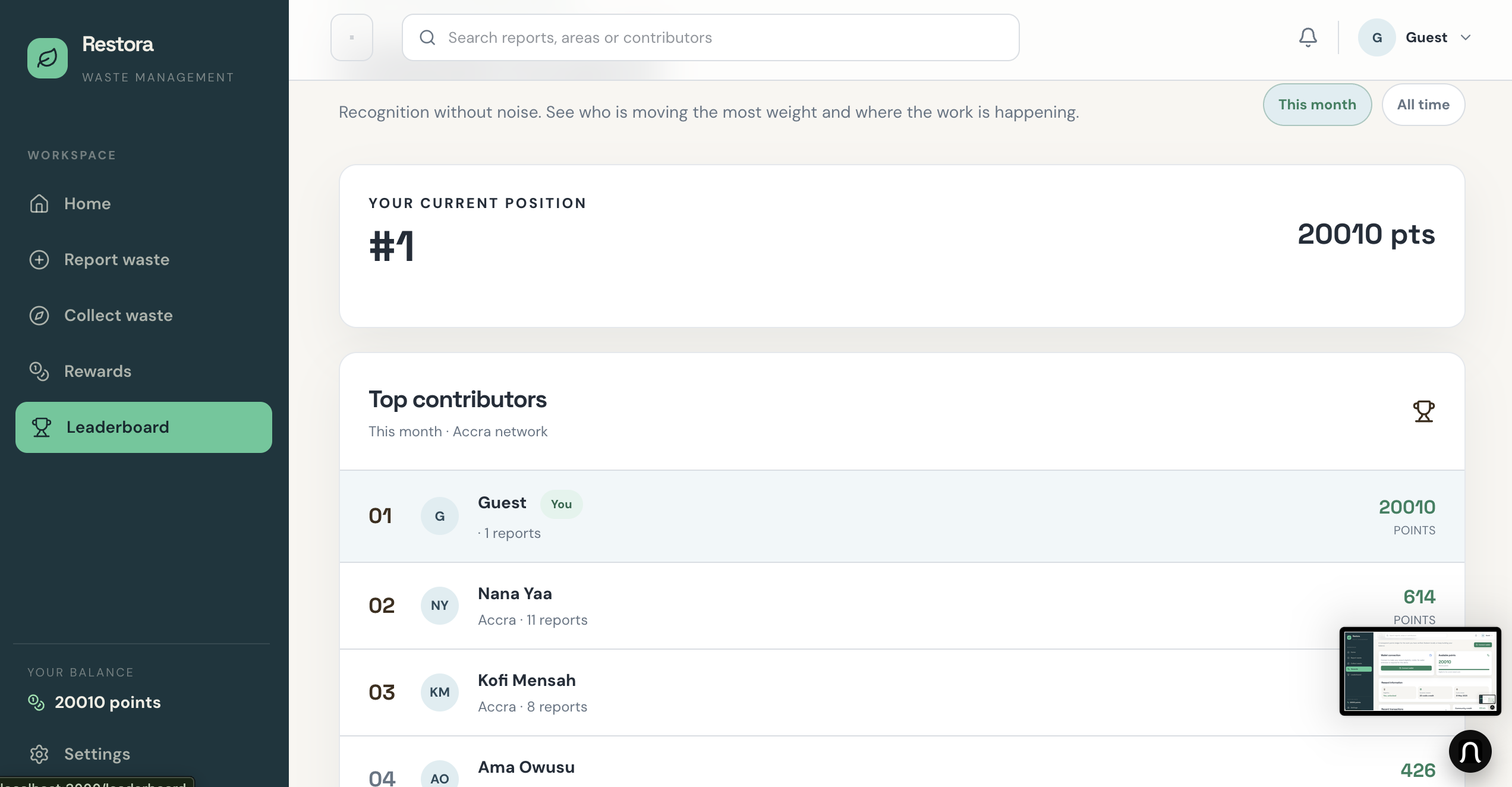
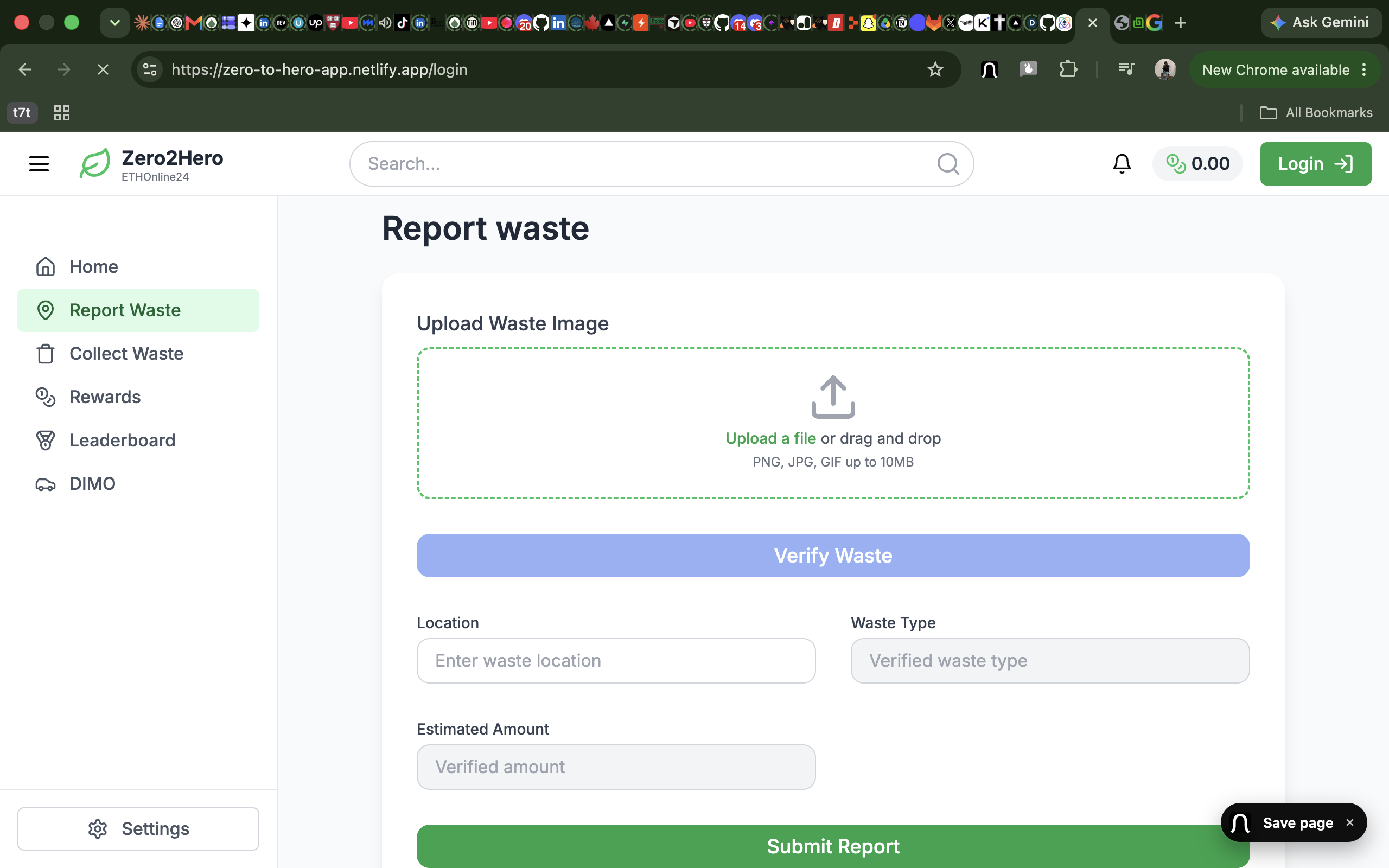
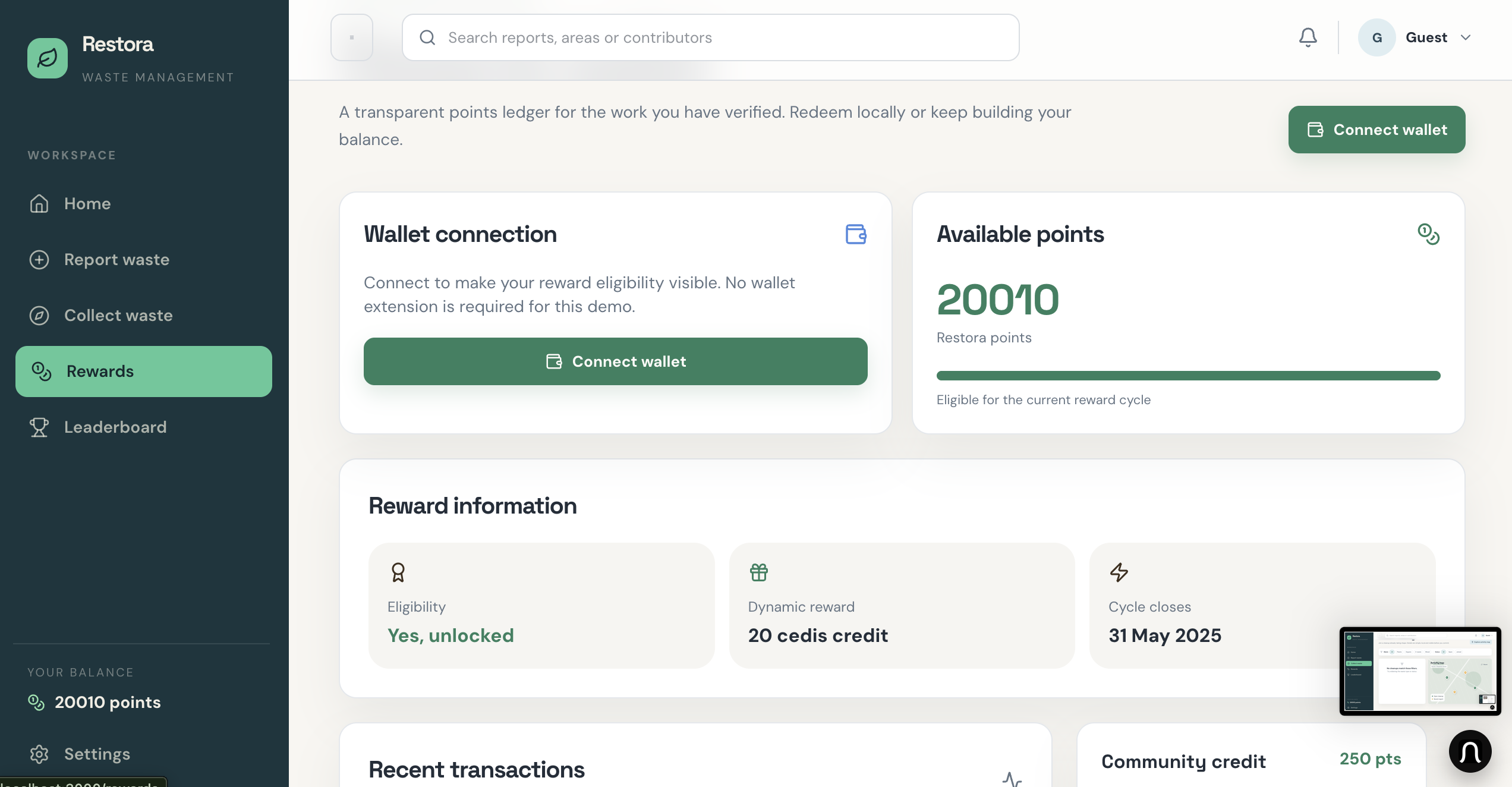
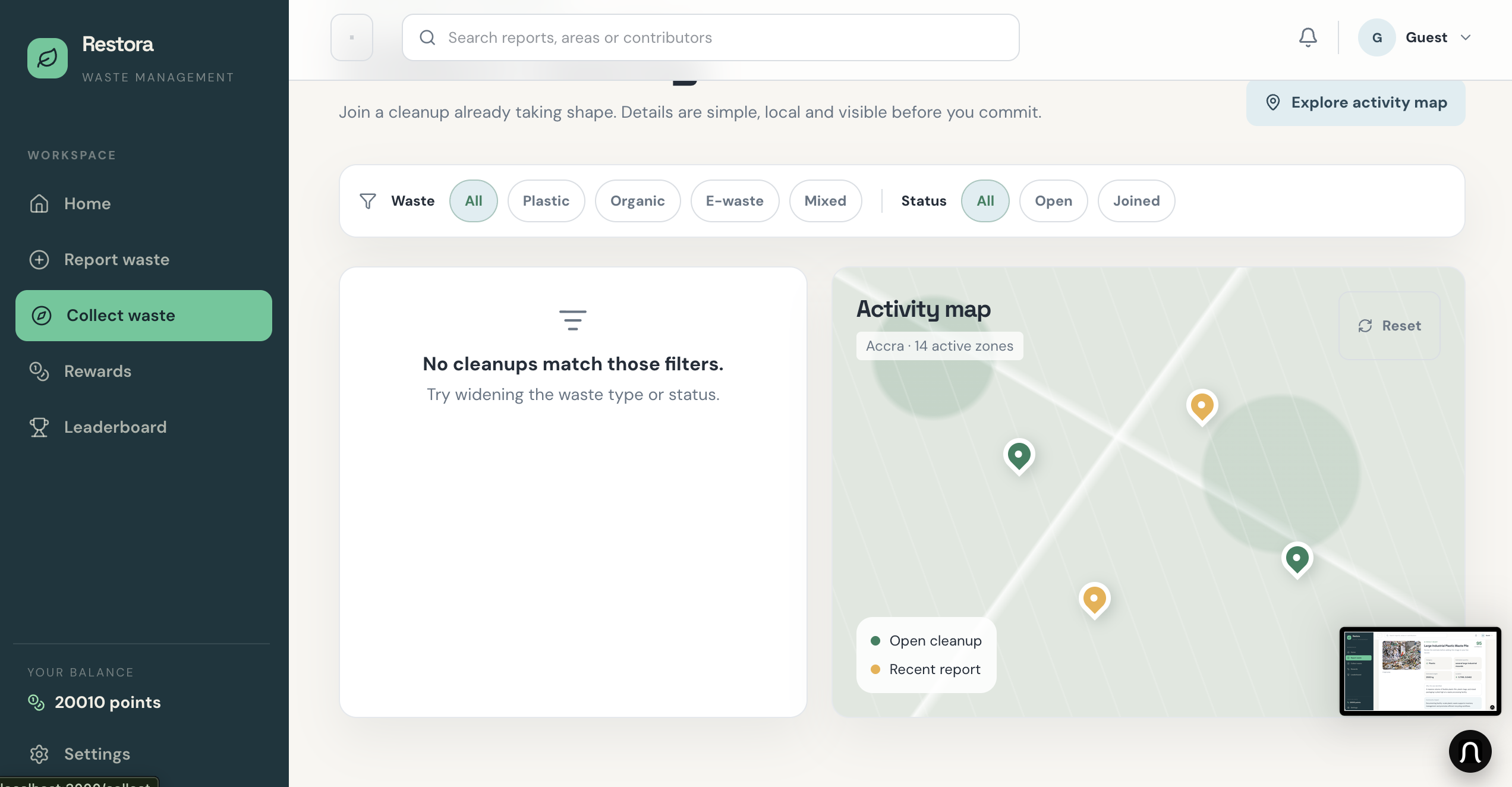
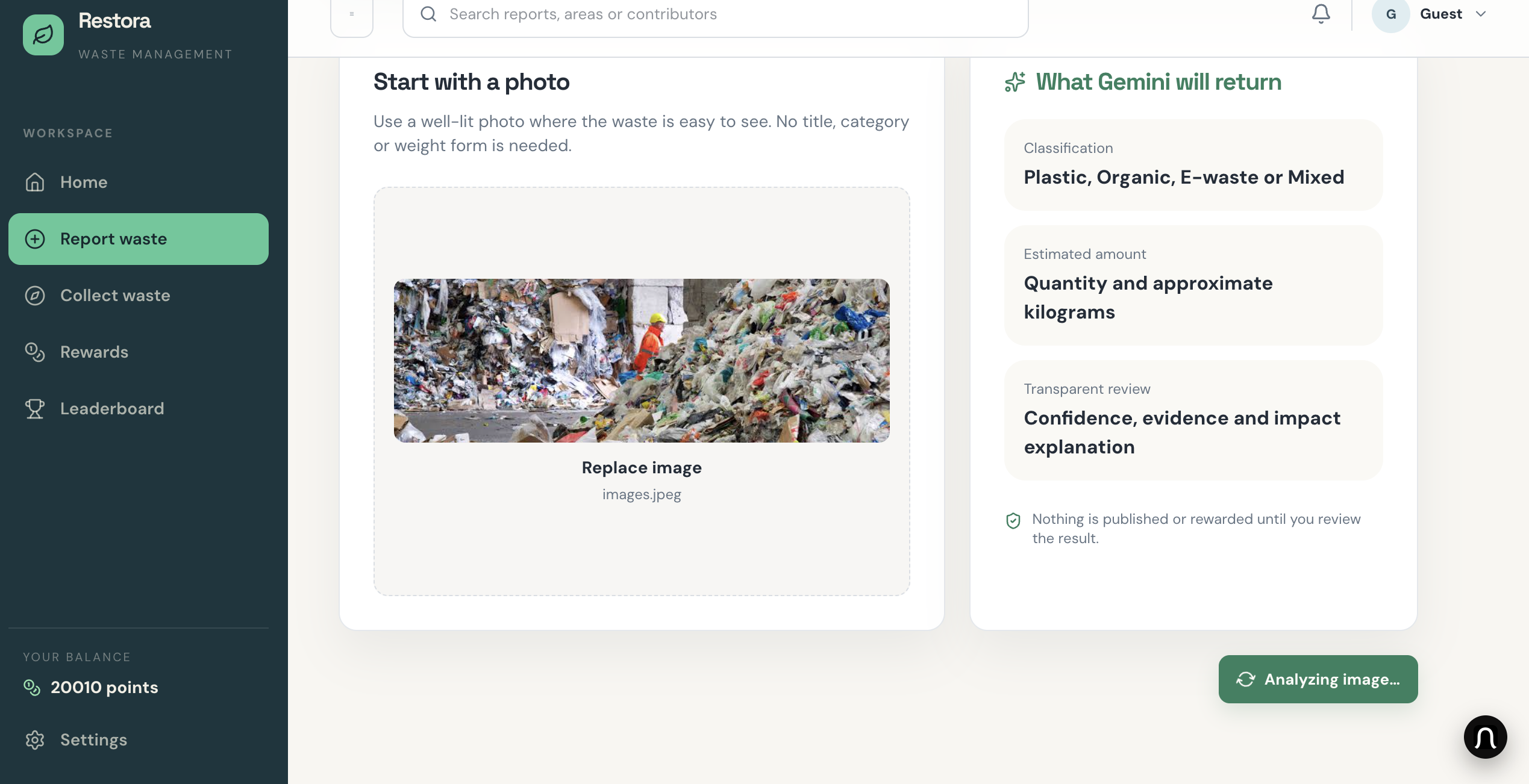
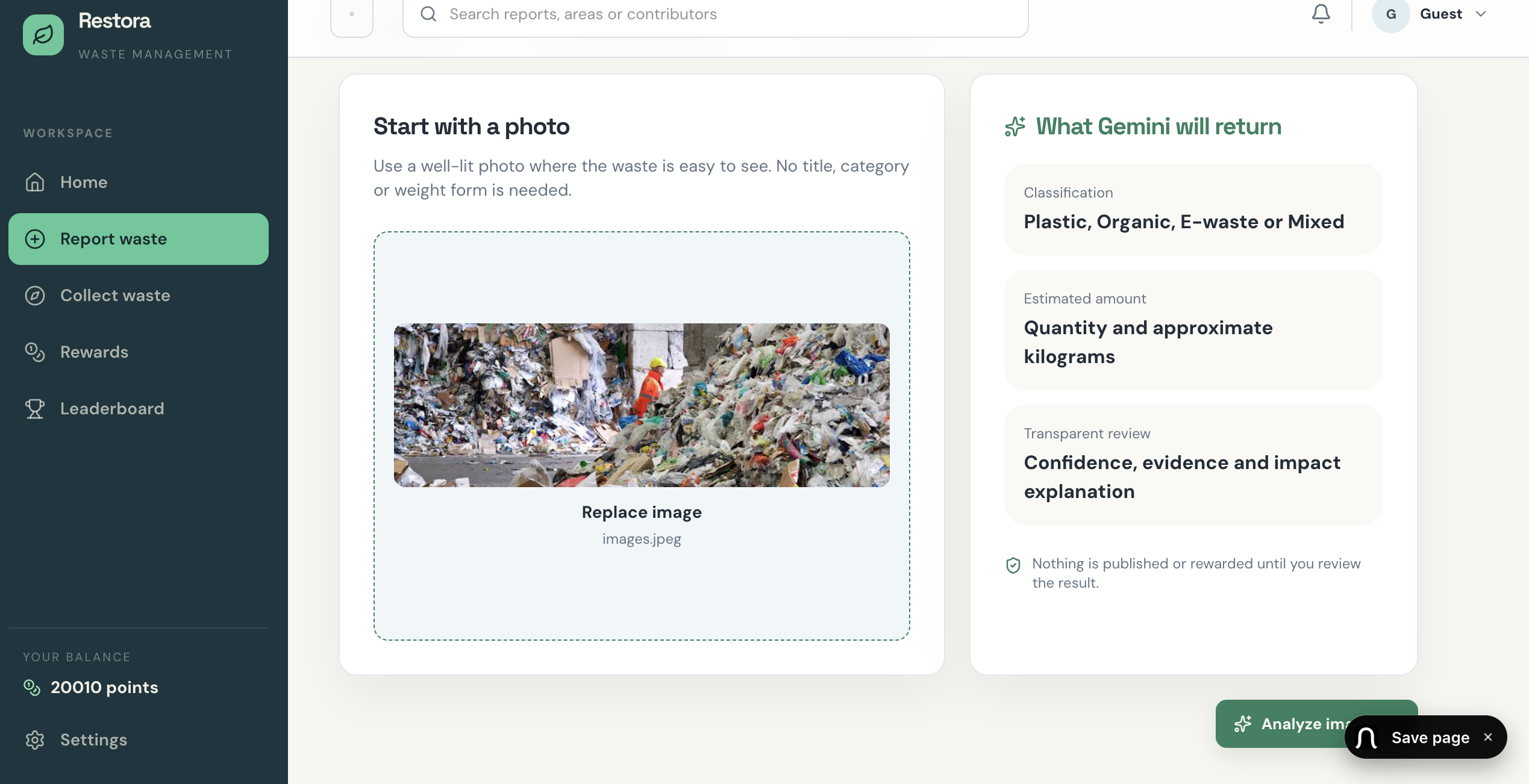
Restora lets people report waste hotspots, clean them up, and prove it. Users submit before-and-after photos, and AI (powered by Gemini) verifies the cleanup actually happened — classifying the waste type and estimating quantity rather than just trusting a self-report. Verified cleanups earn points on a transparent rewards ledger. A live community map shows cleanup activity and hotspots, and an impact dashboard rolls it all up into real-time stats on total waste collected and active contributors.
How we built it
We built Restora as a React/TypeScript frontend with Vite and Tailwind CSS, backed by a Node.js/Express API server. The Gemini API handles image analysis for waste verification, and Supabase manages auth and data. We designed the reporting flow to be accessible from the start, including voice-guided reporting.
Challenges we ran into
Getting the local development environment fully working took real debugging — from environment variable configuration to native dependency issues to routing the frontend to the correct backend API. We also hit a deprecated AI model reference that required tracking down Gemini's current model version. Each issue was a step closer to a fully working, demo-ready pipeline.
Accomplishments that we're proud of
We're proud of getting a genuinely working, end-to-end AI verification pipeline running — from photo upload through Gemini analysis to a rewards ledger and live map. It's a real proof of concept, not just a mockup.
What we learned
We learned a lot about the practical gap between a working prototype in a managed environment and getting the same app running reliably from scratch — dependency resolution, environment configuration, and API integration all required careful, patient debugging.
What's next for Restora
Next steps include stronger anti-gaming safeguards (duplicate-detection on reports), expanding language support beyond Twi voice guidance, and partnering with local community organizations to pilot Restora in specific high-need areas like Agbogbloshie and the Korle Lagoon.

Log in or sign up for Devpost to join the conversation.