-
-
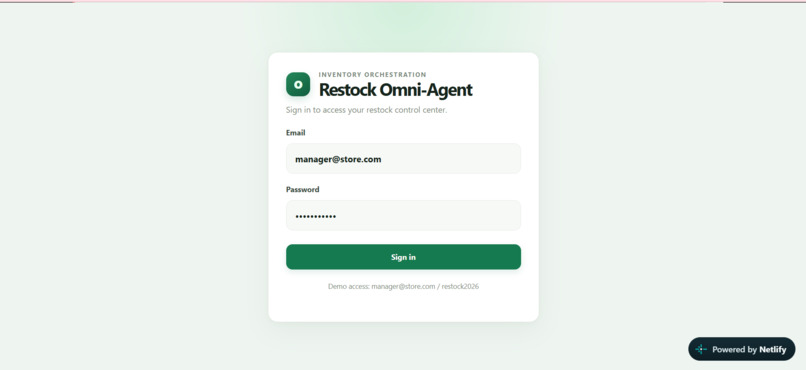
Login in page
-
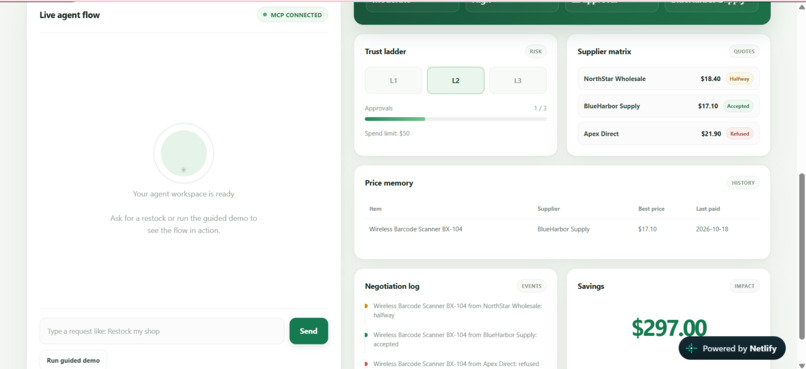
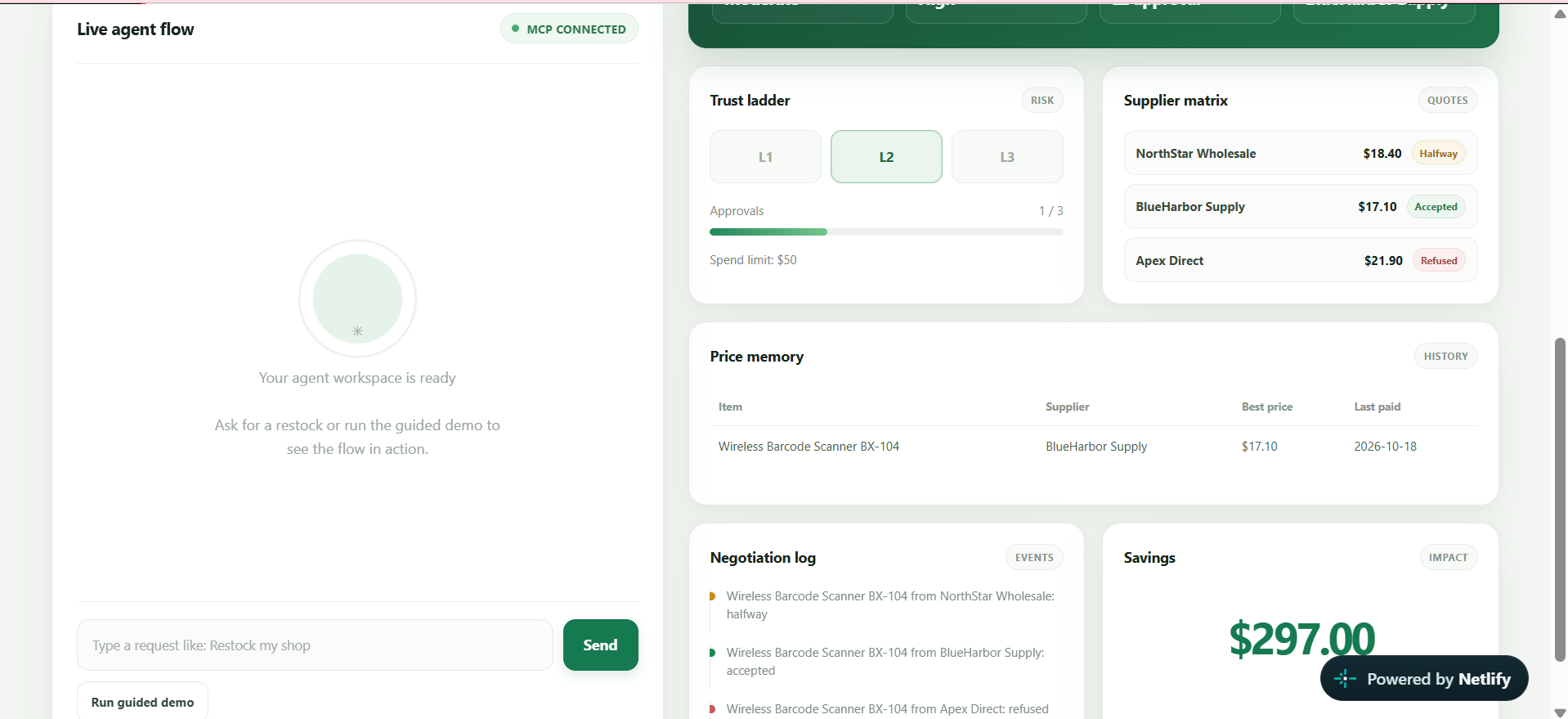
agent chatting page
-
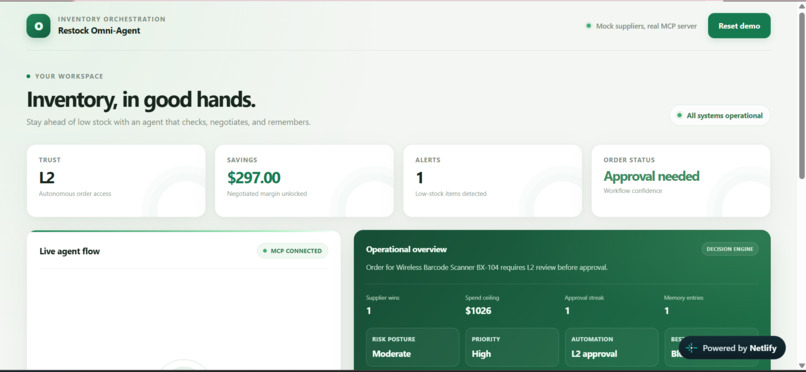
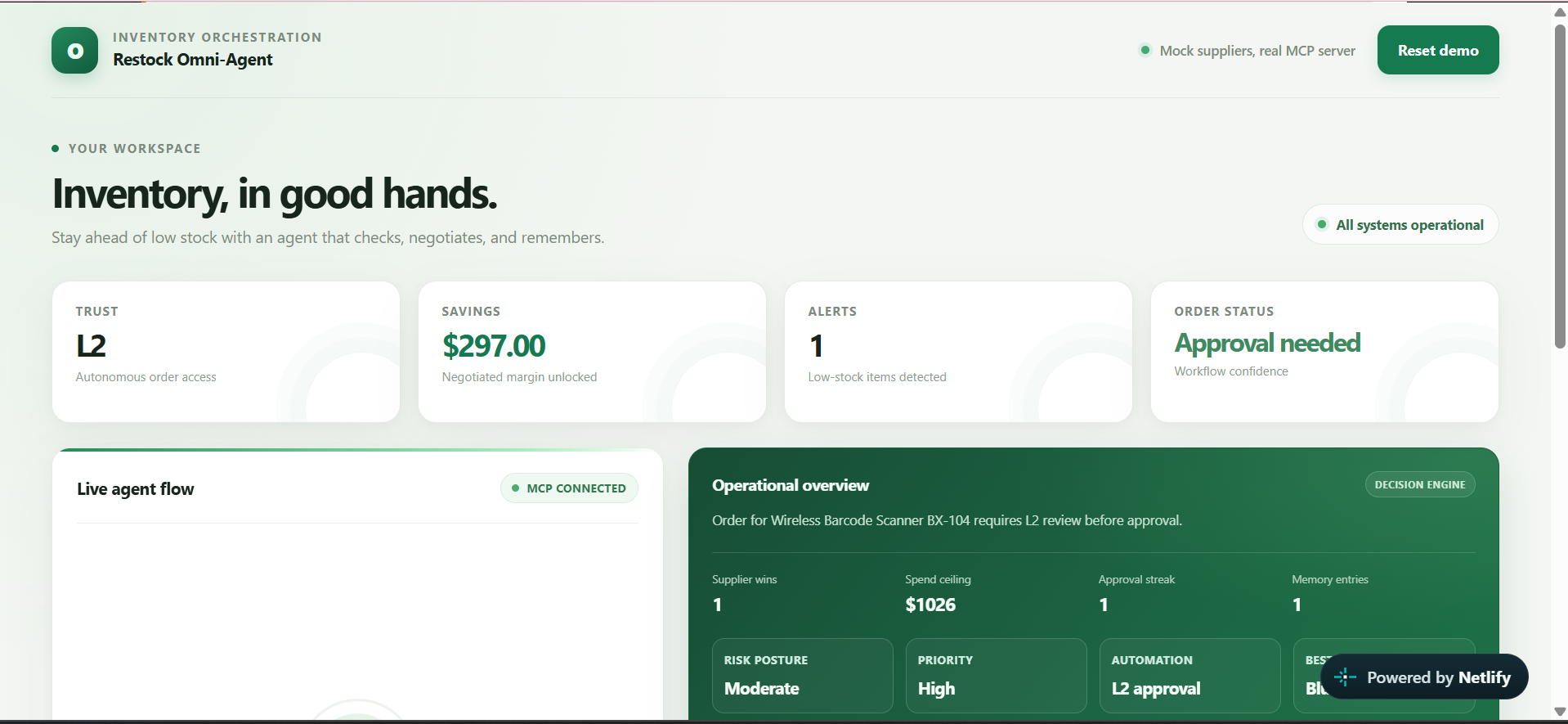
dash board veiw
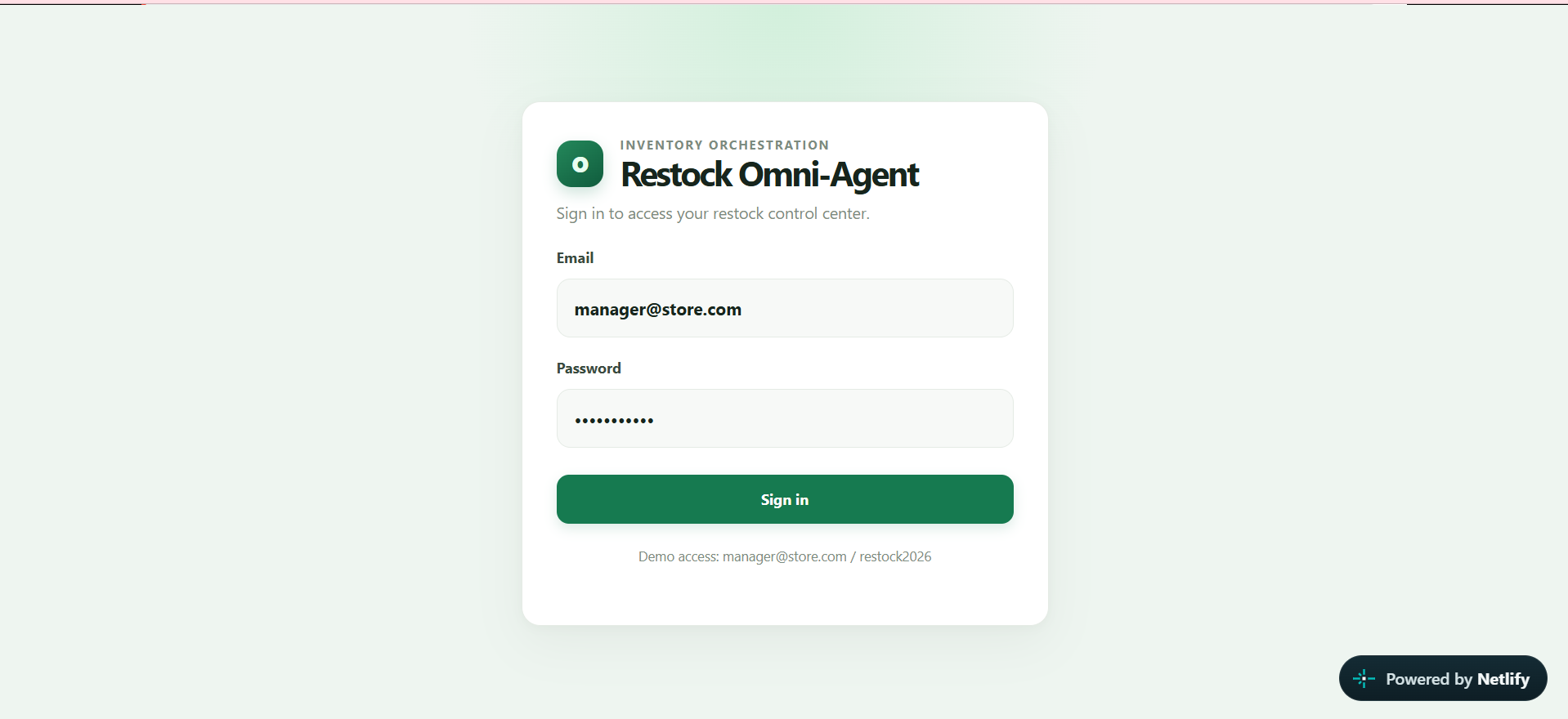
Inspiration
Inspiration
Restocking is more than noticing an item is running low. Store managers also need to compare supplier prices, decide whether an order needs approval, and confirm that the delivery matches what they ordered. We wanted to bring those steps together in a single assistant—and explore how voice interfaces and connected devices could make the process easier to manage.
What we built
Restock Omni-Agent is an inventory and procurement assistant with a web dashboard and an MCP-compatible endpoint. It can identify low-stock items, evaluate supplier quotes against historical prices, flag potential price gouging, and apply a trust-based approval flow. It can also process simulated voice requests and loading-dock events, matching deliveries against open purchase orders.
Amazon Bedrock can help evaluate supplier quotes and draft negotiation messages when credentials are configured. When it isn’t available, the app uses clearly labeled fallback responses. The pricing calculations and approval rules are handled deterministically by the application.
How we built it
We built the project with Node.js and vanilla HTML, CSS, and JavaScript. The backend brings together inventory data, price history, quote evaluation, and approval logic. A JSON-RPC endpoint exposes the assistant’s capabilities as MCP tools, while the dashboard lets a person view and run the workflows. Seed data makes the demo usable without connecting real supplier, Ring, or wearable-device accounts.
What we learned
We learned that an AI assistant is most useful when it works alongside clear, testable business rules—not in place of them. Keeping price comparisons and approval decisions deterministic made the workflow easier to understand, while Bedrock added a place for language-based quote evaluation and negotiation support. We also learned to make the boundary between live integrations and simulated demo components visible.
Challenges
One challenge was connecting several different interactions—dashboard actions, voice-style requests, and delivery events—to the same underlying workflows. Another was designing approval rules that account for total order value and price history, rather than treating every quote the same way. Finally, we had to make the demo useful even when cloud credentials or physical devices were unavailable, without implying those integrations were live.
What it does
How we built it
Challenges we ran into
Accomplishments that we're proud of
What we learned
What's next for Restock
Built With
- amazon-bedrock
- amazon-web-services
- claude-3-haiku
- css
- html
- javascript
- json-rpc-2.0
- model-context-protocol-(mcp)
- netlify-functions
- node.js
- sdk


Log in or sign up for Devpost to join the conversation.