-
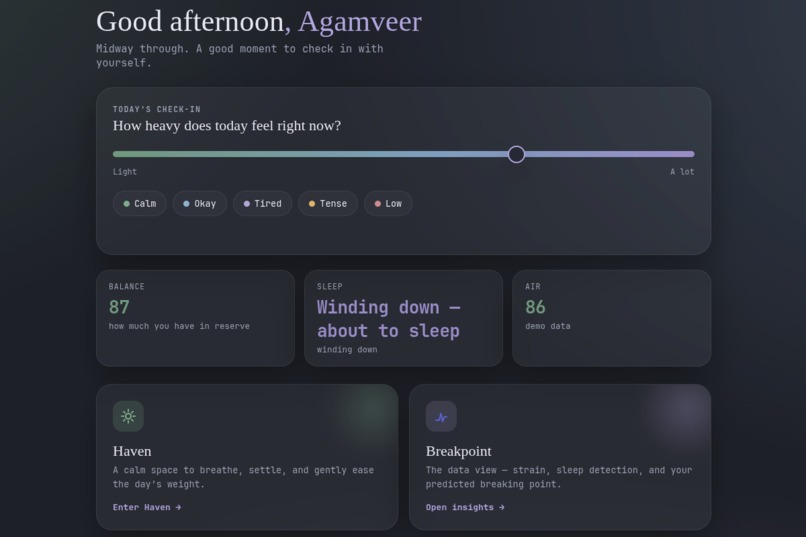
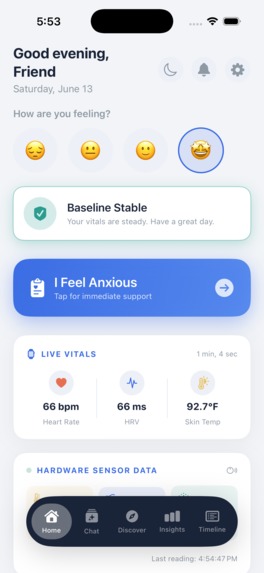
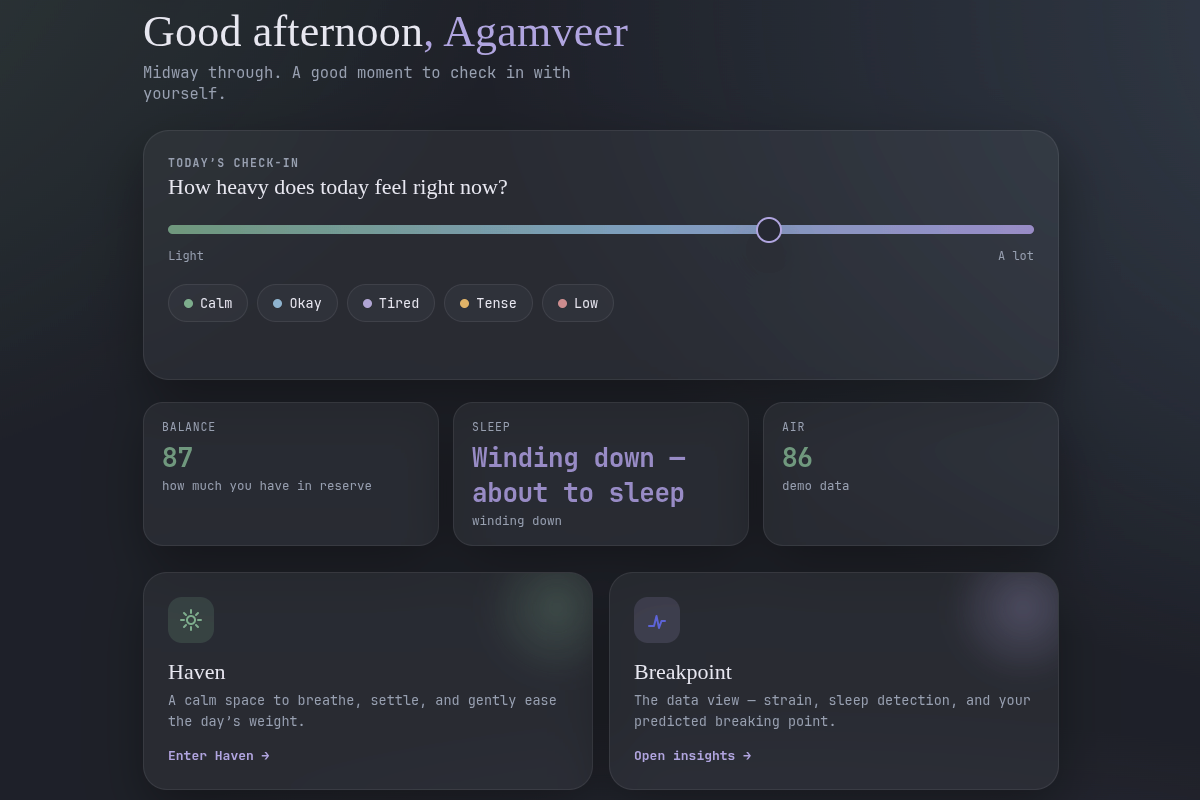
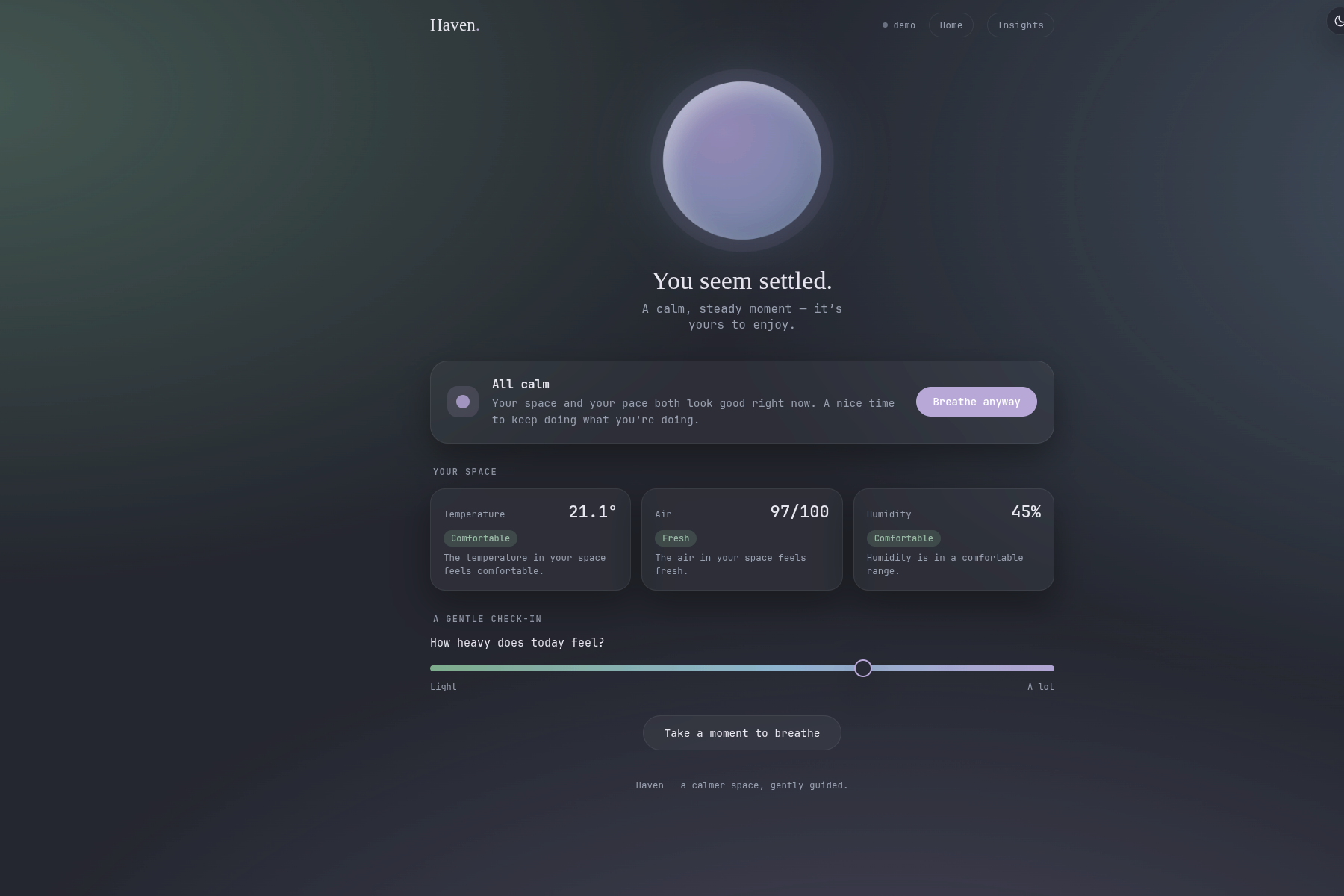
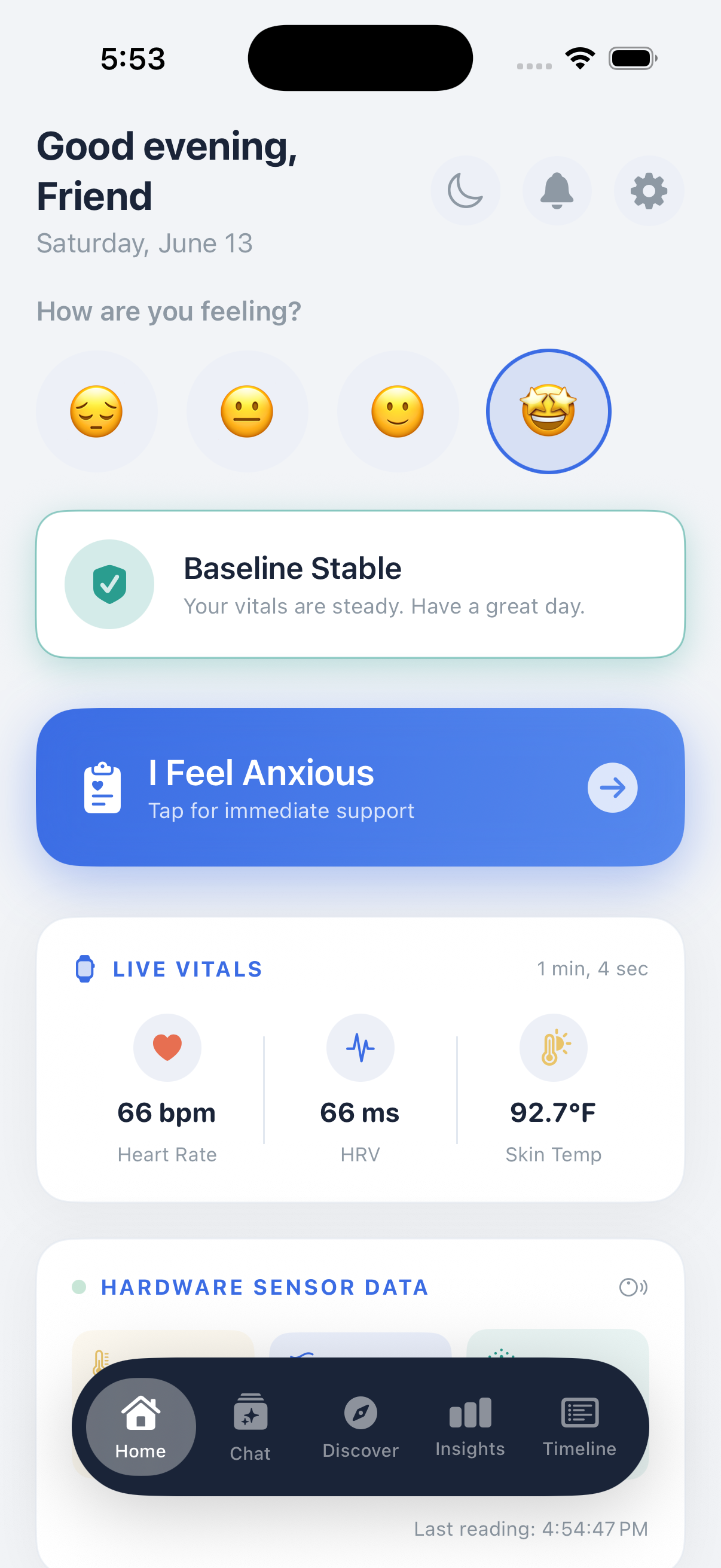
Home page
-
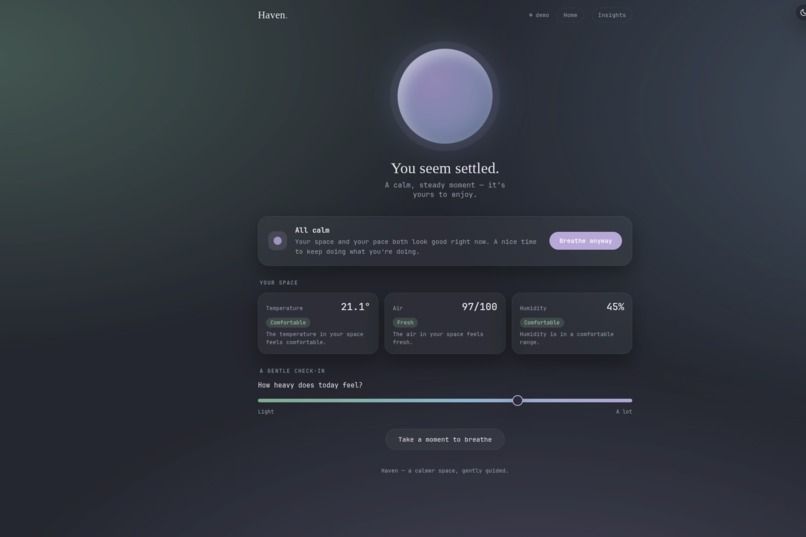
Haven (Take a breather)
-
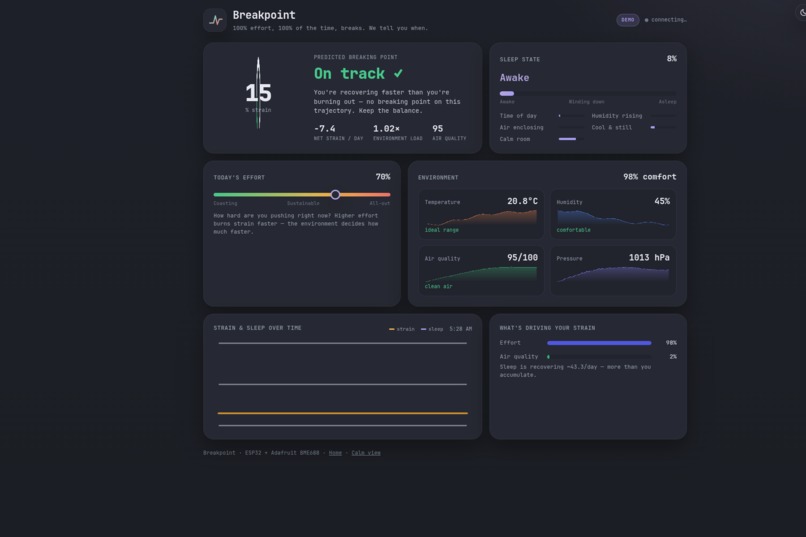
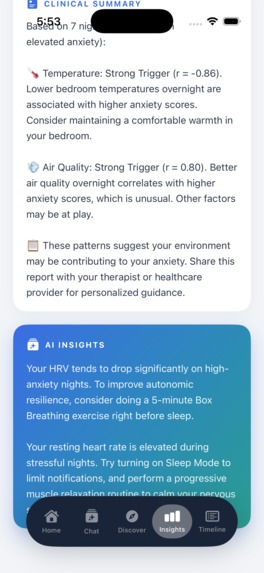
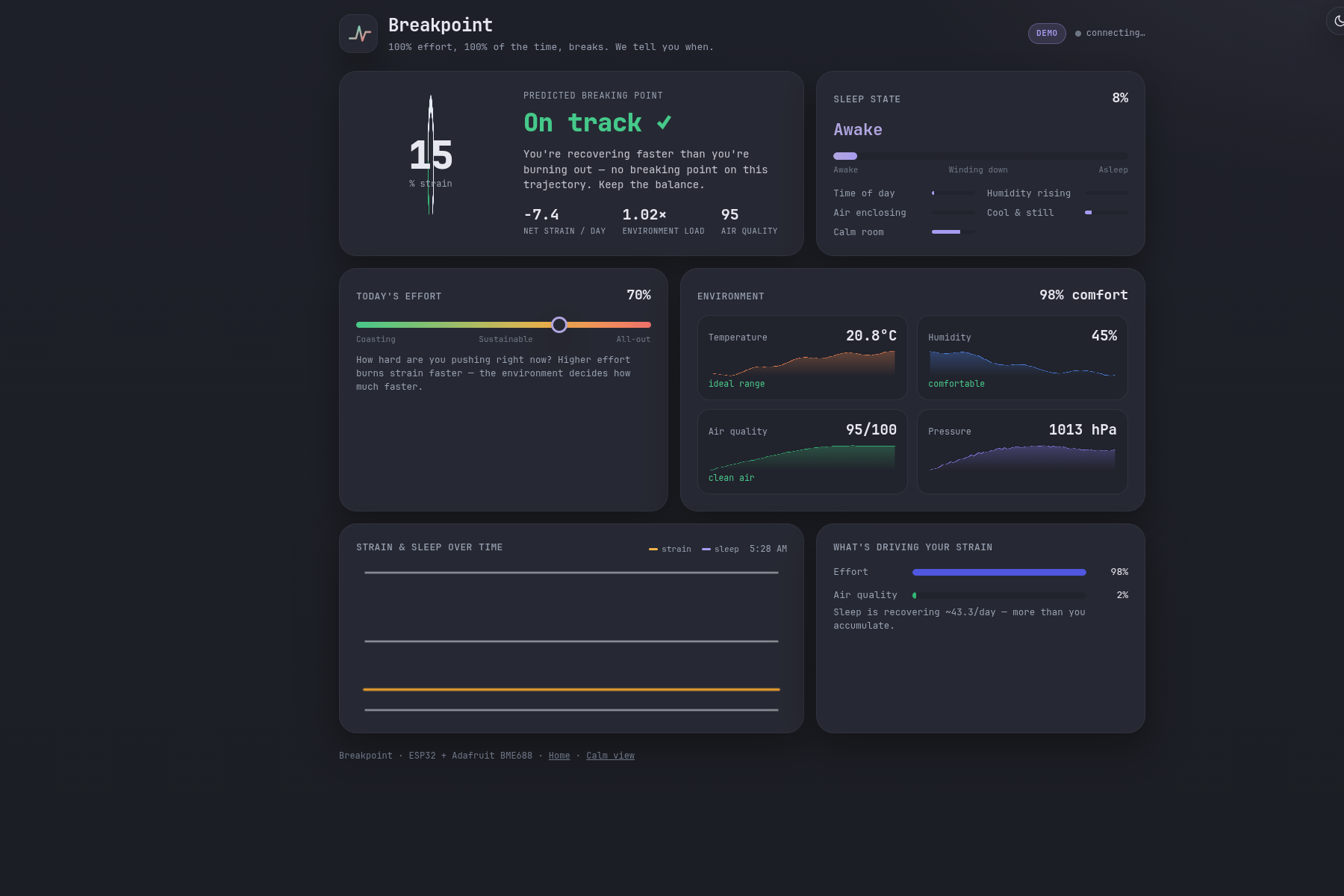
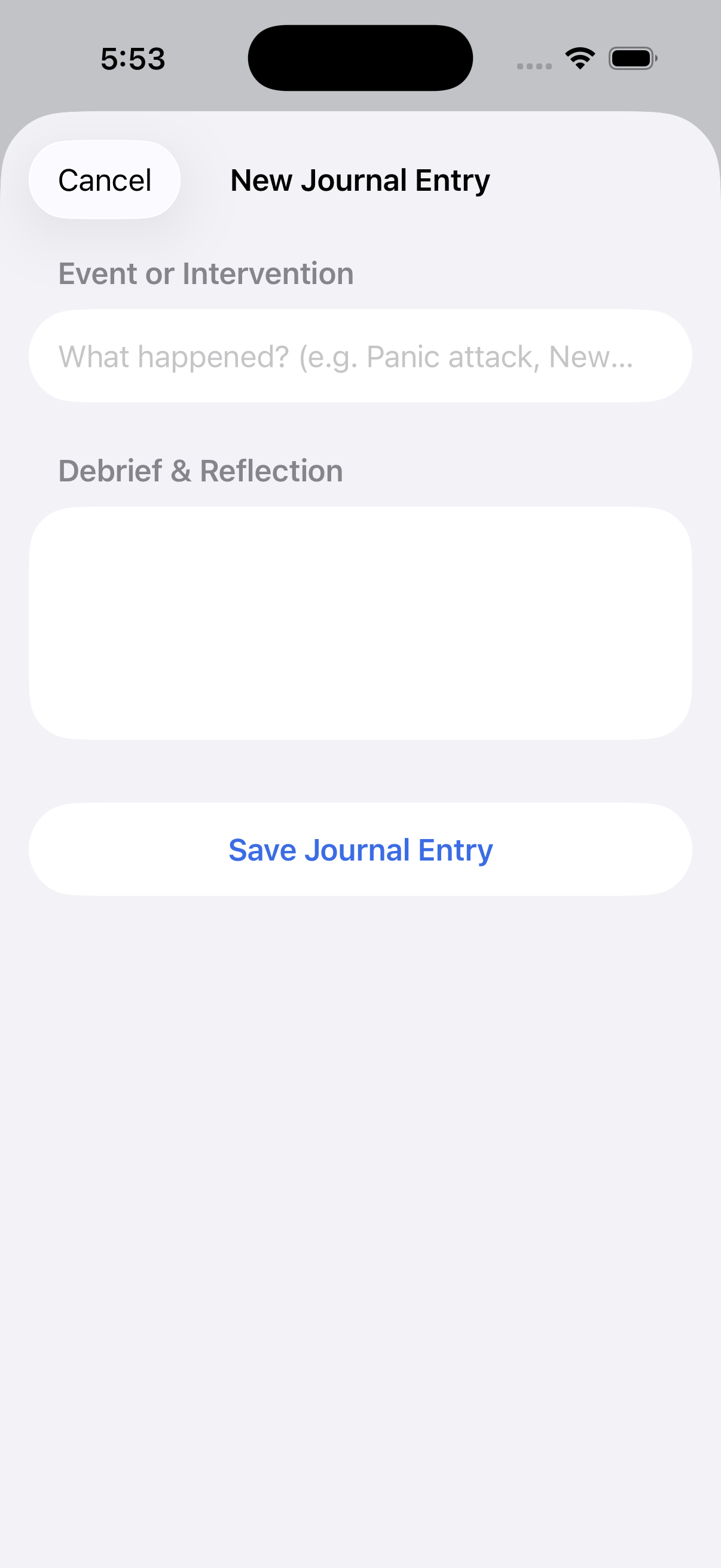
Breakpoint
-
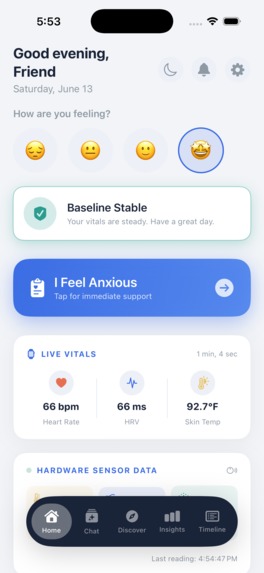
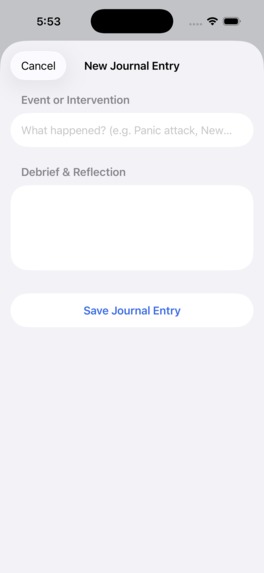
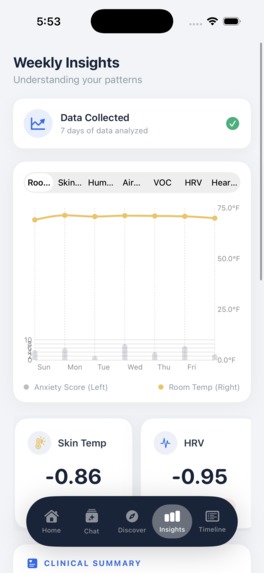
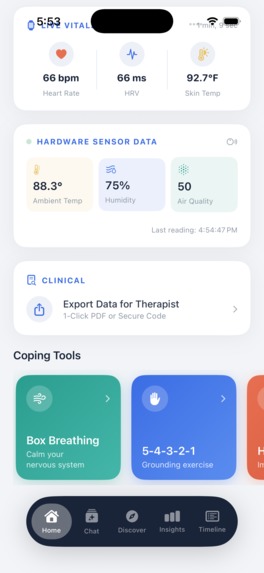
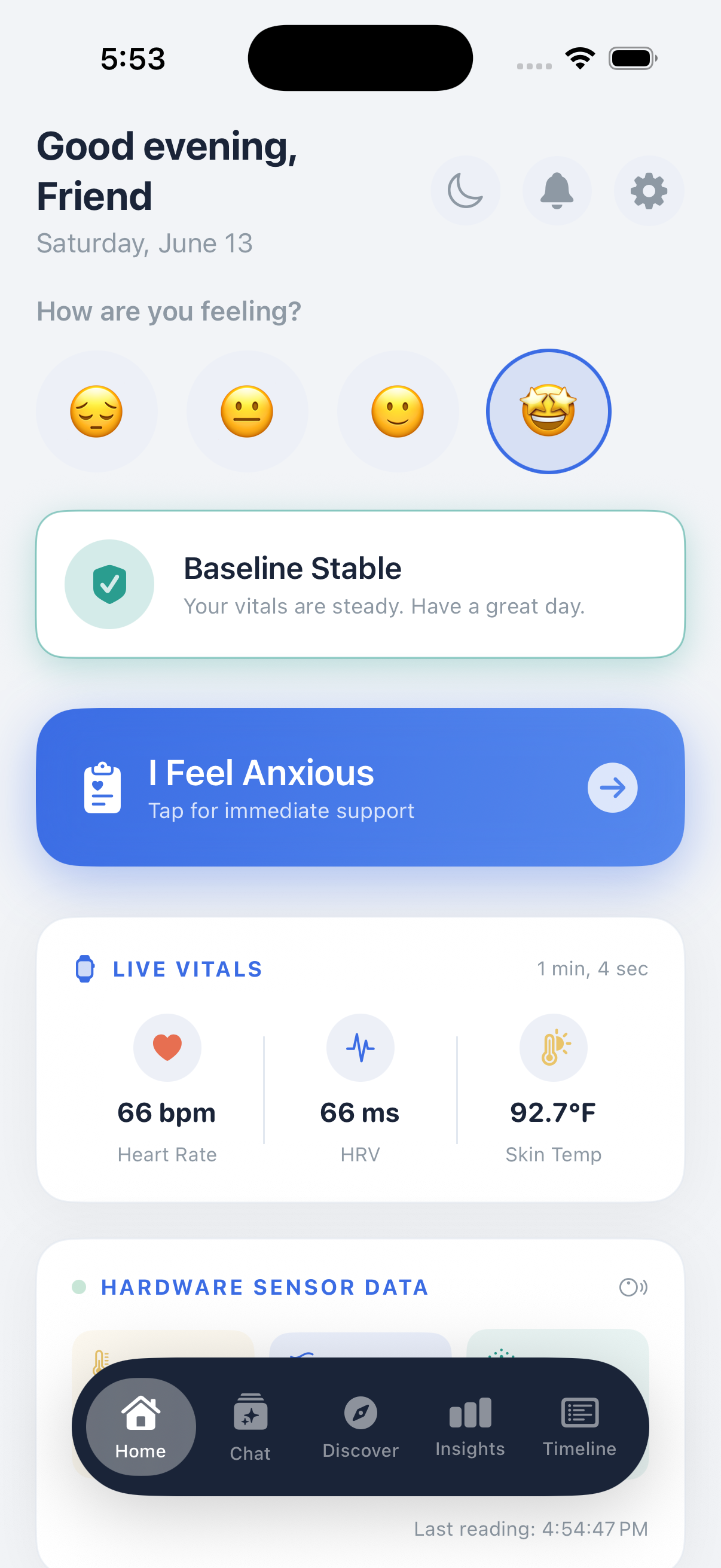
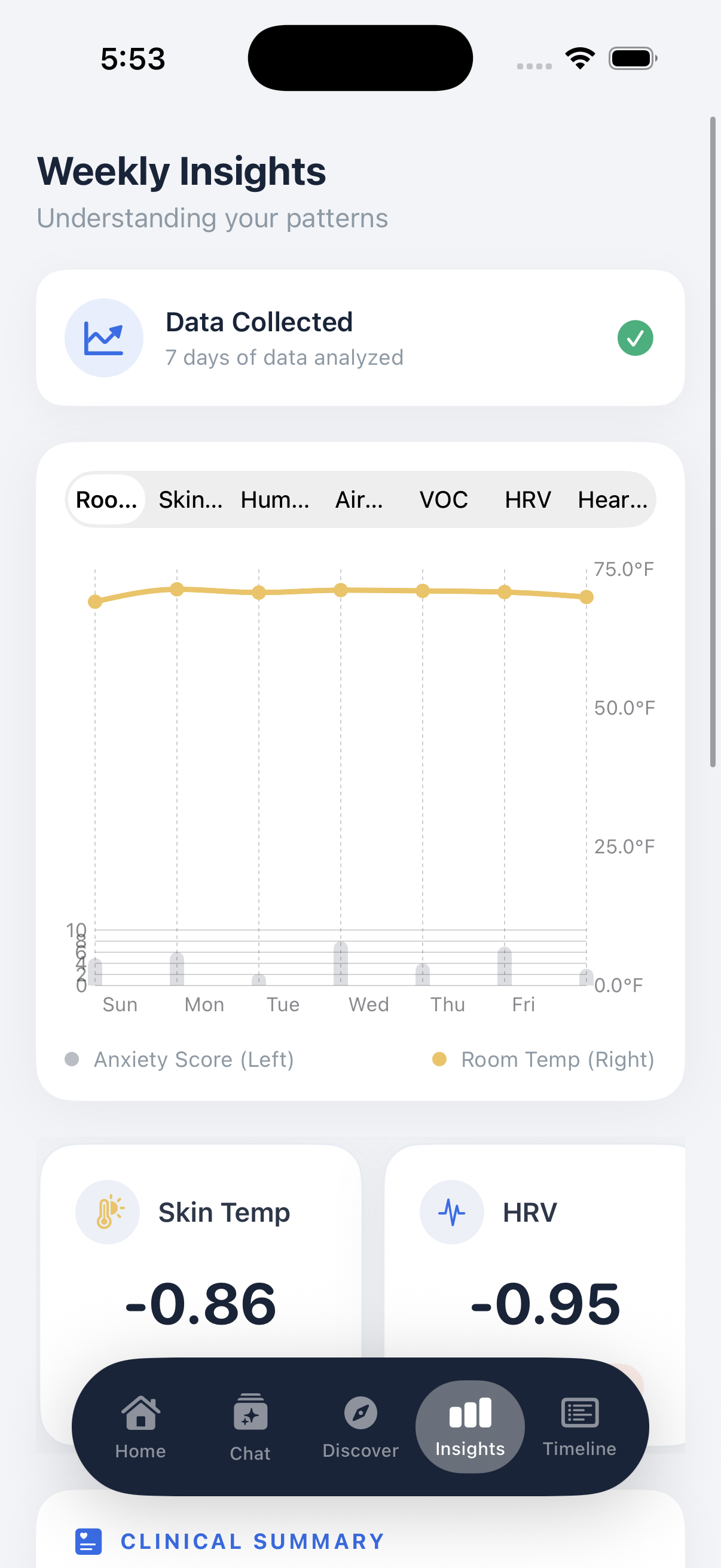
App dashboard
-
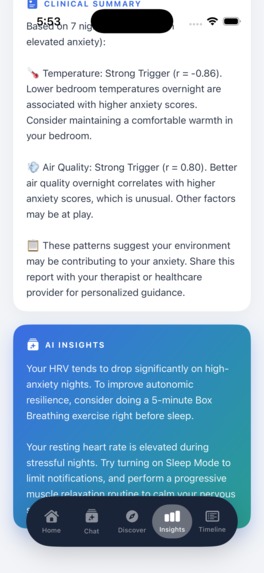
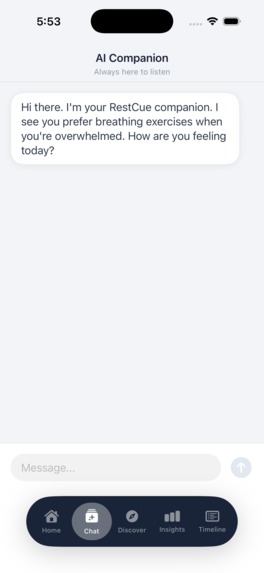
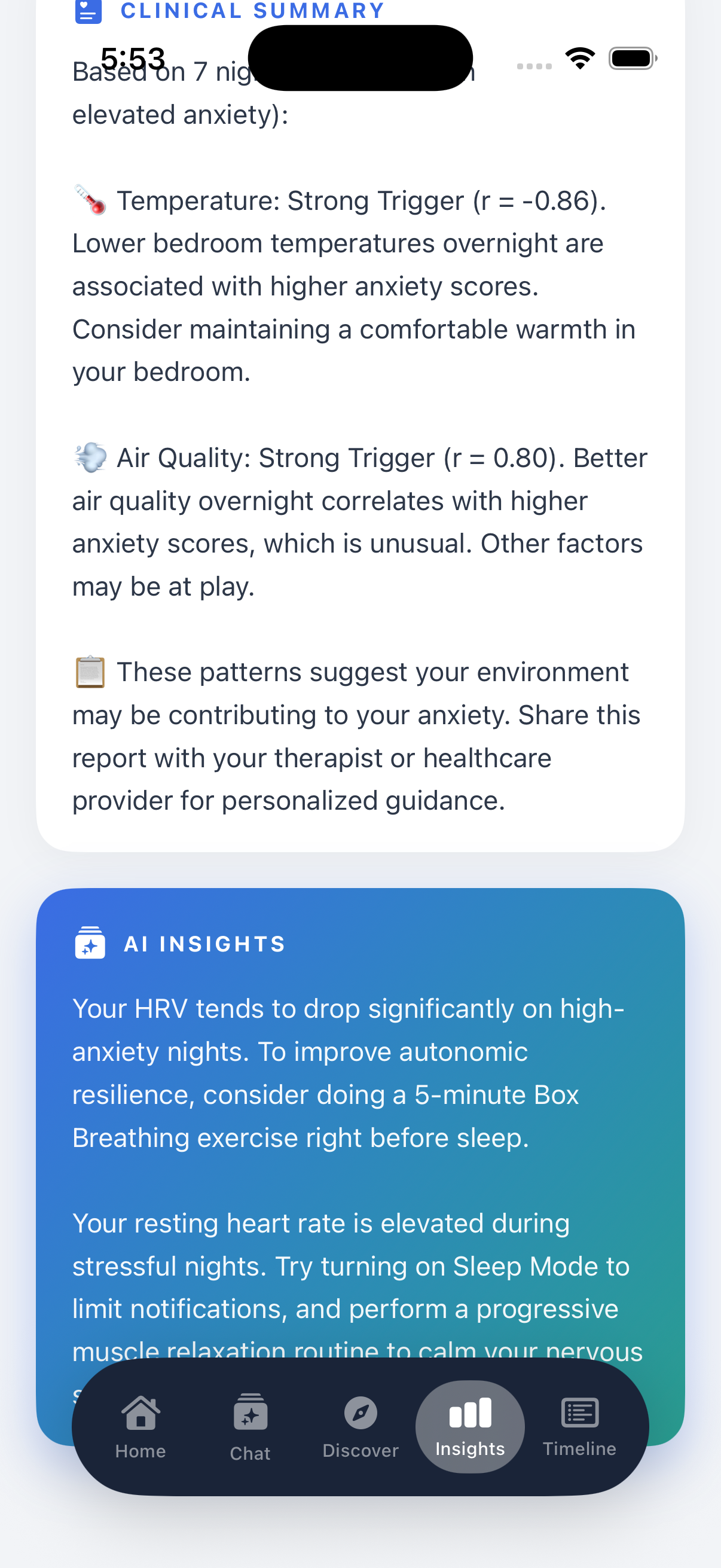
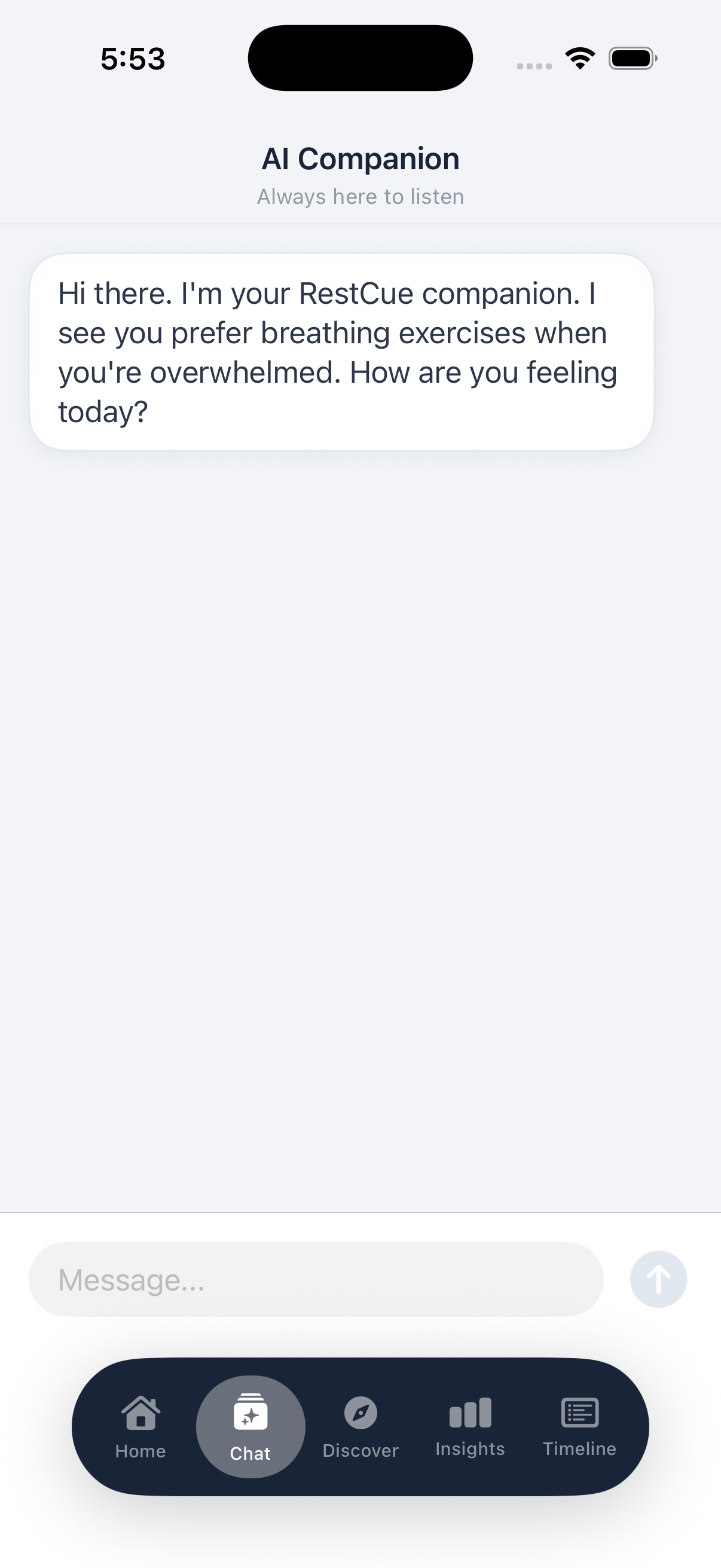
AI chat
-
-
-
-
-
-
Inspiration
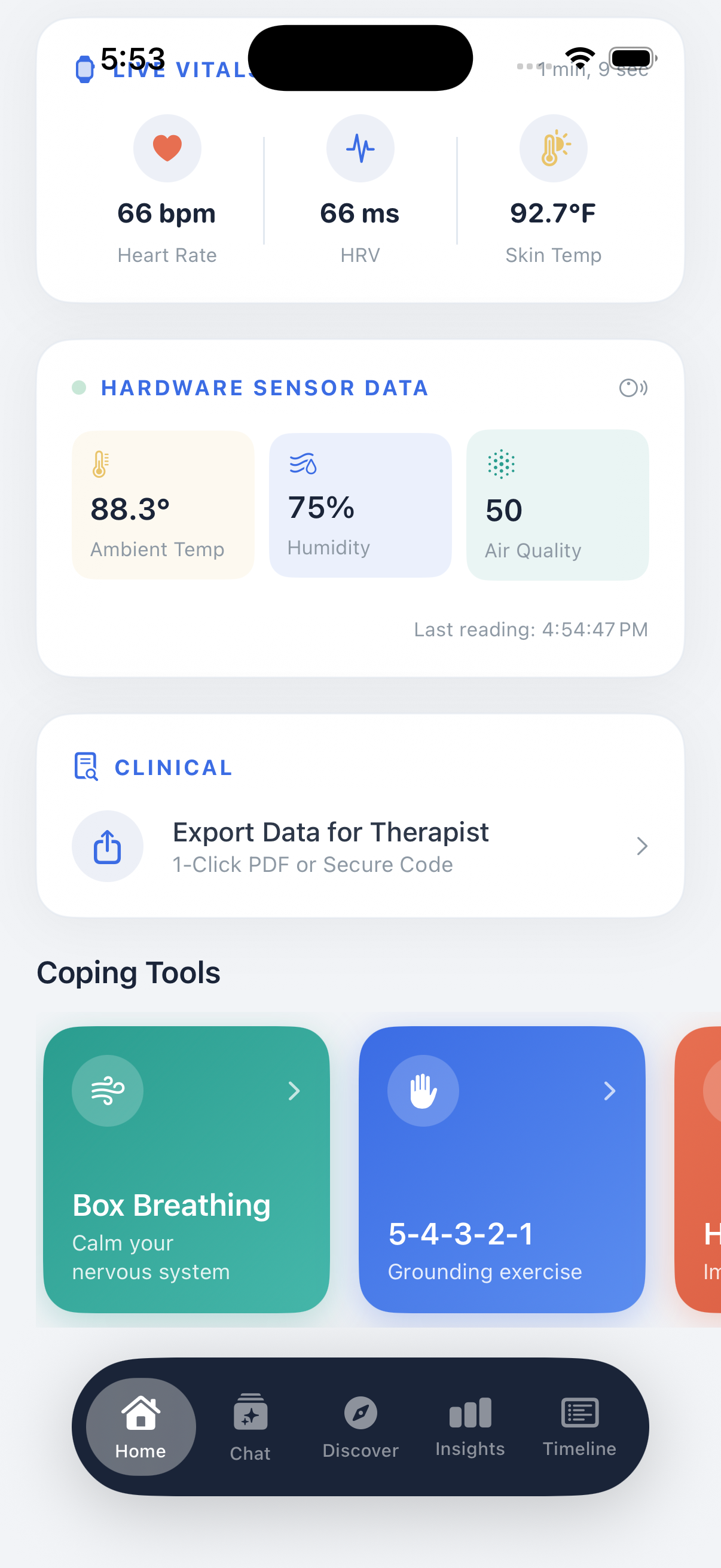
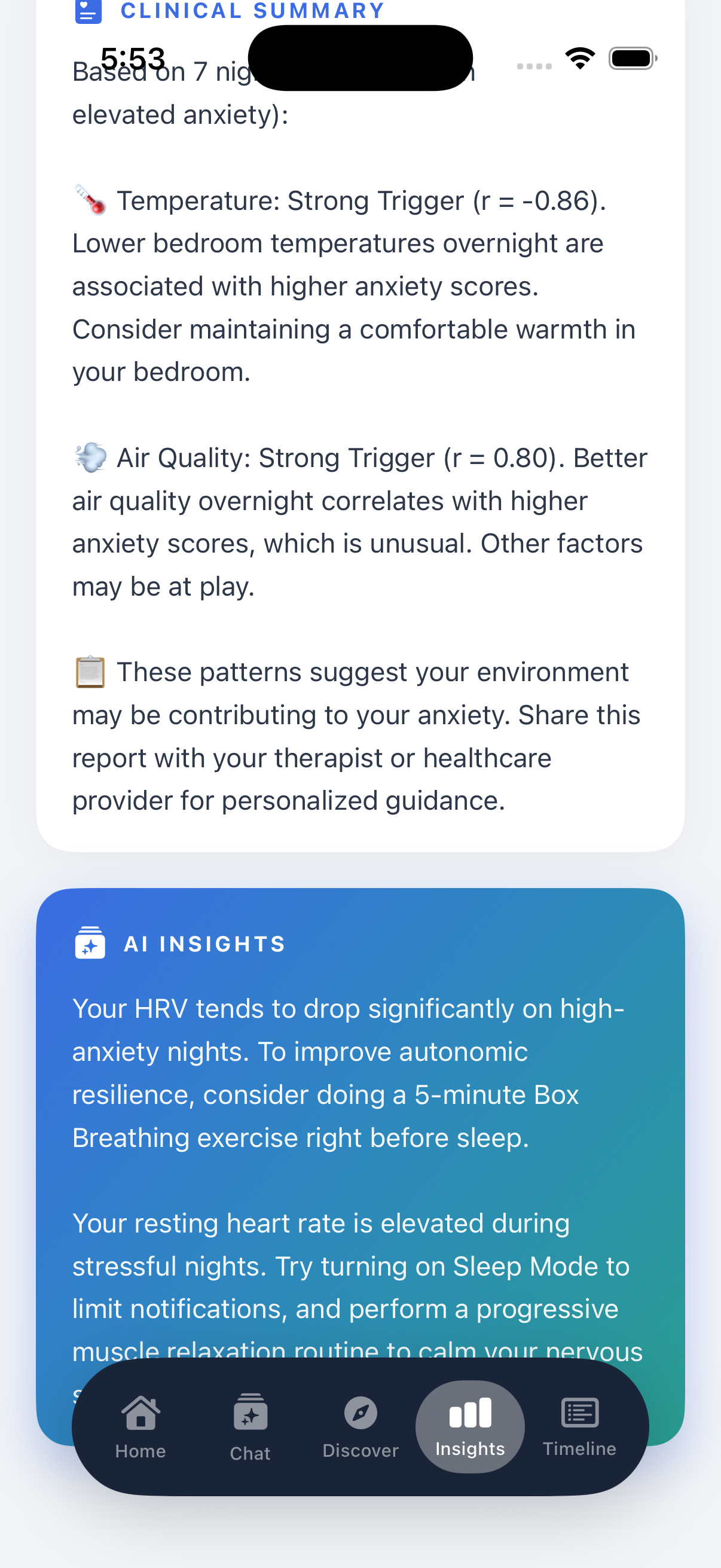
We wanted to use hardware instead of only software for the app. So we decided to incorporate unseen factors like air quality and temperature to reinforce accuracy.
What it does
As aforementioned, we take in unnoticed factors and make them noticed. By using an ESP32 module and a BME688 module, we monitor air quality and temperature, accounting for these factors, along with actual user input, to further enhance accuracy.
How we built it
- Software: We mostly vibe coded the entire apps (Claude), one for the website and one for the app. The app has more features as it directly connects to the ESP32 using wifi, while the website has limited features and encourages people to use the mobile version. We used Google Firebase Console for a database and Vercel to deploy it
- Hardware: (ONLY FOR MOBILE APP) We used a Bambu Lab 3D printer to hold the case of our main hardware, the ESP32-WROOM-32D and the Adafruit BME688, which detect the air quality and temperature. The ESP32 connects to the WiFi from your phone, which then shows accurate readings.
We used node.js for Firebase:
npm install firebase
and set it up
import { FIREBASE_CONFIG } from './firebase-config.js';
and deplyment for vercel
{
  "version": 2,
  "installCommand": "npm install",
  "builds": [
    { "src": "api/index.js", "use": "@vercel/node" }
  ],
  "routes": [
    { "src": "/(.*)", "dest": "api/index.js" }
  ]
}
and created a ve
Challenges we ran into
There were many challenges we faced during the hackathon:
- Managing and working with it
- Deploying the web build on Vercel
- Getting the right unit of readings from the BME688
- Keeping the 3D printer on when there were people accidentally knocking the extention cord off
- Working with limited Claude tokens
Accomplishments that we're proud of
There were also many things to be proud of
- Fixing firebase and vercel
- 3D prints working on the first try
- Getting accurate results from the modules: (The BME measures in Celsius with a \(\pm 0.5^{\circ}\) range. So we needed to convert that to Farenheight with \(\frac{9}{5}C^{\circ} + 32\)
- Finishing the Canva presentation
What we learned
We mostly got to know each other since we never worked with each other in a hackathon before, and we also learned how to integrate hardware into software, which also demonstrates to us the many applications of hardware in everyday life.
What's next for RestCue
We might enhance the website version and make the app more accessible (i.e. Android, other devices) and improving the hardware design, but that is what we can see so far.

Log in or sign up for Devpost to join the conversation.