-
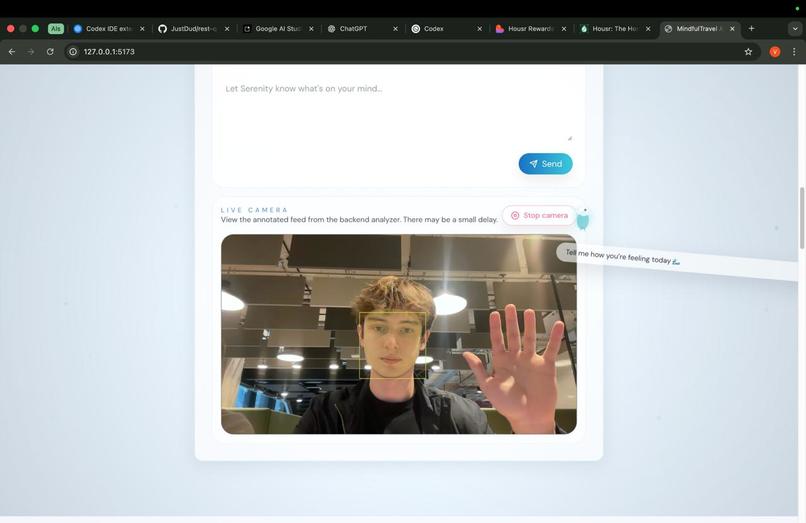
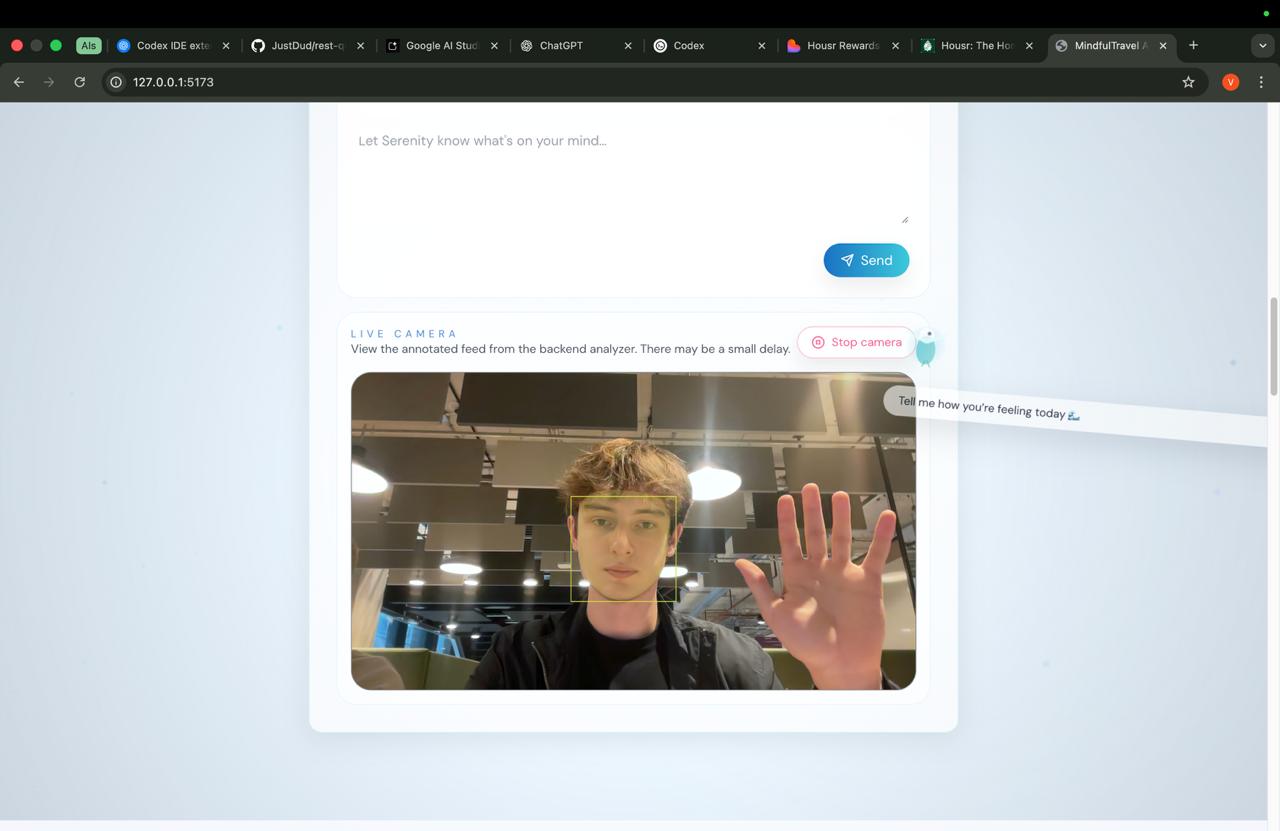
Emotions scanner
-
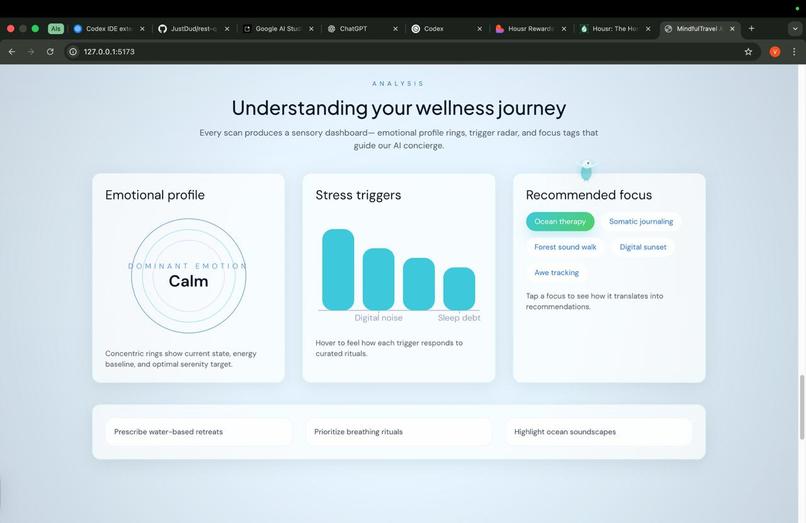
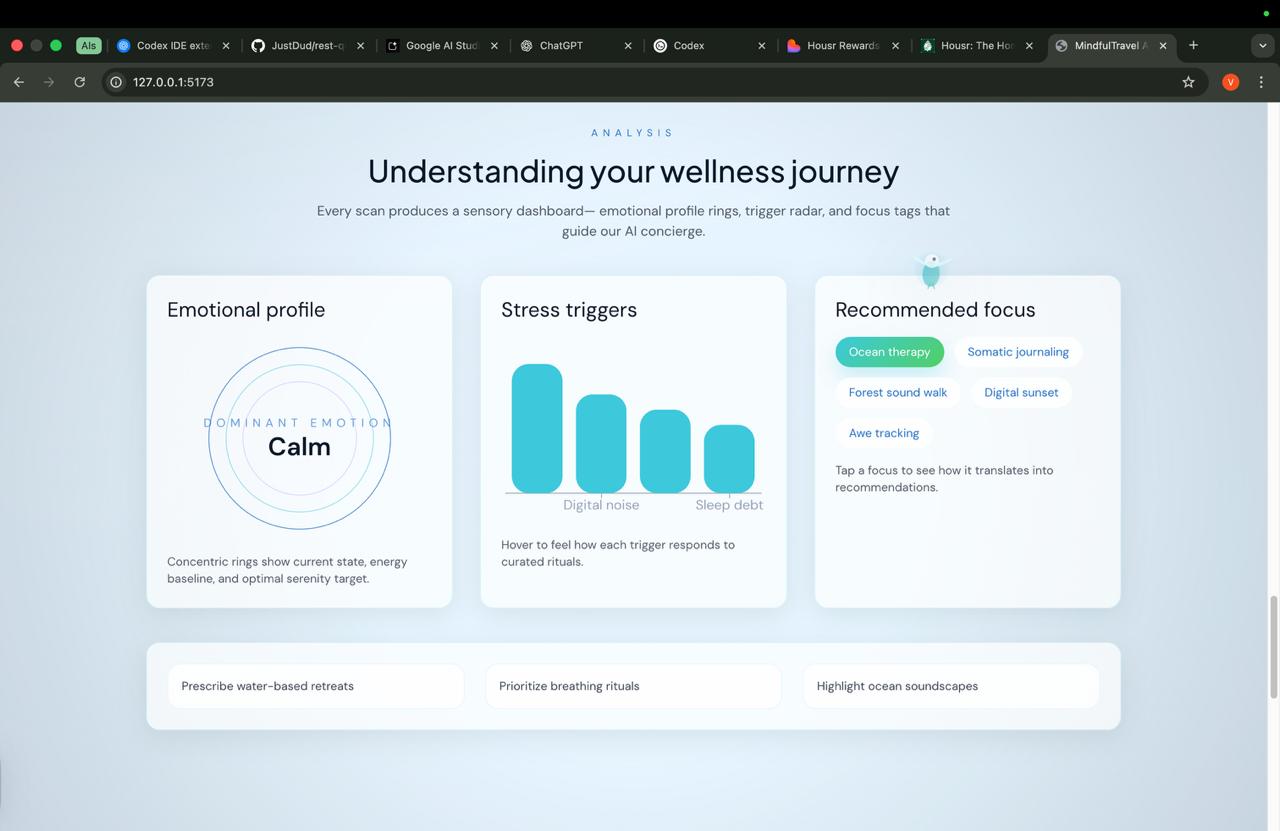
Wellness journey
-
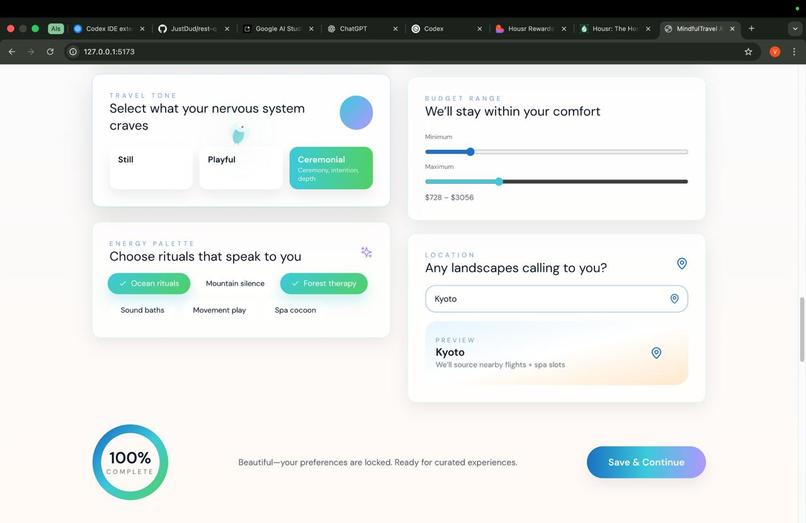
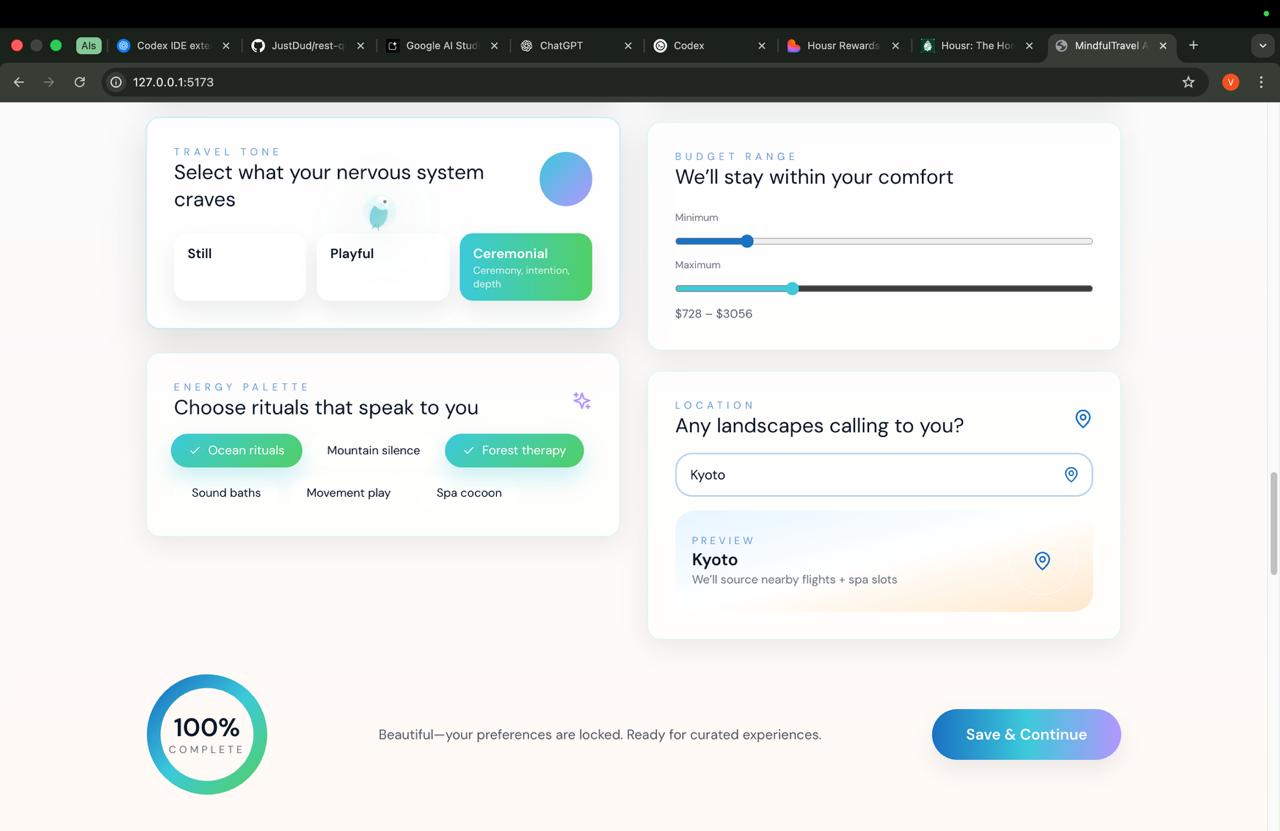
Preferences
-
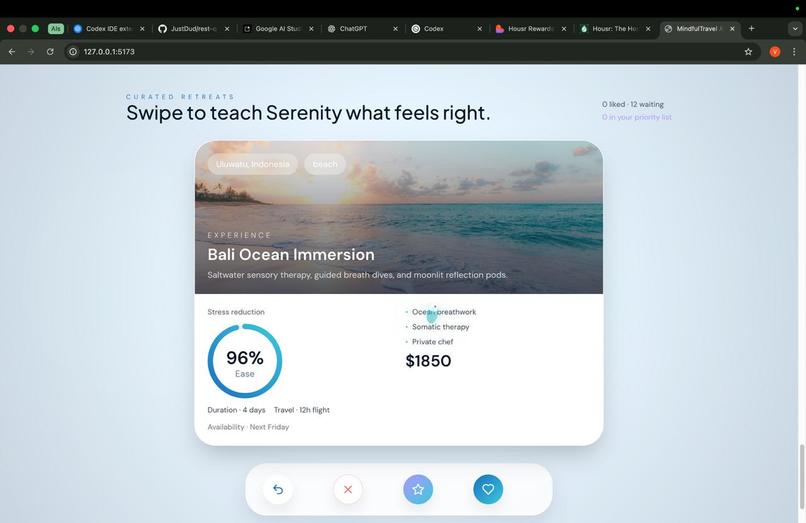
Location chooser
Inspiration
In today’s fast-paced world, people are constantly overwhelmed by digital noise and decision fatigue. Travellers searching for wellness retreats often feel stressed before their trip even begins. We were inspired by the idea that planning rest should itself feel restful. Instead of another travel app, Rest Quest is about understanding how someone feels and offering personalized guidance to restore calm and energy. Our goal was to create a system that doesn’t just detect emotions, but mirrors and responds to them in a meaningful way
What it does
Rest Quest reads your facial expressions in real time using emotion recognition and pairs them with guided wellness experiences – from mindful breathing and music to digital detox plans. When you open the app, it observes your mood, gently visualizes your emotional state through a soft overlay mask, and suggests short personalized rest activities designed to help you rebalance. It doesn’t just detect – it reflects
How we built it
We built Rest Quest using a combination of emotion recognition, real-time interaction, and AI-guided personalisation
• Frontend: The interface is calm and immersive, with soft animations and a responsive layout that mirrors the user’s emotional state. Users can see a reactive mask overlay, progress gauges, and subtle visual cues that reflect mood changes in real time
• Backend: The app processes live facial and vocal inputs using emotion detection models. These inputs are transformed into actionable emotion scores, which drive personalised feedback and visual effects
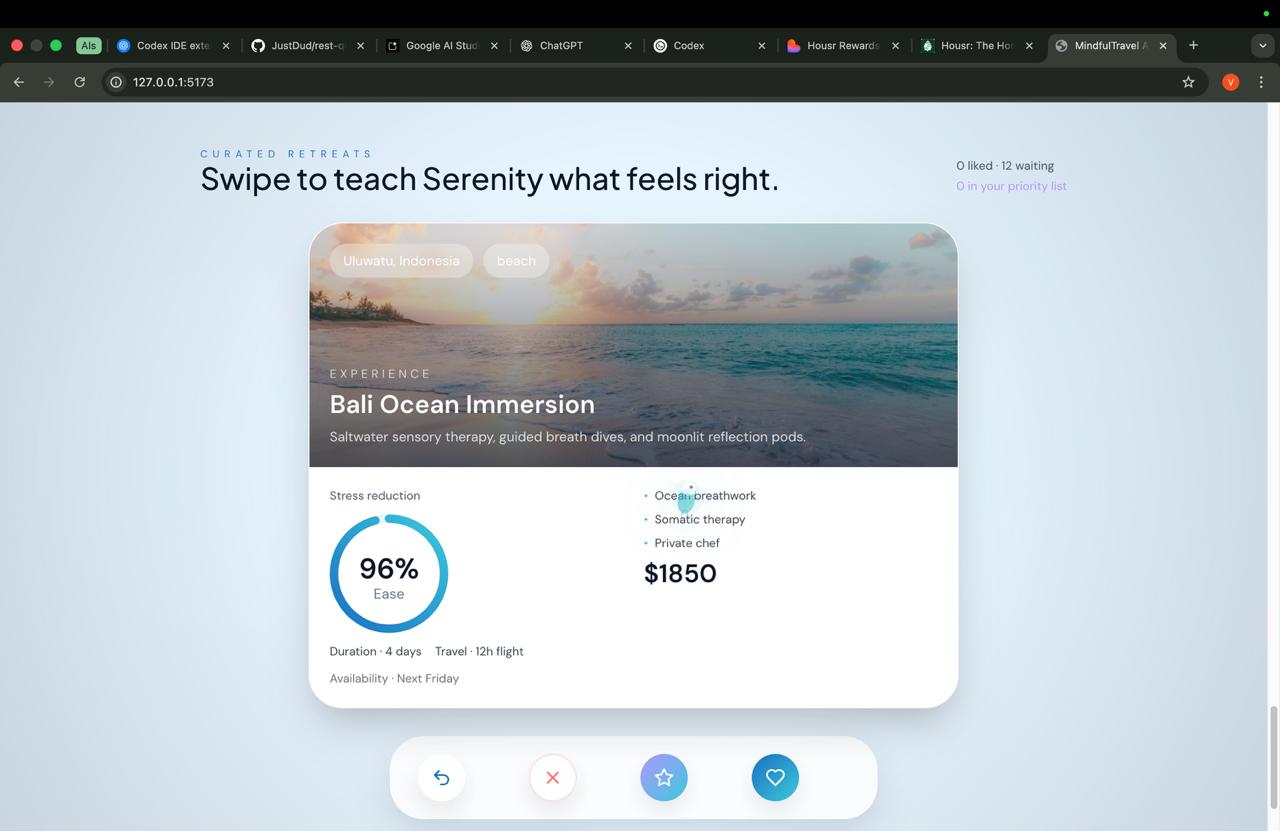
• AI Integration: We integrated Google Gemini to provide empathetic follow-ups and guidance based on the user’s emotional state. The AI offers personalised suggestions for wellness rituals, breathing exercises, and mindful reflections
• Data Handling: All emotion analysis and journaling occur locally, ensuring user privacy. Session data is temporarily logged for generating feedback within the app, but nothing is stored on external servers unless explicitly opted in
Challenges we ran into
• Collaboration and version control: Pulling, merging, and resolving conflicts on GitHub proved challenging as multiple team members worked simultaneously on the frontend and backend. We had to establish clear branching strategies and consistent commit practices to avoid breaking the build
• Connecting frontend and backend: Integrating real-time emotion data with the interface required careful coordination between the Python backend and React frontend. Ensuring seamless communication, handling asynchronous data, and managing state updates without lag took significant iterative work
• Deployment hurdles: Deploying the app while preserving local AI processing and privacy-first principles required creative solutions. We had to balance accessibility, performance, and security to allow the app to run reliably on users’ machines
• Privacy and trust: Ensuring all emotion data remained local while still providing meaningful feedback demanded careful architecture and testing to maintain user trust
Accomplishments that we're proud of
• Developed a real-time emotional feedback loop that visually mirrors the user’s mood, creating a tangible connection between user and system
• Successfully designed and implemented a robust integration between the frontend and backend, enabling seamless real-time communication of emotion data, dynamic interface updates, and responsive user guidance across multiple interaction channels
• Created a system that provides empathetic guidance while preserving user privacy, ensuring all data processing occurs locally and securely
• Achieved smooth, low-latency interaction, making the experience feel immersive, intuitive, and human-like
What we learned
• Emotion-aware interfaces are most effective when paired with dynamic visual and behavioural feedback
• Privacy-first design is feasible without compromising usability or responsiveness
• Capturing subtle emotional states requires iterative testing, empathy, and careful calibration
• Integrating multiple input streams (face, voice, and text) in real time demands careful synchronisation and performance optimisation
What's next for Rest Quest
• Expand emotion recognition to include nuanced states such as calmness, anticipation, and fatigue
• Integrate ambient soundscapes and voice emotion analysis for a fully immersive wellness experience
• Develop cross-platform deployment for consistent wellness tracking on mobile and desktop
• Add long-term journaling and analytics so users can observe emotional trends and personalise routines
Built With
- css
- deepface
- dotenv
- elevenlabs
- fer
- framer-motion
- google-gemini
- html
- javascript
- jsx
- mediapipe
- opencv
- python
- react
- recharts
- tailwind-css
- typescript
- vercel
- vite


Log in or sign up for Devpost to join the conversation.