-
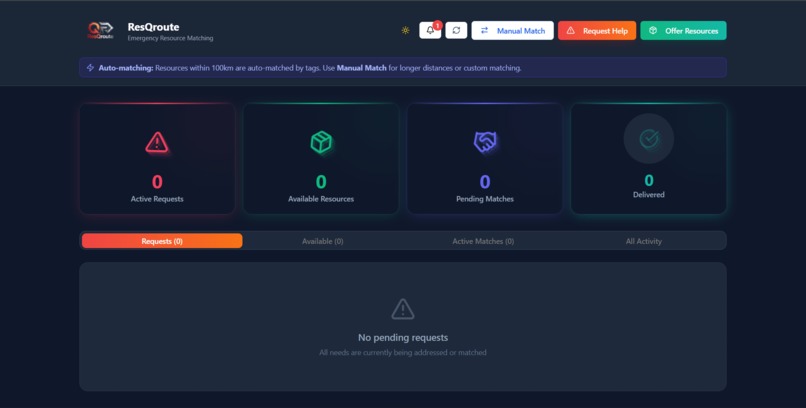
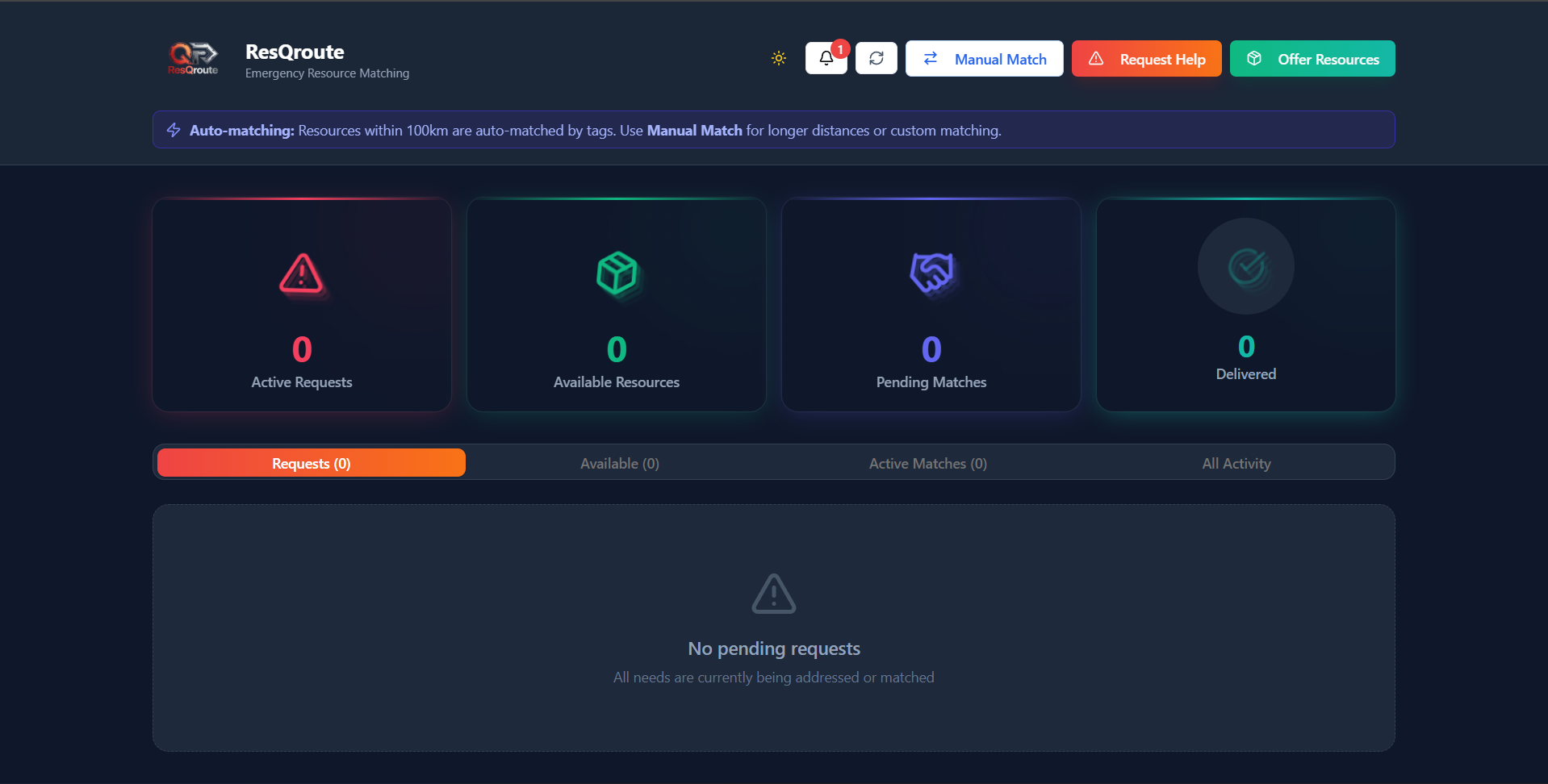
Desktop version of the app
-
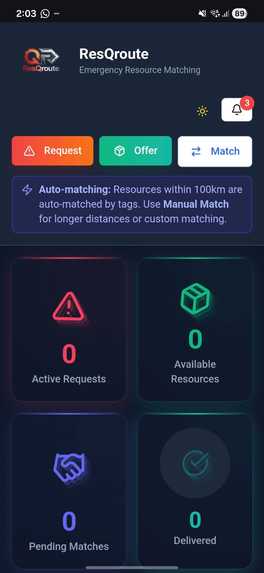
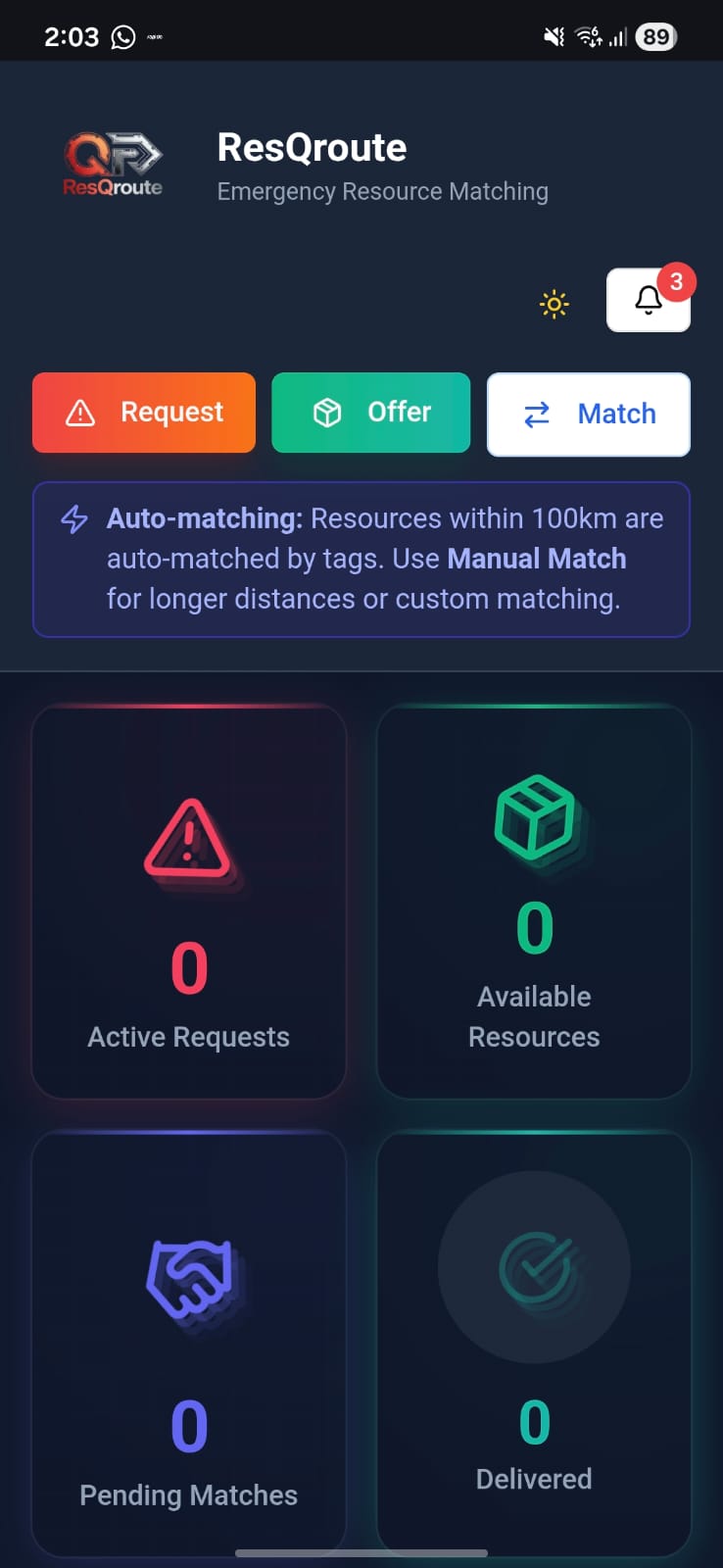
mobile version front page
-
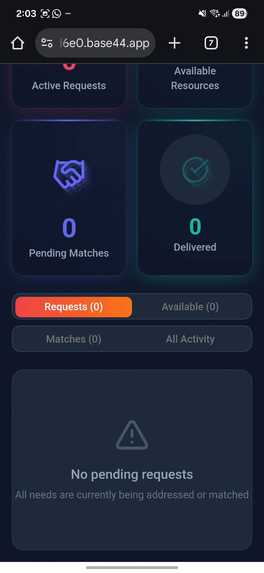
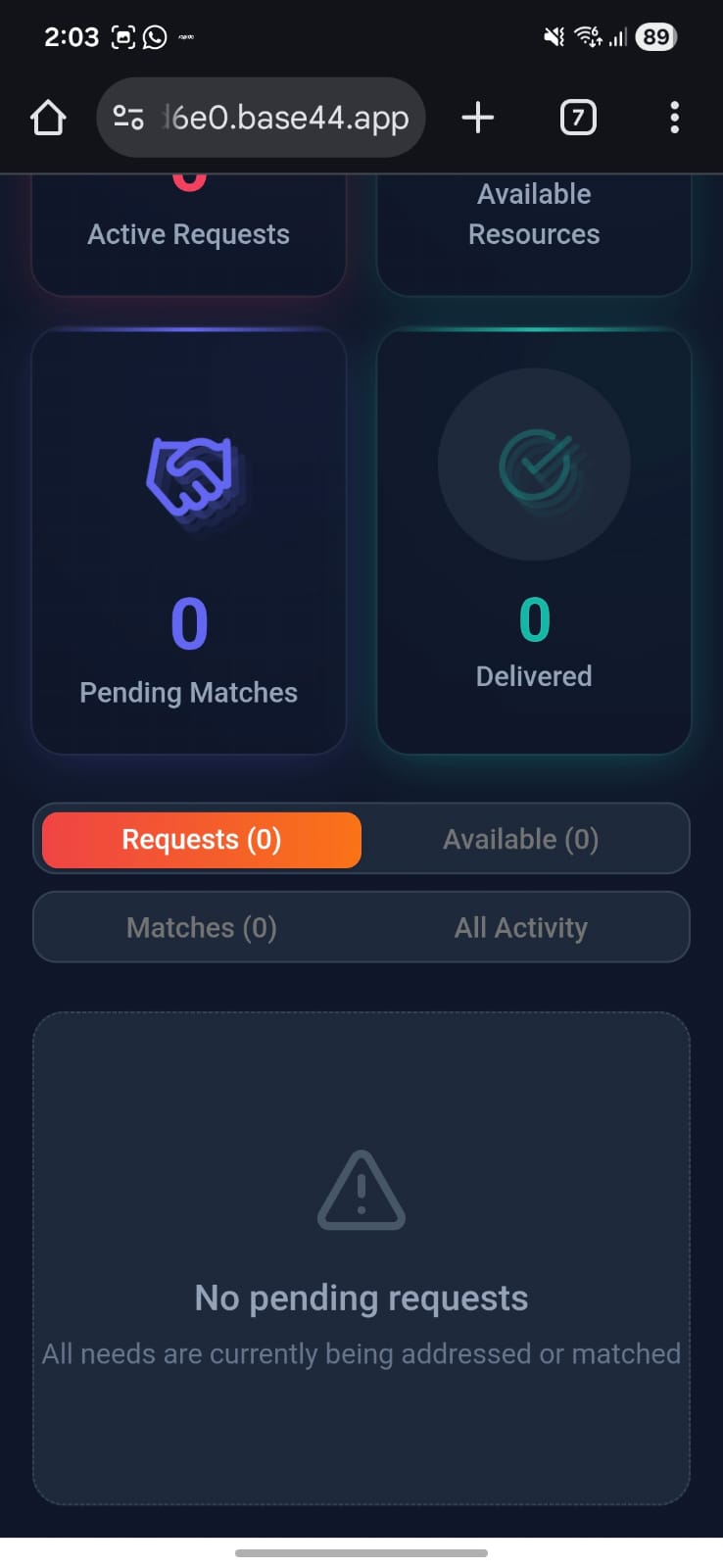
mobile version front page - 2
-
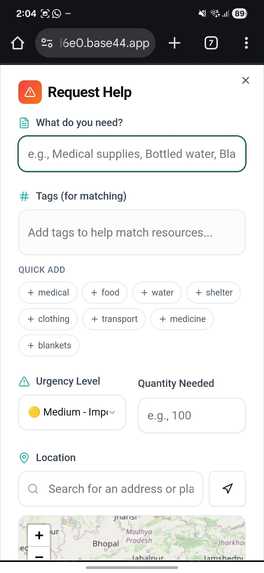
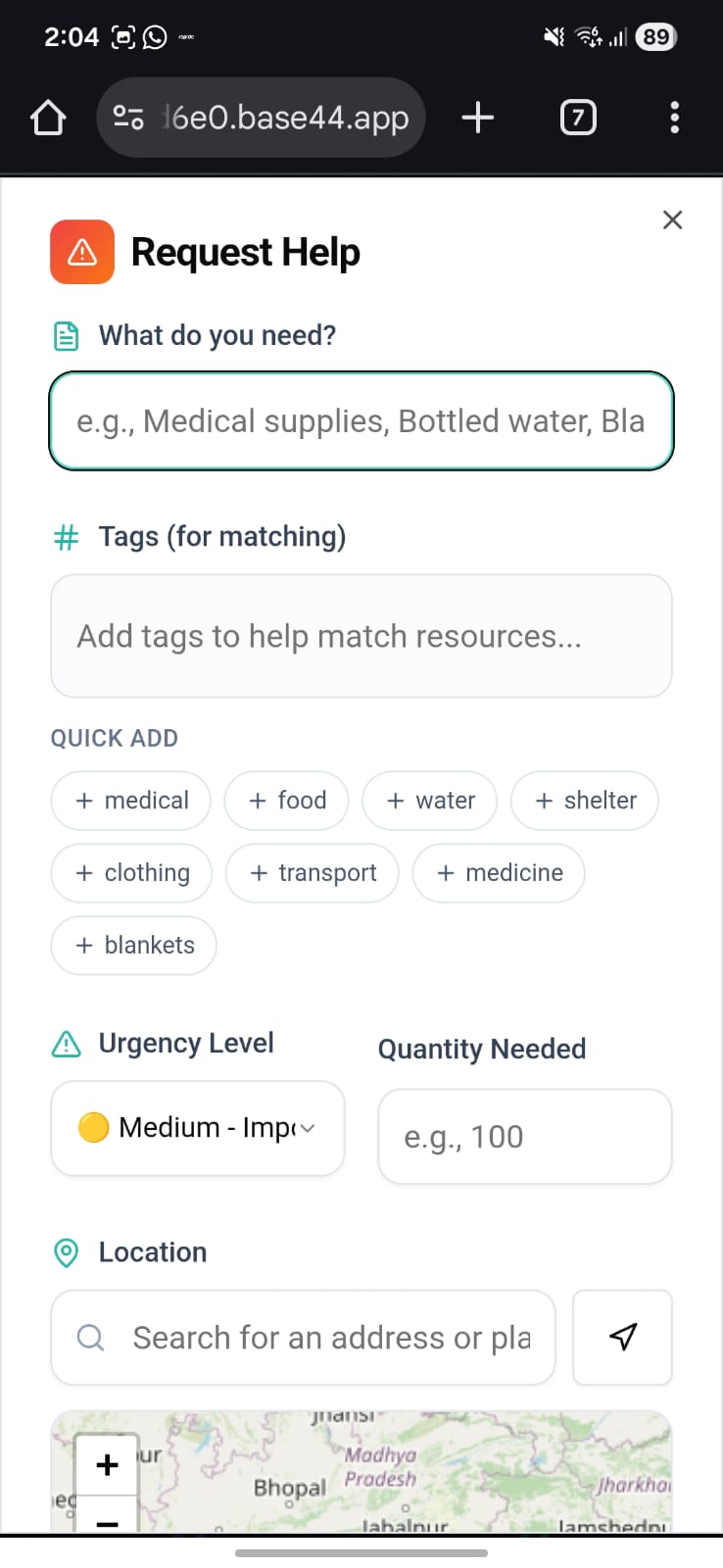
request page
-
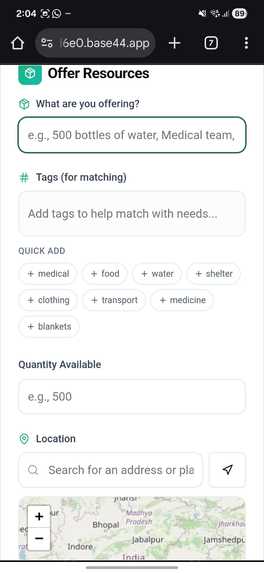
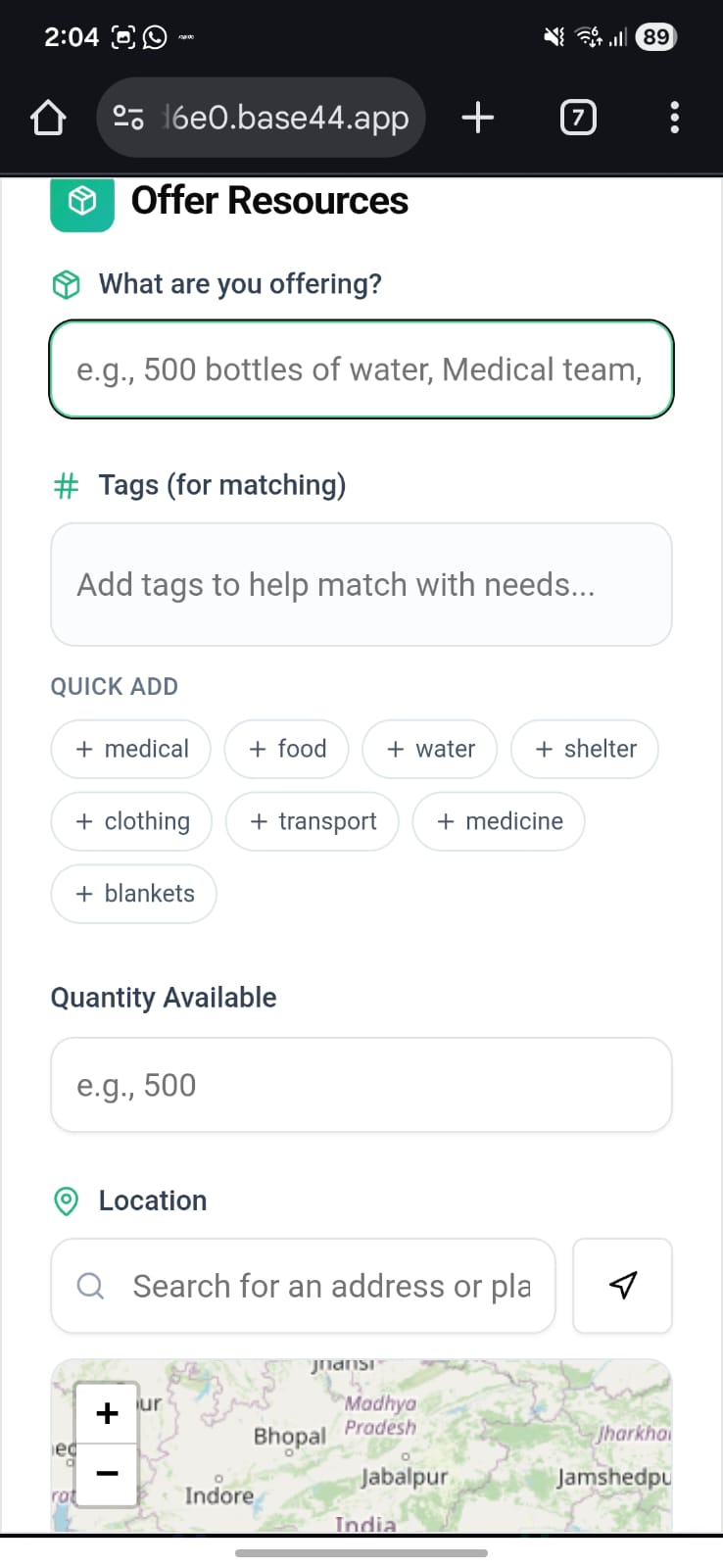
resource offer page
-
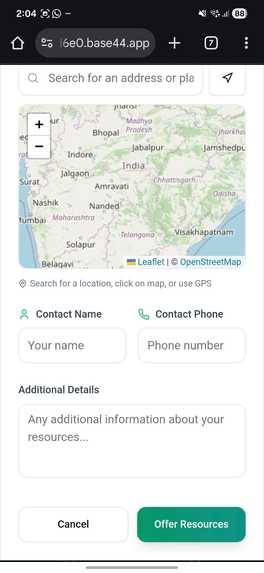
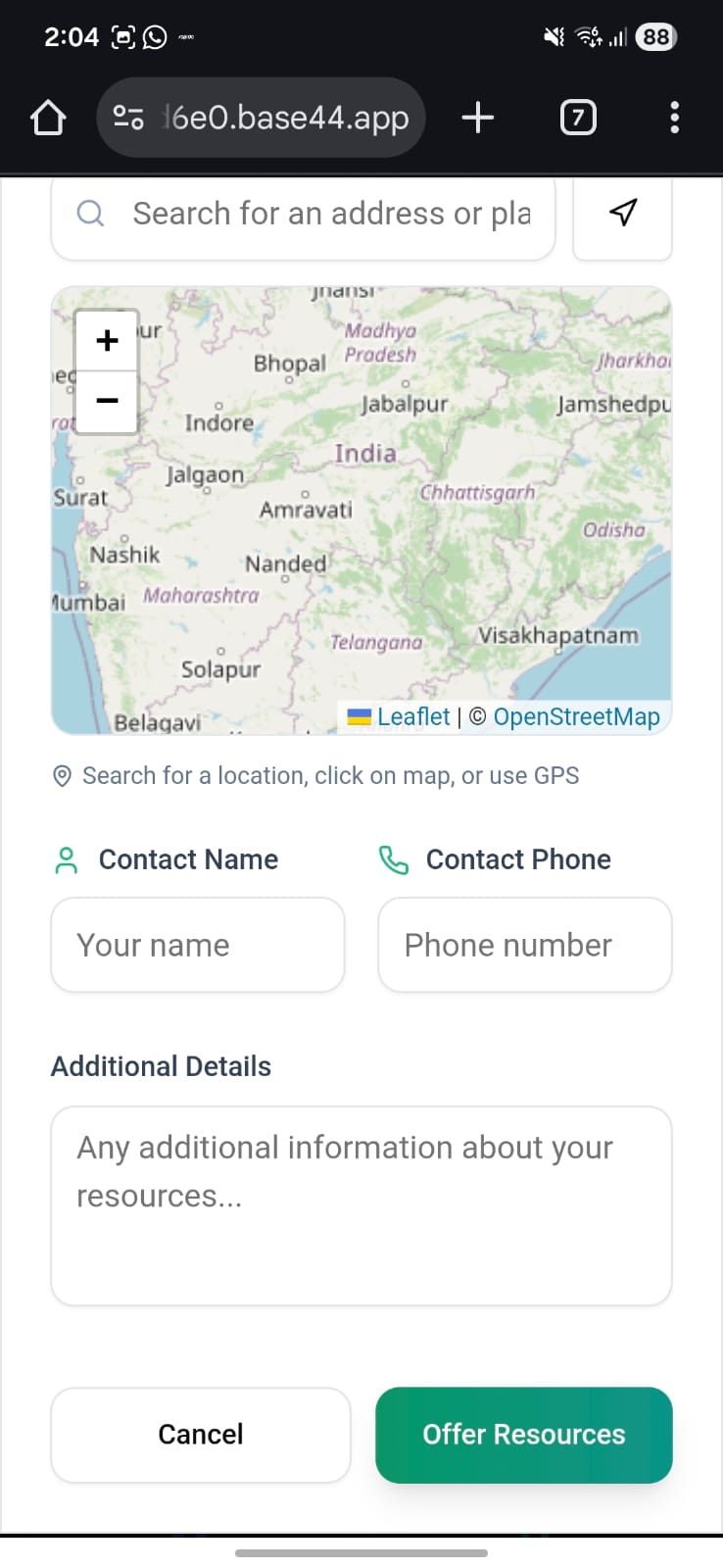
resource offer page - 2
-
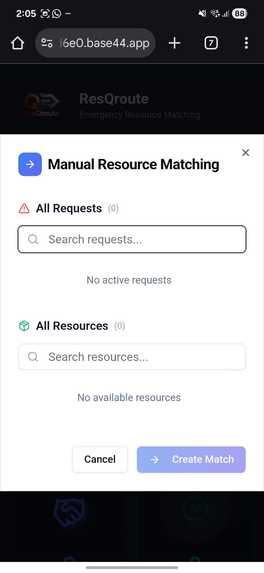
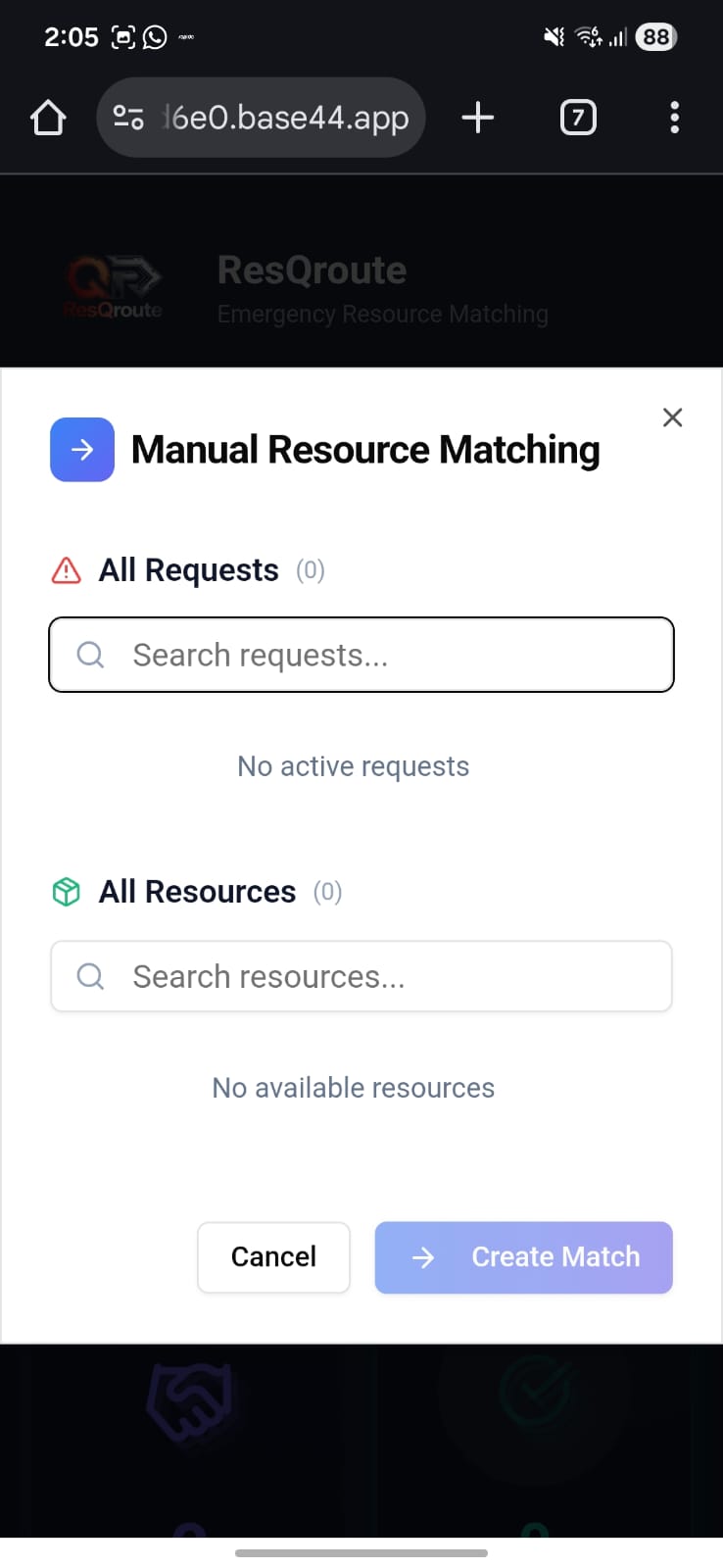
manual match making page
-
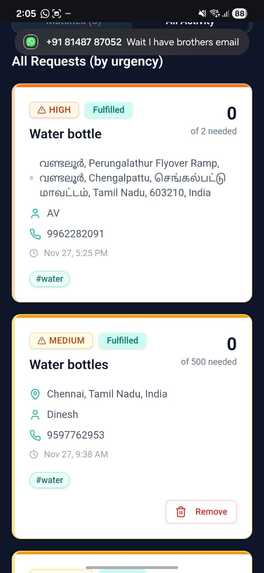
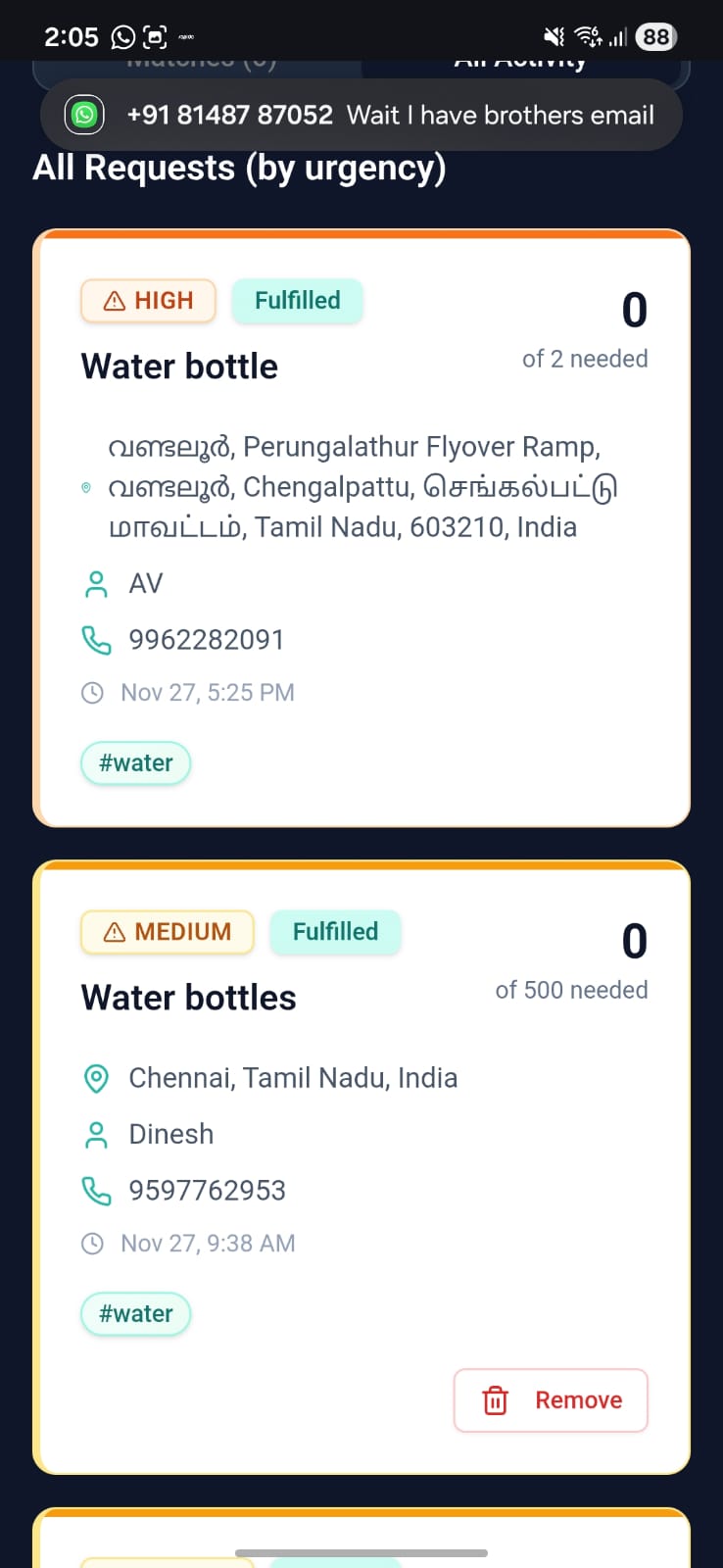
all activity page
Inspiration
This is a crucial correction. In India, the context for disaster management is quite different—we rely heavily on 112 (Pan-India Emergency), local helplines (100, 101, 108), and importantly, WhatsApp Groups.
During disasters like the Chennai Floods (2015), Kerala Floods (2018), or the recent Himachal/Wayanad landslides, the problem wasn't just that official lines were busy—it was that help often came from local fishermen, RWAs, and student volunteers before the NDRF could reach every pocket.
Here is the revised hackathon submission text, culturally adapted for the Indian context.
Inspiration Living in India, we have witnessed how annual disasters—from the urban floods in Chennai and Bengaluru to the landslides in Wayanad—paralyze standard emergency infrastructure.
During these crises, the 112 and 108 emergency lines get choked instantly. The "Second Line of Defense" becomes social media: desperate families forwarding messages on WhatsApp groups, X (Twitter), and Instagram stories asking for food, boat rescue, or medicines.
The problem is that a WhatsApp forward has no timestamp and no live location. Volunteers waste hours chasing "ghost requests" (people who were already rescued 4 hours ago) while others wait in vain. We built ResQroute to replace the chaos of WhatsApp forwards with a structured, real-time coordination map.
During disasters like the Chennai Floods (2015), Kerala Floods (2018), or the recent Himachal/Wayanad landslides, the problem wasn't just that official lines were busy—it was that help often came from local fishermen, RWAs, and student volunteers before the NDRF could reach every pocket.
What it does boldResQroute is a hyper-local crisis coordination platform designed to bridge the gap between official machinery (NDRF/SDMA) and civilian volunteers.
The app serves two critical roles:
The Victim (Request Help): A streamlined, low-data interface where users can drop a pin, select their emergency type (e.g., "Stranded with Elders," "Medical Supply Needed," "Food/Water"), and broadcast their need.
The Good Samaritan (Offer Help): Local volunteers—whether it's a fisherman with a boat, an RWA organizing food packets, or a Jeep owner—can see a live map of needs around them. They can "Claim" a request, which updates the status for everyone else, preventing duplication of effort.
How we built it
We leveraged Base44 to rapidly prototype a solution that works on the "lowest common denominator" of tech.
Prompt Engineering for Schema: We used Base44's AI to design a database that handles the relationship between RescueTickets and VolunteerAssets, ensuring that even if the internet is spotty, the essential data (lat/long coordinates and phone numbers) is prioritized.
India-Specific UI: We designed the interface to be multilingual-ready and icon-heavy, minimizing the need for typing (crucial during panic).
Logic Implementation: We built workflows that allow a request to move from Open -> In Progress -> Resolved -> Archived, ensuring the map doesn't get cluttered with old data—solving the "stale WhatsApp forward" problem.
Challenges we ran into
The "Misinformation" Challenge: In India, fake news and verified leads are a major issue. We had to struggle with how to verify requests without adding too much friction. We decided to include a simple "Report/Flag" feature for volunteers to mark fake requests.
Trust Mechanics: People are hesitant to share phone numbers publicly due to privacy concerns. We had to design the flow so contact details are only revealed to volunteers who actively "Accept" the task.
Accomplishments that we're proud of
Speed to Deployment: We built a functional disaster management tool in a few hours that covers the basics of what usually costs crores in government tenders.
Replacing the "Control Room": We effectively decentralized the "Control Room." Instead of one operator handling 1,000 calls, we enable 1,000 volunteers to handle 1,000 requests directly.
Simplicity: The app is simple enough that a frantic teenager or a non-tech-savvy senior citizen can understand the "Red Button" (Help) vs "Green Button" (Give) interface.
What we learned
Community is Infrastructure: In India, the community is the first responder. A tool doesn't need to replace the government; it just needs to empower the neighbors.
Data Hygiene is Life-Saving: We learned that deleting old data is just as important as collecting new data. A map full of solved cases is useless.
The Base44 Advantage: We learned we could bypass weeks of backend coding and focus entirely on the workflow of rescue, which is critical for a hackathon timeline.
What's next for ResQroute
WhatsApp API Integration: Since WhatsApp is the lifeline of India, our next step is to build a bot where users can send a location pin on WhatsApp, and it automatically plots onto our ResQroute map.
Offline First Mode: Developing a feature to cache requests and auto-upload them the moment a sliver of network is available.
Collaboration with NGOs: Pitching this tool to organizations like Khalsa Aid or local Gurudwaras/Temples to manage their food distribution logistics during crises.
Built With
- base44
- lucidreact
- react
- shadn
- tailwind


Log in or sign up for Devpost to join the conversation.